
The 10 Best Plants for Curb Appeal in 2026
Boost your home's value with the best plants for curb appeal. Our 2026 guide covers 10 low-maintenance options for sun, shade, and every budget.
You pull into the driveway after work, and the front of the house feels a little off. Maybe the beds look thin, the shrubs are crowding the windows, or the color disappears from the street. That first impression is not just about maintenance. It usually comes down to plant selection, scale, and placement.
Good curb appeal starts with a front yard design that reads clearly from the road and still holds up when nothing is in bloom. The best plantings combine structure, seasonal interest, and the right mature size for the space. More plants do not automatically give better results. In practice, too many small, disconnected choices often make the entry look busy instead of settled.
That is why this list focuses on how each plant performs in a real front-yard setting. Some plants give strong shape all year. Others earn their spot with a short but high-impact bloom season. The key is knowing which role each one should play before you buy.
I also recommend testing ideas before planting. A tool for ai landscape design lets homeowners try different combinations, spacing, and color pairings on their own house photo, which cuts down on expensive guesswork. It is one of the fastest ways to see whether a Japanese maple belongs near the entry, whether boxwoods are too rigid for the facade, or whether a mass of grasses will balance the house better.
Clean windows and a tidy facade help, but plants do most of the visual heavy lifting. Choose them with a plan, and the whole front approach looks more intentional.
1. Hydrangeas
Hydrangeas earn their keep fast. Few shrubs give you that much visual weight, color, and softness in one plant. Near a porch, under front windows, or flanking a path, they create the kind of fullness that makes a house look settled.
For curb appeal, the big advantage is bloom mass. Hydrangeas don't read as fussy little flowers from the street. They read as clear blocks of color.
Where they work best
Morning sun with afternoon shade is usually the sweet spot, especially in hotter areas. In cooler climates, they can handle more sun if the soil doesn't dry out too hard in summer.
They fit cottage-style homes beautifully, but I also like them on simple modern facades where one generous drift of white or blue blooms can soften straight lines. If your front yard feels visually sharp or bare, hydrangeas fix that quickly.
Practical rule: Don't plant a single hydrangea by itself unless it's a very large specimen. They look stronger in a grouped planting that reads as one mass from the street.
Color is where people hesitate. Blue can be stunning against gray siding or white trim, while pink often suits warmer brick or cream exteriors. Before buying, it helps to test combinations with an ai landscape design tool so you can see whether the color supports the house or fights it.
What to watch for
Hydrangeas are not a set-it-and-forget-it shrub in every yard. They need enough water to avoid looking stressed, and pruning mistakes are common. Many homeowners cut them back at the wrong time and remove next year's flower buds.
A few practical notes help:
- Leave room to mature: Many hydrangeas get wider than people expect, so cramped spacing usually backfires.
- Prune after flowering when needed: Don't shear them like hedges.
- Use them as a feature, not filler: They're strongest where you want the eye to land.
2. Boxwoods
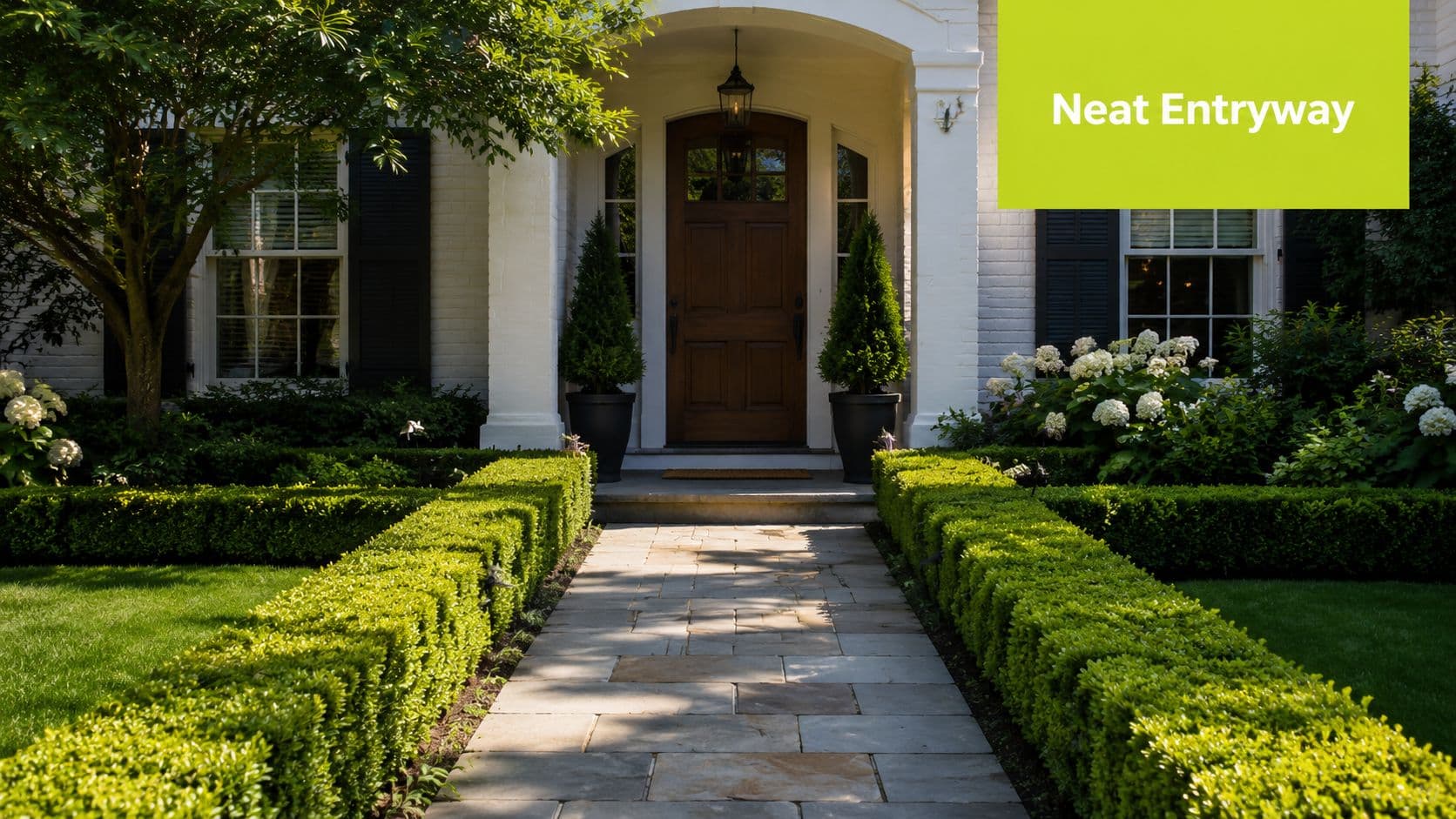
Boxwoods do a different job than flowering shrubs. They bring order. In a front yard, that matters more than many homeowners expect, because curb appeal depends on structure first and color second.
I use boxwoods to make a house look settled and intentional. They frame a walk, hold the corners of a foundation bed, and keep the planting from reading as a loose collection of unrelated plants. If your front yard looks messy even after you add flowers, it usually needs stronger evergreen form.
Why they earn their spot
A good boxwood planting stays useful in every season. It gives the eye a clear edge to follow and keeps the front of the house from feeling empty in winter or between bloom cycles.
That year-round shape is what makes boxwoods so valuable in curb appeal work. If you're planning updates to boost your home's value, this is one of the shrubs that often belongs in the base plan.
They also play well with showier plants. Boxwoods can tidy up roses, ground a mixed perennial bed, or give spring bulbs a clean outline. The trade-off is that they are strongest when used with restraint. Too many boxwoods can make the front yard feel stiff, especially on smaller homes or casual cottage-style facades.
What works and what doesn't
Choose varieties that suit your climate and disease pressure. ‘Green Velvet' is a safer pick in many cold-winter areas, while ‘Emerald' can give a narrower, more upright look where conditions fit. The wrong variety creates years of extra pruning and stress, so matching the cultivar to the site matters.
Use them for jobs like these:
- Frame an entrance: A balanced pair near steps or a walk gives the entry a clear focal point.
- Shape a mixed bed: Low mounded boxwoods help looser plants look placed on purpose.
- Create a repeatable pattern: Repeating the same evergreen form across the front ties the whole planting together.
Spacing is where homeowners get into trouble. Small nursery plants tempt people to install them too close to walls or too tight in a row, then airflow drops and the shrubs grow into each other.
Before you buy, test the mature scale and spacing with an ai landscape design tool. Boxwoods are simple plants, but placement is what makes them look professional. A quick mockup helps you see whether a low hedge, paired anchors, or a few rounded forms fit the house better before you commit to digging.
3. Knock Out Roses
Not every homeowner wants to baby roses. That's where Knock Out roses changed the conversation. They give you the familiar rose look, but with a much more forgiving habit than the high-maintenance hybrid tea image many people still have in mind.
In a front yard, they're useful when you want long-season color without turning the entry bed into a hobby. They bloom heavily, fill space well, and look best when used in repeating groups rather than as lonely specimens.
Best use in the front yard
Knock Out roses work especially well along a walkway, in a broad foundation bed, or in a sunny island bed where they can be seen from the street. They're not subtle. That's the point.
I like them most on houses that need a little warmth or friendliness. A plain facade can feel much more inviting with shrubs that flower generously over the season.
Roses need sun to earn their space. In a shady front yard, they usually become a disappointment instead of a feature.
Real trade-offs
They still need pruning, and they still look better with decent air flow. People hear “easy rose” and assume “zero work.” That's not true. They're easier than many roses, not maintenance-free.
Keep these habits in mind:
- Give them full sun: Less light usually means fewer blooms and weaker shape.
- Don't crowd them: Dense planting invites stress and makes cleanup harder.
- Mulch the root zone: It helps hold moisture and keeps the bed cleaner.
For styling, pair them with cooler colors nearby. Blue or purple companions, or even silver foliage, can make the flower color feel more refined. If your house already has a busy exterior, keep the rose color simple and repeat it rather than mixing too many shades.
4. Japanese Maple
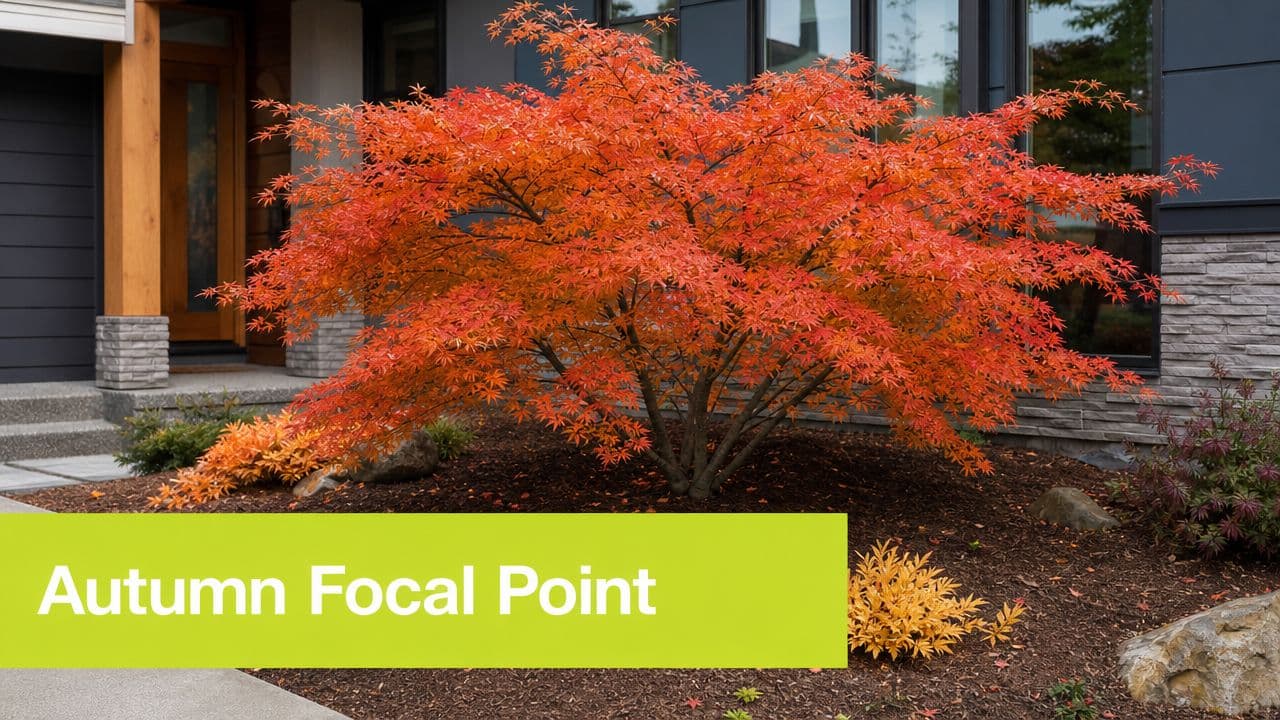
A Japanese maple earns attention the moment someone walks up to the house. If the front yard feels flat, too shrub-heavy, or visually scattered, this is one of the cleanest ways to introduce structure, color, and a clear focal point with a single plant.
I use Japanese maples when a home needs refinement without looking stiff. They work well near an entry patio, beside a front walk, or in a small lawn area where the branching can stand out against a simple backdrop. Placement matters more than quantity here. One well-sited tree usually does more for curb appeal than several smaller accents competing for attention.
Why this tree works
Japanese maples bring shape first, color second. That distinction matters. Even when the leaves are not at peak color, the branching habit and fine texture still give the yard a finished, designed look.
They also solve a common front-yard problem. Many foundation beds sit low and read as a horizontal band across the house. A Japanese maple breaks that line and gives the eye a place to land at mid-height, which helps the whole planting feel more composed.
Getting the placement right
This is not a plant to squeeze in and hope for the best. Many varieties prefer protection from hot afternoon sun, especially in warmer climates, and they resent wet soil. Good drainage and a spot with some shelter from harsh exposure usually produce a better-shaped tree and better leaf quality.
A few design rules keep them looking intentional:
- Give it room to mature: Check the width, not just the height, before planting near walks, windows, or the porch.
- Keep nearby planting quiet: Hostas, low grasses, ferns, or simple groundcovers support the tree without stealing attention.
- Prune sparingly: Remove dead or awkward crossing branches, then stop. Over-pruning ruins the natural form that makes the tree attractive.
- Match the cultivar to the house: Weeping types suit lower, wider spaces. Upright forms fit tighter entry areas better.
If you are unsure whether the tree belongs near the front walk, closer to the street, or off to one side of the yard, test those options before you dig. OutdoorBrite is useful for that kind of design decision because you can compare scale, spacing, and color against your actual house instead of guessing from a nursery tag. For more placement ideas, this expert guide on front yard makeovers can help you sort out sightlines and balance.
5. Ornamental Grasses
Ornamental grasses bring something front yards often lack, which is movement. Most foundation plantings are built from static shapes. Grasses catch the wind, soften rigid edges, and add a looser texture that keeps the design from feeling overtrimmed.
They also earn their spot in more than one season. Fresh green growth in spring, plumes and texture in summer, rich straw tones in fall, and structure in winter make them useful beyond bloom time.
Where they shine
Use them beside steps, near driveways, or in repeated drifts along a broad front bed. They're especially good on modern homes, prairie-inspired designs, and low-water designs where you want a natural look that still feels intentional.
Panicum tends to fit neatly into many residential settings. Miscanthus can be beautiful too, but some selections get large enough to overwhelm small front yards. Pennisetum adds softness, though cold tolerance varies by type.
A grass that fits the mature scale of the house looks sophisticated. A grass that blocks windows looks like a mistake.
Smart design moves
They're excellent companions for coneflowers, black-eyed Susans, and other strong perennials. The contrast between upright flower stems and flowing blades gives the bed depth.
Use them well by remembering:
- Cut them back in late winter: New growth looks cleaner when old foliage is removed.
- Mind window height: Tall grasses can obstruct views surprisingly fast.
- Repeat them: One random clump looks accidental. Repetition looks designed.
If your front yard already has too many shrubs in similar rounded forms, grasses are often the cleanest way to break that pattern.
6. Lavender
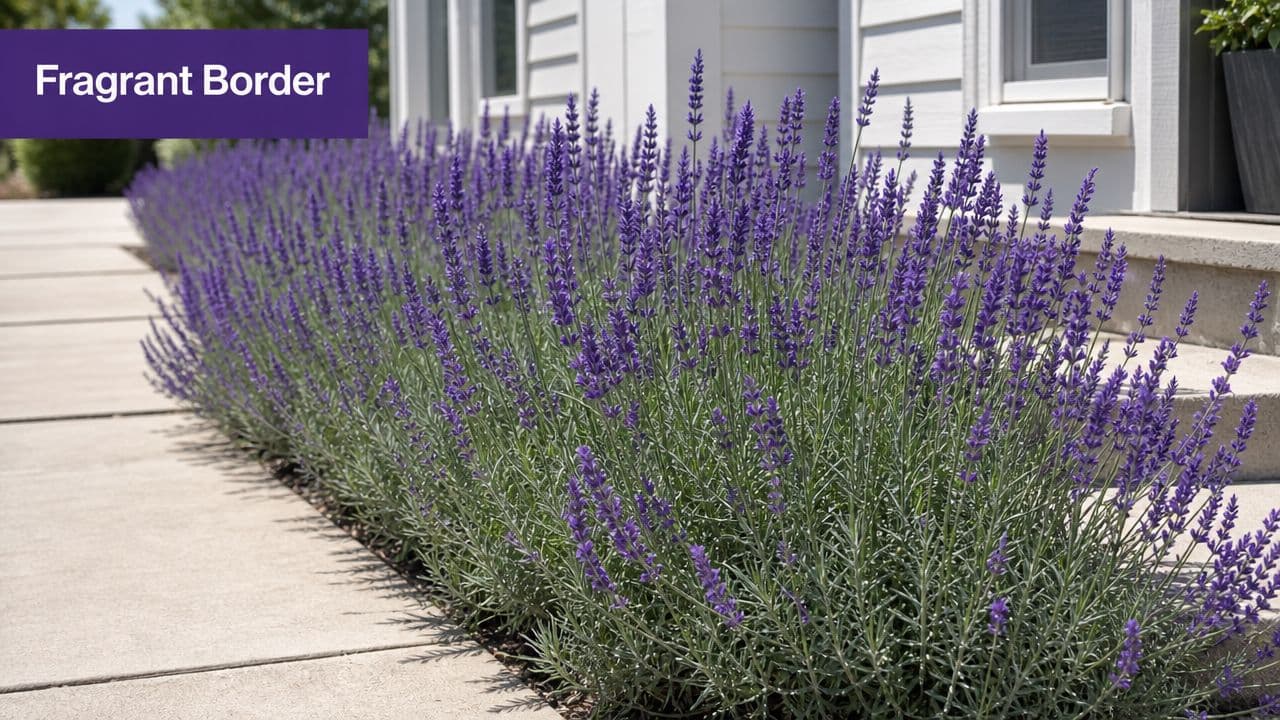
Lavender works hardest near places people pass. Along a front walk, beside steps, or edging a sunny patio approach, it gives you color, fragrance, and a crisp low form that reads beautifully against stone, brick, and light-colored siding.
It's one of the best plants for curb appeal when you want a relaxed, polished look instead of a lush, heavy border. The silver-green foliage keeps it useful even when it isn't flowering.
The main reason people fail with lavender
Drainage. That's the whole game.
Lavender hates wet feet more than it hates lean soil. If your front bed stays soggy or your clay soil holds water, lavender often declines slowly and disappoints. In that case, raised beds, gravelly amendments, or containers near the entry usually work better than forcing it into the ground.
How to make it look professional
Lavender looks strongest in repeated bands or grouped mounds. Scattering one here and one there weakens the effect.
Try these combinations:
- Pair silver with silver: Artemisia and other gray foliage plants create a calm palette.
- Use it along hardscape: It looks especially sharp against paths and edging.
- Keep pruning light: Trim after flowering to maintain shape, but don't cut into old woody growth too aggressively.
On the right house, lavender makes the whole entry feel cleaner. On the wrong site, especially humid or poorly drained spots, it becomes a replacement project. Be honest about the site before you fall in love with the look.
7. Hostas
Hostas solve a specific front-yard problem. Shade. If your entry sits under mature trees or the front of the house gets limited sun, many classic curb-appeal plants won't perform well. Hostas step in with foliage that's bold enough to matter from the street.
A good hosta planting feels lush, not messy. The leaves give you scale and contrast, especially under ornamental trees or along north- and east-facing foundations.
Why they're so useful
Flowers come and go. Hosta foliage does the heavy lifting for much longer.
That matters in shaded areas, where bloom is often brief and inconsistent. Blue-green hostas can calm down busy facades, while gold or variegated types can brighten dark corners near porches and steps.
The trade-offs
Hostas need moisture and they're not the right choice for every dry shade situation. They can also look tired if they're packed into a bed with no contrast.
To get better results:
- Mix leaf sizes: Large hostas need smaller companions or groundcovers nearby.
- Use them in drifts: Repetition gives the bed more visual order.
- Pair with finer textures: Ferns, Japanese maples, and grasses with shade tolerance help the leaves stand out.
I wouldn't rely on hostas alone for the entire front yard. They're a layer plant, not the whole composition. But in shaded foundation beds, they're one of the most dependable ways to make a house look intentionally planted instead of being shaded out.
8. Clematis
Clematis adds height without asking for a big footprint. That's why it can be so effective near small entries, porch posts, low trellises, mailboxes, or arbors leading toward the front door.
Most front yards have plenty of horizontal planting and not enough vertical interest. Clematis fixes that quickly. It also softens hard architectural lines in a way shrubs can't.
Best design role
Use clematis where the eye already wants to travel upward. Beside a front porch column, over a gate, or on a narrow trellis near the entry, it turns a plain structure into part of the natural setting.
This is especially useful on newer homes where the facade feels flat. A flowering vine can make the entrance feel more established.
Put the support in place first. A vine with nowhere to climb turns into a maintenance problem.
What homeowners often miss
Not all clematis are pruned the same way. If you don't know the pruning group, you can cut off the season's show before it starts.
A few practical reminders:
- Shade the roots, give the vine light: That balance usually keeps the plant happier.
- Bury the crown slightly deeper: It helps with resilience in many cases.
- Choose the right bloom habit: Some varieties flower earlier, some later, some more than once.
Clematis is not a backbone plant. It's a finishing move. But when the structure is there and the placement is smart, it can make a small front entry feel much more memorable.
9. Coneflowers
Coneflowers bring a more natural style to curb appeal. If boxwoods and hydrangeas feel too polished for your taste, coneflowers offer a looser, prairie-inspired look that still reads clearly from the street.
They're especially good in sunny front yards where you want long-lasting summer interest and a planting that doesn't need constant fussing. Their strong centers and upright stems hold visual weight better than many perennials.
Why they work in real homes
Some front yards need less perfection and more life. Coneflowers deliver that. They look right at home with ornamental grasses, black-eyed Susans, salvias, and other sun-loving plants.
They also fit current preferences for pollinator-friendly gardens without looking chaotic, as long as the layout is deliberate. Repetition matters. So do edges.
How to keep them from looking wild
Coneflowers can look amazing or untidy depending on how they're framed. Give them a clean border, a defined mulch line, or a repeated drift so the planting still feels controlled.
For best effect:
- Mass them instead of dotting them around: They read better in groups.
- Mix them with structure: Evergreens or grasses prevent the bed from feeling flat in off-seasons.
- Decide whether to deadhead: Leaving seed heads adds texture, while trimming keeps the bed neater.
They're a strong choice for homeowners who want beauty without a formal garden look. Just don't expect them to replace evergreen structure. They're seasonal performers, not the frame.
10. Dwarf Evergreen Shrubs
If I had to build a front yard from scratch, dwarf evergreens would be in the first round of selections. They provide the structure that makes everything else look more expensive and more organized.
This category includes compact junipers, hollies, yews, and other tight-growing shrubs that hold form without constant clipping. They're practical, flexible, and much less likely to outgrow the space than full-size foundation shrubs.
Why they belong near the house
Foundation plantings need discipline. Oversized shrubs swallowing windows is one of the fastest ways to kill curb appeal. Dwarf evergreens solve that by staying compact while still giving you year-round color and mass.
They also let you layer a bed properly. Low evergreens in front, medium shrubs behind, then a specimen tree or seasonal perennials nearby creates the kind of depth people associate with professional design.
A useful outside reference for screening and hedge ideas is this overview of Swift Trees Perth hedging plant recommendations, especially if you're comparing formal and informal evergreen habits.
Best ways to use them
Don't rely on one type only. Mix form and color so the planting doesn't become a row of identical green mounds.
Good combinations often include:
- Mounded and upright forms together: Contrast creates depth.
- Blue-gray and deep green foliage: The color shift keeps evergreen beds interesting.
- Seasonal accents nearby: Bulbs, coneflowers, or grasses prevent the bed from feeling static.
Dwarf evergreens aren't flashy, but they're often the reason a front yard holds together in every month of the year.
Top 10 Curb Appeal Plants Comparison
A plant can look perfect in a nursery pot and still miss badly once it is set against your house, walk, and front windows. This comparison table helps narrow choices by role, upkeep, and visual effect so you can test combinations before you buy. If you are using an AI design tool like OutdoorBrite, this is the point where a simple plant shortlist turns into a plan you can preview and adjust.
| Plant | Implementation Complexity 🔄 | Resource Requirements ⚡ | Expected Outcomes 📊 | Ideal Use Cases 💡 | Key Advantages ⭐ |
|---|---|---|---|---|---|
| Hydrangeas (Hydrangea macrophylla) | Moderate. Soil pH management and summer pruning may be needed. | Moderate water needs, fertile well-drained soil, space 4 to 6 ft | Bold summer blooms with strong volume and possible color shift | Front-yard focal points, cottage gardens, cut-flower beds | Dramatic blooms with color-change potential, reliable performance in part shade |
| Boxwoods (Buxus spp.) | High. Frequent shaping is needed for formal forms. | Moderate needs, well-drained soil, regular pruning, monitoring for blight | Year-round evergreen structure and crisp formal edges | Formal hedges, topiaries, entry framing | Long-lived, highly shapeable evergreen for architectural structure |
| Knock Out Roses (Rosa cvs.) | Low. Simple spring pruning and basic cleanup. | Low to moderate water, full sun, occasional pruning | Continuous flowering through the season with a compact habit | Low-maintenance color beds, mass plantings, beginner gardens | Disease-resistant, repeat blooming, easy care compared with many traditional roses |
| Japanese Maple (Acer palmatum) | Moderate. Careful siting matters, and growth is slow. | Moderate needs, well-drained acidic soil, protection from hot afternoon sun | Multi-season interest with spring color, fine texture, and strong fall display | Specimen focal points, shade gardens, small yards | Elegant, long-lasting focal tree with striking seasonal color |
| Ornamental Grasses (Miscanthus, Panicum, Pennisetum) | Low. Plant, water in, and cut back once a year. | Low water once established, allow room for mature width | Movement, texture, and structure that reads from the street | Massings, borders, modern or native plantings, low-water gardens | Very low maintenance, drought-tolerant, strong architectural impact |
| Lavender (Lavandula spp.) | Low. Light pruning after bloom and sharp drainage are the big requirements. | Very low water, excellent drainage, full sun | Fragrant flower spikes, pollinator activity, silvery foliage | Sunny borders, cottage and Mediterranean styles, pollinator gardens | Fragrant, drought-tolerant, long vase life, strong sensory appeal |
| Hostas (Hosta spp.) | Low. Choose the right mature size and divide occasionally. | Moderate moisture, shade to part shade, consistent watering | Dense foliage that fills shady areas with texture and contrast | Shade beds, understory planting, layered borders | Outstanding shade performance and a wide range of leaf sizes and textures |
| Clematis (Clematis spp.) | Moderate. Support and correct pruning-group knowledge are needed. | Moderate water, well-drained soil, roots shaded and tops in sun | Showy vertical flowering on trellises and arbors | Trellises, arbors, wall coverings, vertical focal points | High vertical impact and a long flowering season without using much ground space |
| Coneflowers/Echinacea (Echinacea spp.) | Low. Easy to establish with occasional division. | Low water once established, full sun preferred | Long summer bloom, drought tolerance, seedheads that hold into winter | Prairie, pollinator, and low-water gardens, mass plantings | Native, pollinator-friendly, drought-tolerant, low maintenance |
| Dwarf Evergreen Shrubs (Juniperus, Ilex, Taxus) | Low to moderate. Good cultivar selection and spacing matter most. | Low water once established, minimal pruning, adaptable light tolerance by type | Year-round evergreen structure and controlled foundation form | Foundation plantings, small yards, minimalist yards | Consistent color through the seasons, minimal upkeep, dependable structure |
Use the table as a filtering tool, not a shopping list. A Japanese maple may be the strongest focal point on one house and the wrong choice on another if the scale is tight or the afternoon sun is harsh. Boxwoods give clean structure, but they ask for more pruning and disease monitoring than many homeowners expect.
That is where previewing combinations earns its keep. Test a row of dwarf evergreens under windows, swap in hydrangeas near the entry, or compare grasses against lavender to see which one fits the house style and maintenance level before you start digging.
Visualize Your Vision From Plant List to Perfect Landscape
The hardest part of choosing the best plants for curb appeal usually isn't finding attractive plants. It's knowing which plants belong in your yard, on your house, in your light, and at your scale. A hydrangea can look perfect at the garden center and completely wrong against the siding once it's planted. A Japanese maple can be stunning, but only if it lands where its shape improves the composition instead of competing with the entry.
That's why I encourage homeowners to think like designers before they think like shoppers. Start with the structure plants first. Evergreens, ornamental trees, and grasses give the front yard shape. Then layer in flowering shrubs and perennials where they'll read clearly from the street. If you reverse that order, you usually end up with a collection of pretty plants instead of a front yard that feels composed.
The most successful curb-appeal planting plans also respect the house itself. Brick homes often handle cooler flower tones and deep greens well. Lighter siding can work with stronger pinks, blues, or purple blooms, but only if the overall mix stays restrained. Warm stucco or stone often looks best when the planting palette includes silver foliage, soft grasses, and darker evergreen anchors. You don't need more kinds of plants. You need the right roles filled.
That role-based approach keeps decisions simple. One or two plants should provide year-round structure. One should act as the focal point. One or two groups should carry the main seasonal color. Another layer should soften edges or fill shade. Once those jobs are assigned, buying plants gets easier because you're no longer guessing what belongs where.
This is also where visualization helps. Many homeowners can describe the look they want, but they can't easily picture how those plants will read together at full size. A tool like OutdoorBrite can help bridge that gap by letting you upload a yard photo and test ideas before you dig. That's useful for practical questions, not just style. You can compare whether boxwoods feel too formal at your entry, whether lavender is strong enough along the walk, or whether a Japanese maple should sit left or right of the porch.
Use visualization to check three things before you buy anything. First, make sure your biggest plants balance the house. Second, confirm that your flowering plants are visible from the street rather than hidden under windows or tucked behind shrubs. Third, look at the yard as a whole and ask whether it still looks good when bloom is gone. If the answer is no, you probably need more evergreen structure or stronger plant forms.
That's the difference between a nice planting and real curb appeal. Nice planting gives you a few pretty moments. Real curb appeal gives the house a stronger presence every day you come home.
Try OutdoorBrite to upload a photo of your front yard, test plant combinations, and see how structure, color, and placement work together before you spend money on plants.
See your yard reimagined
Start creating