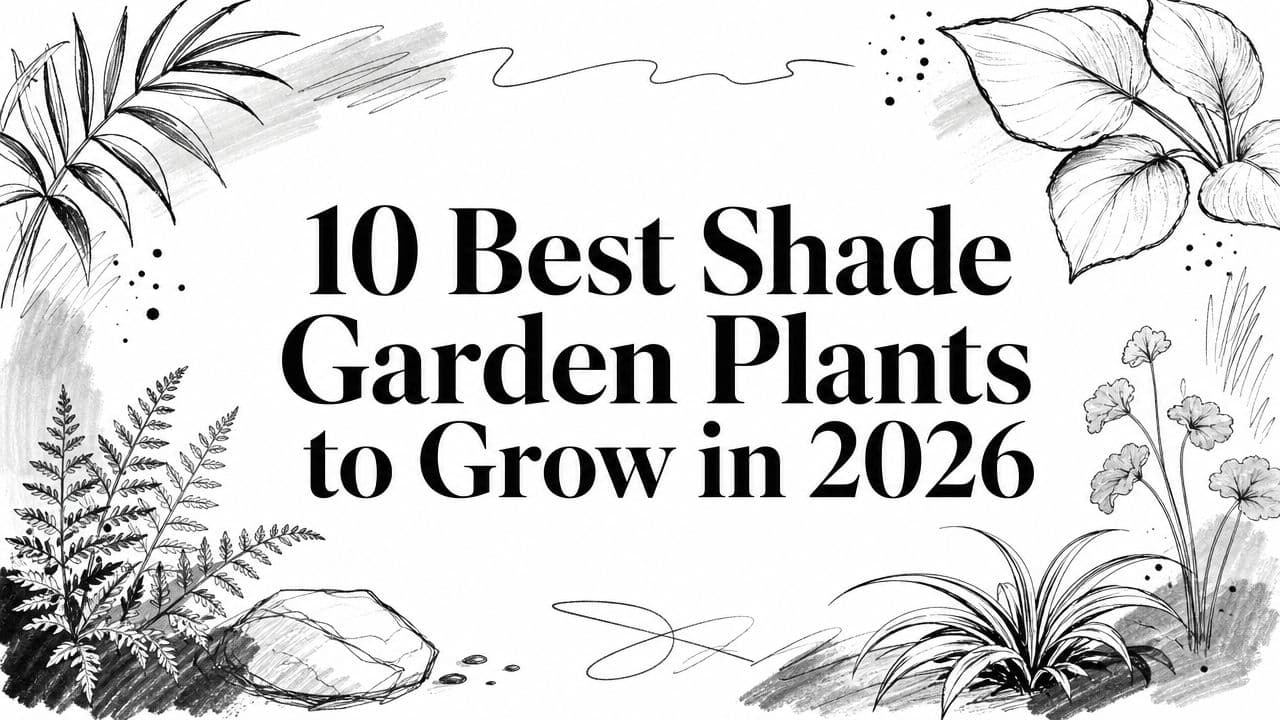
10 Best Shade Garden Plants to Grow in 2026
Discover the 10 best shade garden plants for any low-light yard. Our guide covers perennials, ferns, and shrubs with tips for stunning, low-maintenance designs.
A shady corner can feel like a problem until you start planting it. Maybe the lawn thins out under a tree, maybe one side of the house never gets enough direct sun, or maybe that damp, dim bed by the fence has stayed empty for years because nothing seems to love it. The good news is that shade isn't a dead zone, it's a different growing system, and the best shade garden plants are the ones that match that system instead of fighting it.
The most successful shade gardens don't rely on one “magic” plant. They combine foliage, texture, seasonal bloom, and structure, so the bed still looks intentional when flowers fade. The Royal Horticultural Society notes that in moderate shade many plants are grown primarily for foliage, while reliable choices include Impatiens, Begonia, winter-flowering pansy, and polyanthus, and that several vegetables, including beetroot, baby carrots, chard, kale, lettuce, peas, runner beans, and spinach, tolerate light shade well (RHS shade gardening guidance). That's the mindset shift that changes everything, from a tired border to a layered, livable garden.
Practical rule: Start by reading the shade you actually have. Light shade, partial shade, and deep shade are not the same thing, and the plant palette changes fast once trees leaf out.
Table of Contents
- 1. Hosta (Hosta genus)
- 1. Hosta (Hosta genus)
- 2. Heuchera (Coral Bells)
- 4. Japanese Forest Grass (Hakonechloa macra)
- 5. Hellebore (Lenten Rose)
- 6. Ferns (Various species)
- 6. Ferns (Various species)
- 7. Bleeding Heart (Dicentra spectabilis)
- 8. Brunnera (Siberian Bugloss)
- 10. Lungwort (Pulmonaria)
- 10. Lungwort (Pulmonaria)
- Top 10 Shade Garden Plants Comparison
- Your Lush Shade Garden Awaits
1. Hosta (Hosta genus)
A shaded bed with bare soil, a tree root zone, or a narrow strip beside a walkway can look unfinished for years. Hosta changes that quickly. It gives homeowners broad leaves, clear mounding form, and a dependable base layer that makes the rest of the planting read as intentional.
Hosta is one of the most useful shade perennials because it offers real range in size and habit, not just one look repeated in every yard. Many cultivars form rounded to spreading mounds, and mature plants can vary from six inches to four feet tall with a spread of one to three feet, depending on the cultivar (Clemson Extension, Martha Stewart's hosta garden notes). That flexibility lets you use hostas as edging, mid-border structure, or broad filler where the soil stays evenly moist and the light is filtered rather than harsh.
The biggest design advantage is foliage. Hostas are grown for leaf color, leaf size, and leaf texture, which means they hold a shade bed together even when flowers are short-lived. In practical terms, that matters in a front yard, side yard, or under established trees, where you need plants that keep their shape and do not ask for constant attention. For homeowners comparing options, the best free garden design software can help you test how a clump of blue, gold, or variegated hostas will read against paths, stone, or darker evergreens before you dig.
Where hosta works best
Hosta performs best in partial shade, especially where it gets morning light and afternoon protection. It can handle brighter conditions if the soil stays moist, but exposed spots often scorch the leaves, and deep dry shade usually slows growth. A site with rich soil and consistent moisture gives the plant the cleanest foliage and the fullest mound.
Use hosta where its broad leaves can balance finer textures. A row along a path, a drift around a bench, or a mass at the base of a tree all work well, provided the roots are not fighting severe drought. Large-leaved varieties make the strongest statement near hard edges and paving, while smaller cultivars are easier to tuck into tighter beds or mixed borders.
Soil choice matters more than many homeowners expect. Hosta grows best in organically enriched, well-drained soil that holds moisture without staying soggy. Heavy clay can work if it is improved, but waterlogged ground invites rot, and very sandy soil dries too quickly unless it is amended and mulched. That trade-off is why hosta often performs best in gardens where irrigation, mulch, or natural shade keeps the root zone more stable.
How to use hosta in a shade design
A good hosta planting starts with repetition, not scattering. Repeating the same cultivar, or a small group of related forms, gives a border a stronger visual rhythm than mixing too many leaf shapes at once. Bold blue hostas calm a busy planting, chartreuse types brighten a darker corner, and variegated varieties can guide the eye toward a path, entry, or focal point.
Hosta also pairs well with plants that bring a different leaf shape. Ferns soften the edges, Heuchera adds color contrast, and spring bulbs can slip in before the hostas fully expand. In mixed shade beds, that layered approach is more reliable than counting on flowers alone. It keeps the bed attractive after bloom and reduces the flat look that often shows up when only one texture is used.
There is one trade-off every gardener should plan for. Hostas are vulnerable to deer and slugs in many areas, so placement and maintenance matter. Near a porch, fence, or high-traffic entry, they are easier to monitor and protect. In open woodland areas, choose cultivars with thicker leaves if browsing pressure is common, and use mulch and watering practices that do not leave the crown constantly wet.
A practical way to decide on scale is to match hosta size to the job it has to do. Small hostas suit the front edge of a bed, medium types fill the middle layer, and the largest cultivars create the kind of anchor point that can carry an entire shade composition. If you are planning combinations for a difficult spot, compare leaf size, mature spread, and neighboring textures before planting so the bed does not feel crowded after the second growing season.
1. Hosta (Hosta genus)
A shady entry that looks bare in spring can turn into one of the strongest parts of the yard once hosta settles in. The plant gives homeowners the kind of broad, reliable foliage that makes a shade bed read as intentional instead of unfinished, and that visual weight matters more than bloom count in low light. Hosta is also forgiving in a way many ornamentals are not, which is why it shows up so often in practical shade plantings.
Clemson Extension lists hosta among dependable shade perennials, and Martha Stewart's hosta garden notes show the payoff in real gardens, where hostas form rounded to spreading mounds and can range from six inches to four feet tall, with a spread of one to three feet depending on the cultivar (Clemson Extension, Martha Stewart's hosta garden notes). That spread of sizes makes hosta useful in a narrow foundation bed, a woodland edge, or a larger mass planting where you need one plant to do the job of filling space without looking stiff.
Where hosta works best
Hosta performs best in partial shade with room to mature. Give it soil that holds moisture without staying soggy, and avoid tucking it where tree roots will steal every drop of water. In deeper shade, the leaves may stay large and attractive, but the plant will usually flower less, so the trade-off is clear. You get better foliage, less bloom.
The best design use is structural. Place larger hostas near a path, a bench, or an entry where their broad leaves can read as a visual anchor, then use smaller cultivars farther out to soften the edge of the bed. Fine-textured neighbors such as ferns or heuchera keep the planting from feeling heavy, while lighter hosta varieties can brighten a darker corner without relying on flowers.
If you are deciding between several cultivars, sketch the bed before you buy. A tool like the best free garden design software can help you test spacing, leaf size, and color contrast before planting, which is useful when you are trying to avoid crowding by the second season.
Hosta is strongest where foliage has to carry the composition. In dry, root-competitive shade, place it where the soil stays more even in moisture, or the leaves will tell you something is off even if the light level looks right.
2. Heuchera (Coral Bells)
Heuchera earns its place because it behaves like a color cabinet for shade. Some cultivars lean toward deep burgundy, others toward lime, amber, or silvered variegation, and that makes them unusually useful in beds where flowers are brief but foliage has to carry the design. If hosta is the big anchor, heuchera is the detail work that sharpens the whole composition.
Shade-garden design guidance regularly lists heuchera among dependable workhorse perennials, along with hosta, brunnera, epimedium, hellebore, pulmonaria, astrantia, and tiarella (Gardenia shade garden design guide). That repeated appearance across expert guides is useful because it matches what experienced gardeners see on the ground. Heuchera is steady when the soil suits it and the light stays soft rather than harsh.
Color that lasts beyond bloom time
Heuchera gives you more than flower spikes. Its leaves are the main event, which is exactly what many shady beds need because flowers can be inconsistent under a canopy. The delicate spikes still add vertical movement, but the value is the long season of foliage color that does not depend on a long run of direct sun.
That makes heuchera a strong companion for hosta, Japanese forest grass, and ferns. Use darker cultivars to deepen a border, then break up large green masses with a few bright or metallic leaves so the planting does not go flat. In a small yard, this kind of leaf contrast often does more visual work than another flowering shrub ever could.
The trade-offs to respect
Heuchera is not the answer for every shady spot. It wants the right balance of light and moisture, because a plant that tolerates shade still needs usable growing conditions. In many gardens, the mistake is placing it in dry root competition and expecting the leaf color to do all the work.
Use it where the soil holds moisture and where you can see the foliage up close. That is along a shaded walkway, at the edge of a patio, or near a front entry where close-range detail matters. The plant is at its best when people can notice the leaves, not when it is hidden at the back of a deep border.
For planning combinations, it helps to compare texture and scale before you buy. A quick layout test with the best landscaping grasses can show you whether heuchera has enough room to read clearly beside finer foliage or broader leaves. When you are shaping a shade bed, a visual mockup is often the fastest way to avoid crowding and mismatched color.
If you want to see how heuchera, hosta, and other shade plants will sit together before you dig, use the OutdoorBrite AI design tool to sketch the bed and judge the spacing from the path, not just from the nursery pot.
4. Japanese Forest Grass (Hakonechloa macra)
Japanese forest grass brings movement to a shaded bed in a way few plants can. Its arching mounds drift over stones, spill along a path edge, and keep a low-light garden from feeling stiff. In a planting dominated by broad leaves, this grass adds flow, which is why it works so well in both contemporary and woodland-style designs.
It also fits the broader idea behind the best landscaping grasses, where texture and form matter as much as color. The right grass can soften hard edges, tie plant groups together, and give shade beds a cleaner rhythm without relying on flowers.
Why it changes the mood of a bed
Japanese forest grass is slower and more refined than many ornamental grasses, and that makes it useful where detail matters. It reads best from the side, where the cascading habit shows clearly, and it is strongest when the eye can catch the arc of each clump rather than just the top of the foliage.
Green forms bring calm to a dark area. Gold forms brighten shadowed corners. Variegated forms pick up light in a restrained way that works especially well against stone, bark, or dark mulch. Those differences matter, because the same plant can either disappear into a bed or become the thread that holds the composition together.
It also pairs well with hosta and heuchera. Hosta gives broad surfaces, heuchera adds sharper color notes, and Japanese forest grass fills the space between them with movement. In a small bed, one clump can create enough rhythm to keep the planting from feeling static.
Soil, moisture, and placement
This grass performs best where the soil stays steady, not where it swings hard between wet and dry. It can look refined in a moist, sheltered site, but it struggles when roots compete too aggressively or when the root zone dries out quickly after rain.
That makes placement matter. Give it a spot with filtered light, decent moisture, and room for the mound to arch without being crowded. Along a shaded border, near a woodland path, or at the front of a planting where the foliage can spill forward, it has far more presence than it does when pushed deep into a bed.
Soil texture matters as much as light. A richer, moisture-retentive soil gives it a better chance to hold color and form through the season. If the bed is under established trees, test the site before you buy, because shade plus dry root competition is a poor match for this plant.
How to use it in design
Use Japanese forest grass where you need a soft transition between heavier shade plants and harder garden features. It bridges broad leaves and fine textures well, and it can take the edge off stone, steps, or a narrow path border without looking bulky.
It also helps to think in layers. Put it where the arching foliage can overlap the base of other plants, then repeat it in small drifts if you want the bed to feel intentional rather than scattered. One clump can work in a tight space, but several spaced with restraint give you a stronger line through the planting.
A good rule is to place it where the foliage can be seen at eye level or just below. That is when the movement reads clearly and the plant earns its place. In shade gardening, the best plants are the ones that do more than survive the light. They shape the whole bed.
5. Hellebore (Lenten Rose)
A hellebore earns its place the first time a shaded border wakes up while the rest of the garden is still bare. Its flowers open in late winter and early spring, which gives a dull corner real presence at the moment homeowners are most eager for color. In that early window, it does more than bloom. It signals that the bed has structure even before spring foliage fills in.
Hellebores also show up often in shade plant recommendations because they keep performing after the first flush of flowers. They are one of the dependable choices for gardeners who want a bed that looks composed for a long stretch, not just during peak bloom. That repeated use in expert plant lists points to a simple fact, they are reliable in the places where other perennials can feel temporary.
Why gardeners rely on it
Many hellebores stay evergreen or semi-evergreen, so they carry the bed through winter with usable foliage instead of disappearing completely. Their nodding, cup-shaped flowers are easy to miss if they are tucked too far back. Place them near a path, an entry, or a spot you pass in late winter, and you get the benefit every day instead of only when you go looking for it.
Flower color gives you design control. White and green forms brighten a quiet shade bed, while deeper purples and near-black blooms give the planting a more restrained, moody feel. In a low-light border, a single hellebore can serve as a focal point if the placement is honest and the surrounding plants do not crowd it.
If you are still deciding how to shape the full bed, the Best landscape design apps can help you preview where hellebores will sit beside taller shade plants, groundcovers, and paths before you buy.
What to pair it with
Hellebores pair well with ferns, lungwort, and low evergreen structure because their flower form is compact and their foliage reads cleanly against finer textures. They also sit comfortably beside hosta, heuchera, and other shade staples when you want the planting to feel layered instead of crowded. Keep enough space around the crown for air movement, since tight conditions make the plant look cramped and harder to maintain.
Use hellebores where winter and early spring visibility matter most. A sheltered front border, a woodland edge, or the near side of a path lets the flowers do their best work. In deeper shade, they still hold the planting together, but the flowers need closer placement to be appreciated. That trade-off is worth planning for, because hellebores reward close viewing far more than distant display.
If you are mixing multiple shade plants, it helps to visualize the combinations before planting. A quick layout test prevents overpacking and shows whether the hellebore will read as a highlight or disappear into the background.
6. Ferns (Various species)
A shaded corner can feel empty fast when the planting leans too hard on flowers. Ferns solve that problem with texture, movement, and a woodland look that holds the bed together long after the bloom cycle fades. If you want a shade garden that feels settled rather than assembled, ferns do steady work.
They also fit the practical side of shade planting. The Gardenia shade garden design guide emphasizes layered shade planting, and ferns are one of the easiest ways to build that layered effect without forcing bright flowers into a dim site. Their value comes from the fronds themselves, not from a short display window.
Different ferns do different jobs
Japanese painted fern brings a finer, more decorative look, while Christmas fern has a tougher, more persistent presence. That difference matters in real gardens. A delicate fern can lighten the front edge of a border, but a sturdier evergreen fern is better when you need year-round structure in a deeper woodland bed. Match the plant to the job, or the planting will feel mismatched from the start.
Ferns usually perform best in humus-rich, evenly moist soil with shelter from hot afternoon sun and drying wind. Some handle drier shade better than others, but none like being baked at the edge of a bright wall or left in compacted soil. Give them room to spread, because a fern crowded against stone, roots, or dense perennials loses the soft outline that makes it useful.
Where ferns earn their keep
Use ferns to soften the line between hardscape and planting, especially along a shaded path, beside steps, or at the base of a shrub. They can hide bare stems, knit together larger perennials, and keep the bed from looking broken into separate pieces. In that role, they work like a visual binder, which is often more valuable than a single flashy flower.
They also help in places where you want the garden to look finished even in the off-season. Evergreen types keep a degree of presence through winter, while deciduous types bring fresh growth that reads clean and cool in spring. If you are still shaping the bed, the Best landscape design apps can help you test fern placement beside hosta, heuchera, and woodland edging before you plant. That kind of preview is useful, because ferns look best when their texture supports the whole composition instead of competing with it.
6. Ferns (Various species)
Ferns are the backbone of a shade garden because they carry texture even when nothing is flowering. Their fronds bring an immediate woodland feel, and in low-light spaces that leaf form does most of the design work. If you want a bed that feels settled rather than pieced together, ferns do that job well.
They also suit the practical side of shade planting. In darker areas, groundcovers and evergreen structure matter because they keep the bed from looking empty once spring flowers fade, and ferns fit that role naturally. Their value is less about a single season and more about the steady presence they give a planting over time.
Different ferns do different jobs
Japanese painted fern is valued for its finer, more decorative look, while Christmas fern gives a sturdier, more persistent presence. That difference matters because people often buy “a fern” without first deciding what the bed needs. A delicate frond can brighten a front border, while a tougher evergreen fern can anchor a deeper woodland area.
That choice affects the whole composition. Ferns are especially useful when you need to soften the transition between hardscape and plants. They can edge a shaded path, hide the base of a shrub, or knit together larger perennials that would otherwise seem isolated. In a mixed planting, they make the rest of the border read as one design instead of separate pieces.
Use them where the soil helps them
Ferns do best in humus-rich, evenly moist soil with shelter from hot afternoon sun and drying wind. Dry shade can work for some types, but the foliage usually loses some of the fullness that makes ferns so attractive. The better move is to place them where moisture lingers and where their fronds can be seen close up.
Spacing matters too. Give them room to spread, because a fern crowded against stone, roots, or dense perennials loses the soft outline that gives it value. In a tight spot, even a good fern can look awkward if it has to fight for light and moisture.
Ferns are also a reminder that shade gardening is not only about flowers. If the garden stays handsome because the leaves are doing the heavy lifting, the whole space feels more mature and deliberate. That is the visual payoff many homeowners want, even if they would describe it in simpler terms.
Some of the darkest beds look best with fewer flowers and more layered foliage. That is where ferns earn their keep.
If you are still shaping the bed, the Best landscape design apps resource can help you place ferns where their texture supports the whole layout instead of disappearing into it.
7. Bleeding Heart (Dicentra spectabilis)
Bleeding heart changes a spring shade bed fast. The arching stems and heart-shaped blooms bring a soft, old-fashioned look, and the fernlike foliage gives the plant substance before the flowers open. It is a classic because it still solves a real design problem, it fills a dim corner with color and graceful form.
Martha Stewart's hosta garden notes also describe Dicentra as an elegant companion for shady beds, and that is how many gardeners use it, tucked among larger foliage plants where the delicate shape can read clearly (Martha Stewart's hosta garden notes). That role suits the plant well. It adds refinement without crowding the rest of the border.
A spring plant with a seasonal rhythm
Bleeding heart makes its strongest showing in spring, then goes dormant when heat arrives. That pattern is useful if you plan for it. The early bloom is generous, but the plant should not be expected to carry the bed through summer, so place it where other perennials can take over once the foliage fades.
Hosta, fern, and astilbe work well beside it because they expand as bleeding heart recedes. The planting stays full without forcing you to replant the gap. Good shade design often depends on that handoff, one plant gives way while another steps forward.
Best placement and trade-offs
Bleeding heart prefers a cool, sheltered site where spring light reaches it before the canopy closes overhead. It does poorly in the hottest part of a dry shade bed if you want the foliage to stay fresh and the bloom period to feel clean. The trade-off is straightforward. You get a strong seasonal display in return for a plant that asks for the right microclimate.
Place it near a path, an entry garden, or the edge of a woodland planting where the arching stems can be seen at close range. The flowers are too fine to bury deep in the back of the border. In the right spot, it becomes one of the most memorable plants in the shade mix.
8. Brunnera (Siberian Bugloss)
Brunnera answers a common shade-garden problem: how to keep a bed looking bright after spring flowers fade. Its heart-shaped leaves, often silver-variegated, stay attractive long after the tiny blue blooms are finished. In a garden that relies on foliage, that kind of staying power matters.
Shade-plant guidance often includes brunnera among the dependable perennial choices for low-light beds. That fits its habit well, because it gives you both early-season flower color and a leaf display that carries the planting through the rest of the season.
Foliage first, flowers second
The blue flowers are charming and useful, especially under trees where they read as a soft spring signal. The value is the foliage. Silver leaves brighten darker shade in a cleaner, cooler way than solid green alone, and they help a bed feel lighter without adding more flowers.
Cultivars like ‘Jack Frost' are especially admired for leaf pattern, and that kind of selection suits homeowners who want the planting to look composed for most of the season. Brunnera works well where you need contrast without loud color, and where a steady foliage effect matters more than a brief bloom show.
Where it earns its place
Brunnera belongs near the front or middle of a border, where the leaf pattern can be seen clearly. It is especially effective beside dark hostas, because the silver pattern cuts through the mass and keeps the planting from feeling too heavy. In mixed shade beds, that contrast often makes the design feel crisp.
It also fits cottage-style and woodland-style gardens because it does not need a formal backdrop. A few plants grouped together can create a soft, luminous patch that reads well from a distance and even better up close. If your shade bed feels dull, brunnera is one of the quickest ways to lift it.
A good shade combination also benefits from plants that pull double duty, and brunnera does that without asking for much space. For homeowners comparing plant layers and seasonal color, mosquito control plants for Indiana yards can be a useful planning reference alongside brunnera's foliage value.
10. Lungwort (Pulmonaria)
Lungwort is one of the most practical plants for a shaded ground layer because it handles two jobs at once, early bloom and reliable foliage. The flowers often open pink and blue on the same plant, and the silver-spotted leaves keep their value long after the bloom period ends. That combination makes it a steady performer where shade beds need a little color without depending on a long flower show.
It also fits the kind of shade planting advice that favors dependable workhorse perennials and pays attention to moisture, because dry shade is where many plantings struggle. Lungwort does best when shade and moisture are both present in workable amounts, so it is a smart pick for gardeners who can give it a cooler, evenly moist spot rather than a hot, parched corner. For broader planning, mosquito control plants for Indiana yards can sit alongside pulmonaria in a garden that needs practical, layered planting choices.
A groundcover that earns attention
Lungwort is a useful plant, not just a filler. The spotted leaves brighten dim ground, and the early flowers are welcome when much of the bed is still in transition. Along a path or at the front of a border, it reads as neat without feeling stiff.
It also bridges gaps under shrubs and larger perennials. If your shade bed looks thin in spring, pulmonaria can tie the planting together before the taller plants fill in. That gives the bed a more finished look at the point in the season when many shade gardens feel bare.
Where it succeeds, and where it doesn't
Lungwort performs best in light to medium shade with soil that holds moisture but still drains well. It is a poor match for dry root zones, baking afternoon exposure, or places where water runs off quickly after rain. Give it a little shelter and consistent moisture, and it usually settles in with far less fuss.
It works well in woodland-style beds, under open-canopy trees, and in mixed borders where low plants need to do visual work early in the season. It can also soften the base of taller shrubs without stealing attention from them. If the goal is a shaded area that feels planted from the ground up, pulmonaria belongs on the shortlist.
10. Lungwort (Pulmonaria)
Lungwort is one of the smartest plants for a shaded ground layer because it solves two problems at once, early color and attractive foliage. The flowers often open pink and blue on the same plant, and the silver-spotted leaves stay useful through the season. That combination makes it one of the most dependable small-scale performers for shade.
The brief specifically identifies pulmonaria as one of the repeated workhorse perennials in shade design guidance, and it also notes a real content gap, many shade lists skip moisture grouping even though dry shade is a common failure point (Gardenia shade garden design guide, Gardenia full-shade tolerance guidance). Lungwort fits that smarter approach because it performs best when moisture and shade are balanced.
A groundcover that earns attention
This is not just a filler plant. Lungwort's spotted leaves can brighten a dim area, and the early flowers are especially welcome when the rest of the bed is still waking up. In a front border or along a path, the plant reads as both tidy and lively.
It also works well under shrubs or at the feet of larger perennials, where the foliage can knit gaps together. If you have a bed that feels patchy in spring, pulmonaria can help tie the whole thing together before summer growth takes over.
Where it succeeds, and where it doesn't
Lungwort wants the same thing many shade stars want, moisture that doesn't disappear too fast. It's a reliable choice for layered shade beds, but not the best pick for the driest roots under mature trees unless the soil has been improved. That's why it's so useful to group plants by moisture needs, not just by how much light they can tolerate.
Practical rule: In shade, a plant that likes moisture and a plant that tolerates shade are not automatically the same thing. Lungwort works because it handles both well enough for real gardens.
For readers in the Midwest planning a more humane garden, the same shade-first logic also supports broader planting decisions beyond flowers, including mosquito control plants for Indiana yards, especially when you want beds that feel useful as well as beautiful.
Top 10 Shade Garden Plants Comparison
| Plant | Maintenance 🔄 | Resources & Efficiency ⚡ | Outcomes ⭐📊 | Ideal Use Cases | Key Advantages 💡 |
|---|---|---|---|---|---|
| Hosta (Hosta genus) | Moderate, slug control, divide every 3–5 yrs | Prefers consistently moist, rich soil; full→partial shade; moderate spread | ⭐⭐⭐⭐⭐ Dense shade coverage; bold, varied foliage impact | Foundation planting, massed beds, containers under trees | Vast cultivar variety; reliable low‑maintenance foliage |
| Heuchera (Coral Bells) | Low–Moderate, trim winter foliage, divide 3–4 yrs | Well‑drained fertile soil; partial shade best; moderate establishment | ⭐⭐⭐⭐ Long‑season foliage color; delicate flower spikes attract hummingbirds | Edging, containers, brighten shady corners | Year‑round color palette; compact habit |
| Astilbe | Moderate–High, frequent watering; divide every 4–5 yrs | Needs consistently moist, humus‑rich soil; partial shade; drought‑sensitive | ⭐⭐⭐⭐ Feathery plumes in early–mid summer; strong texture contrast | Waterside plantings, rain gardens, massed woodland drifts | Striking plume flowers; pairs well with bold foliage plants |
| Japanese Forest Grass (Hakonechloa) | Low, cut back annually; few pest issues | Moist humus soil; partial shade; slow‑spreading groundcover | ⭐⭐⭐⭐ Graceful mounding movement; softens hard edges | Path edges, cascading over walls, Japanese/modern gardens | Elegant flowing texture; low maintenance |
| Hellebore (Lenten Rose) | Low, remove old leaves; deadhead as desired | Well‑drained, neutral→alkaline rich soil; partial→full shade; slow establish | ⭐⭐⭐⭐⭐ Winter→early spring blooms; evergreen foliage for winter interest | Near entrances, shade borders, with spring bulbs | Early bloom season; deer/rabbit resistant; very low maintenance |
| Ferns (various species) | Low–Moderate, keep soil moist; late‑season cleanup for some | Consistently moist, acidic humus soil; partial→full shade; size varies | ⭐⭐⭐⭐⭐ Textural backbone; year‑round structure (species dependent) | Mass planting, backdrop for perennials, woodland gardens | Wide range of textures/sizes; reliable shade performers |
| Bleeding Heart (Dicentra) | Low, mark location before summer dormancy | Moist, well‑drained slightly acidic soil; partial shade | ⭐⭐⭐ Spring arching flowers; foliage often dies back in summer | Cottage and woodland gardens; spring specimen plantings | Iconic spring form and delicate blooms; pairs with summer fillers |
| Brunnera (Siberian Bugloss) | Low, keep moist; trim tattered leaves | Moist, rich soil; partial→full shade; forms clumps | ⭐⭐⭐⭐ Spring sprays of blue flowers; lasting variegated foliage | Front of shady borders; brighten dark corners | Silver‑leaf cultivars provide long season contrast |
| Oakleaf Hydrangea | Low, prune after flowering if needed; water to establish | Moist, well‑drained soil; full sun→partial shade; shrub scale | ⭐⭐⭐⭐ Multi‑season interest: summer cones, fall color, winter bark | Specimen shrub, mixed borders, informal hedging in woodlands | Four‑season ornamental interest; low pest issues |
| Lungwort (Pulmonaria) | Low, water in dry spells; cut back after bloom | Moist, humus‑rich well‑drained soil; partial→full shade | ⭐⭐⭐ Early spring flowers (often pink→blue) and attractive spotted foliage | Front of shady borders, groundcover under trees | Early spring color and durable groundcover; good companion for bulbs |
Your Lush Shade Garden Awaits
Creating a beautiful shade garden is less about apologizing for low light and more about choosing plants that know what to do with it. The strongest shade beds don't chase a single flower season, they layer foliage, texture, structure, and a few well-placed bloom moments so the garden keeps working even when the canopy closes in. That's why the best shade garden plants are rarely the flashiest plants in the nursery. They're the ones that stay attractive, stay balanced, and stay alive in the conditions you have.
If you're designing for a light shade bed, you can use a broader mix of flowers and vegetables, because the RHS notes that crops like lettuce, spinach, peas, kale, and chard can tolerate that environment, and that autumn planting in light shade can improve establishment over winter (RHS shade gardening guidance). If you're working under trees, the strategy changes. Clemson Extension's guidance on deciduous shade, including early bulbs like crocus, scillas, snowdrops, and species tulips, shows how useful the short spring light window can be (Clemson Extension). Once you see those differences clearly, the whole design becomes easier to plan.
The breakthrough comes when you stop asking for one perfect plant and start combining plant types on purpose. Use hosta for mass, heuchera for color, astilbe for plume texture, Japanese forest grass for movement, hellebore for winter and early spring interest, ferns for backbone, bleeding heart for spring drama, brunnera for bright foliage, oakleaf hydrangea for shrub structure, and lungwort for a dependable ground layer. That mix gives you a garden that looks finished from spring through winter, not just during peak bloom.
Shade gardens also reward observation. Walk the space after rain, at noon, and again in late afternoon. Notice where the soil stays moist, where tree roots compete, and where light shifts as leaves fill in. Those small observations lead to better plant placement than any shopping list ever will.
If you want to visualize combinations before you buy, OutdoorBrite makes that step much easier. Upload a photo of your yard, test shade garden layouts, and compare plant groupings before you commit to digging. It's a fast way to turn a rough corner into a thoughtful, layered design, and it can save you from choosing plants that look good in theory but fail in your exact conditions.
OutdoorBrite Money helps you design shade beds with confidence by turning a simple yard photo into a photorealistic concept in seconds. Use OutdoorBrite Money to test plant combinations, compare layouts, and see how hostas, ferns, hydrangeas, and other shade favorites will look before you plant a single hole.
See your yard reimagined
Start creating