7 Best Ornamental Grasses for Your Garden in 2026
Transform your landscape with the 7 best ornamental grasses. Discover top picks for sun and shade, from tall screens to low borders, for year-round beauty.
You're probably looking at a bed that feels flat. The shrubs are static, the flowers are brief, and the lawn does nothing except ask for water and mowing. In such a scenario, ornamental grasses earn their keep. They add movement, texture, winter structure, and that soft rustling sound that makes a garden feel alive instead of arranged.
The best ornamental grasses also solve specific design problems. Some create privacy without a heavy hedge. Some brighten dry borders. Some bring order to a loose perennial planting. Some handle shade, which is where many grass lists become useless. This guide stays practical and focuses on how to place each one, what to pair it with, and where beginners usually get it wrong.
If you want to test spacing and scale before planting, an AI design tool like OutdoorBrite helps. It's especially useful with grasses because their impact depends on repetition, massing, and how they sit next to hardscape, shrubs, and flowering plants.
1. Calamagrostis × acutiflora ‘Karl Foerster' (Feather Reed Grass)
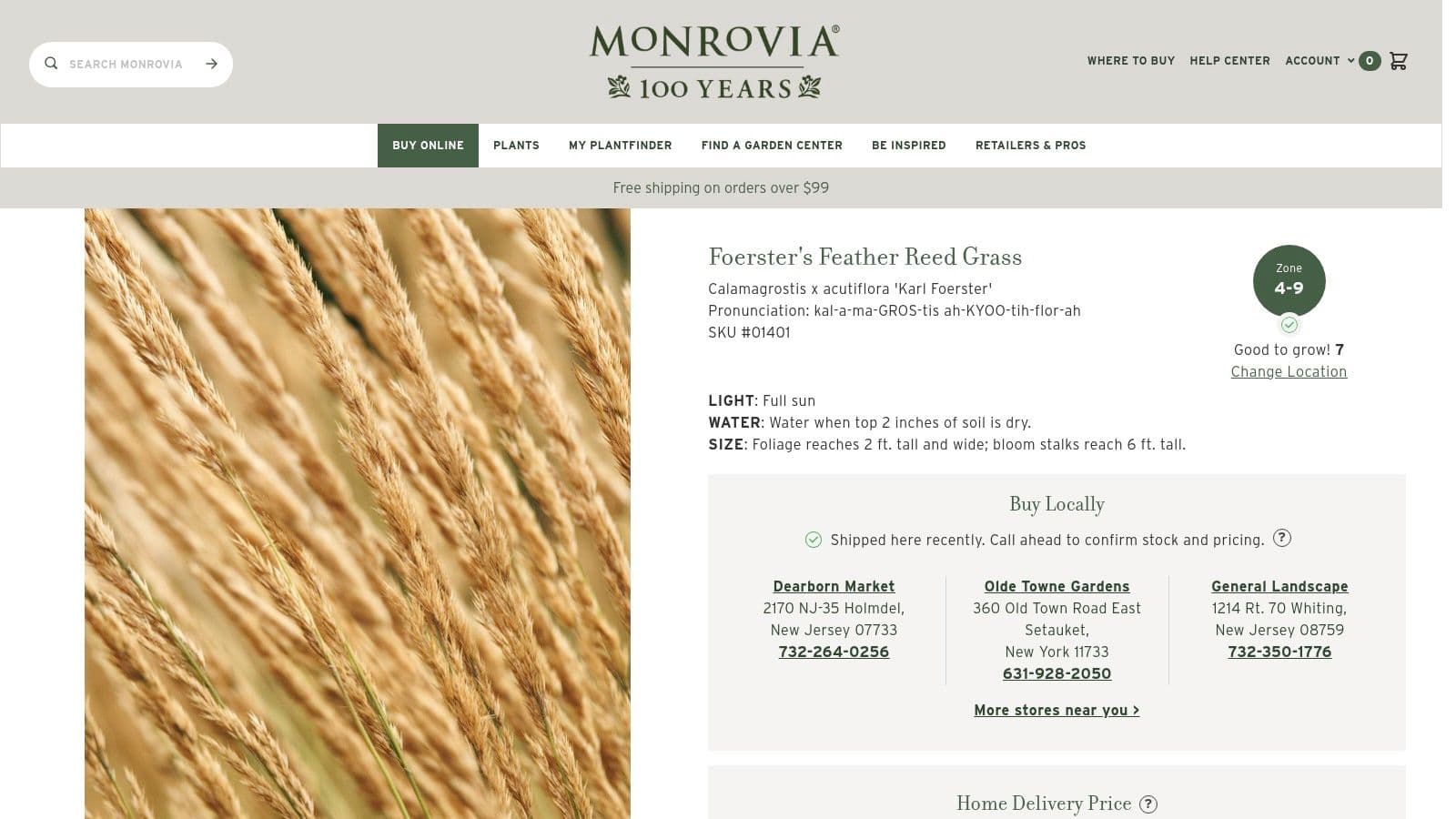
Karl Foerster Feather Reed Grass product details
A narrow bed beside a front walk often needs height, but not bulk. Karl Foerster solves that problem better than many shrubs because it rises straight up, stays relatively tight, and gives the planting area a clear vertical rhythm without making the space feel crowded.
I use it to bring order to spots that can turn messy fast. Entry paths, fence runs, mailbox beds, and foundation plantings all benefit from its upright shape. The key is repetition. Plant it in groups or in a measured row, because one isolated clump rarely has the same impact as three or five placed with intent.
Best use for narrow structure
Karl Foerster performs best with good sun. It will tolerate part sun, but lower light usually means fewer plumes and a looser habit. If the goal is that crisp, architectural look, give it enough light and avoid tucking it behind overgrown shrubs or under tree canopies.
Pair it with plants that make its form look even sharper. In brighter exposures, echinacea, salvia, nepeta, and allium give you a useful contrast between vertical blades and broader flower shapes. In lighter shade, hosta, heuchera, and hardy geranium soften the base and keep the composition from looking too stiff.
Practical rule: Use Karl Foerster where a row of compact shrubs would feel heavy, but the space still needs year-round structure.
A few trade-offs are worth knowing before you plant it:
- Best strength: Strong vertical form that reads clearly even in winter.
- Best placement: Repeated clumps along paths, at patio corners, or behind mid-height perennials.
- Watch for: Floppier growth and less presence in too much shade.
- Beginner mistake: Spacing plants too far apart. The effect is stronger when the clumps visually relate to each other.
If you want a dry-friendly planting plan around it, the OutdoorBrite guide to smart plant choices helps narrow down companions that will not fight its clean shape. You can also use OutdoorBrite to test spacing before planting. That matters with Karl Foerster, because a foot or two in either direction changes whether it reads as a crisp accent or just another grass in the bed.
2. Panicum virgatum ‘Northwind' (Switchgrass)
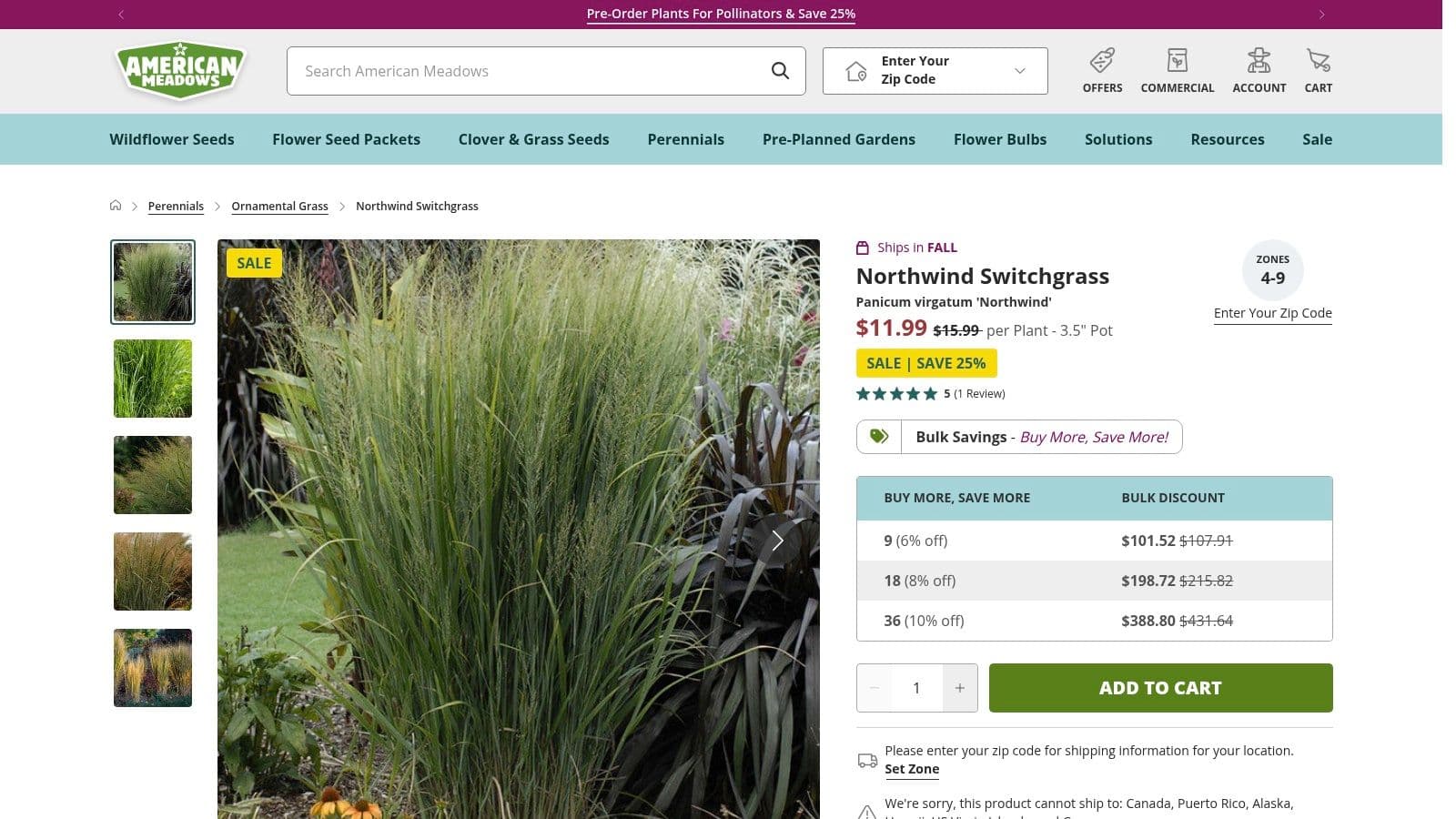
Northwind switchgrass plant page
If you need a privacy screen that doesn't create an ecological headache, Northwind is a strong answer. Switchgrass is one of the best ornamental grasses for tall screening because it gives height, stays fairly narrow, and feels softer than a hedge. It also solves a problem many homeowners don't realize they have until too late. They plant pampas grass for screening and then regret the invasive risk.
A practical guide on tall screening grasses highlights a real gap in ornamental-grass advice. Many gardeners search for privacy grasses without clear warnings about invasive choices, while native options such as big bluestem and switchgrass often get less attention in mainstream lists, as discussed in this non-invasive tall ornamental grass guide.
Best use for privacy without heaviness
Northwind belongs at the back of a border, along a fence, or in staggered drifts where you want screening but still want winter movement and habitat value. Iowa State notes that tall grasses such as switchgrass can exceed 5 feet, which is exactly why this one works behind lower perennials like rudbeckia, asters, or nepeta.
Plant it where you need height, not where you need width. That's the difference between a smart screen and a crowded bed.
- Why it works: Very upright habit and strong presence from summer into winter.
- Good companions: Coneflowers, Joe-Pye weed, black-eyed Susan, and shrubs with open branching.
- What doesn't work: Tight foundation beds where every extra foot of height feels oversized.
For dry-climate planning, the OutdoorBrite guide to smart plant choices is useful when you're combining switchgrass with other low-water plants.
3. Schizachyrium scoparium ‘Standing Ovation' (Little Bluestem)
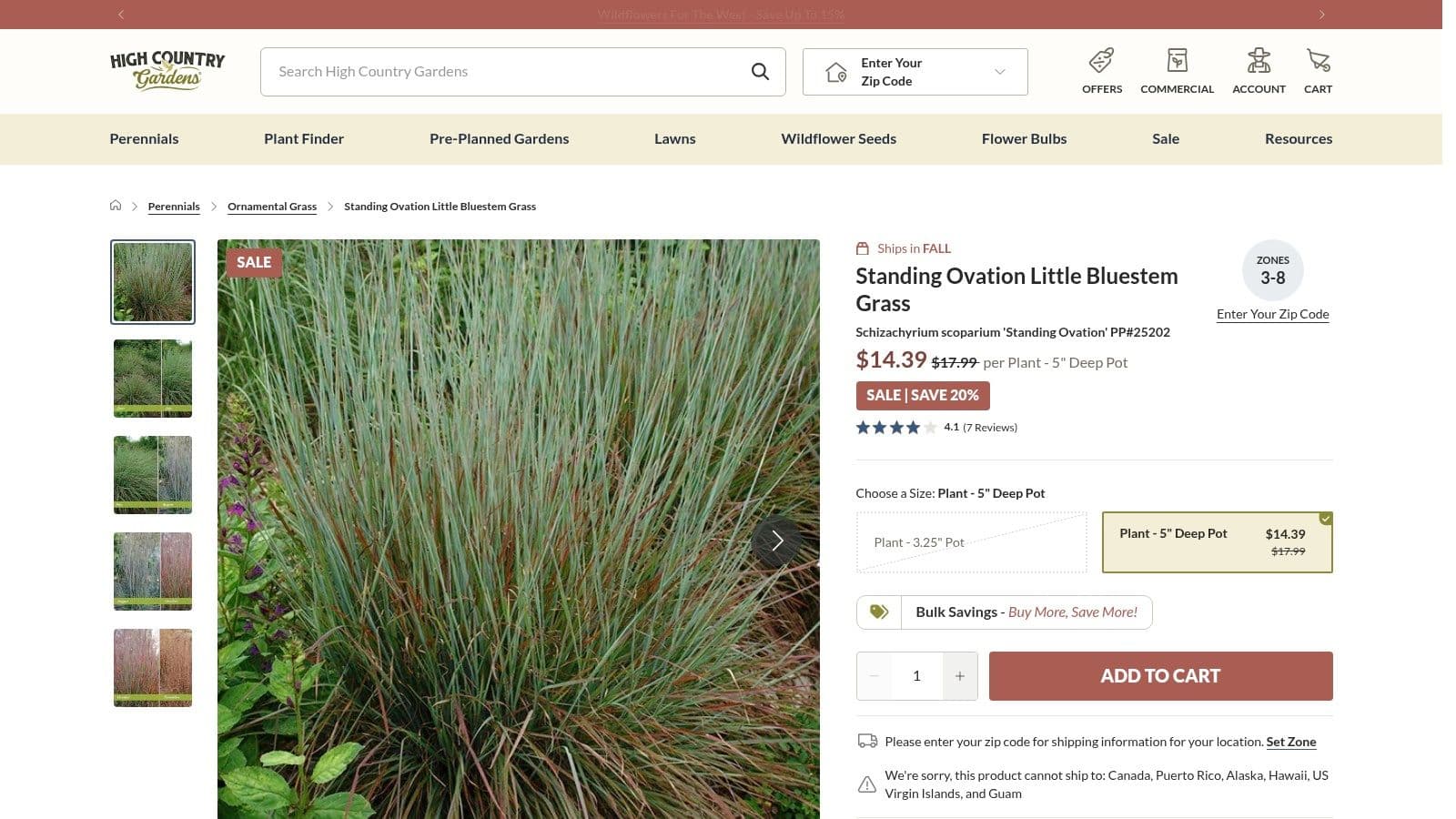
Standing Ovation little bluestem plant page
Little bluestem is the answer when you want a native grass with color, but don't have room for a tall prairie screen. Standing Ovation is especially useful in smaller gardens because it stays more controlled and upright than older forms that can look loose by late season.
This is the grass I'd use in a low-water border where flowers come and go, but the planting still needs a backbone. The blue summer foliage and stronger fall color let it carry visual weight even when neighboring perennials are between bloom cycles.
Best use for a dry sunny border
UNH Extension notes that established ornamental grasses need about one inch of water per week from rainfall or irrigation for optimal growth, while native grasses are also well adapted to low-input soils. That lines up with how little bluestem performs in real gardens. It's happiest in lean, well-drained ground, not pampered soil.
Pair it with yarrow, gaura, blanket flower, or allium. Avoid crowding it with aggressive, floppy perennials that hide the base and steal the sunlight its color depends on.
Field note: Rich soil often gives you more growth and less character. Little bluestem usually looks better when the site is a bit tougher.
For design inspiration built around this plant, see these expert tips for sustainable landscaping.
4. Sporobolus heterolepis (Prairie Dropseed)
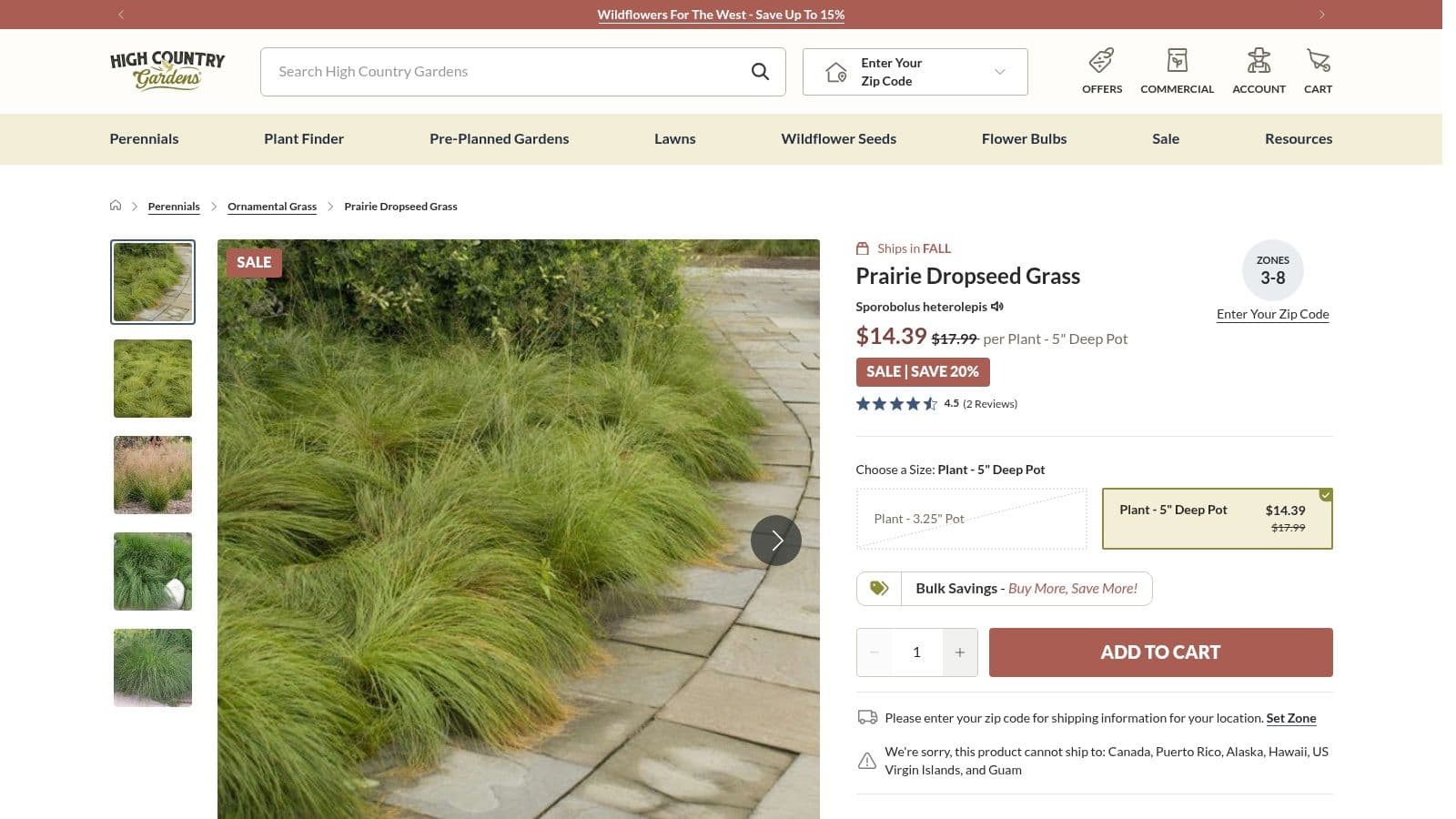
Prairie dropseed is for gardeners who want softness without chaos. It forms neat, fountain-like mounds, so it's one of the best ornamental grasses for edging a path, knitting together a perennial border, or creating a repeated matrix in a naturalistic planting.
It doesn't shout. That's its strength. When louder flowers finish blooming, prairie dropseed still holds the composition together.
Best use for edging and repetition
This grass earns its spot when a border needs a visual thread running through it. Use it at the front or middle of a bed with prairie perennials such as echinacea, liatris, baptisia, or coreopsis. It also works beautifully beside gravel paths and stepping stones where finer texture keeps hardscape from feeling too rigid.
A few honest trade-offs:
- Big advantage: Refined form that makes mixed plantings look intentional.
- Best beginner move: Buy established plants instead of waiting on seed to bulk up.
- Common mistake: Planting too sparsely. This grass looks best when repeated.
Most ornamental grasses resist insect and disease pressure and become very low maintenance after establishment, with North Carolina State Extension noting a late-winter cutback of 6 to 8 inches above ground for healthy spring growth. That simple routine suits prairie dropseed well.
5. Muhlenbergia capillaris (Pink Muhly Grass)
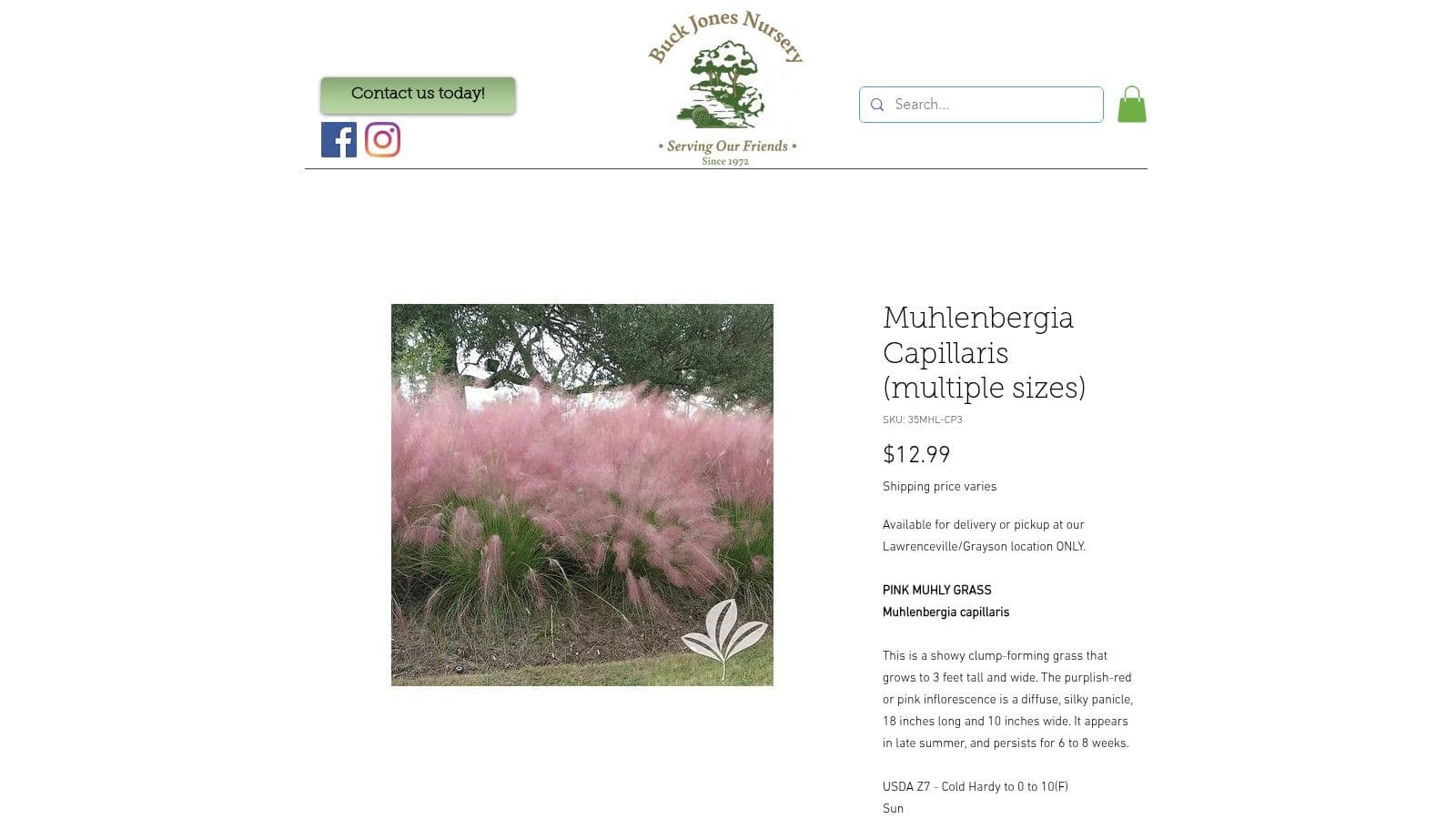
Pink muhly grass plant listing
Pink muhly is the curb-appeal grass. When it flowers, it creates that airy pink haze people stop to ask about. If your front yard needs one dramatic late-season moment without becoming high-maintenance the rest of the year, this is a smart pick.
Use it in masses, not one lonely clump. Three, five, or a long drift will always read better than a single plant dropped into mulch. It's especially effective along driveways, around mailbox plantings, and in sunny beds where the low-angle fall light catches the blooms.
Best use for warm-climate impact
Clemson notes that well-established sun-loving ornamental grasses are drought tolerant and typically require well-drained soil and full sun exposure. Pink muhly proves that point. Give it drainage and sun, and it usually rewards you with strong form and bloom. Put it in heavy, wet soil and it disappoints.
Try pairing it with agastache, autumn sedum, Russian sage, or dark-leaved shrubs for contrast. Don't tuck it into crowded beds where nearby plants block airflow and hide the cloud effect.
The best pink muhly plantings are simple. Fewer companions, more repetition, cleaner lines.
6. Festuca glauca ‘Elijah Blue' (Blue Fescue)
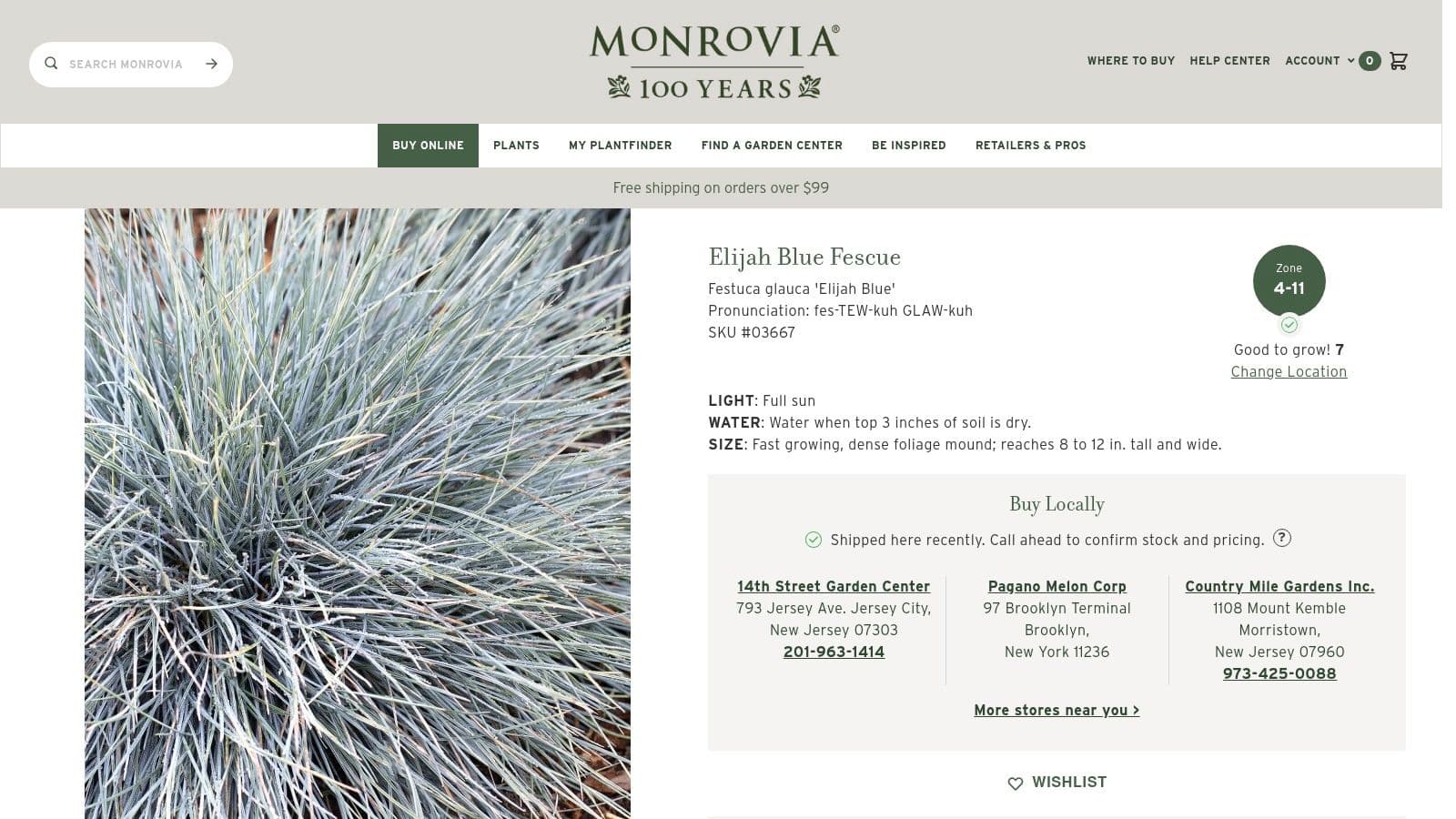
Elijah Blue fescue product details
Blue fescue solves a different problem. Sometimes a planting doesn't need height. It needs contrast at ground level. Elijah Blue gives you that compact, icy-blue mound that breaks up green-heavy borders and adds year-round texture in the right site.
I like it at the front of beds, in rock gardens, and in containers where a small footprint matters. It also works as a repeating edge plant when you want a more modern look than spreading groundcovers provide.
Best use for front-of-bed color contrast
This isn't the longest-lived or toughest grass on the list, so placement matters more. Give it sharp drainage, keep it out of soggy winter soils, and don't expect it to love hot, humid positions with poor air movement.
Use it with:
- Silver and gray foliage: Lamb's ear, artemisia, and lavender create a dry-garden palette.
- Bold leaf contrast: Heuchera, sedum, and dwarf alliums make the blue color read more clearly.
- Containers: It's useful as a cool-toned filler around succulents or architectural annuals.
If you want one grass to repeat across a front edge without taking over, this is often the easiest one to place.
7. Hakonechloa macra ‘Aureola' (Golden Japanese Forest Grass)
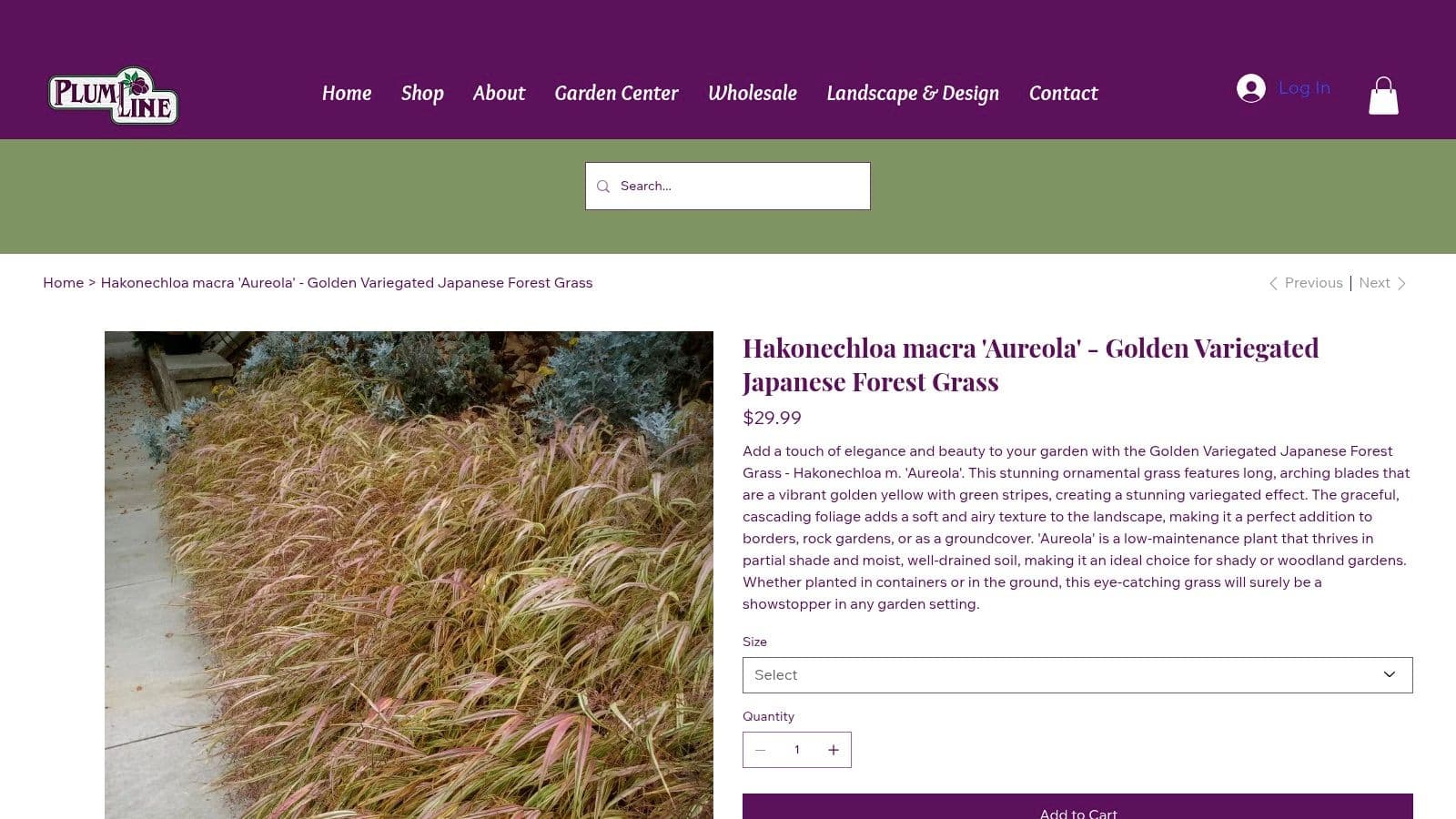
Golden Japanese forest grass plant listing
A front walk in shade often feels flat by midsummer. The hostas are solid blocks, the mulch reads dark, and the whole bed can disappear by evening. Hakonechloa macra ‘Aureola' fixes that problem with color and movement at ankle height.
This grass is one of the best tools for brightening part shade without forcing a high-contrast flower show into a quiet space. The arching, gold-striped foliage catches low light, spills neatly over edges, and softens hard lines around steps, boulders, and retaining walls. I use it where people pass close by, because its texture is part of the appeal.
Best use for brightening shade
Placement matters with hakone grass. Give it humus-rich, evenly moist, well-drained soil and protection from harsh afternoon sun in hotter regions. In deep dry shade under mature trees, it struggles. In bright shade with regular moisture, it looks polished for months.
It is also a reliable plant in the right setting. The Royal Horticultural Society lists Hakonechloa macra ‘Aureola' as an Award of Garden Merit plant, which is a useful signal for beginners trying to avoid expensive shade-garden mistakes.
Use it as a design solution, not just a specimen. It pairs well with hellebores for early-season structure, Japanese painted ferns for layered texture, epimedium for a weed-suppressing ground plane, and dark heuchera when you want the gold blades to read even brighter. For a simple beginner layout, place hakone grass in drifts near the front or along a path, then anchor the back of the bed with evergreen shrubs or upright ferns.
Before planting, it helps to test the composition visually. Tools like OutdoorBrite can help you preview how a ribbon of golden grass will read against stone, mulch, and neighboring shade plants before you start digging.
One caution. This is not the grass for a neglected site. Winter survival and spring recovery are usually tied to drainage, exposure, and climate fit, which is why ornamental grass winter-over questions from gardeners come up so often. Match it to a moist, sheltered position, and it solves a shade problem few other grasses handle this well.
Top 7 Ornamental Grasses Comparison
A comparison table helps, but the better way to choose a grass is to match it to the job you need done. Privacy. Dry soil. A narrow bed by the walk. A shady corner that needs light. Use the chart below as a placement guide first, plant list second.
| Plant | Implementation 🔄 (complexity) | Resources ⚡ (light/water/soil) | Expected outcomes 📊⭐ (performance/impact) | Ideal use cases 💡 | Key advantages ⭐ |
|---|---|---|---|---|---|
| Calamagrostis × acutiflora ‘Karl Foerster' (Feather Reed Grass) | Low 🔄, easy establishment, tidy habit | Sun to part sun; moderate water; tolerant soils | Strong vertical accents, plumes that hold into winter 📊⭐⭐⭐ | Tight borders, formal beds, screening without bulk | Upright form stays clear and organized; sterile seed limits spread |
| Panicum virgatum ‘Northwind' (Switchgrass) | Low to Medium 🔄, clumping, very sturdy | Full sun; dry to periodically moist, including clay | Tall steel-blue structure, good wildlife value, dependable winter presence 📊⭐⭐⭐ | Back-of-border height, light privacy, prairie-style plantings | Native selection with strong stems; handles heat and humidity well |
| Schizachyrium scoparium ‘Standing Ovation' (Little Bluestem) | Low 🔄, compact, non-flopping clumps | Full sun; lean, well-drained soils; drought tolerant | Blue summer foliage, then red and orange fall color, with a neat winter outline 📊⭐⭐⭐ | Small gardens, dry borders, mixed native beds | Excellent seasonal color with low irrigation needs |
| Sporobolus heterolepis (Prairie Dropseed) | Medium 🔄, slow to fill in; best installed as plugs | Full sun; adaptable from clay to sand; low water once established | Fine-textured mounds, airy late-summer seedheads, soft movement 📊⭐⭐ | Path edges, meadow-style groupings, refined perennial matrices | Graceful habit, low upkeep, useful for tying mixed plantings together |
| Muhlenbergia capillaris (Pink Muhly Grass) | Low 🔄, easy to mass where drainage is sharp | Full sun; excellent drainage; drought tolerant once established | Showy pink fall plumes with strong seasonal color 📊⭐⭐⭐ | Massed drifts, curbside beds, warm-region feature planting | High visual payoff in fall without heavy maintenance |
| Festuca glauca ‘Elijah Blue' (Blue Fescue) | Low 🔄, compact but shorter-lived, benefits from dividing | Full sun to part sun; very well-drained soil; low water | Icy blue mounds for front-of-bed definition and year-round color 📊⭐⭐ | Rock gardens, containers, edging, contrast planting | Distinct cool-toned foliage and a small footprint |
| Hakonechloa macra ‘Aureola' (Golden Japanese Forest Grass) | Medium 🔄, slower growth; careful siting required | Partial shade; consistent moisture; good drainage | Bright cascading variegation and soft movement in shade 📊⭐⭐⭐ | Woodland edges, shade containers, Japanese-style plantings | One of the few grasses that adds color and texture in shade |
A few practical trade-offs matter more than the ratings. Karl Foerster and Northwind both solve the upright-structure problem, but Karl Foerster fits narrower spaces and reads cleaner in formal plantings, while Northwind feels looser and more natural in larger beds. Prairie Dropseed is one of the best finish plants in this group, though it asks for patience early on. Blue Fescue gives fast front-edge definition, but it is not the long-term workhorse that dropseed is.
For beginners, companion planting makes selection easier. Use Karl Foerster with salvia, catmint, or alliums where you want vertical lines to break up broad perennial masses. Pair Northwind with coneflower, joe-pye weed, or rudbeckia for a taller native-style bed. Put Little Bluestem with coreopsis, gaura, or blanket flower in hot, lean soil. Set Prairie Dropseed near echinacea, baptisia, or nepeta where its fine texture can soften heavier flowers. Plant Pink Muhly with sedum, agastache, or dark-leaved shrubs so the fall plumes stand out. Tuck Blue Fescue beside creeping thyme, lavender, or stone. In shade, combine Hakonechloa with ferns, heuchera, or hellebores.
Placement is what makes these grasses work. Put the tallest selections where they can screen a view or anchor the back of a bed. Use medium growers to repeat rhythm through mixed plantings. Save the lower, mounding grasses for bed edges, path turns, and spots that need a clean visual finish.
If you are unsure which combination fits your yard, test the layout before buying plants. Tools like OutdoorBrite are useful for previewing height, spacing, and color contrast so you can see whether a low-water border, shade-brightening drift, or light privacy row will read the way you want.
Visualize Your Perfect Grass-Filled Garden
You are standing in the nursery in April, looking at quart pots with small tags and very little context. That is where many grass choices go wrong. The better approach is to choose by function first, then use the plant name to match that job.
A grass planting usually needs to solve one clear problem. You may need a light privacy row that does not feel heavy, a dry front border that still looks finished in late summer, or a shaded corner that needs color without flowers. That is why these seven grasses work well as a beginner-friendly group. Each one fills a different role, and the best results come from matching that role to the site instead of buying what looks good in a pot.
The broader market reflects that shift toward lower-input planting. North America's turf and ornamental grass protection market was valued at USD 1,844.72 million in 2025 and is projected to reach USD 1,942.12 million, which lines up with continued interest in climate-resilient ornamental plantings. For homeowners, the practical takeaway is simple. Plants that hold their form, tolerate stress, and need less correction save work over time.
Ordering early also helps. Missouri Botanical Garden's ornamental grasses collection and plant records are a good reminder that named cultivars can sell out fast, especially the widely used upright forms and strong fall-color selections. If you already know you want a specific grass for screening, edging, or shade, reserve it before spring inventory gets thin.
The cheapest mistake to prevent is a spacing mistake.
With an AI outdoor design tool like OutdoorBrite, you can upload a photo of your yard and test the actual design job each grass needs to do. Try a row of Northwind along a property line to check whether the height gives enough screening. Drop Blue Fescue along a walk to see if the repeated mounds look clean or too busy. Mass Pink Muhly near the street, then compare it with a mixed planting to decide which one gives the stronger fall effect. Grasses are hard to judge from tags because their impact comes from repetition, spacing, and how they read against nearby shrubs, perennials, and hardscape.
For readers also exploring regional native-focused planting ideas, this Perth garden design guide for natives is a useful companion read.
OutdoorBrite helps you test ornamental grass ideas before you buy a single plant. Upload a yard photo to OutdoorBrite, try different grass styles and companion plantings, and see a realistic redesign in seconds so you can plant with confidence instead of guesswork.
See your yard reimagined
Start creating