Little Bluestem Grass: Plant & Design Guide
Discover how to plant, grow, and design with Little Bluestem Grass. Get expert tips for a beautiful, sustainable landscape in 2026.
That dry, sunny strip by the driveway. The slope that bakes all afternoon. The patch where lawn struggles and thirsty flowers sulk by midsummer. Most yards have a spot like that.
That's where little bluestem grass starts to make sense.
If you want a plant that looks good without begging for pampering, this native grass earns its place. It brings fine texture in summer, warm color after frost, and a strong upright presence through winter. It also solves a design problem many homeowners face: how to make a hard, exposed area feel intentional instead of neglected.
Introducing Little Bluestem a Four-Season Star
Little bluestem grass works best when you stop thinking of it as filler and start treating it like structure. In summer, it reads as soft and airy. In fall and winter, it becomes the kind of plant that catches low light and makes a simple bed look designed.
What makes people fall for it is the seasonal shift. Early on, it has a cool-toned, blue-green look. Later, the foliage moves into reddish-orange tones after frost. That color change gives you a lot of impact without needing a complicated planting plan.
Why it fits real yards
Many homeowners want something native and low effort, but they also want it to look tidy enough for a front yard or mixed border. Little bluestem can do that, if the site is right. It shines in hot, open spaces where other plants need constant watering or richer soil than you want to provide.
It's like a tough friend who's happiest camping, not lounging at a resort. Give it sun, open air, and soil that isn't overly rich, and it performs beautifully.
Practical rule: If a spot feels exposed, dry, and a bit unforgiving, little bluestem grass may like it more than your roses do.
What trips people up
The confusion usually starts when people hear “native” and assume “works anywhere.” It doesn't. Little bluestem is not a universal grass for every bed, every border, or every suburban foundation planting.
In the sections ahead, I'll help you read the plant correctly. You'll see what it is, how to choose a cultivar, when seed makes sense, when plugs are smarter, and how to avoid the floppy disappointment that happens when this prairie grass lands in the wrong conditions.
Get to Know This Native Prairie Grass
Little bluestem is a perennial warm-season bunchgrass. That phrase sounds technical, but the idea is simple. “Warm-season” means it gets going when weather warms up. “Bunchgrass” means it grows in clumps rather than running all over the garden.
It's the well-behaved guest at the party. It stays in its space.
According to the Tallgrass Prairie Center plant guide, little bluestem typically grows 1 to 3 feet tall before flowering, blooms from late July to late August, and holds its form through winter. The same guide lists it as NatureServe Global G5, secure, which means it's secure across its native range.
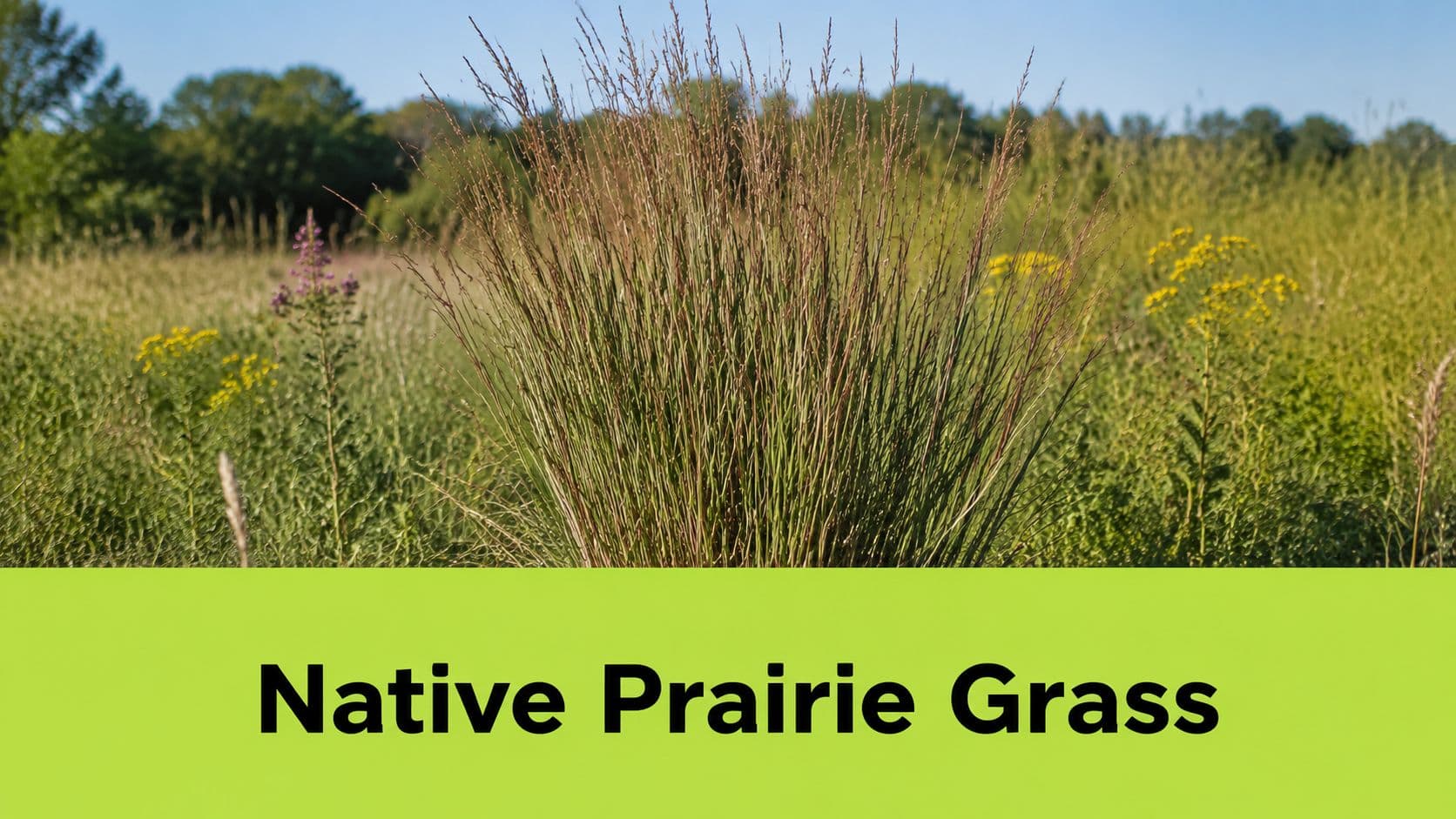
What it looks like through the year
This is one of those plants that rewards patience. In spring, it can seem modest. By summer, the clumps gain presence and movement. Then the cool season arrives, and the foliage shifts into warmer tones that stand out when many perennials are fading.
That winter hold matters. A lot of garden plants disappear when cold weather arrives. Little bluestem keeps contributing shape and texture.
Why gardeners love its growth habit
Because it forms clumps, you can use it with intention. Tuck it between flowering perennials, repeat it in a border, or plant it in drifts so the whole bed feels knitted together. It doesn't create the anxiety people often have with aggressive spreaders.
A few useful traits make that possible:
- Clumping form: It creates distinct tufts instead of a creeping mat.
- Prairie toughness: It comes from environments where heat, open sky, and lean soil are normal.
- Winter presence: It doesn't collapse into visual nothingness when the season ends.
It's one of the rare grasses that can read both naturalistic and refined, depending on how you place it.
Choose the Right Little Bluestem Cultivar
Not every little bluestem looks or behaves exactly the same in a cultivated setting. Some selections feel tighter and more vertical. Others read looser and more relaxed. If you're planting a broad meadow edge, one personality may fit. If you're lining a modern walkway, you may want another.
That's why cultivar choice matters.
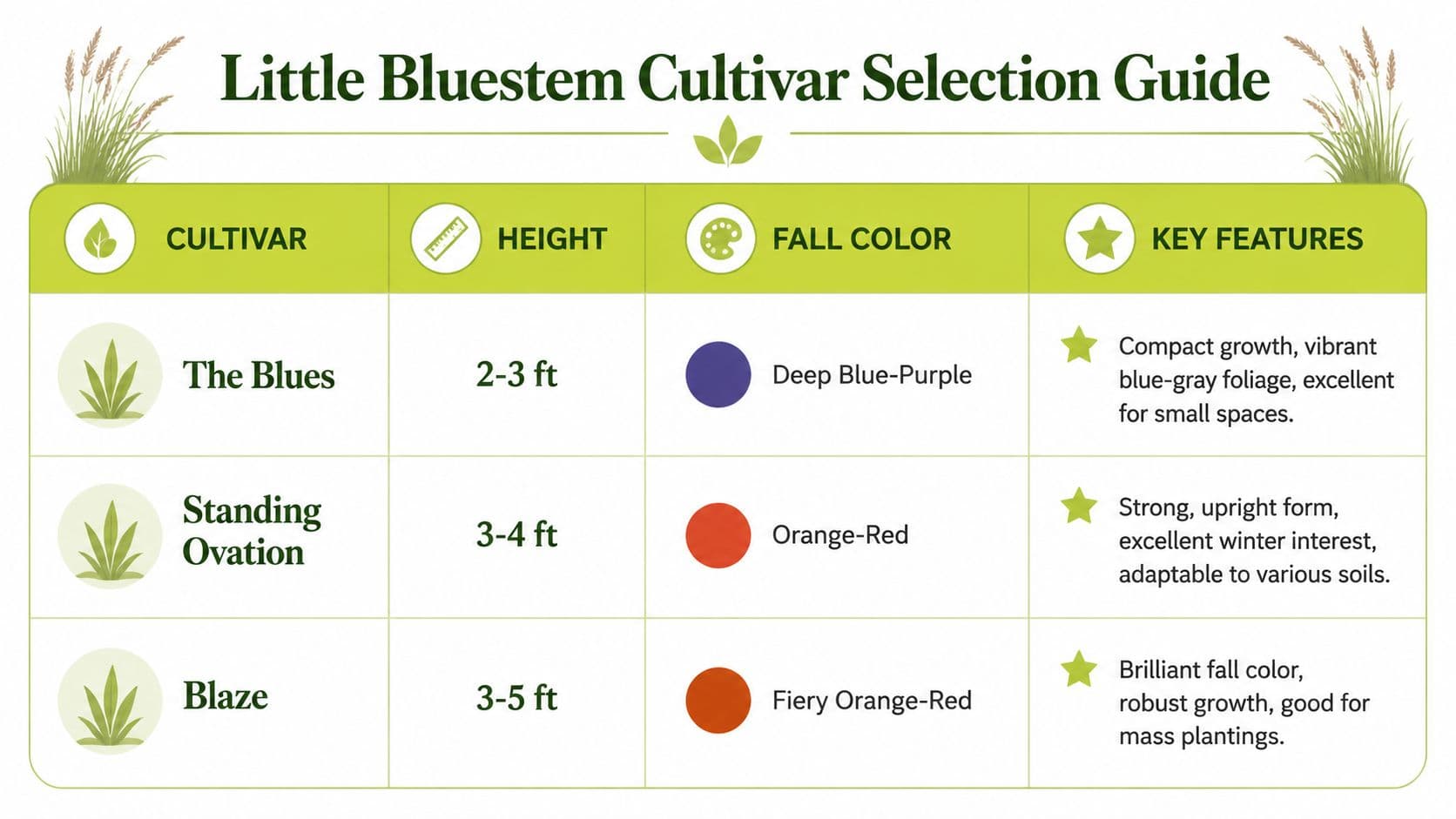
A quick way to think about the options
Some cultivars act like disciplined soldiers. They stay upright and formal. Others feel more like a fountain, softening a planting with movement.
Use that personality test before you even look at labels.
| Cultivar | Height | Fall Color | Key Feature |
|---|---|---|---|
| The Blues | 2-3 ft | Deep Blue-Purple | Compact habit and strong cool-toned foliage |
| Standing Ovation | 3-4 ft | Orange-Red | Upright structure and strong presence |
| Blaze | 3-5 ft | Fiery Orange-Red | Bold color and good impact in mass plantings |
How to match cultivar to design style
If your garden is clean-lined and architectural, look for a cultivar known for a more upright habit. That makes the grass easier to repeat along paths, patios, and geometric beds.
If your planting style leans looser, a cultivar with a slightly arching look can soften hard edges. In a mixed border, that kind of shape acts like connective tissue between broad-leaved perennials and lower groundcovers.
A few practical matchups:
- For small beds: Choose a compact selection so the grass doesn't overwhelm neighbors.
- For formal borders: Pick an upright cultivar with a disciplined silhouette.
- For meadow-style planting: Use a selection that looks good in repeated drifts.
Don't overthink the label
The mistake isn't choosing the “wrong” named cultivar. The bigger mistake is choosing a beautiful one for the wrong site. An upright cultivar still won't look upright in shade and rich soil. A vivid fall color won't save a grass that's planted where it can't hold itself well.
Start with the planting conditions. Then pick the personality you like.
Planting Little Bluestem for Success
Little bluestem grass is easy to grow when you respect its preferences. It gets frustrating when you try to improve the site too much.
Many gardeners are trained to add compost, fertilizer, and regular irrigation to everything. This is one of those plants that often prefers restraint.
Start with the site, not the shovel
Full sun is the essential part. Little bluestem needs open exposure to keep its shape and color. If a space gets only partial sun, especially with rich soil and automatic irrigation, you're setting up a future flopping problem.
Lean soil is often better than pampered soil. Before you reflexively amend soil for healthy plants, ask whether this bed needs richer conditions. For little bluestem, over-preparation can backfire.
Use this simple filter before planting:
- Check sunlight: If the spot doesn't get full sun, choose another plant.
- Check moisture: If the area stays wet or gets frequent irrigation, be cautious.
- Check fertility: If the soil is heavily enriched and lush plants always get oversized there, little bluestem may look floppy instead of crisp.
Seed or plugs
This choice shapes your first few seasons more than people expect. Seed can be a smart move for broad areas where you want a naturalized effect and have patience. Plugs cost more upfront but give you a stronger visual framework quickly.
The Plant Native profile notes that seed is cost-effective for large areas, but germination can be slow and a full stand can take over two years. The same source notes that plugs offer faster visual impact and better weed competition in the first two seasons.
That means the right choice depends on your goal.
- Use seed if you're planting a larger meadow-style space and can tolerate a slower fill-in period.
- Use plugs if the bed is visible every day, bordered by mulch or paving, or expected to look intentional early.
- Mix both if you want structure now and broader fill later.
A front-yard bed usually rewards impatience. A back meadow usually rewards thrift.
Plant simply
Set plants at the same depth they were growing in their pots. Water them in well, then step back from the urge to fuss. Little bluestem establishes best when the site does most of the work.
Your Simple Guide to Seasonal Care
This is not a plant that wants a high-maintenance relationship. Once established, little bluestem grass responds best to steady neglect rather than constant intervention.
Spring cleanup
Leave the old foliage standing through winter if you enjoy the look. In spring, cut back the previous season's growth before fresh new blades push strongly. That one task resets the clump and keeps the plant looking fresh.
You don't need a complicated routine. Hand pruners, hedge shears, or a similar tool will do the job.
Summer restraint
The Wisconsin Extension guide on little bluestem notes that the plant is hardy to USDA Zone 3 (-40°F). The same guide warns that nitrogen fertilizer can cause lodging, or stem collapse, by pushing weak, rapid growth. It also notes that over-watering can promote fungal diseases like rust, while deep, infrequent watering better matches the plant's drought-prone habitat.
That gives you a very clear care philosophy.
- Water thoroughly, not constantly: Let roots seek moisture instead of hovering near the surface.
- Skip routine fertilizer: Especially if the soil is already fertile.
- Watch mulch depth: If you're refreshing a bed, this guide to expert advice on garden mulching can help you avoid burying crowns or creating soggy conditions.
Fall and winter enjoyment
This is the part many gardeners forget. You don't need to tidy everything the moment the weather turns. Little bluestem often looks best when you let it stand.
The stems catch frost, low light, and movement. In a sleeping garden, that's valuable.
Let the plant be a plant. Most problems start when care becomes overcare.
Visualize Little Bluestem in Your Landscape
Designing with little bluestem grass gets much easier when you stop treating it like a lone accent and start thinking in groups. One clump can be pretty. Repeated clumps create rhythm.
Three strong ways to use it
In a prairie-style planting, little bluestem works like a soft matrix around flowering perennials. Coneflowers, black-eyed Susans, and upright sedums all make visual sense beside it because they share a similar appetite for sun and relatively lean conditions.
In a modern xeriscape, use it in repeated drifts. The fine texture offsets stone, gravel, and broad hardscape lines. If you're collecting broader ideas for warm-region outdoor spaces, these landscaping ideas for Tampa Bay homes show how low-input design can still feel finished and welcoming.
For a mixed border, treat little bluestem as the vertical thread that keeps bolder perennials from looking scattered. It's especially good near paths where backlighting can catch the foliage and seedheads.
Where it tends to fail visually
This point matters more than many plant tags admit. The Backyard Ecology article on little bluestem in gardens notes that the plant's upright, colorful form is best in lean, dry, full-sun conditions, and that in highly irrigated, fertile, or shady suburban beds it can become floppy and lose structure.
That means the design test isn't only “Do I like this plant?” It's “Will this spot let the plant look like itself?”
Test the idea before you plant
If you're unsure whether a drift of little bluestem belongs near your patio, mailbox bed, or side yard, mock it up first with an ai garden design generator. A quick visual test can reveal whether the grass adds the right texture, whether the scale feels balanced, and whether a looser prairie look fits the house.
Here's a walkthrough if you want to see that process in action.
Troubleshooting Common Grass Problems
When little bluestem grass looks bad, the plant is usually telling you something about the site.
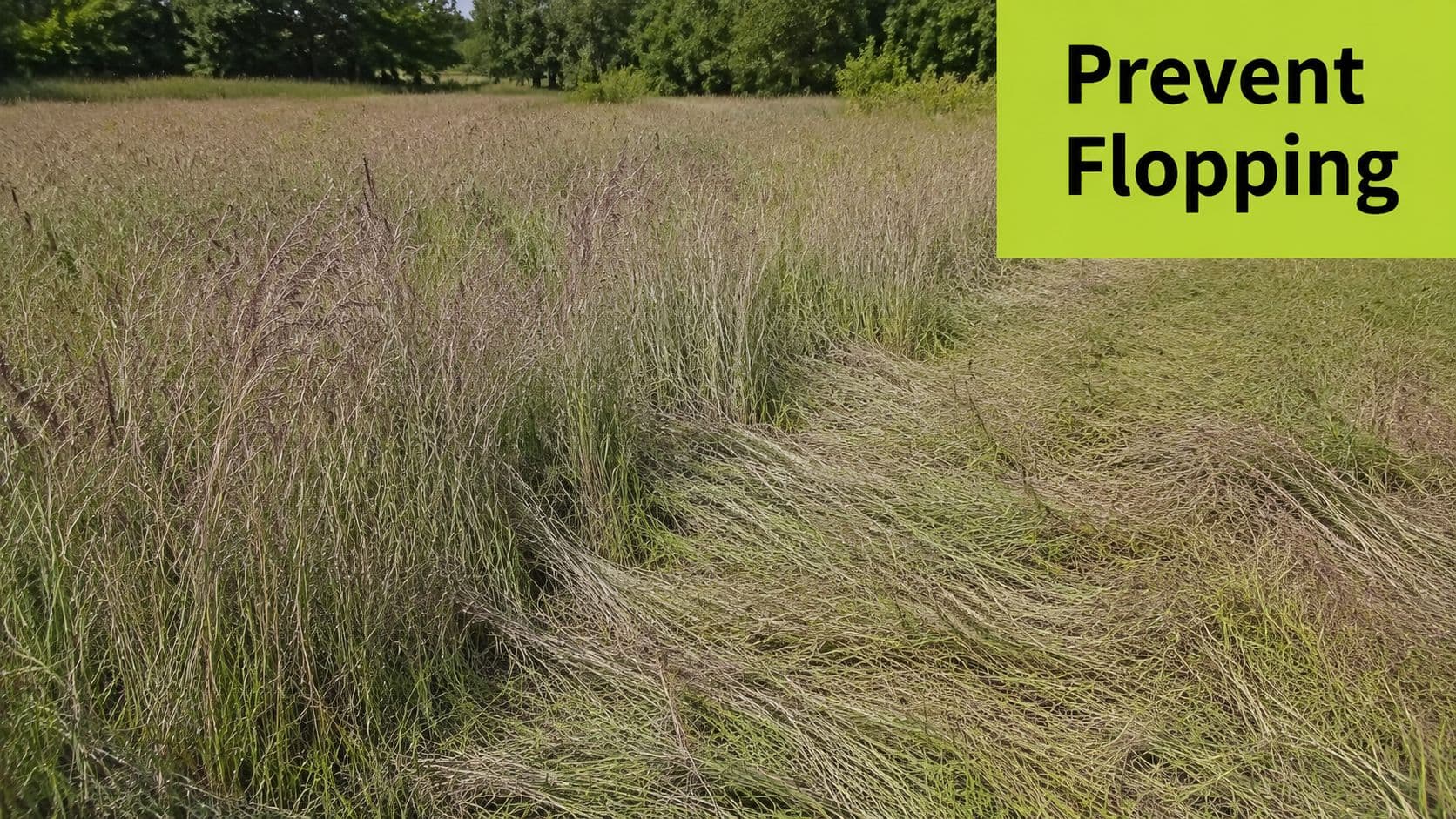
Flopping or lodging
This is the most common complaint. The clump starts upright, then later in the season it sprawls or leans. People often assume the plant is weak. More often, the conditions are wrong.
The usual triggers are too much shade, too much fertility, or too much moisture. The fix isn't fancy. Reduce irrigation if possible, stop feeding it, or move future plantings to a sunnier, leaner place.
Rust or generally unhappy foliage
If the plant spends long periods damp, fungal issues can show up more easily. Better air flow and less frequent watering often help prevent that stress pattern. This is one more reason little bluestem dislikes crowded, heavily irrigated beds.
Slow establishment
This one worries new gardeners, especially from seed. A young planting may look sparse for a while. That doesn't always mean failure.
Treat the area like a project in progress. Keep weeds from taking over, give the grass time, and don't judge the planting too early. If you want a bed to read more clearly while plants establish, physical definition helps. Materials such as Paving Supplies' edging stones can give a young border a finished outline even when the grass itself is still filling in.
A floppy little bluestem usually isn't asking for more fertilizer. It's asking for less kindness.
Frequently Asked Questions
Is little bluestem invasive?
No. Little bluestem is a bunchgrass, so it grows in clumps rather than running aggressively through a bed. That's one reason gardeners use it where they want a native plant with a controlled footprint.
Is little bluestem grass good for small yards?
Yes, if the site is sunny and not overly rich or wet. In a small yard, cultivar choice matters more because the plant's shape is part of the design. A compact or more upright selection usually reads better than a loose mass in a tight foundation bed.
Can I grow it in a container?
You can, but containers dry out faster and heat up differently than in-ground plantings. Use a pot with good drainage and expect to monitor moisture more closely than you would in a prairie-style bed. The look can be beautiful, but containers ask for more involvement.
Does it work in part shade?
Less-than-ideal light conditions often lead to disappointment. Little bluestem may survive in less-than-ideal light, but survival and beauty aren't the same thing. If your goal is upright structure and strong seasonal color, reserve it for open sun.
Should I cut it back in fall?
You can, but many gardeners prefer to leave it standing through winter for texture and seasonal interest. Cut it back in spring before new growth gets going.
Is seed or plugs better for beginners?
If you want quicker visual payoff and easier weed competition, plugs are usually the simpler path. Seed is still a smart choice for larger naturalistic areas, but it asks for patience.
What plants pair well with it?
Choose companions that like the same general conditions. Sun-loving perennials with clear shapes work especially well because they contrast with the grass's finer texture. Think of little bluestem as the stitching that holds a sunny planting together.
If you're trying to decide where little bluestem grass will look best in your yard, OutdoorBrite makes that much easier. Upload a photo of your space, test different planting styles, and see how native grasses, perennials, and hardscape ideas work together before you buy a single plant.
See your yard reimagined
Start creating