The Best Mulch for Garden Beds Your Ultimate 2026 Guide
Find the best mulch for garden beds with our guide. We compare organic vs. inorganic types, costs, and uses to help you choose the perfect garden mulch.
You plant a fresh bed on Saturday. By the next weekend, the soil surface looks crusty, weeds are poking through, and the plants already seem thirstier than they should. Most beginners assume they picked the wrong flowers or missed a fertilizer step.
Usually, the missing piece is mulch.
A good mulch layer acts like a working surface over your soil, not a decoration tossed on top at the end. It helps your bed hold moisture, blocks light from weed seeds, softens the impact of heavy rain, and gives the whole planting a finished look that feels intentional. If you're also reworking the rest of your yard, this guide to outdoor makeovers helps connect the garden bed to the bigger outdoor picture.
Why Your Garden Needs More Than Just Soil and Sunshine
Most garden failures don't begin with dramatic mistakes. They begin with exposure. Bare soil sits in direct sun, wind hits it all day, and every weed seed that lands has a clear shot at germinating.
Mulch changes that equation.
Think of it as a roof for the root zone. Your plants still get water and air, but the soil underneath is buffered from the extremes above it. That matters more than many gardeners realize, especially in the first season after planting when roots are still settling in.
Bare soil is always working against you. Mulch puts the soil on your side.
The best mulch for garden beds isn't always the fanciest bag at the garden center. It's the material that fits your goal and your planting style. Some mulches are best at weed suppression. Some are better for feeding the soil. Some look sharp in a front foundation bed but make no sense in a vegetable patch.
That difference is where people get stuck. They ask, “What mulch is best?” when the better question is, “What do I need this mulch to do?”
The Two Families of Mulch Organic Versus Inorganic
If you remember one framework, make it this one. Mulches fall into two broad families, and each behaves very differently in a garden bed.
Organic mulch feeds the system
Organic mulches come from once-living materials. Wood chips, shredded bark, straw, leaves, grass clippings, and compost all belong here. Over time, they break down and become part of the soil.
I tell new gardeners to think of organic mulch like a pantry full of ingredients. It doesn't just sit there. It changes, softens, blends, and eventually feeds the whole recipe.
That breakdown is a strength, not a flaw. As organic mulch decomposes, it helps build a looser, darker, more workable soil. Earthworms move in. Moisture hangs around longer. The bed starts to feel alive instead of dusty and inert.
Common reasons to choose organic mulch:
- Soil improvement: It contributes organic matter over time.
- Plant-friendly performance: It helps moderate the surface conditions around roots.
- Better fit for most beds: It suits flower beds, shrub borders, and vegetable gardens.
Some organic mulches break down quickly, like compost or grass clippings. Others last longer, like wood chips and shredded hardwood. That doesn't make one better than the other. It just means they're doing different jobs.
Inorganic mulch solves a narrower set of problems
Inorganic mulches include stone, gravel, rubber mulch, and garden fabric. These materials don't decompose into the soil.
They're more like durable kitchen tools. A cast-iron pan and a chef's knife can be useful for years, but they don't nourish the meal. They perform a function.
That function can be useful in the right place. Gravel can suit a dry path or a modern planting design. Fabric can help under a stone walkway. Rubber may hold up in a play area where softness and longevity matter more than soil health.
But in a living garden bed, inorganic choices come with trade-offs. They don't build soil. They can complicate cleanup. Some trap heat. Some make later planting harder than people expect.
Practical rule: If your main goal is healthier soil, start by looking at organic mulch first.
A quick way to classify any mulch
When you're standing in a garden center or looking at a bulk delivery list, ask two questions:
- Will this break down into the soil?
- Do I want this bed to become richer over time, or just stay covered?
If it breaks down, it's organic. If it stays basically unchanged, it's inorganic. That simple filter will eliminate half the confusion before you ever compare colors, textures, or price.
The Organic Mulch Catalog From Wood Chips to Compost
Organic mulch gives you the widest menu of trade-offs, and that is exactly why beginners get stuck. One product looks neat. Another feeds the soil faster. A third smothers weeds better but looks rougher. The right choice depends less on the label and more on your goal for that bed.
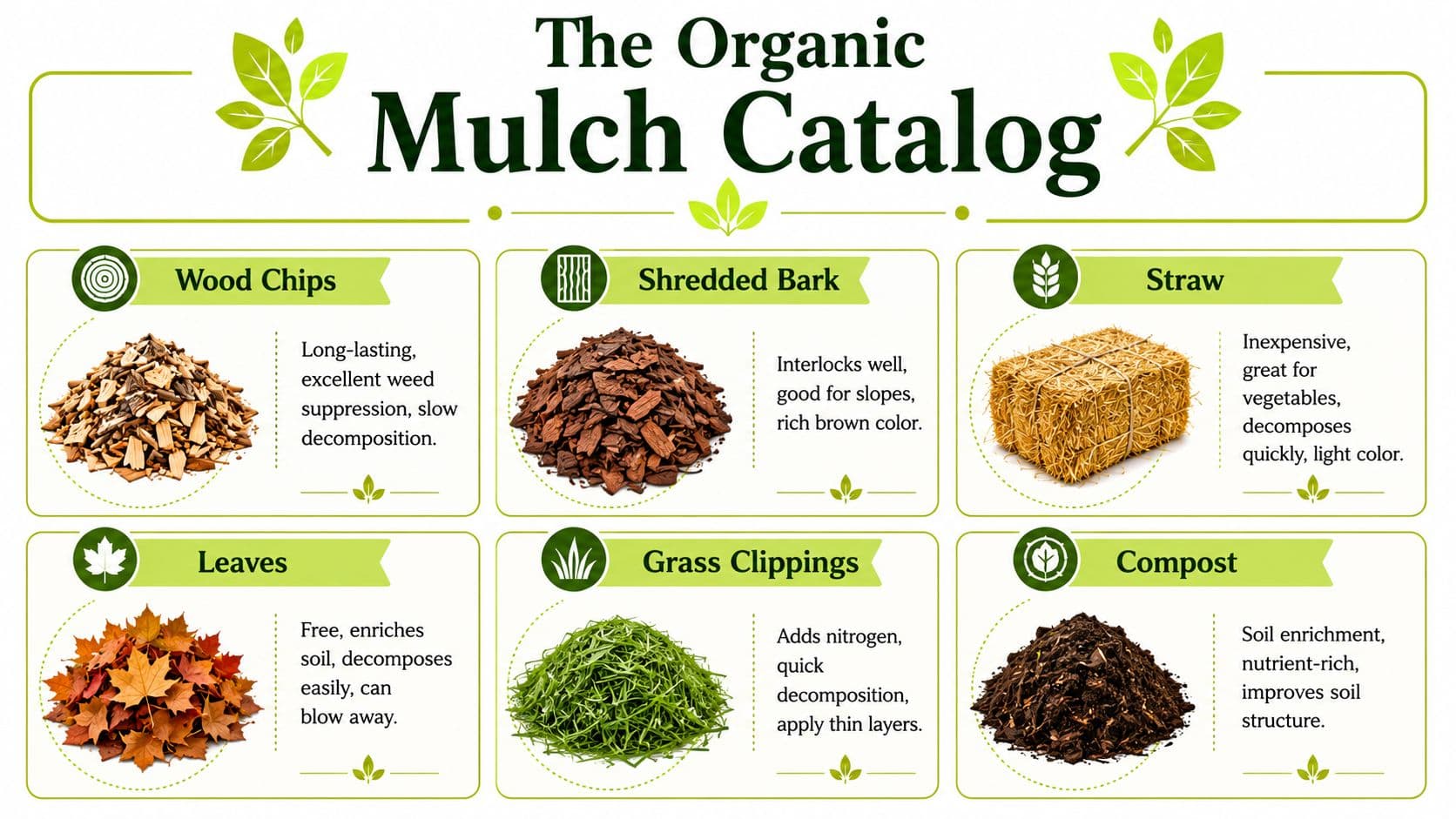
A simple way to sort organic mulches is by the job they do best. Some act like a long-wearing blanket. They shade the soil, slow weeds, and hold their shape. Others act more like a meal for the bed. They break down faster and improve soil sooner, but they need replenishing more often.
The dependable gardening staples
Shredded hardwood is one of the safest all-around picks for established beds. It usually suppresses weeds well, lasts a respectable length of time, and the fibrous texture helps the pieces knit together instead of rolling away after every storm. If you want a mulch that looks finished without demanding constant touch-ups, this is often where I start.
Shredded bark fills a similar role, especially in ornamental beds. It gives a tidy surface and usually stays in place better than chunky bark nuggets. On a slope, that matters. Smooth, chunky materials tend to drift downhill or leave gaps, while shredded materials interlock more like a woven mat.
Pine bark nuggets are best used where appearance matters more than full soil coverage. They can look crisp around shrubs, but they often leave little pockets of bare ground between pieces. Those gaps invite weed seeds and let sunlight reach the soil, so I rarely choose nuggets when weed control is the top priority.
The faster soil-builders
Straw is a strong fit for vegetable gardens because it is light, easy to spread, and friendly to annual crops. It keeps fruits and lower leaves cleaner by reducing soil splash after rain. It also breaks down at a pace that suits beds that get replanted often.
Leaves are one of the best low-cost mulches a gardener can use well. Shredded leaves settle into an even layer and feed the soil as they decompose. Whole leaves are less reliable. They can mat together like wet cardboard, shed water, or blow into corners.
Grass clippings work, but only with restraint. Michigan State University Extension guidance recommends applying fresh grass clippings in thin layers up to 1/4 inch and letting them dry between layers. A thick pile traps moisture and mats down fast, which can create a slimy layer instead of a useful mulch.
Compost belongs in a different category from bark or chips. It is more of a feeding layer than a long-term cover. The same extension guidance recommends 1 to 2 inches of compost when your goal is direct soil enrichment. If your bed is hungry, compost makes sense. If your bed is weedy, compost alone usually will not give you the weed barrier you want.
The heavy-duty weed suppressor
Arborist wood chips are the practical choice for big jobs. They are usually less uniform than bagged products, and some gardeners hesitate because the look is more natural and less polished. In return, you often get excellent coverage, slower breakdown, and a mulch that can handle serious bed-building work.
According to Garden Project Academy, arborist wood chips are especially effective for deep sheet mulching when you need to suppress existing weeds or smother turf. That same guidance recommends a deep organic layer of about 5 to 8 inches or more over 6 to 12 months for new bed preparation, with arborist chips identified as the best material for that method.
That makes arborist chips less of a decorative finish and more of a problem-solver. If your goal is converting lawn into planting space, they are often the smartest first move.
| Mulch Type | Decomposition Rate | Primary Benefit | Best For | Things to Consider |
|---|---|---|---|---|
| Shredded hardwood | Slow | Weed suppression and neat appearance | Mixed ornamental beds | Keep it off stems |
| Shredded bark | Slow to moderate | Good coverage and tidy finish | Foundation beds, slopes | Can need occasional fluffing |
| Pine bark nuggets | Slow | Decorative look | Shrub beds | Can shift or leave gaps |
| Straw | Moderate to fast | Good fit for vegetables | Vegetable beds | Casual look, needs topping up |
| Leaves | Fast to moderate | Free soil-building cover | Seasonal beds, backyard gardens | Best shredded |
| Grass clippings | Fast | Quick organic cover | Vegetable beds in light layers | Must be applied thinly |
| Compost | Fast | Soil enrichment | Beds that need feeding | Not the strongest weed barrier |
| Arborist wood chips | Slow | Heavy-duty weed suppression | New bed prep, larger beds | Coarser appearance |
So which organic mulch is best
The useful answer is goal first, material second.
- For a neat ornamental bed with good weed control: Choose shredded hardwood or shredded bark.
- For a productive vegetable bed that gets replanted often: Choose straw, shredded leaves, compost, or thin layers of grass clippings.
- For building new beds or reclaiming weedy ground: Choose arborist wood chips.
If you keep that framework in mind, the decision gets much easier. You are not picking from a random catalog. You are matching mulch to the result you want now, and to the look you want to visualize later.
Exploring Inorganic Mulches Rocks Rubber and Fabric
Inorganic mulches aren't wrong. They're just more specialized.
Gravel and stone
Stone mulch has clear strengths. It lasts, it doesn't rot, and it can suit a clean modern design or a dry-climate planting. In pathways and non-planting zones, it often performs well.
Its downside shows up over time. Stone absorbs heat, debris settles into it, and weeds eventually find a foothold unless the area is maintained. In a lush planting bed, it can also make soil care and replanting more awkward than anticipated.
Landscape fabric
Garden fabric is one of the most misunderstood products in home garden care. Used under a stone path, it can help separate materials and slow weed pressure. Used throughout a living garden bed, it often becomes a long-term nuisance.
Roots grow into it. Soil and debris collect on top. Weeds sprout in that new layer anyway. Then you have a tangled sheet in the middle of the bed when you try to divide perennials or add shrubs.
A fabric barrier can be a tool. It shouldn't be your default answer for every garden bed.
Rubber mulch
Rubber mulch is durable and long-lasting. That's why it often appears in playgrounds or utility areas where cushioning and low replenishment matter.
In planting beds, I don't recommend it as a first choice. It doesn't improve the soil, and many gardeners prefer not to place manufactured rubber around vegetables or soil-building gardens. If your goal is a healthier bed over time, organic options are usually the better match.
Use inorganic mulch where permanence matters more than soil life. Use organic mulch where the bed itself needs to improve.
The Mulch Decision Framework Choosing Based on Your Goal
You mulch a bed in spring, stand back, and feel pleased for about two weeks. Then the weeds push through, the soil still dries out, or the whole bed looks wrong against the house. That usually happens for one reason. The mulch did not match the job.
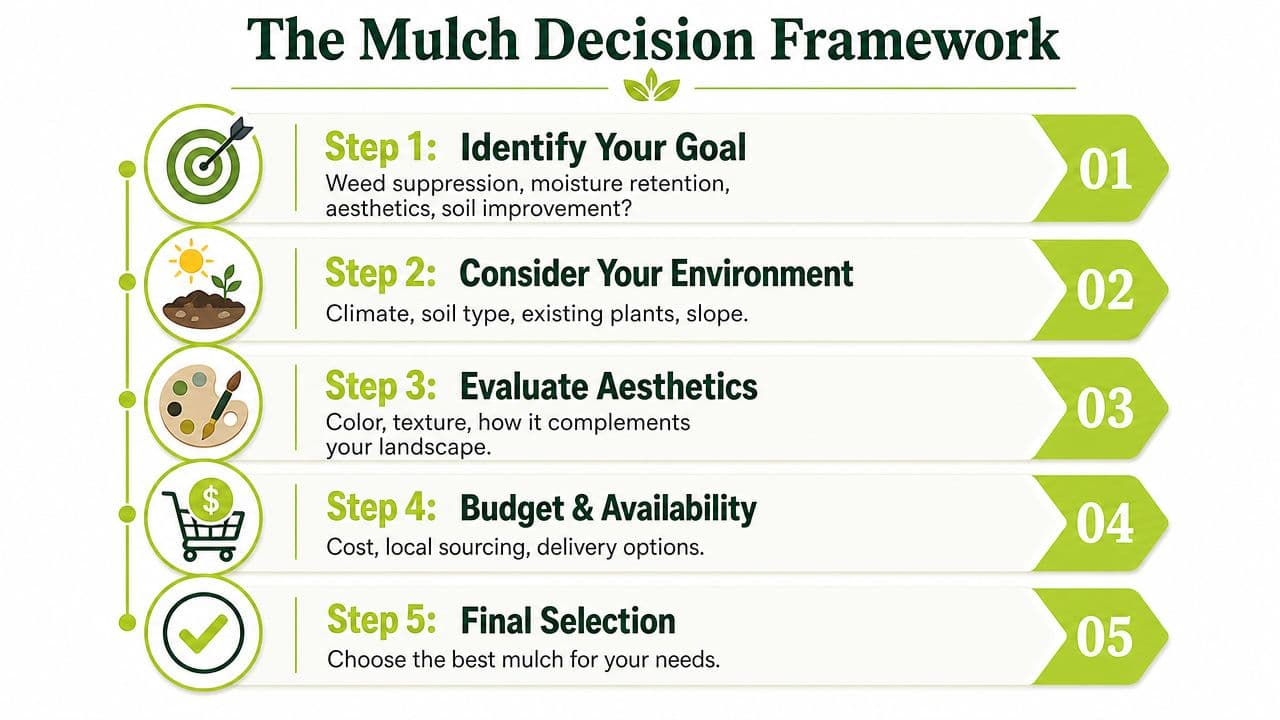
A better question than "What is the best mulch?" is "What do I need this mulch to do first?" Mulch can block light, slow evaporation, feed soil life, soften the look of a bed, or hold up under foot traffic. One material rarely does all five equally well.
Use this framework the way a good designer and a good gardener would. Start with function. Then check plant needs. Then choose the look you want to live with every day. If the bed itself still needs work underneath, handle that first with the basics in how to prepare soil for planting.
Goal 1. Stop weeds
Weed control depends on coverage and staying power. You want a mulch that forms a continuous layer, blocks light, and does not blow away the first windy afternoon.
Shredded hardwood works well in display beds because it knits together into a fairly even mat. Arborist wood chips are often the practical workhorse for larger planting areas. In raised-bed gardens, wood or bark chips also make strong path surfaces because they cushion footsteps and help keep muddy soil off your shoes.
Best choices for this goal:
- Shredded hardwood for tidy beds near the house
- Arborist wood chips for broad coverage and lower cost
- Wood or bark chips for paths and high-traffic garden routes
If you are bringing in bulk mulch for several beds and paths, delivery matters more than beginners expect. For larger projects, equipment options like premium work trailers for landscaping can make hauling and dumping far more manageable.
Goal 2. Hold moisture in the soil
Dry soil behaves like a pan left uncovered on the stove. Water escapes fastest from the exposed surface. Mulch acts like a lid. The better it shades the soil, the slower that moisture leaves.
Wood-based mulches are usually the most reliable choice here for shrubs, perennials, and mixed beds. Straw also works well in vegetable gardens because it covers the soil without packing too tightly. Shredded leaves can help in informal beds, especially if you have them on hand and do not mind a more natural appearance.
If saving water is your top priority, choose a mulch that cools and covers. Organic mulches usually do that better in planted beds than hard materials.
Goal 3. Build better soil
This is the easiest decision in the whole framework. If your main goal is richer soil, use a mulch that breaks down and becomes part of the top layer.
Compost is the fast route when a bed is hungry and tired. Shredded leaves are slower, but excellent over time. Light layers of grass clippings can also help, though they need a careful hand. Put them on too thick and they can mat together, shed water, and smell sour.
Good soil-building picks:
- Compost when feeding the bed matters most
- Shredded leaves for steady improvement at low cost
- Grass clippings in thin, dry layers only
Beginners often misunderstand this point. A mulch that feeds the soil usually will not last as long on the surface. That is not failure. That is the material doing its job.
Goal 4. Get a specific finished look
Mulch is the background color of the garden. It changes how every leaf, flower, and pot reads to the eye.
For a neat, polished bed, shredded hardwood or bark usually gives the cleanest finish. For a looser, more natural garden, arborist chips or leaves often feel more believable. If the house and planting style are spare and dry, gravel may fit the visual style better than any organic option.
Ask yourself:
- Do I want the mulch to fade into the planting or be part of the design?
- Will this texture suit the house and hard surfaces nearby?
- How will it look after rain, fallen leaves, and a month of real use?
That last question saves a lot of regret.
Goal 5. Avoid plant stress at the base
Sometimes gardeners blame the mulch when the problem is placement. Fine mulch pressed against stems and crowns can hold too much moisture in the wrong spot. That creates the same trouble a wet collar creates around your neck. The issue is not the shirt. The issue is that it stays damp against the skin.
If rot, fungus, or weak stems have been a problem, keep mulch back from trunks, crowns, and the base of each plant. In that case, your best mulch may be the same material you already have, applied with better spacing and a lighter hand.
Choose mulch by primary goal first, plant type second, and appearance third. That order leads to fewer mistakes and a bed that works as good as it looks.
A Masterclass in Mulch Installation and Maintenance
A bed can have the right mulch and still perform badly if the installation is sloppy. I see this often. The material is fine. The problem is depth, spacing, or what got buried underneath.
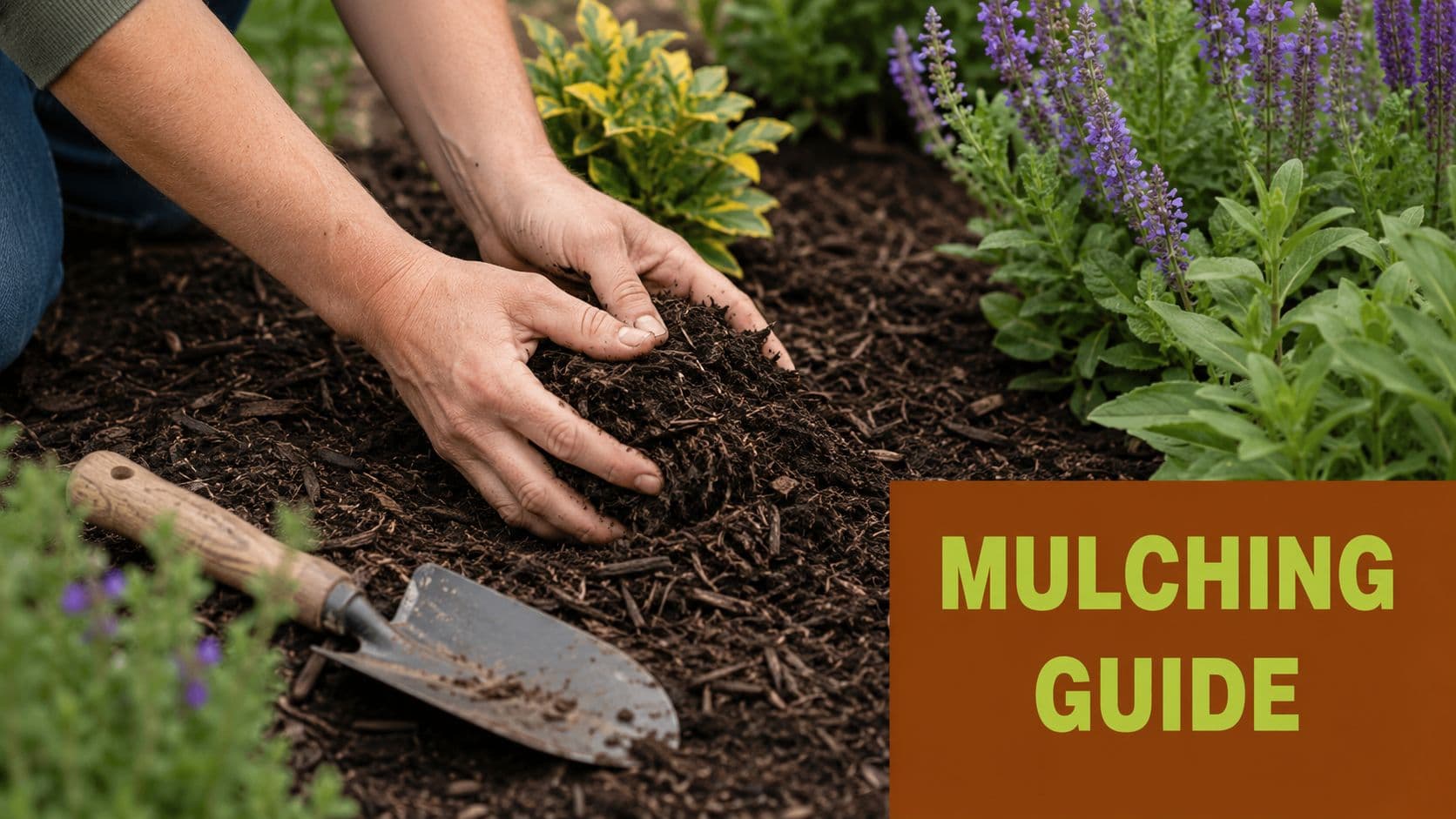
Start with bed prep, not the mulch bag
Mulch works like a blanket, not a repair kit. If weeds are already rooted, or the soil below is dry and crusted, covering the surface only hides the problem for a short time.
Pull or cut existing weeds first, then water the bed so the soil starts evenly moist. If the bed is compacted, depleted, or badly neglected, fix that before you add any cover. This guide on how to prepare soil for planting is a smart first stop if you are rebuilding what is under the mulch, not just changing the top layer.
Large jobs also raise a practical question beginners do not always expect. How will the material get from the supplier to the bed? If you are handling bulk loads for several garden beds, a long driveway, or a full property refresh, it helps to compare hauling options such as premium work trailers for landscaping before the pile shows up at the curb.
Use the right depth and keep it off the stems
Depth controls whether mulch solves problems or creates them. Too little mulch lets light reach weed seeds. Too much can block water, stay soggy near crowns, and stress the very plants you wanted to protect.
For most beds, a moderate layer is the sweet spot. In practice, that usually means enough mulch to shade the soil and slow evaporation, but not so much that plant bases disappear. Around flowers, shrubs, and young perennials, leave a small bare ring around each stem, trunk, or crown. The finished shape should resemble a donut.
That one detail prevents many common failures.
A few mistakes show up again and again:
- A thin dusting: It looks finished on day one, then weeds push through fast.
- A deep mound: Water can run off the surface instead of soaking in.
- Mulch touching stems or trunks: Constant moisture at the base invites rot and gives pests a sheltered spot.
If you are unsure, err on the lighter side and add more after a week. Fixing a shallow layer is easy. Correcting a soggy, buried crown is not.
Spread it evenly and watch the edges
Good installation is quiet work. Rake the mulch level, break up clumps, and check the bed from more than one angle. Low spots and thick piles are easier to see from the side than from standing overhead.
Pay attention to edges too. Mulch that tapers to nothing at the border often washes away first, while thick ridges against edging can look forced and trap debris. Aim for an even layer from front to back, with a clean line where the bed meets lawn, path, or stone.
Rake, top up, and refresh when needed
Organic mulch changes over time. That is part of its value. It settles, weathers, and slowly feeds the soil life underneath.
Different materials age at different speeds. Wood chips and bark usually need a light raking and an occasional top-up. Straw, leaves, and compost break down faster and often need refreshing sooner. The goal is not to maintain a fixed measurement with a ruler. The goal is to keep the bed covered enough to meet your main objective, whether that is weed suppression, moisture retention, or soil building.
If you want a quick visual demonstration of correct technique, this short video is useful.
After rain or irrigation, inspect the bed. Water should move through the mulch and into the soil. If it beads up, runs off, or pools near plant bases, the layer may be too thick, matted, or compacted. Loosen it with a rake, pull it back from stems, and adjust before small problems turn into plant stress.
The true test of your goal-based mulch choice comes in real-life application. The best mulch for weed control, soil building, or appearance still has to be installed with care. Good technique is what turns a smart choice on paper into a bed that looks right and grows well.
Visualize Your Perfect Mulch Choice with AI Design
The practical side of mulch is only half the decision. The other half is visual.
A dark shredded mulch can make bright foliage pop. The same mulch can also make a small bed feel heavy if the house is light-colored and the hardscape is pale. Pine straw may look relaxed and warm in one yard, then look out of place against formal brick edging in another.
That uncertainty is why many homeowners delay the project or buy whatever looks safest.
Take the guesswork out of the final look
The easiest way to decide between mulch options is to see them on your actual bed before you buy anything. A photo-based mockup gives you something gardeners rarely get in advance, which is a chance to compare materials in context instead of in your head.
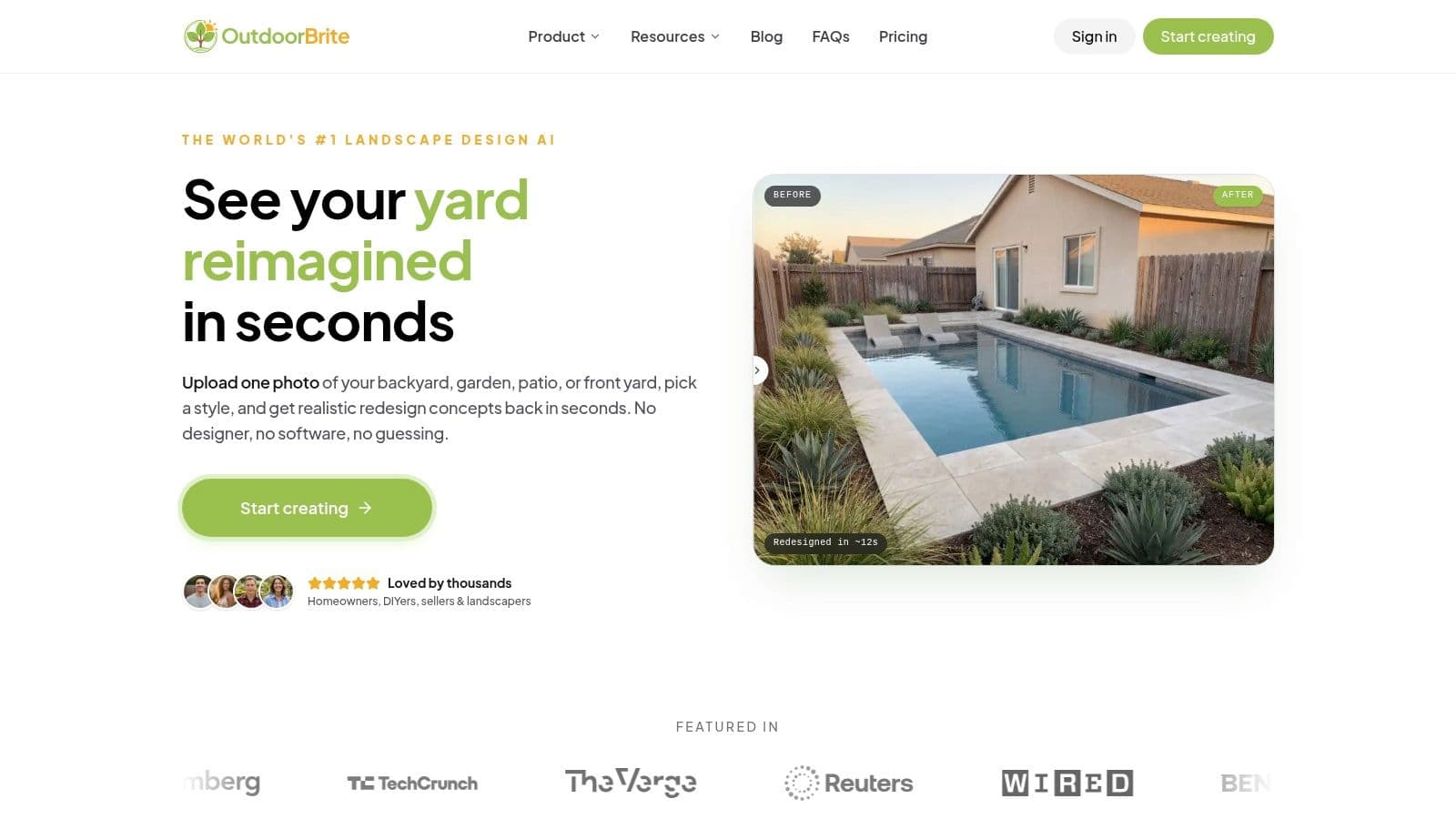
You can upload a garden photo and use ai for garden design to test different looks, such as dark bark, lighter straw tones, or decorative stone, against your plants, edging, and house color. That matters because mulch is usually bought in volume, spread by hand, and annoying to undo once it's down.
Good design choices save labor too
The wrong mulch doesn't just disappoint visually. It creates extra work. You may end up re-buying material, re-spreading the bed, or changing edging because the first look felt off.
A quick visual test helps you answer design questions before the first shovel hits the ground:
- Does this mulch make the planting look cleaner or heavier?
- Does the color work with the house and hardscape?
- Does a natural texture fit better than a polished one?
That's a smart step whether you're renovating one small border or reworking the whole yard.
Your Mulch Plan From Decision to Dirt
The best mulch for garden beds isn't a single product. It's a match between your goal, your plants, your soil, and the look you want in the space.
If you want healthier soil, lean organic. If you want a specialized surface for a path or a permanent design feature, consider inorganic materials carefully. If weeds are the headache, choose a mulch that covers densely and stays put. If the bed needs feeding, compost and other fast-breaking organics belong near the top of the list.
Most mistakes happen at one of two points. People either choose mulch by habit instead of purpose, or they apply good mulch badly.
You don't need to know everything to get this right. Start with one bed. Measure it, decide what the mulch needs to do, and pick a material that matches that job. That's how experienced gardeners work. Not by chasing a universal answer, but by making the right choice for the space in front of them.
Outdoor projects get easier when you can test ideas before you buy materials. OutdoorBrite lets you upload a photo of your yard or garden and preview realistic design options fast, so you can choose mulch, planting style, and layout with more confidence and fewer do-overs.
See your yard reimagined
Start creating