10 Smart Alternatives to Grass for Your Yard in 2026
Ready to ditch the lawnmower? Explore 10 smart alternatives to grass, from low-water xeriscaping to lush clover, and find the perfect fit for your 2026 yard.
You water, you weed, you mow, and then you do it again next weekend. For a lot of homeowners, the lawn isn't an appealing outdoor element anymore. It's a recurring chore that eats time, water, and patience.
That frustration is part of a bigger shift. The Natural Resources Defense Council says manicured turfgrass lawns cover up to 50 million acres in the United States, and that footprint has pushed more homeowners toward native plantings, low-mow turf blends, and edible gardens. In practice, that means the old idea of one uniform green carpet is giving way to a yard that fits how people truly live.
The best alternatives to grass don't all look alike. Some are lush and planted. Some are architectural. Some are better for kids, dogs, or dry climates. Some save work only after the first season, not on day one.
That distinction matters. A meadow that looks effortless in year three may need real weeding and watering while it fills in. A gravel courtyard can be a smart fix for heavy traffic, but it won't feel like lawn under bare feet. Synthetic turf solves one set of problems and introduces another.
The smart move is to match the surface to the job. Shade, runoff, foot traffic, pets, slope, budget, and how much care you'll realistically give the space should drive the decision.
1. Native Plant Gardens
If your yard has decent sun, uneven soil, and you're tired of fighting nature, native planting is one of the strongest alternatives to grass. It works best when you stop asking the yard to behave like a golf fairway and start designing around your region.
A native garden can be formal, loose, meadow-like, or highly structured. I often steer homeowners toward it when they want a front yard that looks intentional but doesn't need constant mowing. It's also one of the better choices for pollinator support and seasonal change.
Where it works best
Native plant gardens fit sunny front yards, park strips, sloped areas, and parts of the yard you don't need for active play. They're especially useful where turf always looks stressed or where irrigation coverage is uneven.
University guidance also supports alternatives like groundcovers and sedges because they can reduce mowing, irrigation, and fertilizer dependence when matched to site conditions, and they help suppress weeds once they fill in, as noted in the earlier NRDC guidance.
Practical rule: Start with one manageable zone, not the whole property.
That advice lines up with University of Maryland Extension guidance summarized in this lawn alternatives overview, which recommends starting small and being realistic about first-season maintenance.
What usually goes wrong
Homeowners often plant too sparsely, mix water lovers with dry-climate plants, or judge the result too early. Native gardens usually look worse before they look better. You'll need mulching, weeding, and some patience while plants establish and knit together.
For layout testing, upload a yard photo into landscape design ai and try a Modern or Japanese Zen style first. That's a practical way to compare dense planting blocks, path widths, and how much negative space your yard needs before you buy plants.
- Use repeating groups: Repeat the same few plants in drifts instead of buying one of everything.
- Keep edges crisp: Steel, stone, or spade-cut edges make native plantings look designed, not abandoned.
- Plan access early: Add stepping stones or mulch paths so you can weed and prune without trampling plants.
2. Hardscaping, Xeriscaping, and Permeable Paving
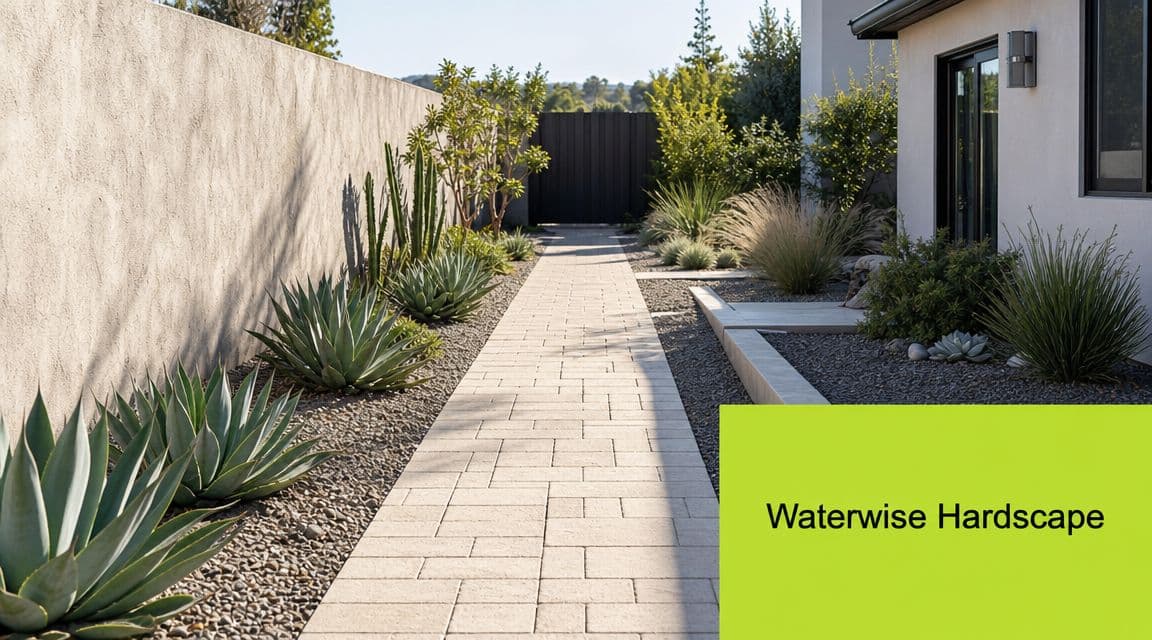
Some yards don't need another living carpet. They need durable surfaces, clean drainage, and a lower-water planting scheme. That's where hardscaping and xeriscaping beat lawn replacements that struggle under traffic.
Xeriscaping has real history behind it. The term was coined by Denver Water in 1981, and it helped formalize the idea that attractive areas in dry climates don't need conventional turf or heavy irrigation.
Best use case
This hybrid approach works well for side yards, front entries, dog runs, courtyards, and areas where people cut across the lawn anyway. It also solves the common problem of asking delicate groundcovers to survive by the driveway or near the back door.
For heavy-use areas, non-living surfaces are often the better recommendation. This practical point is covered well in high-traffic lawn alternatives guidance from SYNLawn, which highlights decomposed granite, gravel, pavers, and mulch pathways for spaces that need to hold up under regular use.
Installation decisions that matter
Base prep matters more than the surface material. If the sub-base is wrong, pavers shift, gravel migrates, and water pools where you don't want it.
I'd rather see a smaller, properly built patio than a large bargain install that settles in one season. If you're comparing surfaces for an outdoor room, patio design ai helps you mock up pavers, gravel bands, and seating zones before you commit.
A helpful companion read is Firm Foundations' patio and deck insights, especially if you're deciding whether the yard needs a hard surface, a platform, or both.
Here's a useful visual walkthrough for the style side of water-wise design:
- Choose light-toned materials: They usually feel less harsh in full sun.
- Soften edges with plants: Use low growers along paving lines so the yard doesn't read as all hardscape.
- Control runoff: Pitch water away from the house and give it somewhere intentional to go.
3. Clover and Microclover Lawns
Clover is the option people ask about when they still want a lawn-like look but don't want a conventional lawn routine. It can work well, but it's not a miracle surface.
The strength of clover is its softness, greener look in mixed conditions, and reduced need for fertilization compared with a turf-first lawn. It also tolerates some shade better than many standard lawns. But if your kids play hard soccer every evening or your dog runs one track along the fence, clover alone may wear unevenly.
The practical version
The best-performing clover lawns I've seen are usually blended, not pure. A mix with low-growing grass often looks more stable through the seasons and handles patchiness better.
Keep expectations realistic. Clover can flower, attract pollinators, and feel a little looser in appearance than a tightly mowed lawn. If you want a very formal front yard, that may bother you.
High-use family lawn and clover-only lawn usually aren't the same thing.
Use OutdoorBrite to test a clover-dominant look in spring and summer lighting before you seed. That quick preview often helps homeowners decide whether they like the softer, less uniform texture.
- Test one section first: Try a side yard or secondary zone before converting the main lawn.
- Mow higher, not lower: Taller growth supports better cover and a healthier look.
- Don't force it into sports use: Save clover for lighter-traffic areas unless you're blending it.
4. Moss Gardens
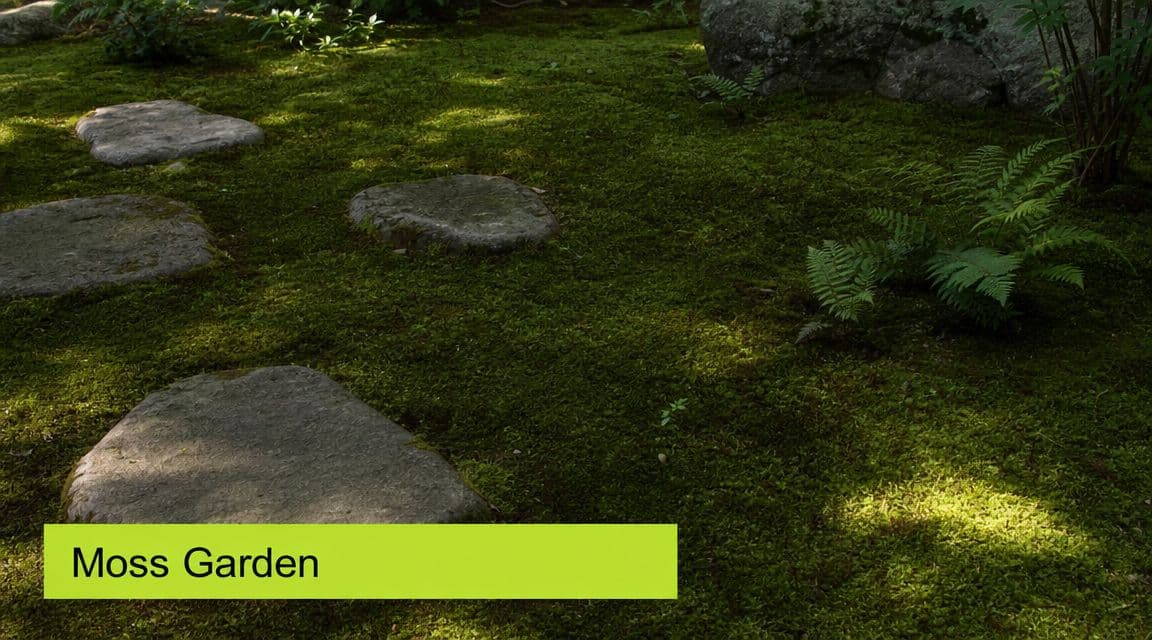
Moss is one of the most beautiful alternatives to grass, but only in the right conditions. If your yard is shady, cool, and consistently moist, moss can give you a calm, finished surface with no mowing and almost no visual noise.
If your yard is hot, dry, and exposed, it's the wrong choice. People get into trouble when they try to make moss act like turf in a site that clearly wants something else.
Why it works
Moss creates a soft visual field in places where grass is thin, patchy, and frustrating. It pairs especially well with stepping stones, boulders, ferns, and shade perennials. In a woodland-style yard, it often looks more natural than any lawn substitute.
The main installation issue is site prep. Remove debris, reduce competing weeds, and protect the area from foot traffic while it establishes. Moss doesn't like being treated like a shortcut path.
What homeowners should know
Moss isn't a play surface. It's a finish surface. It shines in contemplative spaces, side courtyards, and shaded garden rooms where people move through gently.
If you want to preview that restrained, quiet look, Japanese Zen mode in OutdoorBrite is the best style test. It helps you see whether your yard wants moss, gravel, or a combination of both.
- Preserve shade: If you open the canopy too much, the moss often declines.
- Manage moisture: Aim for even moisture, not standing water.
- Add stone paths: Give people a place to walk so the surface stays intact.
5. Ground Cover Plants and Creeping Perennials
Ground covers solve a very specific problem well. They fill space where turf is annoying to mow, unreliable to irrigate, or too visually bland. They don't solve every lawn problem.
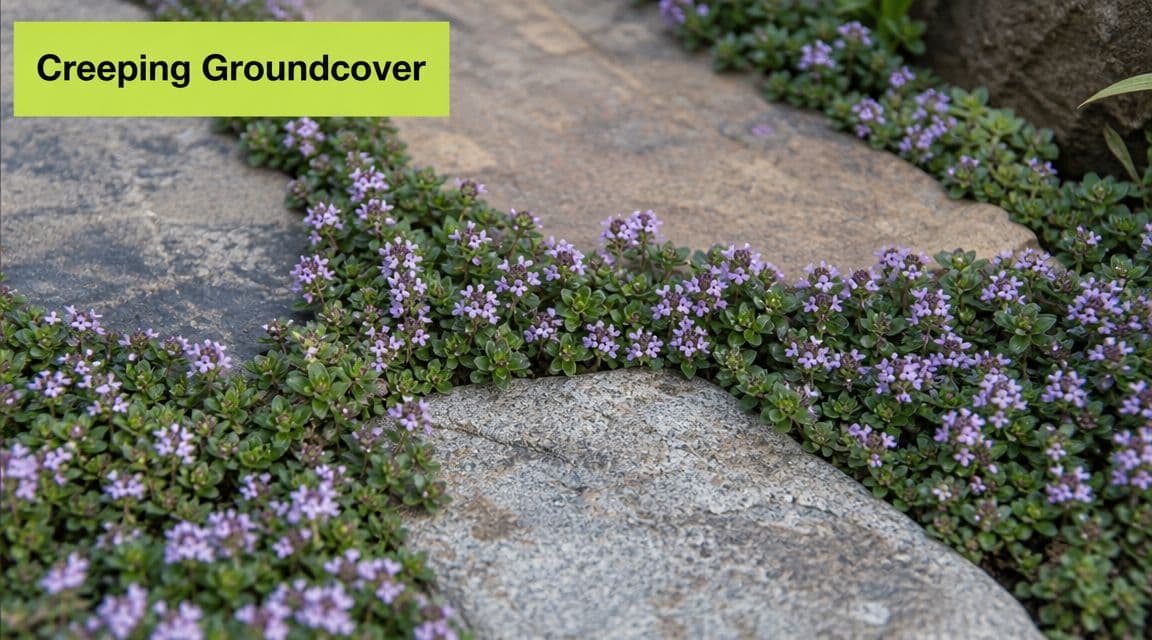
Creeping thyme, sedum, ajuga, and other low growers can knit into a dense carpet, especially along paths, between stepping stones, or in smaller lawn replacements. They also let you bring in fragrance, flowers, and texture that grass never offers.
The trade-off most people miss
Establishment takes work. University guidance notes that groundcovers need weeding and mulching until established, and UConn also notes that cardboard or newspaper smothering is inexpensive but slow to kill existing vegetation, as summarized in the earlier Maryland Extension resource. So yes, the end result may be lower maintenance, but year one often isn't.
Here, design saves labor. Instead of trying to blanket a whole yard, use ground covers in islands, under trees, around stepping stones, or on slopes where mowing is awkward.
Field note: Ground covers succeed when you give them boundaries. They struggle when you ask them to replace an entire active lawn.
- Match the plant to the traffic: Walkable isn't the same as durable for rough play.
- Plant tighter than you think: Sparse spacing invites weeds and impatience.
- Use paths on purpose: Direct feet where you want them so plants can fill undisturbed.
6. Ornamental Grasses
Ornamental grasses don't replace lawn in the usual sense. They replace the visual role of lawn by giving the yard mass, movement, and structure without asking for a clipped green surface.
This option works well for modern, prairie, coastal, and naturalistic designs. In larger yards, grasses can reduce empty-looking expanses and make the outdoor area feel intentional even when the planting palette is simple.
Where they shine
Use them in drifts, screening bands, property edges, or mixed borders. They're especially strong in areas where you want texture but not constant deadheading or fussy flower maintenance.
Some homeowners expect ornamental grasses to look neat all year. That depends on the species and your tolerance for seasonal change. Many look best when left standing through fall and winter, then cut back before spring growth starts.
Smart design move
Think in masses, not specimens. One ornamental grass can look random. Repeating the same variety in groups usually looks designed and easier to maintain.
OutdoorBrite is useful here because height is hard to judge from a nursery pot. Test plant masses against windows, fences, and sightlines before planting so you don't block views or make a small yard feel cramped.
- Use fewer varieties: Repetition gives grasses more impact.
- Pair with broadleaf plants: Contrast makes the texture stand out.
- Check mature size: A small yard can get crowded fast.
7. Artificial Turf and Synthetic Lawns
Synthetic turf is the most commercially scaled lawn substitute. One market estimate values the global artificial grass market at USD 7.27 billion in 2025 and projects USD 13.67 billion by 2033, with an 8.3% CAGR. That doesn't mean it belongs in every yard, but it does show how widely adopted it has become.
The best reason to install artificial turf is functional consistency. It gives you an always-usable surface where real grass fails, especially in small pet areas, rooftop spaces, shaded courtyards, or dry-climate yards where irrigation is the main pain point.
Where it makes sense
Another forecast says sports turf is expected to account for 48.7% of the artificial grass market by 2035, while North America is projected to hold 34.7% global share and polyethylene is expected to represent 63.1% of revenue in 2025. In practical terms, that matters because many buyers choose polyethylene systems for a softer feel and more realistic appearance.
That said, heat, eventual replacement, and cleaning are real trade-offs. Turf also doesn't behave like living groundcover ecologically, so I usually reserve it for spaces that need performance first.
What separates a good install from a bad one
Base preparation, drainage, edge fastening, and infill choices matter more than the marketing brochure. Cheap turf with poor installation looks fake quickly and can become a maintenance headache.
Use OutdoorBrite to visualize turf in context before you buy. It's especially helpful for deciding whether the yard should be all synthetic, partly synthetic, or combined with planting beds and hardscape so the result doesn't look flat.
- Use it selectively: Small, high-use zones usually make more sense than wall-to-wall coverage.
- Plan cleaning: Pet areas need regular rinsing and debris removal.
- Ask about end-of-life removal: Replacement is part of the lifecycle, even if it's years away.
8. Rain Gardens and Bioswales
If part of your yard stays soggy after storms, don't force turf there. Turn the problem into a rain garden or bioswale.
This option is less about replacing grass everywhere and more about replacing grass where water already tells you it doesn't belong. It's a strong fit near downspouts, low spots, and sloped areas that send runoff across the yard.
Why homeowners like them
A well-designed rain garden looks planted and intentional, not like a drainage ditch. The best ones combine structure with function, using a basin shape, water-tolerant plants, and clear edging so the space still reads as part of the overall design.
Because these areas cycle between wet and dry, plant choice matters more than trend appeal. Pick species that can handle both.
Common mistakes
Most failures come from poor grading or putting the basin too close to the foundation. The other issue is making it too small or too shallow to intercept runoff.
OutdoorBrite can help you test basin placement and planting massing before excavation starts. That matters because once grading changes, fixing a bad layout gets expensive and messy.
- Follow the water path: Watch where water moves before you design.
- Include overflow: Big storms need a backup route.
- Keep the shape clean: A defined outline makes a functional feature look designed.
9. Edible Landscapes and Food Gardens
Edible spaces are one of the most satisfying alternatives to grass if you enjoy harvesting, pruning, and seasonal upkeep. If you don't, this can become a guilt garden fast.
The NRDC's no-mow lawn framework includes food-producing areas as one of the broad replacement types, which is a useful reminder that lawn alternatives don't have to be ornamental only. A yard can feed you and still look designed.
Best version for most homeowners
Start with a controlled layout. Raised beds, gravel paths, espaliered fruit, herbs near the kitchen, and berry shrubs integrated into borders are easier to manage than a full backyard farming fantasy.
This is one category where neatness really matters. Straight paths, clear bed edges, and dedicated storage make the difference between “productive garden” and “unfinished project.”
For planning inspiration beyond the planting itself, I like these design ideas for outdoor spaces, especially if you want the edible area to connect to dining, seating, or entertaining zones.
A helpful grower-focused reference is Seed Cellar heirloom seed advice, which is worth a look if tomatoes or seed selection are part of your plan.
What works and what doesn't
Edible gardens work when you place crops where you'll see and use them. They stall out when the garden is too large, too far away, or unsupported by irrigation and storage.
- Keep it close to routine: Herbs and salad crops belong near daily traffic.
- Use permanent paths: Muddy access kills enthusiasm.
- Mix beauty with utility: Fruit trees, herbs, and flowers can share space well.
10. Living Roofs and Green Roofs
A green roof isn't a casual DIY lawn replacement. It's a specialized system with structural, waterproofing, drainage, and planting requirements. But on the right building, it can turn dead overhead space into something useful and visually strong.
This option makes the most sense on garages, additions, studios, and flat or low-slope structures designed to carry the load. If you're considering it for a main residence, bring in the engineer and installer early.
When it's worth considering
Green roofs work well when ground-level yard space is limited or when you want more planted area without expanding into the remaining usable yard. They can also soften a modern structure and make an outbuilding feel integrated into the surroundings.
There are two broad directions in practice. One is a lighter, simpler planted roof focused on hardy, low-maintenance coverage. The other is a more intensive rooftop garden meant for access and use.
Don't skip the planning stage
This is a category where visualization helps before you get deep into design fees. With ai garden design software, you can test how a planted roof relates to the rest of the property and whether it should read as a quiet ecological layer or a designed destination.
- Check structure first: Planting choices come after load capacity.
- Think about access: Maintenance crews need a safe way in.
- Choose exposure-appropriate plants: Rooftops are harsher than ground gardens.
10 Grass Alternatives: Side-by-Side Comparison
| Option | Implementation 🔄 | Resource Requirements ⚡ | Expected Outcomes ⭐📊 | Ideal Use Cases | Key Advantages ⭐ | Practical Tip 💡 |
|---|---|---|---|---|---|---|
| Native Plant Gardens | Moderate, requires species knowledge and 1–2 yr establishment 🔄 | Low ongoing water/fertilizer; moderate initial labor & plant sourcing ⚡ | High biodiversity, pollinator habitat, reduced inputs; seasonal variation ⭐📊 | Eco-minded homeowners, habitat restoration, low-water areas | Low water use, resilient, long-term sustainability ⭐ | Research USDA zone; start small; group by water needs |
| Hardscaping, Xeriscaping & Permeable Paving | High, grading, drainage design, often professional installation 🔄 | High upfront material & labor; low ongoing irrigation/maintenance ⚡ | Durable, water-efficient landscapes; improved stormwater management ⭐📊 | Drought-prone yards, entertaining spaces, urban lots | Creates functional spaces; stormwater control; low long-term upkeep ⭐ | Use permeable pavers, plan grading and choose light materials |
| Clover & Microclover Lawns | Low–Moderate, overseeding or conversion; simple maintenance 🔄 | Low inputs (no N fertilizer), less mowing; inexpensive seed ⚡ | Nitrogen-fixing groundcover, pollinator-friendly, softer aesthetic ⭐📊 | Shaded lawns, low-maintenance yards, transitional replacements | Reduces fertilizer need; drought & shade tolerant ⭐ | Overseed gradually, mix with low grass, reduce mowing height |
| Moss Gardens | Moderate, site prep for shade/moisture; slow to establish (6–12 mo) 🔄 | Low ongoing inputs; requires consistent moisture during establishment ⚡ | Lush shade cover, no mowing/fertilizer, excellent runoff absorption ⭐📊 | Heavily shaded yards, Japanese-style gardens, serene pockets | Extremely low maintenance once established; unique texture ⭐ | Select species for light/moisture, avoid foot traffic while establishing |
| Ground Cover Plants & Creeping Perennials | Moderate, careful species selection and spacing; phased planting 🔄 | Moderate upfront cost; lower water and mowing long-term ⚡ | Dense weed-suppressing cover, seasonal color, erosion control ⭐📊 | Slopes, borders, pollinator gardens, low-traffic lawns | Diverse aesthetics, supports biodiversity, low mowing ⭐ | Space by mature width, mulch during establishment, group by needs |
| Ornamental Grasses | Low–Moderate, simple planting; annual cutback required 🔄 | Low water/fertilizer; occasional pruning; moderate initial cost ⚡ | Dramatic texture and movement, multi-season interest, privacy ⭐📊 | Naturalistic or contemporary designs, screens, specimen plantings | Four-season structure, low inputs, wildlife value ⭐ | Plant in drifts for impact; allow winter seedheads; prune annually |
| Artificial Turf & Synthetic Lawns | Moderate, professional install with drainage and base prep 🔄 | High upfront installation; minimal ongoing water/lawn care ⚡ | Uniform green year-round; highly durable; heat/microplastic concerns ⭐📊 | High-traffic areas, pet zones, rooftops, low-maintenance demands | Zero mowing/watering; consistent appearance; long lifespan ⭐ | Ensure proper drainage, choose high-quality turf, plan for heat mitigation |
| Rain Gardens & Bioswales | High, site analysis, engineered grading and plant selection 🔄 | Moderate–high installation; native plants and soil amendments ⚡ | Captures/filters runoff, reduces flooding, supports habitat ⭐📊 | Properties with drainage issues, urban stormwater solutions | Functional stormwater control plus aesthetic habitat value ⭐ | Design to drain in 24–48 hrs; include overflow; use adapted natives |
| Edible Landscapes & Food Gardens | Moderate–High, planning, soil prep, ongoing management 🔄 | Recurring labor (weeding, pruning, harvesting); moderate inputs ⚡ | Fresh produce, seasonal interest, increased engagement and value ⭐📊 | Homeowners wanting food production, educational yards, small farms | Food security, pollinator attraction, productive beauty ⭐ | Start with raised beds, succession planting, compost and irrigation |
| Living Roofs & Green Roofs | High, structural assessment, waterproofing, specialist contractors 🔄 | High upfront cost and structural requirements; ongoing maintenance ⚡ | Energy savings, stormwater retention, urban heat reduction, habitat ⭐📊 | Urban buildings with load capacity, sustainability projects | Extends roof life, IAQ and insulation benefits, LEED incentives ⭐ | Conduct structural review; hire certified installers; choose system type |
Design Your Dream Yard with Confidence
The right grass alternative usually isn't one material or one planting style. It's a combination that matches how your yard is used. A front slope may want native groundcovers. A side yard may need gravel and stepping stone access. A dog run may need hardscape or synthetic turf. The back corner might become a rain garden because that's where the water already goes.
That's also why so many lawn replacements fail. People choose based on a photo, not on performance. They fall in love with creeping thyme without asking how the kids will cross it every day. They install a meadow where they really needed a path network and some screening. Or they assume “less lawn” automatically means “less work,” when the first season often takes the most attention.
The practical way to decide is to break the yard into zones and assign each one a job. Ask what needs to be walked on, what needs to drain, what needs to look tidy from the street, and what you're willing to maintain. Once those answers are clear, the shortlist gets much easier.
OutdoorBrite is particularly useful in a real planning workflow, not just as inspiration. Upload a photo of your yard, test a few distinct directions, and compare them side by side. Try a native planting concept, then a modern xeriscape, then a clover-dominant lawn, then a hardscape-heavy layout. Seeing the differences in your own space is far more useful than guessing from other people's yards.
I'd use it in this order:
- Start with the problem area: Upload the part of the yard that frustrates you most.
- Test contrasting styles: Don't generate three versions of the same idea. Compare planted, paved, and mixed approaches.
- Check season and light: A design that looks great in bright summer sun may feel harsh in winter or too sparse in shoulder seasons.
- Watch circulation: Make sure people can still move naturally through the space.
- Refine before buying materials: It's cheaper to revise a render than redo a patio edge or replant a whole bed.
The biggest benefit is confidence. You don't need to commit blindly to a full yard conversion. You can pressure-test the look, the balance of planting to hardscape, and the overall feel before you spend weekends removing sod or hiring a contractor.
If you want a cleaner, lower-maintenance yard, there are plenty of solid alternatives to grass. If you want a yard that truly fits your climate, your habits, and your budget, the answer is usually more specific than “replace lawn with plants.” Good outdoor area design is less about picking the trendiest option and more about choosing the right surface for the right place.
Start there, visualize it first, and you'll make better decisions with fewer expensive regrets.
OutdoorBrite helps you move from vague ideas to a yard plan you can trust. Upload a photo, test styles in seconds, and see how native gardens, clover lawns, hardscapes, edible beds, or synthetic turf would look before you spend money on materials or labor. Explore OutdoorBrite to design your yard with more clarity and a lot less guesswork.
See your yard reimagined
Start creating