Eastern Bee Balm Guide for Thriving Gardens
Discover how to grow and design with Eastern Bee Balm in your garden. Learn care, propagation, pest control, and create pollinator-friendly landscapes.
You're probably looking at a bare patch in a border, a dry strip near a walkway, or a sunny bed that keeps disappointing you. Maybe you planted a showy bee balm before, loved the flowers for a week, then watched the foliage collapse into a mildewed mess by midsummer. Or maybe you want a native plant that looks intentional, not weedy, and you're tired of guides that lump every Monarda together as if they all behave the same way.
Eastern Bee Balm solves several of those problems at once. It has the pollinator appeal people want from bee balm, but it also brings a tidier shape, better tolerance for leaner soils, and a reputation for handling dry conditions more calmly than fussier relatives. It fits the kind of real gardens people have. Front-yard beds, cottage borders, small native plantings, and even containers with sharp drainage.
It also gets misunderstood. Many care guides talk about “bee balm” in broad strokes, which can send gardeners down the wrong path. Eastern Bee Balm has its own rhythm, its own strengths, and a few quirks that matter if you want it to look good for more than a single bloom cycle. Once you understand those details, it becomes much easier to place, prune, and maintain.
Table of Contents
- Introduction to Eastern Bee Balm
- Identifying Eastern Bee Balm and Top Cultivars
- Growing Conditions and Ongoing Care
- Propagation Methods for Eastern Bee Balm
- Managing Pests Diseases and Resistant Cultivars
- Landscape Design and Placement Ideas
- Pollinator Benefits and Wildlife Support
- Conclusion and Seasonal Troubleshooting
Introduction to Eastern Bee Balm
Eastern Bee Balm earns its place in a garden the first time summer turns dry and the plant keeps going without drama. While other flowering perennials may flop, mildew, or demand extra water, Monarda bradburyana usually stays compact, flowers well, and asks for much less fuss.
That combination is what makes it different from the bee balm many gardeners already know. Instead of a tall, sprawling plant that can look tired by midsummer, Eastern Bee Balm forms a lower mound with flowers held just above the foliage. The effect is tidy and easy to place, especially if you want a native perennial that looks intentional rather than wild or unruly.
Its real strengths are practical. Eastern Bee Balm handles dry spells better than many ornamentals, tolerates leaner soil, and is often chosen in part because it is less troubled by powdery mildew than some other Monarda types. If standard bee balm has disappointed you before, this species is a useful reset. It offers the same general pollinator appeal, but with fewer of the headaches that cause gardeners to give up on the group.
The timing of its growth also matters. Eastern Bee Balm shines earlier than many summer perennials, so it fills a gap that gardens often have after spring bulbs fade and before peak summer bloom begins. With the right pruning schedule, you can also stretch its display longer than many generic bee balm guides suggest. That detail is easy to miss, but it changes how the plant works in a mixed planting.
A simple way to picture its role is this. Eastern Bee Balm works like a steady connector plant. It ties together showier neighbors, softens bed edges, and fits into spots with decent sun and sharp drainage where thirstier plants struggle.
Gardeners often get confused by the common name. “Bee balm” sounds like one plant, but it covers several Monarda species with very different habits. Eastern Bee Balm works best when you judge it on its own strengths: drought tolerance, cleaner foliage, a more controlled shape, and an easier fit in designed plantings. Those traits are the reason it deserves separate attention, not a brief mention under a general bee balm label.
Identifying Eastern Bee Balm and Top Cultivars
Getting the name right saves a lot of frustration later. A pot labeled only “bee balm” could hold a tall, spreading Monarda that behaves very differently from Eastern Bee Balm. If you want the species this guide focuses on, identification starts with habit, then moves to the label.
What makes it look different
The plant's shape is a key identifier. Eastern Bee Balm forms a low, tidy mound instead of a tall fountain of stems, so it usually looks settled and organized even before it flowers.
That growth pattern matters in practical terms. In a mixed bed, the plant reads more like a controlled clump than a rambler, which is one reason it fits so well into planned borders and smaller spaces.
A few features help confirm you have the right plant:
- Mounded habit. Eastern Bee Balm stays compact in outline, which makes it easier to place near paths, bed edges, or in front of taller perennials.
- Moderate height and broader spread. It is generally shorter than many common bee balms, with a wider, grounded look rather than a strongly upright one.
- Well-kept appearance. The foliage and branching usually look denser and more restrained than the looser, wilder forms gardeners often associate with bee balm.
- Adaptation to drier, better-drained spots. If a tag or nursery description suggests the plant wants rich, constantly moist soil, pause and verify the species. Eastern Bee Balm is often chosen for the opposite reason.
- Gentle self-seeding. It can settle into a site over time, but it rarely gives the same unruly impression people worry about when they hear “mint family.”
The botanical name is the best checkpoint. Look for Monarda bradburyana or sometimes Monarda bradburiana on the tag. Nurseries and databases do not always use the same spelling, which can confuse shoppers, but both are commonly used for this plant in commerce.
Hardiness can also look inconsistent from source to source. If you garden near the cold or warm edge of its listed range, treat the first plant like a trial run. Good drainage, winter wet, and summer humidity often influence success as much as the zone map.
How to shop without getting the wrong plant
Start with the label, then compare the plant in front of you to the label's promise. That sounds basic, but it prevents the most common buying mistake: choosing by flower photo alone.
A quick checklist makes the process easier:
| What to check | What you want |
|---|---|
| Botanical label | Monarda bradburyana or M. bradburiana |
| Growth habit | Compact, mounded |
| Mature size | Shorter, broader, and more controlled than tall common bee balm types |
| Site fit | Sun to light shade, with good drainage |
| Bed placement | Room for airflow and a clean outline |
If the pot already looks upright, coarse, and eager to shoot above nearby plants, be cautious. Eastern Bee Balm usually gives a calmer first impression.
Some named bee balm cultivars create extra confusion. Gardeners often see ‘Jacob Cline’ or ‘Marshall's Delight’ and assume any well-known Monarda selection belongs in the same category. It does not. Those are useful cultivars in their own right, especially in discussions about mildew resistance, but they should not be treated as Eastern Bee Balm equivalents.
That distinction matters for design as much as for care. A taller cultivar can dominate a spot where Eastern Bee Balm would knit the planting together. If your goal is a plant that threads between spring fade-out and early summer color, stays relatively composed, and responds well to careful pruning for a longer show, species accuracy matters.
A botanical name tells you more than a bloom photo. It tells you how the plant is likely to behave after planting.
If you are shopping online and the description feels vague, compare the listed soil and growth habit with basic site-prep principles before buying. OutdoorBrite planting soil advice is a useful refresher for judging whether the seller's recommendations match a plant meant for drainage and restraint rather than lush, thirsty growth.
Top cultivars are less of a focus here than species selection, because Eastern Bee Balm is still often sold as the straight species. In many gardens, that is an advantage. You are choosing it for its specific traits: cleaner foliage, better tolerance of dry periods, a more disciplined outline, and an easier fit with neighboring plants. If the plant in front of you looks like it wants to become a bold, chest-high colony, keep looking.
Growing Conditions and Ongoing Care
A common gardening mistake goes like this. Eastern Bee Balm gets planted into rich, heavily watered soil because the flowers look soft and lush. By midsummer, the plant flops, the crown stays too damp, and the gardener assumes bee balm is fussy. Eastern Bee Balm usually fails for the opposite reason. It is often overpampered.
Its best performance comes from restraint. Give it sun, drainage, moderate room, and a pruning plan. That combination suits the species far better than constant watering or rich feeding, and it is one of the reasons Eastern Bee Balm can fit into lower-input plantings more easily than many gardeners expect.
Start with the root zone, not the flowers
Site choice decides a lot before the first bloom opens. Eastern Bee Balm handles full sun well and also copes with part shade, especially where afternoons are hot. More important than shade level, though, is how fast water leaves the soil after rain. Roots need air as much as moisture.
If that sounds abstract, use a simple test. Check the planting area a day after a good rain. If the soil still feels swampy or water sits in the planting hole, the site needs improvement or a different location. Eastern Bee Balm deals with short dry spells better than stagnant, airless soil.
For gardeners working with clay, the goal is not to make the bed rich. The goal is to make it breathable. Compost can help loosen heavy ground and improve structure so roots are not sealed into a dense mass. General bed preparation matters here, and OutdoorBrite planting soil advice is a useful refresher if you want a practical overview of drainage and soil setup.
Average to dry conditions usually suit this plant better than a bed designed for thirsty perennials. That is one of its underappreciated advantages. In a border that gets missed by the hose now and then, Eastern Bee Balm often stays composed instead of collapsing.
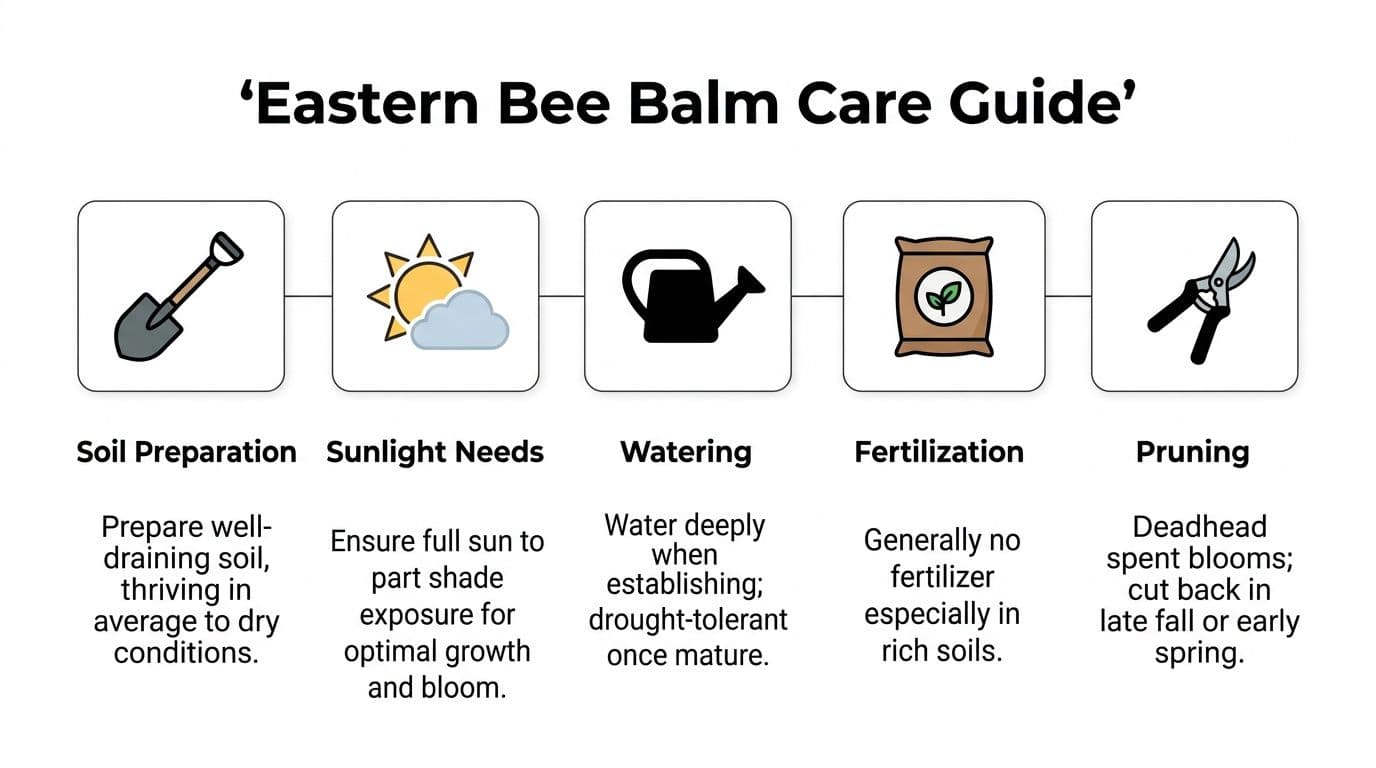
Here's a quick visual summary before you plant:
Water and feed as if you are training roots, not spoiling leaves
New plants need regular moisture while they establish. After that, let the soil surface guide you more than the calendar. If the top layer has dried, check a little deeper before watering again. This habit prevents the two opposite mistakes gardeners make with native perennials. Watering too often in heavy soil, or waiting so long in sandy soil that the young root system stalls.
Once established, Eastern Bee Balm usually asks for less water than generic bee balm advice suggests. That drought tolerance is part of its value in real gardens. It can bridge the gap between spring growth and summer heat without demanding constant attention.
Feeding should stay light. A modest spring application is enough in many beds, and decent garden soil may need no extra fertilizer at all. Too much fertility pushes soft, crowded growth. That creates a plant with more leaves than structure, which is the opposite of what makes Eastern Bee Balm attractive in mixed planting.
Spacing matters for the same reason. Leave enough room for air to move through the clump and for neighboring plants to keep their own shape. If Eastern Bee Balm is squeezed into a tight pocket, you lose one of its best traits, which is its ability to weave into a border without turning into a bulky thicket.
Use this order for routine care:
- Check drainage first. A wet crown causes more trouble than a missed feeding.
- Water for establishment, then reduce. Mature plants prefer a steadier dry-down between drinks.
- Keep spacing open. Good airflow supports cleaner foliage.
- Feed lightly in spring if the soil is poor. Skip heavy summer feeding.
- Deadhead if you want a tidier look. Leave some seedheads if you like the natural finish.
Prune on purpose if you want a longer bloom season
This is the care step generic bee balm guides often blur. Eastern Bee Balm responds well to selective spring pruning, and the timing matters.
Instead of cutting every stem back at once, prune only part of the patch in early spring. Leave the rest alone. That staggered approach delays bloom on the cut portion, so the whole planting flowers over a longer period instead of peaking all at once. It works like setting two timers in the same kitchen. Dinner still gets cooked, but not everything comes out of the oven at the same minute.
That matters in design as much as in maintenance. A border looks more natural when one group starts to color up as another is still building. Eastern Bee Balm is especially good at this because it already has a relatively easy, adaptable habit. Careful pruning makes that habit more useful, not more complicated.
If you prefer a simple rule, remember this. Prune some stems for timing. Deadhead spent flowers for neatness. Do not shear the whole plant hard in midsummer unless you are trying to reset a tired flush.
Container plants need the same logic in a smaller space. Use a pot wide enough to keep roots from overheating and choose a fast-draining mix. Containers dry faster than garden beds, but they also become waterlogged faster if drainage is poor. In other words, the margin for error gets smaller.
A video can help if you learn better by seeing plant habit and maintenance in motion:
A quick visual care reference
If you want the shortest workable care summary, use this:
- Sunlight: Full sun usually gives the best flowering, while part shade can help in hotter sites.
- Soil: Well-drained, average to somewhat dry soil suits it better than rich, wet ground.
- Water: Keep moisture steady during establishment, then let the soil dry somewhat between waterings.
- Feeding: Light spring feeding is enough, and often unnecessary in decent soil.
- Pruning: Selective early spring pruning can extend the display instead of compressing it into one short peak.
Propagation Methods for Eastern Bee Balm
A common propagation failure starts with a healthy idea and bad timing. You sow too late, divide during heat, or move young plants outside before they have enough root mass. Eastern Bee Balm is forgiving once established, especially in drier spots where other bee balms struggle, but new plants are still in their apprenticeship stage. They need a calmer start before they show that mature toughness.
Starting from seed
Seed works well if your goal is quantity. It is the slower route, but it gives you more plants for less money and lets you fill a naturalistic planting without buying a full tray of nursery starts.
The calendar matters here more than many general bee balm guides suggest. Start seeds indoors about 8 weeks before your last frost date, or direct sow roughly 2 weeks before the last frost. If you raise seedlings indoors, wait until about 2 weeks after the last frost to transplant them outside. That spacing protects the two weak points in the process: germination and transplant shock.
A simple way to read the schedule is like this:
| Method | Timing |
|---|---|
| Indoor seed start | About 8 weeks before last expected frost |
| Direct sow | About 2 weeks before last frost |
| Transplant outdoors | About 2 weeks after last frost |
If that seems oddly precise, it helps to picture the plant's first season as a budget. Every setback uses up energy. Cold soil, wet feet, and abrupt moves all cost the seedling something. A steady timeline preserves that energy for root growth, which is what later supports the plant's drought tolerance.
Keep the indoor setup plain and easy to monitor:
- Seed trays or small pots with a loose, fast-draining seed-starting mix
- Labels, because young Monarda seedlings are easy to confuse
- Bright light once seeds sprout
- Even moisture, with no standing water
Direct sowing can work well in a prepared bed, but it asks more from the site. Heavy spring rain can crust the soil surface or wash seed out of place. Indoor sowing gives you better control if your springs are erratic.
Division and other practical options
Division is usually the fastest method if you already have an established clump. It also suits Eastern Bee Balm's growth habit. Older plants can thin in the center or flower less heavily when crowded, so dividing is both propagation and maintenance at the same time.
Spring is the cleanest window for this job. New growth is visible, the weather is milder, and the plant has time to re-root before summer stress arrives. Fall division can work in some gardens, but spring is easier to manage because you can watch regrowth develop in real time.
Use this sequence:
- Dig up the clump while new growth is still short.
- Cut or pull it into smaller sections, making sure each piece has roots and several shoots.
- Replant the divisions promptly in well-drained soil.
- Water them in thoroughly, then keep moisture steady until you see fresh growth.
Division works like splitting a mature classroom into two smaller groups. Each section already has the basic parts it needs, so it settles in faster than a seedling starting from scratch.
Softwood cuttings are possible, but they are less forgiving. They need clean tools, close humidity control, and regular attention so stems do not wilt before rooting. For home gardeners, seed and division are usually the more practical choices.
One detail generic bee balm propagation advice often misses is how this species fits into real garden planning. Because Eastern Bee Balm tolerates leaner soil and dry spells better than many showier Monarda hybrids, divided clumps and well-rooted seedlings can be placed into lower-input parts of the garden once established. That makes propagation more useful. You are not just making more plants. You are building repeats for a border or pollinator bed that stays easier to manage over time.
If you want longer bloom from propagated plants in future seasons, keep one related point in mind. Let new divisions and seedlings spend their first year building roots, then use the more precise spring pruning schedule discussed earlier once the plants are established enough to respond well.
Managing Pests Diseases and Resistant Cultivars
Gardeners often approach bee balm as if disease is inevitable. With Eastern Bee Balm, that assumption is too blunt. The plant has useful resistance traits, but it's not invincible, and confusion with other Monarda types leads to poor decisions.
The main problem gardeners confuse
The most common mix-up involves powdery mildew. Generic bee balm advice often treats all species as equally mildew-prone, then jumps straight to fungicides. Verified analysis points out that this broad advice misses an important distinction. Content commonly lumps Eastern Bee Balm together with other bee balms, even though cultivar selection and species choice matter. The same analysis notes that choosing mildew-resistant cultivars such as ‘Jacob Cline’ or ‘Marshall's Delight’ can reduce disease incidence by up to 80%, according to The Spruce discussion of bee balm disease resistance.
That figure is useful, but it also needs interpretation. Those named cultivars help show how much resistance breeding can matter in bee balm generally. They don't mean every Eastern Bee Balm plant will behave exactly like a mildew-bred hybrid. The takeaway is strategic: stop treating “bee balm” as one disease category.
The practical risk factors are still familiar:
- Crowding keeps foliage damp and stale.
- Poor air circulation encourages leaf problems.
- Excess fertilizer can create dense, soft growth.
- Wrong plant choice for the site sets the whole planting up to struggle.
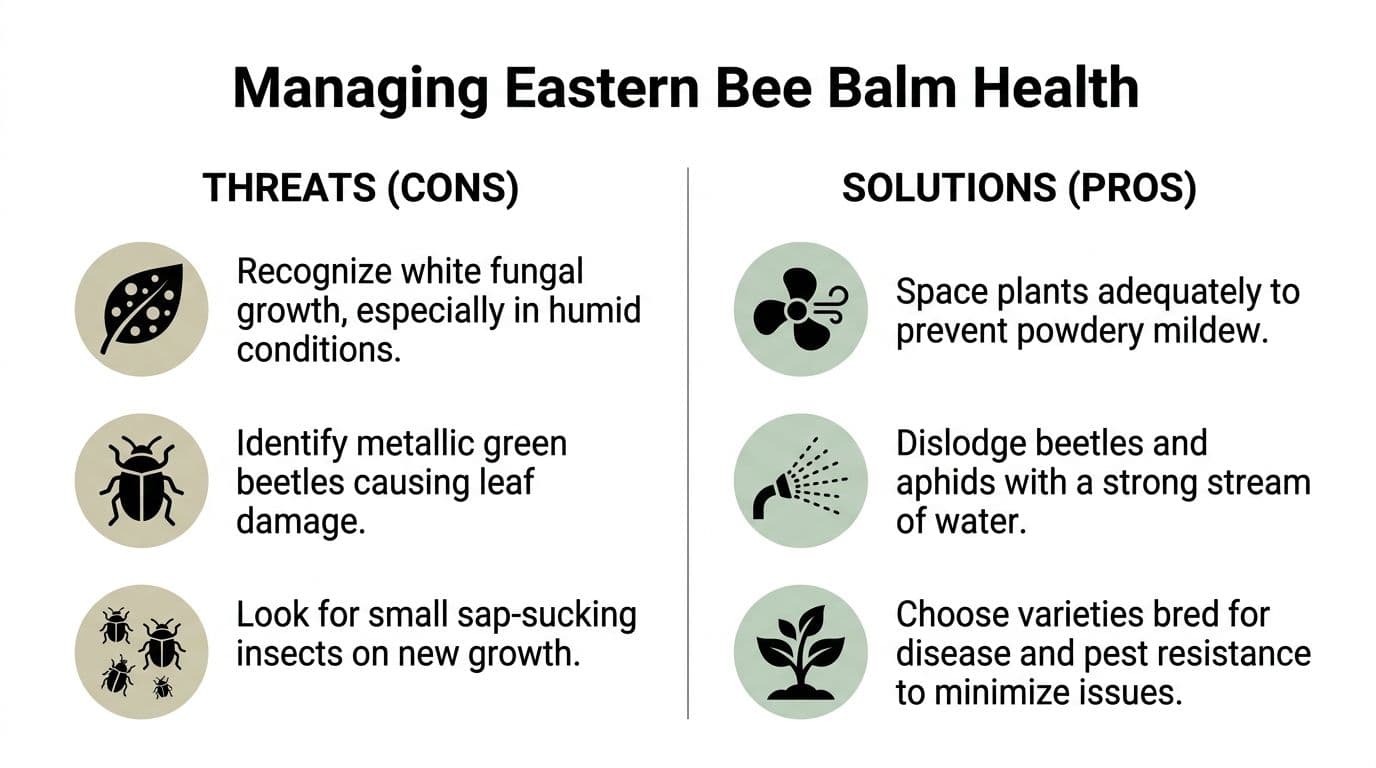
Here's a quick threat-and-response reference:
Simple responses before chemicals
For Eastern Bee Balm, cultural care should be your first line of defense. Start by checking spacing and airflow before you reach for a spray bottle. If the clump is wedged between larger perennials and stays damp deep inside the foliage, the layout may be the main problem.
Japanese beetles and aphids can also show up. Home gardeners usually notice ragged chewing or clustered insects on fresh growth first. A strong stream of water can dislodge soft-bodied pests, and hand removal works for larger beetles when pressure is still low. Those responses are basic, but they're often enough when the plant is otherwise healthy.
A simple decision guide helps:
| Problem | First response |
|---|---|
| White coating on foliage | Improve airflow, reduce crowding, avoid excess feeding |
| Beetle chewing | Hand pick or dislodge with water |
| Aphids on new growth | Hose off and monitor rebound growth |
| Weak repeated decline | Reassess site, drainage, and species selection |
Healthy placement beats reactive treatment. A plant in the right light with room around it usually needs fewer interventions.
If mildew keeps returning, ask a harder question. Is this Eastern Bee Balm in a suitable spot, or is it a different Monarda in a setting that traps humidity? That single correction solves more problems than most product shelves do.
Landscape Design and Placement Ideas
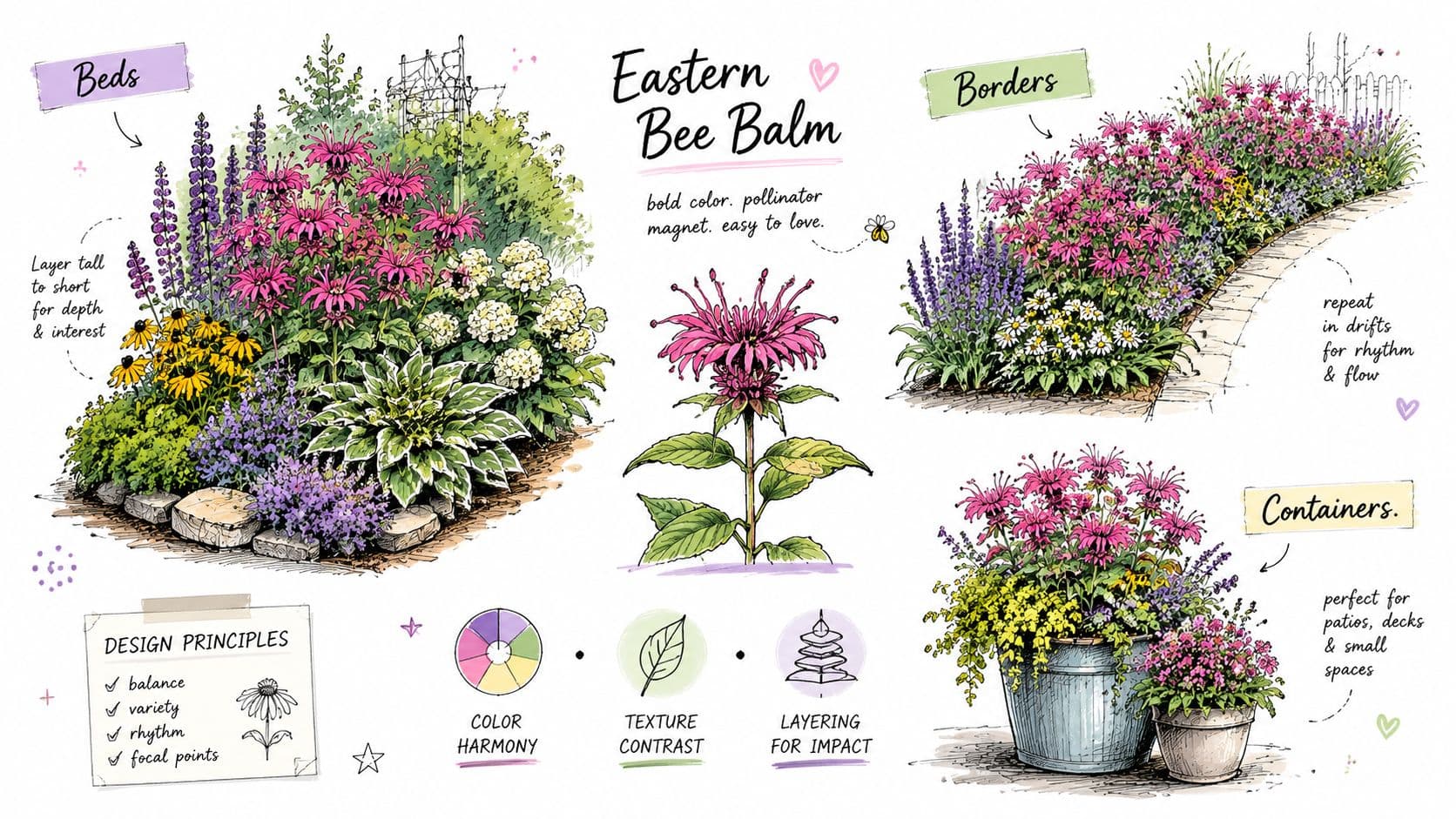
Eastern Bee Balm is especially useful when you want a native planting to look intentional. Its shape is compact enough for structured beds, but soft enough for looser meadow-style compositions. That makes it one of those rare plants that can work for both a tidy front yard and a more naturalistic pollinator border.
Where it fits best
Use Eastern Bee Balm where you need a plant that softens edges without turning into a floppy mass. Because its form stays relatively low and mounded, it works well in the front half of a border, along path edges with enough width, or in repeated drifts that guide the eye through a planting.
Think in layers:
- Front edge role: It can soften the line between hardscape and taller perennials.
- Middle layer role: It can connect upright plants and grasses by adding a rounded, grounded shape.
- Transition role: It's useful where a formal bed starts to blur into a more natural planting.
One of the easiest mistakes is placing it like a specimen that must carry the whole composition alone. It looks better in small groups or repeated clusters. Repetition gives the planting rhythm. A single plant can look accidental. Three or five placed with intention look designed.
Companion planting that makes sense
The best companions share the same cultural temperament. You want neighbors that don't demand constant irrigation or rich soil if your Eastern Bee Balm is planted in a leaner, well-drained setting.
Good companions usually have one of three qualities:
- Vertical contrast. Upright spires or grasses make the bee balm's mound shape more noticeable.
- Textural contrast. Fine leaves or narrow blades keep the broader bee balm foliage from looking heavy.
- Seasonal handoff. Plants that peak before or after it keep the bed from going flat.
For example, coneflowers and switchgrass are often sensible design partners because they add height and movement while fitting the same broad native-plant language. You can also pair Eastern Bee Balm with other drought-tolerant perennials in a sunny border so the irrigation pattern stays simple.
A design test helps. Stand back and ask whether the planting has three forms: upright, mounded, and airy. If all your plants are the same height and bulk, the bed will look crowded even when it's healthy.
The plant's best design use is not as a loud focal point. It's as a connector that makes neighboring plants look more deliberate.
If you want to sketch layouts digitally before planting, tools in the category of best garden design software can help you test spacing, massing, and placement before you move a shovel.
Using it in containers and small spaces
Eastern Bee Balm can work in containers if you treat the pot like a dry garden, not a water reservoir. The plant's compact habit suits patios and small entries better than many larger Monarda types, but drainage still decides success.
In a pot, use it as one part of a composition rather than stuffing several thirsty fillers around it. A clean arrangement might include:
- A central mound of Eastern Bee Balm
- An airy edge softener
- A trailing plant used sparingly so the container doesn't stay damp
Small urban spaces benefit from this plant because it brings a native feel without demanding a meadow-scale footprint. In narrow side yards, townhouse courtyards, and compact front beds, that balance is hard to find.
The design principle is simple. Let the plant's shape do the work. Don't bury it under companions that erase the neat mound, because that tidy form is one of its biggest visual advantages.
Pollinator Benefits and Wildlife Support
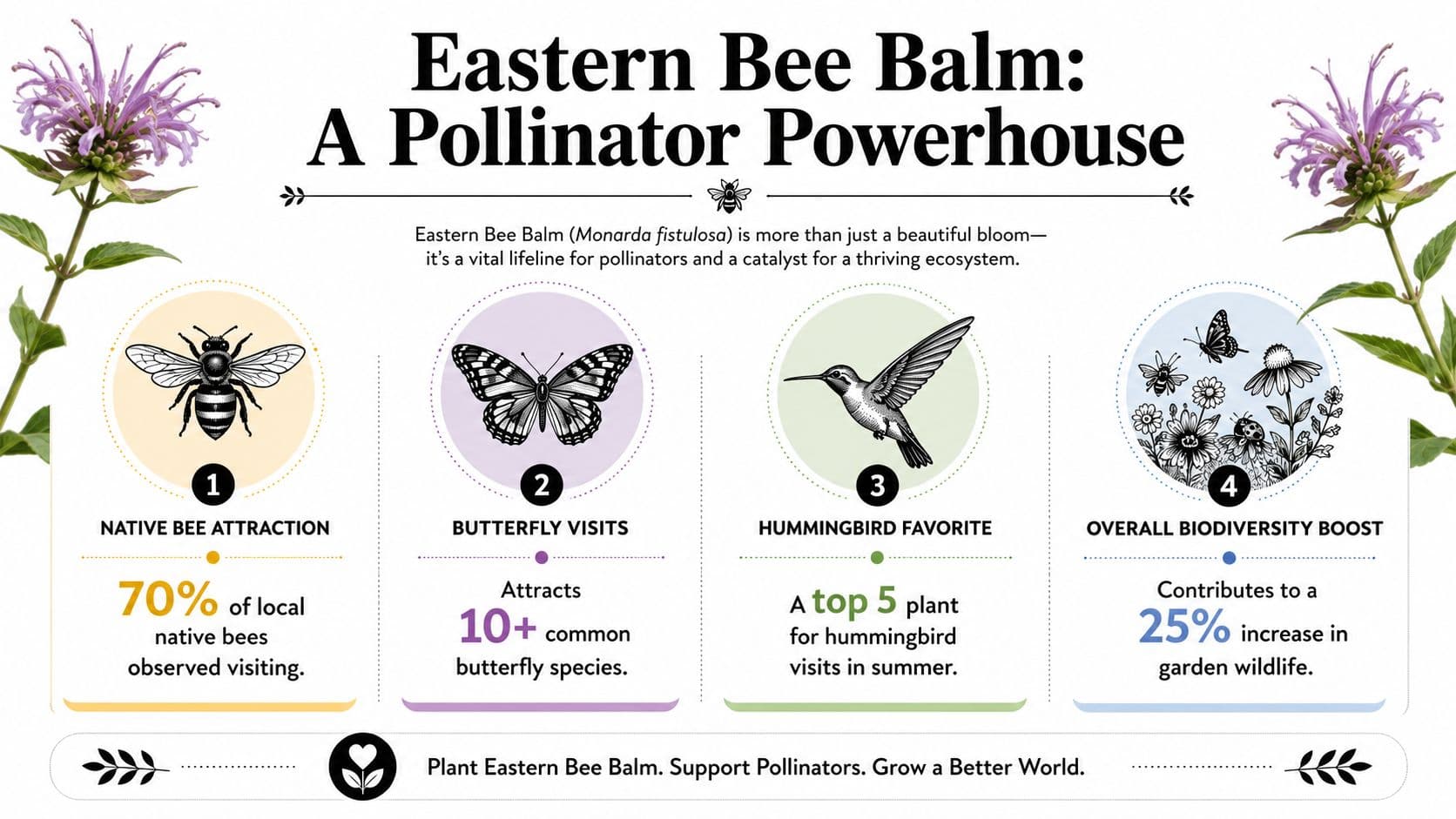
Gardeners don't need a lecture to notice what happens around a good Monarda planting. When Eastern Bee Balm is happy, the bed feels active. You see movement, pauses, return visits, and that steady traffic that makes a garden seem alive instead of merely decorated.
Why native structure matters
Its ecological value starts with its identity as a native North American perennial, which makes it a strong fit for regional biodiversity goals, as described in the earlier verified guidance from the KPU profile. Native plants often support native insects more naturally because the timing, flower form, and seasonal role fit local food webs better than many purely ornamental imports.
That doesn't mean one plant creates a full habitat by itself. It means Eastern Bee Balm is a useful building block. It gives pollinators another dependable stop in a planting and does so without the invasive risk concerns that can come with some aggressive non-native choices.
A lot of gardeners focus only on flower color when choosing pollinator plants. Wildlife responds to more than color. It responds to timing, shelter, continuity, and whether the planting offers repeated opportunities to feed.
How to make the planting more useful to wildlife
If your goal is more than a pretty bloom, treat Eastern Bee Balm as part of a small ecosystem.
- Cluster plants together so pollinators can forage efficiently instead of hunting across a scattered yard.
- Add a water source nearby such as a shallow dish with stones, so insects can land safely.
- Leave some seasonal structure rather than cutting everything down too early.
- Mix bloom periods so there isn't a feast followed by a long famine.
One practical planning aid is to map bloom succession before you buy. A simple flower garden planner can help you place Eastern Bee Balm among earlier and later flowering plants so your garden supports activity across more of the growing season.
The primary argument for growing Eastern Bee Balm is straightforward. It gives you a garden that does more than look good for you. It also functions for the creatures that use it.
Conclusion and Seasonal Troubleshooting
A good way to judge Eastern Bee Balm is to watch what happens in a tough stretch of summer. While thirstier perennials start to look strained and mildew-prone bee balms can turn messy, Eastern Bee Balm often keeps a steadier, cleaner presence if it was placed well from the start. That combination is the key point. This plant rewards restraint more than constant correction.
Its main advantage is not that it asks for special treatment. It is that it avoids several common bee balm frustrations at once. It handles dry periods better than many gardeners expect, it is less likely to spiral into disease trouble when given air and sun, and it responds well to a very specific pruning timeline that can stretch the display instead of producing one quick flush.
That pruning rhythm is the quirk worth remembering. A full haircut at the wrong time can shorten the show. Selective pinching or cutting in late spring works better, because it staggers bloom like setting a few clocks a little apart instead of making them chime all at once. If flowering feels brief, revisit your timing before you blame the plant.
Seasonal problems usually point to one mismatch between plant and setting.
- Wilted stems during hot weather: check the soil first. Dry soil suggests temporary drought stress. Wet soil points to roots sitting in conditions they dislike.
- Yellowing or tired lower leaves: look for crowding, poor airflow, or heavy soil that stays damp too long.
- Weak flowering: the usual cause is insufficient sun or pruning at a poorly chosen time.
- A clump that looks thinner in the center: that is often a sign it is aging and would benefit from division, as noted earlier.
- Late-season foliage decline: remove worn stems selectively and check nearby plants that may be trapping moisture around it.
Eastern Bee Balm also earns its place because it is easy to fit into real gardens. It does not need a formal native planting to make sense. It can soften a dry border, thread through meadow-style designs, or act as a pollinator-focused accent among grasses and other summer perennials without looking out of place. Used this way, it behaves less like a diva specimen and more like a reliable ensemble plant that helps the whole planting read better.
Keep the final rule simple. If the plant seems to need constant rescue, the issue is usually the site or the timing, not a lack of fertilizer or attention. Eastern Bee Balm is at its best when its natural strengths are allowed to do the work.
If you're planning a new bed, reworking a dry border, or testing native-plant layouts before you buy, OutdoorBrite Money can help you visualize outdoor changes fast. It lets you turn yard and garden photos into photorealistic redesigns, compare styles, and make planting decisions with more confidence before you start digging.
See your yard reimagined
Start creating