Sacramento Planting Zone: A 2026 Gardener's Guide
Unlock your garden's potential. Our guide to the Sacramento planting zone (9b) covers frost dates, microclimates, and plant lists for a thriving yard.
You're standing in a Sacramento yard with a shovel in one hand and a nursery tag in the other, and the question is simple: what can survive here? The answer starts with the sacramento planting zone, but the useful answer goes beyond the label on the USDA map. Sacramento's climate rewards gardeners who understand winter lows, summer heat, local exposure, and the way one yard can behave very differently from the next.
That's why the best planting decisions come from a layered view of the city's climate, not a single rule of thumb. If you're trying to build a border that lasts, grow vegetables on time, or choose shrubs that won't sulk through summer, you need the baseline zone, the frost window, and the microclimate in your own yard. A tidy shed can help too, especially if you keep tools, seed trays, irrigation parts, and mulch supplies organized with Van Dyke Outdoors tips for sheds.
Table of Contents
- Your Guide to Gardening in Sacramento
- What Is USDA Hardiness Zone 9b
- Why Zone 9b Is Not the Whole Story
- The Sacramento Gardener's Calendar
- Best Plants and Care for a Zone 9b Garden
- Design Your Ideal Garden with OutdoorBrite
Your Guide to Gardening in Sacramento
A Sacramento yard can surprise new gardeners. A plant that sails through spring in one bed may struggle just a few feet away, where reflected heat, afternoon sun, or a colder pocket changes the conditions completely.
That is why the sacramento planting zone matters, but only as a starting point. The USDA label helps you judge winter survival, yet it does not tell you how a bed near a stucco wall behaves in July, or why a shaded corner stays damp longer after watering.
A new homeowner often picks plants by flower color or by what looked healthy at the nursery, then wonders why one shrub thrives while the other fades. That usually comes from matching a plant to the wrong spot, not from bad luck. A south-facing bed, a windy side yard, and a low spot that holds cold air each ask something different from the plants placed there.
Practical rule: Start with climate, then narrow by soil, sun, and water. If you skip that order, you end up fighting your own yard.
Sacramento gardening also rewards local habits. Keep your tools, seed packets, and drip fittings organized so you can respond quickly when the weather shifts, and use Van Dyke Outdoors tips for sheds if you want a simple system for storing the pieces you reach for most often.
A good local planting plan matches the plant to the spot, instead of trying to make every bed do the same job. That approach saves money, cuts down on replacement plants, and helps the garden feel settled into Sacramento's conditions.
What Is USDA Hardiness Zone 9b
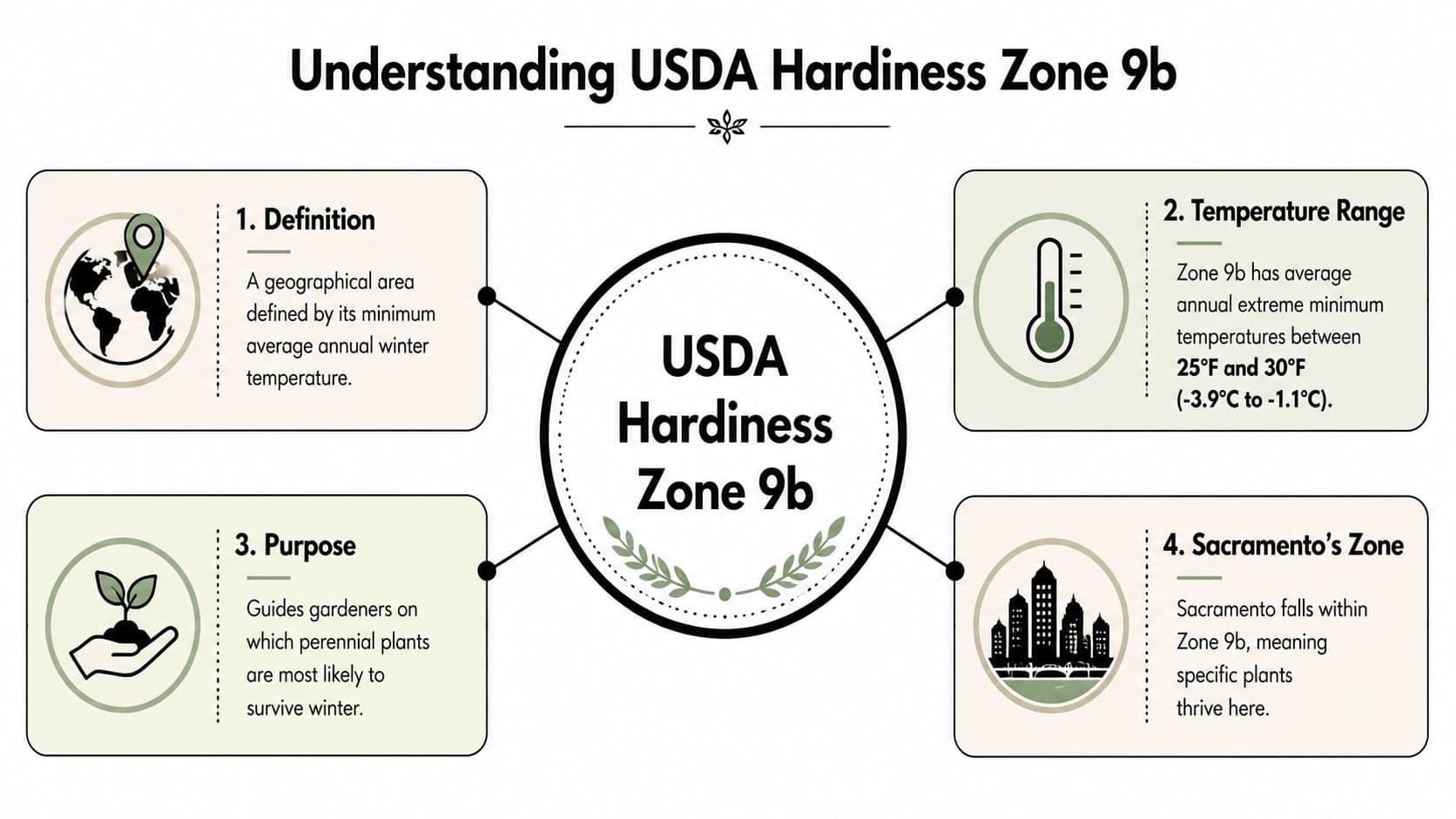
USDA Hardiness Zones are a winter survival map for plants. They're based on the average annual minimum winter temperature, which tells you how cold a place usually gets in the worst part of winter. Think of it as a plant's winter coat rating. A plant rated for a warmer zone may look great in spring, then fail when a cold snap hits.
Sacramento is generally classified as USDA Hardiness Zone 9b, which means the area's average annual minimum winter temperature is about 25°F to 30°F (Plant Guide Online). The same source notes that the 2023 USDA map kept Sacramento in 9b, with almost no change from the 2012 map, so it's a stable baseline for long-lived choices like shrubs, trees, and perennials. That stability matters because you can plan with more confidence when the label doesn't shift every few years.
For a gardener, Zone 9b answers one very specific question, can this plant usually make it through winter here? It does not tell you everything about summer stress, local wind, drainage, or how a low spot in the yard behaves on a frosty morning. Still, it's the starting point for nearly every plant decision.
Sacramento's zone number tells you whether winter cold is likely to be the deal-breaker.
That's why perennials, fruiting shrubs, and woody plants all get checked against the zone first. If their hardiness rating lines up with 9b, they have a reasonable chance of surviving Sacramento winter lows. If they're more tender, they may need protection or a different site altogether.
Why Zone 9b Is Not the Whole Story
A single zone label can be helpful, but it can also hide the differences that decide whether a plant thrives or limps along. In Sacramento, one yard might have a blazing south-facing wall, while another corner stays cool and damp after morning shade. Those spaces do not behave the same way, even though they share the same city address.
The local reality is more nuanced than the USDA map alone. Most sources simplify Sacramento to USDA Zone 9b, but credible local guidance says the area also spans Sunset climate zones 9 or 14 depending on exact location, because fog, elevation, and exposure change what survives (YouTube source on Sacramento climate zones). That's why one plant can perform beautifully in one part of the city and struggle in another.
Microclimates change the rules
A microclimate is just a small area with different conditions from the surrounding neighborhood. A paved patio can hold heat after sunset. A shaded side yard can stay cooler and moister. A low pocket of ground can trap cold air, which matters on frosty nights.
That's where a plant tag can mislead people. A “Zone 9” plant may be perfectly happy in a warm, protected corner, yet fail in an exposed bed that gets hit by wind and cold drainage. The label isn't wrong, it's just incomplete.
A thoughtful gardener starts walking the yard with a few questions in mind.
- Where does the sun hit longest? Full-sun beds dry faster and heat up more.
- Where does water linger? Poor drainage can matter more than cold in Sacramento.
- Which spots are sheltered? Walls, fences, and hedges can buffer cold and wind.
- Which spots are exposed? Open areas often punish tender plants first.
For broader outdoor design decisions, a guide to sustainable yard design can help you think about layout as part of climate adaptation, not just decoration.
Why Sunset zones help
USDA zones focus on cold. Sunset zones try to account for the full regional experience, including summer heat and local conditions. That's useful in Sacramento because winter survival is only part of the story. A plant may technically live through the cold and still dislike the city's long, hot season.
This is why local gardeners often think in layers. USDA tells you if a plant might survive winter. Sunset and microclimates tell you where it belongs inside the yard. Together, they turn a broad answer into a practical one.
The Sacramento Gardener's Calendar
Sacramento gives gardeners a long runway. One planting calendar lists a last frost date around February 28 and a first frost date around November 17, which creates roughly 262 frost-free days (UF Seeds Sacramento planting calendar). That window is one reason the city supports such a wide range of vegetables, herbs, flowers, and shrubs.
A long season doesn't mean planting anything at any time. It means timing matters more, because the same yard can support cool-season crops early in the year and heat-loving plants later on. If you want trees, the optimal time for planting trees depends on species and placement, but the city's frost window gives you room to plan ahead instead of rushing into the first warm day.
Sacramento Seasonal Planting Calendar
| Season | What to Plant (Veggies & Herbs) | What to Plant (Flowers & Bulbs) |
|---|---|---|
| Late winter to early spring | Lettuce, spinach, peas, kale, cilantro, parsley | Pansies, violas, cool-season annuals |
| Spring | Tomatoes, basil, peppers, beans, cucumbers | Zinnias, marigolds, warm-season annuals |
| Summer | Heat-loving herbs, succession beans, southern peas | Drought-tolerant annuals, container color |
| Fall | Broccoli, cabbage, carrots, beets, chard | Fall bulbs, cool-season color, hardy perennials |
Early spring is the moment for cool-season crops that can take advantage of mild temperatures. Once the nights warm up, tomatoes, peppers, and basil get a better start. By summer, the focus shifts toward plants that can handle heat without constant fuss.
Gardener's shortcut: Don't plant by the calendar alone. Plant by the calendar plus soil temperature, sun exposure, and whether the bed drains well.
Fall is a second planting season in Sacramento, not an afterthought. Many gardeners do their best work then because the heat eases and the garden can recover. The long frost-free stretch makes that possible, as long as you don't ignore irrigation and soil moisture.
Best Plants and Care for a Zone 9b Garden
Sacramento's climate favors plants that can handle hot, dry summers and mild winters, so the best choices usually combine toughness with flexibility. The region's Mediterranean pattern makes heat and water management just as important as cold tolerance, and local guidance emphasizes deep, infrequent irrigation plus a 2- to 3-inch mulch layer to hold moisture, especially in clay-heavy soil (Sacramento planting guidance).
Plants that fit the climate
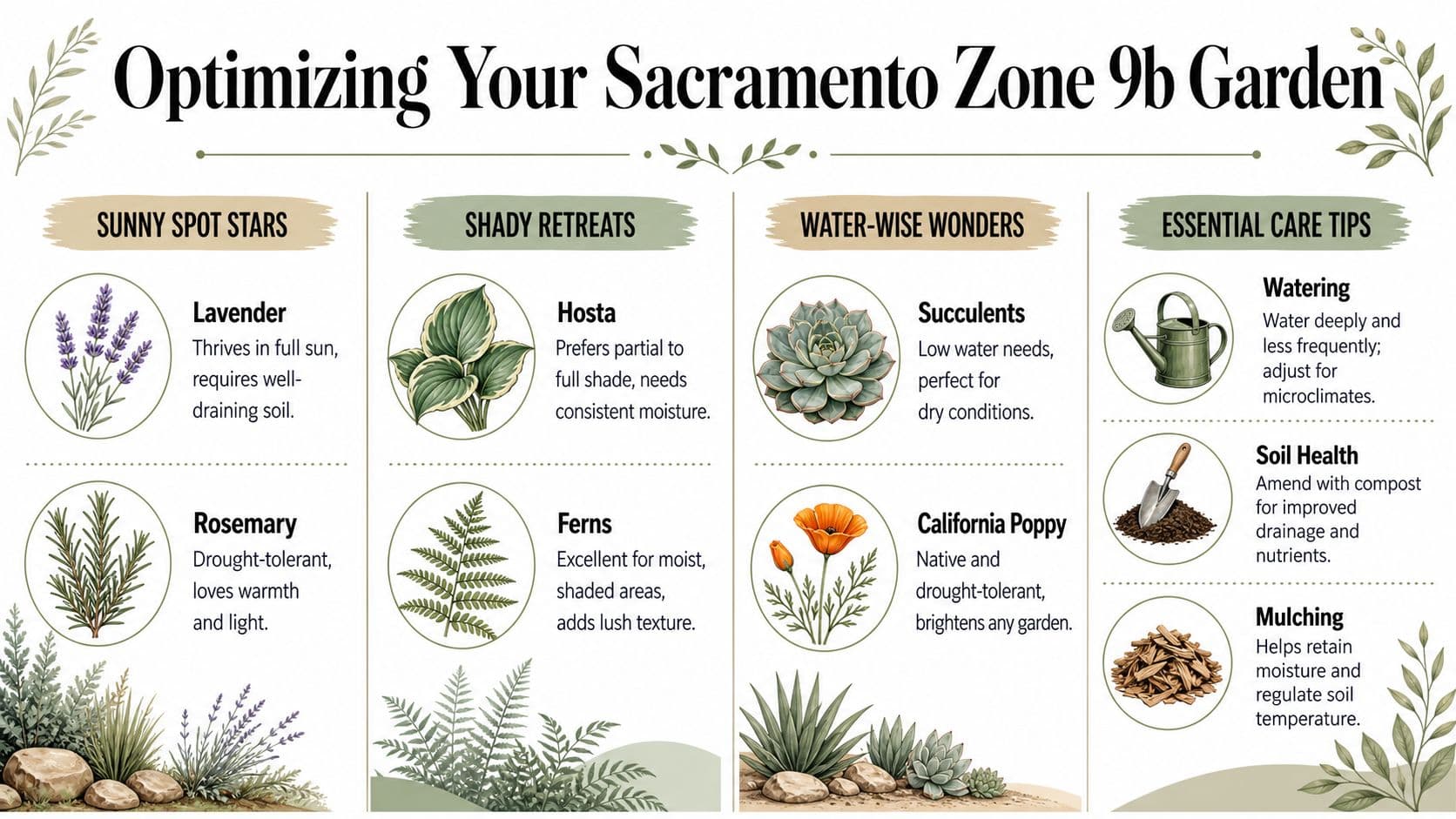
In a sunny, well-drained bed, lavender and rosemary make sense because they like warmth and don't want wet roots. In edible beds, Sacramento gardeners often do well with tomatoes, peppers, and citrus, provided the site gets enough sun and the soil drains properly. In cooler or filtered-light corners, hostas and ferns can bring texture, though they'll want more consistent moisture than drought lovers.
The best plant list is not one list. It's a set of choices matched to the part of the yard you're standing in.
I've seen gardeners put a water-thrifty shrub in a soggy spot and blame the nursery tag when it fails. The problem wasn't the label. The problem was the site. That's why shade plants deserve their own search, and a local zone 9 shade gardening guide can be useful when you're deciding what belongs under trees or along the north side of the house.
Care habits that keep plants alive
Watering in Sacramento works better when you think in cycles, not daily dribbles. Deep watering encourages roots to move downward, which helps plants cope when the surface dries out. Mulch helps keep that moisture from disappearing too fast, and it also moderates soil temperature.
Clay soil needs special attention because it can hold water longer than many plants like. Compost improves structure, so roots get more air and drainage. That matters because a plant in the right zone can still fail if its roots sit in wet soil for too long.
A good care routine looks simple from the outside, but it's deliberate underneath.
- Water thoroughly: Let water soak into the root zone instead of wetting the surface.
- Water less often: Give soil time to dry partway between soakings.
- Mulch generously: Use a 2- to 3-inch layer to slow evaporation.
- Amend problem soil: Mix in compost where drainage is poor.
- Check each microclimate: Shade, reflected heat, and wind all change how fast beds dry out.
The best Sacramento gardens don't fight the climate. They work with it.
A useful rule for mixed gardens
If one area of your yard is dry, sunny, and exposed, treat it like a heat-forward planting zone. If another is shaded and stays moist longer, choose plants that appreciate softer conditions. The same irrigation schedule won't serve both beds equally well.
Design Your Ideal Garden with OutdoorBrite
A Sacramento yard can look perfect on a zone map and still behave differently from the one next door. Zone 9b gives you the winter floor, but shade from a wall, reflected heat from pavement, and a breezy corner by the driveway can all change what survives and what struggles. That is why the best garden plans start with the official label, then check how the space feels at ground level.
A visual plan helps you sort those differences before you spend money on plants or soil amendments. A tool like ai for garden design lets you test ideas against your own yard, so you can see whether a bed belongs in full sun, partial shade, or a spot that stays warm longer than expected. It also makes it easier to compare layout options, whether you want a Mediterranean feel, a quieter seating corner, or a planting plan that keeps sun-lovers away from cooler pockets.
For many Sacramento yards, the next question is how the planting areas will work with patios, paths, and privacy features. Looking at Outdoor Leisure Living custom patios can help you see how hard surfaces frame the garden and where plants can soften the edges without crowding the usable space. That kind of reference is useful because a good garden does more than hold plants, it guides movement and makes the whole yard feel intentional.
Start with a photo of the space, then test a few versions before you dig. That simple habit keeps you from guessing about spacing, sun exposure, or how a bed will read from the house. If you want a clearer way to turn climate knowledge into a workable plan, use OutdoorBrite Money to map out your Sacramento garden with confidence.
See your yard reimagined
Start creating