Best Time to Plant Trees: A Complete Seasonal Guide
When is the best time to plant trees? Our guide covers timing by climate zone, tree type, and season to ensure your new tree thrives. Plan for success.
You spot a tree at the garden center, picture the shade it'll cast over your front walk, and feel ready to bring it home that day. Most homeowners make the same leap. The surprise comes later, when a tree that looked healthy at purchase struggles after planting.
That usually isn't because you picked a bad tree. It's because trees live on seasonal timing. The day you buy one matters far less than whether you plant it when roots have time to settle in before heat, drought, or freezing weather arrive.
If you understand that one principle, the rest gets much easier. You can stop guessing, stop relying on a one-size-fits-all calendar, and make choices that fit your yard, your climate, and the kind of tree you want to grow.
Why Planting a Tree Is All About Timing
You bring home a young maple on a pleasant Saturday, water it well, and expect it to settle in. Two months later, the weather shifts hard. Suddenly the tree is dealing with heat, drought, or an early freeze before it has rebuilt the roots it lost in the move.
That is why timing matters so much.
A tree planting date is less about convenience and more about biology. After leaving a nursery pot or root ball, the tree has to reconnect with new soil, find moisture in unfamiliar ground, and adjust to your yard's temperature swings. The best window is the one that gives it a calm stretch to do that work before stressful weather arrives.
For many homeowners, that window lands in fall or early spring. The exact timing depends on your climate, the kind of tree you are planting, and how quickly your area moves from mild weather into summer heat or winter cold.
Why the season matters more than the shopping trip
Garden centers often make every weekend feel like planting season. Trees may look healthy and ready, but appearance is only part of the story. The critical question is whether the season gives the roots time to establish.
Roots work a lot like a home's water lines. If they are connected and working before demand rises, the whole system runs better. If hot weather arrives while those underground connections are still limited, the tree has to ration water, slow growth, and focus on survival.
Practical rule: Plant ahead of a stress season, not during one.
That simple shift in thinking helps you make better decisions. Instead of asking, “When do stores have the best selection?” ask, “When will this tree have the longest stretch of mild weather to settle in?” If you want to map that decision to your yard, your climate, and your design goals, tools like OutdoorBrite can help turn a general rule into a clear planting plan. Pairing that kind of planning with environmentally mindful tree planting gives you a better shot at a tree that lasts for decades, not just through its first season.
The Science of a Strong Start Root Growth and Transplant Shock
A new tree can look settled long before it is established. You water it, the leaves stay green, and it seems fine. Underground, though, the tree is still trying to rebuild the part that keeps everything above ground supplied.
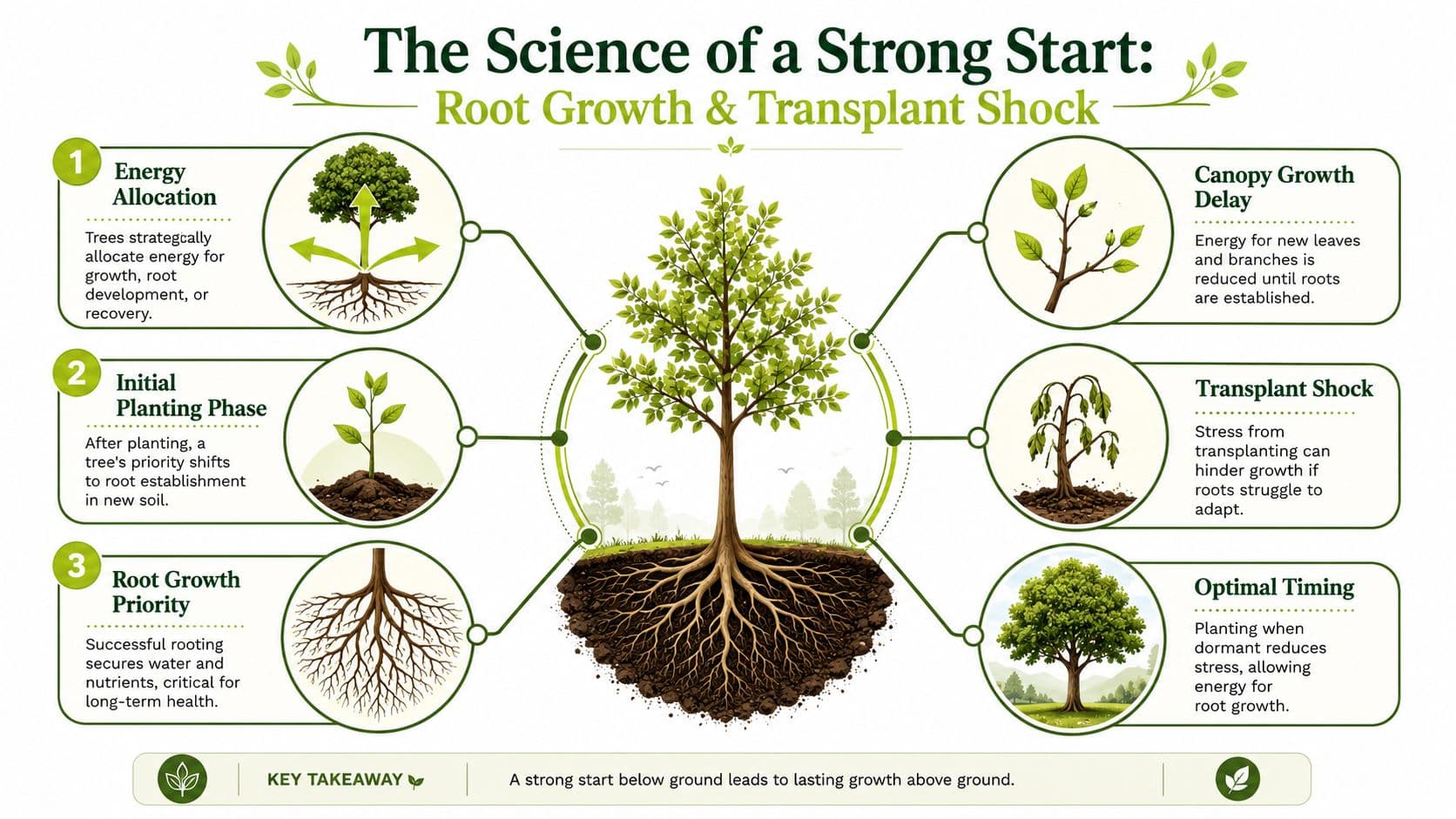
Roots first, top growth second
After transplanting, a tree has fewer working roots than it had before it was dug, potted, or moved. That creates a simple biological problem. The canopy makes energy, but the roots supply water. A tree cannot function well if its water supply is still limited.
That mismatch is what drives transplant shock. You may see wilting, slower growth, scorched leaf edges, or a tree that just sits there without doing much. In many cases, the tree is not failing. It is diverting resources below ground, trying to replace lost roots and reconnect to the surrounding soil.
This helps explain why timing matters so much. Mild conditions give roots a better chance to grow before the tree has to face major demand from heat, drought, or deep cold. Harsh weather closes that window fast.
A useful way to read a newly planted tree is this. What you see above ground is often a lagging indicator. Root recovery happens first. Visible top growth usually comes later.
Why the establishment window matters
Fall often works well because many trees are slowing their shoot growth while the soil can still support root activity. That lets the tree put more of its limited resources into establishment instead of trying to push a fresh flush of leaves.
The calendar matters here. A tree planted too late in fall may miss that rooting window. Cool air alone is not enough. The roots still need time in workable soil before winter shuts growth down.
That is why a good planting date is not just a pleasant weekend or a sale at the garden center. It is a block of calm weeks that gives the root system time to recover.
If you are planning a larger yard project, a design tool becomes practical, not decorative. OutdoorBrite can help you map where a tree will go, but it also helps you think in sequence. Choose the tree, match it to the site, then back up from your local stress season so planting happens while root growth still has room on the calendar.
Some trees need a gentler schedule
Trees do not all recover at the same pace. Some settle in fairly well across either major planting season if watering and site conditions are good. Others are slower, touchier, or less forgiving after transplanting.
That is why species choice and planting timing should be paired, not treated as separate decisions. A fast-establishing shade tree may do well in either window. A tree known for being slower to root in may deserve the longer, safer runway that spring provides in colder areas.
Use this quick filter when you plan:
- Fast-adjusting trees: Often handle either planting window if your local weather stays mild long enough for root growth.
- Slow-to-establish trees: Usually do better with the season that gives them the longest stretch of stable conditions.
- Any newly planted tree: Needs consistent watering and patience, even if the canopy looks healthy early on.
That last point catches a lot of new homeowners off guard. A tree can look good from the street and still be under real stress below ground. Good timing improves your odds, but follow-up care is what turns a good start into a strong one.
The Great Debate Decoding Fall vs Spring Planting
You pick out a tree in October, the air feels pleasant, and planting that weekend seems like the obvious move. Your neighbor waits until April and says spring is the only safe choice. Both of you can be right. The better season depends on which stress arrives first in your yard, and how much time the roots get to settle in before that stress shows up.
That is the debate. Fall and spring are not rivals so much as two different windows on the same calendar.
Why fall often works so well
Fall planting usually gives roots a quieter job. The canopy is slowing down, days are shorter, and the tree is not trying to push a big flush of new leaves at the same time it is rebuilding its root system. Roots still need energy, but the workload is more manageable.
Soil also tends to stay friendlier in fall than many new homeowners expect. The air cools off before the ground does, which means roots can keep growing after summer heat breaks. That works like giving a house crew access to the site after traffic clears. Less strain above ground often means better progress below ground.
In many regions, fall also brings steadier moisture and lower evaporation. For a transplanted tree, that can mean fewer sudden setbacks.
Fall usually makes sense where autumn lasts long enough to give roots several calm weeks before the ground freezes hard.
Why spring is the safer call in some yards
Spring earns its reputation in places with sharp winters, late freezes, or soils that lock up fast. If cold weather arrives early and stays severe, a tree planted in fall may not get enough time to anchor and recover.
A spring-planted tree gets a longer runway before its first winter. That matters for slower-establishing species and for colder parts of the country, where the main threat is not summer stress first, but deep cold. As noted earlier, early spring is generally favored in the coldest zones, while fall is often favored in the warmest ones.
The catch is timing. A tree planted too late in spring can run straight into hot weather before the roots are ready. Spring is safer in cold climates, but early spring is very different from late May with bright sun and drying wind.
A side-by-side view
| Season | Best fit | Main advantage | Main caution |
|---|---|---|---|
| Fall | Moderate to warm climates with a gradual autumn | Cooler conditions help roots establish with less top-growth pressure | Plant too late and the tree loses valuable root-growing time |
| Spring | Colder climates or sites with harsh winter conditions | A full growing season before winter | Plant too late and summer heat arrives before the tree settles in |
A simple question clears up a lot of confusion. Which comes sooner in your yard: hard freeze or serious heat?
How to make the call without guessing
Use the calendar the way an arborist would. Mark your usual first hard frost and your usual first stretch of stressful summer heat. Then work backward and ask which planting season gives the tree a better recovery window.
If that sounds abstract, OutdoorBrite can make it concrete. Use it to place the tree where you want it, then pair that design choice with your local seasonal pattern. You are not just choosing a pretty spot. You are building a schedule. Site, species, and planting date should fit together like parts of the same project plan.
A few checkpoints help:
- Identify the first real stress season. In some yards that is winter freeze. In others it is early summer heat.
- Look at the tree's growth stage. A tree that is dormant or slowing down usually handles transplanting better than one pushing soft new growth.
- Pay attention to your microclimate. South-facing lots, windy corners, and low frost pockets can shift the safer window by weeks.
- Avoid shopping logic. Nursery inventory peaks do not always match the best planting window for your site.
The goal is not to win the fall-versus-spring argument. The goal is to give roots enough quiet time to get established before the next hard test.
Matching the Method to the Tree Container B&B and Bare-Root
The planting season isn't the only variable. The way a tree is sold changes how forgiving the timing will be.
Container trees
Container-grown trees are the most flexible. Their roots come with the potting soil, and they usually experience less disturbance during transplanting than other stock types.
That flexibility can fool people into planting at poor times. A container tree can often be planted outside the ideal window, but “can” doesn't mean “should.” If you plant one near summer heat or winter freeze, you'll need to stay on top of watering and aftercare.
Look closely for circling roots before planting. A tree that has spent too long in a pot may need root correction so those roots grow outward into surrounding soil instead of continuing their loop.
Balled-and-burlapped trees
Balled-and-burlapped trees, often called B&B, come with a large root ball wrapped in burlap. They're common for larger outdoor trees because the nursery can move a substantial root mass with the tree.
They're heavier, more expensive to handle, and more sensitive to rough treatment. You want a good planting window because the tree still loses roots during digging and transplanting, even though it arrives with a soil ball intact.
B&B trees are often chosen for instant visual impact. That's fine, but don't let the larger size trick you into thinking they're tougher. Bigger top growth can mean a greater demand on a still-recovering root system.
Bare-root trees
Bare-root trees are the least forgiving on timing and the simplest to understand biologically. Their roots arrive without a soil ball, so they need to be planted while dormant.
If you buy bare-root stock, treat planting time as critical. Don't let the roots dry out. Don't leave the tree sitting in the garage while you “get around to it.” Plant promptly during the dormant season that fits your local climate.
A handy way to think about all three:
- Container: Most flexible, but still benefits from smart timing.
- B&B: Good for larger specimens, best planted in a calm seasonal window.
- Bare-root: Most timing-sensitive, best handled during dormancy.
The less soil a tree brings with it, the less room for delay you have.
Your Regional Planting Guide for the US
Regional advice works best when you treat it as a starting map, not a hard calendar. The same state can include warmer urban pockets, windy hilltops, clay-heavy suburbs, and frost-prone valleys.
This visual guide gives a broad first pass.
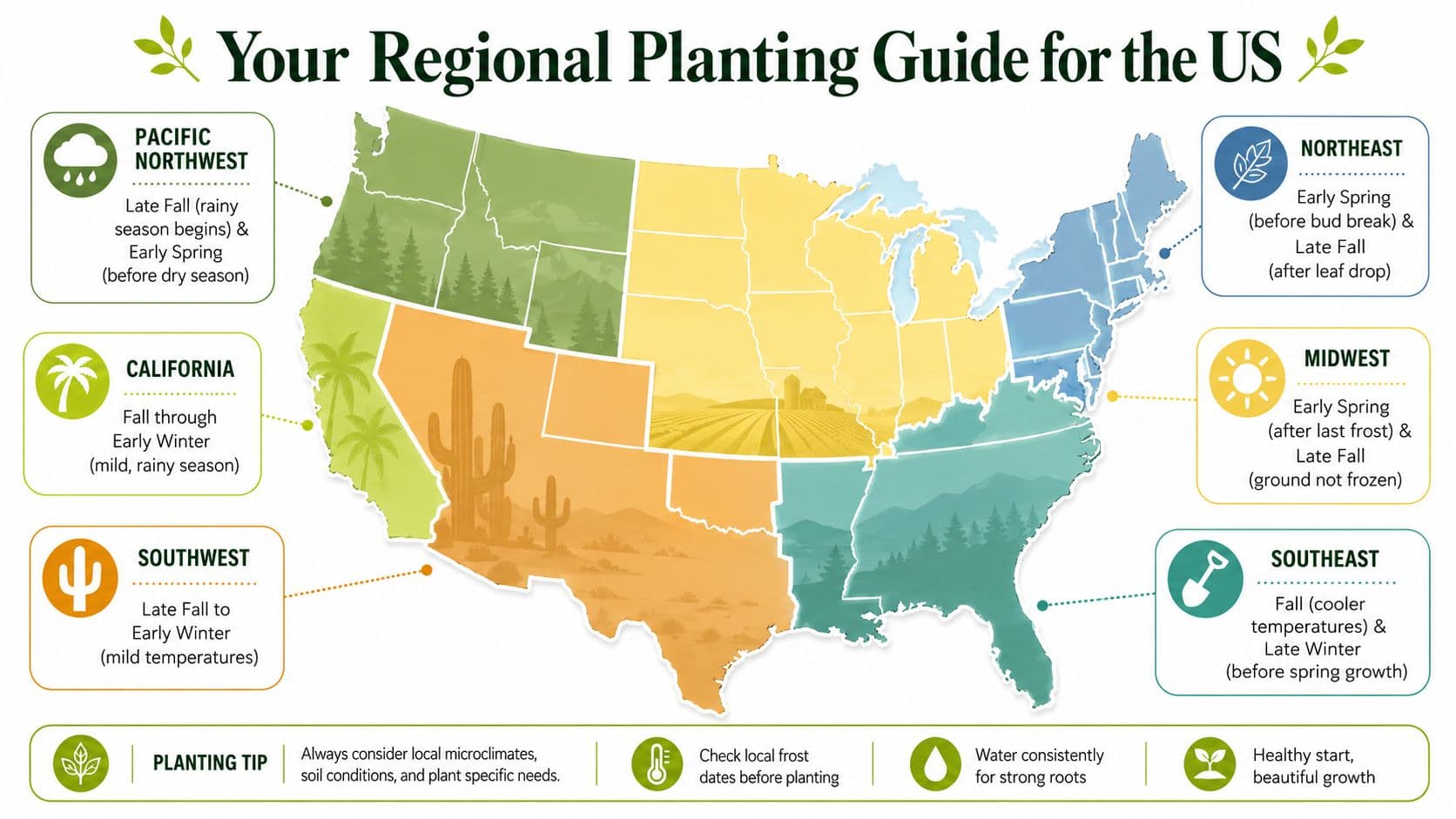
A homeowner-friendly regional snapshot
| Region | General planting pattern |
|---|---|
| Northeast | Early spring before bud break, or late fall after leaf drop |
| Southeast | Fall and late winter often offer the easiest conditions |
| Midwest | Early spring or late fall, depending on soil moisture and frost timing |
| Southwest | Late fall into early winter is often gentler than hot-season planting |
| Pacific Northwest | Late fall and early spring usually align well with moisture patterns |
| California | Fall through early winter often gives the best balance of mild weather and seasonal rain |
If you're planning a front yard project and want ideas for spacing, placement, and curb appeal before you buy anything, OutdoorBrite's front yard tree guide is a useful planning reference.
How to adjust for your own yard
Regional guidance gets you close. Your site conditions finish the job.
Ask these questions before planting:
- Is your yard windy? Exposed sites dry faster and stress young trees sooner.
- Does your soil stay wet? Heavy soil can make cold-season planting riskier if drainage is poor.
- Do you live in a heat pocket? South-facing walls and paved driveways can push spring-planted trees into stress early.
That's why experienced gardeners don't just ask where they live. They ask what their yard provides.
Plan and Visualize Your Perfect Tree with OutdoorBrite
A common new-homeowner mistake starts like this. You plant a tree where it looks good from the driveway, then three years later the canopy crowds the walk, summer shade reaches the vegetable bed, and winter branch structure blocks the front window more than you expected. The planting date may have been right, but the project plan was not.
Good timing and good placement work together. Roots need the right season to settle in. Your yard needs the right tree in the right spot. If either part is off, the tree has a harder start and you have a harder fix.
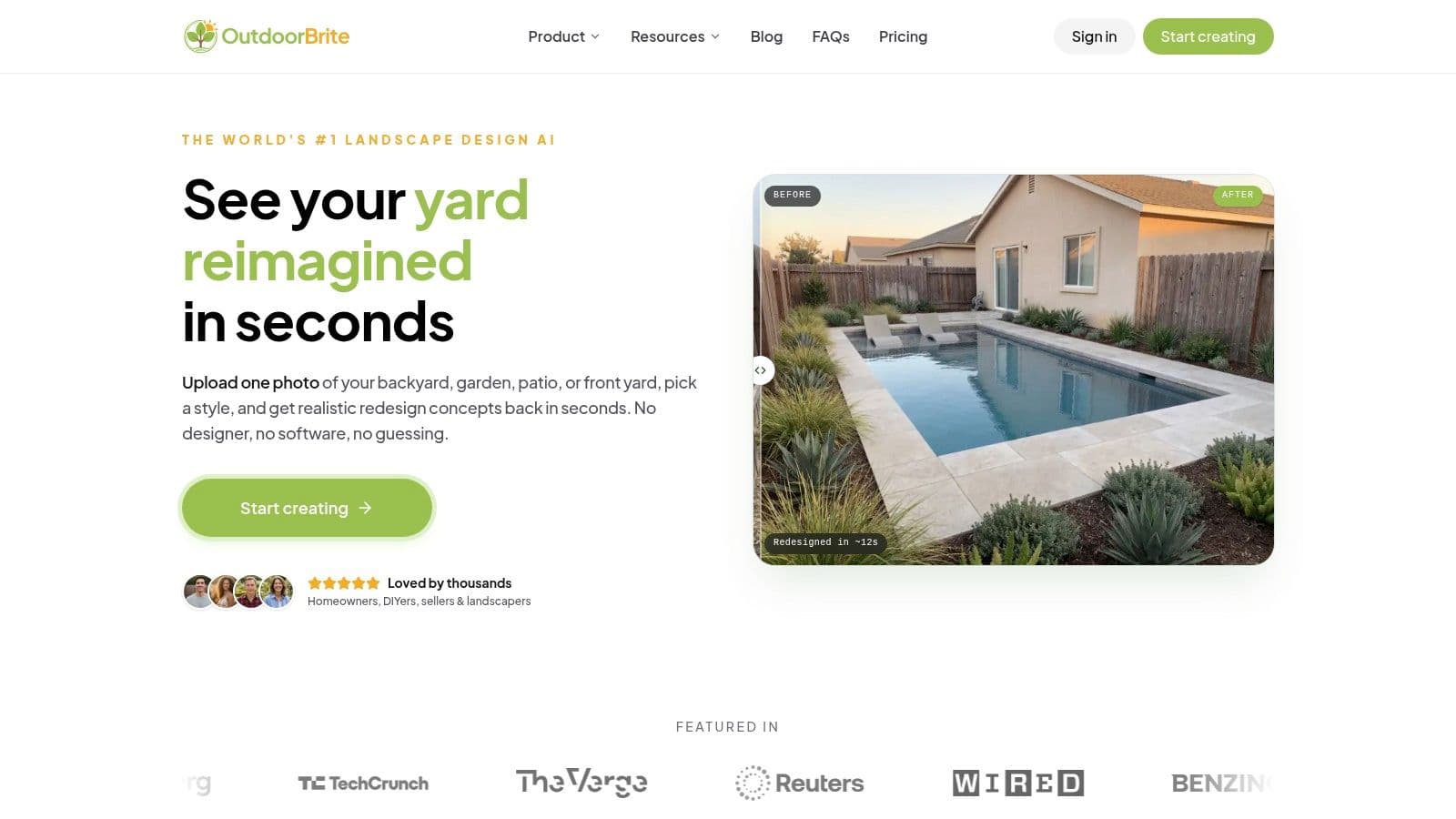
A planning tool helps turn that decision from a guess into a test. With Outdoorbrite, you can upload a photo of your yard, try different tree placements, and compare how the space may feel across seasons before you buy anything. That makes the earlier advice in this article much easier to use. You are no longer asking only, "Is fall or spring better?" You are asking, "Which tree fits this yard, in this spot, during this planting window?"
Why visual planning leads to better planting choices
Tree biology happens below ground, but tree problems usually show up above ground. A tree planted too close to a drive may eventually lift the edge. A shade tree placed without considering mature spread can darken a room that once got winter light. A flowering ornamental that looked balanced as a young plant can feel squeezed once nearby shrubs fill in.
Planning with a photo works like laying tracing paper over a blueprint. You can test the mature idea before you commit to the young plant.
Season matters here too. A deciduous tree in leaf changes shade, privacy, and views very differently than the same tree in winter. Looking at one season alone is a little like judging a house by seeing only one room. You miss how the whole structure functions.
A simple way to use it before planting
Use a clear workflow so the tool supports the decision instead of distracting from it.
- Upload a current yard photo. Pick the exact view where the tree may go, whether that is the front entry, a patio edge, or a side yard.
- Try the job before the species. Start with the role you need filled, such as summer shade, privacy screening, spring bloom, or a vertical accent.
- Compare mature effects. Look at width, height, and how the canopy relates to windows, walkways, rooflines, and lawn space.
- Review seasonal views. Check how leaf-on and leaf-off conditions change light, openness, and curb appeal.
- Match the plan to your planting window. Once the location and tree type make sense, you can line that choice up with the best season for your region and yard conditions.
This approach helps connect the why, the when, and the how. Root biology explains why timing matters. Your regional calendar helps you choose when to plant. A visual plan helps you decide how the finished project should look and function in real life.
That is the difference between planting a tree and planning one.
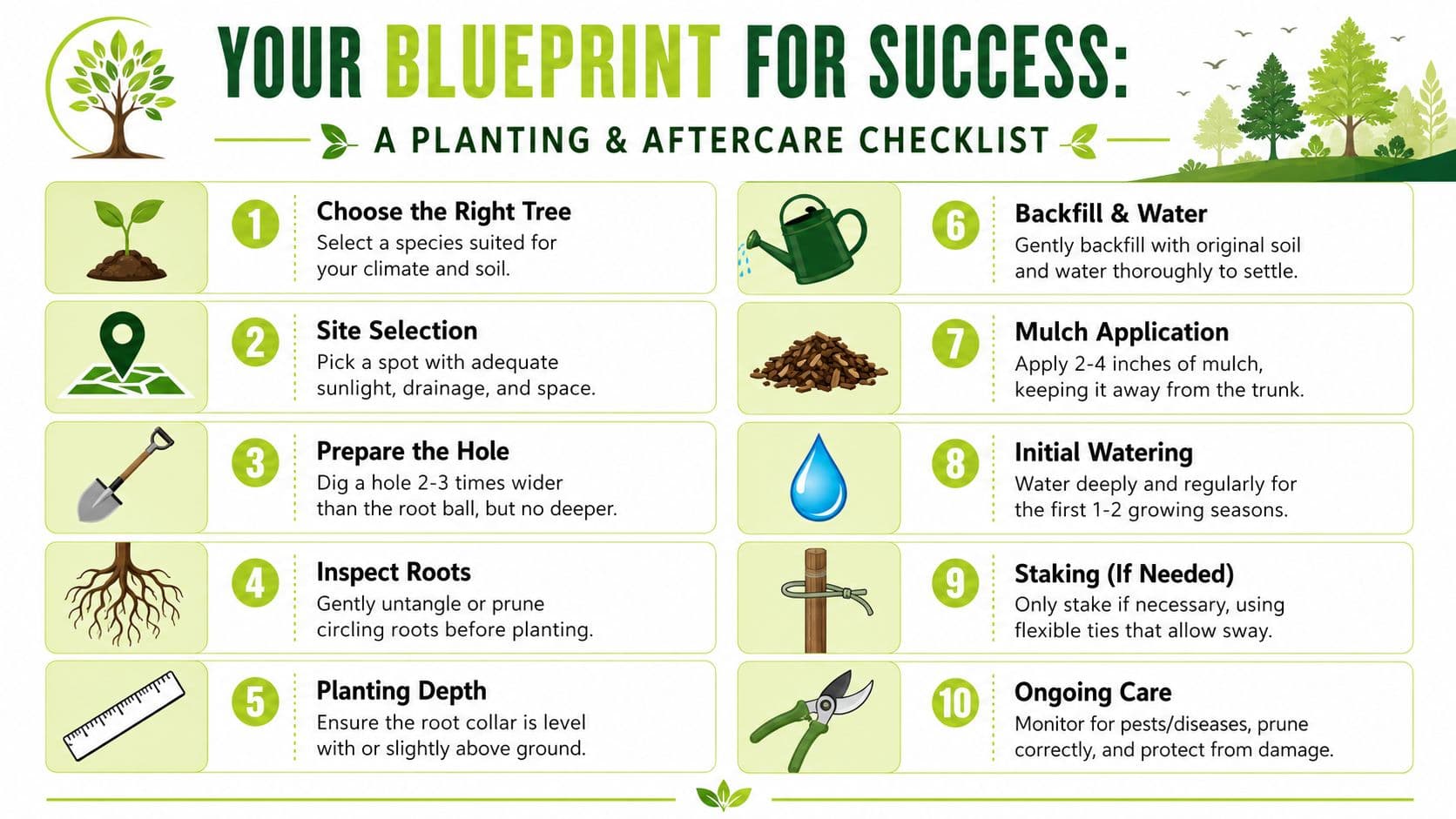
Your Blueprint for Success A Planting and Aftercare Checklist
Once you've chosen the tree and the season, the job becomes straightforward. Don't rush this part. A careful planting day saves years of frustration.
Before planting day
Start with the site.
- Choose the right spot: Match the tree to available light, drainage, and mature space.
- Check the soil: If your ground is compacted, heavy, or poor-draining, address that before planting. If you need help with soil prep, this guide on how to amend garden soil is a practical companion.
- Water the root ball first: A dry root ball is harder to rehydrate after planting.
Planting day steps
Use a slower pace than you think you need. Most planting mistakes come from digging badly or planting too deep.
- Dig wide, not deep. The hole should be wider than the root mass, but not deeper than the tree needs.
- Find the root flare. The place where the trunk broadens into roots should sit at or slightly above finished soil level.
- Remove barriers. Take off pots, twine, and non-biodegradable materials. Loosen or remove burlap and wire as appropriate.
- Correct bad roots. If roots are circling, tease or prune them so they grow outward.
- Backfill with native soil. Break up clods and firm lightly to remove large air pockets.
- Water thoroughly. Deep watering settles soil around the roots better than tamping alone.
Planting too deep is one of the easiest ways to give a tree a hard start.
Aftercare that keeps the tree alive
The first season is about consistency, not fussing.
- Mulch properly: Spread mulch over the root zone, but keep it away from the trunk. Don't pile it like a volcano.
- Water thoroughly: Newly planted trees need regular, thorough watering while they establish.
- Stake only if necessary: If the site is windy or the root ball is unstable, use flexible ties and remove support once the tree can stand on its own.
- Protect the trunk: Lawn equipment, deer rub, and sunscald can damage young bark quickly.
Keep watching the tree after the first month. A tree can leaf out and still be under stress below ground. Your job is to help the roots keep progressing.
A simple mental checklist helps:
- Moisture: Is the root zone evenly moist, not soggy?
- Mulch: Is it flat and pulled back from the trunk?
- Depth: Can you still see the flare?
- Damage: Has anything nicked or scraped the bark?
Planting for Generations to Come
The best time to plant trees isn't a magic weekend in spring or fall. It's the period when your tree can build roots before the next hard season arrives. Once you understand that, the advice starts to make sense. Climate, species, and planting method all fit into one clear idea.
That's what turns tree planting from guesswork into planning. You're not just dropping a tree into a hole. You're choosing the moment when it has the best chance to settle, grow, and stay healthy for years.
A well-timed tree becomes part of the home in a way few other outdoor projects can. It frames the porch, cools the yard, softens the street, and outlasts most of what we build around it.
If you want to test tree placement, compare styles, and see how your yard could look before you plant, OutdoorBrite makes that process much easier. Upload a photo, explore design options, and plan with more confidence before you spend time and money on the trees.
See your yard reimagined
Start creating