10 Landscape Ideas for Front Yard Curb Appeal in 2026
Explore 10 landscape ideas for front yard makeovers, with planting palettes, layout tips, and ways to test each design before you dig.
You're standing at the curb, looking at a bare strip of lawn and a foundation half-hidden behind overgrown junipers. You've set aside money to improve it, but buying shrubs feels premature when you still don't know where the beds should go, whether to keep the lawn, or how much maintenance you're signing up for.
The mistake is choosing plants before choosing a layout. A lavender-and-gravel garden needs different drainage from a cottage border, and a meadow needs different upkeep from clipped evergreens. Even a beautiful design becomes an expensive nuisance if shrubs swallow the windows or loose gravel makes the front door harder to reach.
These front yard curb appeal ideas are organized around what you can realistically build and maintain. Each offers a planting direction, a layout that suits a particular kind of house or frontage, and an honest look at upfront work, recurring chores, climate fit, and possible restrictions.
Start with the parts you can't easily change: the house, driveway, grade, established trees, and route to the door. Then compare planting styles around those fixed features rather than redesigning everything at once.
- For a limited budget: Keep sound paths and established plants, then improve bed shapes, edging, and planting repetition.
- For limited gardening time: Favor appropriately sized shrubs over elaborate flower displays or clipped topiary.
- Before spending: Test the layout on a photograph of your actual yard, then verify dimensions, drainage, utilities, and local rules on-site.
A convincing photo concept can help you decide what belongs where. It isn't a construction drawing or a guarantee that every pictured plant will grow in your soil.
Table of Contents
- 1. Native Plant Front Yard
- 2. Xeriscape (Drought-Tolerant) Front Yard
- 3. Cottage Garden Front Yard
- 4. Modern Minimalist Front Yard
- 5. Japanese-Inspired Zen Front Yard
- 6. Mediterranean Front Yard with Gravel and Lavender
- 7. Edible Front Yard
- 8. Pollinator Meadow Lawn Replacement
- 9. Formal Symmetrical Entry Garden
- 10. Low-Maintenance Evergreen Foundation Planting
- How the 10 front yard landscape styles compare on upkeep, cost, climate, and best use
- Test Your Front Yard Before You Commit to Any Plan
1. Native Plant Front Yard
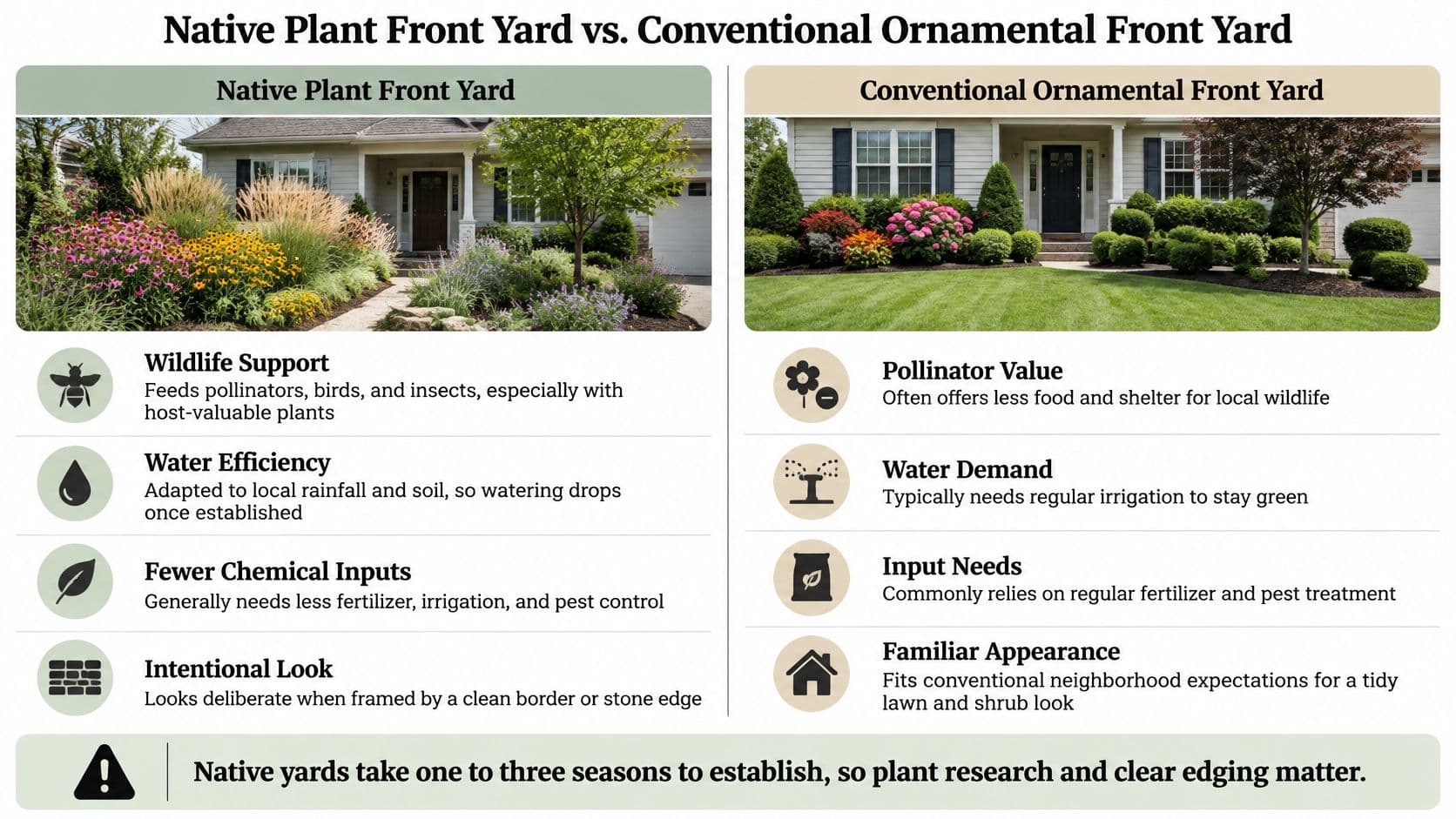
A native front yard works best when it looks like a garden, not an abandoned lawn. Give the planting a clear boundary, repeat recognizable groups, and keep the entrance visible. You can support local wildlife without letting tall stems lean across the sidewalk.
For a sunny Midwestern frontage, a possible palette includes little bluestem, butterfly milkweed, prairie dropseed, and regionally appropriate asters. A shaded eastern yard might call for Pennsylvania sedge, woodland phlox, and locally native shrubs instead. Native to your region matters more than native somewhere in the country.
The EPA's native-landscaping guidance explains that established native plants generally need little or no supplemental water beyond normal rainfall. That doesn't remove the establishment period: new roots still need attentive watering, and species must suit the site's moisture and soil.
Make the Planting Look Deliberate
Say you're replacing a tired lawn beside a ranch house. Keep a simple open foreground, place taller grasses toward the side boundary, and repeat lower flowering plants along the walk.
- Upfront work: Budget for turf removal, weed preparation, plants, and irrigation during establishment. Small plants cost less to purchase but leave more exposed ground to weed.
- Ongoing demands: Expect selective weeding, seasonal cutting back, and occasional division rather than constant shearing.
- Approval risk: Check natural-garden provisions, visibility requirements, and HOA planting rules before removing turf.
Use landscape design software for homeowners to compare a broad native bed with a smaller lawn-edge conversion on your photo. Show mature plant height and dormant-season stems, not just peak bloom.
2. Xeriscape (Drought-Tolerant) Front Yard
Xeriscape is a water-management approach, not a requirement to cover everything in gravel. A useful design combines climate-suitable plants, purposeful open space, mulch, and irrigation zones that match plant needs.
For a hot, dry frontage, consider locally suitable penstemons, low-water shrubs, ornamental grasses, and cold-hardy succulents where appropriate. Don't copy a Phoenix succulent palette into a wet-winter yard without checking drainage and cold tolerance. Plants that tolerate drought can still rot in persistently wet soil.
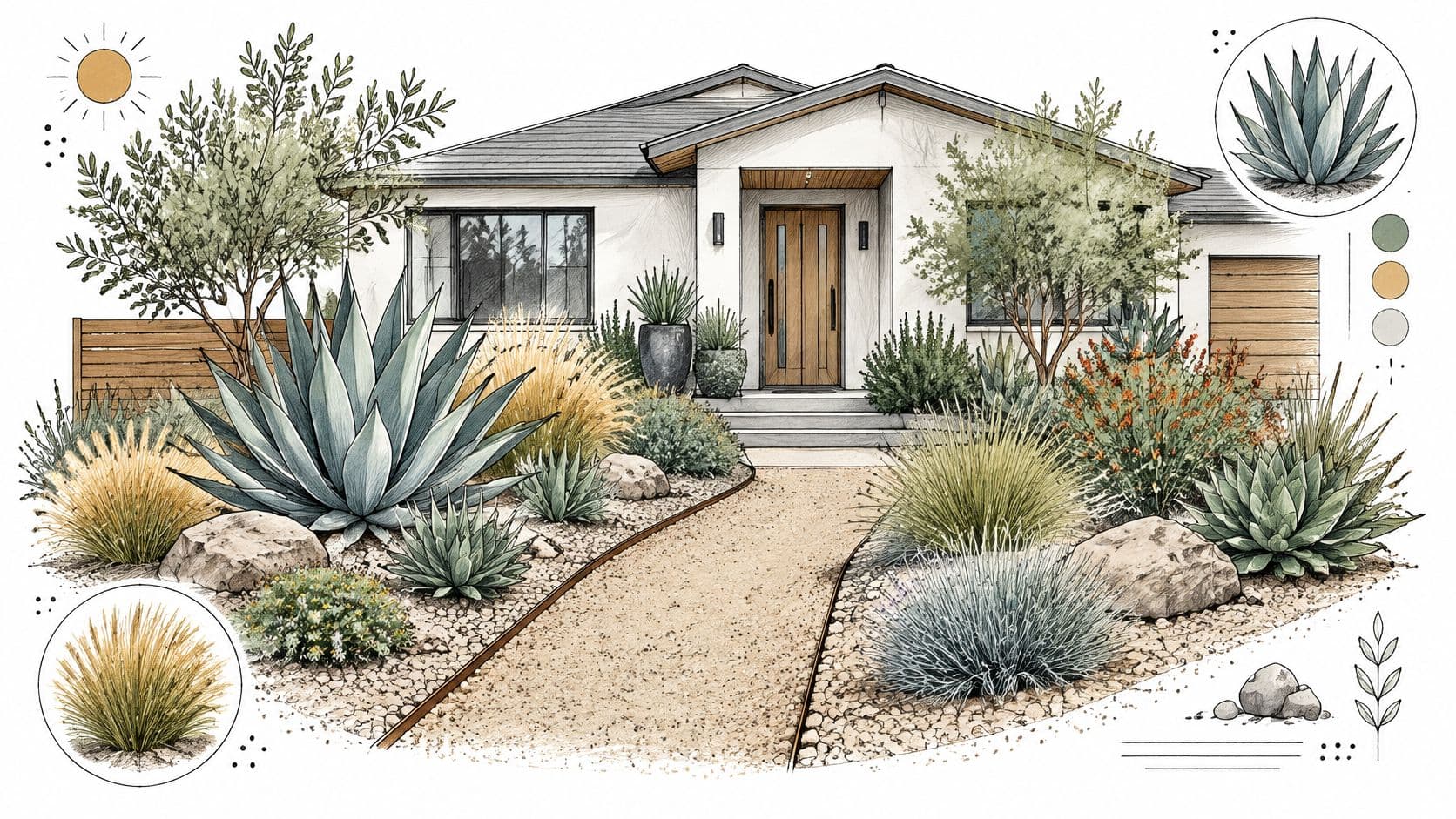
The EPA's WaterSense guidance estimates that as much as 50% of irrigation water may be wasted through evaporation, wind, runoff, or inefficient systems. Fixing overspray and grouping plants by water demand can therefore matter as much as replacing lawn.
Spend on Drainage Before Decorative Stone
For a sun-baked suburban yard, retain a useful lawn panel near the entry and convert the difficult perimeter into planted beds. Put thirsty containers on a separate watering routine rather than irrigating the whole bed to keep them alive.
Practical rule: A drought-tolerant plant in the wrong soil isn't a low-maintenance plant.
Upfront costs rise when you remove sod, repair irrigation, import stone, or reshape drainage. Later chores include removing windblown leaves, controlling weeds, and checking emitters; gravel doesn't eliminate those jobs.
Rules can also limit the amount of nonliving ground cover. Santa Clarita's residential front-yard landscaping guidance, for example, requires at least 50% living landscaping.
On your yard photo, compare planted islands within gravel against continuous planted beds with gravel accents. Preserve the actual slope, driveway visibility, and access to utility equipment.
3. Cottage Garden Front Yard
Choose a cottage garden because you enjoy tending plants, not because dense planting looks maintenance-free. Roses need attention, flowering perennials need editing, and vigorous climbers can overwhelm a porch before slower plants fill their spaces.
The strongest layout has a firm outline and a loose interior. A low fence, brick edge, or clipped boundary gives the garden structure while flowers mingle behind it. Keep the main entrance route direct and generous rather than copying the narrow, winding paths in inspiration photographs.
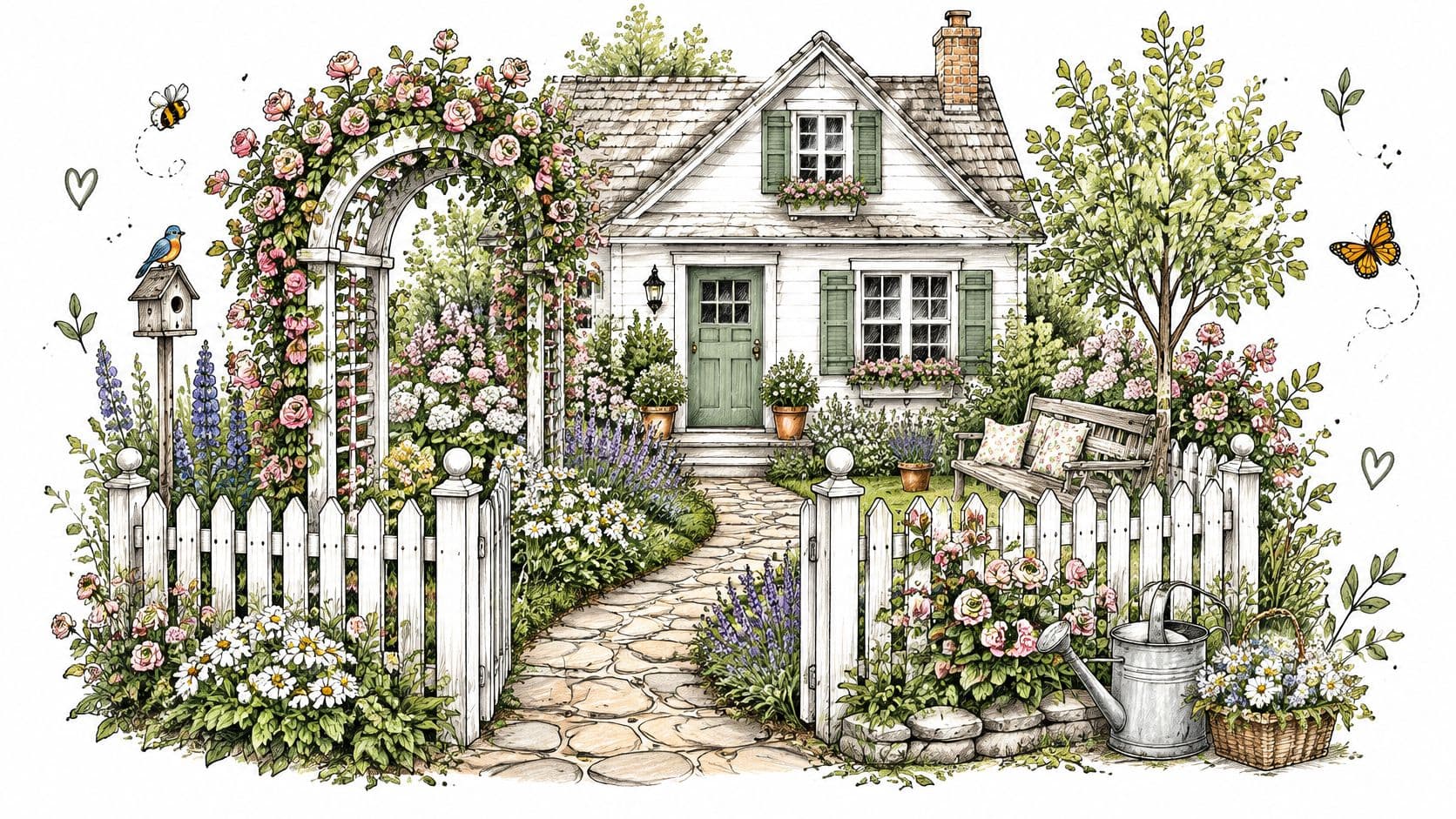
For a sunny cottage frontage, combine regionally suitable shrub roses with catmint, salvia, hardy geraniums, and spring bulbs. Repeat plants in substantial groups rather than buying a different flower for every gap. Include evergreen structure so the yard doesn't disappear visually when herbaceous plants die back.
Keep Abundance Away From the Walk
A small bungalow with an existing straight path is a good candidate. Preserve the path, enlarge beds beside it, and reserve the tallest flowering plants for positions where they won't obscure windows or brush against visitors.
- Installation cost: Reusing the path keeps the project manageable. Fencing, arches, irrigation, and large roses add expense.
- Maintenance commitment: Plan for deadheading, staking where necessary, seasonal pruning, and keeping aggressive plants within bounds.
- Climate and rules: Choose disease-resistant plants suited to local humidity, and verify fence-height and front-setback restrictions.
For the photo test, keep the house and walkway unchanged while comparing a restrained flower border with a fuller cottage composition. Include the fence or hedge in both versions so you can judge whether the abundance feels welcoming or crowded.
4. Modern Minimalist Front Yard
A modern front yard is unforgiving of sloppy construction. You can hide an uneven edge behind cottage planting; you can't hide it in a straight paver grid.
Use a restrained palette of materials and plants. Large-format concrete pavers, a consistent gravel color, repeated grasses, and a well-placed specimen tree can complement a contemporary facade. Choose the tree for local growing conditions, not because an olive tree looks good in the reference image.
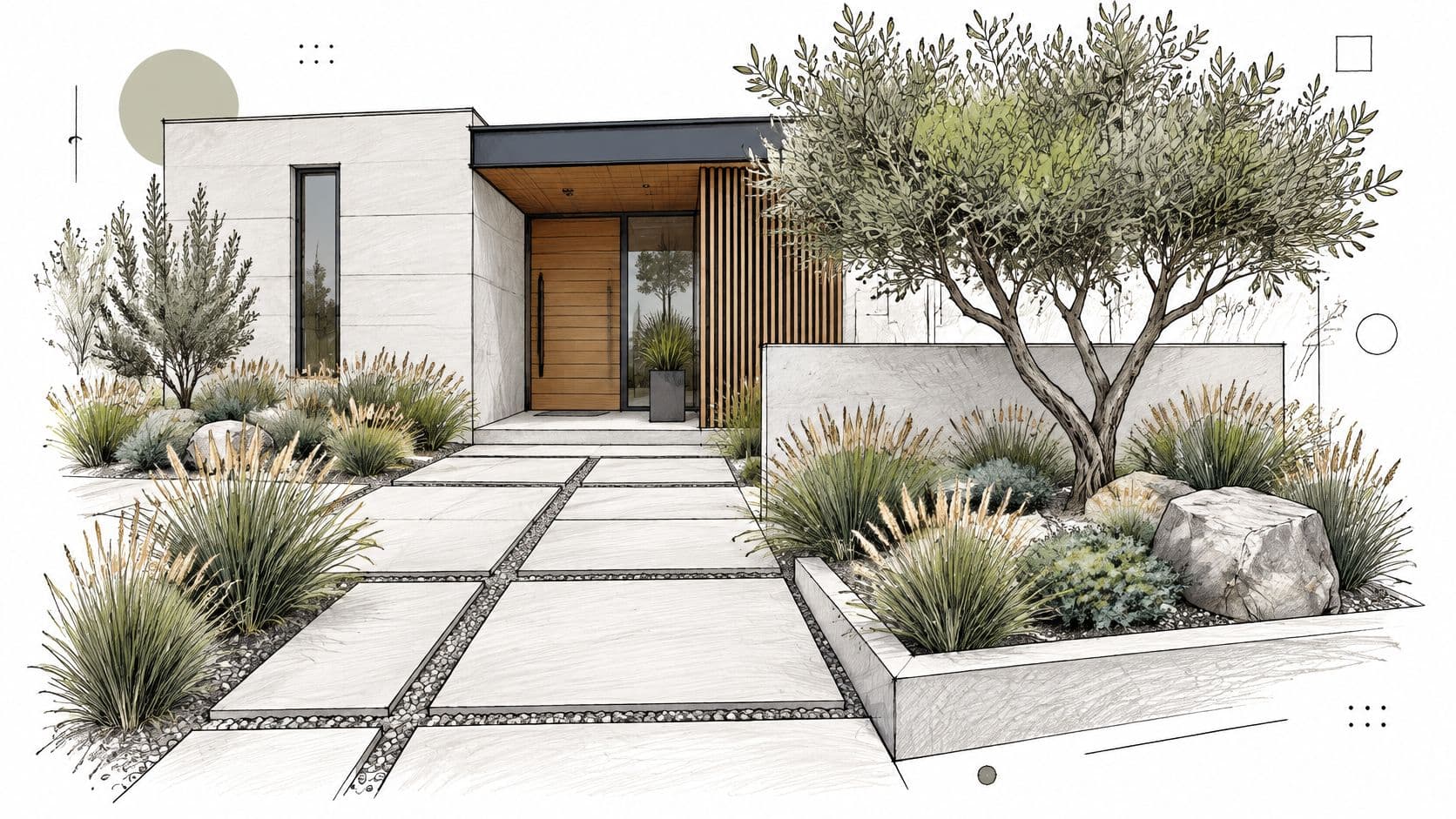
Spend on the base beneath the paving before upgrading the paving itself. Poor compaction, weak edge restraint, and bad drainage lead to movement that looks especially obvious in a geometric layout. Plan lighting cable routes and irrigation sleeves before the hardscape goes down.
Test the Geometry Against Daily Use
For a narrow contemporary frontage, run a clear path from the driveway to the door, then repeat planting bands parallel to the house. Avoid decorative stepping-stone gaps on the primary route if they make walking, wheeling bins, or using mobility equipment awkward.
The Wisconsin Extension landscape planning guide recommends an entrance walk about four feet wide. Use that as a planning reference, then check local accessibility and construction requirements for your site.
Upfront spending is usually concentrated in paving, excavation, edging, and lighting. Plant upkeep can be modest, but gravel cleanup and maintaining crisp lines remain recurring tasks; paving and drainage changes may also require approval.
Use ai front yard design to compare a broad solid path against a paver-grid concept on the same photograph. Keep the actual doorway, grade changes, and driveway junction visible.
5. Japanese-Inspired Zen Front Yard
A shaded, narrow frontage doesn't need a miniature lawn. A carefully placed stone grouping, restrained planting, and an uncluttered entrance can make it feel settled without filling every available space.
Treat this as Japanese-inspired residential design, not a collection of themed ornaments. Natural stone, asymmetrical balance, and thoughtful empty space usually do more than adding a lantern, bridge, and water feature together.
For a sheltered yard, consider a locally suitable Japanese maple with evergreen shrubs and sedges. Azaleas need compatible soil and exposure, while moss belongs where moisture and shade support it naturally. Don't repeatedly water a sunny gravel court just to force a moss effect.
Choose Between a Viewing Garden and a Walking Surface
A small bed beside the front door can be composed mainly for viewing. The path people really use should stay stable, slip-resistant, and easy to move along, rather than becoming an obstacle course of irregular stones.
Leave enough empty space to see the shape of the plants and stones. Restraint is the design, not an unfinished stage.
Upfront cost depends heavily on stone delivery and placement. Specimen trees and skilled pruning add expense, while raked gravel requires recurring debris removal and attention after rain, pets, or foot traffic.
Check whether decorative gravel, fencing, or an entrance screen conflicts with neighborhood rules. Avoid placing large stones over utilities or where they interfere with access.
On a photo, compare an open gravel foreground with a planted groundcover foreground. Show the maple at mature spread, including its relationship to rooflines and windows, and reject any concept that hides the door behind branches.
6. Mediterranean Front Yard with Gravel and Lavender
Lavender along a sunny path can suit a stucco house beautifully. In wet, poorly drained soil, the same idea can become a cycle of replacing struggling plants.
Match the conditions before copying the palette. Lavender, rosemary, and olives need appropriate winter temperatures and drainage, and not every variety handles humid summers equally well. Where those plants don't fit, use locally suitable alternatives that provide similar silvery foliage, aromatic leaves, or airy texture.
For a warm, dry entry garden, arrange lavender in repeated masses, use upright rosemary where its mature size fits, and reserve a sheltered focal position for a suitable small tree. Let terracotta containers accent the entrance rather than lining every edge.
Keep the Gravel Contained
Angular gravel stays underfoot better than rounded pebbles, but a firm paved route is usually preferable for everyday arrival. Install edging where gravel meets lawn or sidewalk, and keep loose material away from door thresholds.
- Upfront demands: Allow for excavation, drainage work, gravel delivery, edging, and irrigation suited to establishing the planting.
- Recurring work: Lavender needs appropriate pruning, containers need watering, and leaves must be removed from gravel before they break down.
- Climate and approvals: Check cold tolerance, summer humidity, living-cover requirements, and restrictions on replacing lawn.
For a clay-soil yard, don't assume mixing a little grit into individual planting holes will solve drainage. Assess the whole bed and consider properly designed raised planting areas if water lingers.
Visualize the same house with pale gravel and then a warmer stone tone. Keep the planting identical so you can judge the material against the roof, siding, and existing pavement rather than being distracted by different flowers.
7. Edible Front Yard
An edible front yard succeeds when harvesting and presentation work together. A vegetable patch that's convenient to water, inspect, and replant is more useful than a picturesque bed stranded beside the sidewalk.
For a small frontage, start with an herb border, strawberries in a defined bed, or fruiting shrubs suited to the soil. Blueberries aren't an automatic choice: they need acidic conditions, and bird protection can change how the planting looks. Espaliered fruit trees save depth but require training and ongoing pruning.
Annual vegetables demand more intervention than a shrub border. You'll need to manage planting cycles, pests, supports, irrigation, and the bare spaces left after harvest. Raised beds can improve working access, but the frame, soil, and watering system increase upfront spending.
Make the Working Garden Presentable
Say you have a sunny strip between the driveway and porch. Keep the existing entrance clear, place tidy herb planting near the path, and put more changeable crops inside a defined bed behind it.
- Check permission first: Confirm HOA rules, municipal restrictions, and public right-of-way boundaries before building beds.
- Investigate the soil: Test where past land use, old exterior paint, or imported fill creates uncertainty, and use suitable tested growing media where needed.
- Plan practical access: Leave working room for harvesting and maintenance without stepping into the planted soil.
Use ai garden design software to compare an ornamental-edible border with a more explicit raised-bed arrangement on your photo. Include trellises, netting, hose access, and compost or tool storage where relevant.
A design that only looks attractive before the crops mature isn't ready to build. Check the view when tomatoes are supported, berries are protected, and harvested beds need replanting.
8. Pollinator Meadow Lawn Replacement
A meadow is a planting system, not a packet of seed scattered over grass. Existing turf and perennial weeds can outcompete young seedlings, so site preparation often determines whether the project succeeds.
Choose a regionally appropriate mix of grasses and flowering plants matched to sunlight, soil, and moisture. Avoid generic wildflower blends that don't identify their contents clearly, and don't assume every colorful species belongs in your region.
This is a good fit for homeowners who accept seasonal change. A meadow won't look like a flower border throughout the year, and establishment can involve close attention to weeds before the planting becomes cohesive.
Make the Boundary Obvious
For a broad, sunny yard, convert a defined outer area while preserving a clear entrance and maintained edge. Keep taller species away from road junctions, driveway sightlines, and locations where they could flop onto pavement.
Before committing, watch the planting process with particular attention to preparation and maintenance rather than just the finished flowers.
Seed can reduce plant-purchasing costs, but preparation, erosion control, and weed management still require time or paid labor. Plugs cost more upfront and allow more deliberate placement, which can help on a highly visible frontage.
If an old stump complicates preparation, consult StumpSniper.com stump grinding advice before deciding how to remove it and restore the planting area. Check lawn-height rules and natural-yard provisions before conversion.
For your photo comparison, show the meadow at mature height and again in its dormant state. Include the maintained boundary in both concepts, and avoid renderings that unrealistically show every species flowering simultaneously.
9. Formal Symmetrical Entry Garden
Matching urns can make an entrance look composed without rebuilding the yard. Formal design becomes expensive when you extend that matching requirement to long hedges, topiary, and elaborate paving.
Begin with the axis between the front door and its approach. If the door sits off-center, organize the immediate entry around it rather than forcing the whole facade into symmetry. Local balance is often more convincing than a rigid mirror image of the entire property.
For a traditional house, use paired containers, repeated evergreen shrubs, and restrained seasonal color. Where suitable, dwarf yaupon holly or Japanese holly can provide clipped structure, but choose according to local conditions rather than treating either as a universal boxwood replacement.
Budget for Keeping the Match
A formal entry suits a homeowner who prefers predictable shapes and doesn't mind regular trimming. It's less forgiving when a shrub dies, because replacing its exact size and form may be difficult.
The University of Nebraska–Lincoln Extension review reports that well-designed, properly maintained landscaping contributes approximately 5% to 12% of a single-family home's perceived value. That supports investing in coherent design and upkeep, not assuming a particular hedge will deliver a guaranteed return.
Buy shrubs for the size they'll become, not the size that instantly fills the bed.
For a modest colonial-style frontage, retain the existing walk and establish symmetry with containers and planting near the door. That limits construction costs while creating a clear focal point.
Check restrictions on walls, gateposts, and fences before adding formal boundaries. On your photo, compare paired plants at mature size and include windows, handrails, and house numbers so symmetry doesn't come at the expense of visibility.
10. Low-Maintenance Evergreen Foundation Planting
If you want the house to look cared for without managing a flower garden, start here. A restrained foundation planting can provide year-round structure while keeping the entrance open and the building accessible.
The main mistake is buying compact-looking nursery plants without checking mature dimensions. A shrub labeled dwarf may still outgrow the space below a window, and repeated shearing won't turn the wrong plant into the right one.
Choose locally suitable compact evergreens, then add a limited amount of seasonal planting where you'll notice it. Dwarf inkberry, compact conifers, or other climate-appropriate shrubs may work, depending on exposure, soil, and browsing pressure.
Space From the Mature Canopy
Measure from the intended shrub center to the wall, walkway, and neighboring plants using the cultivar's expected mature spread. Leave room for maintenance, airflow, meters, and drainage rather than pushing planting against the foundation.
- Upfront cost: Keeping sound shrubs and reshaping existing beds is usually simpler than replacing everything. Oversized plant purchases and difficult removals increase the bill.
- Ongoing upkeep: Expect mulch renewal, weeding, inspection, and selective pruning rather than automatic hedge trimming.
- Site and rule checks: Confirm utility locations, easements, foundation clearances, and any required access around equipment.
In a Home Depot survey of people planning landscaping projects in 2025, 52% intended to add or refresh mulch in garden beds. Use mulch as a finishing layer, not a way to bury root flares, cover drainage problems, or mound material against siding.
For a recently purchased house, visualize keeping the best established plants while replacing only the overgrown foundation shrubs. Show mature outlines and winter appearance so you can judge the structure without relying on flowers.
How the 10 front yard landscape styles compare on upkeep, cost, climate, and best use
Use this comparison to narrow the choices before pricing plants or materials. Cost reflects typical project demands, while the actual total depends on the site, selected plants, and how much hardscape or preparation the design requires. Check local HOA rules and ordinances before changing lawn coverage, adding visible structures, or using the front yard for food production.
| Item | Maintenance Level | Upfront Cost | Best Climate | Best For |
|---|---|---|---|---|
| Native Plant Front Yard | Moderate during establishment, then low | Moderate; plant plugs or seed, turf removal, and site preparation drive the total | Local climate suited to selected native species | Supporting local wildlife with regionally adapted plants |
| Xeriscape (Drought-Tolerant) Front Yard | Low after establishment | High when adding hardscape or irrigation | Dry, drought-prone climates | Reducing outdoor water use |
| Cottage Garden Front Yard | High | Moderate to high due to dense planting | Temperate climates with suitable seasonal plants | Colorful, informal curb appeal |
| Modern Minimalist Front Yard | Moderate | High when using substantial hardscape | Climate suited to selected plants and materials | Contemporary homes and clean, geometric design |
| Japanese-Inspired Zen Front Yard | Low to moderate | Moderate to high, especially for stonework | Shaded or temperate settings; plant choice matters | Small or narrow yards seeking a calm, restrained look |
| Mediterranean Front Yard with Gravel and Lavender | Low in suitable conditions | Moderate to high for hardscape and focal plants | Warm, sunny, dry climates with well-drained soil | Mediterranean-style homes and water-wise planting |
| Edible Front Yard | High | Moderate; depends on beds and plants | Sunny climates suited to chosen food plants | Growing food while maintaining decorative appeal |
| Pollinator Meadow Lawn Replacement | Low after establishment; moderate during setup | Moderate; site preparation may add cost | Climate suited to regional meadow species | Supporting pollinators while reducing mowing |
| Formal Symmetrical Entry Garden | High | Moderate to high | Climates suited to clipped hedges and formal plantings | Traditional homes and a polished, orderly entry |
| Low-Maintenance Evergreen Foundation Planting | Low | Low to moderate | Climates suited to selected evergreen species | Year-round structure with a practical, simple design |
The upkeep labels assume plants suit the site and have established. A cottage garden needs repeated seasonal attention, while a meadow requires deliberate setup before mowing demand drops. Hardscape can raise the initial cost in xeriscape, minimalist, Zen, and Mediterranean designs, and stone or gravel still needs suitable preparation.
Before spending, place a rough version of the preferred design over a photo of your own frontage. Mark bed edges, paths, and hardscape, then compare how much lawn remains and whether the entrance stays clear. A photo mockup helps judge the layout, but it cannot show whether the chosen plants suit the climate or whether local rules permit the change.
Test Your Front Yard Before You Commit to Any Plan
Back at the curb, the decision should feel more manageable. You don't need every appealing feature from every style. You need a clear entrance, planting that belongs on the site, and a scope you can afford to install and maintain.
Match the design to the architecture without turning the yard into a theme. A simple ranch can work with native planting, restrained modern beds, or compact evergreens. A traditional house can support cottage abundance or formal symmetry, provided the planting doesn't hide the entrance or overwhelm the facade.
Climate and exposure narrow the choices further. Observe where the sun actually reaches, where downspouts discharge, and where water remains after rain. A photo can reveal visual possibilities, but it can't tell you whether the soil drains well or a buried utility crosses the proposed tree location.
Separate the Essential Work From the Optional Features
Before requesting installation prices, identify what must happen regardless of style. An unsafe path, drainage toward the house, or vegetation blocking driveway visibility deserves attention before decorative stone, new containers, or accent lighting.
The National Association of REALTORS® 2023 Remodeling Impact Report coverage notes that 92% of surveyed REALTORS® recommended improving curb appeal before listing. For a seller, that doesn't automatically justify an elaborate renovation; visible maintenance and a coherent entrance may be the more sensible scope.
- Keep what works: Sound paving, healthy trees, and well-positioned shrubs can anchor a redesign.
- Phase the spending: Resolve access, drainage, and bed layout before adding optional focal features.
- Price the finished job: Ask about removal, disposal, soil preparation, irrigation changes, delivery, and cleanup, not just plants and pavers.
- Choose honest upkeep: If you won't prune roses, rake gravel, or manage vegetable beds, select a design that doesn't depend on those chores.
Take photographs from the sidewalk and driveway, including the full house, entrance, and property edges. Compare contrasting styles using the same viewpoint so you're judging the layout rather than flattering camera angles.
Then mark promising bed edges and paths on the ground with a hose, marking paint, or stakes. Walk the route carrying groceries, check door swings, and look outward from the driveway. A design must work at walking speed, not just look good from the street.
Shortlist the styles that suit your climate, budget, and available time, then visualize them on your actual yard photograph. Before buying plants or materials, confirm mature plant sizes, get the relevant local and HOA approvals, and turn the preferred concept into a measured scope.
OutdoorBrite turns a photo of your front yard into realistic redesign concepts you can compare and refine before spending on plants or paving. Visit OutdoorBrite, upload a sidewalk-view photo, and test contrasting styles while keeping your real entrance, driveway, and house in view.
See your yard reimagined
Start creating