8 Top Backyard Landscaping Ideas for Dogs
Discover 8 top backyard landscaping ideas for dogs. Create a safe, fun, and beautiful space with pet-safe plants, durable turf, and smart layouts.
Creating a backyard paradise for you and your pup usually starts with two competing visions. You want a yard that feels calm, clean, and pulled together. Your dog wants a sprint track along the fence, a cool patch of dirt to dig, and a convenient place to relieve itself that probably isn't where you'd choose.
That clash is why so many backyards end up stuck in a cycle of muddy paws, worn turf, dead corners, and constant cleanup. Homeowners reseed, dogs run the same routes again, and the lawn loses. The problem usually isn't the dog. It's that the yard was designed like a showroom instead of a working outdoor space for a living animal.
The good news is that solid backyard landscaping ideas for dogs aren't complicated. They just need to respect how dogs move, patrol, rest, dig, sniff, and cool off. When a layout supports those behaviors instead of fighting them, the yard gets easier to maintain and looks better at the same time.
I'd treat this like building eight practical systems, not adding random pet features. A durable surface in the wrong place still fails. A pretty planting bed without protection still gets flattened. A dog run without shade becomes a heat trap.
Below are eight ideas that work in real yards, with the trade-offs that matter, plus ways to preview the layout before you commit.
Table of Contents
- 1. Dog-Friendly Turf and Ground Cover Solutions
- 2. Designated Dog Run and Play Zones
- 3. Dog-Safe Plant and Garden Selections
- 4. Secure Fencing and Containment Systems
- 5. Shade Structures and Cooling Features
- 6. Hardscaping and Permeable Paving Solutions
- 7. Integrated Water Features and Hydration Stations
- 8. Raised Beds and Dog-Proof Garden Barriers
- Dog-Friendly Backyard: 8-Point Comparison
- Bring Your Dog-Friendly Backyard to Life
1. Dog-Friendly Turf and Ground Cover Solutions
The failure point in most dog yards is the surface. A lawn can look fine on install day, then fall apart once a dog starts sprinting the same corner, pacing the fence, or using one spot as a bathroom every day. If the ground under your dog cannot handle friction, urine, and repeated compaction, the rest of the yard becomes harder to keep clean and usable.
A better approach is to treat this as the first of eight connected yard systems. Start with the ground plane, because every other choice depends on it. I usually divide dog surfaces into three jobs. Daily play, bathroom use, and low-traffic human space. Asking one material to do all three usually creates mud, odor, or worn-out turf.
Choose Surfaces Based on Dog Behavior
Dogs tell you where durable surfacing belongs. Watch where they launch, turn, dig, and wait. Put your toughest material there first.
That usually leads to a hybrid setup instead of one uniform lawn. Keep natural grass in the parts of the yard that get lighter use. Use pet turf, mulch, decomposed granite, or pavers in the spots that take abuse. This saves maintenance time and makes the yard feel intentional instead of patched together after damage shows up.
Here is how the common options perform in real use:
- Pet turf: Clean-looking and predictable underfoot. It works well in small yards and side yards, but it needs a proper base, strong drainage, and some heat planning in full sun.
- Clover or mixed ground cover: Softer and more natural-looking than synthetic turf. It recovers better than a weak lawn, but constant pacing will still wear a track into it.
- Wood chips: Good for toilet areas and transition zones. They are cheaper to refresh than turf, though they can scatter and need periodic top-offs.
- Pavers or gravel-adjacent surfaces: Best in hard-wear zones near gates, doors, and corners. They drain well when installed correctly, but some dogs prefer a softer surface for lounging.
Build Around Wear Patterns, Not Wishful Thinking
One of the most useful upgrades is a dedicated relief area. It contains odor, limits yellowing, and keeps the rest of the yard from becoming an accidental bathroom. In practice, that area works best when it is easy for the dog to reach, simple to hose down, and clearly different in texture from the rest of the ground cover.
Mulch, pet turf, and pea gravel are common choices, but each has trade-offs. Mulch is softer and cooler. Gravel drains better but can get kicked into surrounding beds and may bother sensitive paws. Pet turf looks tidy, though poor installation traps smell fast. The material matters, but drainage and edging matter just as much.
Practical rule: Put the strongest surface where your dog already creates damage. Then shape the softer, prettier surfaces around that reality.
Before you commit, test a small area. Some dogs dislike the feel of certain turf products. Some run better on clover than on slick synthetic blades. Some dark surfaces get hotter than owners expect by early afternoon.
It also helps to mock up the layout before tearing out healthy grass. A backyard design ai tool can help you compare turf, mulch, and paver combinations so you can see how the full yard reads before installation. That is especially useful if this section has to connect cleanly with later decisions about dog runs, shade, and raised beds.
A quick video can help you compare surface behavior in a real yard.
Surface choice also affects pest management. If your dog spends a lot of time in mulch, ground cover, or shady edge zones, a plant-based flea tick solution can fit into a broader dog-safe outdoor setup.
2. Designated Dog Run and Play Zones
At 6 a.m., the pattern is obvious. The dog shoots out the back door, hooks the fence line, cuts the corner by the gate, and wears the same loop into the yard again and again. Good design starts there. A dedicated run works best when it follows the route your dog already wants to use, instead of forcing traffic through the prettiest part of the yard.
Why a Dog Run Protects the Rest of the Yard
Dogs rarely spread wear evenly. They patrol boundaries, sprint between doors and gates, and stop at the same lookout points. If you give those habits a defined lane, the lawn and planting areas usually recover because the heaviest traffic has somewhere else to go.
This is one of the clearest examples of the trade-off behind a dog-friendly yard. You give up some flexible lawn space in exchange for cleaner circulation, less mud, and fewer dead corners along the fence. In family yards, that trade often pays for itself fast because cleanup gets easier and the whole yard reads as intentional instead of worn out.
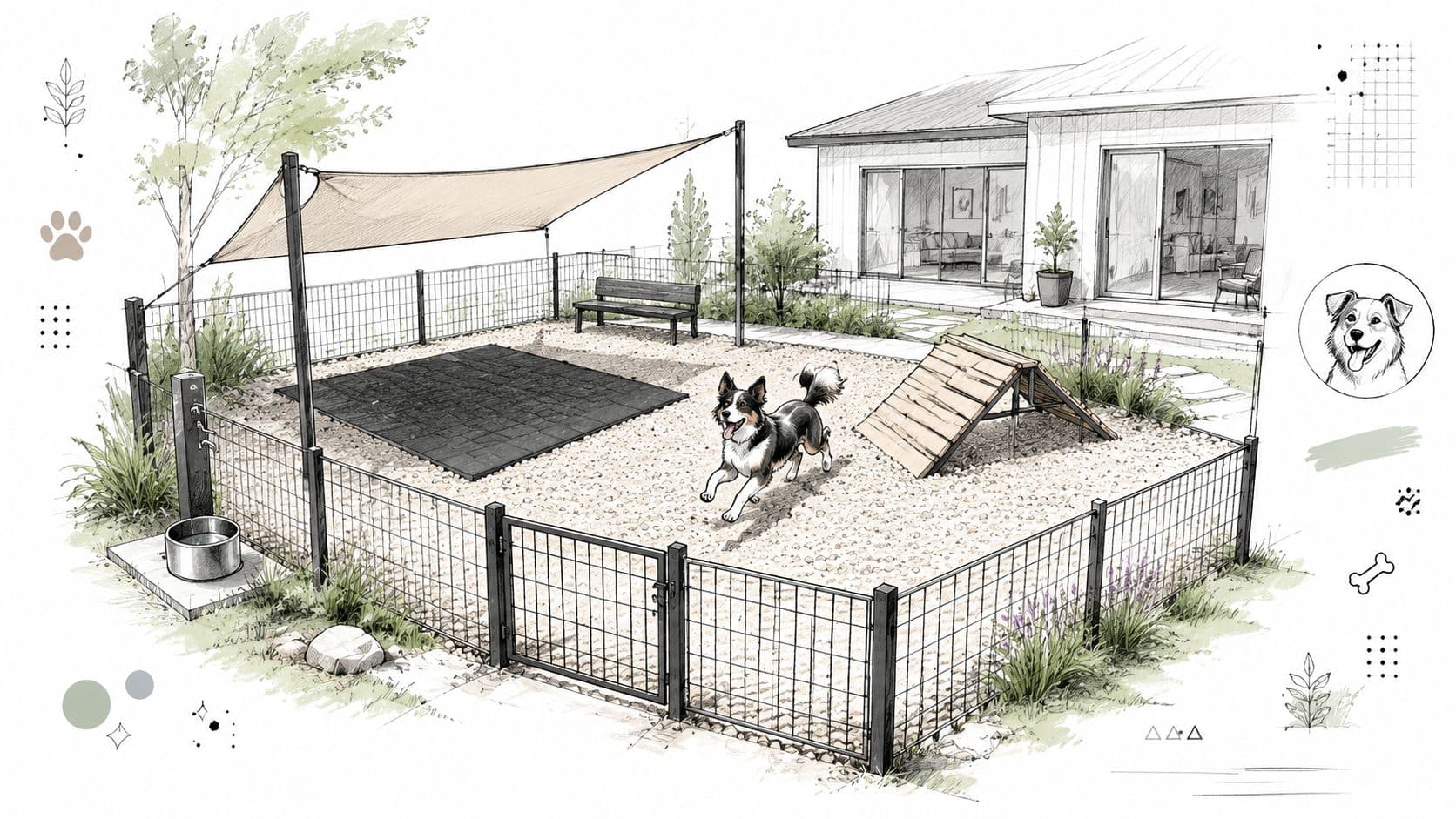
The best locations are practical first. Side yards work well because they already function as corridors. Rear fence lines suit dogs that like to patrol. L-shaped yards often have a natural leg that can absorb rough use without taking over the main entertaining area.
Build the Zone for Real Use
A dog run should function like a hard-working outdoor system, not a leftover strip beside the house. Surface, drainage, entry, and stimulation all matter.
Here's what I specify most often:
- A defined path width: Big dogs need enough room to pass, turn, and accelerate without scraping fencing or flattening adjacent plants.
- Footing that matches the dog: Compacted fines stay put better than loose gravel for hard runners. Pet turf looks tidy, but only if the base drains well and odors are managed. Mulch is softer, though frequent kick-out can make maintenance annoying.
- One clear entry point: Dogs learn zones faster when the access is obvious and consistent.
- Visual buffering: Slatted screens, shrubs placed outside the run, or shade fabric can reduce fence running triggered by people, dogs, or cars.
- Simple enrichment: A low platform, short ramp, or turning post gives active dogs something to do besides pace the perimeter.
A long straight run is not always the best answer. Some dogs use it well for sprints. Others do better with a loop or a widened turnout area where they can pivot, sniff, and settle. Age matters too. Young athletic dogs need room to move. Older dogs often benefit more from stable footing, shade, and easy access than from speed.
Pros, Cons, and a Common Layout That Works
A dedicated run solves several problems at once. It protects the ornamental yard, concentrates cleanup, and gives high-drive dogs a predictable outlet. It can also create a kennel feel if the surface is harsh, the fencing is too exposed, or the run is tucked into a forgotten corner with no shade.
One layout I use often places the run along a side yard with a gate at one end, the back door at the other, and a slightly wider play pocket near the middle. That pocket can hold a platform, water bowl, or shade sail without blocking movement. The result feels integrated into the yard plan instead of added after the damage started.
Before building, test a few layout options on paper or with an ai garden design generator. It helps you see whether the run connects cleanly with patios, planting beds, and later decisions about fencing, shade, and barriers.
3. Dog-Safe Plant and Garden Selections
Dog-safe planting is about more than avoiding toxic species. It's also about choosing plants that can survive being brushed, sniffed, and occasionally trampled without making the yard look shredded by midsummer.
Soft, delicate plants in a high-traffic dog yard usually become a replacement plan, not a yard design plan. Tougher perennials, sturdy herbs, and resilient shrubs tend to hold up better, especially when they're placed outside the dog's main routes.
Plant Tough, Then Plant Safe
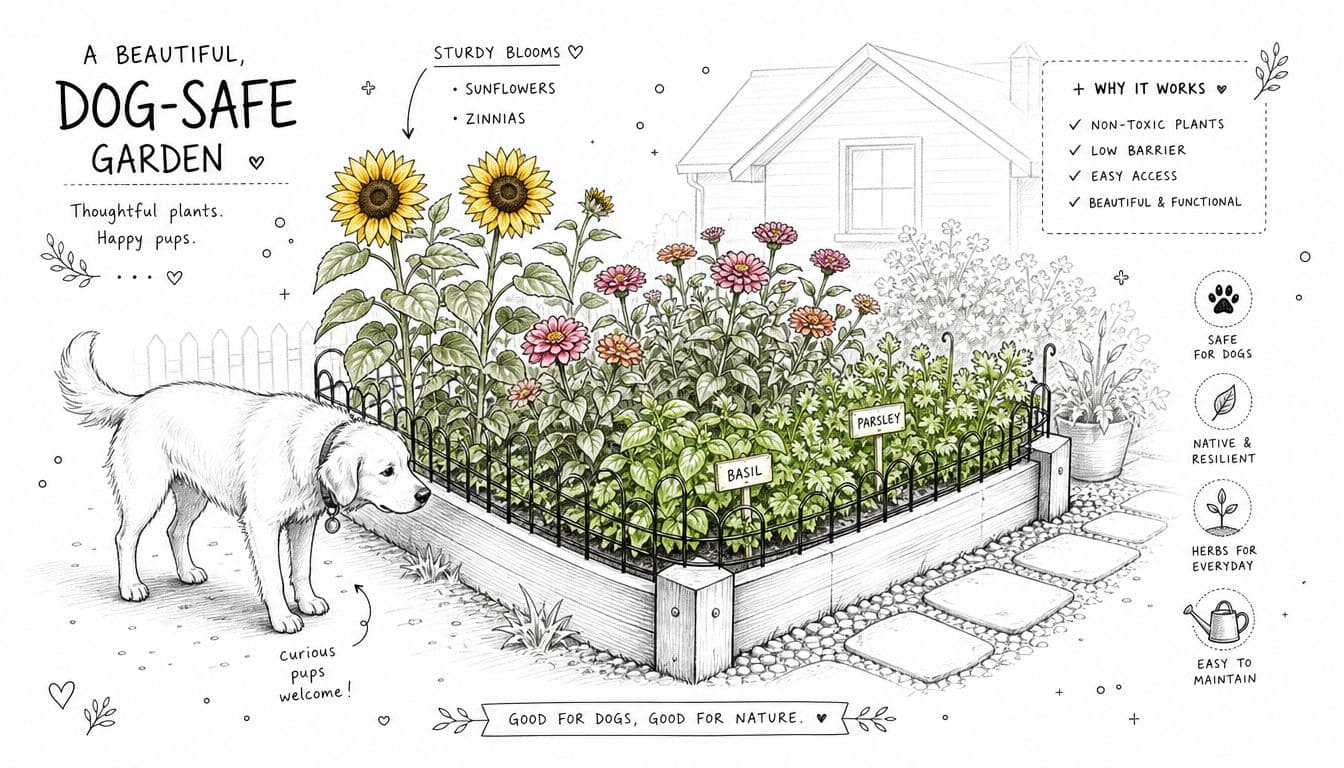
Start with behavior. If your dog grazes, sniffs everything, or barrels into beds, stick with sturdy, dog-safe choices and avoid fragile stems at nose level. Many homeowners do well with herbs like basil, parsley, and thyme, plus dependable flowers such as zinnias and marigolds. Coneflowers and black-eyed Susans can work in sunny borders where there's enough room around them.
If you're checking new plants, use a reliable pet-safety database before buying. Then ask a second question people often skip. Will this plant still look decent after repeated contact?
How to Keep Beds Looking Intentional
The strongest dog-friendly gardens use layout to do as much work as plant selection. Delicate flowers go behind a low edge, inside raised beds, or behind sturdier shrubs. Sniff-friendly plantings stay at the front where contact is expected.
A few practical moves matter more than people think:
- Use sturdy structure plants: Evergreen shrubs and dense mounding perennials give the bed backbone.
- Repeat fewer varieties: Repetition looks cleaner and recovers visually when one plant gets roughed up.
- Keep edible herbs accessible but contained: A small dedicated herb bed is easier to monitor than scattered pockets.
For homeowners who want to compare plant groupings before planting, an ai garden design generator helps you test color, spacing, and bed placement against your actual yard photo.
One more thing. “Dog-safe” doesn't mean indestructible. A dog can flatten a safe plant just as easily as a toxic one. Good design protects the plant and the dog.
4. Secure Fencing and Containment Systems
A fence has one job on paper, keep the dog in. In practice, it also has to manage sightlines, reduce stress triggers, survive weather, and look like it belongs with the house.
That's why the right fence for a quiet older Labrador isn't the right fence for a young shepherd mix that climbs, paces, and patrols. Containment starts with reading the dog accurately.
Match the Fence to the Dog
Solid privacy fencing works well for reactive dogs that get overstimulated by foot traffic, neighboring pets, or street movement. Open metal fencing suits dogs that are calmer and owners who want sightlines preserved. Composite panels can look sharper than pressure-treated lumber and reduce maintenance, but they need careful detailing in hot climates.
Invisible systems can help in some layouts, but I rarely like them as the only layer when the dog is determined, anxious, or likely to chase. A physical boundary is clearer, easier for visitors to understand, and less likely to fail because of one training lapse.
A containment system should be boring to the dog. If the fence line becomes the most exciting part of the yard, the layout still needs work.
Containment Details That Prevent Problems
A good fence is more than the panel. Gate hardware, bottom clearance, corner visibility, and anti-dig detailing matter just as much. If there's a weak point, most dogs will find it long before the owner does.
Pay attention to these specifics:
- Bottom edge control: Reduce gaps where small dogs can squeeze or larger dogs can start digging.
- Interior anti-dig strip: Gravel bands, buried edging, or subsurface deterrents can stop trenching at the perimeter.
- Safe finishes: Avoid sharp wire ends, protruding fasteners, and rough cuts at nose height.
For highly visual projects, use OutdoorBrite to compare fence styles against the house, patio, and planting palette before you order materials. A black aluminum fence can feel elegant in one yard and too exposed in another. Seeing it first saves expensive second-guessing.
5. Shade Structures and Cooling Features
Dogs don't use shade the way people do. They don't necessarily choose the prettiest pergola or the formal sitting area. They choose the coolest surface, the breeze path, and the place where they can still monitor the yard.
That means the best shade plan starts by watching where the dog already lies down during warm weather. Then you improve that spot instead of forcing a new one.
Put Shade Where Dogs Already Gather
A shady corner near the back door often gets more real use than a designer pergola across the yard. Trees, shade sails, covered side runs, and pergolas all work, but placement matters more than style.
Industry data shows pet-focused outdoor spaces are already mainstream, with nearly half of U.S. pet owners having dedicated outdoor areas for their pets and many others planning to add them. That tracks with what I see in projects. Homeowners aren't asking whether to account for the dog anymore. They're asking how to do it without compromising the yard.
Layer Cooling Instead of Relying on One Feature
The best cooling setups combine shade, airflow, and a surface that doesn't hold excessive heat. A pergola over dense pavers can still feel hot if there's no breeze. A tree canopy over pea gravel can feel much cooler.
Useful combinations include:
- Overhead shade plus cool footing: Shade sail with gravel, mulch, or irrigated ground cover.
- Filtered shade near play space: Trees or slatted structures that cool the area without making it damp and stagnant.
- Rest zone near water: A shaded hydration station or dog fountain close to the house.
I'd also think about seasonal sun angles. A structure that shades well in midsummer may leave a run exposed during shoulder seasons if the sun comes in low. Previewing shadow patterns with design software is worth doing before posts go in the ground.
6. Hardscaping and Permeable Paving Solutions
A dog comes in from the yard after a wet morning, cuts the corner by the back door, and brings half the run with him. That traffic pattern is where surface choice earns its keep. In high-use spots, a well-built hardscape system usually performs better than trying to keep turf alive.
I use hard surfaces to solve specific problems. Mud at entries, worn side runs, loose soil around gates, and pacing tracks along the house all respond better to paving, gravel, or compacted aggregate than to more grass seed. The trade-off is heat and paw comfort, so material choice has to match sun exposure and how the dog moves through the space.
Choose Materials by Behavior, Not Just Looks
Pea gravel works well in potty areas and side runs because it drains fast, stays fairly easy to rinse, and costs less than most paved options. It also shifts underfoot. Some dogs ignore that. Others avoid it, especially seniors, puppies, or dogs with joint issues. Gravel also needs a firm edge so it does not migrate into beds or onto patios.
Permeable pavers are a cleaner solution for routes shared by people and dogs. They hold grade better, track less debris indoors, and give you a more finished patio-to-yard transition. They cost more up front and need a proper base. If the base is rushed, the surface settles and the joints stop draining the way they should.
Compacted fines or decomposed granite can look sharp in dry climates, but I am careful with them in dog spaces. Waste cleanup is less pleasant, and repeated urine can create odor pockets if the section does not drain well. Large-format pavers with gravel joints are often the middle ground. You get stable footing with some permeability, and the joint pattern softens the look of a hard surface.
Materials That Usually Hold Up Well
- Pea gravel: Best for potty zones, utility side yards, and low-cost runs. Good drainage, but it moves and can scatter.
- Permeable pavers: Best for paths, patios, and main circulation routes. Cleaner under paw and better for shared use.
- Compacted fines or decomposed granite: Works in arid regions where you want a natural look. Less forgiving for waste cleanup.
- Large-format pavers with gravel joints: Good balance of drainage, appearance, and stable footing.
Color matters more than many homeowners expect. A dark charcoal paver can look great in a sample and run too hot in full afternoon sun. Lighter tones, textured finishes, and partial shade usually make the space more usable for dogs.
Before committing to a pattern or color mix, test it with an ai patio design generator. It is a practical way to compare heat-absorbing dark finishes against lighter options, and to see whether a gravel run, paver path, and door landing work together.
For broader hardscape inspiration, these Pro tips for paving garden designs can help you think through layout and surface transitions.
7. Integrated Water Features and Hydration Stations
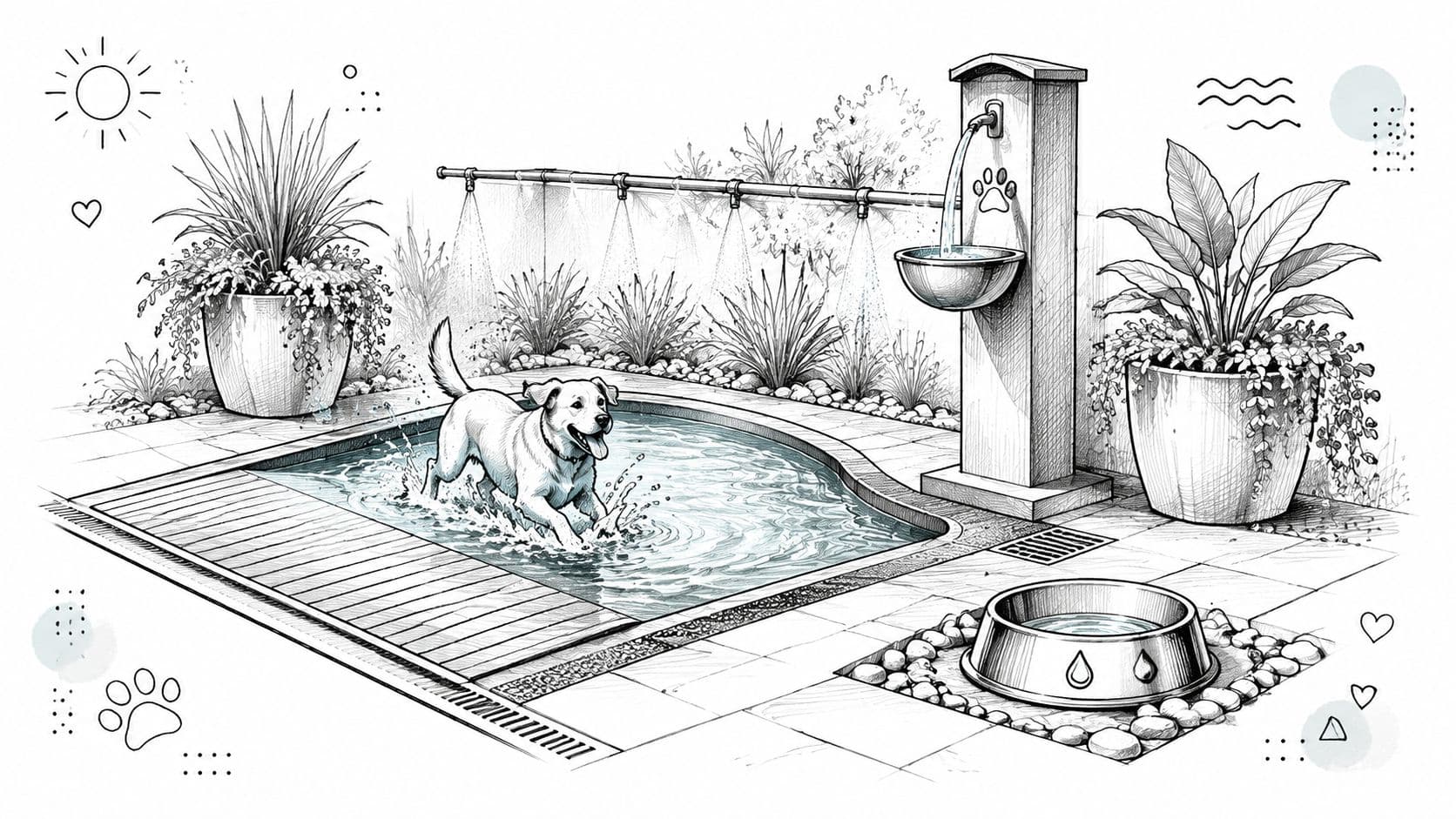
Water features for dogs sound whimsical until you've lived with a thirsty dog in a hot yard. Then they become practical fast. The trick is making them easy to clean, easy to refill, and safe around wet paws.
A decorative fountain that splashes onto slick stone is a maintenance problem. A low dog fountain near a shaded play zone is a real asset.
Make Water Easy to Reach and Easy to Maintain
Hydration stations work best near the spaces dogs already use for play and rest. If the bowl is tucked behind a planter in full sun, it won't help much. If the fountain sits on a slippery pad that stays slimy, it becomes a hazard.
In larger custom yards, I like seeing one primary water point and one backup. It doesn't have to be elaborate. A plumbed dog fountain, a refreshed shaded bowl station, or a shallow splash feature can all work if drainage is handled correctly.
Keep the water source close to a hose bib or irrigation connection. Features that are annoying to maintain usually stop being used.
Design for Splash, Slime, and Overspray
Every water feature creates a wet perimeter. Plan that perimeter first. Use textured paving, a drain path, or a gravel soak zone so the area doesn't turn into algae and mud.
A few choices make a big difference:
- Non-slip surround: Textured pavers or broom-finished concrete beat polished stone.
- Shallow access: Senior dogs and short-legged breeds do better with low edges and gradual entries.
- Simple plumbing: Recirculating systems conserve water, but they still need routine cleaning.
If you want a pool or wading zone, make sure the dog can get out easily from more than one point. Beautiful water features fail quickly when they ignore basic animal movement.
8. Raised Beds and Dog-Proof Garden Barriers
A dog barrels around the corner, clips a bed edge, and suddenly the flowers are flattened and fresh soil is everywhere. That pattern is common in busy yards. Raised beds and physical barriers fix it by changing movement, not just protecting plants.
They also give this part of the yard a clearer job. The dog gets an obvious travel route. The planting area gets height, structure, and a better chance of surviving daily traffic.
Lift Delicate Plants Out of the Traffic Zone
Plants set flush with the ground rarely hold up well in dog-heavy spaces, especially near gates, fence lines, and favorite patrol paths. Raising the soil level protects crowns and roots, keeps mulch in place better, and makes it harder for a dog to cut straight through the bed.
Height matters. A very low border may slow a calm dog, but it will not stop an excited one. For most homes, I get better results from beds tall enough to read as a real boundary, paired with a wide path beside them so the dog does not feel forced into the planting.
This is one of the main trade-offs. Taller beds protect plants better and improve drainage, but they cost more to build and dry out faster in hot weather. Wood is easier on the budget. Masonry lasts longer and stands up better to scratching, urine, and repeated impact.
Use Barriers That Redirect Movement
Barriers work best when they guide the dog toward the route you want. If the shortest path to the gate cuts through a bed, many dogs will test the edge until something gives. Give them a cleaner option and the barrier has a much better chance of holding up.
A practical setup usually combines raised planting with one or two of these elements:
- Low fencing or lattice panels: Useful around vegetable beds, young shrubs, and any area with loose soil.
- Steel or stone edging: Better for defining ornamental beds where you want a cleaner finish and more durability.
- Open patrol paths: A strip of decomposed granite, turf, or pavers beside the bed helps pacing dogs stay out of the planting.
- Dedicated dig zone: Redirect digging into a sand or loose-soil area that is easy to rake and far more appealing than your planting bed.
Diggers need extra protection at the base. Dog guidance on digging management generally favors redirection over punishment, and in stubborn spots that can include using hardware cloth below the surface so the dog meets resistance before reaching root zones. The same idea appears in practical homeowner advice from Pretty Purple Door's dog-friendly landscaping tips.
Build for Maintenance, Not Just Looks
Good barriers should still be easy to weed, water, and prune. I have seen plenty of attractive bed enclosures become a hassle because the opening was too narrow for a hose, a rake, or a person carrying mulch.
Before building, test the spacing with stakes or hose lines on the ground. That simple mock-up shows whether the dog has enough room to pass comfortably and whether the bed height and barrier placement make sense from both sides.
If you want to preview the layout before spending money on materials, use an AI yard design tool such as OutdoorBrite to compare bed heights, edging styles, and barrier placement. It is a fast way to spot circulation problems early, especially in smaller yards where every foot has to work harder.
Dog-Friendly Backyard: 8-Point Comparison
| Option | Implementation Complexity 🔄 | Resources & Cost ⚡ | Expected Outcomes 📊 | Ideal Use Cases 💡 | Key Advantages ⭐ |
|---|---|---|---|---|---|
| Dog-Friendly Turf and Ground Cover Solutions | Medium, professional install for artificial turf; DIY for seed blends | Medium–High, artificial $8–15+/sqft installed; periodic infill/maintenance | Consistent, year‑round play surface; fewer urine spots; improved drainage | Heavy-traffic yards; owners wanting low-maintenance lawn replacements | Durable, pet-safe surface; aesthetic lawn alternative |
| Designated Dog Run and Play Zones | Medium, requires layout, fencing and surface prep | Medium–High, fencing $15–40+/lf plus surfacing and upkeep | Concentrates wear; protects rest of yard; safer, cleanable play area | Multi-dog homes, properties with valuable plantings, renters needing contained zones | Containment of damage; protects landscaping; customizable |
| Dog-Safe Plant and Garden Selections | Low–Medium, research and strategic placement needed | Low, plant purchase and routine care; occasional replacement | Eliminates poisoning risk; maintains garden aesthetics; supports ecosystem | Homeowners prioritizing safety and biodiversity; small gardens | Reduces vet emergencies; preserves visual variety; eco‑friendly |
| Secure Fencing and Containment Systems | Medium–High, precise installation and training for electronic systems | High, $2,000–10,000+ installed; ongoing inspections and maintenance | Strong containment; reduced escape/liability; clear property boundaries | Escape‑prone dogs; yards near roads; owners needing reliable boundaries | Most reliable containment; increases safety and property value |
| Shade Structures and Cooling Features | Medium, structural install or long‑term planting; possible plumbing | Medium, $1,000–5,000+ for structures; water and maintenance costs | Reduced heat stress; extended outdoor usability; improved comfort | Hot climates, brachycephalic breeds, day‑use yards | Protects health; extends safe outdoor time; adds human appeal |
| Hardscaping and Permeable Paving Solutions | Medium–High, specialized installation for permeable systems | Medium–High, $5–15+/sqft installed; may need contractors | Eliminates mud; improves drainage and odor control; durable under traffic | Mud-prone yards; high-traffic play areas; sustainable designs | Durable, low‑maintenance surfaces; good drainage; long‑lasting |
| Integrated Water Features and Hydration Stations | Medium, plumbing, filtration and safety considerations | Medium, installation and regular cleaning; water usage | Encourages hydration and cooling; behavioral enrichment; visual focal point | Active dogs, warm climates, enrichment-focused yards | Promotes cooling/hydration; enriches play; aesthetic benefit |
| Raised Beds and Dog-Proof Garden Barriers | Low–Medium, build and install barriers; routine upkeep | Low–Medium, materials and labor for beds/guards; watering needs | Protects plants from digging/urine; defines zones; safer edible gardens | Vegetable/herb gardeners, small yards needing plant protection | Preserves crops; reduces conflicts; easy monitoring and access |
Bring Your Dog-Friendly Backyard to Life
A successful dog-friendly yard doesn't come from one magic material or one trendy pet feature. It comes from matching the design to real behavior. Dogs run the same routes, claim the same lookout points, cool off in the same corners, and test the same weak spots. Once you design around those habits, the yard stops fighting back.
That's why I prefer thinking in systems. One system handles wear. Another handles containment. Another protects plants. Another makes heat and hydration manageable. Put those together and the whole property starts working better. The yard feels calmer, looks more intentional, and requires less constant repair.
The biggest mistake homeowners make is treating dog use like a minor variable. It isn't. If the dog lives in the yard every day, that behavior should shape the plan from the start. The second mistake is committing too early to materials and layouts they haven't visualized properly. A gravel run might solve one issue and create another if it lands in the wrong place. A beautiful raised bed might block the dog's natural patrol route. A pergola might shade the table but not the place your dog naps.
That's where a visual planning tool helps. OutdoorBrite lets you upload a photo of your current yard and test these ideas before you spend money on demolition, materials, or plant orders. You can compare hardscape layouts, swap lawn areas for pet turf, experiment with raised beds, and see whether a dog run looks integrated with the rest of the design or like an afterthought. For patios, planting zones, and broader yard layouts, that kind of preview reduces expensive guesswork.
It also helps with trade-offs. You can see whether a fence style feels too closed in. You can check if a shade structure lands in the right zone. You can compare whether pavers, gravel, or turf fit your home's architecture better. Those decisions are much easier when you're looking at your yard instead of trying to imagine it from a sample board.
If you want backyard landscaping ideas for dogs that hold up, start with function and then refine the aesthetics around it. Give your dog a place to run, relieve itself, cool off, and dig appropriately. Protect the parts of the garden that matter most. Use durable materials where wear is inevitable, not where it's theoretically possible.
That's how you build a backyard both of you can enjoy. It won't just look better on install day. It'll still work after muddy weather, zoomies, summer heat, and daily life.
Outdoor projects get easier when you can see the finished result before lifting a shovel. OutdoorBrite Money helps homeowners, DIY renovators, and outdoor design pros turn a simple yard photo into fast, photorealistic redesigns for backyards, gardens, and patios, so you can test dog runs, planting plans, paving materials, and shade structures with more confidence and fewer costly mistakes.
See your yard reimagined
Start creating