10 Backyard Makeover Ideas for a Stunning Outdoor Space
Ready for a change? Discover 10 backyard makeover ideas, from budget-friendly gardens to luxury outdoor kitchens. Visualize your dream space with AI.
Your backyard usually reaches a tipping point before you do. The grass is patchy, the patio furniture doesn't fit the space, one corner collects junk, and the whole yard feels like an obligation instead of a place to spend time. You can see the potential, but translating loose inspiration into a plan is where most projects stall.
That's why backyard makeover ideas work best when they move past mood boards and into decisions. Which material belongs where. What's worth buying now versus later. Which upgrades make the yard easier to use, not just nicer to photograph. That practical lens matters even more if you're improving the space before a sale. The National Association of REALTORS® reports that 92% of REALTORS® suggest improving curb appeal before listing and 97% say it's important for attracting buyers.
This guide gives you 10 backyard makeover ideas you can act on. Each one includes realistic cost ranges where verified data exists, materials to consider, implementation advice, and an AI Design Advantage section so you can test layouts and styles before you buy stone, plants, or furniture. That last part is where many homeowners save themselves from expensive second guesses. Seeing your own yard redesigned beats trying to imagine it from a showroom floor or a saved image on your phone.
Table of Contents
- 1. Outdoor Living Spaces & Patio Design
- 2. Water Features & Pond Landscaping
- 3. Native Plant Gardens & Xeriscaping
- 4. Outdoor Kitchen & Dining Areas
- 5. Hardscaping & Pathways Design
- 6. Vertical Gardens & Green Walls
- 7. Outdoor Lighting & Ambiance
- 8. Fire Features & Warmth Elements
- 9. Lawn Alternatives & Turf Replacement
- 10. Shade Structures & Pergola Design
- 10-Point Backyard Makeover Comparison
- Visualize, Plan, and Create Your Perfect Backyard
1. Outdoor Living Spaces & Patio Design
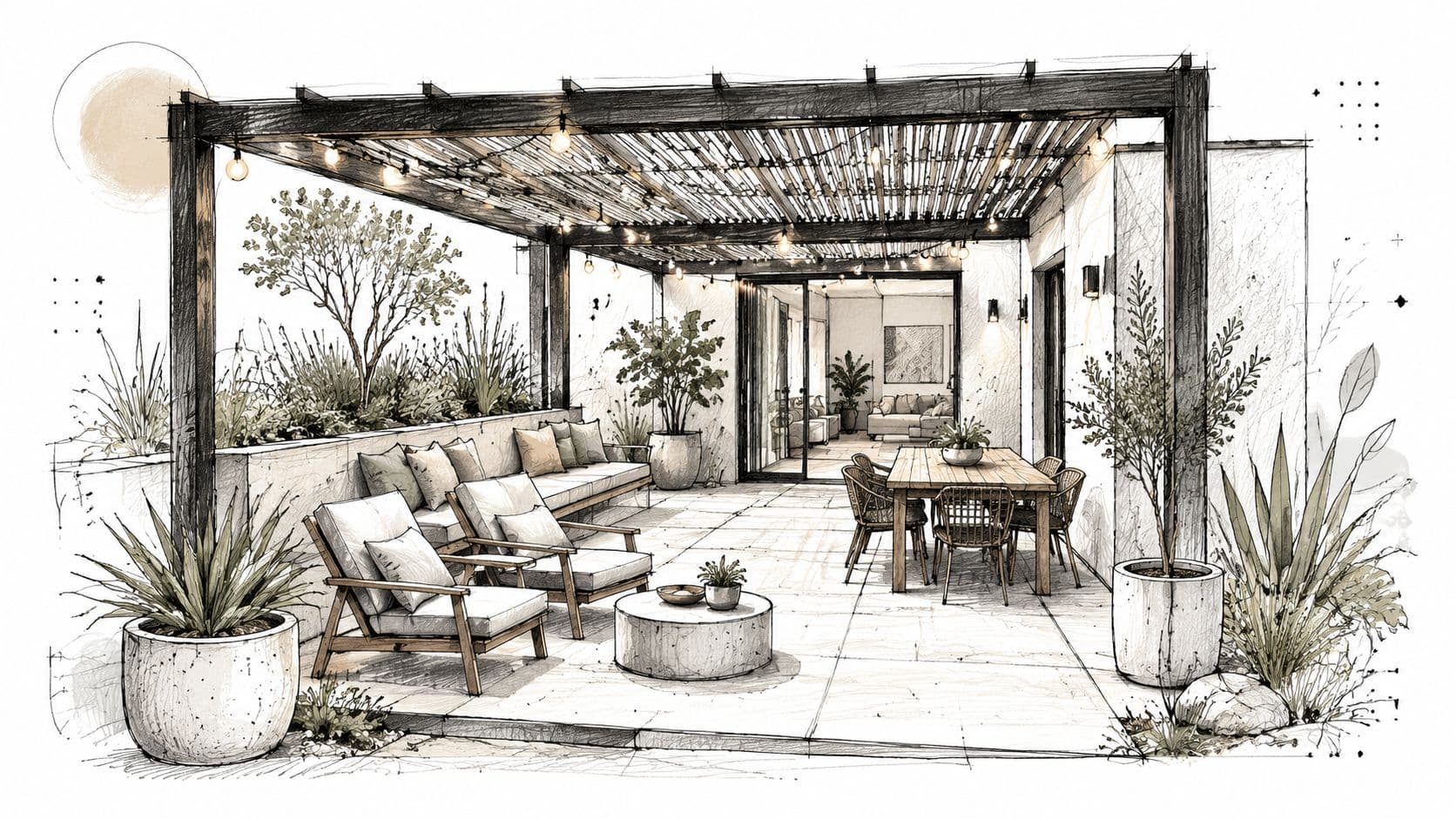
You step into the backyard with coffee in hand, and the yard still feels unfinished. The fix is rarely more decor. It is a patio plan that gives the space a job. One area for sitting, one for eating, and a clear path between them.
This is one of the few backyard upgrades that can start modestly and still look intentional. A small paver pad with two chairs can become a full outdoor room later if the layout is right from the beginning. I usually advise homeowners to spend money on the surface first, then add furniture in phases. Cheap seating is easy to replace. A poorly sized patio is expensive to correct.
Angi's patio installation cost guide shows how wide the price range can be, depending on size and material, from basic gravel or concrete setups to premium stone installations: https://www.angi.com/articles/how-much-does-it-cost-build-patio.htm. For planning purposes, treat this idea in three budget tiers: a simple gravel or concrete patio at the low end, concrete pavers or stamped concrete in the middle, and natural stone or porcelain pavers at the high end.
Build the Patio Like an Outdoor Room
Start with dimensions, not furniture shopping. A true dining patio needs enough depth for chairs to pull out without scraping planting beds or walls. A lounge patio needs room for seat depth, a coffee table, and a walking lane that stays open even when people are seated.
Three material decisions shape the result:
- Surface: concrete pavers, poured concrete, decomposed granite, brick, or natural stone
- Edge or enclosure: low retaining wall, planter border, privacy screen, or built-in bench
- Vertical structure: pergola, slat screen, tall planters, or a fence softened with planting
These choices determine cost, drainage, heat retention, and maintenance. Natural stone looks excellent, but it usually costs more to install and can require a thicker base. Poured concrete is economical and clean-looking, but large slabs can crack if the base prep is poor. Pavers cost more up front than gravel, yet they are easier to repair later because one damaged unit can be lifted and replaced.
Practical rule: Keep the main circulation path at full walking width. If guests have to sidestep coffee tables or chair arms, the patio is undersized or overfurnished.
Furniture should match how the space will be used. Deep sectionals work for a social lounge near the back door. Upright dining chairs make more sense for families who eat outside often. Outdoor rugs help only when they are scaled to the whole seating group. Small rugs make a finished patio look temporary.
For styling references, expert patio design insights can help you narrow the look before you commit to finishes and furniture.
AI Design Advantage
Before ordering materials, test the layout with ai backyard patio design. Upload a photo of the yard and compare a clean modern paver layout, a warm Mediterranean courtyard, or a layered family patio with screening and planters. This saves money because you can see whether the patio feels too tight, too exposed, or visually heavy from the house before any work starts.
That last check matters. A patio can function well on paper and still feel wrong if it blocks sight lines from the kitchen or crowds the rear facade. Good design solves both use and appearance.
2. Water Features & Pond Landscaping
Water changes the character of a yard fast. A basin fountain can make a blank planting bed feel intentional. A pond or stream creates movement and sound that softens traffic noise and draws attention away from fencing, utilities, or a plain rear property line.
The mistake is choosing a feature because it looks impressive online instead of because it fits the yard. A compact courtyard usually benefits from a wall fountain, bubbling urn, or low recirculating basin. Larger lots can support a pond edge, gravel stream, or a waterfall built into a slope.
Choose the Right Water Feature for the Yard You Have
If your yard is level and small, keep the profile simple. Stone bowls, corten steel spillways, and self-contained fountains are easier to service and easier to integrate with existing patios. If the yard slopes, use that grade rather than fight it. A stepped water run or a pondless cascade often feels more natural than a flat formal basin pushed into a hillside.
Materials should look believable in the setting. Natural stone works with cottage, woodland, and Mediterranean gardens. Smooth concrete or metal tends to sit better in contemporary spaces. Avoid fake rock shells unless the entire setting is casual enough to carry them.
What Usually Goes Wrong
Maintenance access gets ignored. Pumps, skimmers, and filters need to be reachable without dismantling half the planting bed. Electrical access needs planning early. Splash also matters. If the feature throws water onto paving, algae and slippery surfaces become part of the design whether you intended that or not.
Put the water feature where it can be seen and heard from the house or the seating area. Hidden water features usually become neglected water features.
For a real-world scenario, think of a narrow side-yard garden. A tall wall fountain near the dining area can deliver sound, vertical focus, and evening atmosphere without giving up usable square footage. That's often a better answer than forcing a small pond into a yard that needs circulation more than spectacle.
3. Native Plant Gardens & Xeriscaping
A lot of backyard makeover ideas focus on additions. Better furniture. Better lighting. Better accessories. In many climates, the smarter makeover starts with removing the plants that constantly struggle and replacing them with a planting palette that belongs there.
That shift is becoming more practical, not just stylistic. Bower & Branch highlights xeriscaping, native plants, artificial turf, vertical gardens, and shade-focused features as alternatives for small yards. I agree with the direction, especially when homeowners are tired of watering thirsty plants that never look settled.
Build the Planting Plan Around Survival, Not Impulse Buys
Start with exposure. Full sun, reflected heat, dry shade, and soggy corners all need different plants. Then group plants by water need, not by flower color. That single decision makes irrigation easier and keeps part of the garden from drowning while another part dries out.
Use a short materials palette. Gravel mulch, shredded bark, steel edging, and simple boulders work well because they support the plants instead of competing with them. In xeric designs, texture matters more than bloom count. Agave, native grasses, salvias, yucca, manzanita, or regional prairie plants can carry a space even when nothing is flowering.
AI Design Advantage
The hard part with low-water garden designs is imagining the mature look before plants fill in. That's where ai garden design software helps. You can test a native meadow look, a structured desert-modern scheme, or a softer mixed border and see how open space, mulch area, and plant massing will read together.
A practical sequence works best:
- Start with structure: Place paths, edging, and boulders first so the garden has shape even on day one.
- Plant in drifts: Repeating groups look calmer than one of everything.
- Mulch correctly: Keep mulch off crowns and stems so new plants don't rot.
- Expect an establishment period: Native and drought-tolerant gardens often look better in their second season than in their first.
If you want less mowing, less irrigation, and fewer replacement plants, this is one of the strongest makeover paths available.
4. Outdoor Kitchen & Dining Areas
An outdoor kitchen can be a grilling station, or it can become a project that overruns the entire yard. The difference comes down to workflow. If the cook has no prep space, no nearby landing area, and no shade, even a beautiful installation feels awkward in use.
I prefer to design these spaces from the cook outward. Put the grill where smoke won't drift into the seating area. Put prep space on at least one side. Keep dining close enough for serving, but not so close that guests end up standing in the hot zone.
Start With Workflow
A compact layout often works better than a sprawling one. Grill, counter, storage, and dining table can form a clean L-shape or galley. Materials need to handle weather and grease. Concrete counters, stone veneer, stainless steel doors, powder-coated cabinetry, and porcelain pavers tend to age better outdoors than finishes that belong in an indoor kitchen.
Shade changes everything. A pergola, awning, or covered extension keeps the cook from baking in afternoon sun and protects some finishes from constant exposure. It also helps dining feel intentional instead of improvised.
Where to Spend and Where to Hold Back
Spend on weather-rated appliances, durable counters, and utility planning. Hold back on novelty add-ons you won't use. Side burners, beverage coolers, pizza ovens, and sinks all sound great, but they should earn their footprint.
The broader market shows why these projects remain popular. IBISWorld estimates the U.S. landscaping services market will reach annual revenue of $176.7 billion in 2026, with 556,000 businesses operating in the industry. That depth means you can usually find help for masonry, gas, irrigation, lighting, and finish carpentry if the kitchen goes beyond DIY.
For layout testing, ai generated backyard design is useful because kitchens affect traffic more than almost any other yard upgrade. You want to see whether the island blocks the lawn view, whether the dining table crowds the grill zone, and whether the whole setup still leaves breathing room.
5. Hardscaping & Pathways Design
You feel the difference the moment you step into a yard with a clear route underfoot. The space feels calmer, easier to use, and more finished. Pathways, edging, steps, and retaining elements do that work. They organize movement, define planting beds, and turn leftover ground into usable outdoor space.
That becomes even more valuable on awkward lots. Houzz's guidance on design solutions for oddly shaped backyards highlights curves, terraces, and visual zoning for difficult footprints. In built work, those moves help solve real problems. A path can slow down a long narrow yard. A low wall can carve a level sitting area out of a slope. Good hardscaping gives the yard a readable structure.
Here's a visual reference before getting into the details.
Start With Function, Then Pick Materials
The best pathway layout comes from traffic patterns, not decoration. Mark the routes you already use from the back door to the gate, grill, shed, or seating area. If guests will carry food or drinks across the yard, keep the path direct and stable. If the goal is to slow people down and draw attention to planting, add a bend, a widened landing, or a pause point for a bench.
Sloped yards need extra discipline. One long ramp often feels awkward and can become slick. Short runs of steps with level landings are usually safer and more comfortable. Where grade changes are small, a low retaining wall can hold a planting terrace or create a cleaner edge for pavers. According to Angi's retaining wall cost guide, small retaining wall projects can be relatively approachable, but costs rise fast with wall height, drainage needs, and engineered construction requirements. That trade-off matters. A simple garden wall may fit a modest budget. A structural wall that holds back serious grade is a different job entirely.
Typical Cost Range
Expect basic gravel or decomposed granite paths to cost less than brick, concrete pavers, or natural stone. Poured concrete is often efficient for clean, modern runs, but repairs can show. Individual pavers cost more in labor, yet they are easier to lift and reset if roots shift or drainage needs to be corrected later.
Retaining work is where budgets move quickly. Height, access, drainage stone, filter fabric, and footing requirements all affect the final number. If the wall is over a few feet tall or sits near a structure, bring in a contractor or engineer early.
Best Materials for Long-Term Results
Match the hardscape to the house first.
Brick and clay pavers suit traditional homes. Bluestone, irregular flagstone, and tumbled stone fit older properties and looser garden styles. Large-format concrete pavers, broom-finish concrete, and decomposed granite work well in simpler, more modern yards.
Also check maintenance before you commit. Gravel shifts. Mortared stone can crack. Tight-joint pavers need strong base prep. Organic joint fillers can soften the look, but they need weeding and occasional topping up.
Practical Installation Steps
- Map walking lines with a hose, marking paint, or stakes.
- Set widths based on use. Main paths should feel comfortable for two people where possible.
- Excavate for the full build-up, not just the surface material.
- Install compacted base and manage drainage before the finish layer goes down.
- Use edge restraints where loose material or pavers could spread.
- Finish with planting that softens the border without spilling into the walking zone.
Field note: Hardscape failures usually start below grade. Poor base prep causes settling, puddling, and loose edges long before the surface material wears out.
AI Design Advantage
Hardscaping is hard to judge from samples alone because scale changes everything. A herringbone brick path may look charming in a small side yard and too busy in a broad open lawn. Oversized concrete pads with gravel joints can look sharp in a modern rendering and feel stark once installed beside a cottage-style house.
OutdoorBrite helps close that gap before you spend on excavation and materials. Test a straight path against a curved one. Compare decomposed granite, brick, and large pavers. Try a low wall as a seat edge instead of a separate bench. Those quick visual checks help you catch proportion problems early and avoid paying twice for the same ground.
One layout I return to often is an L-shaped yard where one leg becomes a compact terrace and the other becomes a planted walk. The path is not filler. It gives the space order, directs movement, and makes the whole yard read as one design instead of two disconnected corners.
6. Vertical Gardens & Green Walls
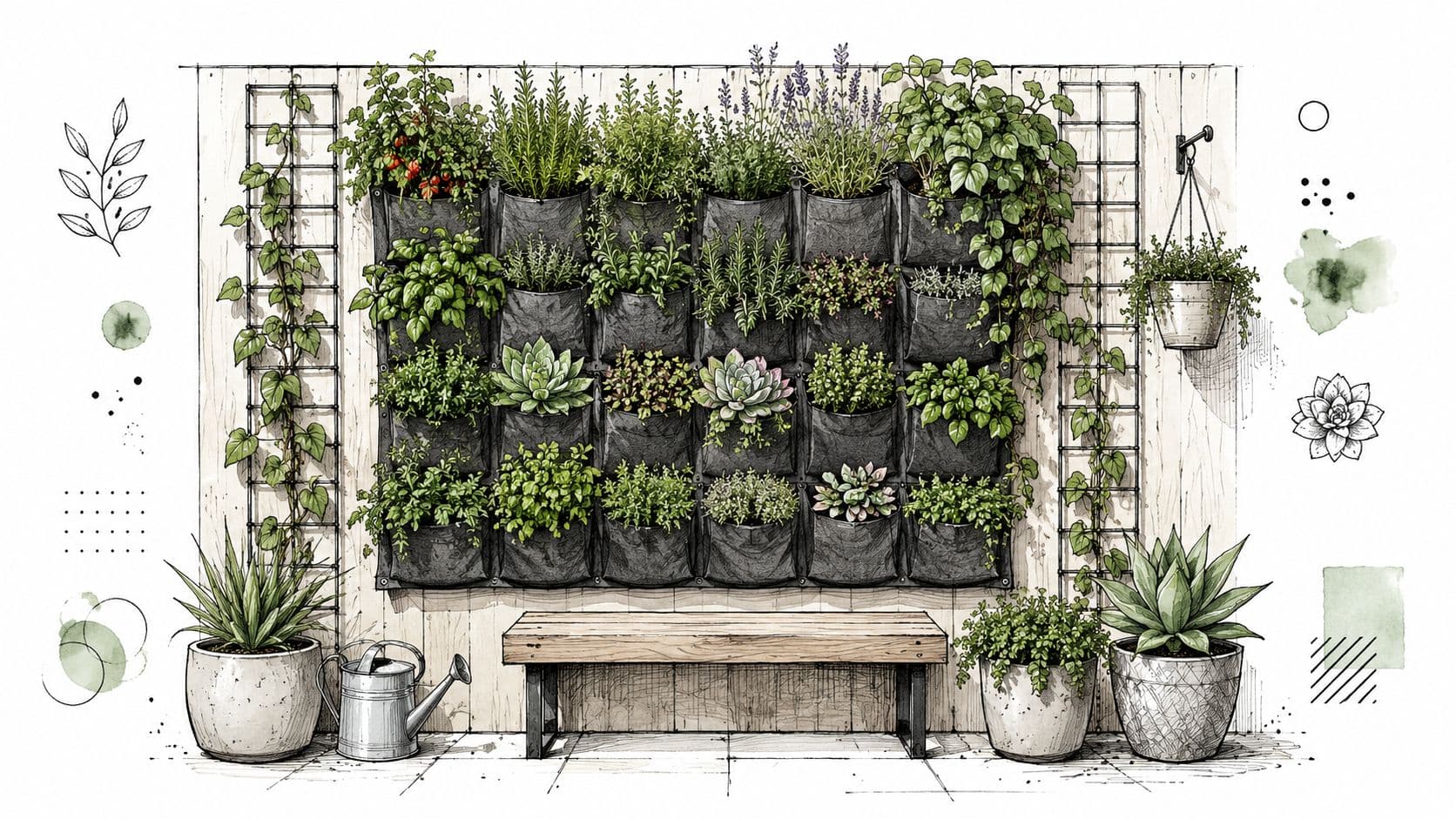
Vertical gardens are often sold as a cure-all for small backyards. They're not. They're best when they solve a specific problem such as screening a wall, softening a fence, adding herbs near a kitchen door, or pulling the eye upward in a tight courtyard.
The smartest version is usually the simplest. A trellis with star jasmine, clematis, or climbing rose often delivers more long-term value than a complicated panel system packed with thirsty pocket planters.
Use Vertical Space With Restraint
Pick one surface to emphasize. If every fence panel becomes a feature wall, the yard feels busy fast. In a small modern yard, one black steel trellis with a disciplined planting line beneath it can do more than a patchwork of mounted pots.
Living walls need reliable irrigation. Hand-watering fades quickly once the novelty wears off. If you want herbs or annual color at eye level, place them close to a hose bib, outdoor sink, or a door you use often.
Best Materials for Long-Term Success
Look for powder-coated steel, cedar, redwood, stainless hardware, UV-stable planters, and breathable backing materials. Cheap fixtures stain walls and fail early. That's especially common on sunny exposures.
Use these combinations often:
- For privacy: Wire trellis panels with evergreen climbers.
- For fragrance: Jasmine near seating or dining zones.
- For edible use: Wall-mounted herb troughs near the grill.
- For low water: Sparse succulent panels in protected locations.
A good scenario is a small townhouse yard with a blank rear wall. Instead of filling the middle of the yard with decor, mount a trellis plane, plant climbers at the base, and keep the floor open. The yard feels larger because the interest moves upward.
7. Outdoor Lighting & Ambiance
Lighting doesn't rescue a bad layout, but it can make a good one feel finished. It also determines whether the yard works after sunset or disappears the moment daylight fades. I like to think of outdoor lighting in three jobs: help people move safely, make key features legible, and create mood without glare.
Many homeowners overload one category and skip the others. They'll hang string lights and forget the steps. Or they'll install path lights everywhere and end up with a runway effect that feels harsh instead of welcoming.
Light the Yard in Layers
Start with path and step lighting. Then add soft ambient light over seating or dining. Then accent a few vertical elements such as a tree trunk, fountain wall, or textured planting bed. Warm light usually feels better in residential outdoor spaces than cold blue-toned light.
Fixture style should match the architecture. Dome path lights, recessed step lights, bollards, lantern sconces, and slim spot uplights all have their place. The trick is consistency. Mixed fixture styles often look accidental.
Where Homeowners Overdo It
Too many visible bulbs. Too much brightness near seating. Too many competing color temperatures. Outdoor lighting should help the yard settle down at night, not feel like a parking lot.
The category is worth planning carefully because spending in the broader lawn and garden market remains strong. Mintel projects the U.S. lawn and garden market will grow 28.3% from 2025 to 2026 to nearly $94 billion, then reach $99.6 billion by 2030. With that much product volume in play, it's easy to overbuy. Visualization helps filter what the yard needs.
Good lighting hides the fixture and reveals the space.
A practical example is a family patio with steps down to the lawn. Put low glare lights on the risers, one pendant or string-light canopy above the table, and a couple of narrow uplights in nearby planting. That's enough to make the yard useful and calm.
8. Fire Features & Warmth Elements
The patio is finished, the lights are on, and guests still drift around without settling. Add a fire feature in the right spot and the yard finally gets a focal point people use.
Fire works best when it supports the layout instead of competing with it. A pit or outdoor fireplace should sit on a stable surface, respect local setback rules, and leave enough room for chairs to pull back without blocking circulation. I usually plan for the fire first, then build the seating zone around it.
Choose the Type That Fits the Way You Actually Use the Yard
Portable steel fire pits are the easiest entry point. They suit renters, smaller budgets, and patios that need flexibility. Built-in pits in block, stone, or poured concrete look more permanent and usually make sense only when the seating area is already established.
Gas fire tables and linear fireplaces cost more, but they solve real problems. They start fast, shut off cleanly, and create less smoke around dining and lounge areas. Wood-burning units still have the best crackle and visual warmth, but they also require wood storage, ash cleanup, spark control, and more thought about wind direction. Those trade-offs matter more than style photos suggest.
For product examples and format comparisons, Smokey Rebel's fire pit recommendations are a useful starting point.
Typical Costs and Material Choices
A simple movable fire pit can be relatively affordable. A custom masonry installation is a bigger project once you add base prep, surround materials, and labor. According to Angi, fire pit installation costs vary widely depending on whether you choose a basic prefab unit or a built-in design with stonework and gas lines, so budget should be set after you decide on fuel type and permanence, not before. Angi's fire pit cost guide gives a solid baseline.
Material choice affects both appearance and maintenance. Steel develops character but can weather fast in wet climates. Concrete is clean-looking and suits modern yards, though cheap units can stain or crack. Natural stone feels grounded and durable, but it raises installation cost and needs a design that matches the house.
Practical Placement Rules
Keep the fire close enough to your main seating area that people will use it on a regular evening, not only during parties. In many backyards, that means connecting it directly to the patio or extending the patio with gravel, pavers, or decomposed granite.
Avoid three common mistakes. Placing the fire feature in the middle of a lawn with no hard surface around it. Tucking it under low tree canopy or too close to a fence. Choosing undersized seating that looks good in photos but becomes uncomfortable after twenty minutes.
A fire feature needs clearances, stable footing, and comfortable seating, or it turns into something people admire more than use.
A straightforward upgrade for a builder-grade yard is a round metal pit on a compact gravel pad, edged cleanly, with four deep chairs and one or two movable stools. That setup is far less expensive than a full outdoor fireplace, and it still creates a destination.
AI Design Advantage
Fire features are hard to judge from a sketch because small placement changes affect safety, comfort, and how the whole backyard reads at night. Use OutdoorBrite to test a low circular pit with Adirondack chairs, a square fire table centered on a patio conversation set, or a linear gas feature built into a seat wall.
That speed matters. You can compare material palettes, see whether the fire zone feels too cramped, and catch mistakes before you pay for masonry, gas work, or surface changes. It turns a vague idea into something you can price and build with fewer surprises.
9. Lawn Alternatives & Turf Replacement
Traditional lawn still has a place. Kids play on it. Dogs use it. Some homes need the visual quiet of open green space. But a surprising amount of turf survives only because it hasn't been questioned yet.
If the grass struggles in shade, burns on slopes, or turns muddy near gates and downspouts, that's where replacement should start. You don't need to erase every blade of grass to improve the yard.
Replace the Hard Parts First
Begin with problem zones. Swap out narrow side strips, steep banks, deep shade, and awkward corners first. Ground covers, gravel gardens, mulch beds, stepping stone courts, ornamental grasses, or planted dry creek beds often outperform lawn in those places.
Artificial turf has valid uses, especially for small play zones, rooftops, pet runs, and places where irrigation is impractical. But it isn't the universal answer. In hot sun, it can feel harsh. In some designs, it also looks too uniform unless the surrounding materials and planting are strong enough to support it.
Climate-Aware Choices Matter More Than Trendy Ones
Clover, native sedges, creeping thyme, kurapia, gravel, decomposed granite, and regional ground covers all offer alternatives depending on climate and use. The best choice is the one that matches foot traffic, sunlight, and maintenance tolerance.
I also think homeowners should weigh cleanup realistically. A meadow planting sounds romantic until the front edge flops over a path. A gravel court sounds low maintenance until leaves collect in every crevice beneath a deciduous tree.
Use AI visualization to compare a living ground cover, a modern gravel-and-paver mix, and a turf replacement approach in your actual yard. That side-by-side view makes trade-offs obvious. Some options feel beautiful in isolation but wrong once you see them against your fence, siding, and neighboring views.
10. Shade Structures & Pergola Design
A backyard without shade often gets used less than its square footage suggests. The space may look attractive at noon in photos and still be miserable at the exact hour people want to sit outside. Shade solves comfort first. The design payoff comes second.
Pergolas are popular because they define space without fully enclosing it. Shade sails, arbors, retractable awnings, and covered pavilions all solve the same problem differently. The right choice depends on whether you need filtered light, rain protection, privacy, or a strong architectural statement.
Shade Should Solve a Real Comfort Problem
Map the sun before you build. Afternoon exposure is usually the one that drives the project. A pergola over the dining zone, a sail over a lounge pad, or a vine-covered arbor leading to a back seating area can all work if they intercept the sun where people sit.
Material choice changes the tone. Cedar and redwood feel warmer and more traditional. Powder-coated aluminum and steel suit modern homes and tend to read cleaner visually. Retractable canopies give flexibility, but they require more hardware and more maintenance than a simple fixed top.
Match the Structure to the House
The pergola should look related to the architecture, not imported from a different property. Heavy rustic timbers can overwhelm a crisp contemporary house. A black metal frame can look too stark against a soft cottage garden unless the rest of the detailing supports it.
A few practical guidelines help:
- Size for furniture, not for the drawing: Cover the actual seating or dining footprint.
- Plan for lighting early: Pendants, string lights, or recessed fixtures need attachment points.
- Think about drainage: Even open slat structures change how water falls and splashes.
- Use plants carefully: Vines add softness, but they also add weight, debris, and pruning needs.
A common example is a west-facing patio that becomes unusable after lunch. A well-placed pergola with a slatted top, outdoor curtains, and a ceiling fan can turn that dead zone into the most comfortable part of the yard.
10-Point Backyard Makeover Comparison
| Feature | Implementation Complexity (🔄) | Resource Requirements (⚡) | Expected Outcomes (📊) | Ideal Use Cases (💡) | Key Advantages (⭐) |
|---|---|---|---|---|---|
| Outdoor Living Spaces & Patio Design | Moderate–High; phased or full build; possible permits | Hardscaping, furniture, lighting, moderate labor | Extended living area; higher resale value; improved curb appeal | Entertaining, family gatherings, year-round outdoor use | High ROI; flexible staging; strong aesthetic impact |
| Water Features & Pond Landscaping | High; plumbing/electrical and safety concerns | Pumps, filtration, stonework, ongoing maintenance | Strong focal point; calming soundscape; wildlife attraction | Tranquil gardens, focal entry features, luxury yards | Dramatic visual impact; ecological benefits when maintained |
| Native Plant Gardens & Xeriscaping | Low–Moderate; research and proper planting zones | Native plants, mulch, reduced irrigation systems | Reduced water use; low maintenance; pollinator support | Drought-prone areas, sustainability-focused yards | Large water savings; resilient, low-upkeep landscapes |
| Outdoor Kitchen & Dining Areas | High; requires plumbing, gas, electrical, permits | Appliances, weather-rated materials, skilled trades | Enhanced entertaining functionality; notable resale lift | Frequent outdoor cooks/hosts, alfresco dining lovers | Strong experiential value; convenience for gatherings |
| Hardscaping & Pathways Design | Moderate–High; needs proper base prep for longevity | Stone/pavers, base materials, skilled installers | Improved circulation, structure, and year-round durability | Defining zones, accessibility, low-maintenance yards | Long-lasting structure; complements many styles |
| Vertical Gardens & Green Walls | Moderate–High; irrigation and structural support needed | Planter modules, irrigation, structural anchors, maintenance | Maximizes planting area; privacy; cooling and air benefits | Small urban yards, fences, privacy screens, edible walls | Space-efficient planting; strong visual statement |
| Outdoor Lighting & Ambiance | Low–Moderate; electrical planning and layering recommended | Fixtures, wiring, smart controls or solar options | Extended evening use; enhanced safety and curb appeal | Nighttime entertaining, security-focused designs | High perceived value increase; flexible ambiance control |
| Fire Features & Warmth Elements | Low–Moderate; safety and code adherence necessary | Fire pit/fireplace materials, gas or wood supply, seating | Focal gathering spot; extended season use; ambiance | Social spaces, cooler climates, intimate gatherings | Creates warmth and social focus; strong user appeal |
| Lawn Alternatives & Turf Replacement | Low–Moderate; soil prep and establishment period | Native groundcovers, ornamental grasses, irrigation for establishment | Reduced water and maintenance; diverse textures | Water-restricted regions, low-maintenance goals | Major water and emissions savings; varied aesthetics |
| Shade Structures & Pergola Design | Moderate–High; structural and possibly electrical work | Timber/metal, fasteners, possible motors, permits | Cooler shaded areas; extended usability; architectural interest | Hot climates, patio cover needs, integrated outdoor rooms | Lowers temps; extends usable outdoor time; supports fixtures |
Visualize, Plan, and Create Your Perfect Backyard
The best backyard makeover ideas don't start with products. They start with a clear read of how the yard needs to work. A family with young kids needs open circulation, durable surfaces, and shade. A couple who entertains needs seating logic, lighting, and a place to cook or gather. A homeowner preparing to sell may focus on visible curb appeal, tidier planting, and upgrades that make the outdoor space feel cared for rather than customized beyond the market.
That's why the strongest backyard transformations usually come from sequencing. Handle grading and drainage first if they're a problem. Establish the hardscape framework so the yard has shape. Add planting that fits the climate and the maintenance reality. Then layer in comfort features such as lighting, fire, dining, and shade. When homeowners reverse that order, they often spend money twice.
Visualization makes that sequencing easier. It's hard to judge whether a pergola is too large, whether a path should curve or run straight, or whether a dry garden will feel refined rather than sparse by looking at inspiration photos alone. Your own yard has its own setbacks, windows, fences, slope, and proportions. A design tool that works from your actual photo closes the gap between a nice idea and a buildable one.
That's where OutdoorBrite is useful. You can test styles quickly, compare concepts against the architecture of your home, and make decisions with more confidence before ordering furniture, selecting pavers, or planting an entire border. For contractors and designers, that means faster client alignment. For homeowners, it means fewer expensive guesses and fewer projects that stall halfway through because the original idea looked better on a pinboard than it does on the property.
I'd also encourage restraint. Not every yard needs all ten of these ideas. In fact, most of the best outdoor spaces rely on a few well-executed moves. A solid patio, a coherent planting plan, layered lighting, and one focal feature often outperform a yard crammed with trend pieces. The same is true for budget. A smaller number of durable, appropriate choices usually ages better than trying to copy a luxury outdoor showroom all at once.
If you're ready to move from inspiration to action, begin by choosing one problem to solve. Maybe it's lack of shade. Maybe it's a lawn that never thrives. Maybe it's a patio that doesn't function. Design around that first, and let the rest of the yard evolve from a stronger foundation. When you need installation help, it also helps to find services for your project once your direction is clear.
A backyard becomes memorable when it feels easy to use. Comfortable to sit in. Logical to move through. Durable enough that you're not constantly fixing it. If you can see the plan before you build it, you're far more likely to get there.
Outdoor projects get expensive when you make decisions in the yard, at the store, and then back in the yard again. OutdoorBrite Money helps you shortcut that cycle by turning a simple yard photo into photorealistic redesign options you can evaluate. If you want to test patio layouts, compare planting styles, or see whether a pergola, fire feature, or lawn alternative fits your space before you spend, it's one of the fastest ways to design with confidence.
See your yard reimagined
Start creating