10 Backyard Patio Landscaping Ideas for 2026
Discover 10 stunning backyard patio landscaping ideas for 2026. Find inspiration for any budget, style, or size and visualize your dream patio with our tips.
You walk into the backyard, look at the slab or patch of grass behind the house, and know it could be better. The hard part is not finding ideas. It is figuring out which patio style fits your lot, your budget, your maintenance tolerance, and the way you spend time outside.
Good backyard patio landscaping ideas should help you make decisions, not just collect screenshots. Patio spaces have become a standard part of outdoor living, but the best result is never the one that looks good in someone else's yard. A long, narrow side yard calls for a different layout than a broad suburban backyard. Full sun changes your plant list. Privacy needs change your wall, hedge, and screening choices. Entertaining for ten has different requirements than wanting a quiet coffee spot for two.
That is why this guide is organized by style, budget, and upkeep, with real plant and material suggestions you can price and source. It also covers the trade-offs homeowners usually discover too late, such as when gravel looks great but tracks indoors, or when a lush planting plan turns into a weekend maintenance job.
If you need a starting point, these outdoor living design tips pair well with the ideas below.
Before you buy pavers, furniture, or plants, test the concept. patio design ai can help you preview different layouts and styles so you can rule out bad fits early and move forward with more confidence.
Here are 10 backyard patio landscaping ideas that go beyond inspiration photos, with practical categories, plant palettes, material options, and a clearer path from concept to build.
1. Modern Minimalist Patio Design
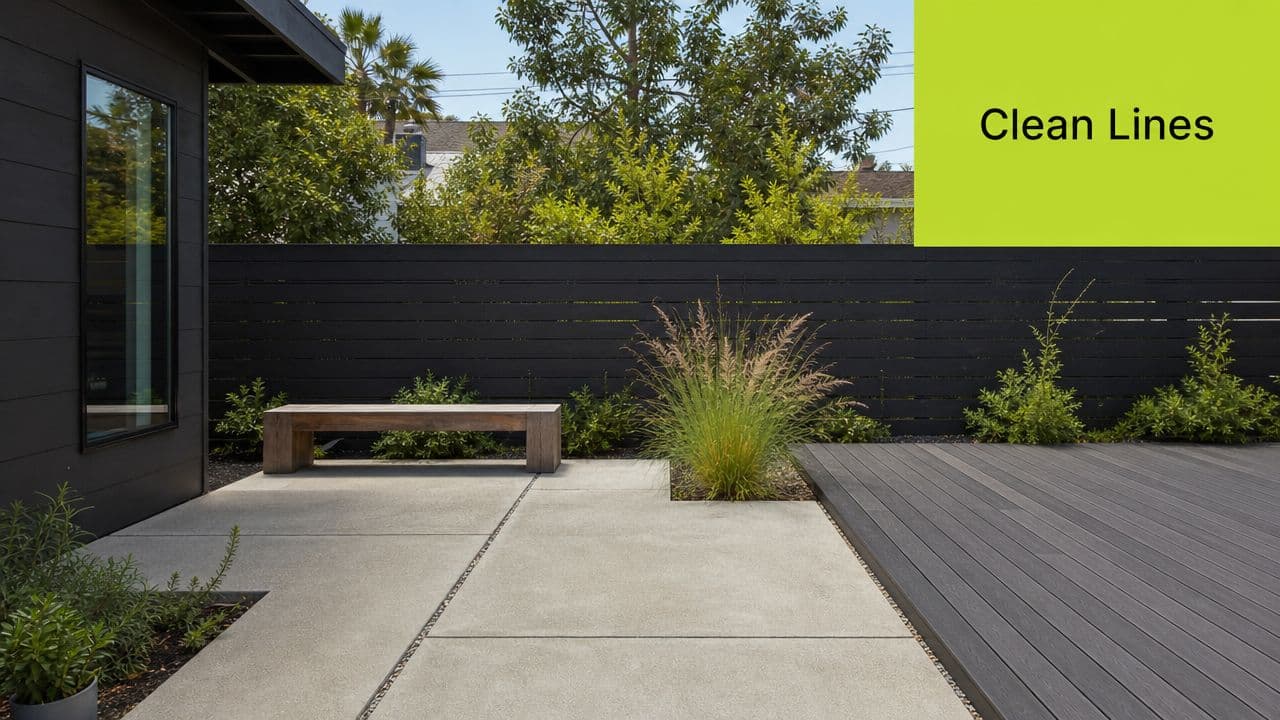
A minimalist patio works best when you commit to restraint. Homeowners often get this style wrong by adding too many small planters, too many furniture pieces, and too many materials. The result feels busy instead of calm.
Use one paving language. Large concrete pavers, fine gravel, or a clean composite deck border all work well. Then add a tight plant palette with architectural structure. Blue fescue, feather reed grass, boxwood, dwarf pine, and upright evergreens are reliable choices depending on climate.
What actually works
A modern layout usually needs one strong focal point. That might be a slatted wood privacy panel, a cast concrete fire bowl, or a specimen tree in a simple planter. If everything is meant to be a feature, nothing stands out.
For small patios, this style is especially effective because open space becomes part of the design. If you want to test clean lines and neutral materials before buying furniture, patio design ai can help you preview the balance between paving, planting, and empty space.
Practical rule: Limit yourself to three primary materials and a short plant list. Minimalism gets expensive fast when every detail is custom.
Best for: contemporary homes, small yards, low-clutter households
Maintenance level: low to moderate
Watch out for: a finished space that feels cold if you skip texture, lighting, or one warm material like wood
2. Mediterranean-Style Patio Oasis
Mediterranean patios are forgiving, which is one reason they stay popular. Terracotta pots, gravel, limestone-look pavers, wrought iron, and warm planting palettes can feel collected rather than rigidly matched. That makes this a smart option for homeowners who want charm without a hyper-modern finish.
Lavender, rosemary, santolina, olive, and ornamental grasses give you the classic look. If your climate won't support true Mediterranean species, use local plants with similar color and texture. Silvery foliage and loose, mounded forms matter more than strict plant authenticity.
Build it in layers
This style gets stronger when you create vertical structure first. A pergola, small tree, or stucco wall gives the patio enclosure. Then fill the middle layer with shrubs and containers, and keep the ground plane simple with gravel, stone, or clay-toned pavers.
A central fountain looks great in photos, but it isn't always the best move in a compact yard. A grouped pot arrangement or a single large urn can anchor the space with less maintenance and less visual noise.
Best for: warm climates, entertainers, homes with stucco or traditional architecture
Materials to consider: terracotta, decomposed granite, limestone, clay pavers
What doesn't work: overly tropical plants mixed into the scheme. The style falls apart when the foliage language clashes.
3. Japanese Zen Garden Patio
Zen-inspired patios need discipline. They aren't just gravel plus a maple. Their strength is spacing, asymmetry, and quiet transitions from one element to the next.
Natural stone, fine gravel, mossy edges, clipped shrubs, and carefully chosen wood tones create the mood. In a small urban yard, even one corner can carry this style if the lines are clean and the planting is edited. I'd rather see five intentional elements than twenty decorative ones.
Where this style earns its keep
This is one of the best backyard patio landscaping ideas for awkward shapes. Curved or circular forms can soften hard property lines, and zoning with planting helps make odd corners feel intentional, as noted in Houzz's piece on design solutions for oddly shaped backyards. A narrow patio can benefit from a diagonal stone path or offset stepping pads that pull the eye across the space instead of straight down it.
If you want to experiment with gravel fields, stone placement, and controlled planting, ai garden design software is a practical way to test proportions before you move rock or remove turf.
Leave visible negative space. Zen gardens feel calming because the eye has room to rest.
Good plant choices: Japanese maple, dwarf pine, mondo grass, bamboo in the right setting, carex, moss where climate allows
Maintenance level: moderate, because pruning and cleanup matter
Common mistake: crowding the design with lanterns, bridges, and ornaments that turn it into a theme set
4. Tropical Paradise Patio
Tropical patios succeed on abundance. Broad leaves, layered heights, saturated greens, and pockets of bright bloom create the feeling. If your yard gets strong summer growth, this style can look rich very quickly.
Use a canopy layer, a middle layer, and a soft edge. Palms, banana, elephant ears, tree ferns, canna, hibiscus, bird of paradise, philodendron, hosta, and dense groundcovers all help build that immersive look, depending on region. In cooler climates, containers do a lot of the heavy lifting because you can rotate or protect plants seasonally.
Lush doesn't mean chaotic
The biggest mistake is planting everything the same distance apart and hoping it fills in. Tropical design looks better when you mass plants in clusters and leave deliberate access for seating, maintenance, and circulation.
Privacy matters here too, but full solid screening can make a compact patio feel boxed in. Yardzen's article on landscaping ideas for privacy makes an important point. Layered planting and partial enclosure often preserve more light and depth than a heavy wall of screening.
If roots near paving are a concern, especially around small trees, it's worth reviewing guidance on solving root damage with native trees.
Best for: warm regions, pool patios, homeowners who enjoy active plant care
Maintenance level: moderate to high
Worth it when: you want the patio to feel enclosed and immersive rather than open and architectural
5. Outdoor Entertainment Hub Patio
A good entertainment patio gets tested fast. One person is carrying food off the grill, two guests are pulling out dining chairs, someone else is heading for the cooler, and traffic jams show up immediately if the layout is off.
Start with function zones, not features. Separate cooking, dining, and lounging so each area can work at the same time. I usually lay out this kind of patio from the host's point of view first. If the cook has to squeeze past chair backs or cut through the conversation area every few minutes, the design will feel frustrating no matter how nice the materials are.
Plan the traffic before the extras
Place the fixed elements first. Grill or outdoor kitchen. Dining table. Main lounge zone. Then check the walking routes between them and out to the yard, house, or pool. Clear circulation often matters more than adding one more amenity.
That is where backyard ai design helps reduce risk. A visual mockup makes it easier to spot crowded corners, undersized dining zones, or a pergola that feels too heavy for the slab before you pay for concrete, utilities, or cabinetry.
Features that usually earn their space
- Pergola coverage: Shade and structure make the dining or lounge area usable for longer stretches of the day. This outdoor pergola sizing guide is a helpful reference for scale.
- Layered lighting: Use task lighting at the grill, ambient light overhead, and low lighting at steps or planting edges so the space works after dark.
- Built-in elements: Seat walls, counters, and storage benches cut furniture clutter and hold up better than too many loose pieces in smaller patios.
Material choice matters here more than it does in a showpiece patio. Porcelain pavers, broom-finish concrete, large-format concrete pavers, powder-coated aluminum, and performance fabrics usually hold up well under frequent use. Natural stone can look excellent, but it often comes with higher install cost and more maintenance depending on the material.
Best for: homeowners who host often, families who use the patio as a second living and dining area
Maintenance level: moderate
Budget note: utilities, shade structures, and built-ins raise the price quickly, so it pays to decide early whether this patio is centered on cooking, dining, or lounging rather than trying to force all three at full scale into one footprint
6. Cottage Garden Patio Aesthetic
If modern patios are edited, cottage patios are generous. They work because the hardscape and planting soften each other. Gravel, brick, weathered stone, arbor structures, and layered flowers make the patio feel as if it has settled into the garden over time.
This style works especially well when the patio itself is simple. A plain paver pad can become charming when it's framed by roses, salvia, nepeta, foxglove, lady's mantle, hydrangea, and self-seeding annuals. You don't need ornate hardscape if the planting does the visual work.
Let it spill, but not swallow
A good cottage patio has controlled looseness. Keep paths and seating edges clear, and let the outer planting areas soften those boundaries. Curved paths or offset stepping stones help the space feel exploratory instead of formal.
A cottage garden should feel full, not neglected. If guests can't reach the chair without brushing through wet foliage, it's overplanted.
Best for: traditional homes, gardeners who enjoy seasonal change
Maintenance level: moderate to high
Budget note: plants can be added over time, which makes this style easier to phase than some hardscape-heavy designs
7. Sustainable Water-Wise Desert Patio
A desert or water-wise patio isn't barren when it's done well. It's sculptural. Gravel mulch, boulders, clean-edged pavers, and strong plant forms create contrast and shadow rather than lush density.
Agave, yucca, hesperaloe, aloe, dwarf grasses, artemisia, salvia, penstemon, and regionally appropriate natives are the backbone. In many yards, I'd rather see fewer plants with better spacing than a scattered collection of drought-tolerant species that never forms a cohesive design.
Match the style to the climate
This approach isn't just aesthetic. The global outdoor design services market was estimated at USD 330.58 billion in 2024 and is projected to reach USD 484.79 billion by 2030, with a 6.7% CAGR from 2025 to 2030, according to landscaping services market research. Homeowners are spending steadily on outdoor upgrades, and climate-fit garden designs tend to hold up better than copied styles that fight the site.
Good material pairings
- Crushed gravel: clean, affordable, and visually right for dry-climate planting
- Large-format pavers: create modern contrast against fine-textured stone
- Steel edging or boulders: define planting beds without fussy borders
Common mistake: using desert plants in rich, heavily amended beds with overhead irrigation. Most failures come from too much care, not too little.
8. Edible Garden Patio with Raised Beds
You step onto the patio to grill dinner and realize the basil is six feet away, the lettuce is ready, and the kids can pick snap peas while you set the table. That is when an edible patio earns its footprint. It turns a sitting area into a working part of the yard without making it feel like a vegetable plot dropped beside the house.
Raised beds do the heavy lifting here, but layout decides whether the space feels useful or high-maintenance. I usually place herbs and cut-and-come-again greens closest to the dining area, then give larger crops their own beds where they still get full sun. Cedar feels warm and natural. Metal lasts longer and suits cleaner-lined homes. Both work if the bed height, reach, and path width make harvesting easy.
Design for access first
Edible patios fail for predictable reasons. Beds are too deep to reach across, irrigation is inconsistent, or warm-season crops are planted in a spot that only gets half a day of sun. For most households, a smaller setup you can keep productive beats a bigger one that turns into summer cleanup.
A smart plant mix keeps the patio attractive even between harvests. Use rosemary, thyme, chives, sage, and parsley near the seating zone. Reserve deeper beds for tomatoes, peppers, kale, beans, cucumbers, and succession planting. In the right climate, blueberries, espalier apple, fig, or dwarf citrus can give the space structure as well as food.
This approach also solves a common space problem. Many patios are not large enough to support a separate entertaining area and a separate kitchen garden with comfortable circulation between both. Combining them is often the cleaner design move.
Best for: home cooks, families, small yards where every square foot needs to work
Maintenance level: moderate to high during peak growing season
Works best with: drip irrigation, at least one water source nearby, and a plan for seasonal replanting
AI Design Advantage: Use OutdoorBrite to test bed placement, materials, and crop layouts before you build, so you can see whether the patio still feels open once the raised beds are in place.
9. Sunken Seating Area with Fire Feature
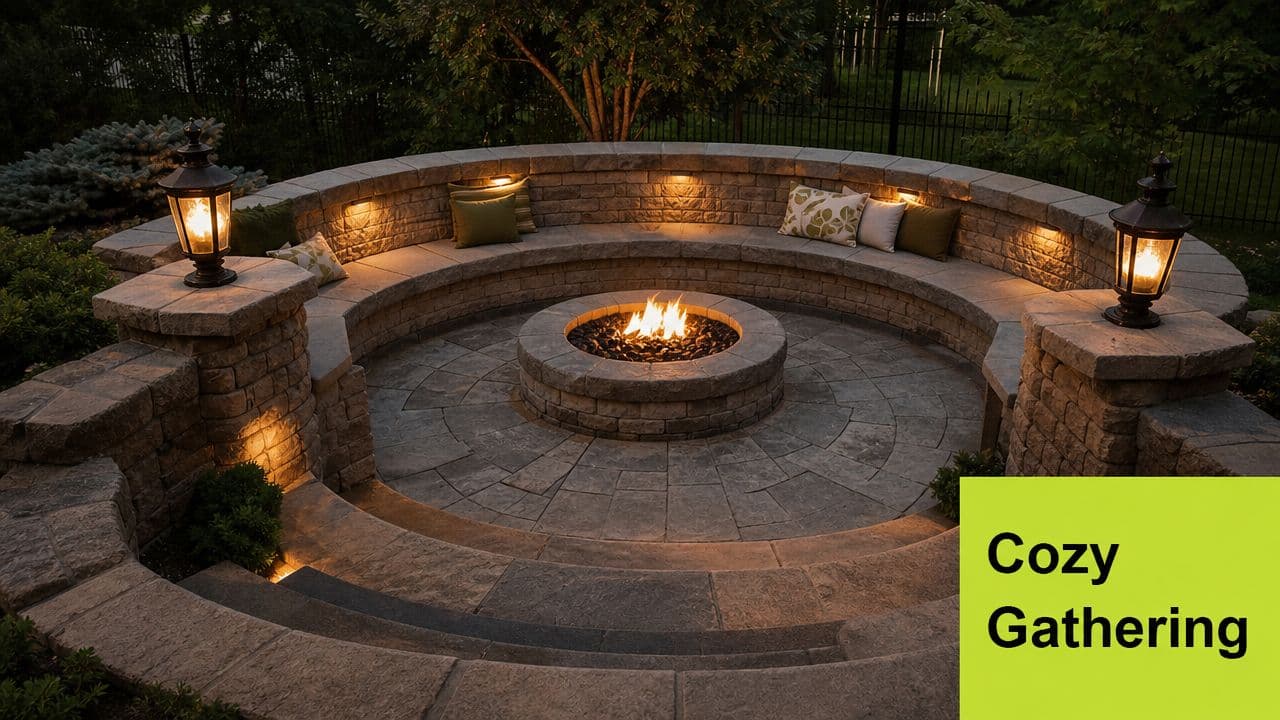
A sunken seating area can be excellent, but only when the site supports it. It creates intimacy fast. It also creates drainage, accessibility, and construction complexity just as fast.
This idea works best on larger patios where you want one clear social anchor. Built-in seat walls, wide steps, and a central fire element make the space feel intentional. On a very small patio, though, a slightly lowered grade can feel more like a hazard than a design feature.
When to choose a sunken layout
If your yard is flat and poorly drained, think carefully before excavating. A raised conversation area often delivers the same social effect with fewer water issues. If your site slopes naturally, a sunken pit can fit more gracefully.
Don't build a fire feature first and force the seating around it. Set the conversation geometry first, then choose the fire element that fits.
Best materials: concrete pavers, natural stone, decorative concrete, seat-wall caps that stay comfortable to the touch
Maintenance level: moderate
Biggest risk: underestimating water management and code-related clearances for fire elements
10. Vertical Garden and Living Wall Patio
Small patio, blank fence, no room for border beds. Vertical planting earns its place. A living wall, cable trellis, stacked planters, or mounted pockets can turn dead vertical surfaces into the main attraction.
This approach is strongest in urban yards, rental patios, and narrow side spaces where floor area is precious. It also helps soften privacy boundaries without filling the patio with large pots.
Keep the system simple enough to maintain
A fully planted living wall looks impressive, but it needs dependable irrigation and a planting plan that matches exposure. For many homeowners, climbers on a trellis are the better long-term answer. Star jasmine, clematis, climbing rose, evergreen vine options, and espaliered edibles can all add height with less hardware.
The U.S. landscaping services industry is projected to generate about USD 176.7 billion in 2026 revenue and includes 556,000 businesses, according to IBISWorld landscaping services industry data. In practice, that means many patio projects are handled by small contractors, so a clear visual plan helps avoid back-and-forth revisions on custom vertical features.
A quick visual reference helps here:
Best for: small patios, rentals, urban spaces, privacy screening with a lighter feel
Maintenance level: moderate to high, depending on irrigation
What to avoid: heavy wall systems on weak fences or walls that weren't built for added load
10 Backyard Patio Designs Comparison
| Patio Style | Implementation Complexity 🔄 | Resource Requirements ⚡ | Expected Outcomes 📊 | Ideal Use Cases 💡 | Key Advantages ⭐ |
|---|---|---|---|---|---|
| Modern Minimalist Patio Design | Medium, precise hardscaping and sightlines required 🔄 | Low, simple materials, limited plant palette ⚡ | Clean, spacious, low-maintenance and highly usable 📊 | Small yards, contemporary homes, urban rooftops 💡 | Low upkeep, easy customization, timeless modern aesthetic ⭐ |
| Mediterranean-Style Patio Oasis | Medium–High, masonry, layered plantings, water features 🔄 | Medium, terracotta/stone, irrigation, seasonal care ⚡ | Warm, inviting atmosphere with high sensory & curb appeal 📊 | Warm/coastal climates, entertaining courtyards, villas 💡 | Rich textures & fragrance, entertaining-friendly, timeless look ⭐ |
| Japanese Zen Garden Patio | High, careful composition of stone, gravel, and plants 🔄 | Medium, quality stone, water element, specialty plants ⚡ | Tranquil, meditative space with strong year‑round structure 📊 | Small contemplative spaces, meditation gardens, wellness yards 💡 | Promotes calm, unique structural interest, low plant upkeep once established ⭐ |
| Tropical Paradise Patio | Medium, dense layered planting and shade structures 🔄 | High, irrigation, rich soil, exotic plants and ongoing care ⚡ | Lush, resort‑like environment with high biodiversity & color 📊 | Warm/humid climates, poolside or vacation‑style yards 💡 | Immersive, cooling vegetation, strong visual impact for entertaining ⭐ |
| Outdoor Entertainment Hub Patio | High, multi‑zone planning, utilities, permits required 🔄 | High, outdoor kitchen/appliances, electrical/gas, durable furnishings ⚡ | High usability and extended outdoor living; increases property value 📊 | Frequent entertainers, large families, outdoor dining hubs 💡 | Multifunctional zones, customizable for hosts, strong value add ⭐ |
| Cottage Garden Patio Aesthetic | Low, informal, abundant planting with flexible layout 🔄 | Medium, many plants and regular horticultural maintenance ⚡ | Romantic, colorful, wildlife‑friendly and intimate atmosphere 📊 | Country homes, romantic yards, pollinator gardens 💡 | Abundant blooms, low establishment cost, charming character ⭐ |
| Sustainable Water‑Wise Desert Patio | Medium, xeriscape planning and irrigation grouping 🔄 | Low, minimal ongoing water; initial cost for quality rock/specimens ⚡ | Very low water use, low maintenance, sustainable impact 📊 | Arid climates, water‑restricted areas, eco‑focused landscapes 💡 | Major water savings, rebate‑eligible, long‑term low upkeep ⭐ |
| Edible Garden Patio with Raised Beds | Medium, bed construction, soil prep, irrigation planning 🔄 | Medium, quality soil/compost, regular watering and labor ⚡ | Productive harvests, educational value, functional landscape 📊 | Urban homesteads, families, sustainability‑minded homeowners 💡 | Fresh produce, accessible gardening, supports pollinators ⭐ |
| Sunken Seating Area with Fire Feature | High, excavation, drainage, safety/permits and finish work 🔄 | High, hardscape, fire systems, drainage infrastructure ⚡ | Intimate focal point that extends season and encourages gatherings 📊 | Social yards, cooler climates, luxury outdoor focal spaces 💡 | Strong social focus, acoustic benefits, memorable design ⭐ |
| Vertical Garden and Living Wall Patio | Medium, structural mounts, irrigation, plant selection 🔄 | Medium, modular panels, irrigation system and ongoing care ⚡ | Maximizes greenery in small footprints; improves air quality & privacy 📊 | Small urban patios, rentals, rooftops with limited ground space 💡 | Space‑efficient greenery, visual impact, improves microclimate ⭐ |
From Idea to Reality Visualize Your Perfect Patio Today
The best patio design isn't the one with the most features. It's the one that fits your yard, your climate, and the way you spend time outside. A minimalist patio can be perfect for a townhouse courtyard. A cottage patio can bring warmth to a plain suburban slab. A water-wise design can outperform a lush look if your site is hot, bright, and dry. The right answer is always contextual.
That's also why homeowners get stuck. Homeowners can react to a finished image, but they often struggle to imagine that image mapped onto their own backyard. A narrow lot, awkward corner, or underwhelming fence changes everything. The ideas in this list are useful only if you can test them against your real conditions.
Start with the bones. Look at sun, circulation, privacy, drainage, and how close the patio sits to the house. Then choose a style direction and narrow your material palette. After that, choose plants that reinforce the style instead of competing with it. This sounds simple, but it saves a lot of money because most expensive patio mistakes come from changing direction halfway through the project.
If you're unsure between two or three concepts, visualize them before you build. OutdoorBrite is one option for doing that with a photo of your actual space. It lets you compare styles such as modern, Mediterranean, tropical, or cottage and see how different layouts, planting densities, and hardscape moods might look before you start buying materials or hiring installers.
That kind of preview is especially helpful when you're deciding between open and enclosed designs, testing privacy ideas, or figuring out whether your patio needs more planting, less furniture, or a stronger focal point. It won't replace good site judgment, but it can reduce guesswork and help you move from vague inspiration to a plan you can carry out.
A good patio doesn't start with pavers. It starts with clarity. Once you can see the direction, the project gets much easier to phase, budget, and build.
If you want to test backyard patio landscaping ideas on your own space before committing, try OutdoorBrite. Upload a photo of your patio or backyard, apply a style, and compare realistic design directions before you spend money on plants, paving, or furniture.
See your yard reimagined
Start creating