10 Best Hardscape Design Ideas for 2026
Explore the best hardscape design ideas for 2026. From permeable patios to smart lighting, find inspiration and visualize your project with AI.
Look at your yard and you can usually tell, within seconds, whether it has structure or just stuff in it. Lawn, mulch, and scattered plant beds rarely create a finished outdoor space on their own. The primary difference is usually the hardscape: the patio that holds the seating area together, the path that makes movement feel natural, the wall that solves a grade change instead of fighting it.
That's why the best hardscape design starts with function before style. A good patio isn't just attractive. It fits the grade, drains correctly, connects to doors and walkways, and feels proportionate to the house. A good path doesn't just lead somewhere. It guides traffic, handles weather, and still looks intentional in the off-season when plants fade back.
That practical mindset matters more than ever because hardscape design sits inside a large professional market. The U.S. outdoor design industry reached $9.7 billion in 2026 across 48,721 businesses, after growing at a 3.6% CAGR over the prior five years. In other words, homeowners aren't choosing from a niche set of decorative upgrades. They're making decisions in a mature category where visualization, planning speed, and fewer installation mistakes matter.
The ideas below focus on what works. You'll see where each style shines, where it can go wrong, what materials tend to suit it, and what kind of maintenance it asks for later. Just as important, each idea ends with a practical prompt you can use to visualize it in your own yard with OutdoorBrite, so you're not guessing from someone else's patio photo.
1. Permeable Paving Systems
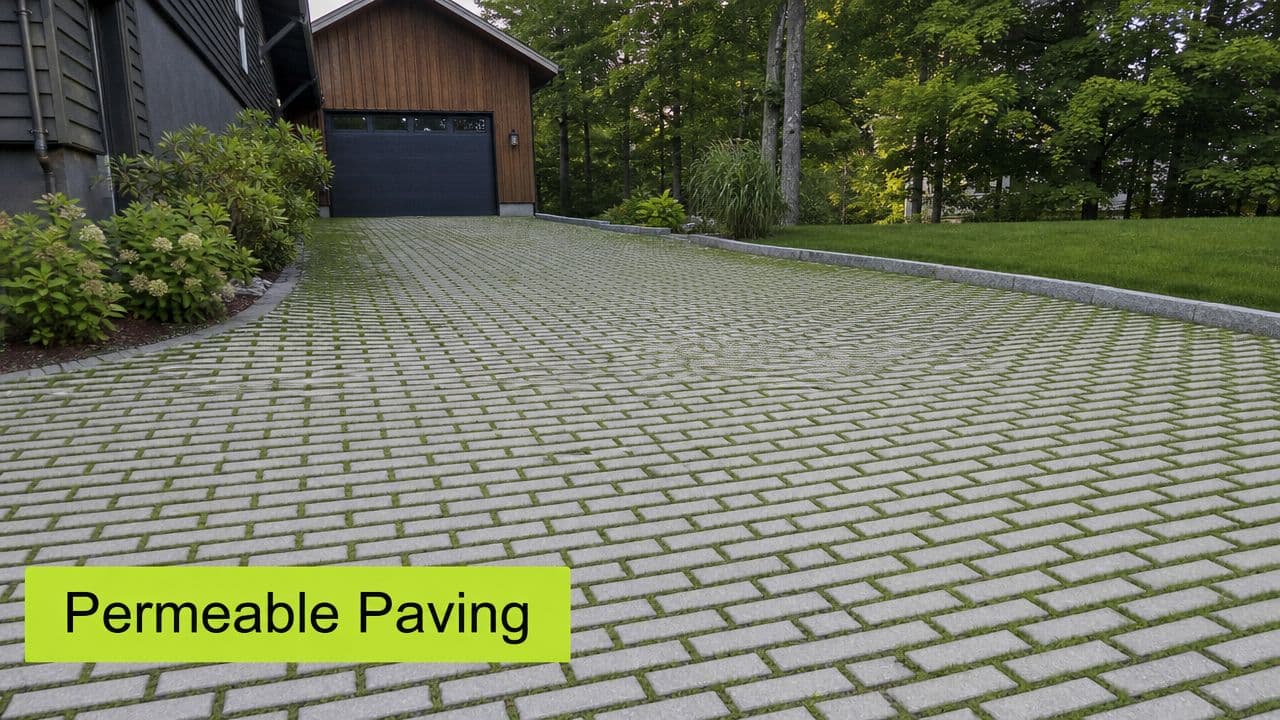
Permeable paving earns its place on any best hardscape design list because it solves two problems at once. It gives you a finished surface for walking, parking, or entertaining, and it helps water move through the surface instead of rushing away from it.
That makes it especially strong for driveways, side yards, patio extensions, and transition zones where runoff usually causes trouble. A gray permeable paver field with planted joints can look crisp and contemporary, but it also feels softer than a solid slab.
Where It Works Best
Permeable pavers are usually easier to integrate into residential design than porous concrete or porous asphalt because they look familiar and offer more control over pattern, color, and edge restraint. I like them most where homeowners want drainage performance without giving up a refined look.
What doesn't work is treating them like standard pavers with a surface-level swap. The base prep matters. So does debris control. If nearby trees constantly drop leaves and seed pods, clogged joints can turn a smart system into a high-maintenance one.
- Best fit: Driveways, garden paths, courtyard patios, and utility side yards.
- Watch for: Fine sediment, poor edge restraint, and installers who don't understand the drainage assembly.
- Style match: Modern, transitional, and naturalistic designs.
Practical rule: If water is already a problem in the space, don't choose permeable paving as a cosmetic gesture. Build the whole area as a drainage system.
Pairing permeable paving with native planting usually improves the result because the surrounding soil and plant roots help the whole space behave more naturally in wet weather. If you're weighing this option for a renovation, your guide to permeable paver projects is a useful next read.
OutdoorBrite prompt: Upload a photo of your driveway or patio area and ask for a modern yard redesign with gray permeable pavers, planted joints, and native border planting in rainy weather conditions.
2. Modern Minimalist Hardscapes
Minimalist hardscape design looks simple. It isn't simple to do well.
The cleanest modern patios rely on disciplined spacing, strong geometry, and a limited material palette. A large-format paver, a restrained border, one gravel or stone accent, and carefully edited planting can feel calm and expensive. Add too many textures or decorative flourishes, and the whole idea collapses.
The Trade-Off Most Homeowners Miss
Minimalism lowers visual clutter, but it raises the standard for everything you keep. Cheap materials stand out faster in a minimalist scheme because there's nowhere for them to hide. Uneven cuts, awkward edging, and mismatched colors become the focal point.
That's why I usually recommend fewer materials, but better ones. If the layout is straightforward, let the surface finish and crisp detailing carry the design. Night lighting also matters more than people expect because modern spaces rely on shadow lines and contrast.
Minimalist hardscape isn't empty space. It's edited space.
A modern scheme also benefits from restraint in planting. You want enough softness to prevent the yard from feeling sterile, but not so much that the plant palette fights the architecture. If you want a strong starting point, you can explore modern patio concepts before choosing materials.
OutdoorBrite prompt: Upload your backyard photo and generate a Modern-style concept with large rectangular pavers, charcoal edging, a simple dining zone, and sparse architectural planting.
3. Integrated Water Features and Drainage
A lot of hardscape fails for one reason. Water wasn't designed into it early enough.
The best hardscape design doesn't hide drainage as an afterthought. It shapes grades, channels water, and places surface materials so the yard performs during a storm as well as it does on a sunny afternoon.
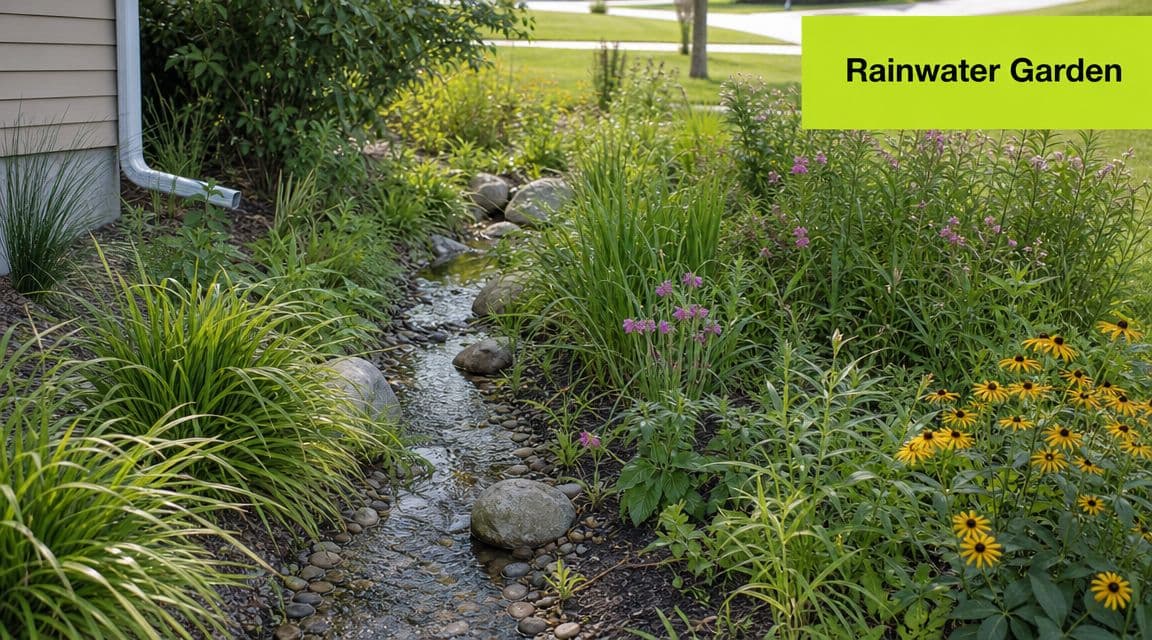
To see that idea in a residential setting, look at this kind of drainage-aware layout.
Build Around the Site
University of Florida site design guidance emphasizes a full site inventory and analysis before final design, including measuring existing hardscape such as patios, driveways, and sidewalks. That sounds basic, but it's exactly where drainage problems are either prevented or baked in.
EPA WaterSense guidance included in that reference also points to practical details that affect hardscape performance. Mulch generally belongs at 3 to 4 inches, slopes should be minimized where possible because they increase erosion and runoff risk, and plants with similar water needs should be organized into hydrozones. Those aren't decorative notes. They shape how a patio edge, swale, wall, or walkway should be detailed.
A rain garden, stone-lined swale, or basin edge can become a visual feature instead of a hidden fix. Decorative water elements can also work, but only when they support the grading logic rather than competing with it.
If your site needs subsurface collection as well as surface management, this primer on ensuring proper drainage with soakaways is a practical companion.
Here's a useful visual overview before you finalize your layout.
OutdoorBrite prompt: Upload a photo of the wettest part of your yard and ask for a design with a stone swale, rain garden planting, and a small patio that directs runoff away from the house.
4. Layered Material Transitions and Edging
Good hardscape often looks expensive because the transitions are handled well, not because the materials are rare.
A patio can be plain concrete and still look sharp if the border is intentional, the edge is clean, and the connection to gravel, lawn, or planting beds feels resolved. On the other hand, a yard full of premium stone can still look unfinished if every surface crashes into the next without hierarchy.
What Clean Transitions Actually Do
Material transitions help people read the space. They show where to walk, where to gather, and where one zone ends. They also keep maintenance under control by preventing gravel migration, mulch spillover, and creeping turf.
I usually suggest keeping the palette tight. Two or three complementary materials is enough in most residential yards. That might mean sawn pavers at the main patio, compacted gravel in a side path, and a steel or stone edge tying them together.
- Use contrast carefully: Texture contrast often works better than color overload.
- Detail the traffic points: Door thresholds, stair landings, and path intersections deserve the cleanest transitions.
- Match the house: Hardscape edging should support the architecture, not compete with it.
The mistake I see most is over-designing border patterns. If every area gets a different shape, color, and soldier course, the yard starts to feel busy. Strong edging is usually quiet.
OutdoorBrite prompt: Upload your yard photo and ask for a patio redesign with two paving materials, a crisp border, and clear edging between planting beds, gravel, and lawn.
5. Outdoor Living Zones with Multi-Functional Hardscaping
Some yards feel generous even when they aren't large. Usually that comes down to zoning.
Instead of treating the backyard as one undifferentiated patio, divide it into useful outdoor rooms. A dining pad near the house, a lounge area a little farther out, a grill zone with direct access from the kitchen, and a connector path that makes movement feel obvious. That's the kind of organization that improves daily use.
Make Each Zone Earn Its Space
A multi-zone design only works when circulation is easy. If people have to squeeze around furniture, step awkwardly between levels, or cut through planting beds to reach the grill, the layout looked better on paper than it performs in life.
Width and proportion matter. The plan notes for comfortable circulation are straightforward: pathways should generally be about 36 to 48 inches wide for easy movement. That range is especially helpful when you're linking dining, cooking, and lounging spaces in one composition.
The global landscaping services market was estimated at USD 330.58 billion in 2024 and projected to reach USD 484.79 billion by 2030 at a 6.7% CAGR. That broad demand shows why outdoor living layouts have become more elaborate. People aren't just adding a slab. They're building usable exterior space.
If you want to test several arrangements quickly, ai outdoor patio design is a practical way to compare dining-first, lounge-first, and mixed-use layouts before anyone breaks ground.
If a zone doesn't support a real habit, it becomes decorative square footage.
OutdoorBrite prompt: Upload your backyard and generate three concepts with separate dining, lounge, and grill zones connected by one cohesive paving material.
6. Natural Stone and Boulder Integration
Natural stone gives a yard authority fast. Even one well-placed boulder can anchor a space better than a cluster of small decorative objects.
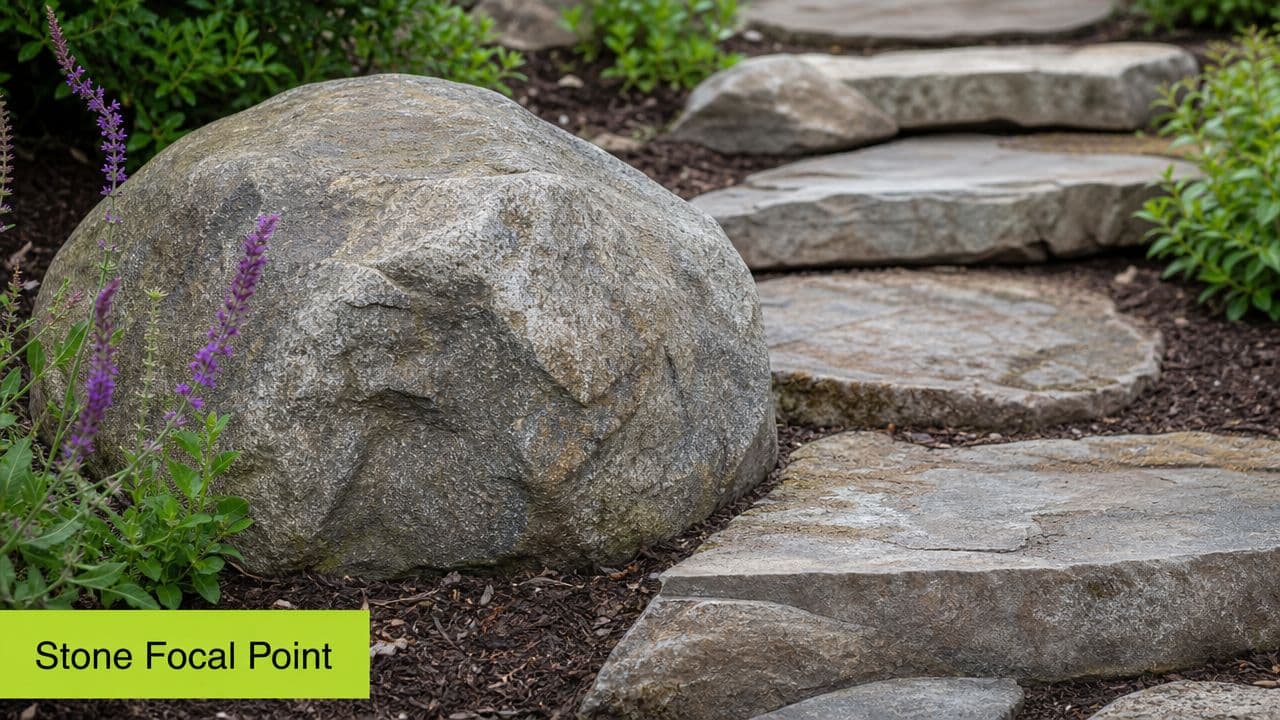
That's because stone has weight, scale, and irregularity. It can make a new build feel grounded or help a polished outdoor space feel less manufactured. Flagstone terraces, stone steps, dry-set paths, and specimen boulders all work, but they need to look embedded in the site rather than sprinkled across it.
Where Stone Excels and Where It Doesn't
Stone shines in sloped gardens, woodland settings, mountain settings, and transitional designs that need texture. It can also work beautifully in contemporary yards when the stone is cut cleanly and paired with simple lines.
The downside is inconsistency. Color variation, thickness differences, and irregular edges require a more skilled installer and a more patient owner. Natural stone also asks for better judgment at the supplier yard. Don't pick from one sample board and assume the delivered material will read the same across a large area.
- Best use: Steps, seat walls, steppers, focal boulders, and patio accents.
- Be careful with: Mixed stone types that clash in undertone.
- Maintenance note: Natural stone ages well, but joints and surrounding fines need periodic attention.
A single large boulder near a path bend or entry can do more than a row of smaller rocks. It creates a focal point and makes the space feel intentional instead of decorated.
OutdoorBrite prompt: Upload your front or backyard photo and ask for a natural stone concept with a focal boulder, irregular flagstone path, and layered planting around the edges.
7. Contemporary Composite and Recycled Materials
Not every hardscape has to feel rustic or traditional. Composite and recycled-content materials can bring a sharper, more contemporary look while reducing some of the upkeep that natural materials demand.
This category is broad. It can include composite decking, engineered pavers, recycled-content edging, and manufactured surfaces that stay visually consistent from piece to piece. For homeowners who want a clean finish and fewer seasonal headaches, that consistency is often the appeal.
The Real Trade-Off
You gain predictability. You may lose some character.
That's the balance to think through. Composite materials can look crisp and perform well, especially in modern settings, but some products read flat or artificial if they dominate the whole yard. I usually get the best results by mixing them with gravel, planting, or natural stone so the space doesn't feel over-engineered.
If decking is part of your plan, this overview of Sacramento Trex deck installation is a useful example of where composite products fit.
A practical note matters here. Darker composite surfaces can feel hotter in full sun, so color selection should respond to climate and exposure, not just taste. Warranty support, fade behavior, and surface texture also deserve attention before you commit.
OutdoorBrite prompt: Upload your patio or deck area and ask for a contemporary redesign using composite decking, recycled edging, light-toned materials, and soft planting to balance the finish.
8. Elevated Decking with Architectural Details
A deck should do more than float off the back of the house like a platform. The best versions feel architectural. They solve elevation, create views, and integrate details that make the structure feel custom.
That might mean built-in benches, planter edges, a privacy screen, wider stairs, or a change in board direction that defines a dining zone. These moves don't need to be flashy. They just need to make the deck feel like a designed room instead of leftover square footage.
Don't Let the Structure Outshine the Use
Decking built off the ground works best when it responds to grade or view. If the yard is nearly flat and the deck has no compelling relationship to the house, a patio often feels more grounded and more comfortable. Raised platforms without purpose can create awkward railings, stairs, and maintenance headaches.
What does work is using the deck to bridge difficult terrain, improve access, or create a strong transition from interior flooring to outdoor living. In those cases, details matter. Fascia treatment, lighting placement, and stair proportions can transform a basic structure into one that feels intentional.
A good deck isn't only a surface. It's a circulation system, a seating system, and often a view platform.
I also recommend planning furniture early. Many decks are technically large enough but functionally cramped because furniture scale wasn't tested before construction.
OutdoorBrite prompt: Upload the rear of your home and ask for a raised deck with built-in seating, wide steps to the yard, integrated planters, and evening lighting.
9. Mediterranean and European-Inspired Hardscapes
If you want warmth, texture, and a sense of age, Mediterranean-inspired hardscape is hard to beat. Clay pavers, gravel, stone, limewashed walls, and warm lighting can make even a newer yard feel established.
This style works especially well when the house already has stucco, tile, arched forms, or warm exterior tones. It can also soften boxy newer construction by adding texture and human scale around the patio and entry.
Warm Materials Need Restraint
The temptation is to pile on rustic detail. Too much terracotta, too many decorative inserts, too many wrought-iron accents, and the space starts feeling theatrical. The strongest Mediterranean hardscape usually chooses one or two dominant materials and lets planting do the rest.
This style also pairs naturally with the growing interest in replacing difficult lawn areas. Recent mainstream design coverage points to gravel, pavers, and perimeter planting as practical lawn alternatives in lower-maintenance outdoor spaces, especially where homeowners want less turf without creating a barren yard, as noted in this roundup of landscaping ideas.
- Strong material anchors: Terracotta, tumbled stone, decomposed gravel.
- Best companion planting: Silver foliage, herbs, clipped shrubs, and drought-tolerant textures.
- Common mistake: Too many small decorative elements and not enough simple massing.
OutdoorBrite prompt: Upload your courtyard, patio, or front entry and generate a Mediterranean concept with terracotta paving, gravel transitions, white walls, and layered drought-tolerant planting.
10. Smart Hardscape Integration with Lighting and Automation
Technology doesn't make a bad design good, but it can make a good hardscape easier to use.
The strongest smart integrations are usually subtle. Path lights that improve safety, zone lighting that changes the mood for dining or entertaining, irrigation that supports adjacent planting without overspraying paving, and controls that reduce the friction of using the yard after dark.
Start with Lighting, Not Gadgets
Most homeowners get the biggest payoff from lighting first. It extends use, improves safety on steps and paths, and reveals texture in stone, walls, and planting. Automation becomes valuable when it supports those basics instead of adding novelty.
This approach also lines up with how design tools are evolving. In a 2026 G2 category snapshot, outdoor design software had 213 verified user reviews, with listings highlighting AI tools that can produce photorealistic concepts in under 60 seconds and support side-by-side comparisons. That speed matters when you're trying to evaluate lighting layout, material changes, and zone edits before installation.
If you want to test ideas from a photo, ai landscape design software can help visualize lighting and hardscape combinations before you commit to trenching, fixtures, or controls.
Add smart features where they remove friction. Skip them where they create another thing to troubleshoot.
OutdoorBrite prompt: Upload your patio or front walk photo and ask for a night-view design with low-voltage path lighting, step lights, and simple automated zone lighting around the seating area.
Top 10 Hardscape Design Comparison
| Design / Feature | Implementation Complexity 🔄 | Resource Requirements ⚡ | Expected Outcomes 📊 | Ideal Use Cases 💡 | Key Advantages ⭐ |
|---|---|---|---|---|---|
| Permeable Paving Systems | Moderate–High, specialized installation and proper base/grading | Higher upfront cost; skilled installers; occasional maintenance | Reduced runoff, groundwater recharge, cooler surface temperatures | Patios, driveways, walkways, stormwater-sensitive sites | Environmental stormwater control; aesthetic and durable |
| Modern Minimalist Hardscapes | Moderate, requires precise detailing and design discipline | Moderate materials cost; high-quality finishes recommended | Low maintenance, clean visual calm, makes small spaces feel larger | Urban yards, modern architecture, low-maintenance projects | Timeless, simplified upkeep, strong visual clarity |
| Integrated Water Features and Drainage | High, needs grading, engineering and hydrologic planning | Professional installers, plants, drainage infrastructure; ongoing upkeep | Improved flood control, habitat support, attractive focal points | Flood-prone sites, sustainable landscapes, large yards | Functional beauty, erosion control, biodiversity gains |
| Layered Material Transitions and Edging | Moderate, careful sequencing and precise edging required | Multiple materials, edge systems, skilled labor; moderate cost | Polished, organized spaces with reduced soil migration | Formal gardens, high-end renovations, defined outdoor rooms | Visual hierarchy, neat boundaries, versatility in zoning |
| Outdoor Living Zones with Multi-Functional Hardscaping | High, complex layout, coordination of systems and levels | Significant budget, contractors, utilities and finishes; higher maintenance | Maximized usability, multiple activity areas, increased property value | Entertaining-focused homes, large backyards, luxury projects | High functionality, flexible use, strong ROI |
| Natural Stone and Boulder Integration | Moderate–High, heavy materials and careful placement | High material and installation cost; heavy equipment and expertise | Timeless, durable surfaces with strong focal character | Luxury residences, rustic/transitional settings, feature elements | Exceptional longevity, natural character, premium perception |
| Contemporary Composite and Recycled Materials | Low–Moderate, straightforward install but requires sourcing checks | Generally lower to moderate cost; verify recycled content and warranties | Sustainable, low-maintenance surfaces with consistent performance | Eco-conscious homeowners, budget-conscious durable designs | Reduced environmental impact, predictable durability, lower upkeep |
| Elevated Decking with Architectural Details | High, structural, multi-material and integrated systems | High costs, specialized contractors, permits and electrical/plumbing | Sophisticated outdoor living, integrated storage/lighting, added value | Multi-level sites, homes seeking outdoor rooms, entertaining spaces | Integrated features, luxury appeal, enhanced usability |
| Mediterranean and European-Inspired Hardscapes | Moderate, material selection and planting coordination | Moderate–High material and plant costs; possible higher water needs | Warm, romantic atmosphere that ages gracefully | Warm-climate homes, vineyard/wine-country styles, rustic estates | Rich character, inviting ambience, timeless charm |
| Smart Hardscape Integration with Lighting and Automation | High, electrical and tech integration, planning for compatibility | Higher upfront tech and installation costs; professional wiring/controls | Energy-efficient operation, improved safety, customizable ambiance | Tech-forward homes, security-focused properties, evening entertaining | Convenience, energy savings, dynamic control and ambiance |
Your Vision, Realized Start Designing Today
The best hardscape design isn't the one that photographs best in someone else's backyard. It's the one that fits your site, your house, and the way you live outside. That usually means balancing style with drainage, material character with maintenance, and visual impact with budget discipline.
If your yard is flat and exposed, permeable paving or a minimalist patio may make the most sense. If your lot slopes or holds water, drainage-led hardscape will outperform almost any trend-driven design. If you want warmth and personality, Mediterranean materials or natural stone may carry the project better than a sleek composite scheme. The point is to choose an approach that solves the site first and expresses style second.
That principle shows up in awkward yards too. Some of the most common real-world design problems aren't about beauty. They're about shape. Narrow side yards, boxy backyards, or irregular corners need layout tactics that fit the footprint, as noted in Houzz coverage on oddly shaped backyards. Curves, diagonals, zone breaks, and strong focal points often do more for these spaces than upgrading materials alone.
Visualization helps because hardscape decisions are hard to reverse. Once the patio is poured, the wall is built, or the path is set, changing direction gets expensive fast. That's why I recommend testing the big moves before you choose the finish details. Compare shape first. Then compare material. Then evaluate maintenance and comfort.
This is also where fast visual tools are useful. OutdoorBrite lets users upload a yard photo, apply different styles, and generate photorealistic redesign concepts quickly. For a homeowner, that means seeing whether a gravel courtyard feels inviting or sparse, whether a large-format modern patio looks elegant or too severe, and whether a layered stone design suits the house. For a designer or contractor, it helps narrow revisions earlier.
Use that advantage well. Don't ask for one pretty image and stop there. Test the hardscape in daylight and evening conditions. Try one version with more planting and one with less. Compare a generous walkway against a tighter one. Ask whether the space still works in wet weather, not just under perfect sunshine.
A strong hardscape plan should answer a few basic questions clearly. Where will water go? How do people move through the yard? Which materials will age well in this climate? What will the space ask from you in maintenance after the installation crew leaves? If the design answers those well, you're already closer to the best result than most inspiration galleries will ever get you.
The hard part isn't finding ideas. It's choosing the right idea for your exact site. Start there, test it visually, and the project becomes much easier to build with confidence.
Take a photo of your yard and try OutdoorBrite to visualize hardscape ideas before you build. It's a practical way to compare layouts, materials, and styles from your own space instead of guessing from inspiration photos.
See your yard reimagined
Start creating