7 Fire Pit Ideas for Small Backyard Spaces
Explore 7 fire pit ideas for small backyard spaces, from portable bowls to built-in benches, with costs, safety tips, seating, and design pairings.
Your yard has just enough room for a few chairs, a clear walkway, and one feature that makes cool evenings worth staying outside for. The problem is that a traditional fire pit can quickly take over the entire layout. The best fire pit ideas for small backyard spaces match the feature to the actual constraint, whether that's limited floor area, flexible placement, vertical heat, dual-purpose furniture, or a permanent social zone.
The seven options below include tabletop bowls, recessed pits, steel rings, gas fire tables, built-in benches, chimineas, and patio-heater combinations. Each comes with trade-offs involving fuel, permanence, comfort, maintenance, and circulation. Before buying or building, check local regulations, HOA rules, clearance requirements, drainage conditions, and the manufacturer's instructions. OutdoorBrite can also help you upload a photo of your actual yard, compare styles, and test fire pits, benches, planting beds, and lighting before you buy materials.
Table of Contents
- 1. Tabletop Fire Bowl
- 2. Sunken or Recessed Fire Pit
- 3. Metal Ring or Steel Fire Pit Ring
- 4. Portable Gas Fire Table
- 5. Built-in Bench Fire Pit with Stone Surround
- 6. Chiminea or Outdoor Fireplace
- 7. Propane Patio Heater with Fire Feature Addition
- 7 Small-Backyard Fire Pit Options Comparison
- Choose the Fire Feature Your Yard Can Support
1. Tabletop Fire Bowl
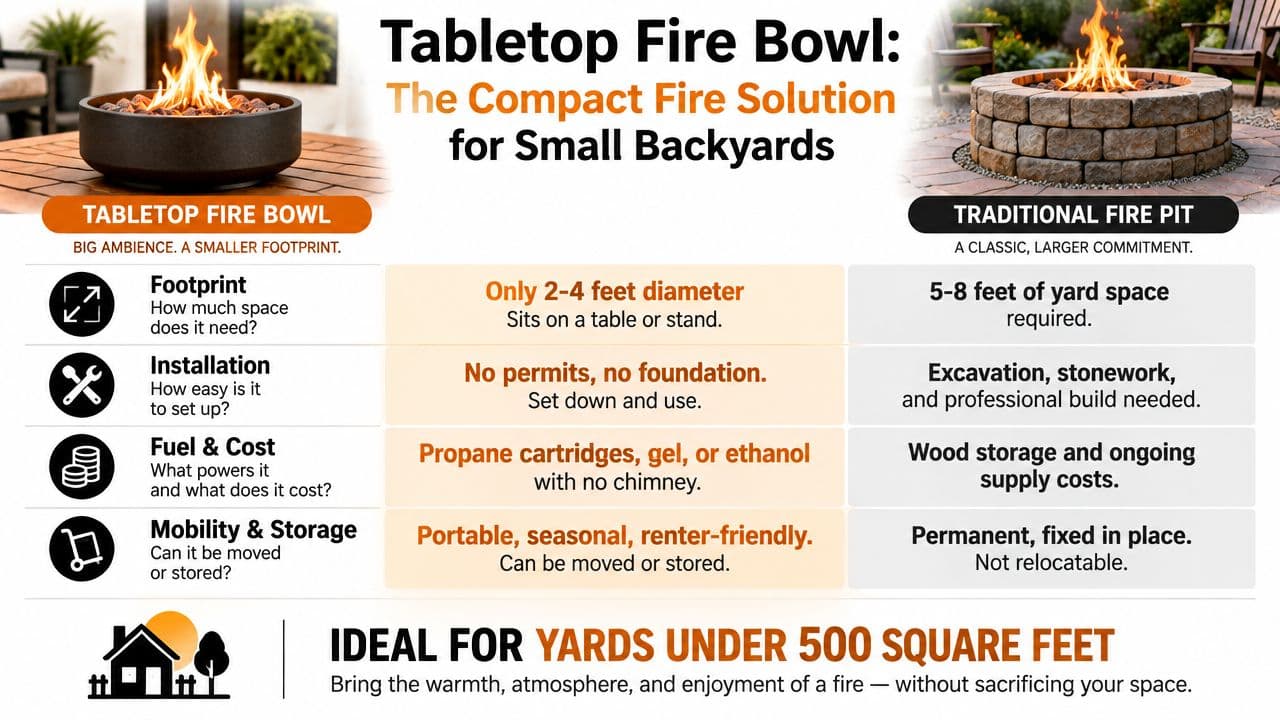
A tabletop fire bowl solves the most restrictive problem, minimal footprint. It can sit on a patio table, pedestal, or stable ground-level stand, giving you visible flame without creating a separate fire zone. Propane, gel, and ethanol models are available, and portable designs can move into storage when you need the patio for dining, gardening, or children's activities.
A compact propane bowl is usually the most practical choice for regular use. It provides adjustable flame control and avoids the ash and ember management associated with wood. Gel models can work well as decorative accents, but they may require more frequent fuel replacement and generally suit ambiance better than serious heating.
Make the seating arrangement do the work
Place the bowl at the center of a small conversation setting, but don't push chairs so close that people must lean over the flame. A narrow bistro table with two chairs, a pair of lounge chairs, or a built-in ledge can create an intimate arrangement without adding another large object. Use a nonflammable surface, keep the unit level, and avoid placing it beneath branches, roof edges, or combustible screens.
Practical rule: A small fire feature should preserve the walkway first. If guests have to squeeze between the flame and a fence, the layout is too tight.
Keep the bowl well away from structures and fences, with a 10-foot minimum buffer used in compact-space safety guidance and greater clearance where local rules or the manufacturer require it, as outlined in this fire pit safety guide. Add weather-resistant cushions and blankets nearby, but store textiles away from the flame when the feature is operating. To compare a tabletop bowl with other layouts on your actual patio, try an AI outdoor patio design workflow before committing to a stand or table.
Before: A bare patio corner with one small table and unused wall space.
After: A compact propane bowl centered on the table, two chairs angled toward it, and a clear route between the house and garden.
2. Sunken or Recessed Fire Pit
A sunken fire pit solves a different problem, creating a defined gathering zone without adding a bulky object above the patio. Lowering the fire area can make a small backyard feel more intentional, especially when the surrounding edge doubles as a seat, retaining wall, or visual boundary. The recessed form can also provide some wind protection, though it doesn't remove the need for proper ventilation and clearance.
This is a permanent construction project, not a weekend placement decision. Excavation, drainage, soil stability, retaining walls, and access for materials all matter. A professional should assess the site before digging, particularly where water collects after rain or where the yard sits near a foundation.
Build a room, not a hole
Use fire-resistant masonry, flagstone, or a properly rated steel ring. A drainage layer and airflow beneath a wood-burning bowl can help prevent standing water, but the exact construction should follow local requirements and the fire feature's specifications. Flat coping stones can provide perch seating, while separate chairs should remain far enough away for people to enter and leave comfortably.
A recessed pit may suit a yard where the patio already sits above a lower lawn, but it can be a poor choice on a cramped, flat site. Excavation may reduce usable lawn, create trip hazards, and complicate access for anyone with limited mobility. Gas can simplify operation in a tighter setting, but it still requires approved components, ventilation, and the clearances specified for that appliance.
For layout planning, use the best free patio design app to test whether the sunken zone leaves enough room for seating and circulation.
A recessed design works best when its edge connects naturally to the rest of the surroundings rather than appearing as an isolated excavation. Review the construction sequence and drainage approach in this sunken fire pit installation video before discussing the concept with a contractor.
Before: A sloped or divided lawn with no obvious destination.
After: A carefully drained lower seating zone edged with stone, with the fire feature low in the center and an unobstructed path around it.
3. Metal Ring or Steel Fire Pit Ring
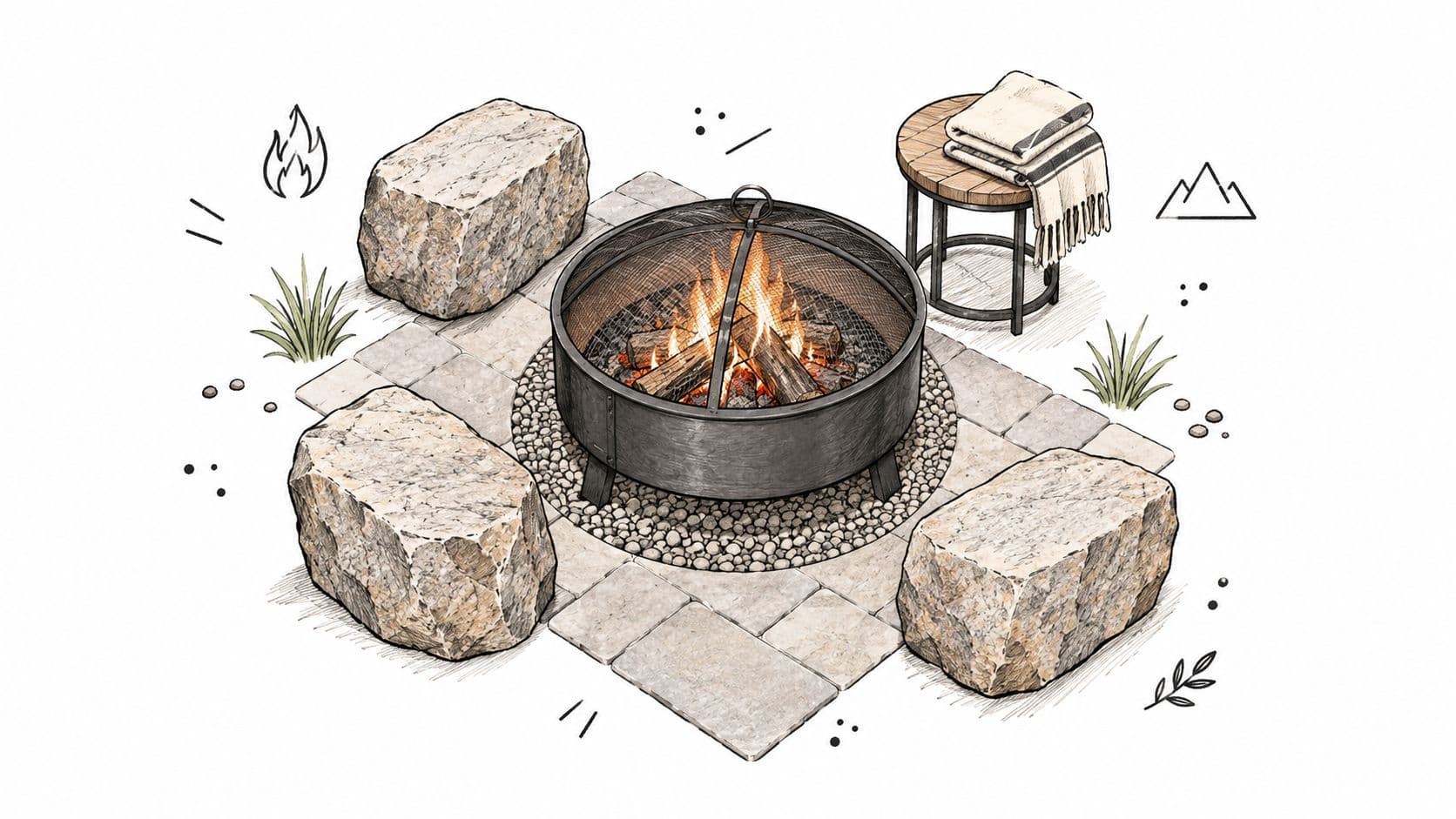
A steel fire ring is the practical answer for homeowners who want a recognizable campfire experience without committing to masonry. It solves the low-commitment and flexible-placement problem. You can place a prefabricated basin on gravel, pavers, or concrete, then move or store it when the yard needs to serve another purpose.
The simplicity is the appeal, but it can also expose the limitations. An open wood fire produces smoke, ash, sparks, and changing heat direction. In a small backyard, those effects can reach fences, planting, furniture, or neighbors more easily than expected. A spark screen is essential, and local rules may impose clearance requirements that make an open wood-burning ring impractical.
Give the ring a proper landing
Don't set the bowl on grass, loose soil, a wooden deck, or a surface that can scorch. Create a level nonflammable base with gravel, pavers, or concrete, and extend that surface far enough to protect the surrounding area from stray embers. The plan notes for compact layouts call for generous separation from structures and vegetation, including 15 feet where required by the setup or local guidance, so verify the actual rule before placing the ring.
A Solo Stove Ranger, a Blue Rhino steel fire ring, or a Landmann USA ring can suit different visual styles, from clean contemporary steel to a more traditional basin. A mesh cover improves ember control. A removable grill grate adds cooking flexibility, but don't treat cooking equipment as a substitute for safe fire management.
Steel also needs maintenance. Rain, ash, and temperature changes can encourage rust, so clean out residue, refresh high-temperature protection as needed, and store the ring under cover during the off-season. Keep seating movable rather than building a heavy surround until you know how smoke travels through the yard.
Before: A patch of lawn with a portable chair and no defined outdoor room.
After: A steel ring on a compact gravel pad, two movable chairs positioned upwind, and a clear storage route for the pit.
4. Portable Gas Fire Table
A portable gas fire table solves the double-duty furniture problem. Instead of adding a pit beside a table, it combines the flame feature and tabletop in one piece. That matters on a narrow patio where every additional object reduces circulation.
Propane fire tables offer clean operation, adjustable flames, and no woodpile to store. Models such as the Endless Summer GAD860SP, Outland Living tables, Bali Outdoors units, and Solo Stove Solis Table cover a range of visual approaches. The key question isn't only whether the table looks good. It's whether the seating can approach it from the sides without blocking the only path through the yard.
Protect the circulation line
Place the table on a stable, level surface with the flame area oriented so people can see it from the main seating positions. Leave the clearance required by the manufacturer and local rules, including the 10-foot separation commonly cited for compact gas installations, as well as appropriate overhead clearance. Never use a patio table arrangement to justify placing the unit under a roof or branch canopy that wasn't designed for a fire feature.
The flat surface is useful for drinks, plates, and small serving trays, but it won't replace a full dining table. Covers, glass guards, and decorative media also need regular cleaning. Store propane safely in accordance with local requirements, away from direct heat and ignition sources, and inspect hoses and connections before use.
This option works particularly well in a small garden room or patio where the fire feature should anchor a conversation area. It works less well when the yard needs a completely open center for games or frequent circulation. In that case, a smaller portable bowl may preserve more flexibility.
Before: A narrow patio with a coffee table, separate chairs, and little room between the house and fence.
After: A compact rectangular gas fire table replaces the coffee table, with chairs arranged on three sides and the primary walkway left open.
5. Built-in Bench Fire Pit with Stone Surround
A built-in bench fire pit solves the permanent zoning and seating-storage problem. The fire feature becomes part of a low stone or composite structure, while the bench replaces freestanding chairs that would otherwise occupy the yard. This approach creates a finished outdoor room, but it demands more planning than any portable option.
The most successful layouts treat the bench as architecture rather than decoration. Match its materials to the house, retaining walls, or existing paving so the fire zone feels connected to the property. A curved bench can make a circular fire feature feel sociable, while a straight bench may work better along a boundary where depth is limited.
Check sight lines before building
A permanent bench can block views, narrow a path, and become uncomfortable if its back or seat angle is poorly designed. Leave enough room for people to stand, pull out cushions, and walk behind the seating. Include storage beneath the bench for cushions or fire accessories where moisture control allows it, but don't store combustible materials directly beside an active fire.
Gas is often easier to integrate into a refined built-in design because there is no regular ash cleanup or ember drift from burning logs. Wood can provide a more traditional experience, but it demands more attention to sparks, fuel storage, smoke, and clearances. Whichever fuel you choose, use only materials and components rated for the application.
Lighting should mark the bench edge and approach path without competing with the flame. Low-level fixtures, concealed step lights, and softly lit planting beds can make the zone easier to move through after dark. Use an AI backyard design concept to test the bench depth, fire position, and sight lines before construction.
Before: A narrow lawn bordered by a fence, with mismatched outdoor chairs taking up the center.
After: A stone bench follows the boundary, the fire feature sits in a controlled central opening, and the remaining space forms a clear circulation lane.
6. Chiminea or Outdoor Fireplace
A chiminea solves the vertical-space problem. Its tall body and chimney direct smoke upward while concentrating radiant heat toward the opening, allowing the feature to occupy less floor area than a broad fire pit. It can become a strong focal point in a courtyard, side yard, or compact patio where the available space is narrow but the surrounding area is open above.
Traditional clay chimineas bring texture and a garden character. Cast iron and steel versions suit more durable or contemporary settings, while a masonry outdoor fireplace creates a permanent architectural element. The choice affects maintenance. Clay can crack when exposed to freezing conditions or rapid temperature changes, while metal needs protection from rust and masonry requires a properly designed foundation.
Aim the opening toward the seats
Set the chiminea on a level, nonflammable base and orient the opening toward the seating area. Keep it away from fences, siding, branches, roof overhangs, and other combustible features. Compact layouts still need substantial separation, with 15 feet or more required in some guidance, so the vertical profile doesn't grant permission to place the unit close to a wall.
A spark screen helps contain embers, but it doesn't make an unsafe location safe. Use a fitted weather cover, protect clay during cold weather, and store firewood in a dry container that isn't pressed against the appliance. A chiminea offers concentrated warmth, but people sitting to the side or behind it may receive little heat, so arrange seats around the radiant side rather than forming a full circle.
This design is attractive where a tall feature balances a low planting bed or blank wall. It isn't ideal where smoke could enter upper windows or where a narrow passage leaves no safe buffer.
Before: A vertical fence dominates a small courtyard, with unused space at its base.
After: A covered steel chiminea stands on a fire-resistant pad, angled toward two chairs, with low plants and lighting framing the feature without crowding it.
7. Propane Patio Heater with Fire Feature Addition
Some yards cannot safely accommodate a conventional fire pit, even when the homeowner still wants warmth and a visible flame. A tall propane patio heater paired with a small tabletop bowl addresses that functional-heat and visual-ambiance problem without making one appliance perform both jobs.
A mushroom-style or pyramid heater sends radiant warmth toward a seating zone, while the nearby bowl supplies the glow and focal point. This separation can make the layout more adaptable. You can move the heater toward the chairs on a cool evening and relocate or remove the bowl when the patio needs to function as a dining or play area.
Keep the two features coordinated
Start with the seating arrangement, then place the heater where its warmth reaches the people who use the space. A small bowl can sit on a side table or separate pedestal, but it must still have its own stable base and required clearances. Don't place the flame directly beneath the heater or combine appliances in a way the manufacturer hasn't approved.
Products from Endless Summer, AZ Patio Heaters, and other outdoor-heating brands offer different heights and shapes. Choose a design that won't tip in the local wind conditions, and secure or store it according to the instructions. Propane storage also matters. Keep tanks shaded from direct sun and away from ignition sources, while following local storage rules.
This hybrid layout works well on covered patios only when both appliances are rated for that environment and ventilation is adequate. It isn't a shortcut around fire codes, overhead clearance, or manufacturer restrictions. String lights, weather-resistant cushions, and a small side table can complete the seating zone without adding another large structure.
Before: A compact patio that feels cold and empty after sunset, with no room for a large pit.
After: A freestanding heater warms two lounge chairs while a small fire bowl adds a controlled glow on a separate side table.
7 Small-Backyard Fire Pit Options Comparison
| Option | 🔄 Implementation Complexity | ⚡ Resources & Maintenance | ⭐ Expected Outcomes / Quality | 💡 Ideal Use Cases | 📊 Key Advantages |
|---|---|---|---|---|---|
| Tabletop Fire Bowl | Low, no excavation, plug-and-play | Low ongoing fuel (propane/gel/ethanol), minimal upkeep | ⭐⭐, excellent ambiance, limited area heating | Small patios, renters, yards <500 sq ft | Portable, low install cost, seasonal storage |
| Sunken / Recessed Fire Pit | High, excavation, professional build | High upfront cost, permanent, drainage/long‑term maintenance | ⭐⭐⭐⭐⭐, strong heat containment, polished look | Owned properties wanting a permanent gathering zone | Intimate seating, wind protection, adds property value |
| Metal / Steel Fire Ring | Low, place on level surface, minimal assembly | Low–Medium cost, rust prevention and occasional upkeep | ⭐⭐⭐⭐, reliable cooking/heat for its size | DIYers, budget-conscious small yards, renters | Affordable, quick setup, highly portable |
| Portable Gas Fire Table | Low–Medium, simple setup, minor assembly | Medium cost, propane refills, low cleaning (no ash) | ⭐⭐⭐⭐, consistent controlled flame, multi‑functional | Small decks/patios seeking furniture + heat | Multi-use (table + fire), no smoke, modern aesthetic |
| Built-in Bench Fire Pit (Stone) | Very High, custom design, pro construction | Very high investment, permanent, periodic maintenance | ⭐⭐⭐⭐⭐, cohesive design, durable, strong heat | Homeowners wanting a high-end permanent centerpiece | Space‑efficient seating + fire, long lifespan, increases value |
| Chiminea / Outdoor Fireplace | Medium, place on base or semi‑permanent install | Medium cost, chimney cleaning, clay models need protection | ⭐⭐⭐⭐, concentrated heat, upward smoke management | Narrow or vertical spaces, Mediterranean/Southwest styles | Small footprint, decorative focal point, directs smoke up |
| Propane Patio Heater + Fire Feature | Low, freestanding, plug-and-play; add tabletop element | Medium ongoing propane cost, simple maintenance | ⭐⭐⭐⭐, excellent radiant heat, lower flame ambiance | Covered patios, raised decks, compact urban yards | Extremely space-efficient, heats larger radius, portable |
Choose the Fire Feature Your Yard Can Support
The right choice starts with the space problem, not the product photograph. Choose a tabletop bowl when you need the smallest footprint and want to move the feature seasonally. Choose a metal ring when you want a simple, portable wood-burning setup and have enough open space for responsible ember control. These options offer flexibility, but they require disciplined placement and storage.
Choose a portable gas fire table when your patio table and fire feature need to occupy the same footprint. It can make a compact seating area feel organized, but it still needs a level surface, safe propane handling, overhead clearance, and enough room for people to move around it. A chiminea makes sense when vertical space is more available than floor space and the radiant opening can face the seating area without directing smoke toward the house.
A sunken pit or bench-integrated design suits a homeowner creating a permanent social zone. Both can make a small yard feel intentional, but excavation, drainage, retaining construction, materials, access, and future maintenance deserve professional review. A patio-heater combination is useful when practical warmth matters more than a traditional campfire, or when a full-size pit cannot fit the site safely.
Before purchasing, confirm the fuel type, required clearances, drainage, ventilation, surface rating, permits, HOA conditions, and property-line rules. Guidance commonly centers on a 10-foot setback from combustible structures, while some local requirements call for 15 feet or more. Overhead clearance also matters, with safety guidance commonly identifying roughly 20 to 21 feet from overhanging branches, so verify the exact requirements for your location and appliance in this placement guidance.
Sketch the fire feature, seating, walkways, lighting, planting, and fuel storage together. Then upload a photo of the yard to OutdoorBrite and compare a compact concept at believable scale before you order pavers, cut stone, or hire a contractor.
OutdoorBrite lets you upload a photo of your backyard and test fire pits, seating, planting beds, lighting, and different styles on your space. Visit OutdoorBrite to compare a small-yard fire feature before you buy materials or start construction.
See your yard reimagined
Start creating