8 Living Fence Plants for Year-Round Privacy
Compare 8 living fence plants for privacy, climate fit, growth rate, and upkeep — plus how to test each screen on your own yard before you buy.
The new deck next door looks straight into your seating area. Or the street can see down the side yard, and the pool feels exposed even with the gate shut. You need privacy, but a nursery photo won't tell you whether that handsome hedge will swallow the path or survive summer beside your driveway.
Match living fence plants to the line, not the catalog photo. Photograph the boundary with your house in frame, then mark the sightline you need to block. A screen that hides seated diners may work beautifully without reaching the upstairs windows.
Use these filters before choosing foliage:
- Mature size: Check both height and width against the usable planting bed, including pruning access.
- Seasonal coverage: Evergreen, semi-evergreen, and deciduous plants don't provide the same winter privacy.
- Site tolerance: Match winter hardiness, summer water, drainage, and disease pressure.
- Risk flags: Check toxicity, invasive spread, utility access, and local boundary rules.
The choices below start with structured evergreen screens, move through faster and looser options, and finish with warm-climate plants. Each names the homeowner it suits, the chore it creates, and a concrete pre-purchase check. Use the comparison table for a fast shortlist, but make the final decision against your climate zone and actual fence line.
If immediate enclosure matters, compare privacy fences and chain link before committing to a planting-only boundary. A living screen needs growing room and establishment care, and it isn't a substitute for a required pool barrier.
Table of Contents
- 1. Cherry Laurel (Prunus laurocerasus)
- 2. Common Privet (Ligustrum vulgare)
- 3. Boxwood (Buxus Species)
- 4. Emerald Green Arborvitae (Thuja occidentalis 'Smaragd')
- 5. Clumping Bamboo (Fargesia spp.)
- 6. Japanese Pittosporum (Pittosporum tobira)
- 7. California Privet (Ligustrum ovalifolium)
- 8. Southern Wax Myrtle (Myrica cerifera)
- Living Fence Plants Compared
- Match the Plant to Your Line, Then Test It on a Photo
1. Cherry Laurel (Prunus laurocerasus)
Cherry laurel suits homeowners who want a substantial evergreen boundary and have a deep planting bed. Its glossy, broad leaves make a convincing visual barrier, including in part shade where some conifers become sparse. Along a detached home's garden boundary, it can soften a hard edge without looking wispy.
The catch is bulk. Standard selections mature into tall, broad shrubs, not naturally narrow panels, and a compact cultivar shouldn't be confused with a vigorous full-size selection. If your photo shows only a sliver of soil between the path and fence, ordinary cherry laurel is the wrong starting point.
Buy for Width, Then Prune for Shape
The recurring chore is controlling outward growth. Use secateurs for selective cuts where practical, since hedge trimmers slice through the large leaves and leave conspicuous cut edges. Keep the base broad enough to receive light, and allow access behind the hedge rather than assuming you'll reach everything from the lawn.
Establishment moisture matters, but soggy soil isn't a shortcut to faster growth. Poor drainage and stressed foliage can leave a supposedly solid screen patchy, while exposed winter conditions can damage unsuitable selections.
Practical rule: A hedge that fits only when freshly clipped doesn't fit the bed.
Cherry laurel also needs a household safety decision. Its foliage and seeds are toxic if eaten, so don't leave pruning piles where pets or children can investigate them. Check its local invasive status before treating vigorous growth as an advantage.
For a boundary that needs greenery without a bulky hedge, consider other stylish alternatives to a wooden fence.
Before buying: Ask the nursery to write the exact cultivar's mature width on your planting sketch, then confirm that footprint leaves your path and maintenance access clear.
2. Common Privet (Ligustrum vulgare)
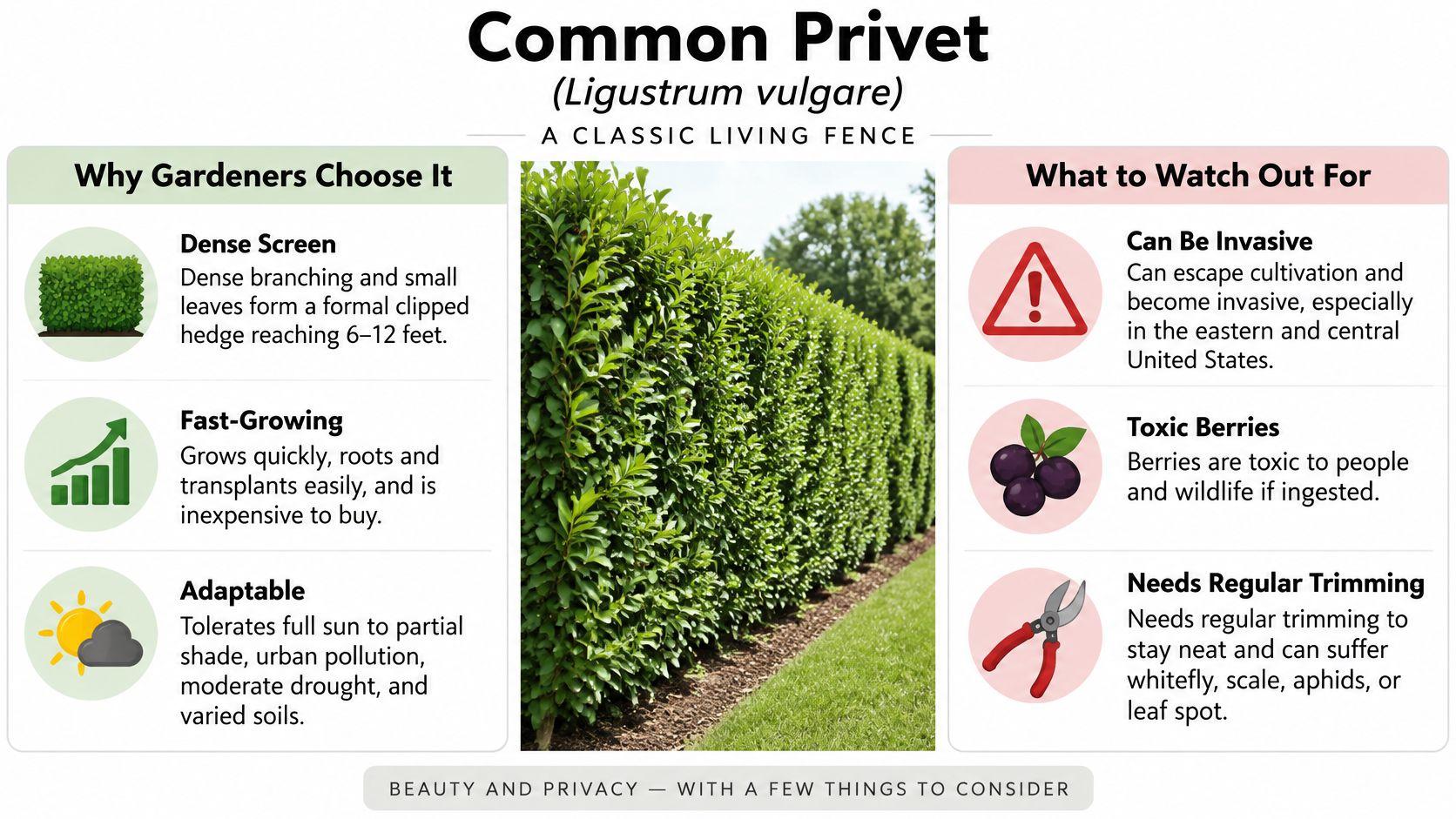
Common privet makes sense for a homeowner maintaining a traditional clipped boundary, but it isn't a dependable year-round privacy choice in cold conditions. It can be deciduous or semi-evergreen, so a dense summer hedge may expose the same sightline after leaf drop.
Its attraction is straightforward: small leaves, vigorous branching, and good recovery from clipping. For a formal front boundary where winter openness is acceptable, that can work. For a hot tub that needs screening through winter, choose something whose local foliage retention is proven.
Fast Growth Comes With Repeat Work
Unclipped common privet becomes a substantial, spreading shrub. A narrow finished hedge is a maintained shape, not its natural mature footprint, and keeping it beside a sidewalk means trimming outward shoots before they obstruct passage.
- Routine chore: Clip actively growing shoots and remove seedlings around an existing hedge.
- Main failure mode: Winter leaf loss defeats a privacy plan based on summer appearance.
- Ecological concern: Where privet escapes cultivation, birds can carry its seeds beyond your property.
Don't assume a familiar hedge plant is locally appropriate. The Atlantic's account of hedgerows describes living boundaries as multifunctional habitat rather than green walls, a useful reason to consider what your planting does outside the clipped face.
Privet berries also warrant a toxicity check where children or pets use the garden. For an existing hedge, removing fruiting growth can reduce seed production, but it doesn't make an invasive species a responsible new purchase.
Before buying: Look up Ligustrum vulgare on your regional invasive-plant list, and reject it if local guidance identifies it as invasive or restricted.
3. Boxwood (Buxus Species)
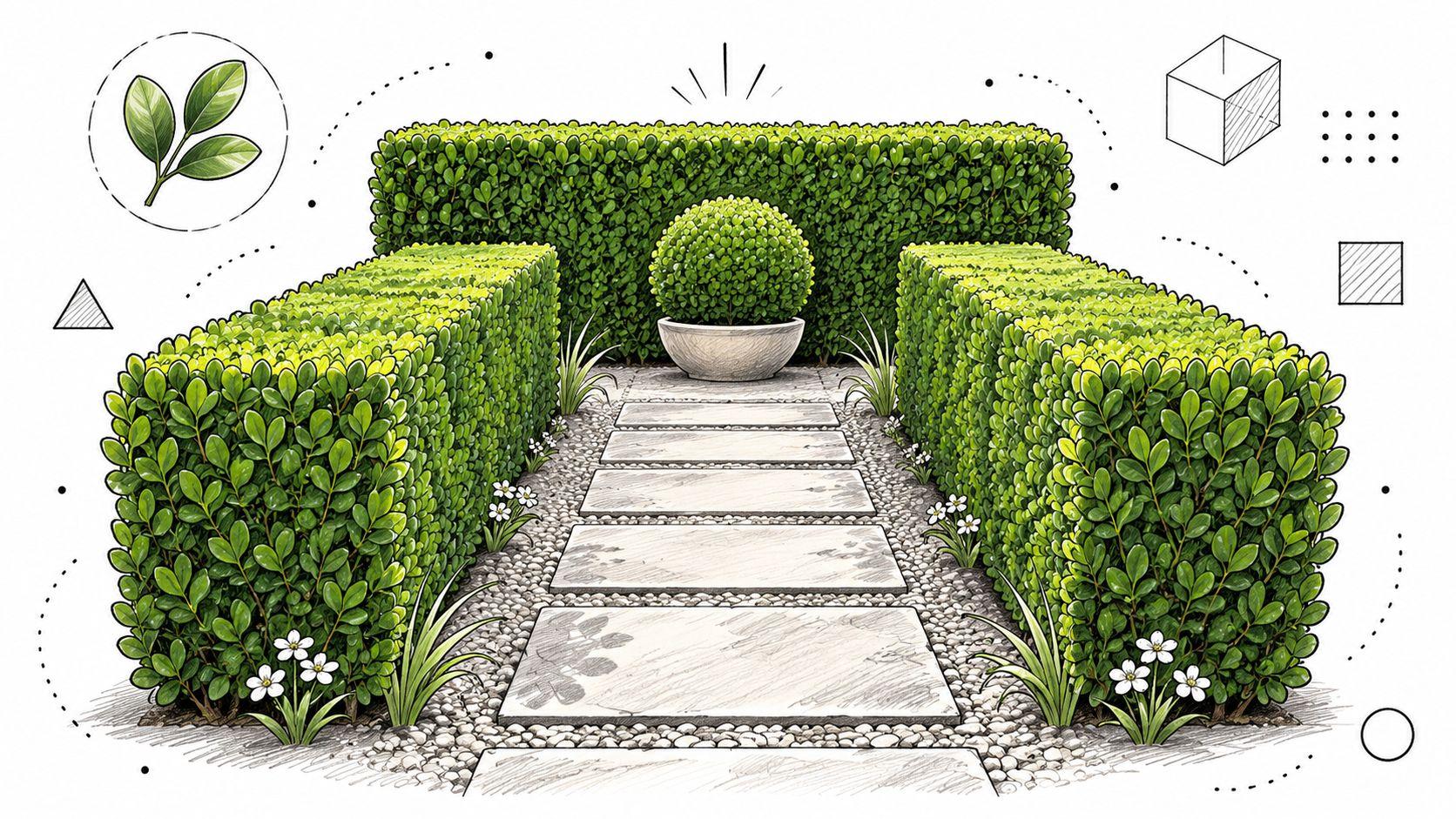
A courtyard often needs separation more than a towering screen. Boxwood suits that job better than it suits hiding a raised neighboring deck. Its small evergreen leaves and controlled appearance work around entrances, dining terraces, and formal garden rooms.
Mature size varies sharply by species and cultivar. Dwarf forms stay low and broad, while larger selections become substantial shrubs, so the word boxwood on a label tells you very little about eventual screening height. Choose the plant for the sightline, not because a clipped nursery specimen looks tidy.
Disease Pressure Can Outweigh Appearance
The recurring chore is careful shaping plus inspection. A tightly sheared outer shell can conceal a congested interior, so use selective thinning cuts where needed instead of repeatedly trimming only the surface. Keep irrigation directed toward the soil and avoid crowding plants into a damp, airless strip.
Boxwood blight and box tree moth change the buying decision in affected areas. A plant that looks perfect at purchase can still become a poor investment if you're unwilling to monitor it or follow local pest-management guidance.
Cold exposure is another filter. Some selections tolerate winter better than others, and foliage beside a windy entrance may bronze or scorch even when the plant survives.
Choose boxwood for a precise garden edge, not as an emergency answer to a tall privacy problem.
For a patio beside a low garden wall, boxwood can provide attractive evergreen enclosure without dominating the house. In a narrow passage with standing water or known disease problems, a different plant is the better decision.
Before buying: Take the cultivar name to a local nursery and ask whether its winter performance and current local blight or moth pressure make it suitable for your site.
4. Emerald Green Arborvitae (Thuja occidentalis 'Smaragd')
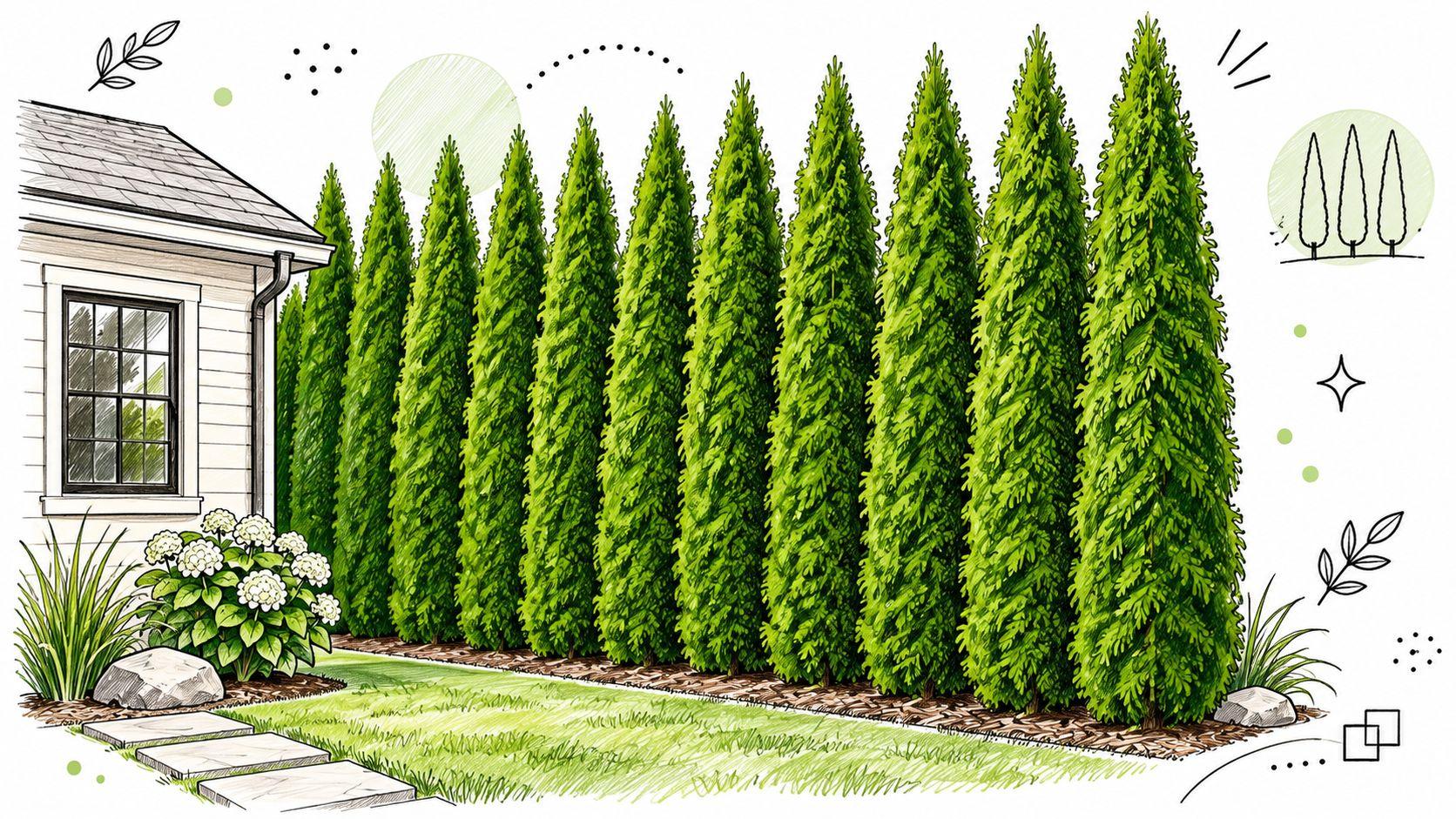
Emerald Green arborvitae is the strongest fit here for a comparatively narrow, upright evergreen screen in a suitable cool or temperate climate. A row beside a suburban patio can block direct views without the broad mass of cherry laurel. Its naturally columnar shape also reduces the amount of shaping needed.
Narrow doesn't mean widthless. Mature plants still need room to broaden, and planting them against a fence or beneath roof overhangs creates avoidable crowding. Leave access for inspecting the back of the row and checking soil moisture.
Water the Root Ball, Not Just the Bed
A common failure is a green-looking plant whose original root ball has dried while the surrounding soil remains damp. Check moisture within the root ball during establishment, water thoroughly when needed, and keep mulch away from the trunk.
This isn't a carefree choice for a hot, dry strip beside reflective paving. Deer browsing can also remove the lower screening foliage where deer are common, while bagworms and tip dieback deserve prompt inspection.
- Mature form: Tall, upright, and relatively narrow, but still a substantial woody plant.
- Recurring chore: Moisture checks, pest inspection, and light corrective pruning.
- Pruning limit: Don't cut back into bare brown wood and expect a fresh green face.
The design mistake is buying a tightly packed row for instant privacy. Crowding may hide the fence sooner, but it leaves less room for healthy mature crowns.
To judge how that upright shape relates to a patio, browse private backyard design ideas with the house and seating area in mind.
Before buying: Show the nursery a photo of the site and confirm that summer irrigation, local deer pressure, and the cultivar's mature width are compatible with your run.
5. Clumping Bamboo (Fargesia spp.)
A loose bamboo screen moves and filters views rather than reading as a clipped wall. Fargesia suits sheltered patios where the owner wants softness and can provide dependable moisture. It's a poor default for a scorching, dry boundary just because bamboo has a reputation for rapid growth.
Compare that looser effect with the rigid outline of an arborvitae row:
Fargesia forms expanding clumps rather than the long-running rhizomes associated with running bamboo. That distinction matters, but a clump still becomes wider with age, and arching canes occupy more space than the base suggests. Mature height and spread vary by species and selection, so buy a named plant.
Clumping Doesn't Mean Maintenance-Free
The chore is watering, removing dead canes, and selectively thinning congested growth. Leaf litter also needs clearing from paving and drains. In unsuitable heat or drought, curled or thinning foliage can leave the screen far less private than the nursery display promised.
A large planter can make sense for a courtyard, but containers demand closer watering attention and expose roots to temperature extremes. Use the best container plants for screening as a shortlist, not as permission to put a large bamboo in a small pot.
Use this video as a visual reference while considering the screen's form:
Don't plant a dense line beneath irrigation overspray and assume moisture alone solves everything. Match sun exposure and summer conditions to the particular Fargesia, and leave room to reach the canes.
Before buying: Require a label with the botanical species or cultivar, then have the nursery confirm that it's clumping and suitable for your summer heat and winter exposure.
6. Japanese Pittosporum (Pittosporum tobira)
For a mild coastal garden, Japanese pittosporum offers a softer broadleaf screen than an upright conifer. Rounded glossy leaves and fragrant flowers suit a Mediterranean-style patio, especially where the planting is meant to look like a garden rather than a barricade.
Choose it for a broad bed in a mild climate, not a frost-exposed narrow passage. Standard forms become large, rounded shrubs with substantial sideways growth. Compact selections change that equation, but may also fall short of the height needed to block a standing neighbor's view.
Allow the Rounded Shape to Work
Say your pool terrace needs screening along its open side. A broad pittosporum planting can make an attractive backdrop if there's enough room between the water, access route, and boundary. Squeezing the same plant into a thin strip creates a permanent pruning job and can leave the walkway wet with cut foliage after maintenance.
The recurring work is selective pruning after flowering, checking moisture during establishment, and keeping the base free of piled mulch. Avoid relying on severe late-season cuts to undo a sizing mistake.
- Climate failure: Cold damage can open gaps in an otherwise evergreen screen.
- Soil failure: Poor drainage can undermine plants even where the coastal climate suits them.
- Design failure: A compact cultivar may fit the width but never reach the required sightline.
Pittosporum is useful where wind and coastal exposure make other broadleaf choices awkward, but exposure tolerance doesn't remove its drainage or establishment needs. Water the root zone rather than repeatedly wetting the foliage, and watch for scale or declining growth.
Before buying: Confirm the exact selection's mature height and spread with a local nursery, using your measured bed depth and required screening height rather than a generic species label.
7. California Privet (Ligustrum ovalifolium)
The name California privet isn't proof that this plant belongs in a California native garden. It suits a maintained formal hedge in a locally appropriate mild-winter setting, not a hands-off wildlife boundary. It can retain foliage in favorable conditions, but cold weather can reduce its screening.
A long suburban boundary is the typical use case: the homeowner wants dense foliage and accepts repeated clipping to maintain a straight face. Unpruned plants become tall, broad shrubs, so their suitability for a slim hedge comes from maintenance rather than a naturally slender mature shape.
Budget for Clipping and Seed Control
The work includes trimming vigorous growth, clearing clippings, and managing fruiting branches where seed spread is a concern. Don't dump cut material at a woodland edge or in a drainage channel. Check toxicity guidance before planting beside a pet run or children's play space.
Privet also shouldn't be mistaken for the only practical way to build a useful planted boundary. A California field-edge study published through Yolo County Resource Conservation District reported more beneficial natural-enemy insects and lower crop-pest pressure near hedgerows, supporting a broader case for diverse planting where space allows.
That agricultural finding isn't a promise for a suburban yard. The useful design lesson is to consider whether a mixed, locally suitable boundary can meet the same privacy need without committing the whole run to a vigorous ornamental hedge.
Maintenance test: If you don't want to clip a long hedge repeatedly, don't choose a vigorous privet and hope it stays narrow.
An existing healthy hedge may justify careful management. A new planting deserves a stricter ecological and climate check.
Before buying: Check Ligustrum ovalifolium by botanical name against local invasive-species guidance, rather than assuming advice for common privet covers it.
8. Southern Wax Myrtle (Myrica cerifera)
Southern wax myrtle suits a generous, informal screening bed in the southeastern United States and other locally suitable warm settings. It handles heat and humidity more naturally than many plants sold for cool-climate hedges. Its fine-textured evergreen foliage works around decks and along broad property boundaries.
This is a large shrub or small tree at maturity, with a broad crown rather than a narrow column. Give it room to branch low if ground-level privacy matters. Repeatedly removing lower limbs creates a tree-shaped planting that may no longer hide the patio.
Keep the Structure, Not a Perfect Rectangle
The chore is selective pruning, removing unwanted seedlings, and checking for scale, rust, or other signs of stress. It tolerates varied site conditions, including sandy and somewhat wet soils, but a newly planted row still needs consistent establishment care.
A useful scenario is a deep boundary bed behind an outdoor dining area. Wax myrtle can form the evergreen backbone, with locally appropriate companion plants filling lower gaps and adding seasonal interest. It's less suitable beside a narrow entrance path where every spreading branch becomes an obstruction.
Biodiversity depends on that structure, not merely the presence of shrubs. Written evidence submitted to the UK Parliament associates higher-quality hedges with woody diversity, good vertical structure, and fewer substantial gaps, a useful principle when planning an informal living fence.
Don't translate that into an overcrowded jumble. Keep mature crowns, maintenance access, and the actual sightline visible on your plan, and retain enough lower foliage to do the screening work.
Before buying: Ask for locally appropriate nursery-grown stock and confirm that its mature crown can fit inside your property while preserving low branches and access.
Living Fence Plants Compared
| Plant | Mature Height | Evergreen | Best Climate | Growth Rate | Upkeep Level |
|---|---|---|---|---|---|
| Cherry Laurel (Prunus laurocerasus) | 10–18 ft | Yes | Temperate | Fast | Moderate; regular pruning |
| Common Privet (Ligustrum vulgare) | 6–12 ft | Deciduous or semi-evergreen | Mild to temperate | Fast | Moderate; frequent trimming |
| Boxwood (Buxus species) | 2–6 ft | Yes | Mild to cool; avoid extreme heat | Slow to moderate | Moderate; monitor for pests and disease |
| Emerald Green Arborvitae (Thuja occidentalis 'Smaragd') | 10–15 ft | Yes | Cool to temperate | Slow | Low; water during dry periods |
| Clumping Bamboo (Fargesia spp.) | 8–15+ ft | Evergreen or semi-evergreen | Cool to mild; some varieties tolerate cold | Fast | Moderate; regular watering and occasional pruning |
| Japanese Pittosporum (Pittosporum tobira) | 6–10 ft | Yes | Warm, mild, or coastal | Moderate | Moderate; prune to control size |
| California Privet (Ligustrum ovalifolium) | 6–10 ft | Yes in mild climates | Mild-winter regions | Fast | Moderate; regular trimming |
| Southern Wax Myrtle (Myrica cerifera) | 8–15 ft | Evergreen or semi-evergreen | Warm, humid, or coastal | Fast | Low to moderate; prune to control spread |
Match the Plant to Your Line, Then Test It on a Photo
The best living fence plants are the ones that fit after they've grown, not just while they're sitting in nursery pots. A broad evergreen in a cramped strip creates an ongoing pruning obligation. A beautifully narrow plant that struggles with your winter, irrigation limits, or local disease pressure creates replacement gaps instead of privacy.
Use this weekend to make the decision concrete. Bring a tape measure, take photos from the seating area and the neighboring sightline, and mark the usable planting bed rather than the entire distance to the boundary.
Measure, Eliminate, Then Verify
- Measure the run and sightline. Record the planting length, usable bed depth, nearby paving, gates, utilities, and maintenance routes. Identify whether you're hiding a seated view, a standing view, or a raised deck.
- Eliminate poor fits. Remove every candidate whose mature width exceeds the bed or whose hardiness, drainage, and water needs don't match the site. Don't keep an unsuitable plant on the shortlist because its clipped catalog image looks convincing.
- Verify local risks. Check invasive-species guidance, toxicity information, and applicable boundary or pool requirements before anyone digs. Where disease or pest pressure is significant, ask a local nursery about the exact cultivar rather than the plant group.
Then photograph the fence line with the house in frame so the proposed screen height reads against something familiar. Include the patio, windows, and any path that the mature planting must leave usable. A close-up of bare fencing hides the very width and scale problems you're trying to solve.
Upload that image to outdoorbrite.com and compare a clipped formal hedge with a looser bamboo or wax myrtle screen. Our concepts include bed and border shapes alongside the planting, so you can judge how much garden each approach occupies, not just whether you like the leaves.
Treat the result as a concept, not a construction or horticultural guarantee. Use the bed layout and plant list to start a conversation with your nursery and contractor. It doesn't establish post spacing, footings, buried utility locations, or a surveyed property line.
Before ordering, have a local nursery check the final plant choices against your climate zone and site exposure. Keep the exact cultivar names on the quote, agree on establishment watering, and make sure someone can reach both sides for maintenance. Those decisions matter far more than making the new hedge look fully grown on planting day.
OutdoorBrite turns a photo of your yard into planting concepts you can compare before buying plants or pricing the work. Visit OutdoorBrite with a photo of your actual fence line, test formal and informal planting styles, and take your preferred concept to a local nursery for a climate and mature-size check.
See your yard reimagined
Start creating