8 Flower Garden Plans to Copy in Your Yard
8 complete flower garden plans with layouts, plant lists, and seasonal tips — from cottage to xeriscape — so you can pick a design and start planting.
Which flower garden plan fits your yard, and which one will still work when the spring enthusiasm wears off? Most garden failures start with the plan, not the plants: a moisture-loving border on a dry slope, a clipped parterre without anyone available to clip it, or a gravel garden over soil that stays waterlogged.
Good flower garden plans connect appearance with growing conditions and maintenance. They show where plants belong, what replaces the spring display, how you'll reach the weeds, and which plants need the same watering schedule. A beautiful planting that you can't comfortably maintain isn't a finished design.
The templates below give you a layout, plants with distinct jobs, seasonal succession, and a realistic account of the work involved. Treat each palette as a starting point, not a universal shopping list. Check local hardiness, mature size, invasive status, and availability before buying.
You can copy a complete plan or borrow a module: a cottage border beside a formal path, a pollinator patch beyond a patio, or raised flower beds near the kitchen door. Choose the structure first, then buy plants that fit it.
Table of Contents
- 1. Cottage Garden
- 2. Formal Parterre and Knot Garden
- 3. Naturalistic Perennial Border
- 4. Japanese Zen Garden
- 5. Mediterranean and Gravel Garden
- 6. Xeriscape Garden
- 7. Pollinator and Native Flower Garden
- 8. Raised Bed and Square Foot Garden
- 8 Flower Garden Plans at a Glance
- From Template to Planting List Making the Plan Yours
1. Cottage Garden
A cottage garden looks spontaneous, but the strongest versions rely on repetition. For a small backyard, curve a mixed border around a seating area, keeping the path clear while allowing softer plants to spill slightly over the bed edge.
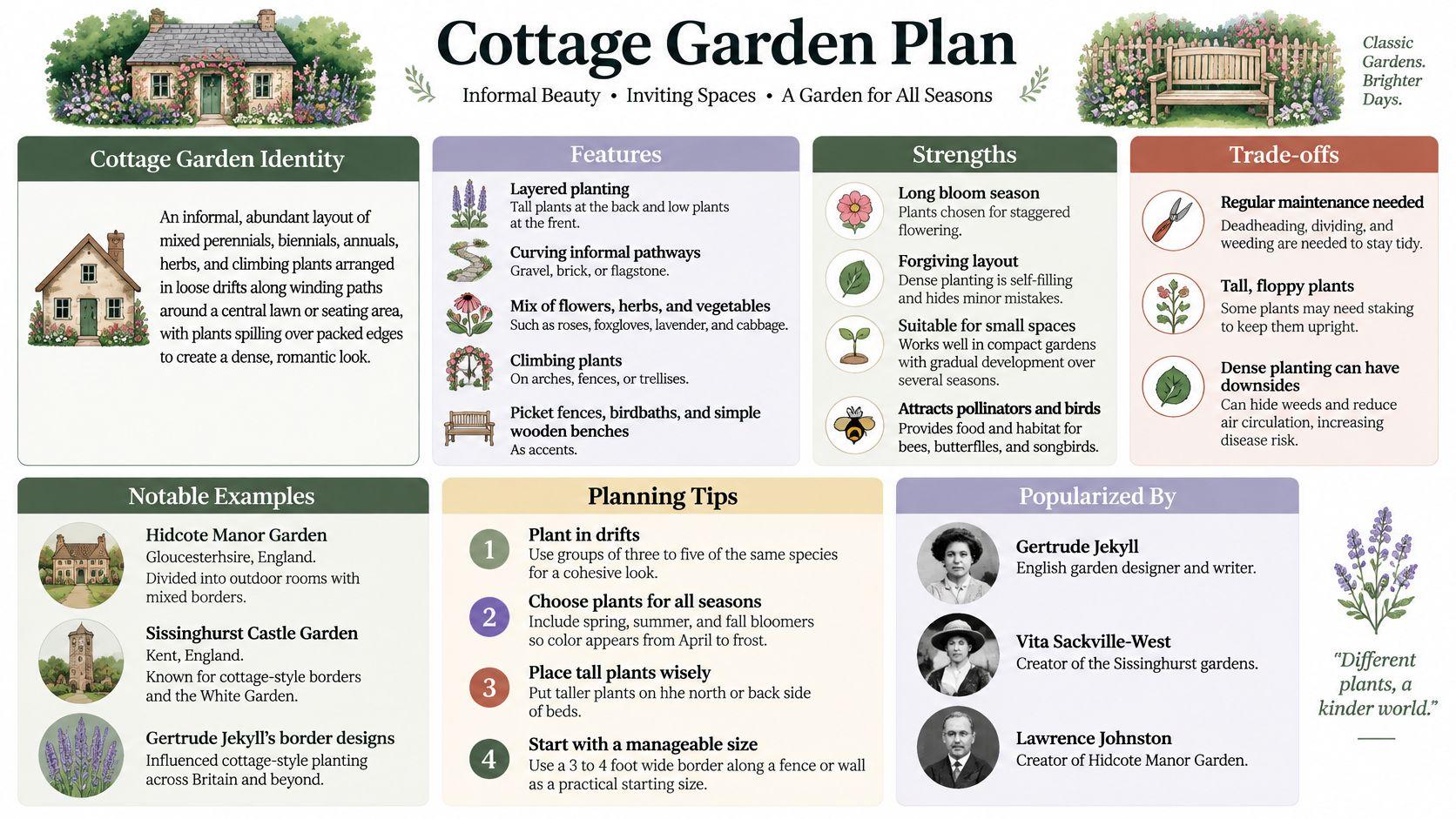
Use a climbing rose on a sturdy support as the vertical anchor. Repeat hardy geraniums along the front, place salvias through the middle, and tuck taller phlox toward the back where soil retains moisture without staying saturated.
Build Abundance Without Crowding
- Spring opening: Plant narcissus between emerging perennials, with foliage nearby to soften the bulbs' declining leaves.
- Summer body: Repeat roses, salvias, and hardy geraniums rather than collecting unrelated specimens.
- Late-season color: Add locally suitable asters and use annual cosmos in temporary gaps where there's enough sun.
For a fence-side example, keep the rose support accessible from the path and repeat the same perennial combination along the fence. Place plants according to their mature spread, not the size of their nursery pots.
The trade-off is hands-on attention. Roses need training, vigorous seedlings need thinning, and some flowers need deadheading or support. Dense planting can reduce exposed soil, but cramming plants together makes dividing and weeding harder.
If you're comparing border shapes before digging, the garden ai design resource offers a starting point. Keep the final planting restrained enough that you can recognize and remove unwanted seedlings.
2. Formal Parterre and Knot Garden
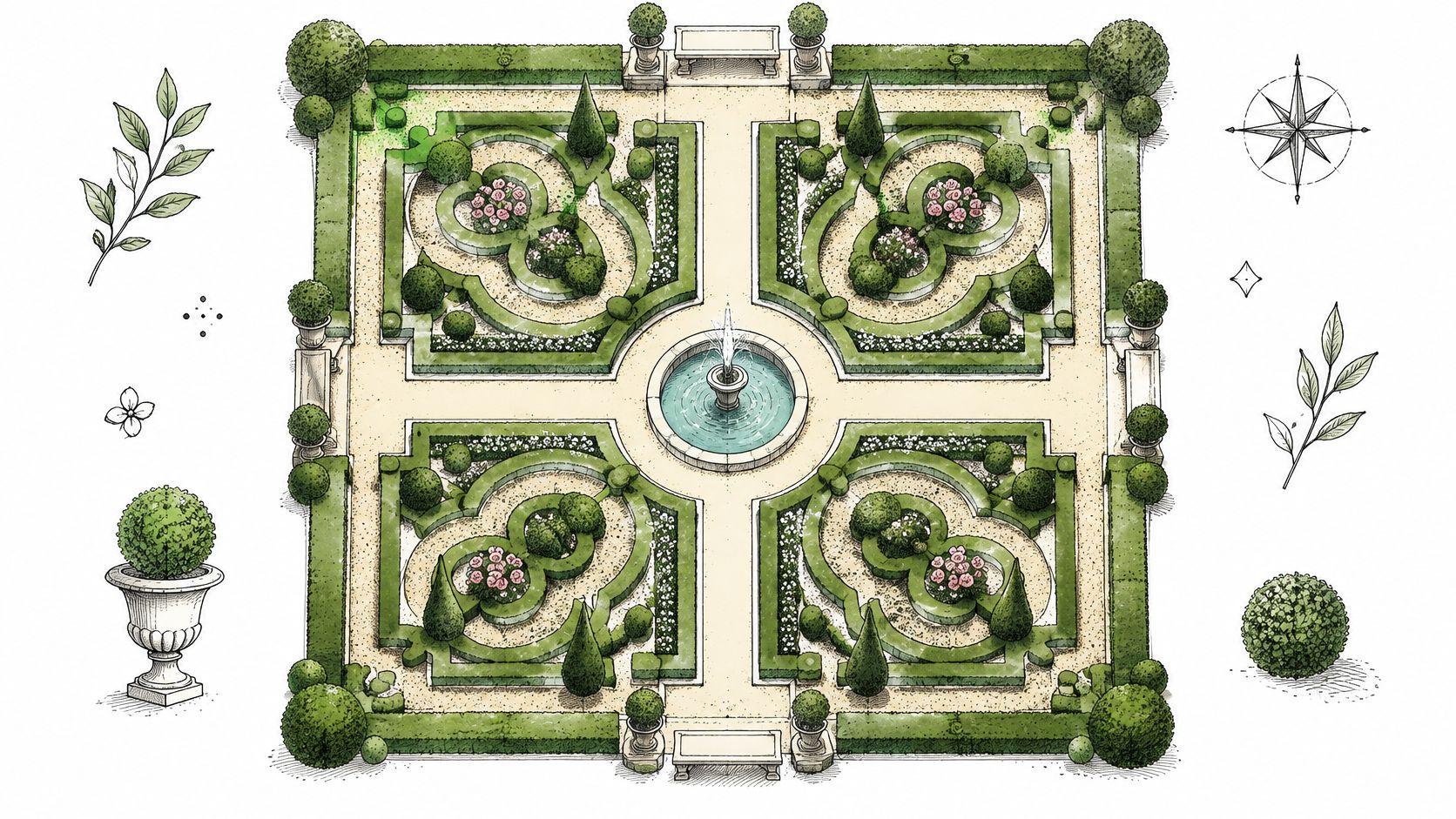
Symmetry makes maintenance visible. A missing edging plant or an uneven hedge stands out more in a formal parterre than in a loose mixed border.
For a house with a centered front door, align the main garden path with that entrance. Mirror the beds on either side and use a bowl, urn, or clipped shrub as the central feature.
Keep the Pattern Simple
Lay out the design with stakes and string before removing turf. Check it from the front door and an upstairs window, because an intricate pattern that looks good on paper may disappear at ground level.
Use compact evergreen edging where it's locally reliable, or choose brick or metal edging if you don't want repeated clipping. Lavender suits sunny, freely drained sites, but it won't create a convincing knot where wet soil causes gaps.
Maintenance reality: If you don't enjoy clipping, build the geometry with hard edging and let the flowers provide the softness.
Fill matching compartments with the same seasonal sequence: spring bulbs, summer salvias or annual bedding, then locally suitable autumn flowers. Keep sprawling plants away from narrow paths.
Formal layouts belong to a long history of organizing flowers through bed geometry and plant grouping, documented in the National Gallery of Art's flower-garden history. For a straightforward home version, compare mirrored rectangles using the best free garden design software options before attempting interlacing ribbons.
3. Naturalistic Perennial Border
For a sunny boundary where you want movement rather than clipped precision, combine upright perennials with clump-forming grasses. Naturalistic doesn't mean random. Repeat recognizable plant groups so the border still reads as a deliberate composition.
A practical template uses little bluestem for structure, coneflowers for summer flowers, and locally appropriate asters for the closing display. This combination suits suitable sunny North American sites; elsewhere, choose regional equivalents with compatible soil and moisture needs.
Give Each Plant a Job
- Structural plants: Use grasses and sturdy upright perennials to hold the outline after flowering.
- Seasonal flowers: Distribute early, middle, and late bloomers throughout the bed instead of isolating each season at an end.
- Ground-level cover: Fill suitable gaps with shorter, compatible plants, while leaving room for mature crowns.
For a border viewed from the patio, arrange taller clumps in offset groups rather than a continuous back-row wall. Let lower plants interrupt those groups so you can see into the planting.
A multi-season study published in Landscape Ecology found that floral enhancement increased pollinator visitation in urban and suburban gardens, while short- to medium-term gains in pollinator species richness were limited. A varied planting can help, but it doesn't guarantee every ecological outcome.
Expect careful weeding while the planting establishes. Leave sound stems and seed heads where they remain useful, then cut back before fresh growth becomes difficult to avoid. Remove aggressive spreaders early, before they erase the repeated pattern.
4. Japanese Zen Garden
Choose this template for a compact courtyard where quiet structure matters more than continuous flowers. A Japanese-inspired gravel garden can include seasonal blooms, but it shouldn't become a flower border with decorative rocks scattered through it.
Start with the view from a bench or doorway. Position the principal stone off-center, group supporting stones naturally, and leave a generous open gravel area.

In a sheltered courtyard with acidic soil, an azalea can provide spring flowers while a suitable camellia supplies another seasonal feature. Keep their irrigated root zones separate from gravel areas intended to stay dry. Where those shrubs don't suit the climate, use restrained, locally adapted alternatives.
Design the Empty Space
Install firm edging between planted pockets and raked gravel. Remove perennial weeds before construction, and choose a base suited to drainage, soil, and whether people will walk on the surface.
Don't assume fabric makes gravel maintenance-free. Windblown debris still collects above it, and weeds can germinate in that accumulated material.
A calm-looking garden still needs someone to remove leaves, pull seedlings, and maintain its edges.
For the seasonal sequence, rely on a brief flowering display, attractive foliage afterward, and evergreen or stone structure through dormancy. Moss belongs in places where moisture and shade support it, not wherever a rendering shows a green patch.
If you want bouquets and abundant summer color, choose another plan. This one works through restraint.
5. Mediterranean and Gravel Garden
Lavender beside a warm patio makes sense. Lavender in a wet depression doesn't, however convincing the gravel surface looks.
Drainage determines whether this plan succeeds. For a sunny seating area, create planting pockets around lavender, culinary sage, thyme, and rosemary where winter temperatures permit. Use taller plants as anchors and repeat thyme near edges that won't receive regular foot traffic.
Build Around Dry Crowns
Start by investigating where rainwater goes. On heavy, persistently wet soil, consider properly constructed raised planting areas or change the palette rather than filling isolated holes with gravel and creating water-catching sumps.
Keep gravel away from plant crowns and allow space around woody herbs. Don't scatter thirsty annuals through the same irrigation zone just because their colors match.
- Spring display: Use suitable flowering bulbs or early-blooming dry-garden plants.
- Summer display: Let lavender and sage provide flowers, with thyme joining according to variety and climate.
- Quieter months: Rely on evergreen foliage and seed heads where plants remain healthy and attractive.
For a patio example, place the taller rosemary away from seating circulation and keep low plants beside the approach. Compare bed outlines and paving connections with the Best landscape design apps before committing to excavation.
New plants still need establishment watering. Later, irrigate according to rooting, weather, and soil moisture rather than assuming drought tolerance means no care. The main chores are selective pruning, removing seedlings from gravel, and preventing woody herbs from crowding the path.
6. Xeriscape Garden
A xeriscape isn't a gravel garden with tougher plants. Its organizing principle is water use: put plants together because they need similar irrigation, then choose a surface treatment that suits them.
For a hot front yard, place the thirstiest planting near the entrance where you'll notice problems quickly. Use lower-water flowering groups farther out, with a clear maintenance route between them.
Divide the Yard Into Water Zones
On a suitable dry, sunny site, penstemons can provide an earlier flowering layer, blanket flowers a summer layer, and locally adapted late-blooming perennials the finish. These are candidate roles, not a universal palette. Check the species, winter tolerance, mature spread, and regional suitability.
A Gardening for Nature survey from the Institute for Applied Ecology found that 61% of respondents in the United States and southern Canada had changed which species they planted. That's a useful reason to make your plan adaptable rather than treating a planting list as permanent.
Watering rule: A drought-tolerant plant can still fail if its roots never establish beyond the nursery root ball.
Use drip irrigation where appropriate, but inspect emitters and the surrounding soil rather than trusting the timer. Apply organic mulch where it suits the plants; choose mineral mulch where crowns need drier conditions.
For a lawn replacement, preserve healthy trees and account for their water needs before changing irrigation. Don't put every plant on a single schedule because the finished garden carries a xeriscape label. Establishment care remains substantial even when long-term watering becomes lighter.
7. Pollinator and Native Flower Garden
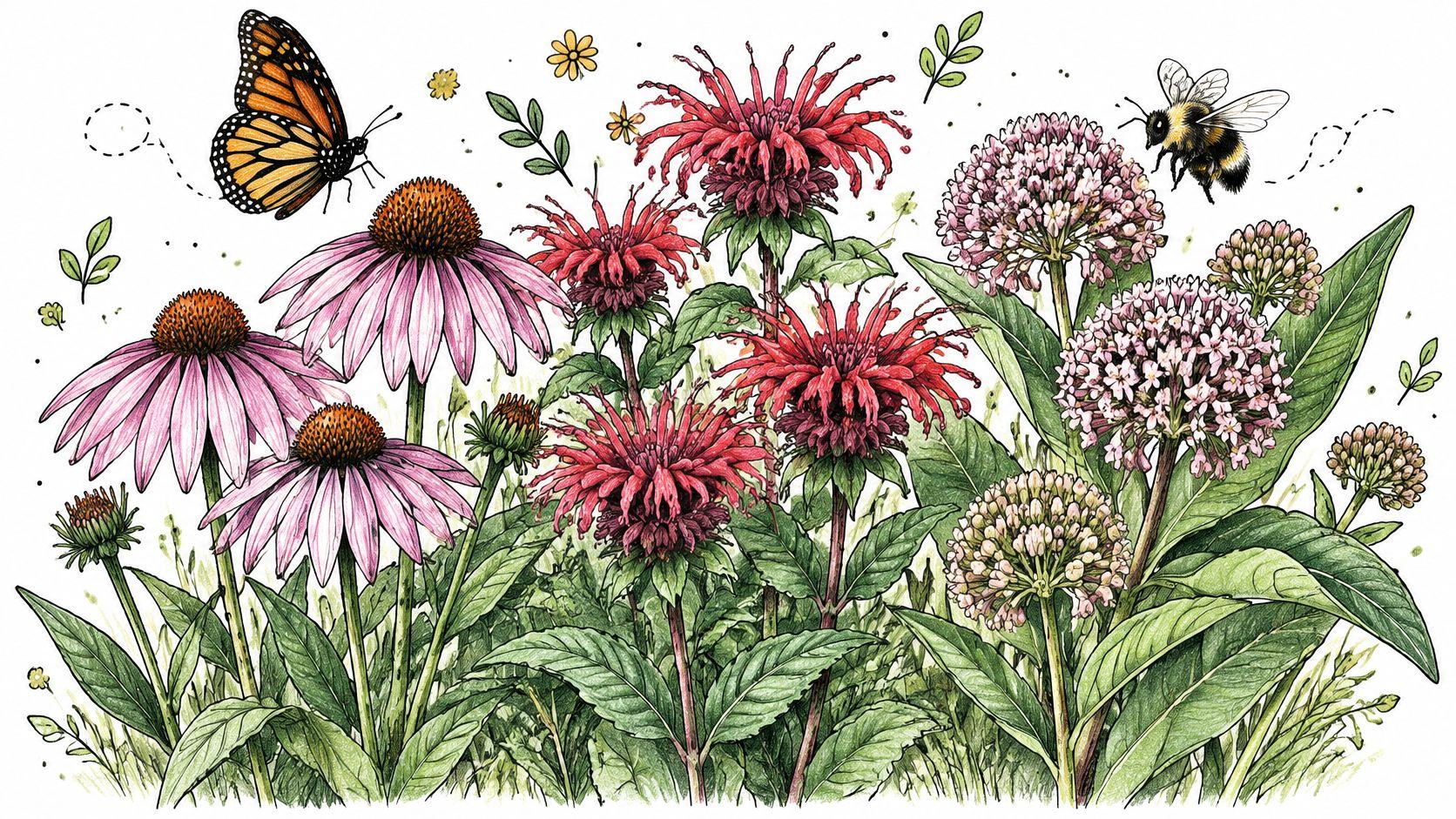
Start with the insects you want to support, then select locally native plants that provide the right flowers and host foliage. A pollinator garden needs more than summer blooms and a butterfly ornament.
For a sunny side yard in an appropriate eastern North American region, combine golden alexanders for earlier flowers, suitable milkweeds and mountain mints for summer, and native asters or goldenrods for later bloom.
Plan for Flowers and Caterpillars
- Flowering groups: Repeat compatible plants in visible patches and check for seasonal gaps.
- Host plants: Choose locally appropriate species for the butterflies or moths you hope to support.
- Habitat space: Retain suitable stems, leaf litter, or undisturbed soil where they won't obstruct access.
Match milkweed to moisture conditions rather than buying whichever species is available. Keep vigorous goldenrods and mountain mints where their spread can be managed.
A streetscape biodiversity case study reported increases in bee species and individual bee observations at planted sites relative to controls. At home, record what flowers and visitors are present before planting, then repeat observations under comparable conditions.
The pollination insights from Topanga Quality Honey offer additional context on bees and flowering plants. Judge your planting by more than honeybee visits, and avoid routine insecticide use.
Expect some chewed leaves. A host plant doing its job won't always look untouched, and a successful habitat planting may need editing rather than tidying into bare soil.
8. Raised Bed and Square Foot Garden
Raised beds suit gardeners who want clear boundaries, controlled soil preparation, and flowers within easy reach. A grid helps organize sowing, but the grid doesn't override mature plant size.
For a small cutting garden beside a patio, put compact zinnias in the central planting area, calendulas near an accessible edge, and taller snapdragons where they won't shade smaller plants. Give sprawling nasturtiums an outside edge rather than allowing them to bury neighboring seedlings.
Design Around the Gardener
Choose bed width by testing your comfortable reach before construction. If you'll work seated, mock up both the bed height and the space beneath or beside it, and check access with the actual chair or mobility aid.
The University of Hawaiʻi's dementia-friendly garden project uses raised planter boxes, resting areas, native plants, and wide paths. Accessibility requires a complete route and usable working position, not just taller sides.
- Seasonal sequence: Start with locally suitable cool-season flowers, then replace declining plants with warm-season annuals after frost risk passes.
- Soil preparation: Use a raised-bed blend with mineral soil and mature compost, not pure compost.
- Maintenance access: Keep paths firm, clear, and wide enough for the equipment and people using them.
Use this video as a companion when considering the layout.
Raised beds can dry quickly, especially raised planters. Check moisture below the surface and keep irrigation reachable without dragging a hose across the main path.
8 Flower Garden Plans at a Glance
| Plan | Best For | Water Needs | Maintenance Level | Season of Interest |
|---|---|---|---|---|
| Cottage Garden | Colorful, fragrant planting in small yards | Regular watering as needed | High; deadheading, dividing, and weeding | Spring through fall |
| Formal Parterre and Knot Garden | Formal homes and symmetrical spaces | Moderate; depends on plantings | High; regular clipping and edging | Year-round structure |
| Naturalistic Perennial Border | Sunny yards with a loose, wildlife-friendly look | Low once established | Low to moderate; careful plant selection and seasonal upkeep | All four seasons |
| Japanese Zen Garden | Compact spaces and a calm, uncluttered look | Very low with stone and gravel | Low; regular gravel raking and debris removal | Year-round structure |
| Mediterranean and Gravel Garden | Sunny, dry sites such as patios and slopes | Low once established | Low; occasional plant replacement or upkeep | Seasonal color and lasting foliage interest |
| Xeriscape Garden | Arid regions and water-restricted areas | Low; efficient irrigation as needed | Low once established | Seasonal interest varies by plant selection |
| Pollinator and Native Flower Garden | Wildlife-friendly yards of almost any size | Low to moderate; depends on local conditions | Low to moderate; some plants may spread or establish slowly | Spring through fall |
| Raised Bed and Square Foot Garden | Small yards, patios, and poor native soil | Moderate to high; beds can dry out quickly | Moderate; regular watering and bed upkeep | Growing season |
From Template to Planting List Making the Plan Yours
Choose the plan that matches the site you have, not the maintenance routine you hope to acquire. If you enjoy clipping, a parterre can be satisfying. If you prefer seasonal editing and don't mind standing stems, a naturalistic border may fit better.
Before buying plants, mark the proposed beds with a hose or marking paint. Walk the paths carrying a watering can, check whether doors and gates open freely, and look at the layout from inside the house. A bed can look generous from the lawn yet block the view you use every morning.
Turn Plant Roles Into Purchases
Write your planting list by function: structural anchors, early flowers, summer flowers, late flowers, and edge plants. Beside each name, record mature spread, moisture needs, and the task it will eventually require, such as division, pruning, or support.
Don't substitute by flower color alone. Replacing a compact, dry-soil perennial with a sprawling, moisture-loving plant changes the plan even if both bloom purple.
- Check the site: Record sunlight, drainage, exposure, and existing roots before choosing varieties.
- Check the sequence: Make sure the border won't depend entirely on a brief summer flush.
- Check the workload: Leave room to reach plants, remove weeds, and renew mulch without stepping on crowns.
Our OutdoorBrite garden design tool lets you upload a photo and compare planting styles on your own yard, including cottage, xeriscape, and Mediterranean concepts. The designs include bed and border shapes alongside planting; Plus also includes region-specific plant selections and a plant list for each design. Treat the visual concept as a starting point to check against actual measurements, drainage, and local plant availability.
Start with a section you can prepare and maintain properly. Establish its structure, plant repeated groups, and photograph it through the seasons so you can spot gaps and crowding. A useful plan leaves room for adjustment, but it stops every nursery visit from becoming an unrelated collection of plants.
OutdoorBrite turns a photo of your yard into planting and bed-layout concepts you can compare before buying plants or moving soil. Visit OutdoorBrite, upload your garden photo, and test the flower garden style that best matches your site and maintenance time.
See your yard reimagined
Start creating