7 Front Yard Before and After Transformations to Inspire You
Explore 7 stunning front yard before and after transformations. Get ideas for hardscaping, planting, and lighting to boost your curb appeal in 2026.
You walk up to your house after work and the problem is hard to name, but easy to feel. The entry looks buried. The walk does not lead the eye anywhere. Beds spill into each other, and the front of the house loses definition from the street.
That is how weak curb appeal usually shows up in real projects. It is rarely one bad plant or one outdated feature. It is a layout problem first, then a material and planting problem second.
Strong curb appeal improvements can increase perceived value and make a home feel better maintained before anyone reaches the porch. The resale upside is often part of the motivation, but the more useful goal is simpler: make the approach to the house clear, balanced, and easier to maintain.
The best front yard before and after projects succeed because they solve a few practical issues at once. They improve the path to the door. They give the house a stronger frame with cleaner bed lines, better scale, or more deliberate planting mass. They also respect trade-offs. A wider walk costs more, but it can do more for the entry sequence than swapping out a dozen shrubs. New planting adds color, but if the porch, steps, and bed edges still fight each other, the yard will keep looking unfinished.
That is why this guide looks at more than attractive photos. It breaks down which sources are useful for inspiration, which ones help you compare real design decisions, and which tools let you test ideas on your own house before you commit. If you want to see your options early, Outdoorbrite is one of the faster ways to turn a real front yard photo into a concept you can evaluate against your home's façade, walkway, and existing beds.
1. OutdoorBrite
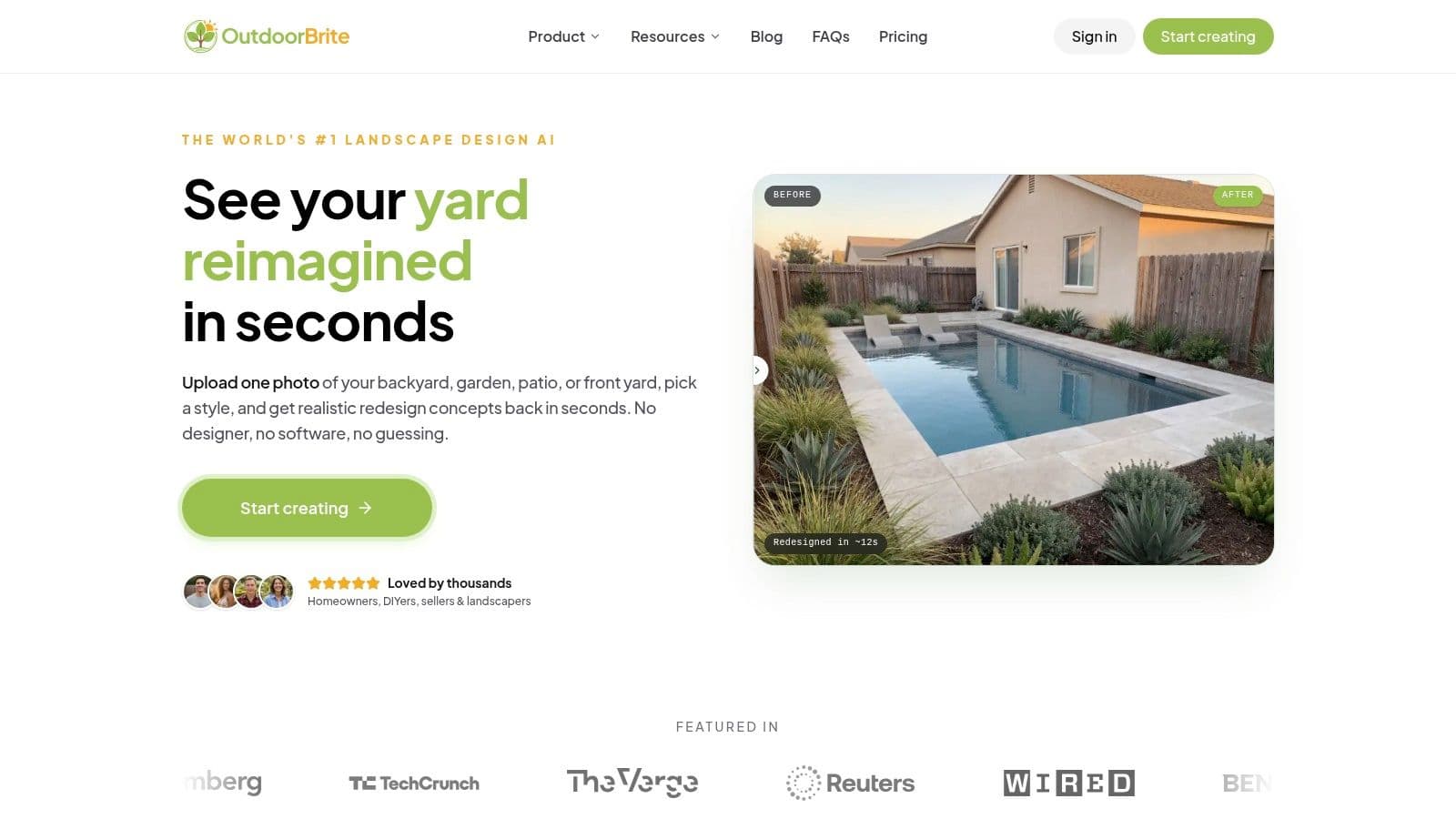
You stand at the curb, look at your front yard, and know it needs more than fresh mulch. The hard part is deciding which changes will improve the house instead of adding cost without fixing the layout. Outdoorbrite helps at that stage by turning a real photo of your yard into a concept you can judge against your façade, entry walk, and existing beds.
The workflow is simple. Upload a phone photo, choose a style direction, adjust details like season or lighting, and review generated concepts quickly. From a planning standpoint, that speed matters because you can compare a few different approaches before calling installers or buying materials. I find that useful early on, especially when a homeowner is torn between cleaner geometry, fuller foundation planting, or a lower-water setup.
Where it works best
OutdoorBrite is strongest during concept selection. It gives you a fast way to test the decisions that usually make or break a front yard before-and-after result: clearer path emphasis, simpler bed shapes, stronger framing at the porch, and planting mass that fits the scale of the house.
Practical rule: Compare layout and massing first. Plant variety comes later.
That is the value here. A lot of makeover content shows attractive results but skips the reason one approach works better than another. This tool is useful because it lets homeowners study the design on their own house, not on a generic example.
Trade-offs to know
OutdoorBrite is a concept tool. It does not replace drainage review, grading plans, utility checks, or the installation notes a contractor needs to price and build accurately. Cost is another filter. Since there is no free tier, it makes more sense for homeowners who are actively planning a project than for someone casually collecting ideas.
Used that way, it solves a real early-phase problem. It reduces bad guesswork.
- Best use case: Testing multiple front yard directions on your actual house before hiring a designer or contractor.
- Big advantage: Fast browser-based concepts without learning design software.
- Main limitation: Final decisions still need site validation for slope, drainage, utilities, and code.
2. HGTV Curb Appeal Before-and-After Galleries
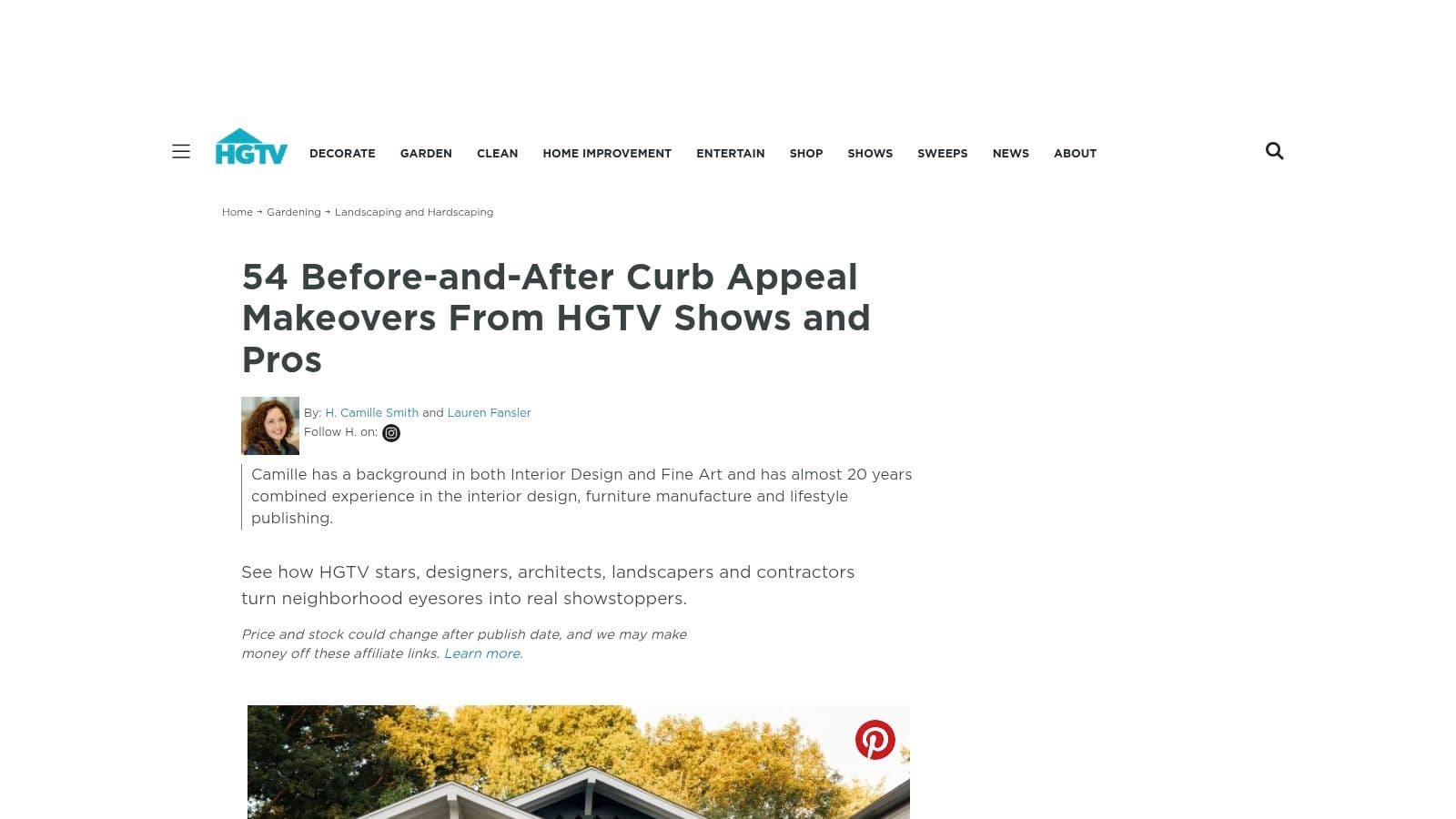
If you're still figuring out your taste, HGTV is one of the easiest places to start. Its curb appeal galleries let you scan a lot of front yard before and after examples quickly, which is useful when you need pattern recognition more than technical detail.
The best part is speed. You can move through entries, walkway changes, porch updates, and planting refreshes in one sitting and start noticing what keeps showing up in successful projects. Stronger path definition, cleaner bed edges, simplified planting masses, and a visible focal point at the front door tend to do the heavy lifting.
What it does not do well
HGTV is inspiration-first. It won't walk you through plant spacing, drainage corrections, or phased installation strategy in much detail. Ads and shopping prompts can also pull attention away from the design lesson.
A gallery is useful when you need visual references. It's weak when you need a build sequence.
Use HGTV when you want to collect screenshots and narrow your direction. Don't use it as your only planning tool if you're about to spend real money.
You can browse the full gallery on HGTV's curb appeal makeover page.
3. Houzz Before and After 3 Front Yards Get Captivating Curb Appeal
Houzz is stronger than a general inspiration gallery when you want practical translation from photo to project. The featured editorial on three front yard transformations shows what changed and why, with more useful detail on materials, planting, and designer choices.
That's important because homeowners often over-focus on color and under-focus on composition. A good front yard before and after usually depends on layered structure, not just prettier flowers. Plant lists and material callouts make that easier to copy intelligently.
Why designers like this format
Houzz's detailed case style helps readers connect visual improvement with actual components. You can see how a project uses hardscape, foundation planting, and entry emphasis together instead of treating them as isolated upgrades.
A useful design benchmark comes from evergreen structure. Effective front yard designs should allocate 40% to 60% of total space to evergreen plants so the yard keeps visual bones through winter, according to this evergreen-focused design guidance.
- Good for: Planting-forward homeowners who want named materials and species.
- Less good for: Anyone who wants a huge gallery volume instead of a few deeper examples.
Read it on Houzz's three front yard makeover article.
4. This Old House Curb Appeal Before and Afters
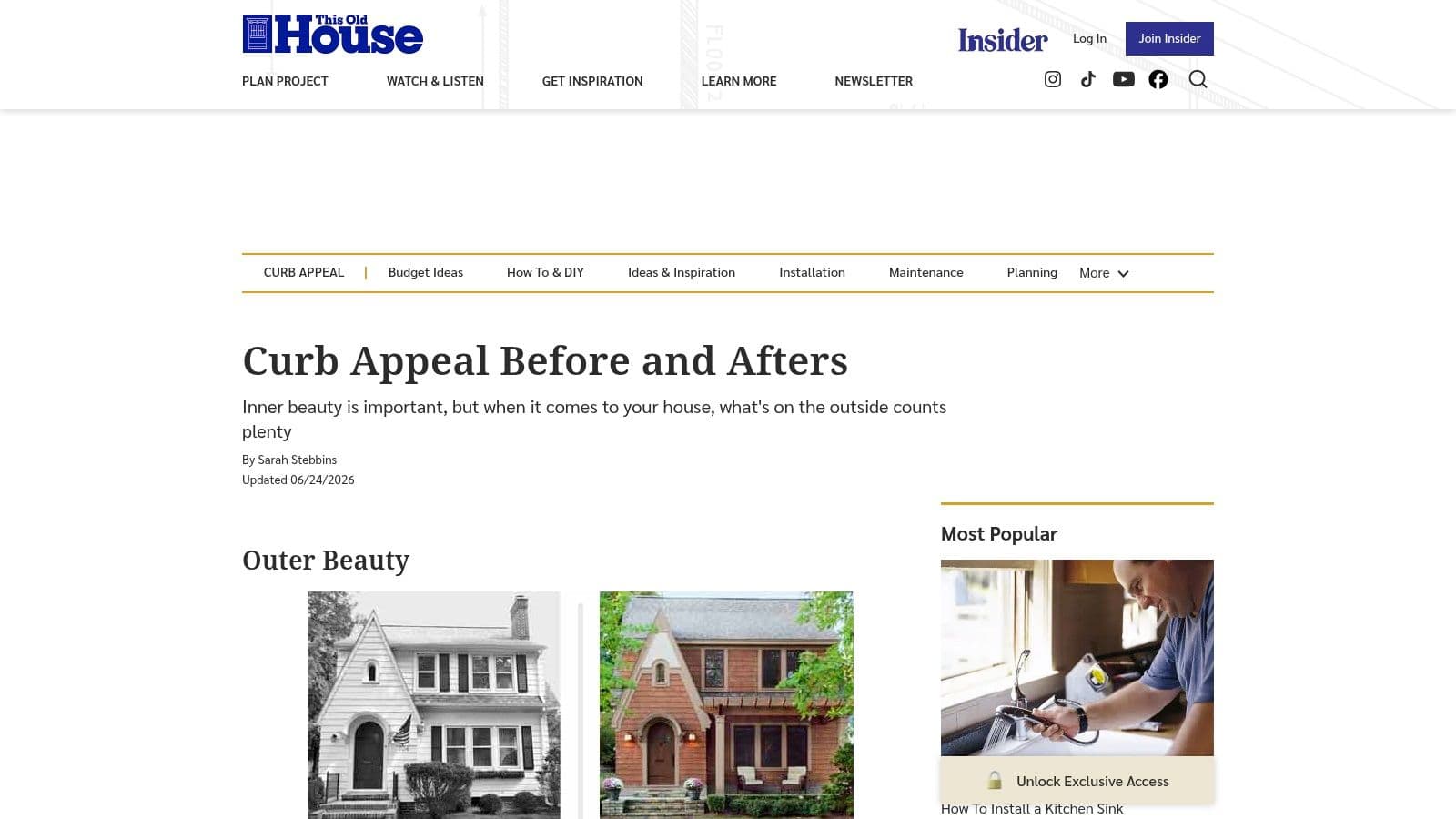
This Old House tends to be more grounded in materials and sequencing. That makes it especially useful for older homes or phased upgrades where you're not ripping everything out at once.
Its examples often connect exterior enhancements to siding, porch structure, paint, and light conditions. That's how front yards get fixed in the field. You don't always start with the plants. Sometimes you start by correcting the walkway, trimming visual clutter, or making the porch look like it belongs to the house again.
Best fit for phased projects
This is one of the better resources for budget-aware homeowners because it supports incremental improvement. A realistic makeover often starts with one hardscape correction and one planting correction, then builds from there.
There's also a broader reason this matters now. Across 370 analyzed residential sites, average front yard area decreased by 19%, front garden coverage by 46%, and canopy cover by 62% over time, according to this ScienceDirect study on changing residential front yards. That decline helps explain why even modest, thoughtful upgrades can make such a visible difference.
Visit This Old House curb appeal before and afters.
5. Yardzen Finished Yards and Before/After Portfolio
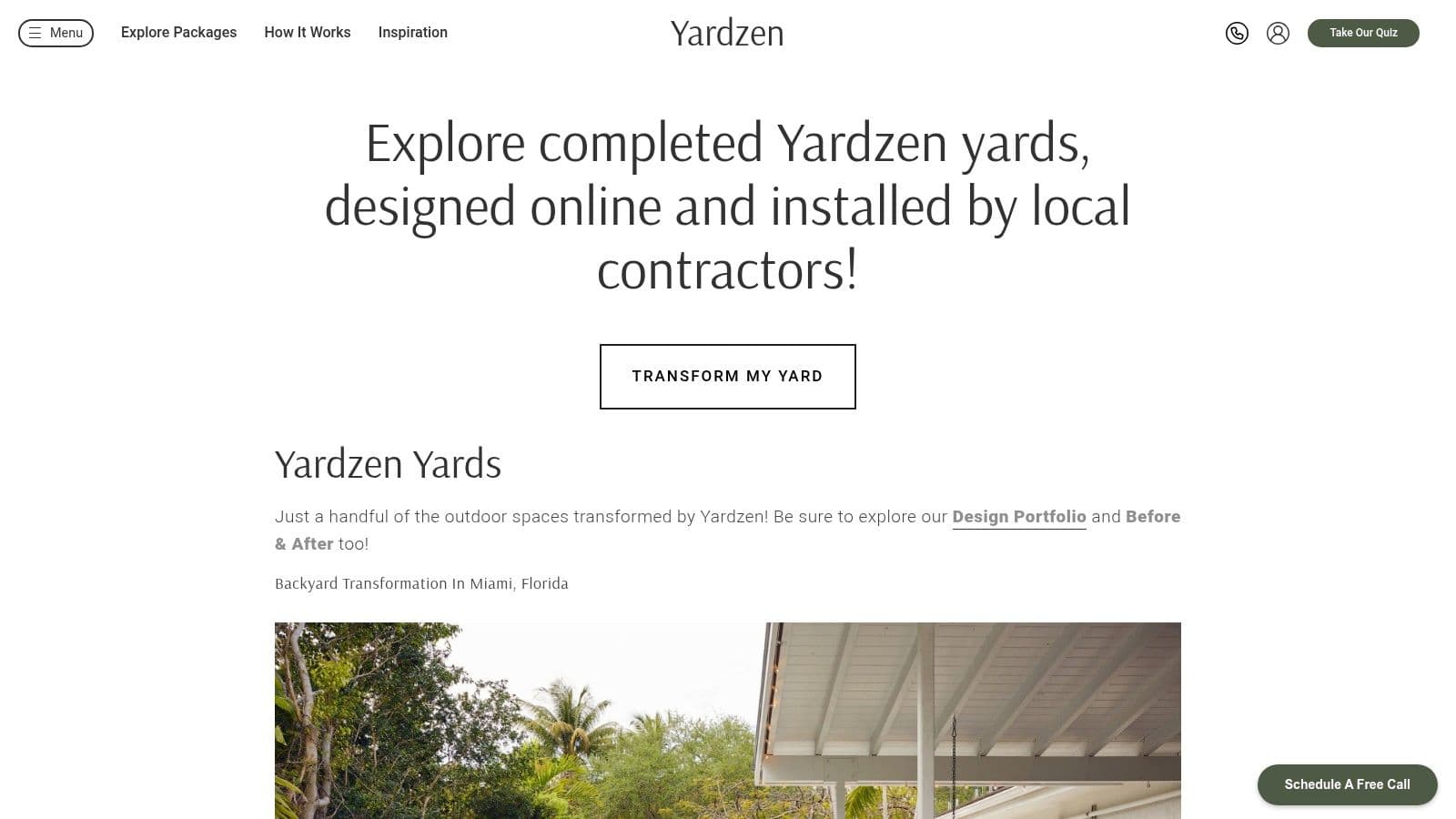
A common point in front yard planning comes after the inspiration stage. Homeowners know the look they like, but they still need a layout, planting plan, and enough detail for a contractor to price the job accurately. Yardzen is useful at that stage because its finished-yard portfolio shows what happens when a concept turns into a buildable remote design package.
That makes its before-and-after examples more practical than a simple photo gallery. You can study how entries are framed, how lawn area is reduced or retained, and how planting zones are organized for climate and maintenance. The value is not just the final image. It is seeing the level of definition that helps a project move from “maybe” to “ready for bids.”
For homeowners still sorting out style direction, a quick concept tool can save time before committing to a full service. An ai landscape design generator helps you test layout ideas and curb-appeal styles early, then compare those rough directions against the more detailed work shown in Yardzen's portfolio.
A key trade-off
Yardzen is strongest when you want drawings and visual plans that support real decision-making. A remote service can clarify layout, materials, and planting intent. It is less useful if you need rapid on-site adjustments for grading, drainage, utility conflicts, or contractor-specific construction methods.
I tell clients the same thing on built projects. Renderings help everyone agree on the target, but site conditions still decide what gets installed cleanly and what needs revision.
Front-yard upgrades also tend to justify the planning effort because they affect perceived value the moment someone arrives at the house. That makes Yardzen's portfolio especially useful for homeowners who want to compare polished concepts with completed work before choosing how much design support they need.
See the portfolio at Yardzen Yards.
6. brick&batten Exterior Design Before/After Plus Premium Landscape Option
A common front-yard mistake shows up before a single shrub goes in. The planting design improves, but the house still has mismatched trim, dated shutters, weak lighting, or a front entry that feels undersized. The result looks more expensive, yet still unresolved.
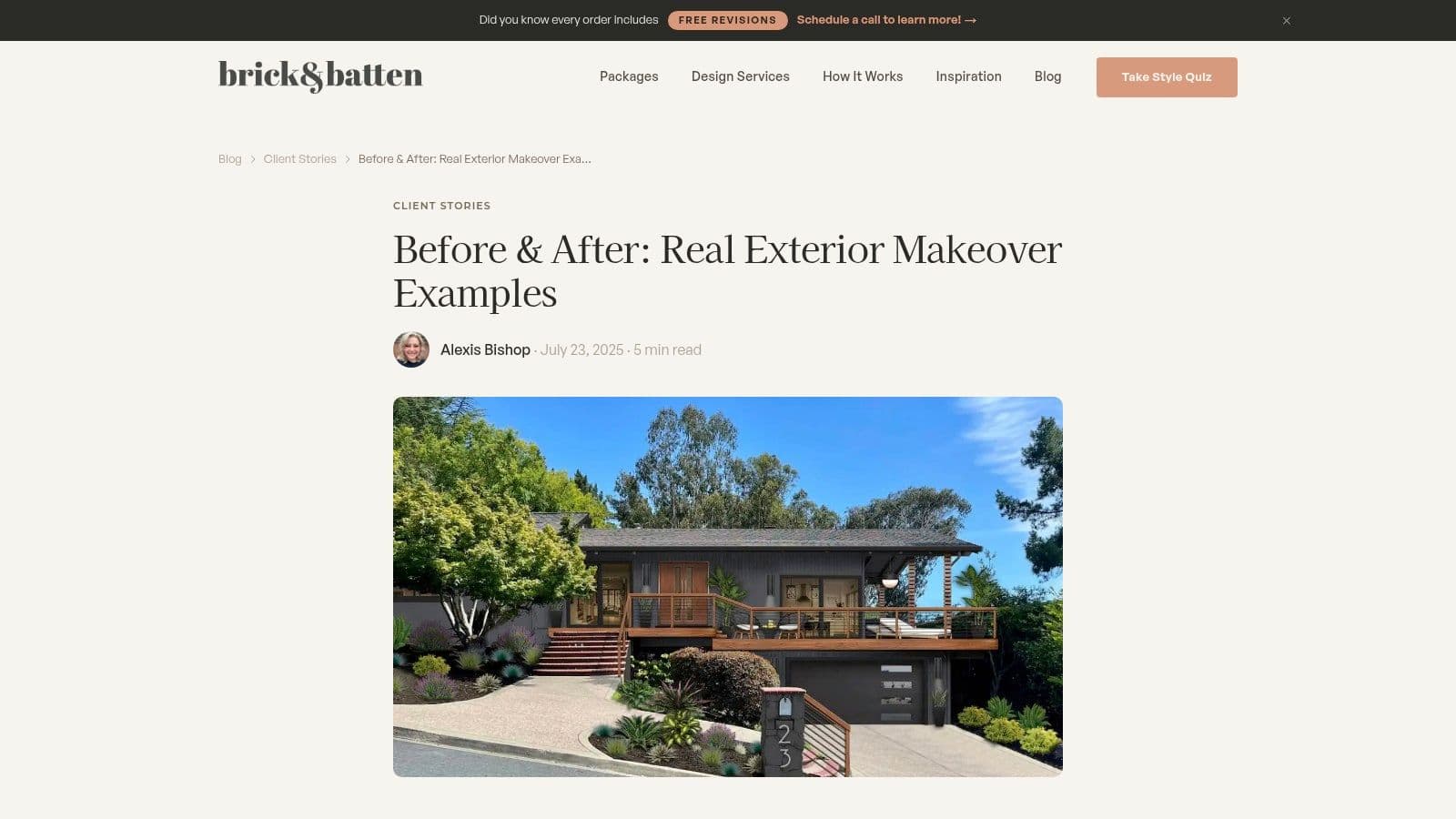
brick&batten is useful in that exact situation because it starts with the house. Its before-and-after examples show how color, materials, lighting, and entry details can set the direction for the rest of the yard design. That sequence matters. I have seen homeowners spend heavily on new beds and edging, then redo parts of the work later because the facade changes pulled the style in a different direction.
When to choose it
Choose brick&batten when exterior updates and front-yard improvements need to be planned together. It is a strong fit for repainting, new siding, updated columns, different shutters, or a front porch refresh that should connect visually to the walk, foundation beds, and entry planting.
The trade-off is scope. This service is strongest on curb appeal at the house level, but it may not go as far into grading, drainage, irrigation, or detailed plant spacing as a yard-first design service. Homeowners still need local help for site measurements and construction realities.
If you want to test planting styles before paying for a full redesign, ai for garden design can help you compare directions early and avoid pairing the wrong plant palette with the architecture.
You can review its exterior makeover examples at brick&batten's virtual exterior design service.
7. Tilly Design Online Landscape Design with Sample Plans and Before/Afters

A common front-yard problem looks like this: the homeowner wants a professional plan, but the actual work will happen in stages with different contractors, weekend labor, and a lot of owner decision-making. Tilly fits that kind of project well. It offers remote design with plan sets that give structure to the job without requiring a full local design-build commitment from day one.
That difference matters. A polished rendering can help you choose a style, but a usable yard plan helps you price materials, phase the work, and hand clear direction to an installer. Tilly's sample before-and-afters are useful because they connect the visual goal to documents homeowners can work from.
It also suits projects where flexibility matters, including homes with temporary budgets, partial DIY installation, or changes that need to stay relatively easy to revise later. For early concept testing, ai for garden design can help you compare planting styles and layout directions before you commit to a final plan.
Best for hands-on homeowners
Tilly is a strong option for homeowners who want design guidance, plant direction, and a plan they can implement in phases. The trade-off is local execution. Remote design gets you organized, but it does not replace on-site judgment about drainage, soil conditions, permit requirements, or contractor quality.
- Strong fit: Homeowners managing their own front-yard update and needing a plan that is more actionable than inspiration photos.
- Watch for: Local plant sourcing, field verification, and build details still need follow-through on your end.
Visit Tilly Design.
Front Yard Before-and-After: 7-Site Comparison
| Product/Source | Implementation Complexity 🔄 | Resource Requirements ⚡ | Expected Outcomes ⭐/📊 | Ideal Use Cases 💡 | Key Advantages ⭐ |
|---|---|---|---|---|---|
| OutdoorBrite | Low, browser-based, guided workflow | Paid subscription, single phone photo, internet | Photorealistic concept renders quickly; concept-level, not construction plans 📊 ⭐ | Rapid concept exploration for homeowners, sellers, landscapers | Very fast photoreal renders; extensive styles; intelligent auto-fill; cost-saving vs. traditional designers |
| HGTV – Curb Appeal Galleries | Very low, browse-only gallery | Free, ad-supported web access | Visual inspiration with clear before/afters; minimal execution detail 📊 | Quick idea scanning and moodboarding | Free, large TV/pro-sourced collection |
| Houzz – Before and After | Low, editorial with project detail | Free access; may require contacting pros | Practical plant/material callouts and regional notes useful for implementation 📊 ⭐ | Homeowners seeking emulatable projects and pro connections | Actionable plant lists and links to vetted professionals |
| This Old House – Before and Afters | Low, editorial with pro tips | Free access; DIY material sourcing needed | Technique- and material-focused guidance for budget/phased projects 📊 | Budget-conscious homeowners and phased weekend upgrades | Practical sequencing, named materials, pro tips |
| Yardzen – Portfolio & Services | Moderate, full-service remote design | Paid packages, client input, budget for build; possible contractor coordination | Climate-specific designs, photoreal renders, CAD plans, and build scoping 📊 ⭐ | Homeowners wanting professional remote design and contractor matching | Package transparency, nationwide service, CAD and install-ready deliverables |
| brick&batten – Virtual Exterior Studio | Moderate, packageized virtual service | Paid packages, optional consults, shoppable materials | High-quality facade and coordinated landscape renderings; visual roadmap (site validation still needed) 📊 ⭐ | Owners focused on cohesive exterior finishes and coordinated planting | Photoreal façade renders, shoppable lists, structured revisions |
| Tilly Design – Remote Landscape Design | Moderate, designer-led remote process | Flat-fee packages, site info from client, may require local installer | Handable plan sets, plant lists, optional 3D; suitable for contractors 📊 ⭐ | DIY-friendly homeowners who want installable plans and phased implementation | Clear deliverables for installers, planting-focused plans, flat-fee packages |
Planning Your Perfect Front Yard Transformation
You pull into the driveway after spending a few weekends and a few thousand dollars, and the front yard still feels off. The new plants are healthy. The path is cleaner. The porch looks better. But the house still does not read clearly from the street. That usually comes back to planning, not effort.
Start with one job for the yard. Support the entry. Reduce upkeep. Screen a window. Make the house look grounded instead of top-heavy. Help the property show better before a sale. Good before-and-after projects work because every change supports that job.
Then assess the site like a designer would. Stand at the curb and study the house first, not the planting. Check whether the front door is obvious, whether the walkway pulls people in, and whether the bed lines fit the architecture. If shrubs are blocking windows or crowding the foundation, cut that problem before adding anything new. A simpler plan almost always reads better from the street.
Testing ideas before you buy materials saves money. OutdoorBrite helps by letting homeowners place different layouts and style directions on a photo of their actual home. That is useful for practical decisions, not just inspiration. You can compare a straighter walk against a curved one, fuller foundation planting against more open space, or a tidy low-maintenance approach against a softer garden look.
Budget choices matter most when they affect structure. Walkways, edging, steps, driveway condition, and lighting set the framework. Plants fill it in. If the hard surfaces are stained or tired, cleanup alone can sharpen the whole front view, much like the reset effect shown in this DFW driveway cleaning guide. I often tell clients to fix visibility, grading, and circulation first, then spend on plants once the bones are right.
The strongest transformations usually follow a few repeatable rules. Limit the number of materials. Repeat plant forms so the yard feels organized. Use evergreens or other reliable structure to hold the composition in winter. Match the scale of the planting to the windows, porch, and height of the house. Those decisions create the clean, intentional before-and-after results people respond to.
A good front yard makeover is a planning exercise first and a shopping exercise second. When homeowners can see the direction clearly before installation starts, they make better trade-offs and get a result that fits the house instead of fighting it.
See your yard reimagined
Start creating