10 Top Landscape Plants Ideas for 2026
Transform your yard with our top 10 landscape plants ideas. Explore curated plant lists for every style, from modern to cottage and xeriscape gardens.
Your Dream Garden Starts with the Right Idea
Staring at a blank backyard or a tired planting bed usually creates the same problem. You know you want something better, but scrolling through random plant lists doesn't tell you what belongs together, how much maintenance it will need, or whether it will still look good in three years.
Strong planting ideas start with a planting strategy, not a shopping cart. The best gardens are built like systems. Trees, shrubs, perennials, and groundcovers each do a job, and the layout matters as much as the species. That's also why simple repetition works so well. Extension guidance for low-care yards recommends using about 10 to 15 hardy species repeated in large masses, paired with spacing at about 85% of mature spread to balance fill-in and future crowding, according to University of Florida IFAS guidance on low-maintenance landscape plants.
That trade-off is where many DIY gardens go wrong. People either buy too many different plants and end up with visual clutter, or they underplant and live with bare mulch and weeds for years. Grouping also matters visually. Designs built around odd-numbered clusters such as 3, 5, or 7 plants are preferred by most observers, and over 70% of small-bed designs rated balanced or pleasing used odd-numbered clusters, according to Fine Gardening's summary of plant-by-number design principles.
You also have more support than ever when planning a yard. The global landscaping products market was valued at USD 88.64 billion in 2024 and is projected to reach USD 129.98 billion by 2030, a projected CAGR of roughly 6.5%, according to Grand View Research's landscaping products market analysis. Homeowners are clearly investing in outdoor spaces. The smart move is choosing a concept that fits your site, your budget, and how much upkeep you'll realistically do.
These 10 ideas are complete blueprints, not just plant suggestions. They'll help you build a yard that looks intentional, functions well, and holds together season after season. You can also visualize these styles in your own space with AI before you buy a single plant.
1. Native Plant Communities
A yard usually feels calmer and more convincing when the planting reads like it belongs to the site. Native communities do that well because they are built as a working plant system, not a grab bag of good-looking specimens. The strategy is simple. Choose plants from the same regional habitat, repeat them in visible drifts, and let each layer handle a job such as shade, screening, soil coverage, or seasonal color.
That can look very different from one region to the next. In the Midwest, it might be a prairie mix built around little bluestem, switchgrass, coneflower, and asters. In California, it could be a dry planting of buckwheat, manzanita, and toyon. In the East, a woodland-edge scheme might use a canopy tree, native shrubs, and a ground layer of sedges or ferns. Start with three to five dependable species and build out once the first group settles in.
Build the structure first
The strongest native plantings have a clear framework. Pick one anchor species for each layer, then repeat it enough that the bed looks intentional from a distance. I usually set the tallest plants first, place shrubs or medium growers in broad groups, and use spreading natives to knit the soil together. That approach cuts weeding time and gives the planting a stable shape even when seasonal bloom comes and goes.
For larger informal beds, grouped woody plants and broad sweeps of the same ground layer are easier to maintain than scattered singles, as noted in the NC State Extension Gardener Handbook on garden design.
Practical rule: Choose one tree, one main shrub, and one dominant ground-layer plant, then repeat them consistently.
There is a trade-off. Native communities often look sparse in year one and much better by year two or three. Resist the urge to fill every gap with thirsty fillers that need different irrigation and soil conditions. The Missouri Botanical Garden's guidance on native plant gardening is a useful reference when you want plants that belong together ecologically, not just visually.
If you want to test massing and spacing before you plant, an ai garden design generator can help you preview how repeated drifts and layered groups will read in your own yard. To support the habitat around the planting, it also helps to plan for birds that feed on garden pests. This guide on how to attract beneficial insect eaters pairs well with a native-first approach.
2. Pollinator Gardens
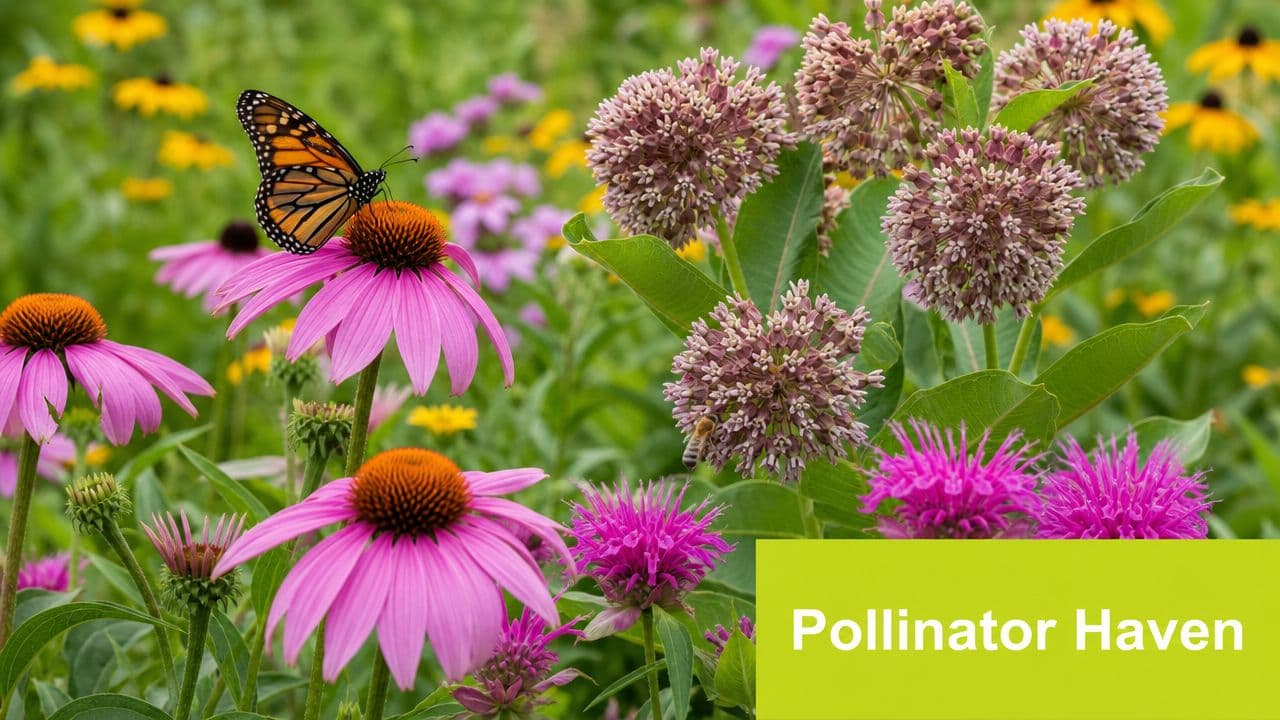
A good pollinator garden isn't just colorful. It offers bloom succession, shelter, and enough repetition that bees and butterflies can find the flowers. I'd rather see five large drifts of dependable bloomers than twenty single plants dotted around a bed.
A simple layout works well. Put taller nectar plants toward the back, medium bloomers in broad clusters through the middle, and host plants near the edges where they're easier to monitor. A monarch-focused bed might pair milkweed with coneflower and asters. A hummingbird-focused border can lean on salvias, bee balm, and tubular flowers.
Keep the planting legible
Pollinators respond better when the same species appears in clusters instead of isolated singles. Leave a shallow water source nearby, skip pesticides entirely, and don't over-clean the garden in fall if you want beneficial insects to overwinter.
If you want to test combinations before planting, a dedicated ai garden design generator helps you preview how dense clusters, paths, and bloom colors will read in your actual yard. If birds are part of your wildlife plan too, this guide on how to attract beneficial insect eaters adds a useful layer to the strategy.
What works is bloom overlap from spring into fall. What doesn't work is a single dramatic flowering moment followed by months of nothing useful.
3. Mediterranean Xeriscaping
By late July, this is the part of the yard that should still look intentional at 4 p.m. in full sun, not tired and thirsty. Mediterranean xeriscaping works best on hot, bright sites where regular irrigation is expensive, restricted, or unnecessary if the planting plan is right.
This strategy is less about individual drought-tolerant plants and more about building a dry-climate planting system. Pair structural shrubs like lavender, rosemary, and santolina with ground-hugging sedums, bold accents such as agave where winter conditions allow, and a few regionally appropriate grasses to loosen the composition. Gravel mulch and stone paths are part of the planting plan, not decoration added at the end. They keep the layout crisp and make the plant palette feel cohesive.
The layout matters as much as the species list. Set the largest forms first, then repeat smaller plants in bands or drifts so the bed reads as one design instead of a collection of singles. Keep plants with similar water needs on the same irrigation zone. That single decision prevents a common failure point: drought plants getting summer water meant for something thirstier nearby.
Where people get it wrong
Mediterranean plants fail fast in soil that stays wet. I see the same pattern often. Lavender and rosemary get tucked into heavy clay, covered with organic mulch, and watered lightly every day. The tops stay alive for a while, but the roots sit in damp soil and decline.
Fix drainage before planting if the site is tight or compacted. Raised berms, gravelly backfill used carefully, and wider plant spacing all help. Then water thoroughly and less often. That encourages roots to move down and makes the bed more resilient during heat.
If you want a wider plant palette for this style, the WUCOLS plant search from UC Davis is a practical tool for checking low- and moderate-water-use options by region.
On dry sites, gravel does two jobs. It slows surface evaporation and visually connects scattered plant forms into a single composition.
What works is repetition, strong spacing, and enough empty ground to let sculptural plants read clearly. What fails is crowding the bed with every drought-tolerant plant you like and hoping the mix will organize itself.
4. Japanese Zen Garden Plantings
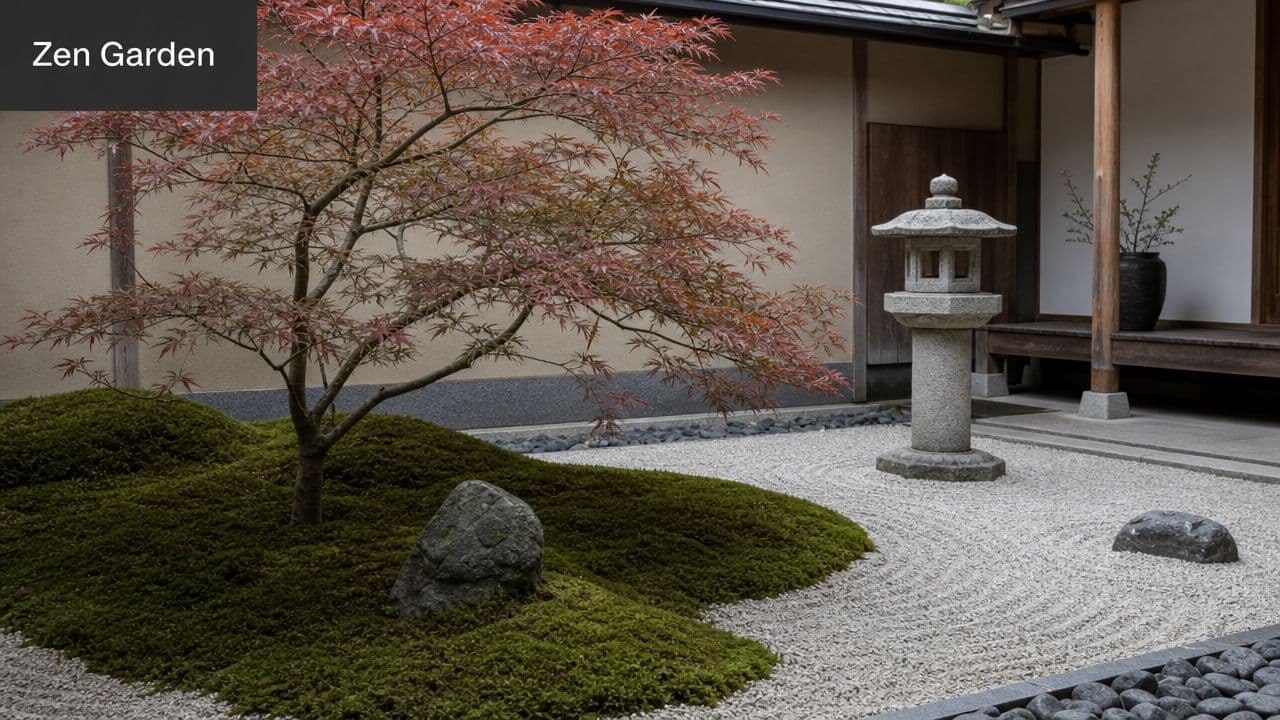
A Zen-inspired planting succeeds when it feels edited. Every plant needs a reason to be there. Form matters more than flower count, and empty space is part of the composition.
Use a small palette. A Japanese maple or another elegant small tree can anchor the view. Beneath it, place mounded azaleas, ferns, hakone grass, mossy groundcovers where conditions allow, and stone elements that hold the design together even when plants are dormant.
Use fewer, better moves
Sightlines are everything here. Don't pack the bed. Let gravel, stepping stones, or a lantern create pauses between planting moments. This style also benefits from thinking in layers: canopy, understory, then a quiet ground plane.
What works is careful asymmetry and disciplined pruning. What doesn't work is adding lots of showy bloomers just because there's room. Zen gardens lose their calm fast when every plant tries to be the star.
5. Cottage Garden Mixed Plantings
Cottage gardens are generous, layered, and slightly unruly, but they still need structure. The charm comes from abundance. The success comes from planning bloom sequence, height, and self-seeding behavior so the whole thing doesn't collapse into a tangle.
A strong mix might include roses or flowering shrubs for height, foxgloves or delphiniums for vertical accents, mid-layer bloomers such as salvias and daisies, and fillers like calendula or cosmos that soften edges. Herbs belong here too. Thyme, sage, chives, and lavender make the garden feel useful instead of purely ornamental.
Aim for controlled abundance
The easiest way to build one is by planting in bands of height instead of rows of species. Keep low growers near paths, place billowy middle-layer plants in broad drifts, and let taller stems rise through them.
A cottage garden rewards regular deadheading and seasonal editing. It doesn't reward neglect. If you want this look without constant fuss, reduce the annuals and lean harder on dependable perennials and shrubs.
A cottage border should feel full, not crowded. There's a difference, and maintenance decides which one you built.
6. Modern Minimalist Plantings
You walk up to a clean, modern house and the planting is doing too much. Ten textures, seven bloom colors, and no visual order. This style works best when the plant palette gets tighter and the layout gets sharper.
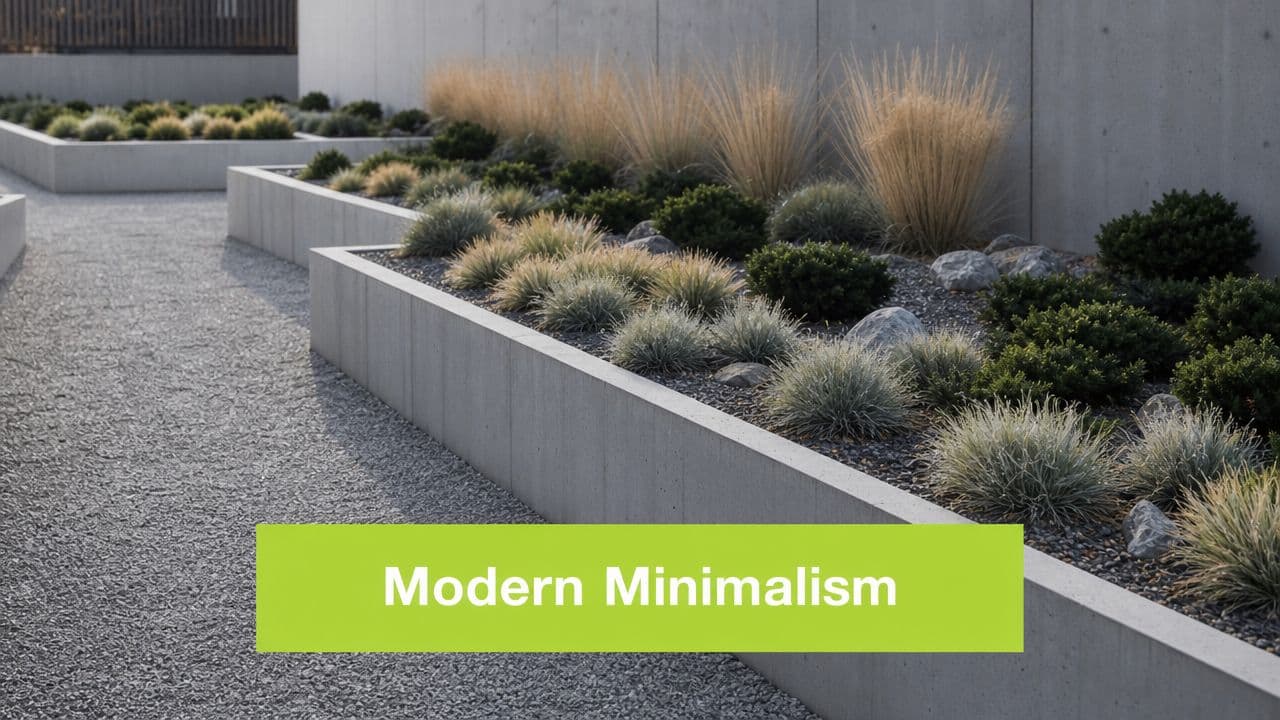
Treat this as a full planting strategy, not a grab bag of trendy specimens. Start with three to five core plants and repeat them with discipline. A reliable formula is ornamental grasses for movement, clipped evergreen shrubs for structure, one bold succulent or architectural perennial for contrast, and a single specimen tree to anchor the composition. Then support that planting with gravel, concrete edging, and simple bed lines that match the house.
Build with repetition and open space
The mistake I see most often is underestimating how much empty space this look needs. Repeated masses of one grass or shrub read clean. Small collections of unrelated plants read fussy and unfinished.
A front yard plan might use bands of dwarf boxwood or ilex, broad drifts of sesleria or feather reed grass, and one multi-stem tree such as olive, crape myrtle, or a small maple, depending on climate. In warmer, drier regions, agave, aloe, and lomandra can carry the same idea with less irrigation. In colder zones, swap in juniper, carex, or upright yew and keep the form strong through winter.
Good spacing matters here more than flower power. Plants need room to mature into clear shapes without merging into a blur. If you want to test proportion before planting, a good ai landscape design generator can help you compare gravel areas, repeated plant blocks, and specimen placement before you buy material.
Why restraint improves curb appeal
Well-designed residential grounds can raise perceived property value, especially when the planting fits the architecture and looks intentional. Virginia Tech Extension notes that higher-quality, well-designed residential plantings are associated with stronger home value than weak or poorly executed ones, according to their summary of landscape improvement and home value.
The trade-off is that every mistake shows. One poorly placed shrub, one oversized grass, or one high-maintenance plant that flops open can throw off the whole composition. Clean minimal planting is usually lower maintenance than a mixed border, but only if the plant choices match the climate, irrigation, and mature size.
7. Shade Garden Layered Plantings
A side yard under mature trees can look cool and inviting in July, then turn patchy and worn by August if the planting plan stops at “shade plants.” Good shade design starts with the site, then builds in layers that suit that exact mix of light, roots, and moisture.
This idea works best as a small planting system, not a grab bag of individual plants. Keep the canopy you have, add a middle layer of shrubs or small understory plants where space allows, then knit the ground together with durable perennials and sedges. For a dry shade blueprint, pair oakleaf hydrangea or leucothoe at the edge, then mass epimedium, carex, hellebores, and autumn fern below. For richer, moister shade, hosta, Japanese forest grass, astilbe, and lady fern can carry more texture and seasonal contrast.
Read the microclimates inside the shade
Shade changes by the hour and by the foot. The area under a maple with heavy surface roots behaves differently from the north side of a house, and both behave differently from a fence line that gets reflected afternoon heat.
I map those differences before planting. Morning sun under open branches can support broader-leaf plants and stronger bloom. Dense dry shade under evergreens usually needs tougher, slower-spreading choices such as epimedium, carex, liriope, or cast-iron plant in warm climates. The Missouri Botanical Garden's guide to gardening in shade is a useful reference for separating shade types and matching plants to site conditions.
A key trade-off is maintenance. Hostas give a lush look fast, but they struggle where roots steal moisture and slugs are active. Sedges and epimedium fill more slowly, yet they usually need less dividing, less watering, and less cleanup once established.
Before buying plants, it helps to test bed depth, path clearance, and mature spread with an ai generated backyard design. Shade beds often fail because they are overcrowded early, then impossible to maintain once everything reaches size.
8. Edible Landscape Plantings
A front yard can produce fruit, herbs, and greens without reading like a row-crop garden. The best edible planting plans use the same discipline as ornamental design. Repetition, structure, seasonal balance, and clear access matter just as much as yield.
This strategy works best when each plant earns two roles. Apples or citrus can anchor the plan as small feature trees. Blueberries hold a shrub layer with spring flowers, summer fruit, and strong fall color. Rosemary, thyme, and chives define edges near walks, while rainbow chard, kale, and nasturtiums bring color into mixed beds.
Make harvest part of the design
Start with the permanent structure. Place fruit or nut trees where they have full sun, room for mature canopy spread, and enough clearance for pruning ladders, nets, or harvest bins. Then build outward with berry shrubs, herbs, and a limited number of seasonal vegetables. That sequence keeps the planting readable year-round and prevents the whole space from collapsing once annual crops are pulled.
Vertical growing is usually part of the plan. Espaliered apples against a wall, beans on an obelisk, or cucumbers on a narrow trellis save space and create a clear framework. In small yards, I prefer repeated clusters over one large food bed. Three pockets of herbs and greens near daily-use paths usually get harvested. A big bed in the far corner often gets ignored by July.
Spacing is the trade-off that trips people up. Productive plants look sparse in year one, especially berries, figs, and young fruit trees, so it is tempting to cram in extras. A realistic ai generated backyard design helps test reach, path width, and mature size before those access problems get built in.
The practical rule is simple. Leave enough room to pick fruit, cut herbs, refresh mulch, and prune without stepping through the bed. Productive planting succeeds when it stays attractive in the off-season and easy to work in during peak harvest.
9. Seasonal Interest Four-Season Plantings
A four-season planting keeps the garden useful to the eye even when nothing is in peak flower. That means combining bulbs, shrubs, trees, grasses, seedheads, berries, bark, and evergreen structure so the yard still has shape in winter and momentum in shoulder seasons.
One reliable formula is layered succession. Early bulbs and flowering shrubs open spring. Summer perennials and annuals carry color. Fall foliage trees and late bloomers take over next. Then grasses, persistent fruit, bark color, and evergreens carry the cold months.
Design for distance and winter
If a bed is viewed from the street or from inside the house, make the distant reading strong. Native plant design guidance notes that large plants with bold foliage and warm colors such as yellow, orange, and pink are more legible from a distance, while blue, purple, and red tend to recede and work better near paths where people can appreciate detail, according to Plant NOVA Natives garden design tips.
That principle changes how I place plants. Warm, bold masses go farther out. Smaller, subtler flowers come close. It's a simple adjustment that makes a yard read better in every season, not just in peak summer.
10. Mediterranean Hillside Plantings
You step onto a dry slope in late summer and see the usual problems. Bare soil between plants, water cutting channels after every storm, and a planting plan that looked good on paper but is miserable to maintain on a grade. A Mediterranean hillside works best when planting is treated as slope management first and garden style second.
Build the scheme in layers. Use woody shrubs with strong root systems to hold the bank, low spreaders to knit the soil surface, and upright grasses to break runoff and add movement. Lavender, creeping thyme, deer grass, California buckwheat, and low manzanita types are reliable examples in climates with dry summers and fast-draining soil.
A visual example helps on sloped sites:
Stabilize first, beautify second
Plant in contour bands, not straight rows running up and down the hill. That one layout decision slows water, makes irrigation easier to control, and gives the hillside a settled, intentional look. On steep grades, I also tighten spacing more than I would on flat ground because exposed mulch tends to slide and open soil dries fast.
Temporary erosion control often earns its keep here. Jute mesh, coir netting, or small check areas can protect the slope while roots establish, especially after planting season rains. The University of California Agriculture and Natural Resources guide to landscaping on slopes also recommends designing for erosion control and access, which matters just as much as plant choice.
The trade-off is simple. Dense hillside planting lowers erosion risk and cuts long-term watering once established, but it demands better planning at the start. Skip that planning, and the slope usually gives the verdict quickly. Soil moves, plants struggle, and maintenance turns into careful climbing with a hose and pruners.
10 Landscape Planting Ideas Compared
Use this comparison as a design shortcut. Each option below is a full planting strategy, not just a plant category, so the right choice depends on how you want the space to function, how much upkeep you will do, and what your site allows.
| Style | Implementation complexity 🔄 | Resource requirements ⚡ | Expected outcomes 📊⭐ | Ideal use cases 💡 | Key advantages ⭐ |
|---|---|---|---|---|---|
| Native Plant Communities | Moderate, site-specific planning and an establishment period | Low ongoing water and fertilizer, moderate initial labor and sourcing | High biodiversity, resilient low-maintenance planting | Sustainability-focused homeowners, drought-prone sites, wildlife habitat | Long-term cost savings, supports pollinators and wildlife |
| Pollinator Gardens | Moderate, requires bloom timing and host plant planning | Moderate plant diversity, water sources, pesticide restraint | Strong increase in pollinator activity and better seasonal color | Vegetable and fruit gardens, conservation-minded yards | Direct pollinator support, extended bloom season, lively visual change |
| Mediterranean Xeriscaping | Moderate, soil prep and drainage planning | Low water use, moderate hardscape and initial amendments | Very high water savings and strong drought performance | Arid and semi-arid climates, areas with water restrictions | Reduced irrigation, low seasonal maintenance |
| Japanese Zen Garden Plantings | High, precise design, pruning skill, disciplined plant palette | Moderate ongoing care, quality hardscape and specialty plants | Serene, year-round minimalist character and contemplative use | Small urban courtyards, partial shade properties, minimalist tastes | Calm architectural composition, low visual clutter |
| Cottage Garden Mixed Plantings | Moderate to high, succession planning and dense layering | High plant variety, regular deadheading, weeding, and editing | Abundant, changing displays with mixed edible and ornamental value | Gardeners who enjoy hands-on care, cutting-flower gardens | Rich personal style, edible integration |
| Modern Minimalist Plantings | High, confident design decisions and precise execution | Moderate, quality specimens, clean hardscape, low plant count | High visual impact with low routine upkeep | Modern homes, small urban lots, owners seeking clean aesthetics | Strong focal points, restrained maintenance |
| Shade Garden Layered Plantings | Moderate, requires light assessment and layered layout | Moderate soil improvement and shade-tolerant species | Lush understory planting that performs in low light | Properties under mature trees, shaded urban sites | Turns dim areas into usable garden space, uses moisture efficiently |
| Edible Garden Plantings | High, timing, succession, and pest management required | Moderate to high ongoing care, irrigation, and seasonal inputs | Regular harvests plus attractive multi-use planting | Home food producers, urban gardeners maximizing yield | Combines productivity with beauty, improves household food supply |
| Seasonal Interest Four-Season Plantings | High, complex succession and structural planning | Higher initial plant density and cost, diverse species needs | Continuous year-round interest and seasonal habitat value | Homeowners wanting curb appeal in every season, public gardens | Prevents winter emptiness, gets more value from each planting zone |
| Mediterranean Hillside Plantings | High, slope assessment, erosion control, careful installation | Moderate to high, erosion matting, deep-rooted plants, possible professional input | Stabilized slopes with cascading drought-tolerant planting | Steep or eroding properties in dry climates | Controls erosion, reduces mowing, creates dramatic terraces |
Bring Your Landscape Vision to Life
You walk outside, picture a lush front entry or a cleaner, lower-water yard, then hit the same problem most property owners hit. The site has its own opinion. Wet corners stay wet, hot walls bake roots, tree shade shifts by season, and the amount of care you can realistically give each week sets limits fast.
That is why the strongest results come from choosing a planting strategy, not chasing isolated plant ideas. The ten approaches above are meant to work as full blueprints. Each one pairs a style or goal with the right plant groupings, spacing logic, and upkeep pattern, so you can choose a direction that fits the property instead of forcing plants into the wrong conditions.
Plant relationships do most of the visual work. Repetition makes beds look settled. Layering gives depth. Mature size controls whether shrubs read as intentional masses or become a pruning problem. Groundcovers need enough density to cover soil before weeds move in, and trees need to hold the structure together rather than interrupt views at random.
Maintenance decides whether a plan keeps looking good after the install crew leaves. Cottage-style mixes give a lot back, but they need editing or they sprawl. Food-producing beds are productive, but they ask for timing, harvest discipline, and replanting through the season. Zen-inspired compositions look restrained only if someone keeps raking, thinning, and simplifying. Dry-climate plantings reduce water use only when drainage, hydrozoning, and plant choice are aligned.
Good planning also protects the budget.
Outdoor work gets expensive quickly when plants are overbought, placed too tightly, or replaced after one bad season. I have seen clients spend far more correcting avoidable layout mistakes than they would have spent on a clear planting plan from the start. The concept needs to be settled before money goes into soil prep, irrigation lines, edging, gravel, and nursery stock.
Previewing the layout first helps. You can test whether a Mediterranean palette feels too sparse near the house, whether a pollinator border looks loose from the patio, or whether a minimalist scheme needs one more structural shrub mass to avoid feeling flat. That kind of review is practical for renters, first-time gardeners, and anyone building the yard in phases instead of all at once.
If safety and evening use matter too, don't stop at planting. Layering structure with lighting for safer outdoor spaces makes paths, steps, and gathering areas more usable while helping the planting design stay visible after dark.
One strategy does not need to cover the whole property. A crisp front entry can work with a looser cutting garden in back. Deep shade under mature trees can be handled as a layered woodland bed, while the sunny side yard uses a low-water approach. In practice, mixed solutions often feel more natural to live with because they respond to real site conditions instead of forcing one look everywhere.
The goal is a yard that fits your climate, reads clearly from the house and the street, and still makes sense in three to five years. Once the blueprint is right, plant selection gets easier, costs get clearer, and the project feels manageable.
OutdoorBrite helps you turn rough outdoor plant ideas into clear, photorealistic plans before you commit to plants or materials. Upload a photo of your yard, explore 80+ styles, test layouts for gardens, patios, and backyards, and see what fits your space in under 30 seconds with OutdoorBrite.
See your yard reimagined
Start creating