
8 Townhouse Landscape Ideas Front Yard Owners Can Use
Explore 8 townhouse landscape ideas front yard owners can adapt, from modern hardscapes and containers to pollinator gardens, lighting, and DIY upgrades.
The most popular townhouse landscaping advice starts with the wrong question. Instead of asking which plants will fill the whole yard, start with how a visitor moves through it. A compact front yard works as a sequence of high-impact zones: the approach, the entry threshold, the planting layer, and the vertical or overhead frame.
That shift makes townhouse ideas for the front yard easier to test and combine. You might pair a clean paver approach with native plants, Mediterranean containers with a low-water ground plane, or a cottage planting bed with restrained lighting. The best arrangement depends on your sun exposure, climate, water needs, sightlines, shared walls, available maintenance time, and HOA or covenant rules.
A visual test can prevent expensive guesswork. With OutdoorBrite, you can upload a photo of the actual frontage, compare style concepts, and refine paths, planting beds, containers, and other elements before buying materials. For lighting direction, compare the entry approach with these stylish driveway lighting ideas, then get to the list quickly.
Table of Contents
- 1. Modern Minimalist Front Yard
- 2. Mediterranean-Style Front Entrance
- 3. Low-Maintenance Xeriscape Design
- 4. Japanese Zen Garden Front Yard
- 5. Cottage Garden Front Porch Entry
- 6. Contemporary Tropical Front Yard Oasis
- 7. Native Plant and Pollinator-Friendly Front Garden
- 8. Edible Landscape and Herb Garden Entry
- 8-Style Townhouse Front Yard Comparison
- Build the Version You Can Maintain
1. Modern Minimalist Front Yard
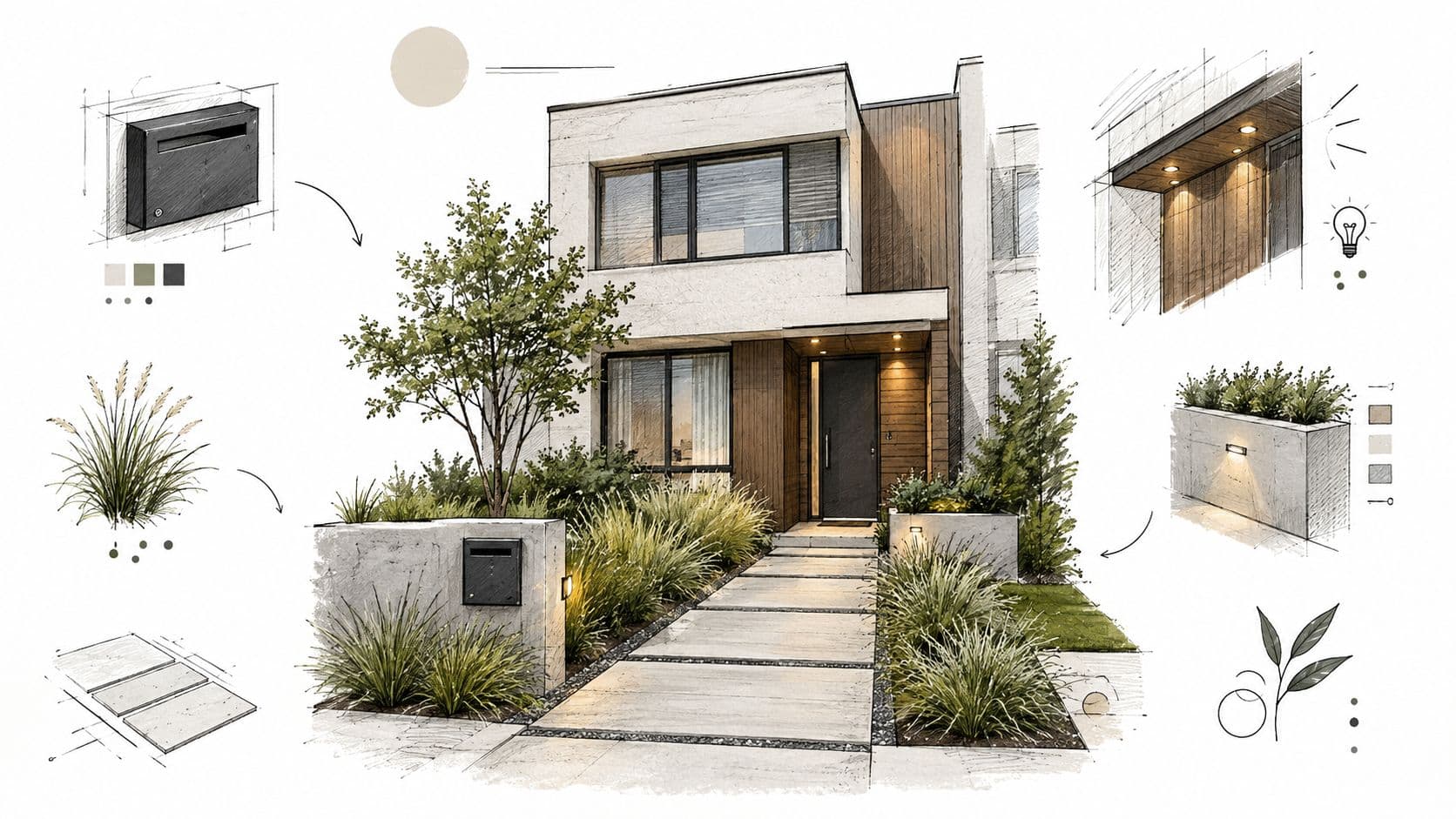
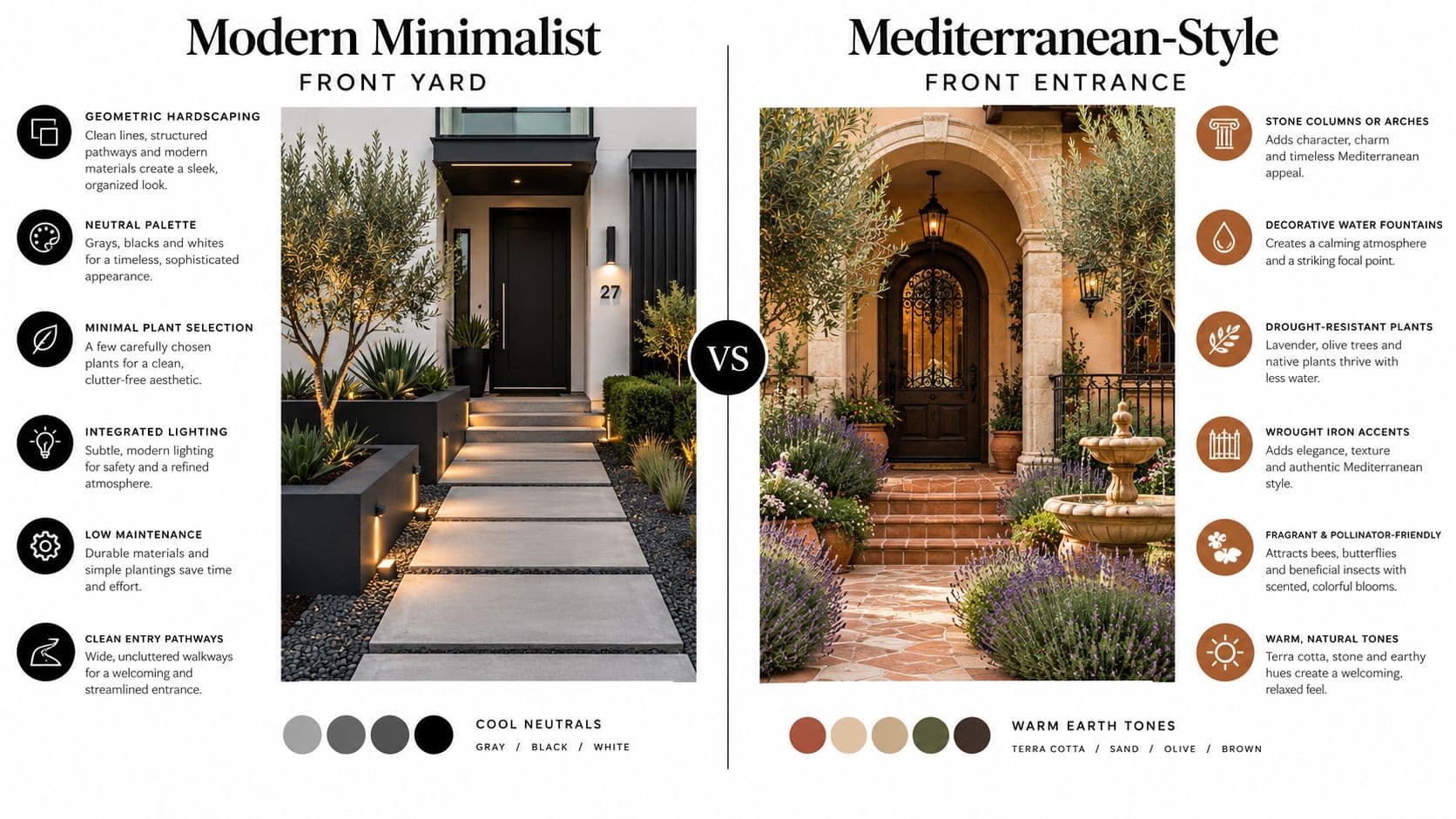
A modern minimalist frontage depends on editing, not emptiness. Use one clear path, a limited material palette, and a small number of plants with strong silhouettes. Large-format concrete, slate-look pavers, steel edging, and pale gravel can make a narrow frontage feel orderly because the eye reads fewer competing boundaries.
The entry path should be the first module. Lay it in a straight line if the architecture is formal, or use a slight offset if the front door sits away from the sidewalk. Keep the planting bed broad enough to look intentional, rather than leaving thin leftover strips beside the paving. A pair of ornamental grasses, a compact evergreen, or a single Japanese maple can provide the focal point without turning the frontage into a collection.
Keep the hardscape from becoming severe
Hardscape-heavy designs look spacious at first, but too much paving can make the entrance feel hot, bare, or institutional. Soften the geometry with fine-textured grasses, a low groundcover, or a broad mulch bed. Warm architectural lighting also helps. Aim the light at the path, mailbox, and focal plant instead of flooding the entire facade.
Urban townhouses in Brooklyn might suit slate-colored pavers and compact grasses, while a Denver modern townhome may work better with architectural xeric plants. In a San Francisco Bay Area development, concrete and steel can be balanced with climate-adapted planting.
Use OutdoorBrite's AI front yard design to test whether the path, bed edges, and lighting feel balanced in your actual frontage. The tool is most useful here when you compare restrained versions rather than adding more features.
2. Mediterranean-Style Front Entrance
A Mediterranean entrance gives a townhouse personality through warm materials and repeated forms. Start with a terra cotta, sandstone, or warm porcelain accent near the door. Then add a simple path, two substantial containers, and one sculptural element, such as an urn, basin, or compact fountain.
The style works best when plants are grouped by water needs. Place drought-adapted herbs and flowering plants together in the sunniest bed, while containers near the door can hold seasonal color or plants that need more regular attention. Lavender, rosemary, thyme, and climate-suitable ornamental grasses can create the silver-green texture associated with Mediterranean gardens, but local conditions should decide the final plant list.
Make the entrance feel layered, not crowded
Use containers at different heights to establish depth without expanding the planted footprint. A tall narrow pot can frame the door, while a lower bowl can sit beside the path. Keep the material consistent, even if the plant forms vary. Too many pot colors, paving patterns, and flower tones will make a compact frontage look busy.
Scottsdale townhomes might combine lavender borders with stone-colored paving, while a Santa Barbara townhouse can support a richer mix of warm masonry and drought-tolerant planting. In Las Vegas, the same visual language needs desert-adapted plants and careful irrigation.
The trade-off is maintenance. A fountain introduces sound and focus, but it also needs cleaning and equipment access. If that upkeep doesn't fit your routine, use a dry urn or sculptural stone instead. OutdoorBrite's style concepts can help you compare warm tones, containers, and entry proportions before installation.
3. Low-Maintenance Xeriscape Design
Xeriscaping isn't “replace grass with rocks.” A successful townhouse xeriscape reduces irrigated turf, groups plants by water demand, and gives every small section a role. Use a defined path, a planted bed with climate-suitable species, mulch or gravel, and irrigation that delivers water where roots need it.
The water-saving case is strongest when turf removal is paired with thoughtful coverage. A Southern Nevada Water Authority conversion study found that replacing turf with xeriscape reduced annual residential water use by about 30% on average, equal to roughly 96,000 gallons per household, with savings of 55.8 gallons per square foot each year. The findings are detailed in the Southern Nevada Water Authority xeriscape study. The same source summarizes related research showing that well-designed residential outdoor design changes can reduce water use by up to 54%, while Xeriscape applications across seven Colorado Front Range cities produced savings ranging from 18% to more than 50% compared with controls.
Build the kit around hydrozones
Put plants with similar moisture needs together. A dry upper bed shouldn't drain into a thirsty container group, and a drip line shouldn't water bare gravel. Apply mulch where it fits the design, use decorative rock selectively, and check that the irrigation timer can be adjusted for seasonal weather.
Denver townhomes can use native prairie plants with grasses and seed heads. California Bay Area frontages may suit native oak forms and poppies, while Arizona communities often need a more mineral ground plane and highly heat-tolerant planting. Texas townhomes can combine native shrubs with sedums where drainage permits.
Practical rule: Reduce the area that needs regular irrigation before you spend more on sophisticated irrigation equipment.
A gravel garden is low maintenance only when its edges are clear and weeds are removed early. If you need a firmer, more formal walking surface, compare permeable pavers with other low-maintenance decking materials as part of the overall outdoor plan.
4. Japanese Zen Garden Front Yard
A Japanese-inspired frontage works best when open space does more work than planting. Start with a quiet ground plane of gravel, stone, moss, or clipped groundcover, then add one specimen plant whose form can be seen from the entry path and sidewalk. This modular kit uses fewer materials, but each edge and junction must be finished carefully.
A Japanese maple can anchor a Portland townhouse when climate and exposure suit it. In the San Francisco Bay Area, raked gravel, sculptural stones, and restrained evergreen planting can form a compact composition. Seattle-area homes may support mossy textures and stone paths, provided drainage and shade conditions allow them.
Use asymmetry with control
An offset arrangement usually gives a narrow frontage more breathing room than matching beds. Set the specimen plant to one side, angle stones toward the door, and keep an intentional open area beside the sidewalk. Check the view from the street and from the front step. If the open area reads as leftover space, strengthen its edge with a clean gravel boundary or a single low groundcover.
Select plants for bark, branching, foliage, and seasonal form rather than flowers alone. Greens, grays, and earth tones keep the kit restrained, while repeated stone sizes help it feel coherent. A small recirculating water feature adds sound, but it requires cleaning, power, and winter planning. A dry stone basin can provide a similar focal point with less equipment.
Use low, directed lighting to reveal a trunk, stone edge, or path. Bright fixtures flatten shadows and can disturb the calm effect. Before buying materials, compare layouts with OutdoorBrite's AI garden design generator, testing more open space, fewer plants, or a different stone arrangement against the townhouse footprint and budget.
5. Cottage Garden Front Porch Entry
Cottage planting can make a townhouse feel welcoming, but the informal look still needs a framework. Define the path first, then build the bed around it with taller plants behind shorter edging plants. A trellis, porch post, or narrow arbor can provide the vertical layer that a small frontage lacks.
New England townhouses may suit climbing roses, perennial borders, and soft flower colors. Philadelphia historic homes can use heritage-inspired planting near a stoop, while a Canadian city townhouse might combine a British-style mix with plants that tolerate its local winter. The exact species matter less than matching light, soil, and winter conditions.
Let abundance stop at the path edge
The main risk is visual sprawl. Plants that lean across the walkway, hide the house number, or block a window quickly turn charm into obstruction. Repeat a small group of plants instead of buying one of everything. Place fragrance near the door, where it can be noticed, and keep taller growth away from narrow circulation zones.
A practical cottage kit can include:
- Back layer: A climber on a permitted trellis, a compact shrub, or a narrow ornamental grass.
- Middle layer: Perennials with different foliage textures and flowering periods.
- Front edge: Low plants that define the bed without spilling into the walk.
- Entry detail: A bench, seasonal container, or small window box that can be edited easily.
Deadheading, watering, and seasonal cutting are part of the style. If you don't have time for regular attention, use a looser native planting scheme with strong seed heads instead of a high-flower cottage mix.
This short visual walkthrough can help you judge how layered planting behaves around a compact entry.
6. Contemporary Tropical Front Yard Oasis
Tropical design creates impact through large foliage, strong contrast, and controlled repetition. In a warm climate, place one architectural plant where it frames the door, then use smaller companions to soften the base. Clean paving and simple containers keep the result contemporary rather than jungle-like.
Miami and South Florida townhouses can combine hibiscus with bird of paradise, while Hawaii island homes may use native and adapted tropical plants. In Austin or Southern California, tropical-looking plants may need careful placement, seasonal protection, or container culture. Hardiness and exposure should decide what stays in the ground.
Control the color and the water
Limit the flower palette so the foliage remains visible. Three or four dominant hues can be enough for a polished frontage. Use containers for plants that may need to move during cold weather, and group those containers where irrigation and maintenance remain convenient.
Large leaves create shade and texture, but they also shed, conceal walkways, and can outgrow a narrow frontage. Check mature spread before planting beside a shared wall or near a door swing. Avoid placing a thirsty tropical collection beside drought-adapted plants, because one group will receive the wrong irrigation schedule.
A contemporary tropical kit might use:
- Structure: One bird of paradise, palm-like plant, or broad-leaved focal specimen.
- Support: Fine-textured grass or fern-like companion planting.
- Hardscape: A straight path in concrete, porcelain, or large-format pavers.
- Portable color: Containers with hibiscus or seasonal foliage.
A timer can make watering more consistent, but automation doesn't fix poor zoning. Position the focal plants so they frame the entry rather than blocking the house number or narrowing the approach.
7. Native Plant and Pollinator-Friendly Front Garden
A native garden can look highly designed when its layers, edges, and sightlines are deliberate. Start with the view from the sidewalk. Keep the path and house number clear, then place local shrubs or grasses where they can establish a strong outline. Add flowering plants in repeated groups rather than scattering isolated specimens across the bed.
Midwest townhouses can use prairie forms such as coneflowers, black-eyed Susans, and blazing star. Northeastern entries may support native ferns, woodland plants, and shrubs in lower light. California gardens can combine poppies with buckwheat, while Pacific Northwest designs may use Oregon grape and native serviceberry where the site allows.
Design for wildlife without losing order
Leave some seed heads and leaf material through part of the year if local rules permit. Those remnants can provide shelter and seasonal structure, but a front yard still needs an edited edge. Remove invasive plants, protect the walkway, and keep growth away from utility access or shared structures.
Use a layered arrangement:
- Canopy or upper frame: A suitable small tree or tall structural plant.
- Shrub layer: Native evergreen or deciduous forms that define the bed.
- Herbaceous layer: Flowering plants selected for local pollinators.
- Ground layer: Low plants or mulch that reduce exposed soil.
Native plants aren't automatically maintenance-free. They need attention while roots establish, and they can fail if the site has compacted soil, reflected heat, or shade that doesn't match their needs. Ask a regional native plant society or local nursery for recommendations based on the actual growing conditions, not just a broad plant label.
A wildlife-friendly front yard works best when it reads as a garden first and unmanaged growth second.
OutdoorBrite can help you test the visual density of native groupings before you commit to a full bed. Compare a restrained version with a fuller planting plan, then make sure the selected plants comply with HOA and municipal rules.
8. Edible Landscape and Herb Garden Entry
An edible front yard can be attractive when productive plants occupy the same design roles as ornamentals. Herbs can line a path, leafy vegetables can fill a raised bed, and edible flowers can soften a container arrangement. The key is to make harvest access part of the layout rather than forcing visitors to walk through planting.
Urban townhouses in Brooklyn and Manhattan may rely on containers, rooftop growing areas, or narrow entry planters. Portland homes can integrate herbs into a food-forest-inspired composition, while San Francisco Bay Area properties may combine productive plants with ornamental shrubs. Austin frontages can use adapted herbs and vegetables where sun, heat, and water availability permit.
Treat raised beds as architecture
A raised bed should align with the path, facade, or boundary. Choose a material that relates to the house, such as stained wood, composite, brick, or masonry. Attractive supports for tomatoes, beans, or cucumbers can provide the vertical frame, but check HOA rules before adding trellises.
Purple basil, ornamental kale, chard, rosemary, sage, and compact peppers can contribute foliage, color, and texture. Group plants by watering needs and harvest timing so the bed doesn't develop awkward bare gaps. Succession planting can maintain interest, but it requires regular observation and replanting.
For smaller frontages, containers offer flexibility. Put culinary herbs near the door, where they're easy to harvest, and use a consistent container material to keep the arrangement cohesive. Check the exposure before choosing crops. A shaded townhouse entrance may support herbs suited to lower light, while a heat-reflective paved frontage can stress shallow containers.
Use the best free garden design software to test how edible beds, containers, and ornamental planting share the available space. A photo-based visual plan can reveal whether the productive elements feel integrated or merely added on.
8-Style Townhouse Front Yard Comparison
| Style | Implementation Complexity 🔄 | Resource & Maintenance ⚡ | Expected Outcomes ⭐ / Impact 📊 | Ideal Use Cases 💡 | Key Advantages ⭐ |
|---|---|---|---|---|---|
| Modern Minimalist Front Yard | 🔄🔄, precise hardscaping; may need pro install | ⚡⚡, low ongoing maintenance; medium upfront cost | ⭐ High-quality, sophisticated look · 📊 Strong curb appeal | Townhouses with limited acreage; modern architecture | Clean, low-maintenance, upscale curb appeal |
| Mediterranean-Style Front Entrance | 🔄🔄🔄, masonry, water features, layered planting | ⚡⚡, drought-friendly plants; moderate material/maintenance cost | ⭐ Inviting, timeless aesthetic · 📊 Distinctive character | Warm climates; owners wanting resort-like feel | Drought-tolerant, fragrant plants, strong identity |
| Low-Maintenance Xeriscape Design | 🔄🔄, planning hydrozones & hardscape focus | ⚡⚡⚡, large water savings (50–75%); minimal upkeep | ⭐ Sustainable, functional · 📊 High ROI and water-cost reduction | Water‑scarce regions; eco-conscious townhouses | Major water savings; low long‑term maintenance |
| Japanese Zen Garden Front Yard | 🔄🔄🔄, requires design knowledge & composition | ⚡⚡, low ongoing care; periodic raking and upkeep | ⭐ Serene, refined aesthetic · 📊 High uniqueness and contemplative value | Small spaces; owners seeking a meditative entry | Calming atmosphere; strong design intent in compact yards |
| Cottage Garden Front Porch Entry | 🔄🔄, layered planting but flexible layout | ⚡⚡, seasonal upkeep (deadheading, refresh) | ⭐ Warm, welcoming charm · 📊 Strong seasonal curb appeal | Owners wanting romantic, pollinator-friendly displays | Abundant blooms, adaptable, high curb warmth |
| Contemporary Tropical Front Yard Oasis | 🔄🔄🔄, complex plant selection and layering | ⚡, higher water and care unless in warm zones | ⭐ Dramatic, high-impact look · 📊 Memorable visual statement | Warm climates or containers for colder areas; corner lots | Bold foliage, year‑round drama in suitable climates |
| Native Plant & Pollinator-Friendly Front Garden | 🔄🔄, requires regional plant knowledge | ⚡⚡⚡, low inputs once established; initial establishment period | ⭐ Ecological value · 📊 Supports biodiversity and wildlife | Eco-conscious homeowners; municipal/HOA green initiatives | Wildlife support, low long‑term cost, regulatory alignment |
| Edible Landscape & Herb Garden Entry | 🔄🔄, layout integration of productive elements | ⚡⚡, active seasonal maintenance; harvesting needs | ⭐ Functional and educational · 📊 Provides fresh produce | Urban growers, families, sustainability-focused owners | Fresh herbs/produce at the door; multifunctional design |
Build the Version You Can Maintain
Start with one focal point at the entry. That might be a Japanese maple, a sculptural container, a pair of restrained evergreens, a flowering trellis, or a distinctive stone element. The focal point should be visible from the sidewalk without blocking the door, house number, mailbox, or an accessible route.
Next, define the path. A path gives the frontage direction and makes even a small bed feel intentional. Choose a material that fits the house and local drainage conditions. Concrete may offer a clean modern line, while brick, stone, gravel, or permeable pavers can support cottage, Mediterranean, Zen, or xeriscape character. Avoid creating a complicated route that steals space from planting or makes snow, leaves, and weeds harder to manage.
Select plants for the actual site, not a mood board. Note sun exposure at different times, reflected heat from paving, shade from attached buildings, soil depth, drainage, and available irrigation. A plant that thrives in a broad regional category may still fail in a narrow strip beside a shared wall. Choose mature forms carefully, especially where roots, branches, or irrigation could affect neighbors.
Add one vertical or container layer. A trellis, columnar shrub, narrow tree, tall grass, window box, or stacked container arrangement can create height without consuming much ground area. This is also where you can address sightlines. Use screening selectively, because a dense barrier at the sidewalk can make the entry feel closed and may conflict with HOA rules. A partially open frame often gives better privacy without turning the frontage into a wall.
Finish with lighting or a budget-friendly material upgrade. Warm path lighting can improve nighttime orientation, while fresh mulch, a crisp bed edge, repaired paving, or a coordinated container can make the entire arrangement look more resolved. Lighting should highlight circulation and key forms, not create glare into neighboring windows.
Compatible modules often outperform a rigid single-style design. Try minimalist hardscape with native plants, Mediterranean containers with xeriscape groundcover, or a Zen composition with shade-tolerant local species. Before installation, check HOA approval requirements, municipal visibility rules, drainage constraints, utility access, and any shared-boundary responsibilities.
Finally, photograph the front yard and test the arrangement in OutdoorBrite before purchasing plants, pavers, containers, or other materials. Compare the design from the sidewalk, the front door, and the neighboring sightline. The version you can maintain, access, and live with will create better curb appeal than the most elaborate concept you can't keep in scale.
Upload a photo of your townhouse frontage to OutdoorBrite, choose from styles such as modern, cottage, Mediterranean, tropical, Japanese zen, and xeriscape, and compare realistic concepts for the actual entry path and planting area. Refine the elements before buying materials, then use the selected concept as a practical starting point for your HOA submission or installation plan.
See your yard reimagined
Start creating