8 Tuscan Landscaping Designs for Every Yard
Explore 8 Tuscan landscaping designs with stone, cypress, pergolas, water features, and climate-smart planting ideas for yards of every size.
Tuscan character doesn't come from planting one olive tree beside a weathered urn. It comes from coordinated decisions: warm stone, restrained geometry, vertical accents, layered foliage, and outdoor rooms that connect naturally to the house. That design language has deep roots. Leon Battista Alberti's 1452 work De re aedificatoria is cited as a catalyst for the Renaissance revival of gardening in Tuscany, and by the 16th century, Tuscan villas had become models for formal garden design across Europe (Italian garden history).
The eight Tuscan landscaping designs below treat the style as a set of adaptable systems rather than a collection of attractive photographs. Each composition weighs visual impact against maintenance, climate fit, scale, drainage, irrigation, construction risk, and the substitutions that make the look work outside a Mediterranean climate. A compact courtyard needs a different strategy from a sloped suburban yard, and a cold, wet garden can't just copy a Tuscan estate plant for plant.
Before buying trees, pavers, or a fountain, use OutdoorBrite's AI front yard design to test ideas on a photo of your own property. It's also sensible to compare the concept with advice from Sacramento outdoor living experts before construction begins.
Table of Contents
- 1. Cypress-Lined Driveways and Pathways
- 2. Gravel and Crushed Stone Courtyards
- 3. Tuscan Stone Paving and Hardscape Patterns
- 4. Tuscan Pergolas and Vine-Covered Arbors
- 5. Formal Herb and Vegetable Gardens
- 6. Native and Mediterranean Drought-Tolerant Plantings
- 7. Tuscan Water Features and Pools
- 8. Stone Terracing and Retaining Walls
- Tuscan Landscaping Designs: 8-Point Comparison Guide
- Scale the Look to Your Climate and Budget
1. Cypress-Lined Driveways and Pathways
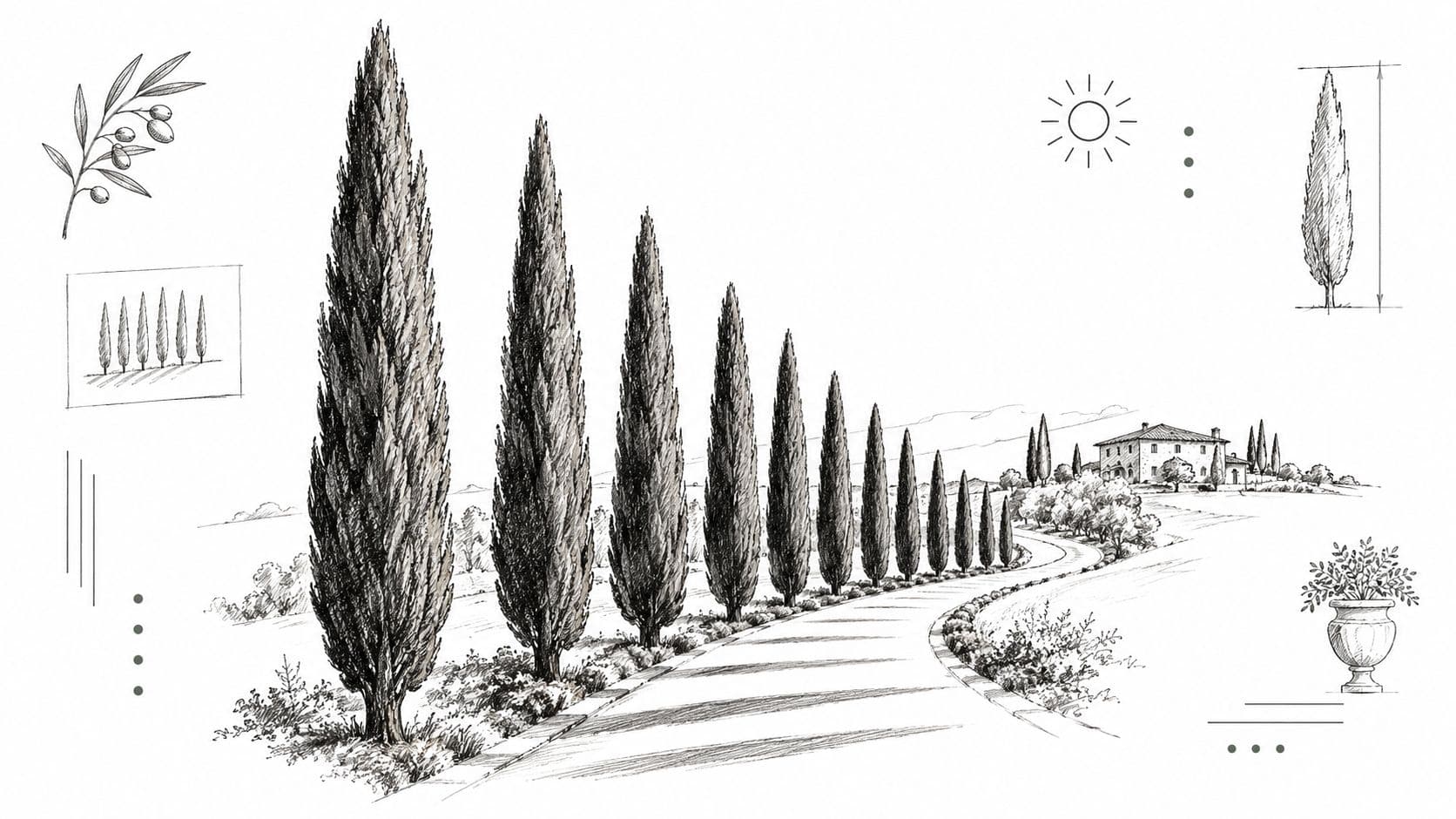
A row of narrow evergreens can establish Tuscan identity faster than almost any decorative accessory. Italian Cypress creates a strong vertical rhythm along a driveway, garden path, or boundary, drawing the eye toward an entry, villa façade, gate, or distant focal point. The effect works because the trees organize movement as well as decoration. They turn an otherwise ordinary route into a deliberate arrival sequence.
The classic reference is the formal approach associated with Italian villas, including gardens such as Villa d'Este in Tivoli. In North America, the same composition appears around Mediterranean estates in Napa Valley, Sonoma County, San Diego, and other warm regions. The visual formula is simple, but the planting conditions aren't. Cypress dislikes persistently wet soil, poor drainage, and sites where strong wind constantly stresses tall, narrow growth.
Adjust the rhythm to the property
Tight spacing creates a formal screen, while wider spacing gives each tree room to read as an architectural accent. Don't force a rigid avenue into a small front yard. On a compact lot, a short group near the gate or porch often looks more convincing than a full-length line that overwhelms the house.
Use odd-number groupings where the layout is informal, especially near a bend or planting bed. Perfect symmetry suits a strongly axial driveway, but a looser arrangement can feel more natural beside a winding path.
Practical rule: Test the mature vertical mass, not just the newly planted trees. A design that looks elegant at installation can become crowded when the canopy and root systems develop.
Prepare drainage before planting. In cooler regions, spring installation gives plants time to establish before winter. Where Italian Cypress isn't reliable, investigate columnar junipers or other narrow evergreens suited to the local climate. The substitution should preserve the vertical silhouette while respecting frost, wind, soil, and water conditions.
2. Gravel and Crushed Stone Courtyards
Tuscan courtyards often feel refined because their simplicity is controlled. A warm gravel surface, a shaded table, clipped edging, and one strong focal point can create a complete outdoor room without covering the entire yard in expensive masonry. Gravel also allows rain to move through the surface, although it still needs a stable base, thoughtful grading, and containment at the edges.
The best version isn't a random layer of stones scattered between plants. Establish a clear shape first, then define the perimeter with stone, steel, low hedging, or another durable edge. A courtyard at Villa Gamberaia in Settignano offers the kind of ordered garden-room logic that translates well to residential settings, while contemporary Mediterranean properties in Santa Barbara or Montecito often use warm gravel to soften more substantial architecture.
Build a surface that stays usable
Choose the aggregate according to how people will use the space. Decomposed granite can provide a relatively firm walking surface when installed and compacted correctly. Marble chips create a brighter, more decorative finish, but loose angular stone may be less comfortable beneath dining furniture or bare feet. Rounded pebbles can shift under chairs and are usually better as accents than as the main surface.
A shallow, consistent installation is easier to maintain than an overly deep loose bed. Weed suppression fabric may reduce maintenance, but it won't replace edging, occasional raking, or removal of windblown organic matter.
- Contain the aggregate: Use a crisp boundary so gravel doesn't migrate into lawns, drains, or planting beds.
- Shape the grade: Direct surface water toward planted areas or an approved drainage route rather than toward the house.
- Plan the focal point: A fountain, mature container, specimen tree, or sculptural urn can anchor the courtyard.
- Accept seasonal work: Raking, topping up displaced material, and removing weeds remain part of the maintenance plan.
The composition suits a compact patio especially well. In a large yard, however, a gravel field without shade, seating, or planting layers can look unfinished. Use patio design ai to compare aggregate colors, furniture placement, and planting density on the actual courtyard before ordering materials.
3. Tuscan Stone Paving and Hardscape Patterns
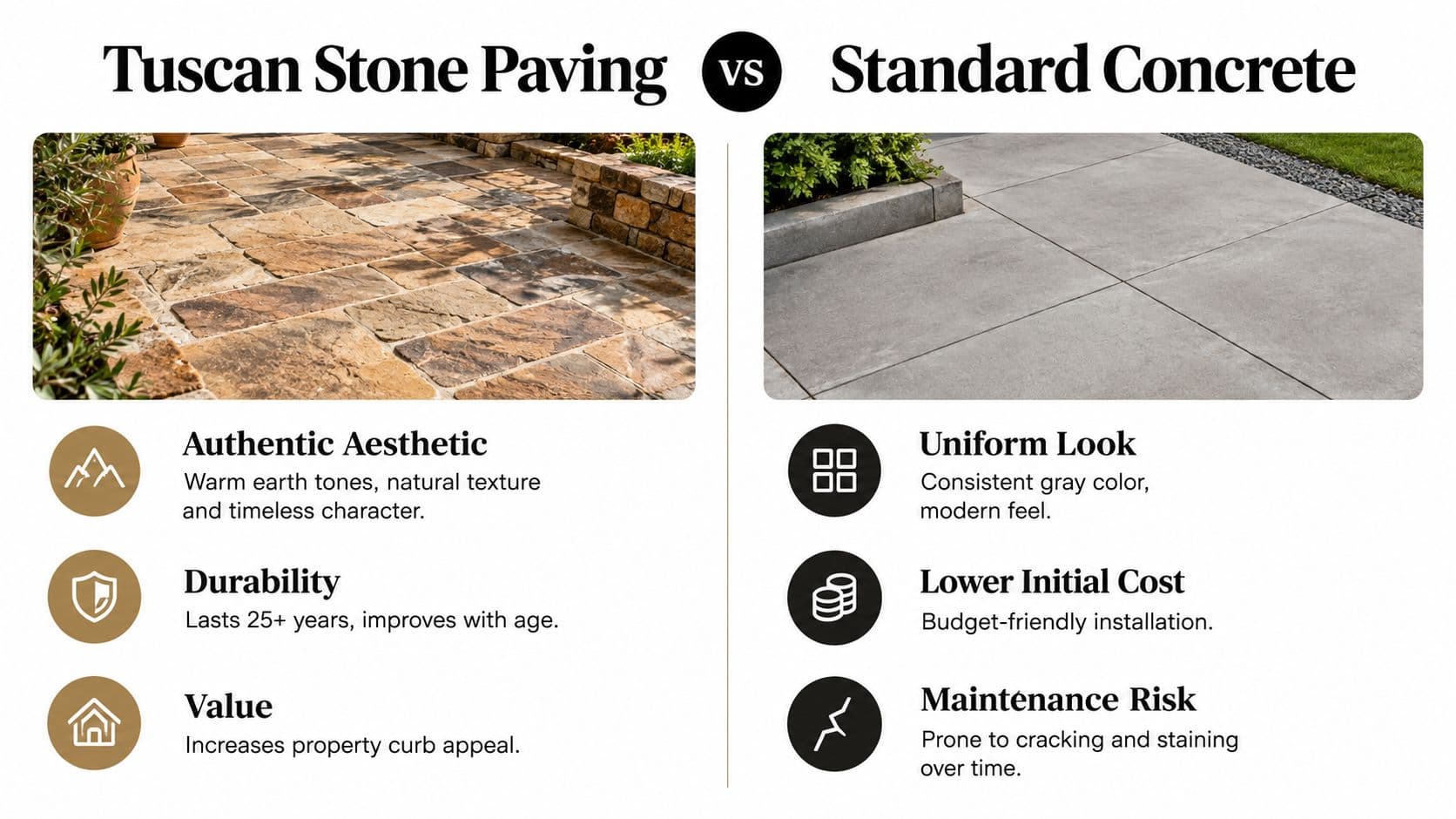
Tuscan paving succeeds when its material, pattern, and setting work as one composition. Travertine, limestone, and warm flagstone give paths, steps, terraces, and dining areas a grounded connection to the villa. Cream, honey, ochre, and rust tones introduce variation without making the surface appear manufactured. The layout must also support circulation, furniture, drainage, and access.
Start with the yard's scale and the building's proportions. A piazza-style patio suits stucco, timber details, terracotta, and low stone walls, while a restrained pattern can bring warmth to a newer house. Slate provides cooler tones, but may weaken the sun-baked character associated with Tuscan planting and masonry. In a compact space, larger paving units can reduce visual clutter. Broad yards need enough joints, planting, or changes in direction to avoid an empty stone field.
Build the foundation around use
The visible stone receives attention, yet the compacted base controls long-term stability. Excavate according to soil conditions and expected loads, install the appropriate gravel foundation, compact the bedding layer, and set a fall that carries water away from buildings. Settlement and ponding will undermine even a carefully chosen pattern.
Permeable joints can soften the appearance and reduce the impression of a sealed slab where the paving system and site allow them. They still depend on sound construction and periodic maintenance. Sealing can protect color, although a glossy coating usually looks less convincing than stone that develops a restrained patina.
Choose details that connect the hardscape to its surroundings:
- Match the stone to the architecture: Warm limestone and travertine reinforce a sunlit Mediterranean palette.
- Use local material when practical: Regional stone can reduce transport and help the work belong to its setting.
- Employ skilled installation: Complex patterns, steps, and irregular flagstone require experienced masons.
- Integrate the edges: Planting, gravel, and low ground cover can soften transitions and clarify circulation.
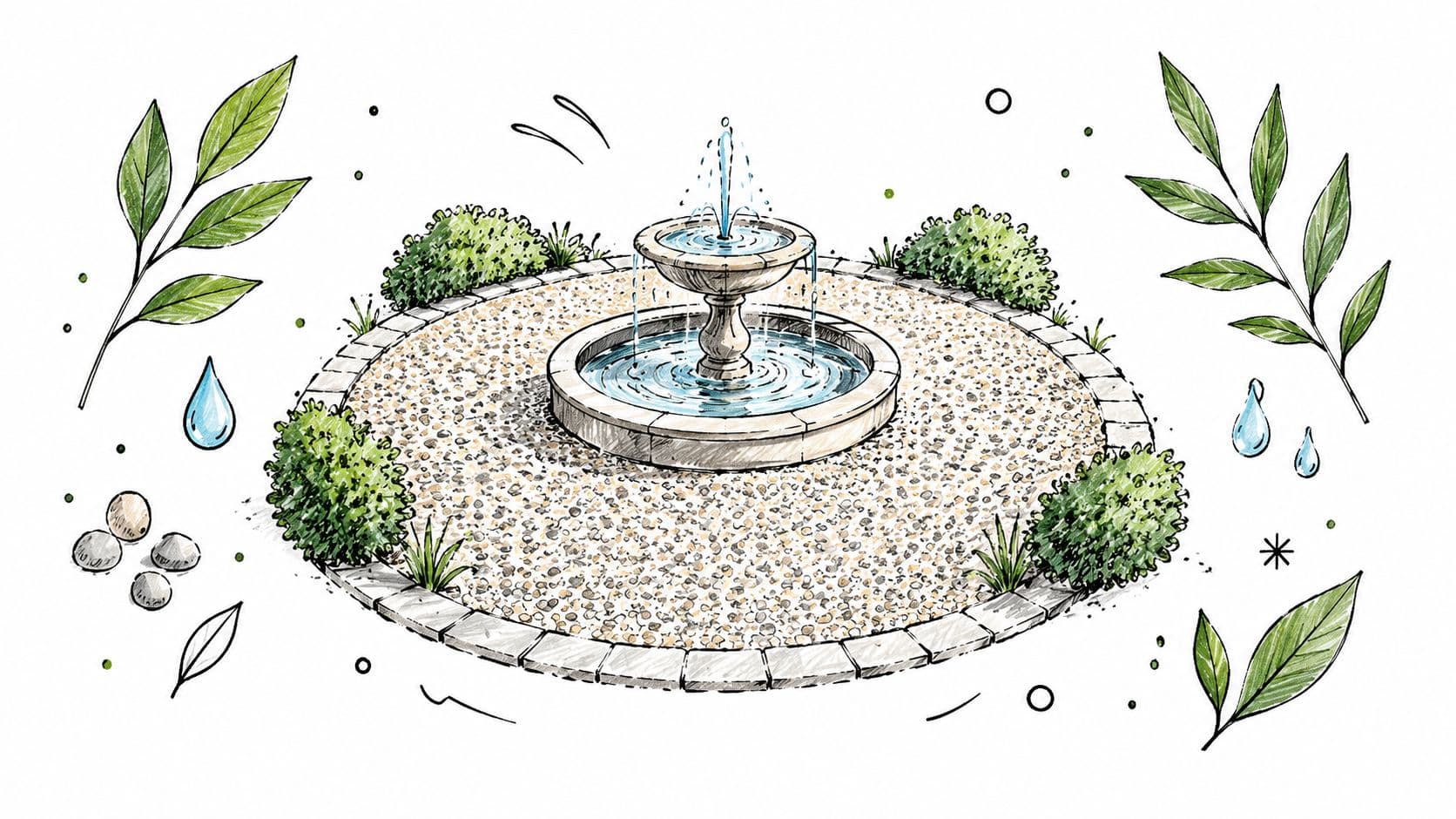
A central fountain gives a paved area a destination and a focal point. Test stone color, paving geometry, planting borders, and fountain placement with garden ai design before ordering materials. For projects combined with broader exterior home improvements West London, coordinate construction levels and drainage before the paving is installed.
4. Tuscan Pergolas and Vine-Covered Arbors
A pergola succeeds when it creates a useful room, not when it functions as a freestanding prop. Regular beams filter light, establish an overhead ceiling, and support vines that gradually connect the structure to the surrounding planting. Place one beside a kitchen for outdoor dining, along a route between the house and pool, or at the end of a path as a destination.
Grape vines give the structure an agricultural reference and can provide fruit, while wisteria supplies fragrance and a heavy flowering display. Climbing roses add color without creating the same dense canopy, and clematis can suit smaller structures or cooler conditions. Every vine changes the maintenance profile. Wisteria needs decisive pruning and a strong frame, grape vines need seasonal management, and roses bring their own disease and deadheading concerns.
Design the structure around shade
In a hot climate, orient the pergola to intercept harsh afternoon sun. In a cooler or cloudier region, avoid placing it where the structure blocks the limited light available to the house or key planting beds. Wind exposure matters too. A vine-covered canopy catches more wind than an empty frame, so posts, connections, and anchoring need to suit the site rather than a catalog photograph.
Keep the proportions related to the building. Oversized posts and beams can dominate a small patio, while a light arbor may disappear beside a broad terrace. Leave enough clearance for people, furniture, pruning, and maintenance access.
A vine is a long-term structural load, not a seasonal decoration. Choose the support system before you choose the plant.
Provide irrigation during establishment, particularly while roots are spreading through compacted or newly graded soil. Pruning is part of the design, not an afterthought. Use OutdoorBrite's pergola element to compare placement, scale, and eventual vine coverage against the actual house and yard before construction.
5. Formal Herb and Vegetable Gardens
The Tuscan kitchen garden combines order with usefulness. Geometric beds, gravel paths, low edging, and a central feature create a small formal composition, while rosemary, thyme, oregano, basil, parsley, and seasonal vegetables supply the practical reason for maintaining it. This arrangement works beside a kitchen, near an entertaining terrace, or at the transition between ornamental beds and a productive garden.
Renaissance garden traditions favored strong geometry, but farmhouse gardens needed efficient access and easy harvesting. The most successful residential version respects both. Beds should be narrow enough to reach from the path without stepping into the soil, and paths should remain firm enough for watering, harvesting, and routine maintenance.
Separate plants by water demand
Mediterranean herbs generally prefer excellent drainage and less frequent watering once established. Basil and parsley need a different moisture regime, especially during hot weather. Grouping them together because they look attractive can create a watering problem, with one group receiving too much or too little.
Raised beds help define soil and drainage, but they also dry faster than ground-level beds. Use untreated timber, stone, or suitable metal edging, and avoid materials that may leach unwanted substances into edible soil. Drip irrigation keeps water near the root zone and reduces the temptation to water the whole path.
A central sundial, small fountain, birdbath, or stone seat gives the geometry a visual destination. Gravel paths also make the structure legible from a window above, which matters when the garden is part of the overall view rather than only a place to work.
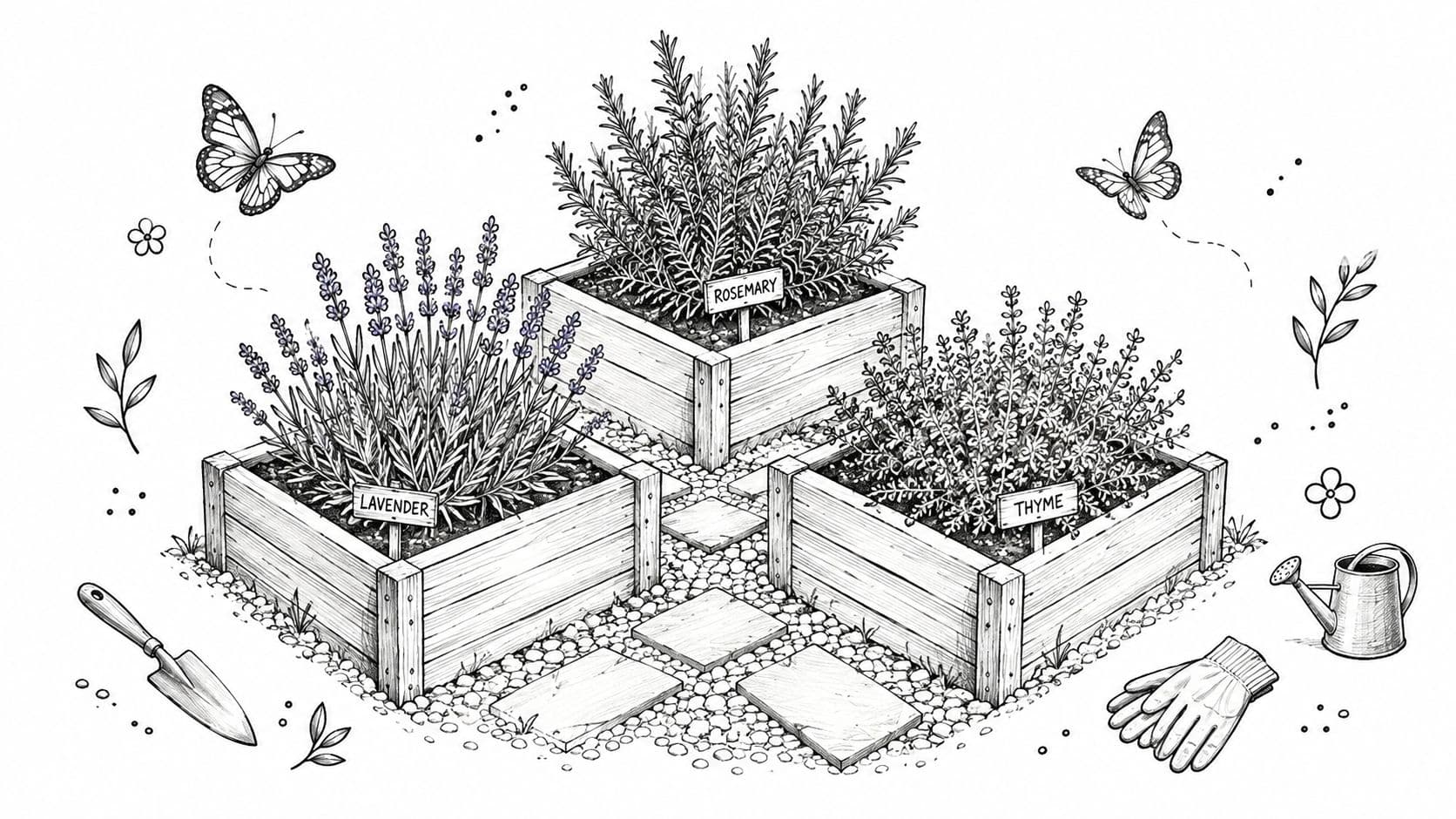
Keep the palette disciplined. Too many bed shapes, edging materials, or unrelated ornaments weaken the Renaissance influence. For a first installation, build a modest set of modules, establish irrigation, and expand only after you understand the maintenance rhythm.
6. Native and Mediterranean Drought-Tolerant Plantings
A Tuscan planting succeeds through relationships, not a catalog of imported species. Layer silvery foliage, aromatic herbs, evergreen structure, warm mineral surfaces, and repeated forms, then replace plants that cannot handle the local climate. The result keeps the design language while working as a buildable planting system.
In Mediterranean climates, locally adapted plant palettes can use less water than turf-heavy planting. A suburban Barcelona field study recorded summer demand of 30.1 ± 8.31 liters per square meter per week for Atlantic gardens, compared with 18.5 ± 9.4 liters per square meter per week for Mediterranean-adapted gardens, roughly 38% less water per square meter during peak season (the Barcelona field study).
Build the composition in layers. Use a structural layer of a narrow evergreen, small tree, or locally adapted shrub. Add flowering perennials and aromatic plants at mid-height, then use ground covers or seasonal plants to close gaps. The visual effect comes from repeated masses and changing heights, not from scattering individual specimens across the bed.
Set irrigation zones around water demand. An oasis zone can support thirstier plants near a house or seating area. A transition zone links it to the drier outer planting, while a drought zone uses species that tolerate longer intervals between watering. This arrangement protects the design from mismatched irrigation.
Climate substitution may be necessary. In colder or wetter regions, olive trees, Italian Cypress, lavender, and rosemary may require shelter or replacement. A native plant with gray-green foliage can preserve the intended color relationship. Check frost, wind, soil structure, drainage, water access, and microclimate before approving the palette. Regional guidance on best water-saving plants for DFW shows why plant selection should follow local conditions.
Allow resilient plants to establish with reliable water, then reduce irrigation as roots develop. Use mulch to limit evaporation, keeping it away from crowns and trunks. Leave room for mature spread, because a sparse new bed can become difficult to maintain when every plant reaches full size.
OutdoorBrite can help compare foliage texture, planting density, and mature-looking compositions. Confirm the final plant list with a local nursery or garden designer.
7. Tuscan Water Features and Pools
Water can anchor a Tuscan composition, but its scale and position must match the yard. A narrow courtyard may suit a wall fountain or shallow basin. A larger property can support a reflecting pool, swimming pool, or long axis of water that connects the house with a terrace or grove.
The Renaissance tradition used water as an artistic and practical garden element. The fountains of Villa d'Este show how strongly water can organize views and movement. Residential projects can apply the same principle at a smaller scale. A restrained basin with a stone surround often works well when it remains visible from the principal rooms and seating areas.
Start with the main viewpoints and circulation route. A large fountain crowded into a small courtyard creates sound, maintenance, and visual congestion. A small bowl loses presence beside a broad lawn or expansive terrace. Leave enough surrounding space for the feature to read as a focal point, while keeping paths clear and sightlines open.
The construction sequence matters. Resolve water circulation, electrical supply, drainage, cleaning access, and winter protection before installing paving or planting. Retrofitting plumbing through finished stone disrupts the composition and can limit equipment access. Select the pump for the intended flow, noise level, and basin design, then provide a discreet route for servicing it.
Match the detailing to the composition:
- Formal settings: Geometric basins, restrained stone, and axial placement reinforce order.
- Rustic settings: Irregular stone, quieter flows, and edge planting create a softer transition.
- Pool settings: Coordinate coping, paving, shade, planting, and safety access as one system.
- Small spaces: A reflective surface and controlled sound usually serve the yard better than heavy ornament.
Climate also changes the specification. Freeze protection, evaporation control, water availability, and local safety requirements can affect the feature more than its appearance. Test the proposed view from the kitchen, living room, entry, and main seating area. OutdoorBrite can help visualize scale and location before excavation, but the final plan still needs practical access for cleaning and repairs.
8. Stone Terracing and Retaining Walls
Terracing is where Tuscan landscaping becomes structural. On a slope, stone walls create usable garden rooms, stabilize changes in level, and give planting a sequence of horizontal bands. On a flat property, low retaining walls can still introduce architectural layers, but they shouldn't be added merely to imitate a hillside estate.
The historic model comes from the cultivated slopes and villa gardens of Tuscany, including the terraced character associated with Boboli Gardens in Florence. In contemporary residential work, similar strategies suit sloped properties in Sonoma County or Montecito. The wall material, cap detail, steps, planting, and drainage must work together or the result becomes a stack of disconnected construction elements.
Treat every wall as infrastructure
A retaining wall holds back soil and water. Slope stability, foundation conditions, surcharge from buildings or vehicles, and local regulations may require an experienced grounds engineer or retaining-wall specialist. Drainage behind the wall is essential. Gravel backfill, suitable perforated pipe, outlets, and a controlled discharge route protect the structure from hydrostatic pressure.
Build terraces in phases if the complete project exceeds the immediate budget. Start with the level that creates the most useful space, then connect future work to the same circulation and drainage logic. Avoid planting thirsty species above walls where leaks or uncontrolled runoff can threaten the structure.
Use locally available stone where possible, and allow it to weather naturally. High-pressure washing can strip the surface character that makes dry-stacked or softly mortared walls feel established. Plant each level with a mix of ground covers, perennials, shrubs, and small architectural accents suited to its sun and moisture conditions.
The economics can favor careful planting and surface selection. A 2026 study of urban green infrastructure reported that replacing lawn with a mixture of 47% biodiverse meadow, 36% shrubs, and 17% permeable inert surfaces reduced annual irrigation requirements by 53.4% and annual operating costs by 60.5%, with an estimated 2.7-year payback (the 2026 urban green infrastructure study). The study is municipal rather than a direct residential terracing case, so use it as evidence for the value of climate-adapted surfaces and planting, not as a promise for a particular home.
Tuscan Landscaping Designs: 8-Point Comparison Guide
| Landscaping Example | 🔄 Implementation Complexity | ⚡ Resource Requirements | 📊 Expected Outcomes | ⭐ Key Advantages | 💡 Ideal Use Cases |
|---|---|---|---|---|---|
| Cypress-Lined Driveways and Pathways | Moderate; requires careful spacing, drainage, and climate assessment | Medium initial cost; low maintenance after establishment | 📊 Strong Mediterranean character, privacy, and defined circulation | ⭐ Dramatic vertical accents, compact footprint, year-round foliage | Driveways, pathways, property boundaries, and formal entrances |
| Gravel and Crushed Stone Courtyards | Low to moderate; straightforward installation with edging and grading | Low to medium cost; periodic raking and annual replenishment | 📊 Flexible, well-drained outdoor gathering area with rustic appeal | ⭐ Affordable, permeable, easy to modify, and authentic-looking | Courtyards, seating areas, entertaining spaces, and tree surrounds |
| Tuscan Stone Paving and Hardscape Patterns | High; skilled masonry, site preparation, grading, and possible permits required | High installation cost; professional labor and periodic sealing | 📊 Durable, high-value outdoor living surfaces lasting 25+ years | ⭐ Timeless appearance, durability, design flexibility, and improved curb appeal | Patios, garden paths, plazas, pool surrounds, and luxury estates |
| Tuscan Pergolas and Vine-Covered Arbors | Moderate; requires structural planning, positioning, and vine support | Medium to high cost; ongoing pruning, cleaning, and wood care | 📊 Defined outdoor rooms with increasing shade and character over 2–3 years | ⭐ Adds architecture, shade, entertaining space, and planting opportunities | Patios, dining areas, seating zones, and garden transitions |
| Formal Herb and Vegetable Gardens | Moderate; needs geometric planning, raised beds, irrigation, and full sun | Medium setup cost; approximately 1–2 hours of weekly maintenance | 📊 Productive, attractive garden space with seasonal harvests and pollinator value | ⭐ Combines ornamental structure with food production and education | Kitchen gardens, family gardens, restaurant gardens, and entertaining spaces |
| Native and Mediterranean Drought-Tolerant Plantings | Moderate; requires climate matching, soil preparation, and staged irrigation | Medium initial cost; low water and maintenance needs after establishment | 📊 Lower water consumption and a sustainable Tuscan-style landscape within 2–3 years | ⭐ Efficient, climate-conscious, pollinator-friendly, and adaptable | Xeriscapes, arid regions, sustainable estates, and water-conscious gardens |
| Tuscan Water Features: Fountains and Pools | High; involves plumbing, electrical work, permits, and professional installation | High cost; ongoing water, energy, cleaning, and treatment requirements | 📊 Strong focal point, sensory appeal, cooling, and potential property-value gains | ⭐ Creates ambiance, movement, sound, and authentic Renaissance character | Courtyards, central gardens, pool areas, luxury estates, and resort landscapes |
| Stone Terracing and Retaining Walls | Very high; requires engineering, drainage planning, heavy materials, and permits in some cases | Very high installation cost; specialized labor and periodic structural maintenance | 📊 Converts slopes into usable garden levels while controlling erosion | ⭐ Combines functional grading, drainage improvement, and lasting visual impact | Hillside properties, vineyards, sloped yards, and terraced gardens |
Scale the Look to Your Climate and Budget
Tuscan landscaping designs work best when you copy the relationships, not the inventory. Warm stone should relate to the house. Gravel should support circulation and drainage. Vertical trees should frame an arrival or view. Planting should provide layers of texture, seasonal change, and a maintenance level the owner can sustain. A collection of unrelated Mediterranean objects won't create the same coherence.
Start with one defining structure or circulation move. On a small property, that might be a gravel courtyard with a compact fountain, a short cypress-inspired planting group, or a pergola beside the kitchen. Keep the number of materials limited, and let one focal point carry the composition. A courtyard can combine warm gravel, a stone basin, clipped edging, and aromatic planting without needing a large lawn or multiple architectural features.
A sloped yard needs a different sequence. Prioritize drainage and retaining conditions, then establish the most useful terrace and connect it to safe steps or a path. Add stone walls, drought-adapted planting, and a shaded sitting area over time. This phased approach protects the budget from being consumed by decorative finishes before the site is stable and usable.
Climate should guide every substitution. In a dry-summer region, Mediterranean plants and permeable surfaces can support lower irrigation demand when they're correctly grouped and established. The Barcelona evidence shows why adapted planting can outperform turf-heavy design, while the urban green infrastructure research suggests that changing both planting composition and surface treatment can affect operating costs. Those findings don't eliminate maintenance, and they don't transfer automatically to every residential site.
Reserve funds for the invisible work:
- Drainage: Grade, subsoil conditions, outlets, and retaining-wall drainage protect the visible design.
- Irrigation: Drip zones should follow plant water needs rather than treating the whole garden uniformly.
- Engineering: Slopes, walls, structures, and difficult soils may require professional assessment.
- Maintenance: Pruning, gravel care, irrigation checks, stone cleaning, and seasonal planting all have ongoing costs.
- Climate substitutions: Local natives and adapted cultivars may look less literal but often perform better.
Before requesting quotes, upload a photo of the yard to OutdoorBrite and test the proposed scale. Compare cypress-like vertical accents, pergola placement, stone and gravel tones, planting density, terrace levels, and the visibility of a fountain from the house. A realistic concept won't replace a site survey or construction drawings, but it can reveal whether the design feels balanced before you spend on materials, plants, or labor.
OutdoorBrite lets you upload a photo of your yard and create realistic garden concepts, including Mediterranean-inspired arrangements with courtyards, pergolas, pathways, planting beds, and water features. Visit OutdoorBrite to test your Tuscan landscaping ideas on the space you own before moving to quotes or construction.
See your yard reimagined
Start creating