10 Backyard Garden Ideas to Transform Your Space in 2026
Discover 10 stunning backyard garden ideas for any space, budget, or style. Get expert tips and visualize your dream garden with AI before you start.
You walk into the backyard with every intention of improving it, then stall at the first real decision. Keep some lawn or remove it. Grow food or focus on flowers. Build once and keep maintenance low, or accept a garden that asks for regular pruning, watering, and seasonal replanting. That uncertainty is where good ideas usually get buried under screenshots and vague plans.
A lot of homeowners are in the same position. Gardening is already a common part of home life in the United States, with broad household participation reported in these gardening statistics. The interest is established. The harder part is choosing a garden style that fits your yard, your budget, and the amount of upkeep you can sustain in July, not just in spring.
Budget shapes the plan more than inspiration does. Industry reporting noted strong interest in backyard upgrades and landscaping in 2026, with spending ranging from modest refreshes to larger installations, as noted earlier in the Alan's Factory Outlet trend report. That matters because the right backyard garden idea is not always the most dramatic one. It is the one that suits your light, soil, climate, and weekly maintenance habits.
If you need broader inspiration for patios, shade, and layout, the XTREME EDEALS INC. outdoor space guide is a useful companion. If your focus is planting design, edging, and bed performance, it also helps to read about selecting ideal mulch for gardens.
The ten ideas below are built to do more than spark inspiration. Each one gives you a practical direction you can test in your own yard with OutdoorBrite, so you can see how raised beds, native planting, containers, or a minimalist layout might look before you spend money on soil, gravel, stone, or lumber. That shortens the gap between a good idea and a plan you can trust.
1. Raised Garden Beds
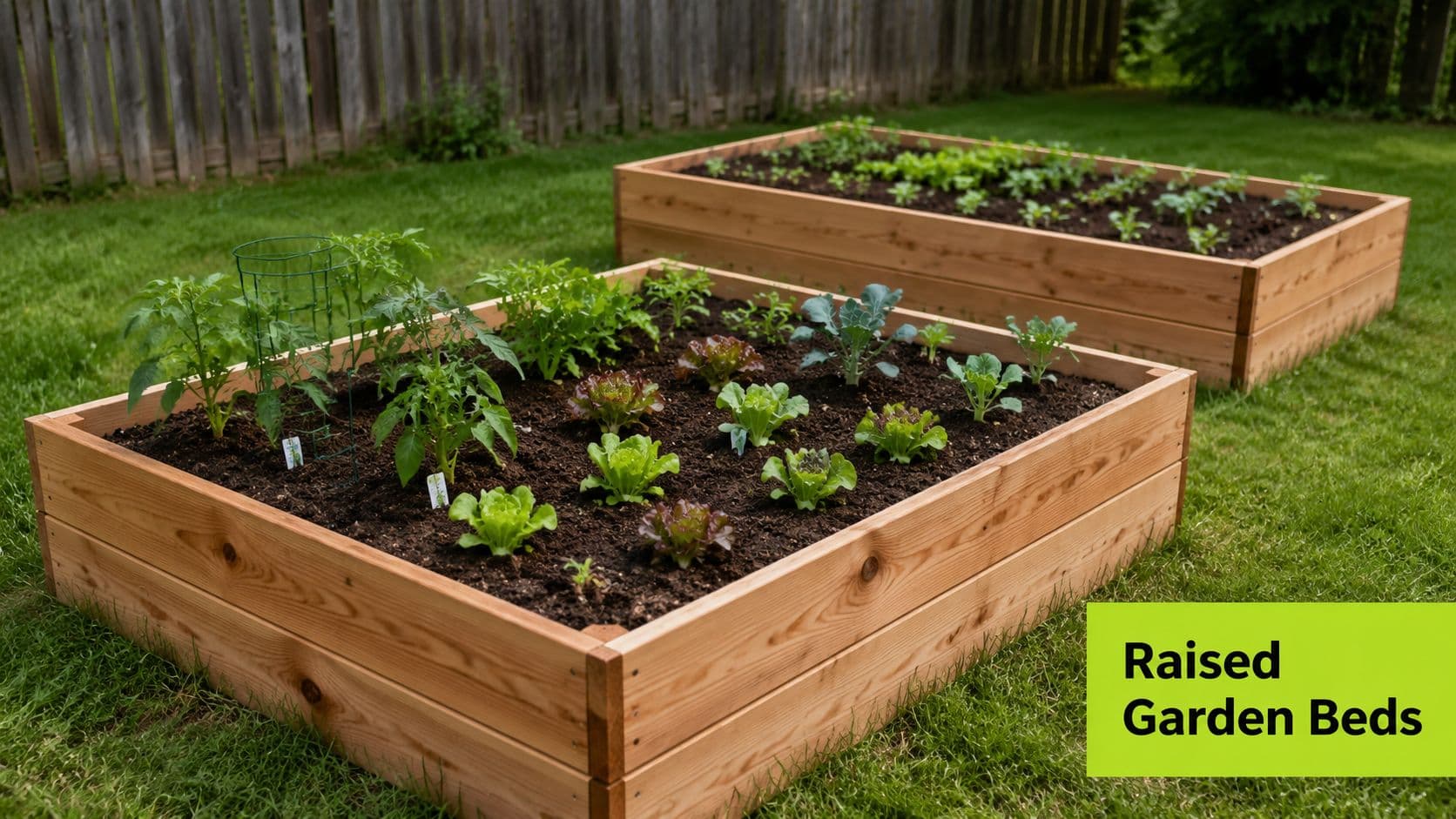
You step into the backyard after a rain and the same problem shows up again. The ground stays soggy in one corner, the soil is thin where you want vegetables, and the whole space feels scattered instead of planned. Raised beds fix that faster than almost any other garden move because they improve drainage, give you control over soil, and create a layout that reads clearly from day one.
Interest in raised beds has stayed high, as noted earlier, for a simple reason. They work in a wide range of yards, from suburban back lawns to narrow side yards and small patios. They also give beginners a cleaner starting point, which usually leads to better follow-through in midseason when watering, weeding, and harvesting start competing with everything else.
What works best
Material choice matters more than people expect. Untreated cedar is a reliable option for edible gardens because it holds up well and fits naturally into most backyard styles. Composite lasts longer in many cases, but the upfront cost is higher. Metal beds suit clean, modern designs and heat up quickly in spring, though that same heat can dry soil faster in hot climates.
Bed quantity matters too. Start with two or three beds and run them for a season before expanding. I have seen plenty of homeowners build a full kitchen garden grid in April, then realize by July that they created more watering and crop turnover than they wanted to manage.
A few layout rules prevent expensive mistakes:
- Prioritize sun over symmetry: Put beds where crops will get the strongest light, even if that shifts them away from the prettiest axis.
- Leave real working space: Paths should handle a hose, wheelbarrow, kneeling room, and harvest access without forcing awkward turns.
- Plan the base layer: Hardware cloth is worth adding if gophers, voles, or burrowing rodents are common in your area.
Practical rule: A raised bed should reduce friction. If access is tight, drainage is poor around the path, or irrigation feels awkward, the design needs adjustment before planting.
Prompt to visualize in OutdoorBrite
Raised beds are one of the easiest ideas to test visually before you buy lumber, soil, or gravel. Upload a photo of your yard to OutdoorBrite and try: “Add three cedar raised beds with gravel paths, black metal trellises, and a clean kitchen garden layout.”
Then test a second version with different finishes or spacing. That quick comparison helps you decide whether the garden should feel productive, formal, rustic, or more modern before you spend money. Finish details matter here, especially around paths and bed edges, so review this guide on selecting ideal mulch for gardens before you lock in the final look.
2. Native Plant Gardens
A native garden is often the smartest answer for people who want beauty without constant rescue work. If you're tired of replacing water-hungry plants or fighting disease every season, this is the reset.
The biggest mistake is treating “native” as a loose style instead of a local plant list. A prairie planting in the Midwest behaves differently from a coastal planting in California or a dry-garden mix in the Southwest. Use plants that belong to your region, then group them by sun and moisture needs.
Real trade-offs
Native gardens aren't always tidy right away. Early on, they can look sparse or wild compared with formal foundation plantings. They also require more editing in year one than many people expect, because you're guiding the spacing and balance before the planting fills in.
What they do well is long-term resilience. Once established, they usually ask for less irrigation, less fertilizer, and less fuss than imported ornamentals.
- Start with a small palette: Pick a handful of reliable species and repeat them.
- Reduce lawn strategically: Replace the hardest-to-maintain turf first, such as slopes, strips, and dry corners.
- Match the site accurately: Shade plants won't perform in reflected heat, and sun lovers won't bloom in deep shadow.
A good real-world use case is the side yard that bakes in summer and never looks happy with standard shrubs. Native grasses, flowering perennials, and a small regional tree often outperform a thirsty lawn strip there.
Prompt to visualize in OutdoorBrite
Try: “Transform this backyard into a regional native plant garden with layered grasses, flowering perennials, natural stone edging, and reduced lawn.”
3. Container Gardens
Container gardening is the fastest way to change a yard without committing to construction. It's also one of the best backyard garden ideas for renters, small patios, awkward corners, and anyone testing a style before spending more.
Use containers when the site itself is the problem. That could mean poor soil, too much pavement, invasive roots, or a landlord who won't approve permanent beds. Large pots can turn a blank patio into a planted room in an afternoon.
Where people go wrong
They buy pots before they know the watering burden. Small containers dry out fast. Decorative pots without drainage become root rot machines. Mixed arrangements also fail when one plant wants steady moisture and the next wants to dry between waterings.
Use high-quality potting mix, not dug soil. Group pots by water need, and use fewer, larger containers instead of many tiny ones if you want less maintenance.
A cluster of oversized planters usually looks more intentional than a scattered collection of small pots.
A practical example is a paved backyard with no planting beds at all. Use tall pots with evergreen structure along the fence, medium herb planters near seating, and one statement container by the back door. That gives you screening, fragrance, and harvest without tearing up hardscape.
If you want edible experiments beyond herbs and tomatoes, container growing can even extend to niche projects like how to grow mushrooms at home.
Prompt to visualize in OutdoorBrite
Try: “Add grouped terracotta and matte black containers with herbs, flowering annuals, and a small citrus tree around the patio perimeter.”
4. Pollinator Gardens
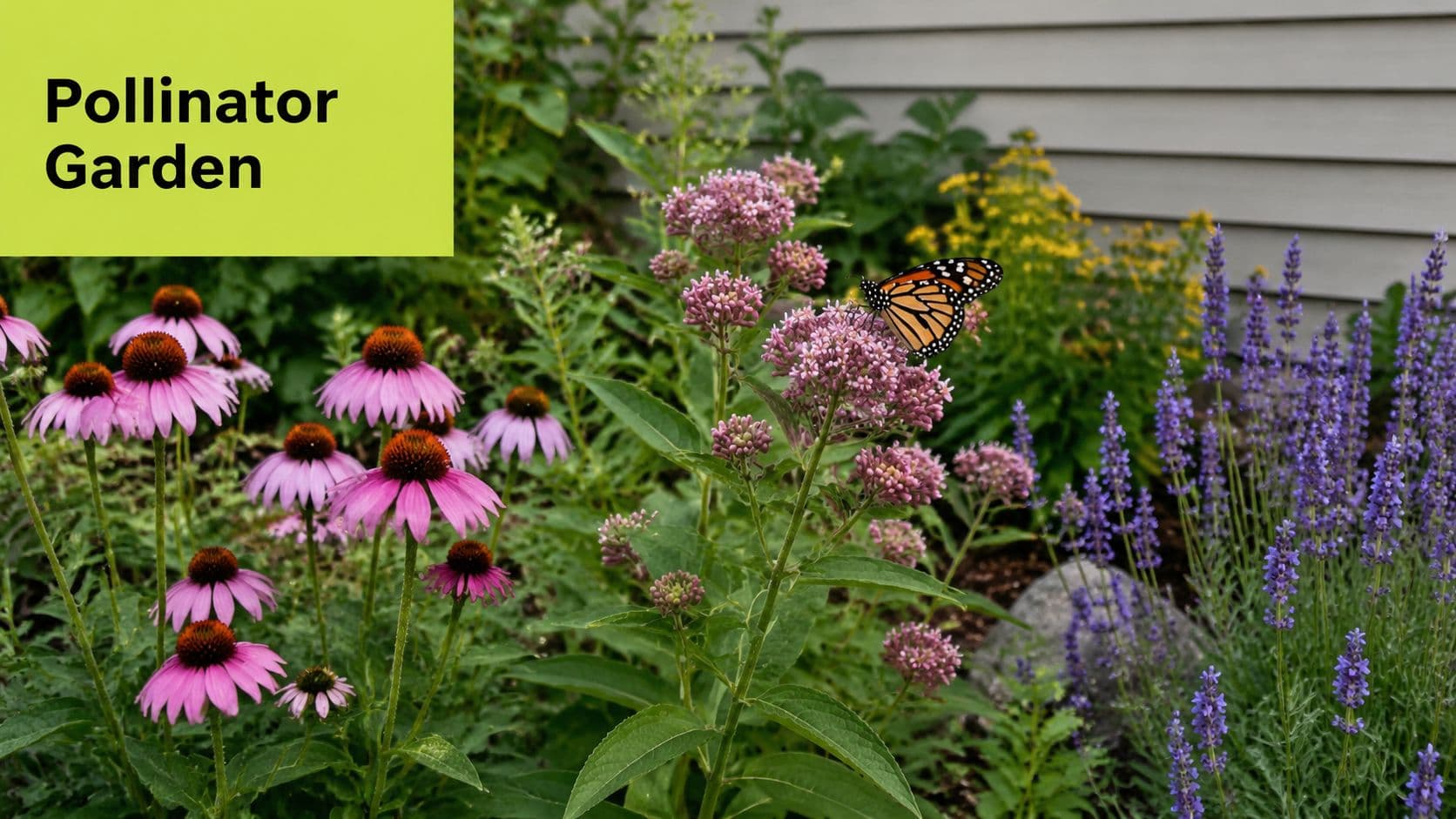
Pollinator gardens bring motion into the yard. Bees work the flowers, butterflies drift through, birds follow the seedheads. If a garden feels static, this style fixes that.
The best pollinator planting doesn't rely on one showy bloom period. It layers early, midseason, and late flowers so something useful is always happening. Native flowers usually perform best because local pollinators recognize and use them more reliably.
Keep it usable, not chaotic
Pollinator gardens can look messy if you skip structure. Anchor them with edging, repeated plant groupings, and a clear path. That tells the eye the abundance is intentional.
For small backyards, keep the pollinator zone close to seating or edible beds. You'll see more activity, and the garden will feel more connected to daily use.
- Plant in clusters: Larger groupings are easier for pollinators to find.
- Skip pesticides entirely: A pollinator garden and routine pesticide use cancel each other out.
- Add shallow water: A simple dish with pebbles helps more than people think.
A common suburban version is a fence-side border with milkweed, coneflower, bee balm, salvias, and grasses, plus a bench nearby. It's manageable, attractive, and far easier to maintain than a mini meadow dropped in the middle of the lawn.
Prompt to visualize in OutdoorBrite
Try: “Create a pollinator-friendly backyard border with native flowering perennials, soft paths, clustered blooms, and a small seating nook.”
5. Japanese Zen Gardens
A Zen-inspired garden works when you want calm more than abundance. It's less about collecting plants and more about editing space.
This style depends on restraint. Too many rocks, too many lanterns, or too many decorative accents quickly push it into theme-park territory. The strongest versions use gravel, carefully chosen stone, one or two focal plants, and empty space that lets the composition breathe.
Best use cases
Small enclosed yards do especially well with this approach. Courtyard corners, side patios, and compact backyards can feel larger when the layout is reduced to a few high-quality elements.
The challenge is maintenance discipline. Gravel needs raking, moss and groundcovers need boundaries, and every visible detail matters because there's nowhere for sloppiness to hide.
Designer's note: Minimalist gardens aren't lower effort by default. They simply shift the work from “many plants” to “precise upkeep.”
A real-world example is replacing a struggling mixed bed beside a modern patio with raked gravel, boulders, a clipped pine or cloud-pruned evergreen, and a simple bench. It often costs more upfront than mulch and perennials, but it stays visually quiet year-round.
Prompt to visualize in OutdoorBrite
Try: “Redesign this backyard corner as a Japanese Zen garden with raked gravel, sculptural stones, clipped evergreens, and a minimalist bench.”
6. Mediterranean Gardens
Mediterranean gardens are some of the most forgiving when the site is sunny and dry. They look good with a little weathering, which is exactly why they age well.
Think gravel, terracotta, aromatic herbs, silver foliage, and a seating area that feels warm instead of delicate. This isn't the right style for every climate, but in hot, exposed yards it often performs better than thirsty cottage-style planting.
The trade-offs that matter
People often overplant Mediterranean gardens. The style needs open space between plants, or it loses the clean, sun-baked character that makes it appealing. Rich mulch can also work against the look. Gravel usually fits better and helps keep the design crisp.
For cooler or wetter regions, borrow the style rather than copying it exactly. Use the color palette, pots, and hardscape language, then choose climate-appropriate plants with a similar feel.
- Use herbs as structure: Rosemary, thyme, sage, and lavender do double duty.
- Prioritize drainage: Wet feet ruin drought-adapted plants faster than dry spells do.
- Create one destination: A bistro set, bench, or pergola makes the garden livable.
A classic setup is a patio framed with terracotta pots, clipped herbs, pale gravel, and a warm-toned wall or fence. It feels finished without needing dense planting.
Prompt to visualize in OutdoorBrite
Try: “Apply a Mediterranean garden style with gravel groundcover, terracotta pots, lavender, rosemary, olive-toned foliage, and a shaded seating area.”
7. Vertical Gardens and Living Walls
When ground space is limited, go up. Vertical gardens are practical, but they only stay practical if the irrigation and weight are realistic.
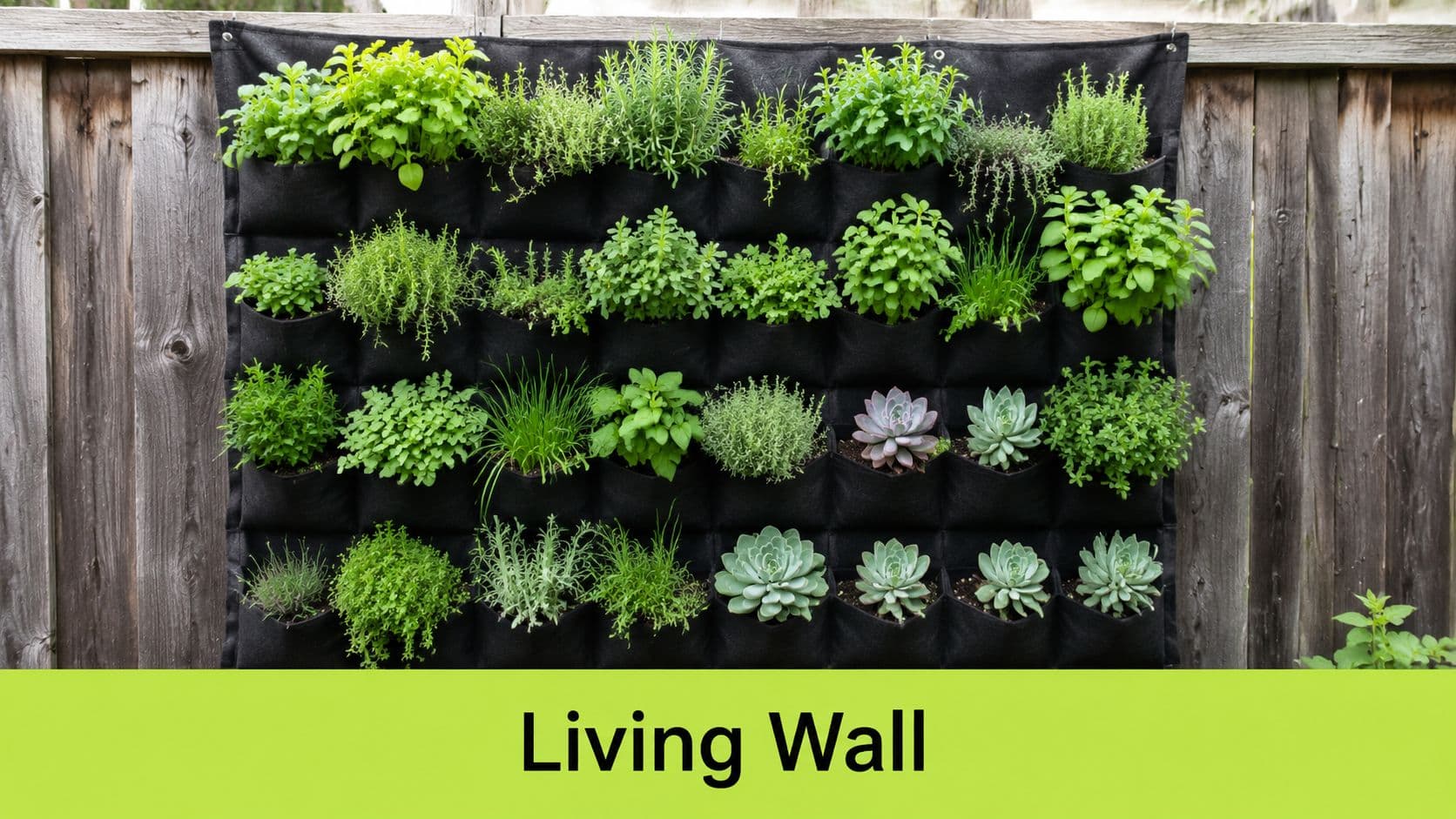
The simplest version is usually the best starting point. A trellis with climbers, espalier fruit, or hanging herb rails gives you vertical impact without the complexity of a full living wall. Fabric-pocket systems and modular wall panels can work, but they dry out quickly and need consistent monitoring.
Best for privacy and awkward shapes
This is one of the most useful fixes for narrow yards or leftover spaces. Guidance on awkward backyards often points to curves, terraces, and visual zone breaks, but shape-specific solutions are still underserved, especially for narrow lots and odd corners, as noted in Houzz's discussion of oddly shaped backyards. A vertical layer can keep those spaces useful without making them feel more crowded.
Good candidates include:
- Fence-mounted herbs: Great near kitchens and grilling zones.
- Climbing vines on wire: Better for screening than many wall-pocket systems.
- Trellised edibles: Cucumbers, peas, and beans save real planting area.
For a visual walkthrough before building, this installation video is useful:
Prompt to visualize in OutdoorBrite
Try: “Add a vertical herb wall and slim black trellis panels along the fence to create greenery and privacy in a narrow backyard.”
8. Cottage Gardens
Cottage gardens look effortless only when someone has done the hard editing. The appeal is abundance, but the success comes from repetition, layering, and regular maintenance.
This is one of the best backyard garden ideas if you want the yard to feel welcoming and full. Roses, salvia, foxglove, catmint, herbs, daisies, and self-seeding fillers all work, but they need a framework. Without paths, edges, and some evergreen structure, cottage style can turn into a tangle.
How to keep it from becoming work overload
Limit the plant palette more than the pictures suggest. Repeat favorite plants rather than buying one of everything. Mix ornamental and edible choices so the garden earns its footprint.
Deadheading matters here. So does staking. Cottage gardens reward regular light attention, not neglect.
A practical version for a modest backyard is a curving border along the fence with roses, lavender, salvias, and herbs, plus a narrow path and a bench. That keeps the romance without swallowing the lawn.
If you want to test that softer, layered style before buying plants, tools like ai for garden design can help you compare a cottage look against more structured alternatives in the same space.
Prompt to visualize in OutdoorBrite
Try: “Create a cottage-style backyard garden with mixed flowers, herbs, soft curved borders, a rustic path, and layered planting around a bench.”
9. Permaculture and Food Forest Gardens
A food forest is not just “more edible plants.” It's a layered system. Trees, shrubs, herbs, groundcovers, and vines all share space, ideally in a way that improves soil and reduces exposed ground.
Done well, this can be one of the richest backyard garden ideas for long-term productivity. Done badly, it becomes a crowded orchard understory that's hard to harvest and harder to prune.
Start with a demonstration zone
Don't convert the whole yard at once. Pick one corner and build a small guild around a fruit tree or large shrub. Add support species, mulch heavily, and observe how water moves before you expand.
The value is resilience over time. The downside is patience. Annual vegetable beds give quick returns. Food forest systems take longer to read, and mistakes are slower to correct because woody plants stay put.
Build the canopy with care. Once a tree is in the wrong place, everything under it inherits the mistake.
A realistic backyard example is a sunny rear corner with a dwarf fruit tree, berry shrubs, culinary herbs, flowering support plants, and living groundcover. That's enough to learn the system without turning the yard into an experiment you regret.
Prompt to visualize in OutdoorBrite
Try: “Design a small backyard food forest with a dwarf fruit tree, berry shrubs, herbs, mulch paths, and layered edible planting.”
10. Modern Minimalist Gardens
Modern gardens work best when the house already leans clean-lined, geometric, or contemporary. They don't need many plants. They need the right plants in the right places.
This style is often more hardscape-driven than plant-driven. Rectangular beds, strong edging, gravel or pavers, and a limited plant palette create a calm, architectural look. If your home has crisp lines, this can make the backyard feel like an extension of the building rather than a separate zone.
Where it succeeds and fails
It succeeds in small spaces because fewer elements reduce visual noise. It fails when the materials are cheap or the planting is random. A modern garden doesn't hide weak decisions well.
Use repeating forms. Think grasses, clipped shrubs, upright accents, and one statement tree. Negative space is part of the design, so don't rush to fill every bare patch.
The broader market also supports higher-value outdoor upgrades. The global outdoor property enhancement and gardening service market is forecast to grow from USD 125.77 billion in 2026 to USD 169.36 billion by 2031 at a 6.13% CAGR, and the grounds and garden enhancements segment is cited at 8.32% CAGR in this landscaping market outlook. That lines up with what modern gardens usually require: cleaner hardscaping, lighting, irrigation, and more deliberate construction.
If you want to compare layout options before committing to paving or built-in planters, ai for backyard design is well suited to this style.
Prompt to visualize in OutdoorBrite
Try: “Convert this backyard into a modern minimalist garden with large pavers, gravel joints, sculptural grasses, clipped shrubs, and a restrained plant palette.”
10 Backyard Garden Ideas: Quick Comparison
| Garden Type | Implementation Complexity 🔄 | Resource requirements & Cost ⚡ | Expected outcomes ⭐ / Impact 📊 | Ideal use cases 💡 | Key advantages |
|---|---|---|---|---|---|
| Raised Garden Beds | Medium 🔄, basic carpentry and soil prep | Moderate ⚡, lumber/metal + quality soil; $200–$800/bed; annual soil top-up | High ⭐⭐⭐⭐, improved yields, drainage, accessibility 📊 | Vegetables/herbs in poor soil, patios, small yards 💡 | Better soil control, ergonomic access, fast warming |
| Native Plant Gardens | Low–Medium 🔄, research & proper placement | Low long-term ⚡, low irrigation/fertilizer; initial plant sourcing | Very High ⭐⭐⭐⭐⭐, supports biodiversity, saves water 📊 | Drought-prone areas, low-maintenance, ecological restoration 💡 | Low water/maintenance, strong wildlife support |
| Container Gardens | Low 🔄, simple potting and placement | Moderate ⚡, containers, potting mix; frequent watering; replace every 3–5 yrs | Medium ⭐⭐⭐, flexible yields, fast visual change 📊 | Renters, balconies, patios, mobility-limited gardeners 💡 | Portable, accessible, seasonal design flexibility |
| Pollinator Gardens | Low–Medium 🔄, plant choice & pesticide-free care | Low–Moderate ⚡, native plants, time to establish 1–2 yrs | High ⭐⭐⭐⭐, increases pollinators & adjacent yields 📊 | Wildlife support, educational spaces, boosting crop pollination 💡 | Attracts pollinators, colorful, improves food production |
| Japanese Zen Gardens | High 🔄, requires design knowledge and detailing | High ⚡, quality materials, possible professional install | High (aesthetic) ⭐⭐⭐⭐, calming spaces, low plant maintenance 📊 | Meditation spaces, modern/minimal properties, small contemplative areas 💡 | Peaceful aesthetic, year-round structure, low plant upkeep |
| Mediterranean Gardens | Medium 🔄, soil prep and drought planting | Low–Medium ⚡, drought-tolerant plants, some hardscaping costs | High (climate-dependent) ⭐⭐⭐⭐, drought resilience, fragrant herbs 📊 | Hot/dry climates, culinary gardens, water-restricted regions 💡 | Extremely drought-tolerant, low-water maintenance, aromatic plants |
| Vertical Gardens / Living Walls | High 🔄, structural/irrigation planning | High ⚡, systems $500–$5,000+; irrigation & maintenance needed | Medium–High ⭐⭐⭐, strong visual impact, space-maximizing 📊 | Small urban yards, privacy screening, balconies, façade greening 💡 | Maximizes vertical space, improves air quality, dramatic curb appeal |
| Cottage Gardens | Medium 🔄, dense plantings and ongoing care | Low–Medium ⚡, many plants, regular maintenance | High ⭐⭐⭐⭐, abundant aesthetic, pollinator-friendly 📊 | Traditional homes, mixed ornamental/edible plots, nostalgic settings 💡 | Lush, forgiving design, supports pollinators and edibles |
| Permaculture / Food Forests | High 🔄, complex design & long-term planning | Medium–High upfront ⚡, trees/shrubs, guilds; low inputs over time | Very High long-term ⭐⭐⭐⭐⭐, self-sustaining, high yields in 3–5 yrs 📊 | Food security, sustainable systems, larger properties 💡 | Productive, builds soil fertility, low long-term labor |
| Modern Minimalist Gardens | Medium–High 🔄, precise layout and material choice | High ⚡, quality hardscaping/materials; low ongoing care | High (aesthetic/maintenance) ⭐⭐⭐⭐, refined, low-maintenance 📊 | Modern architecture, small yards, contemporary lifestyle 💡 | Clean, timeless aesthetic, low maintenance, architectural harmony |
Bring Your Garden Vision to Life, Instantly
The best backyard garden ideas aren't always the flashiest ones. They're the ones that fit how you live. If you cook often, raised beds or containers near the kitchen will serve you better than a decorative border at the back fence. If you want quiet and order, a Zen or modern layout may give you more lasting satisfaction than a flower-heavy cottage scheme. If you're dealing with heat, poor soil, awkward geometry, or limited time, the right style matters even more.
That's where many backyard projects go sideways. People choose a look before they test whether it fits the site. A narrow yard gets planted like a broad suburban lot. A shaded corner gets treated like a full-sun herb garden. A steep slope gets loaded with fussy plants before drainage and access are solved. The result is usually expensive frustration, not a better yard.
A clearer approach is to choose by constraint first, then by style. Start with sun exposure, drainage, access, privacy, and maintenance tolerance. Once those are honest, the design direction gets easier. Raised beds suit edible growing and poor soil. Native and pollinator gardens suit lower-input planting. Containers suit flexibility. Vertical systems suit tight spaces. Mediterranean gardens suit dry, sunny exposure. Minimalist layouts suit contemporary homes and people who prefer order over abundance.
There's also a planning gap that technology now helps close. The global garden planning app market was valued at USD 1.21 billion in 2024 and is projected to reach USD 4.03 billion by 2033, reflecting a 14.2% CAGR in this garden planning app market report. That growth makes sense. Homeowners don't just want inspiration anymore. They want to preview ideas, compare layouts, and avoid building the wrong thing.
That matters most when your yard is difficult. Odd shapes, slopes, and leftover corners need more than pretty references. They need testing. Privacy needs are similar. A hedge might screen the neighbor but create shade and pruning work. A pergola with climbing plants might offer a better balance. Yardzen's privacy guidance highlights that gap well, especially for homeowners trying to balance screening, maintenance, and habitat value in one design decision, as discussed in these backyard privacy landscaping ideas.
This is why visualization is so useful before construction. You can see whether a cottage border makes your fence feel softer or just busier. You can test if three raised beds feel organized or overcrowded. You can compare a Mediterranean gravel scheme against a lush pollinator border using the same backyard photo.
OutdoorBrite is one option for doing that. You upload a photo of your yard, apply a style, and preview how a redesign could look before you start digging. For homeowners and renters who don't want to learn design software, that's a practical way to narrow decisions quickly.
A good garden doesn't begin with plants. It begins with seeing the space clearly. Once that happens, the right backyard idea is usually much easier to choose, and much easier to build well.
If you want to test these backyard garden ideas in your own space before spending on materials, try OutdoorBrite. Upload a backyard photo, apply a style, and compare realistic concepts in seconds so you can move forward with a plan that fits your yard.
See your yard reimagined
Start creating