Cost to Landscape Front Yard: Your 2026 Guide
Discover the exact cost to landscape front yard in 2026. Our guide breaks down prices per sq ft, sample budgets, & ways to save money on your project.
Most homeowners spend about $1,500 to $5,000 for a basic front yard makeover, and once you add hardscaping, irrigation, lighting, grading, or custom design, the project can climb to $15,000 or more. That's why the cost of front yard improvements can feel confusing at first. You might be pricing mulch and plants in your head, while a contractor is also thinking about demolition, drainage, labor, and access.
A lot of people stand at the curb, look at a tired lawn, patchy beds, or an outdated walkway, and ask the same thing: “What would it take to make this look finished?” That's a fair question. Front yards are small enough to seem manageable, but they can become expensive fast because every feature sits in full view and usually needs to look polished.
The good news is that front yard budgeting gets much easier when you stop treating it like one big mystery number. Think of it as a visual budget builder. You're not just buying “landscaping.” You're combining layers like cleanup, lawn work, planting, edging, irrigation, lighting, and hardscape. Once you see those layers clearly, the project feels far more controllable.
Your Front Yard Dream and the Budget Reality
You pull into the driveway after work, glance at the front of the house, and notice the same things again. The grass looks tired. The beds feel messy. The walkway gets the job done, but nothing out front feels finished.
That usually creates two questions at once. What do you want to change, and what will each change cost?
Front yard pricing feels confusing because homeowners often picture the visible pieces first. A few shrubs. Fresh mulch. Maybe new sod. A contractor is also pricing the parts you may not see from the curb, such as cleanup, disposal, soil prep, drainage correction, access, labor time, and whether old materials need to come out before new ones go in.
Angi's front-yard cost guide shows just how wide that spread can be, with smaller refresh projects sitting in one range and larger redesigns climbing into much higher brackets. The useful takeaway is simple. Your budget is built from layers, not from one mystery number.
A front yard project works a lot like remodeling a kitchen. Two homes may have the same size room, yet one owner swaps cabinet hardware while another moves plumbing, adds custom cabinets, and installs stone counters. The yard out front follows the same pattern. A cleanup and planting refresh costs one amount. Reworking drainage, replacing a walk, adding lighting, and rebuilding beds costs something very different.
Why one front yard can cost far more than another
The fastest way to get your bearings is to sort your project into one of three buckets:
- Refresh: cleanup, mulch, minor plant replacements, lawn touch-ups
- Makeover: redesigned beds, more planting, edging, broader lawn work, simple new features
- Rebuild: grading, drainage, irrigation, lighting, new walkways, walls, or major stonework
That choice matters because each bucket adds another layer of labor, materials, and prep work.
Here is where many homeowners get tripped up. They compare their yard to a neighbor's finished result without comparing what happened underneath. One yard may have needed only cosmetic work. Another may have needed roots removed, soil brought in, water redirected, and a front entry rebuilt to look right and last.
A clearer way to budget is to build the project visually before you price it. Start with the base yard, then add features one by one and watch how the budget changes with each decision. That makes trade-offs easier to see. A wider walkway might mean fewer premium plants. Lighting might be worth more to you than a decorative border wall.
If you want to test those choices before calling contractors, Outdoorbrite helps you compare different front yard directions so the budget conversation starts with something concrete instead of guesswork.
Decoding Landscaping Prices A Square Foot at a Time
Contractors usually price front yard work in one of two ways. They either estimate by square foot or by item. Most real proposals use a blend of both.
Square-foot pricing works like buying flooring. The larger the area and the denser the work, the more labor and materials the yard needs. Item pricing works more like ordering off a menu. Each feature adds another line to the bill.
The square-foot benchmark
Current benchmark data puts professional landscaping at about $4.50 to $14.50 per sq. ft., with simpler work at the lower end and major remodels rising to about $40 per sq. ft., according to LawnStarter's landscaping price guide. For a 1,000 sq. ft. front yard, that means standard work may land around $4,500 to $14,500, while a more complex remodel with demolition, grading, retaining elements, or other labor-heavy hardscape can exceed $40,000.
That's the part many homeowners miss. Square footage matters, but scope density matters more. A flat yard with sod, mulch, and a few shrubs is one thing. A yard with tear-out, lighting, irrigation, steps, and stone borders is another.
Why square-foot pricing gets fuzzy
Here's the easiest way to think about it.
If your front yard is mostly softscape, square-foot pricing is fairly useful. Softscape means living and loose materials such as:
- Sod
- Mulch
- Planting beds
- Ground cover
- Soil prep
But when the project adds hardscape and systems, the square-foot number gets less precise because labor changes dramatically. Hardscape and systems often include:
- Walkways
- Retaining features
- Drainage fixes
- Irrigation
- Lighting
- Demolition and haul-away
A paver walkway takes a different crew, more base prep, tighter layout work, and more time than laying mulch around shrubs. That's why two yards with the same square footage can end up in very different budget bands.
Think of square-foot pricing as the frame, not the final answer.
The menu-style way to build a budget
If square-foot pricing gives you the outside box, item pricing helps you fill it in. This is the better method when you're trying to understand trade-offs.
A homeowner might say, “I only want a simple front yard update.” Then the wish list starts growing:
- Replace the lawn
- Add two planting beds
- Upgrade the walkway
- Hide the utility boxes
- Add lights by the entry
- Fix the low spot near the porch
That's how a refresh turns into a remodel.
Estimated Costs for Common Front Yard Landscaping Items
| Item / Service | Typical Cost Range (2026) |
|---|---|
| Basic front yard makeover | $1,500 to $5,000 |
| Front yard project tier | $3,000 |
| Front yard project tier | $5,000 |
| Front yard project tier | $15,000 |
| Front yard project tier | $35,000 |
| Front yard project tier | $65,000+ |
| Professional landscaping per sq. ft. | $4.50 to $14.50 per sq. ft. |
| Major remodel or tear-out per sq. ft. | Up to about $40 per sq. ft. |
| Standard work on a 1,000 sq. ft. front yard | $4,500 to $14,500 |
| Complex 1,000 sq. ft. front yard remodel | Can exceed $40,000 |
This table isn't a shopping list for every plant and stone. The verified data doesn't break costs down that way. But it does give you a solid estimating structure.
A simple budgeting approach
Use this sequence when estimating the cost to improve a front yard:
- Measure the area: know the rough square footage.
- Choose the project type: refresh, makeover, or rebuild.
- List every feature: lawn, beds, edging, irrigation, lighting, walkway.
- Separate softscape from hardscape: a common point for budget drift.
- Expect complexity to raise labor: especially if demolition or grading is involved.
The 5 Biggest Drivers of Your Front Yard Landscaping Cost
The final price usually comes down to five levers. Pull one, and the whole budget can move.
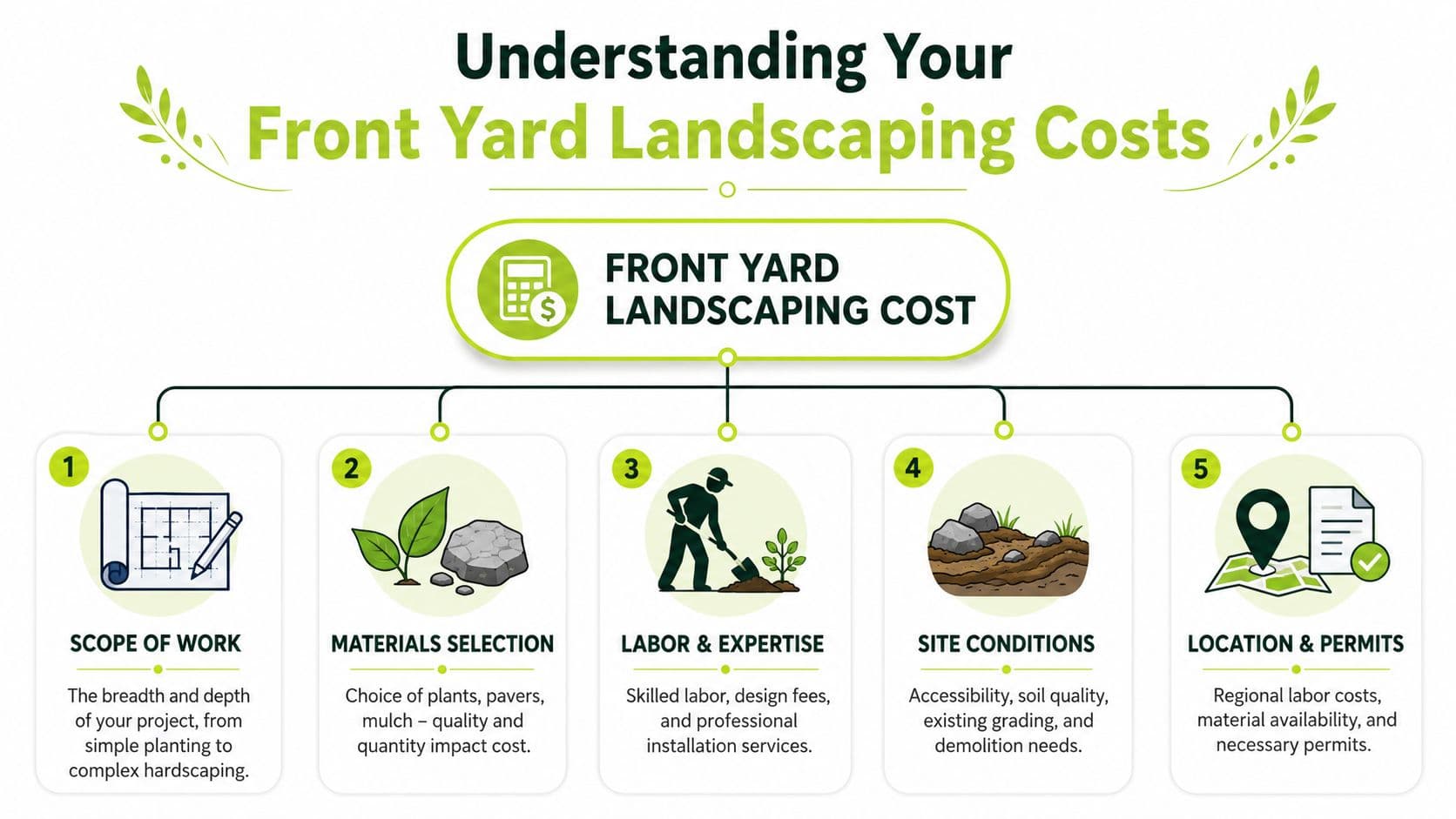
Scope of work
This is the biggest one. A cleanup and replanting job is lighter than a project that changes the shape and function of the yard.
If the crew is only improving what's already there, costs stay more contained. If they're removing old material, rebuilding beds, changing grades, or adding structural features, the project becomes a different class of work.
Materials selection
Materials affect both appearance and labor. Mulch spreads quickly. Stone and pavers need base prep, layout, cuts, and finish work. Plant choices matter too. A simple palette usually installs faster than a layered design with multiple bed depths and edge details.
A useful homeowner question is: “Which materials give me the look I want without pushing this into a more labor-heavy job?”
Labor and expertise
Not all landscaping labor is the same. General cleanup, bed prep, and planting are different from masonry, drainage correction, lighting installation, and irrigation work.
That's why homeowners sometimes feel shocked by bids. They're picturing gardening. The contractor is pricing construction.
A front yard gets expensive when the work shifts from “installing plants” to “building systems.”
Site conditions
Some yards fight back. Tight access, roots, poor drainage, old edging, buried debris, uneven grades, and compacted soil all slow the job down.
A front yard that looks simple from the street may still need careful prep before anything new can go in. If water currently moves toward the house, or the ground falls awkwardly near the driveway or porch, correction work can absorb a lot of the budget before the decorative pieces even begin.
Location and permits
Regional labor costs, material availability, and permit requirements all influence the total. A small wall, lighting upgrade, drainage adjustment, or grading change may involve extra coordination depending on where you live.
This isn't always the flashy part of the project, but it affects scheduling and pricing. Homeowners should ask early whether any part of the plan triggers inspections, approvals, or utility checks.
What Different Budgets Actually Look Like
Numbers are helpful, but clients want to know what the yard will look like when the work is done.
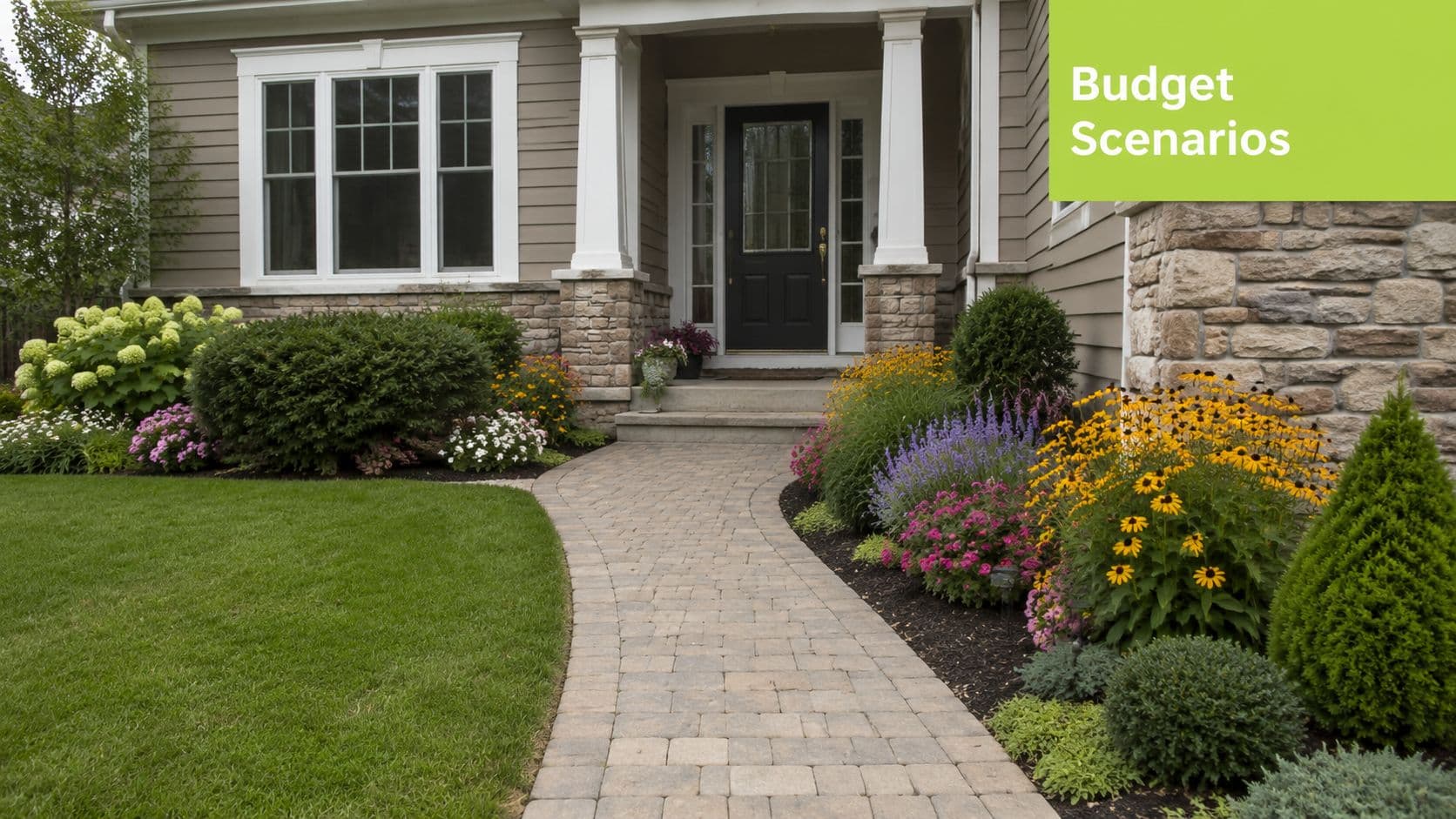
Around the lower budget tiers
A front yard near the $3,000 to $5,000 range usually feels like a smart cleanup with visible curb appeal gains. The lawn gets repaired or refreshed. Beds are re-edged. Fresh mulch ties the house to the ground visually. Old or overgrown plants are removed and replaced with a simpler, cleaner planting scheme near the entry.
This kind of project often looks better because it becomes more organized, not because it becomes more elaborate.
Typical features may include:
- Fresh mulch and edging
- A modest shrub and flower update
- Sod or lawn touch-up work
- Cleanup of overgrown areas
Around the moderate makeover tier
At about $15,000, the front yard usually starts feeling intentionally redesigned rather than merely cleaned up. At this stage, homeowners often add stronger structure. The walkway may be rebuilt or upgraded. Planting becomes more layered. The entry gets framed better. Lighting or irrigation may join the plan.
This tier often delivers the biggest emotional shift. The house starts to feel finished from the street.
A moderate front yard might include:
- A rebuilt or upgraded path
- More defined planting beds
- Shrubs and accent plants placed for balance
- Lighting or irrigation if the scope allows
- Targeted grading or drainage improvements
A short video can help you think through how layout and material choices change the whole look of a front entrance.
Around the higher tiers
At $35,000 and up, the project often involves construction-level work. The crew may regrade the yard, solve drainage issues, build retaining features, install substantial hardscape, and create a more custom design language across the whole frontage. At the $65,000+ level, you're typically looking at a premium buildout with complex details and higher-end finishes.
The jump in budget usually isn't about “nicer flowers.” It's about adding labor-heavy features that permanently change how the site works and looks.
DIY Landscaping vs Hiring a Professional Contractor
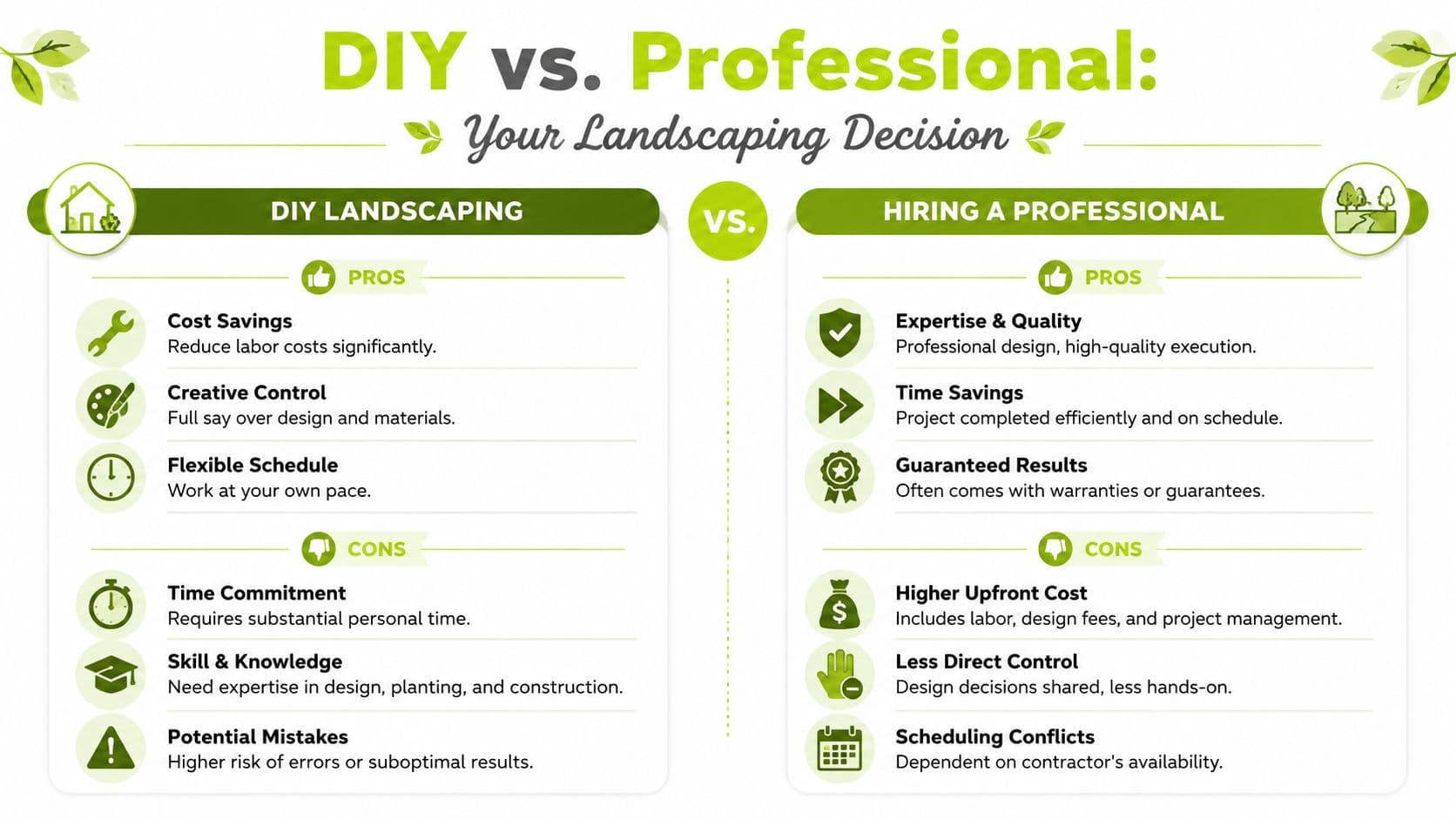
DIY can absolutely work for some front yards. Professional installation also has a clear place. The right choice depends on complexity, your time, and your tolerance for mistakes.
When DIY makes sense
DIY is usually strongest when the project stays cosmetic and manageable. That includes refreshing beds, planting shrubs, spreading mulch, or replacing small sections of lawn.
DIY may fit if:
- You enjoy hands-on work: you don't mind weekends spent hauling soil or shaping beds
- The design is simple: no complicated drainage, grading, or structural work
- You can phase the project: one area at a time is often easier to manage well
DIY gets riskier when the yard needs technical correction work. Drainage, electrical, irrigation layout, and hardscape base prep are the areas where mistakes tend to show later.
When hiring a contractor makes sense
A professional contractor usually earns their keep when the project needs coordination, speed, or construction knowledge. That doesn't just mean big luxury jobs. It also applies to front yards with awkward grades, access issues, old materials to remove, or a hard deadline before listing a home.
If you're comparing local companies, a curated list of top Kingwood landscape services can give you a starting point for evaluating service styles and specialties. For a broader budgeting framework, this guide to landscaping costs for homeowners can help you understand how contractors think about labor and scope.
A practical decision filter
Ask yourself these questions:
- Is this mostly planting and cleanup, or does it involve systems and construction?
- Do I already own the tools and know the installation sequence?
- Can I afford delays if I discover drainage, access, or removal issues mid-project?
- Will a visible mistake in the front yard bother me every day?
If your answers lean toward uncertainty, hiring out at least the technical portions is usually the safer move.
Planning Your Project Timeline from Dream to Reality
Homeowners often budget for the work but forget to budget for the calendar. A front yard doesn't move from idea to finished curb appeal in one smooth weekend.
Design and planning
Here, you decide what stays, what goes, and what the finished yard needs to do. A good plan sorts needs from wants. It also catches conflicts early, like a walkway that crowds planting space or a drainage fix that changes bed layout.
During this stage, collect photos, measure the frontage, and decide whether your priority is appearance, lower maintenance, drainage improvement, or a new entry experience.
Site preparation
This phase can be quick or surprisingly involved. Old lawn may need removal. Beds may need reshaping. Some yards need grading correction before the pretty work starts.
Drainage is a common issue here. If runoff is already causing trouble around the house, driveway, or foundation, review resources like Prime Gutterworks' drainage guide before finalizing the plan. Water management affects both the design and the budget.
Installation
This is the part homeowners picture first, but it only goes smoothly if the earlier work was solid. Installation may include hardscape, irrigation, planting, mulch, lighting, and finish cleanup.
Weather, contractor scheduling, and material availability can all shift the order of work. That's normal. What matters is that the sequence stays logical.
Establishment and grow-in
A front yard often looks good on install day, then enters a quieter phase. Plants settle in. Sod roots. Irrigation gets adjusted. Minor tweaks happen. This period matters because even a strong design needs time to fill out and balance visually.
A finished front yard is installed in stages, then matured through follow-up care.
Visualize Your Options and Estimate Materials with OutdoorBrite
Most budgeting mistakes happen before the first shovel hits the ground. The homeowner sees one thing in their head. The contractor pictures another. Then the quote arrives and nobody is talking about the same yard.
That's why visual planning matters. If you can compare a simple mulch-and-shrub refresh against a paver-heavy redesign before requesting bids, your choices get sharper. You can decide whether you really want more hardscape, whether a narrower bed still looks finished, or whether the entry needs lighting at all.
A tool like landscape ai design gives homeowners a way to upload a yard photo, test different front-yard directions, and compare how design choices may affect scope. That's useful when you're trying to answer practical questions like:
- Do I want more lawn or more planting area?
- Would a straight path look cleaner than a curved one?
- Does the yard need a feature element, or just better structure?
- Am I planning a refresh or drifting into a rebuild?
This doesn't replace a contractor's field judgment. It helps you arrive at that conversation with clearer priorities.
The biggest budgeting benefit is simple. Once you can see the trade-offs, you stop paying for vague ideas. You start pricing actual choices.
Frequently Asked Questions About Landscaping Costs
Is front yard landscaping usually priced by square foot or by feature
Usually both. Square-foot pricing helps establish the broad project range. Feature pricing refines the quote once you add things like walkway upgrades, irrigation, lighting, or grading work.
Why do contractor quotes vary so much
They may be pricing different scopes, different material assumptions, or different levels of prep work. One contractor may include removal, haul-away, and finish grading. Another may assume the site is already ready for planting.
What hidden costs catch homeowners off guard
The biggest surprises are usually the non-decorative parts of the job. Drainage correction, demolition, access challenges, poor soil, and grading issues can raise the total before any visible upgrades happen.
Is it cheaper to do the project in phases
It can be, especially if you separate cosmetic work from technical work. Many homeowners handle a front yard in layers. They solve drainage or hardscape first, then finish planting and detail work later.
How do I get a more accurate estimate
Give the contractor a clear wish list, rough measurements, and photos. Be specific about what matters most. If your priority is a better entry sequence, lower maintenance, or stronger curb appeal for resale, say so directly. Clear goals usually produce clearer bids.
If you're trying to turn ideas into a realistic front yard plan, OutdoorBrite can help you visualize design options before you commit to materials, labor, or a full contractor quote.
See your yard reimagined
Start creating