Curb Appeal Front Yard Landscaping Ideas on a Budget
Explore curb appeal front yard landscaping ideas on a budget, with DIY tips, low-cost materials, cost ranges, and quick wins for a polished entrance.
A full front-yard renovation is rarely the smartest first move. Cleaning, defining, repairing, and editing what you already have can create a more convincing entrance than an expensive redesign, especially when the budget is limited. Virginia Tech research has long connected garden quality with perceived home value, finding that substantial garden investment can improve perceived value and support a higher selling price compared with minimal gardening. Virginia Tech's landscape research also helps explain why simple visible upgrades remain practical: tidy bed lines, fresh mulch, trimmed shrubs, and a healthy lawn change the signals people notice first.
This list prioritizes curb appeal front yard landscaping ideas on a budget by transformation efficiency. Start with the improvements that make existing features look cared for, then add structure, plants, seasonal color, and one memorable accent. You'll find DIY instructions, maintenance trade-offs, and places where OutdoorBrite can help you test a concept on a photo of your own yard before buying materials. For another practical approach to improving the outside of your home, see this guide to boosting your home's curb appeal.
Table of Contents
- 1. Refresh Mulch and Ground Cover
- 2. Choose Plants and Shrubs for the Long View
- 3. Install Clean DIY Edging and Borders
- 4. Use Annual Flowers for Flexible Seasonal Color
- 5. Pressure Wash and Clean Existing Surfaces
- 6. Add One Affordable Focal Point
- 7. Use Container Gardens as Flexible Test Beds
- 8. Repair and Reseed the Lawn Strategically
- 8-Point Budget Front-Yard Curb Appeal Comparison
- Build Your Budget Curb Appeal Plan in Stages
1. Refresh Mulch and Ground Cover
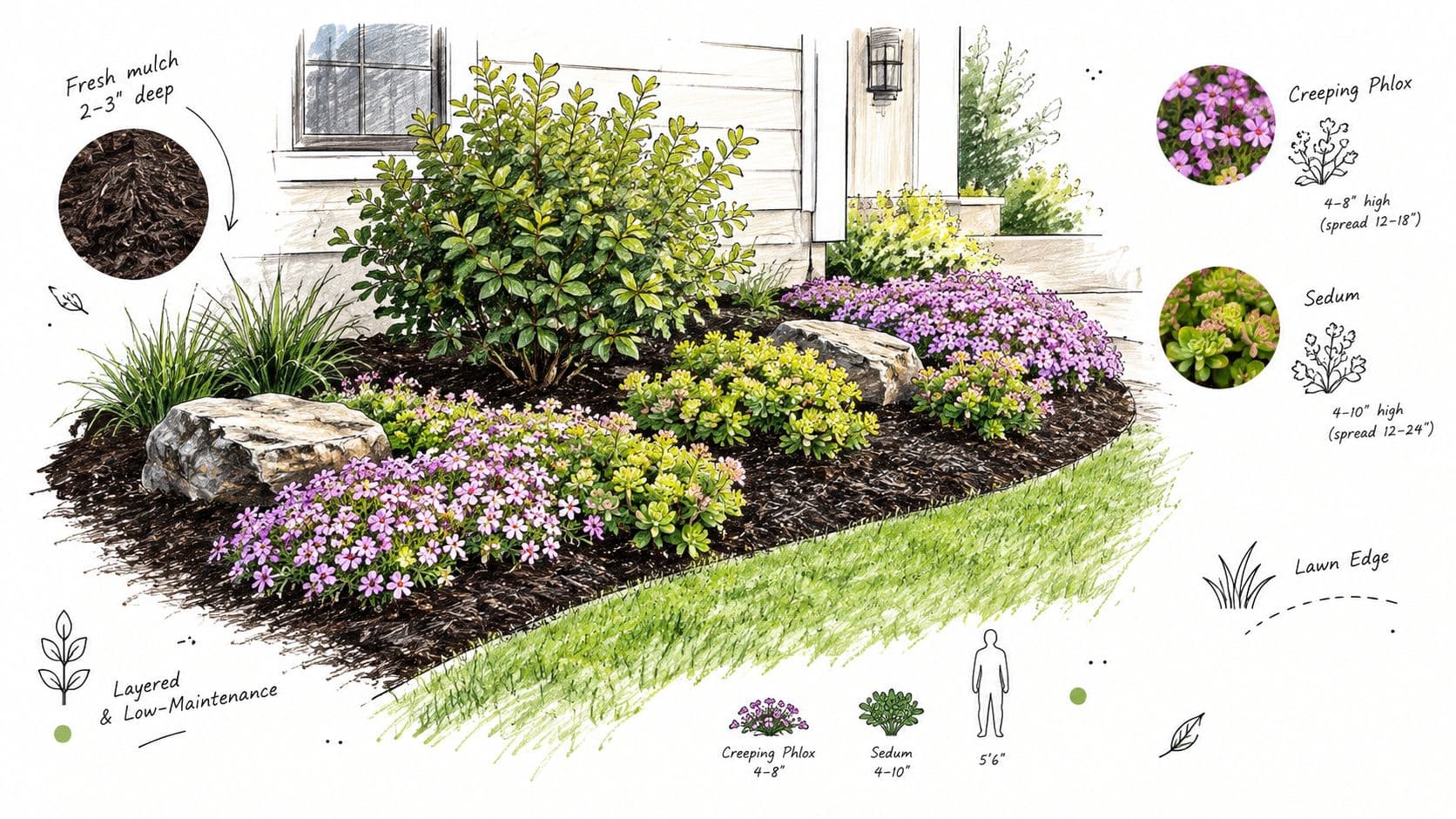
Fresh mulch is one of the quickest ways to make a tired front yard look deliberate. It creates contrast around shrubs, covers uneven soil, suppresses weeds, and gives separate planting areas a common visual language. A dark mulch can make green foliage appear richer, while natural brown mulch often suits cottage, craftsman, and traditional homes.
Before spreading anything, remove visible weeds, pull out fallen branches, and reshape the bed edge. Apply 2 to 3 inches of mulch for effective coverage, keeping it 6 inches away from the foundation and several inches clear of trunks and shrub stems. Thick mulch piled against plants can hold excess moisture against bark and invite problems, so a shallow, even layer is better than a volcano around every tree.
Practical rule: Mulch should frame plants, not bury them.
Ground covers work well where bare soil keeps returning or where mowing narrow spaces is awkward. Creeping phlox can suit a sunny cottage-style bed, sedum fits dry, bright locations, and lamb's ear adds soft foliage where conditions allow. Check local growing conditions before buying, because a ground cover that thrives in one region can struggle with humidity, shade, or winter cold elsewhere.
Use OutdoorBrite to compare black, brown, and natural mulch against your house exterior before ordering. You can also use these simple mulch estimation formulas to avoid buying far more material than the bed requires. Refreshing existing beds is usually more efficient than creating several new ones, and buying in bulk can make the project easier to manage when access and delivery are practical.
2. Choose Plants and Shrubs for the Long View
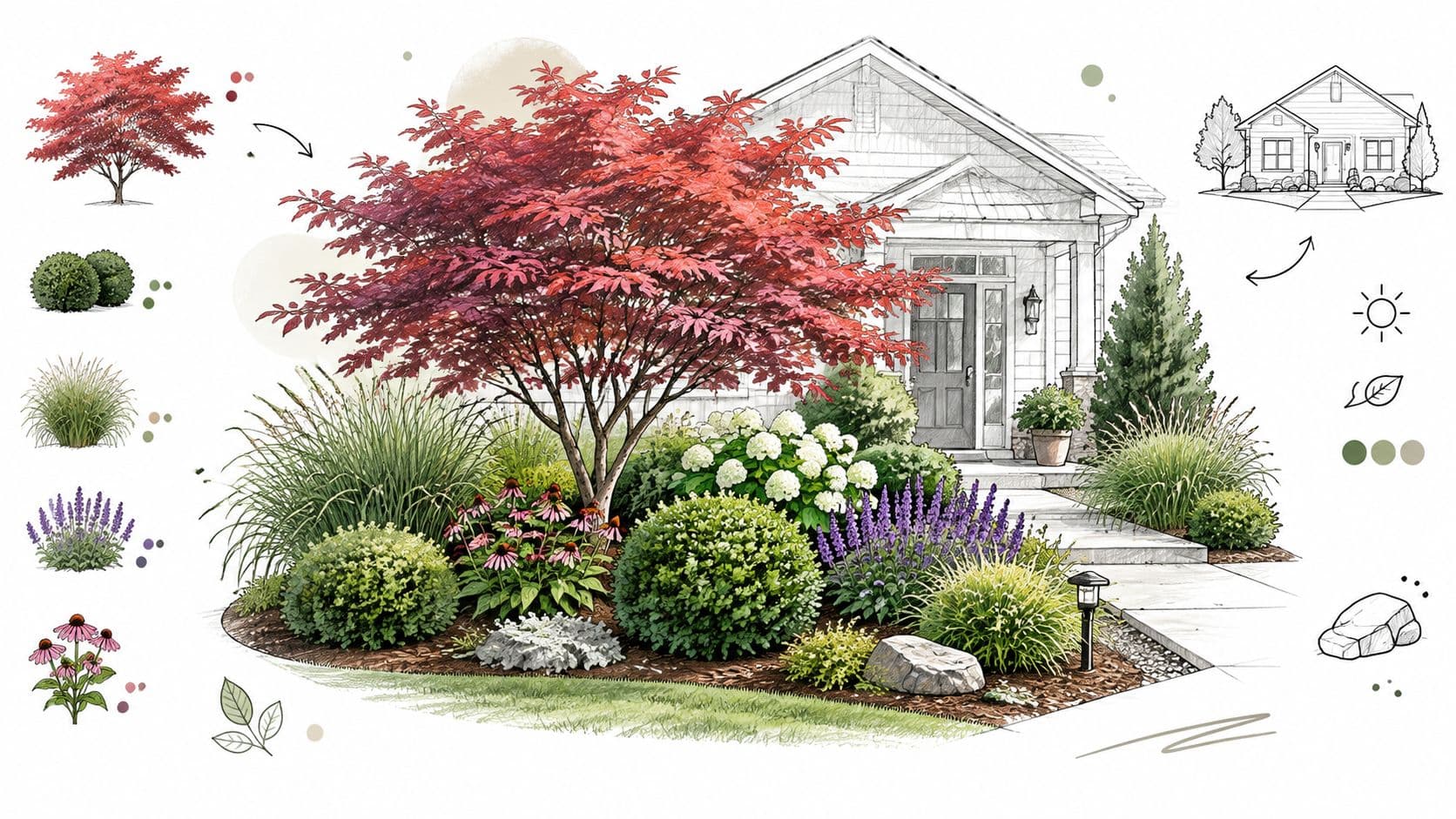
The cheapest plant is not always the cheapest choice. A plant that outgrows its location, needs frequent replacement, or attracts recurring disease can cost more in labor and maintenance than a smaller, better-suited specimen. Choose plants by mature height, mature width, light exposure, soil, water needs, and seasonal interest, not by how impressive they look in a nursery pot.
Shrubs provide the strongest long-term structure. Evergreen forms such as boxwood or privet can frame a doorway, while flowering shrubs such as serviceberry or clethra can add seasonal character in suitable Eastern gardens. Ornamental grasses and blue fescue can bring texture to contemporary beds, and a Japanese maple can serve as a focal tree where the climate and available space support it.
A practical planting composition might include a small structural shrub group, a lower layer of perennials, and one ground-cover area. Select disease-resistant varieties when possible, and choose plants with different bloom periods so the yard doesn't depend on one short burst of color. Smaller plants usually cost less than mature specimens and can establish successfully when planted correctly and watered consistently.
Design around mature size
Read the plant label before digging. Keep shrubs far enough from walls, windows, walkways, and utility equipment that their mature spread won't force future pruning. Planting three compatible shrubs in a loose group often looks more natural than scattering individual plants across the yard, but don't create dense rows that will become difficult to thin.
Use OutdoorBrite's style editor to test combinations before purchasing. You can compare an evergreen-heavy design with a flowering, naturalistic layout and see whether the plants compete with the color and shape of your home. If your climate is dry, you can also explore container gardens for drought areas before committing to permanent beds.
3. Install Clean DIY Edging and Borders
A bed can contain good plants and still look unfinished if grass spills into it. A clean border gives the eye a clear line between lawn, planting soil, and walkway. It also reduces the time spent trimming grass by hand, which makes edging both a visual upgrade and a maintenance decision.
Start by laying a hose or garden rope along the proposed curve. For straight sections, use stakes and string. Step back toward the street and front windows before cutting anything. A border that looks graceful from the porch can look crooked from the road, and the street view is the one that matters most for curb appeal.
Plastic edging is inexpensive and easy to install, but it can lift, crack, or become visible if the soil shifts. Metal edging, aluminum, brick, stone, and ground-level pavers typically create a stronger finish, although they require more careful preparation and may cost more at the start. A useful compromise is to use a modest material throughout the yard and reserve premium brick or stone for the entry bed or the most visible corner.
- Measure first: Calculate the linear footage of each border before buying material.
- Set the grade: Install edging at soil level or slightly above it so a mower can pass without catching.
- Prepare the trench: Remove roots and loosen compacted soil rather than forcing edging into hard ground.
- Plan drainage: Don't create a border that traps runoff against the foundation or across a walkway.
Fall and early spring are often easier times to work soil, provided it isn't saturated or frozen. Before sketching the layout, try a landscaping design app to compare a crisp modern line with a softer cottage curve.
A short installation demonstration can help you judge the tools and effort involved:
4. Use Annual Flowers for Flexible Seasonal Color
Annual flowers let you change the mood of the front yard without committing to permanent planting. They work especially well around the front door, under prominent windows, and in containers where a small amount of color can guide attention toward the entrance. Their flexibility is valuable when you're still deciding whether a bed should become cottage, modern, Mediterranean, or low-water in character.
For spring, pansies and tulips can brighten window boxes and entry containers. Summer beds may suit marigolds, salvia, or impatiens, depending on light and moisture. In fall, mums and ornamental kale create a strong seasonal signal, while winter arrangements can rely on evergreen boughs, berries, or winter-tolerant violas where the climate permits.
Concentrate color instead of scattering it
A few related colors repeated near the entry usually look more intentional than many unrelated colors spread across the entire yard. Use the container design principle of thriller, filler, and spiller: one upright plant for height, fuller plants around it, and a trailing plant to soften the edge. In a bed, repeat the same annual through several locations so the yard feels coordinated.
Annuals require recurring work. They need watering, deadheading, and replacement when weather or frost ends their display. Buying end-of-season plants can reduce purchase costs, and starting flowers from seed can lower material costs if you have the time, space, and patience to grow healthy transplants. The trade-off is clear: annuals provide fast visual impact, but shrubs and perennials usually offer more lasting structure.
Use OutdoorBrite to test seasonal palettes on your actual facade. A bright summer combination may look excellent against pale siding but compete with brick or a strongly colored front door. Preview the composition first, then place the highest-color plants where visitors naturally approach.
5. Pressure Wash and Clean Existing Surfaces
A dirty driveway can make an otherwise healthy front yard look neglected. Before adding new plants or decorative features, clean the surfaces that occupy the most visual area: the driveway, front walk, porch, retaining edges, siding, and visible steps. Removing grime, algae, moss, and streaking often reveals that the underlying concrete, brick, or stone is still usable.
Start with a small test area. A pressure washer can damage soft wood, older mortar, painted surfaces, and some siding if the pressure or nozzle is wrong. For driveways and patios, a careful DIY cleaning session may be reasonable. House siding deserves more caution, and professional cleaning can be the safer choice when the material, height, or condition is uncertain.
A clean surface changes the background against which every plant and border is judged.
Work from the top of the surface downward where appropriate, protect outlets and delicate plantings, and avoid directing water toward window seals or openings. Don't use aggressive pressure to compensate for a neglected surface. Let the detergent or cleaning solution do part of the work, then rinse methodically.
Cleaning is also a useful diagnostic step. After washing, you may discover that a walkway only needs joint repair, a porch needs a new finish, or a driveway needs sealing rather than replacement. Take a before photo and compare it with the cleaned surface before spending on new materials. If a stain returns quickly, investigate drainage or persistent shade instead of repeatedly washing the same area.
The best schedule depends on weather and the surface condition, but mild spring or fall conditions are generally more comfortable for outdoor work. Cleaning first keeps new mulch, flowers, and containers from being covered with dirt during later maintenance.
6. Add One Affordable Focal Point
A front yard often feels disorganized because nothing tells the eye where to look. One well-placed focal point can solve that problem without filling the yard with decorations. Consider a smooth boulder, a simple birdbath, a solar light, a painted planter, a small sculpture, or a container with strong architectural foliage.
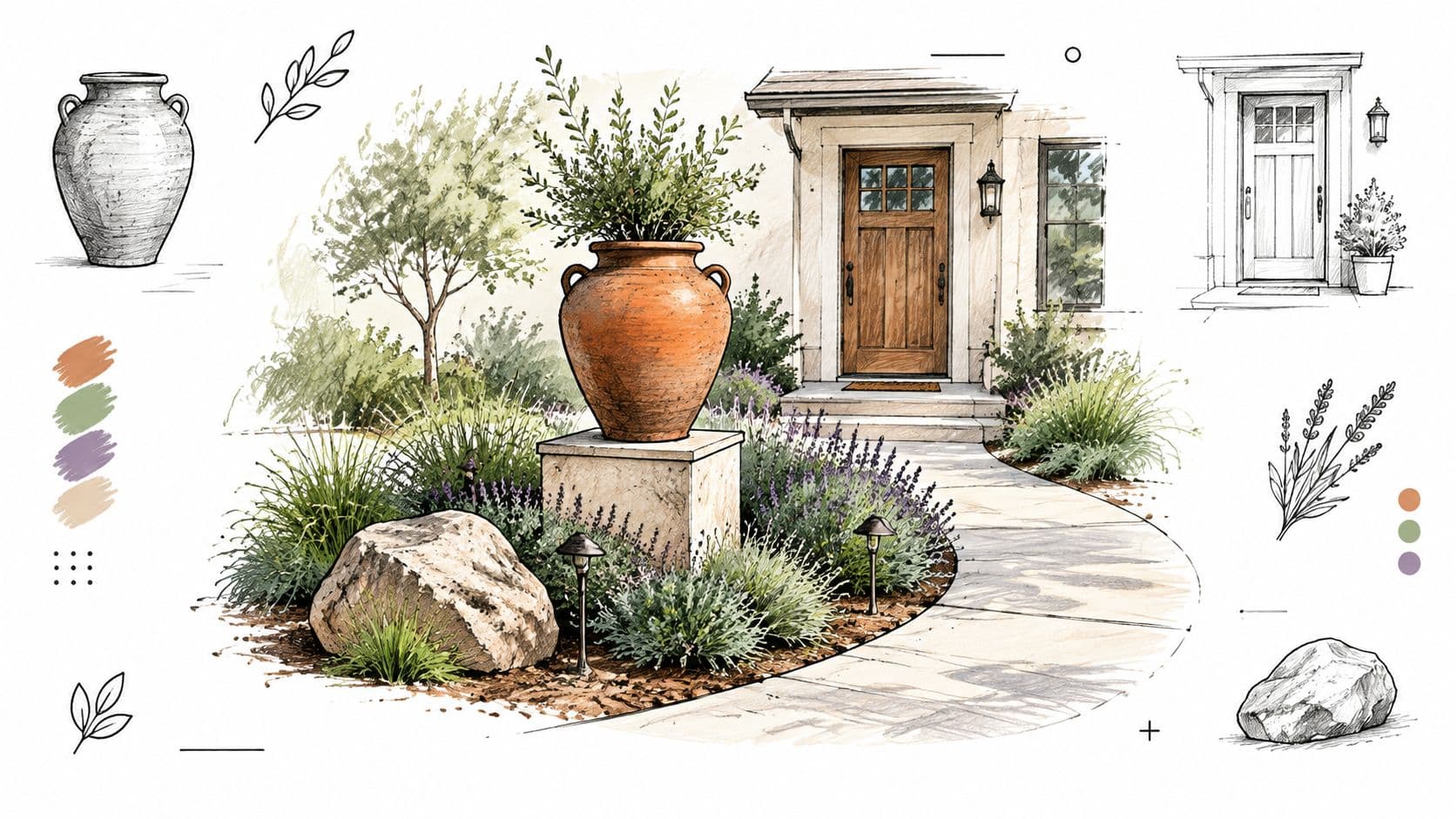
Match the accent to the house rather than buying the most eye-catching object available. A weathered birdhouse can suit a cottage garden, a terracotta urn can support a Mediterranean planting scheme, and a single dark metal sculpture can reinforce a modern facade. A decorative rock can work in a minimalist or xeric design, especially when its color echoes the foundation or walkway.
Place the feature where it can do real work
The strongest locations are usually near the entry, at the end of a path, or in a visible corner that needs visual weight. Check sight lines from the street, sidewalk, and front door. An accent hidden behind an overgrown shrub won't improve the composition, and an oversized feature can make a small yard feel crowded.
Surround the focal point with restrained planting. A lone urn in bare soil looks accidental, while the same urn framed by mulch, low ground cover, or a few repeat plants looks intentional. Avoid buying several unrelated ornaments before establishing the main structure. The budget disappears quickly when every empty space receives a new object.
Use an AI front yard design tool to place possible features on a photo of your property. OutdoorBrite's elements editor can help you compare a boulder, planter, lighting feature, or planting bed before you purchase it. You can also create a DIY accent from a painted rock, a simple planter box, or a repurposed container, but weather resistance and safe placement still matter.
7. Use Container Gardens as Flexible Test Beds
Containers deliver immediate planting impact without requiring you to excavate a new bed. Put paired planters beside the front door, use a narrow box along a porch edge, or group containers near a walkway to create a visual transition. This approach suits renters, small yards, newly built homes, and homeowners who want to test a style before making permanent changes.
Symmetry works well at the entrance. Matching urns or planters can frame a door, while an informal group of varied containers may suit a cottage or naturalistic setting. Keep the arrangement connected through one repeated element, such as the same foliage color, container finish, or flower palette. Containers should support the architecture, not block the path or crowd the threshold.
Choose containers with drainage holes and use potting mix rather than ordinary garden soil, which can compact and drain poorly in a pot. Larger containers hold more moisture and tend to be less demanding than very small pots, but they're heavier and harder to move. Plan for watering because containers dry out faster than in-ground beds, particularly in hot, windy locations.
Build a container that earns its space
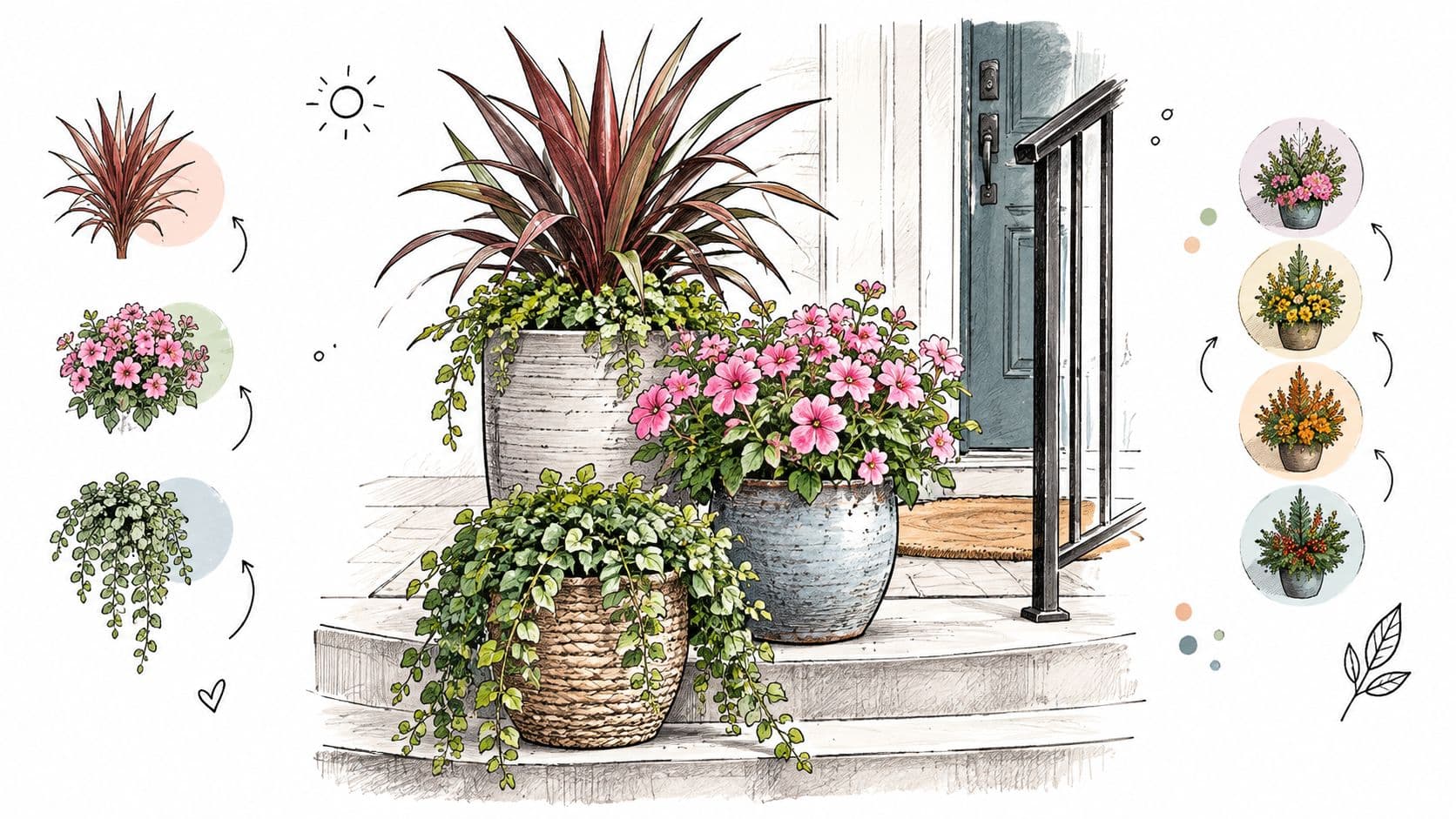
Use the thriller, filler, spiller formula for a mixed pot. An upright grass, cordyline, or other structural plant can serve as the thriller. Fillers create volume around it, and trailing petunias, ivy, or another suitable spiller soften the rim. For a lower-maintenance scheme, use evergreen shrubs or drought-tolerant plants suited to your region, then place seasonal flowers in smaller removable pots.
OutdoorBrite can help you visualize container size and placement against the actual facade. Try the containers by the door, then move them toward the walkway and compare how each arrangement affects the approach. That small experiment can prevent a common budget mistake, buying attractive planters that are too small, too numerous, or poorly positioned.
8. Repair and Reseed the Lawn Strategically
A lawn doesn't need a complete replacement to look healthier. Start by identifying why it looks thin or bare. Foot traffic, pet activity, compacted soil, poor drainage, shade, mowing too short, and unsuitable seed can each require a different response. Throwing seed onto a problem area without addressing the cause usually produces a temporary patch rather than a durable improvement.
For bare spots, loosen the surface, add a thin layer of suitable soil or compost, spread a climate-appropriate seed mix, and keep the area consistently moist while it establishes. Overseeding can help a thin lawn, while aeration can improve seed-to-soil contact where compaction is the main issue. Renting an aerator makes more sense than buying one for an occasional project.
Mowing practices also change the visual density of grass. A higher mowing height can make the lawn look fuller and shade the soil, but the correct height depends on the grass type and local conditions. Choose seed for the amount of sun, moisture, and seasonal stress the site receives. Fescue may suit some shaded areas, while other regions need different cool-season or warm-season mixes.
Budget sequence: Fix drainage and compaction before paying for more seed.
A lawn can be attractive and still be the wrong use of water for your site. Colorado water-conservation literature summarizes xeriscape guidance indicating that water-wise landscaping can reduce water use by at least 50% compared with conventional landscaping, and it cites an estimate of 55.8 gallons saved per square foot of lawn converted annually. The Colorado landscape-water literature review supports considering shrubs, ground covers, perennials, or low-water xeric plants where turf repeatedly fails.
Use OutdoorBrite to compare a repaired lawn with a smaller, water-wise planting area before removing grass. For ongoing lawn care, a slow-release lawn fertilizer guide can help you evaluate feeding choices without treating fertilizer as a substitute for correct mowing, watering, drainage, and seed selection.
8-Point Budget Front-Yard Curb Appeal Comparison
| Item | 🔄 Implementation Complexity | ⚡ Resource Requirements | 📊 Expected Outcomes | Ideal Use Cases | ⭐ Key Advantages (💡 Tip) |
|---|---|---|---|---|---|
| Mulch and Ground Cover Refresh | Low, DIY in a weekend; minor prep | Low ($50–200); mulch/groundcovers, basic tools | Immediate visual polish; weed suppression; moisture retention | Existing beds; quick curb-appeal refresh | Very low cost with instant impact; 💡 apply 2–3" mulch and keep 6" from foundation |
| Strategic Plant and Shrub Selection | Medium, planning + correct species choice; long-term | Moderate ($100–400); plants, soil amendments, possible pro help | Long-lasting structure, multi-season interest, lower maintenance over time | Homeowners seeking lasting value and structure | One-time investment pays off over years; 💡 choose natives and match hardiness zone |
| DIY Hardscape Edging and Borders | Low–Medium, manual labor; accuracy matters | Low–Moderate ($50–300); edging material (plastic/metal/stone) | Clean bed definition; reduced grass encroachment; polished look | Yards needing defined lines; staged installs | Inexpensive way to organize landscape; 💡 use string lines and durable materials for longevity |
| Seasonal Color Rotation with Annual Flowers | Low, frequent replanting (2–4×/yr) | Low recurring ($30–100/season); seeds/annuals, containers | High seasonal visual impact; flexible aesthetics | Renters, entries, homeowners who want frequent change | High impact per dollar but recurring cost; 💡 buy end-of-season or start seeds to save |
| Pressure Washing and Exterior Cleaning | Low, straightforward but technique-sensitive | Low ($100–300 DIY; $300–800 pro); rental or service | Immediate dramatic cleanliness; surfaces look newer; reveals repairs | All properties before sale or refresh projects | Most affordable major visual upgrade; 💡 test area and keep PSI ≤1500 on delicate surfaces |
| Affordable Focal Point or Accent Features | Low, select and place; style-sensitive | Very low ($20–200); single accent item | Anchors design visually; creates focal interest | Small yards, entries, to balance asymmetry | Minimal cost for strong focal effect; 💡 scale appropriately and place on sightlines |
| Container Gardens and Planter Boxes | Low, planting and seasonal swaps; watering needs | Low ($50–200); pots, soil, plants | Instant entry-point impact; flexible and movable | Renters, small spaces, testing designs before planting | Portable, high-impact at entries; 💡 ensure drainage and group odd numbers for balance |
| Low-Cost Lawn Renovation and Seeding | Medium, timing and watering critical; may need aeration | Low–Moderate ($50–200); seed, aerator rental, watering | Fuller, healthier lawn over weeks–season; strong foundational improvement | Yards needing turf improvement without sod | Cost-effective vs sod; foundational for other upgrades; 💡 overseed in optimal season and mow high (3–4") |
Build Your Budget Curb Appeal Plan in Stages
The most efficient plan starts with work that improves everything else. Clean the driveway, walk, porch, and visible exterior surfaces first. Then remove dead material, prune shrubs to expose the entry, repair obvious lawn problems, and define the edges of beds and paths. These steps create a clean framework before you spend on plants or decorative features.
Next, decide whether the yard needs more lawn or less lawn. If turf is healthy and appropriate for the site, patch thin areas and improve mowing practices. If grass repeatedly struggles because of shade, drought, compaction, or drainage, a water-wise bed may provide better long-term value. Colorado guidance describes water-wise landscaping as capable of cutting water use substantially, including reductions of at least 50% compared with conventional landscaping, so the cheapest long-term design may not be the one with the most turf.
Once the framework is ready, add shrubs for structure, smaller perennials or ground covers for gaps, and mulch to unify the beds. Containers and annuals can supply fast color while you wait for permanent plants to mature. Finish with one focal feature, not a collection of unrelated decorations. A single urn, boulder, birdbath, or lighting element will have more visual authority when the surrounding space is calm and maintained.
The resale logic supports this order. The National Association of Realtors reports that 97% of its members consider curb appeal important when marketing to sellers, while 98% consider it important to buyers in its outdoor features report. That report from the National Association of Realtors also places maintenance, lighting, and other outdoor improvements among projects that provide strong homeowner satisfaction. These findings don't mean every homeowner should pursue an expensive renovation. They support concentrating effort where visitors see it first.
OutdoorBrite can help you compare a minimal refresh with a partial redesign using a photo of your own front yard. Test mulch color, bed shapes, plant groupings, containers, lighting, and the entry sequence before buying materials. Then choose one quick win you can finish this weekend, such as washing the walk, edging one bed, pruning an overgrown shrub, or spreading a carefully planned layer of mulch. A completed small project gives you a visible baseline and makes the next decision easier.
OutdoorBrite turns a photo of your front yard into realistic redesign concepts, so you can compare mulch, planting beds, containers, paths, lighting, and focal features before spending on materials. Upload your yard, test different styles and layouts, and visit OutdoorBrite to start planning a curb appeal improvement that fits your budget and maintenance capacity.
See your yard reimagined
Start creating