8 Best Ground Cover Lawn Alternative Ideas for 2026
Tired of mowing? Explore 8 top ground cover lawn alternative ideas, from clover to hardscapes. Get pros, cons, costs, and visualize your yard's new look.
A lot of homeowners reach the same point at the same time of year. The grass is patchy, the mower needs gas, the sprinklers are running again, and the yard still doesn't feel especially inviting. What started as a simple lawn becomes a repeating maintenance cycle that takes up weekends and rarely gives much back beyond a flat green surface.
A ground cover lawn alternative changes that equation. Instead of forcing every part of your yard to behave like a play field, you can match each area to how you use it. A side yard can become a clover run. Deep shade can become moss. A dry slope can become spreading thyme, sedum, or mulch with layered planting. A patio edge can shift into low-growing groundcovers instead of another strip of struggling turf.
That practical shift is one of the biggest reasons these alternatives work. University extension guidance consistently points out that established groundcovers often need little maintenance, no mowing, and can help outcompete weeds, reduce erosion, and support pollinators. The trade-off is just as important. Most won't handle heavy foot traffic like turf, and they need irrigation, mulching, and weed control while getting established, as noted by the University of Wisconsin Extension overview on lawn alternatives.
The fastest way to know what fits your yard is to stop guessing from plant lists and start visualizing. If you can upload a photo of your own front yard, side yard, or backyard and preview clover, meadow planting, pavers, shrubs, or mulch in place, the decision becomes much easier. Tools like OutdoorBrite help make a ground cover lawn alternative feel real before you buy plants or tear out turf.
Table of Contents
- 1. Clover Lawns (Microclover & White Clover)
- 2. Native Ground Cover Plants & Wildflower Meadows
- 3. Moss Lawns & Moss Gardens
- 4. Hardscape & Permeable Paving Solutions
- 5. Groundcover Shrubs & Low-Growing Perennials
- 6. Artificial Turf & Modern Synthetic Lawn
- 7. Mulch, Decorative Ground Covers & Bark Landscaping
- 8. Living Walls, Green Roofs & Vertical Ground Cover Solutions
- 8-Option Comparison of Groundcover Lawn Alternatives
- Design Your Dream Yard, Minus the Lawn
1. Clover Lawns (Microclover & White Clover)
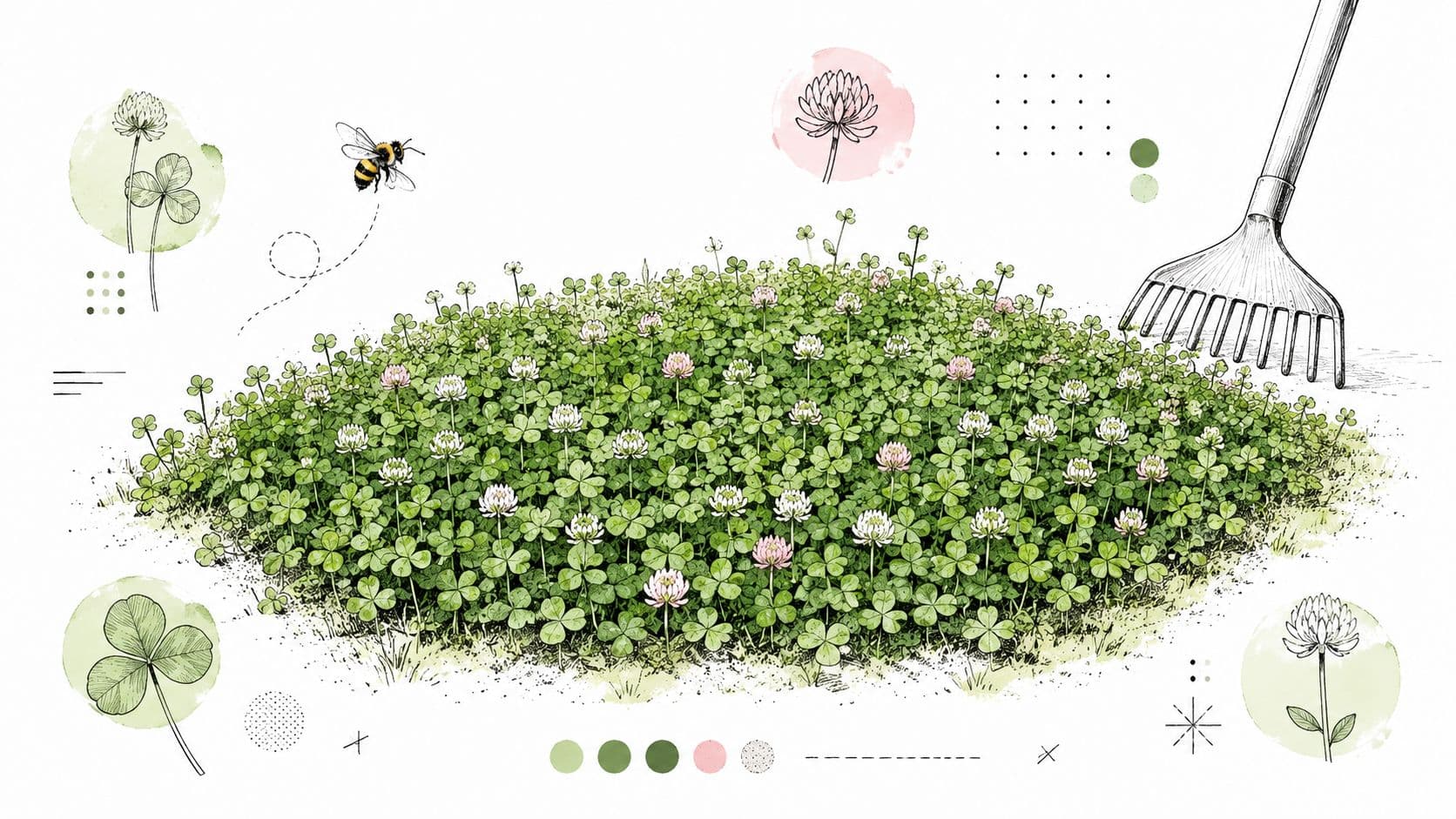
Clover is one of the easiest entries into a ground cover lawn alternative because it doesn't require a full philosophical commitment to a wild yard. You can blend it into an existing lawn, convert a low-traffic section, or use it in a backyard zone that you want to feel softer and looser than a standard turf panel.
Microclover usually gives the cleaner look. White clover reads more relaxed and natural. Both tend to fit homeowners who want something greener and more forgiving without jumping all the way to meadow planting.
Where clover works best
Clover does well in spaces that need a soft, living surface but don't need the durability of a soccer field. Think side yards, dog-adjacent runs, orchard understories, informal front lawns, and the open areas between planting beds where grass always seems to look mediocre.
What usually works:
- Mixed lawns: Overseed clover into existing grass if you want a gradual shift instead of a full removal.
- Low to moderate traffic zones: It can handle everyday movement better than many ornamental groundcovers, but constant hard wear still favors turf.
- Pollinator-conscious yards: If you like a little seasonal flowering and don't need a perfectly uniform surface, clover feels more alive than conventional grass.
How to make it look intentional
The biggest mistake is treating clover like turf and then getting frustrated when it behaves like a plant community instead of a carpet. Keep edges crisp, define beds clearly, and decide early whether you want flowers visible or a tighter clipped look.
Practical rule: Put clover where you want softness and lower upkeep, not where kids are grinding in the same path every day.
For visualization, this is one of the easiest swaps to test in OutdoorBrite. Upload a yard photo and compare a mixed grass-and-clover look against a full clover surface. Evening shade, spring bloom, and a more manicured summer version can look surprisingly different on the same property. That matters because clover usually wins homeowners over visually before it wins them over technically.
2. Native Ground Cover Plants & Wildflower Meadows
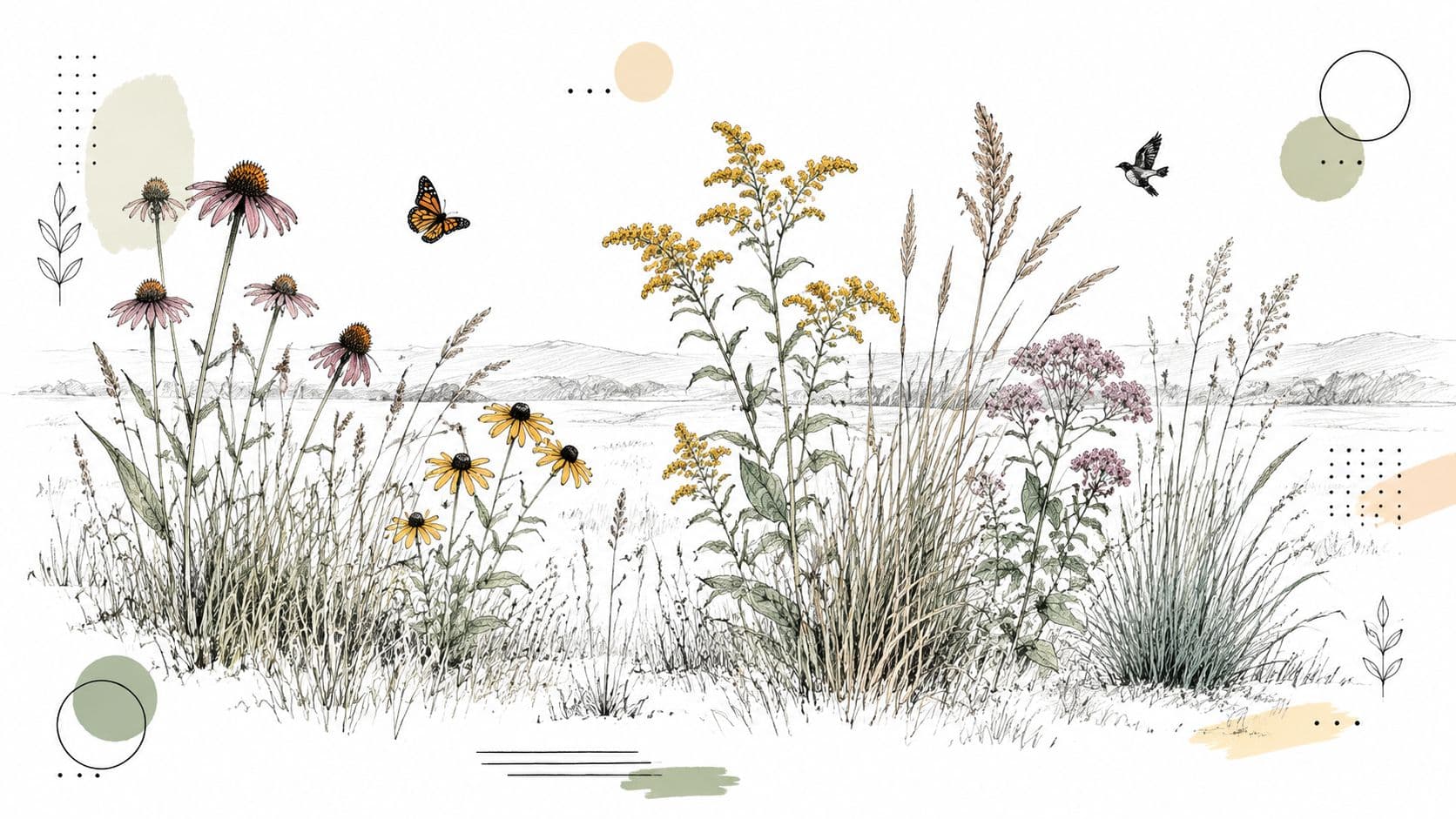
A native planting is less about replacing grass with one substitute and more about replacing the idea of lawn altogether. Instead of one flat surface, you get layers: low sedges, flowering perennials, bunching grasses, and seasonal changes that make the yard feel connected to place.
This is often the best answer for large front yards, slopes, awkward berms, and sunny areas that don't need to host regular play. It can also be one of the most beautiful options when it's edited well.
Think in habitat zones, not one blanket planting
Homeowners often fail with meadows because they buy a seed mix and hope the entire yard sorts itself out. Better results come from zoning. Put lower species near paths, taller species deeper into the bed, and use repeated drifts instead of random scattering.
UConn Extension makes the core principle clear: choose species adapted to your site's sun, soil, and moisture conditions, and favor plants that, once established, need minimal supplemental irrigation and show resistance to disease and insects in that setting. It also notes that transition costs and labor are higher upfront, but maintenance can decline over time in a well-matched planting, according to UConn Extension's guidance on alternative lawn options.
What makes meadows succeed
Meadows need restraint. A strong path edge, a mown border, or a gravel frame keeps the planting from reading abandoned. That's especially important in suburban neighborhoods where “intentional” and “weedy” are separated mostly by layout.
A few practical choices help:
- Group plants in masses: Repetition looks designed. One of everything looks messy.
- Water the first season consistently: Native doesn't mean self-sustaining on day one.
- Delay cleanup thoughtfully: Seed heads and dry stems often carry the winter look.
If you like the ecological benefits of a no-mow area but can't picture it from a plant tag, test combinations on your actual lot line and house style first. OutdoorBrite is especially helpful here because a native palette can look airy and elegant in one yard and visually chaotic in another. If you're also tackling food production nearby, this guide to creating a greenhouse with reclaimed materials pairs well with a more habitat-focused outdoor plan.
3. Moss Lawns & Moss Gardens
Moss is one of the few lawn alternatives that looks expensive even when the palette is simple. It gives a yard that settled, quiet, woodland character that grass almost never achieves in dense shade. If your lawn struggles under trees, beside a north-facing wall, or in a damp courtyard, moss may fit the site better than another round of reseeding turf.
But moss is not the answer for every low-light space. It wants the right moisture pattern, reduced competition, and very little disturbance.
Shade is the deciding factor
Moss works best where grass never really had a fair chance. Under mature canopies, between stepping stones, beside boulders, or in enclosed gardens, it can turn a problem area into the most memorable part of the property.
What doesn't work is forcing moss into a sunny, compacted, actively used family yard. That's usually disappointment dressed up as aspiration.
Moss is for calm spaces. If the area needs rough play, wheel traffic, or regular patio overflow, choose something tougher.
What to expect from a moss yard
A moss garden needs patience during establishment and a clean visual setting around it. Fallen leaves, invading weeds, and messy edges will undermine the effect faster than the moss itself. Once it settles, though, the maintenance rhythm is usually simpler than shade lawn repair.
Good candidates include:
- Stepping-stone courts: Moss softens stone and makes narrow spaces feel cooler.
- Shaded side yards: It can turn a forgotten passage into a designed garden.
- Woodland fronts: Moss pairs especially well with ferns, rocks, and simple paths.
OutdoorBrite is useful here because shade conditions are hard to imagine from a plant list. A moss concept may look magical with large stone pads and ferns, but flat and unfinished without those supporting elements. Previewing the full composition helps you decide whether you're building a moss lawn or a moss garden. Those are related ideas, but they don't look the same in practice.
4. Hardscape & Permeable Paving Solutions
A worn shortcut from the back door to the gate usually tells the truth faster than the lawn does. If people already treat part of the yard like a path, staging area, dining space, or grill zone, a planted lawn alternative will keep struggling there. Hardscape solves the actual use problem.
That makes it one of the strongest ground cover lawn alternatives for side yards, small courtyards, utility runs, and compact backyards where turf stays thin, muddy, or patchy from steady foot traffic.
Use hardscape where the yard already wants it
Permeable pavers, stabilized gravel, decomposed granite, and porous paving work best in places that need reliable footing and clear circulation. They remove mowing from the equation and hold up better than living groundcovers in repeated-use zones.
The trade-off is real. Hard surfaces can store heat, show weeds in joints if installation is sloppy, and feel stark when they cover too much of the yard. The fix is good layout and enough planting to balance the surface.
I usually advise homeowners to start with function, then soften the edges.
Pair paving with planting, not empty square footage
The best results come from mixed compositions. A gravel court feels better with planted borders. Large pavers read more comfortably with low joints or creeping plants between them. A decomposed granite path gains a lot from flanking grasses, sedges, or compact shrubs.
That balance matters visually, but it matters for water use too. Planted pockets around paving are easier to irrigate efficiently with zone-by-zone planning than a broad lawn panel that needs uniform coverage. If you are sketching options, an AI garden design tool helps you test how much surface area your yard can handle before it starts to look hard and overbuilt.
A practical layout approach
Use this sequence before you choose materials:
- Mark the desire lines: Map where people walk, not where a straight line looks tidy on paper.
- Give hardscape the working zones: Entries, dining pads, trash routes, grill access, and gate connections usually deserve a durable surface.
- Keep planting in the margins and breaks: Borders, islands, and joints keep the yard cooler and more finished.
- Scale the material to the house: Small units suit tighter spaces. Oversized slabs can overwhelm a narrow yard.
Previewing the layout before installation saves expensive corrections. A dedicated patio design ai tool is useful for comparing permeable pavers, gravel courts, and patio-plus-planting combinations on your actual footprint, so you can see whether the result feels inviting or too bare before any base material goes down.
5. Groundcover Shrubs & Low-Growing Perennials
A front yard often changes fastest when grass is replaced with plants that stay low but bring real texture. Creeping thyme, sedum, ajuga, heuchera, low junipers, and similar spreaders can give a space shape and character without creating a knee-high planting that feels unruly.
These plants work best when the goal is a planted composition, not a lawn imitation. That distinction matters. A groundcover bed can look clean and intentional, but it will never behave like turf under daily foot traffic, dog play, or backyard sports.
Where this option works best
Low-growing perennials are especially useful on slopes, hellstrips, path edges, mailbox beds, and foundation areas where mowing is awkward and patchy grass always looks half-finished. Groundcover shrubs make more sense where you need year-round mass, stronger winter structure, and a planting that reads calm from the street.
The maintenance trade-off is straightforward. You mow less, but you pay more attention to plant spacing, seasonal cleanup, and occasional editing. In my experience, homeowners are happiest with this category when they want a gardened look and are willing to treat it like planting, not surfacing.
The planting plan matters more than the plant list
Poor results usually come from thin spacing and too much bare soil. Plants get installed like specimens instead of a connected layer, weeds move in, and the area looks unfinished for far too long.
Use a tighter plan from the start:
- Choose by mature width: Set spacing from the plant's real spread, not the pot size at purchase.
- Mulch the gaps early: A light mulch layer holds moisture and cuts weed pressure while plants knit together.
- Repeat a small palette: One dominant groundcover with two or three supporting plants usually looks stronger than a collector's mix.
- Match vigor carefully: Fast growers can swallow slower companions if you combine them without a clear hierarchy.
Design note: The best groundcover beds usually have one readable structure from across the yard and enough variation up close to keep them interesting.
This is also one of the easiest alternatives to preview before you buy trays of plants. With AI garden design, you can test whether your yard looks better with a soft flowering carpet, a denser evergreen shrub layer, or a mixed perennial scheme that fits your house lines and maintenance tolerance. Seeing those options on your own property helps you avoid a common mistake. Picking plants that sound good in a list but never look right together in your actual space.
6. Artificial Turf & Modern Synthetic Lawn
Artificial turf sits in a different category from the other options because it replaces lawn visually and functionally, but not ecologically. That doesn't make it automatically wrong. It just means the decision should be specific and unsentimental.
When homeowners are honest about why they want it, the right applications become clearer. Small dog runs, enclosed play spaces, awkward utility zones, rooftop installations, and heavily shaded corners can all be reasonable candidates.
Where synthetic lawn can make sense
Artificial turf works best where you need a durable, year-round surface and are willing to maintain it differently instead of pretending it's maintenance-free. Debris removal, brushing, rinsing, and occasional weed management are still part of the package.
It's also one of the few alternatives that can tolerate repeated use better than most living groundcovers. If your actual requirement is consistent play surface rather than habitat or planting value, synthetic may fit that narrow brief.
The trade-offs are real
A lot of disappointing turf installations come from putting it wall to wall across a hot, sunny yard. It usually performs better as one component of a mixed outdoor design. Hardscape, shade, trees, and real planting around the edges help the whole design feel less artificial and more usable.
Use it selectively:
- Small use zones: Better than covering the whole property.
- Pet areas: Easier to clean when properly installed and drained.
- Problem sites: Useful where lawn repeatedly fails for practical reasons.
OutdoorBrite can help you compare turf against planted alternatives on the same site. That side-by-side view is useful because synthetic often looks cleaner in concept images than it does once installed next to real planting. A preview lets you judge proportion, edge detail, and whether the material fits the architecture of your home.
7. Mulch, Decorative Ground Covers & Bark Landscaping
A front yard often gets easier to design the moment grass comes out of the conversation. Under mature trees, along side yards, beside fences, and around utility runs, mulch and decorative ground covers usually solve the problem more effectively than lawn ever did. They reduce maintenance, protect roots, and give the space a finished look without forcing plants to compete with thin, tired turf.
Used well, mulch creates structure. It sets up planting beds, clarifies circulation, and gives the eye a place to rest. Used poorly, it becomes a flat brown expanse that looks temporary.
The difference is layout.
Mulch works best where lawn was never performing well
Wood mulch, pine bark, gravel, and stone are especially useful in transition zones and low-traffic areas. They also pair well with shrubs, grasses, and specimen plants that need a clean background to read clearly. If a space is mostly visual and rarely walked on, a planted mulch bed often makes more sense than trying to keep turf alive there.
For lawn conversions, extension guidance from Penn State Extension on mulches and mulching supports using mulch to conserve soil moisture, moderate temperature, and limit weed pressure around plants. That is the practical value in a lawn-reduction plan. Mulch helps the new bed function while the planting matures.
How to keep it from looking sparse
Large mulch areas need a backbone. I usually build that with a few repeated plant groups, one or two anchor elements, and clear edging. A bed can stay low maintenance and still feel designed.
A few reliable moves:
- Create strong edges: Steel, stone, or a crisp spade edge keeps the area intentional.
- Break up open surface: Use shrubs, boulders, grasses, or clustered perennials so the bed has rhythm.
- Choose mulch color carefully: Red-brown bark, dark shredded mulch, and pale gravel each change how the house and plants read.
- Match material to use: Bark is softer and more natural around planting beds. Gravel and stone suit dry zones and modern layouts better.
This is one of the easiest categories to test before you spend money. OutdoorBrite can show the same yard with dark mulch, pine bark, or decorative stone so you can judge contrast, scale, and whether the finish suits your home. That matters because material color looks very different on your property than it does in a supplier yard or stock photo. If you want help narrowing choices, this guide to the top mulch for garden beds is a useful starting point.
8. Living Walls, Green Roofs & Vertical Ground Cover Solutions
A side yard with no planting room, a hot garage roof, a patio boxed in by bare fencing. Those are the places where vertical ground cover solutions earn their keep. Instead of asking the remaining lawn to do everything, you put plant coverage on walls, screens, and roofs that are currently doing nothing for the space.
These systems solve visual exposure, heat, and space limits. They also ask for more planning than any ground-level lawn alternative in this guide.
Use them where square footage is tight
Living walls, green roofs, and planted vertical panels work best when the ground plane is already committed to circulation, seating, storage, or parking. A sedum roof on a shed, trailing plants on a retaining wall, or a planted privacy screen can add green mass without giving up usable floor area.
Watch a real-world example here:
Start with one surface
I usually advise homeowners to treat this as a feature, not a yard-wide system. One fence bay. One garage roof. One screened corner by the patio. That gives you a manageable test case for irrigation, drainage, wind exposure, and maintenance access.
That phased approach matters here. Vertical systems dry out faster, installation errors are harder to correct, and plant choice has less margin for error than it does in a simple bed. If the first section performs well through a season, expanding becomes a design decision instead of a gamble.
A few uses I recommend often:
- Fence or wall panels: Good for softening hard boundaries in compact yards.
- Shed and garage roofs: Useful where roof structure and drainage can support shallow green roof assemblies.
- Privacy screens: A better-looking option than plain panels when neighbors are close.
The main trade-off is maintenance access. A clover area or mulch bed is easy to reach with basic tools. A living wall needs irrigation lines you can service, a growing medium that will not wash out, and plants that can handle reflected heat and uneven moisture. Green roofs also need structural review before installation. On the right surface, they look excellent. On the wrong surface, they become an expensive repair.
OutdoorBrite is especially useful with this category because scale is hard to judge from inspiration photos. You can test greenery on your actual fence line, garage, or courtyard wall and see whether the coverage feels clean and architectural or too heavy for the house. That makes it much easier to decide if a vertical planting feature belongs in your yard before you commit to framing, waterproofing, or irrigation.
8-Option Comparison of Groundcover Lawn Alternatives
| Option | Implementation Complexity 🔄 | Resource Requirements ⚡ | Expected Outcomes 📊 | Ideal Use Cases 💡 | Key Advantages ⭐ |
|---|---|---|---|---|---|
| Clover Lawns (Microclover & White Clover) | Low–Medium: easy overseed; initial weed control season 🔄 | Low: reduced fertilizer/watering; lower long-term cost (≈30–40% cheaper) ⚡ | Improves soil N; dense cover; pollinator habitat; moderate formal appearance 📊 | Small–medium yards, mixed grass transitions, low‑maintenance lawns 💡 | Nitrogen‑fixing, quick germination, drought‑tolerant ⭐ |
| Native Ground Cover Plants & Wildflower Meadows | Medium–High: design + phased planting; 1–2 yr to mature 🔄 | Low long‑term water/fertilizer; moderate upfront design and planting ⚡ | High biodiversity; 50–75% water savings; seasonal interest; habitat creation 📊 | Large areas, ecological restoration, low‑mow estates, parks 💡 | Strong ecosystem benefits; durable and low‑maintenance once established ⭐ |
| Moss Lawns & Moss Gardens | Medium: site prep, pH/moisture control; 1–2 seasons to establish 🔄 | Low maintenance but requires consistent moisture and acidic soil ⚡ | Year‑round green, excellent shade performance, erosion control on slopes 📊 | Shaded, moist sites; woodland/Zen gardens; steep slopes 💡 | No mowing/pesticides; luxurious texture; thrives in shade ⭐ |
| Hardscape & Permeable Paving Solutions | High: professional installation, base/drainage prep recommended 🔄 | High upfront cost; very low ongoing maintenance; works in any climate ⚡ | Eliminates mowing; increases usable living space; reduces runoff 📊 | Patios, courtyards, urban yards, drought‑prone properties 💡 | Durable, versatile, supports stormwater management and modern design ⭐ |
| Groundcover Shrubs & Low‑Growing Perennials | Medium: planning for mature spread; 1–2 yr establishment 🔄 | Moderate: watering first season; low thereafter; occasional pruning ⚡ | Textured year‑round interest; erosion control; layered planting effect 📊 | Slopes, borders, water‑wise and modern gardens 💡 | Distinctive appearance; evergreen options; low long‑term care ⭐ |
| Artificial Turf & Modern Synthetic Lawn | Medium–High: precise base prep and drainage; pro install advised 🔄 | High upfront cost; negligible watering; minimal maintenance; heat concerns ⚡ | Consistent green year‑round; durable for high traffic and pets 📊 | Drought regions, play areas, rooftops, pet‑friendly zones 💡 | No mowing/watering; allergy‑friendly; highly durable ⭐ |
| Mulch, Decorative Ground Covers & Bark Landscaping | Low: fast install; simple edging and refresh annually 🔄 | Low initial cost; periodic replenishment (annual/biannual) ⚡ | Immediate visual impact; strong weed suppression; moisture retention 📊 | Planting beds, slopes, low‑traffic decorative areas, erosion control 💡 | Affordable, versatile, reduces watering and weeding ⭐ |
| Living Walls, Green Roofs & Vertical Solutions | Very High: structural assessment, irrigation systems, pro design 🔄 | High upfront and ongoing resource needs (irrigation, maintenance) ⚡ | Energy savings, improved air quality, strong visual and biodiversity impact 📊 | Urban small plots, rooftops, façades, high‑visibility projects 💡 | Maximizes planting in small areas; insulation and aesthetic benefits ⭐ |
Design Your Dream Yard, Minus the Lawn
The best ground cover lawn alternative usually isn't one thing across the whole property. It's a mix. Clover where you want softness. Hardscape where you need use. Shrubs and perennials where you want structure. Mulch where the yard needs definition. Moss where shade makes the decision for you. That layered approach almost always performs better than trying to force one material to solve every outdoor problem.
It also helps to accept a basic truth early. These alternatives are often chosen for resource savings and ecological benefits, not for heavy-use recreation. Established groundcovers can reduce mowing and other inputs, but many still need irrigation and weed control while they establish, and most won't tolerate constant traffic like a conventional lawn. If you need room for daily sports, keep some turf or build that function into a different surface.
There's also a planning gap that catches many homeowners. People often want a soft, walkable alternative to grass, but the available guidance rarely gives clear comparative data for barefoot comfort and traffic feel across options like clover, selfheal, or yarrow. That's one reason hesitation is common. Homeowners can understand the maintenance story and still feel uncertain about what the yard will feel like underfoot. In practice, the fastest way around that uncertainty is visual planning plus honest zoning. Put your most walkable surfaces where people gather, and let lower-traffic areas become more ecological or ornamental.
That's where OutdoorBrite becomes more than a novelty. Upload a photo of your yard and test these ideas on the space you already have. You can compare clover with meadow planting, swap turf for pavers, try bark and shrubs under trees, or see whether a moss garden feels elegant or too subdued next to your house. The design decision gets easier when you can react to a realistic image instead of a list of plant names.
For homeowners doing phased conversions, that matters even more. You don't need to replace the entire lawn at once. You can redesign one side yard, one front strip, one tree ring, or one patio edge and build from there. That phased method is practical, easier to maintain, and usually leads to better choices because each part of the yard teaches you something about the next.
Professionals can use the same process to communicate with clients faster. Homeowners can use it to avoid installing something that looked good in theory but never fit the house, the climate, or how the yard is used. If you also manage crews or coordinate installs at scale, reliable field service for landscaping teams can help connect design decisions to execution.
A lower-maintenance yard doesn't have to feel sparse or generic. It can feel richer, more site-specific, and more enjoyable to live with. The right ground cover lawn alternative won't just remove chores. It will make your yard look like it belongs to your home, your climate, and your life.
OutdoorBrite Money can help you move from inspiration to action. Upload a yard photo to OutdoorBrite Money to visualize lawn alternatives, compare layouts, and make planting or hardscape decisions with more confidence before you start buying materials.
See your yard reimagined
Start creating