Hardscape vs Landscape: A Homeowner's 2026 Design Guide
Hardscape vs landscape? Our guide compares costs, maintenance, and durability to help you choose the right mix for your home's outdoor space.
You're probably staring at a yard that feels full of possibility and full of uncertainty at the same time.
Maybe the grass is patchy, the patio is too small, the side yard turns muddy after rain, or the whole space just feels unfinished. You know you want something better. The hard part is deciding where to put your money first. Do you build the patio, steps, wall, and paths that make the yard usable? Or do you invest in trees, shrubs, lawn, and garden beds that make it feel alive?
This is the core hardscape versus planted elements question. It isn't just about learning the vocabulary. It's about choosing what your outdoor space will do for you, how much upkeep it will require, and what kind of spending commitment you're signing up for over the next decade or more.
For homeowners, this isn't a small category. The U.S. landscaping services industry employed more than 1.4 million people across 692,777 businesses, and that business count was reported as a 4.8% increase from 2024. Industry reporting also cited broader market research that estimated the U.S. landscaping market at $184.1 billion in 2025, with a 6.0% CAGR from 2020 to 2025 and projected 3.2% revenue growth in 2025 according to landscape industry statistics. That scale tells you something important. Outdoor projects are major household decisions, not cosmetic afterthoughts.
A good plan starts by separating what looks good on day one from what still works for your budget and lifestyle years later. That's where tools like Outdoorbrite can help homeowners test ideas before committing to the wrong mix.
Table of Contents
- Your Dream Yard Starts with One Big Choice
- What Is Hardscape and What Is Landscape
- A Detailed Comparison for Homeowners
- When to Prioritize Hardscape or Landscape
- How to Plan and Visualize Your Outdoor Design
- Practical Tips for Budget and Upkeep
- Common Questions About Hardscape and Landscape
Your Dream Yard Starts with One Big Choice
A first outdoor project usually starts the same way. A homeowner says they want a “nice backyard,” but what they really mean could be very different. One person wants a clean patio for entertaining. Another wants privacy and shade. Someone else wants less mowing, less mud, and fewer weekend chores.
That's why the first choice matters so much. Before you pick materials or plants, you have to decide whether your yard needs more structure or more life.
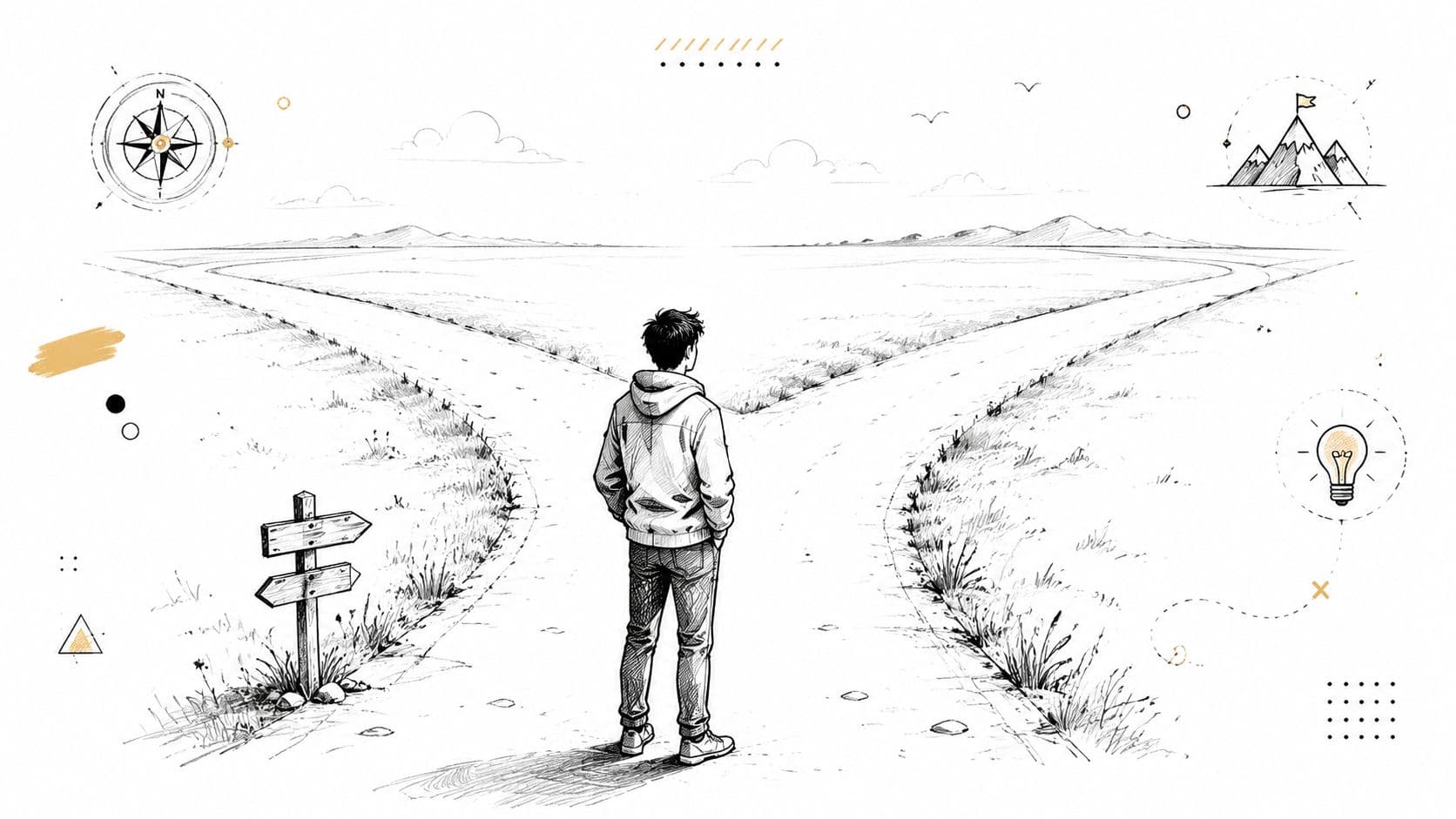
I've seen homeowners spend heavily on features they loved in photos but barely used in real life. A large patio sounds smart until no one accounted for summer sun exposure. A lush planting plan looks beautiful until the owner realizes they don't enjoy watering, pruning, or replacing underperforming plants. The mistake usually isn't taste. It's skipping the lifestyle question.
What this choice really affects
A hardscape-first plan changes how you move through the yard and how often you need to maintain it. A vegetation-focused plan changes how the space feels through the seasons and how much living material you'll be managing.
Think about these practical outcomes:
- Daily use: Where will people sit, walk, cook, gather, or store things?
- Weekly effort: Do you want routine garden care, or would you rather have fewer recurring tasks?
- Long-term value: Are you trying to solve drainage, slope, wear, privacy, or curb appeal?
- Flexibility: Will your kids, pets, or hosting habits change how the yard gets used?
A yard usually fails when the layout fights the homeowner's routine.
The goal isn't to “win” the hardscape vs softscape debate. The goal is to decide what the property needs first, and what can wait. When that order is right, the design feels natural. When it's wrong, the yard can look finished and still function poorly.
What Is Hardscape and What Is Landscape
Clear planning starts by separating the yard into two categories: built surfaces and living material. They share the same space, but they age, perform, and cost out very differently over the years.
Industry resources like Outercle's explanation of hardscape and landscape frame the distinction in a practical way. Hardscape covers the constructed parts of the property, such as patios, walkways, retaining walls, decks, driveways, and outdoor kitchens. Softscape includes the plant-based parts of the yard, including trees, shrubs, lawn, groundcovers, and garden beds. One side is built to carry traffic, define use, and solve site problems. The other side changes with weather, growth, and seasonal care.
That difference matters because ownership feels different after installation. A patio may need cleaning, joint repair, or sealing from time to time. Plantings ask for regular attention through watering, pruning, feeding, and replacement when something declines.
Hardscape. The Structure That Carries the Yard
Hardscape gives the property its framework. It controls circulation, handles grade changes, and creates places people can use.
Common examples include:
- Patios and seating areas: Space for dining, gathering, and everyday outdoor use
- Walkways and paths: Connections between the driveway, entry, side yard, and backyard
- Retaining walls and steps: Solutions for slope, erosion, and uneven grades
- Decks and raised platforms: Useful where the house sits above the yard
- Driveways and aprons: High-wear surfaces that affect function and curb appeal
- Outdoor kitchens, fire features, and built-ins: Add convenience, but also add installation and repair costs
Material choice has long-term consequences. Pavers, natural stone, concrete, wood, composite, and gravel all look different, but the bigger issue is how they handle heat, drainage, staining, snow, settling, and repairs. I often tell clients that the wrong surface can stay expensive long after the install is paid for. A beautiful patio that puddles, shifts, or overheats in July will not feel like a smart investment.
Fencing sits in this same decision category because it affects privacy, upkeep, and replacement cycles. If that feature is part of the project, this guide on choosing vinyl or wood fencing is worth reviewing alongside your surface and structure choices.
Landscape. The Living Layer That Changes the Experience
Softscape shapes how the yard feels. It adds shade, screening, texture, color, habitat, and seasonal change that built elements alone cannot provide.
This usually includes:
- Trees: Shade, privacy, scale, and long-term canopy
- Shrubs and hedges: Screening, evergreen structure, and border definition
- Lawns and groundcovers: Open space, cooling effect, and play areas
- Perennials, annuals, and ornamental grasses: Seasonal color and movement
- Garden beds and planting zones: Areas that give the yard personality and softness
Living material often comes with lower upfront cost than masonry or carpentry, but the ownership pattern is more active. Plants react to soil, drainage, exposure, pests, and weather. Some thrive with minimal care. Others need steady irrigation, pruning, feeding, and occasional replacement to keep the design looking intentional.
A simple rule helps here. If routine garden work sounds like a chore, reduce high-maintenance beds before they go in.
The strongest yards use both categories well. Built features make the space usable and durable. Greenery softens those edges, improves comfort, and makes the property feel settled. Too much concrete and stone can feel harsh and hot. Too much vegetation without enough structure can feel overgrown, costly to maintain, and harder to use day to day.
A Detailed Comparison for Homeowners
A yard can look affordable on install day and feel expensive every season after. I see that happen when homeowners compare bids line by line but never price out the years that follow.
The better question is simpler. What will this choice ask from your budget, your weekends, and your daily routine over the next 5 to 15 years?
That ownership lens matters because installation cost and long-term cost often split apart. Georgia Outdoor Living's overview of the tradeoffs highlights that clearly in its discussion of how built features and living elements age, require care, and create different long-term demands.
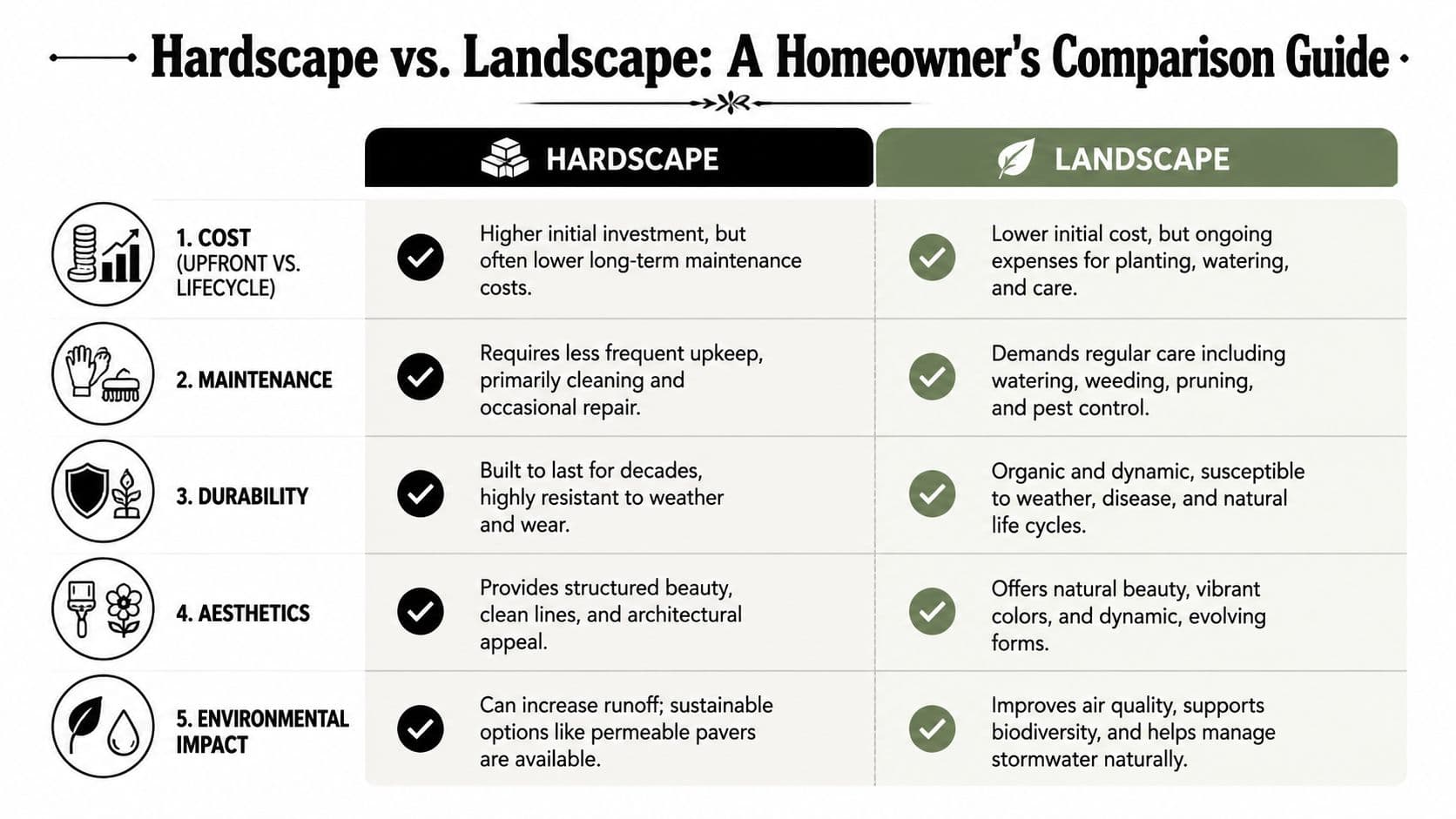
Hardscape vs Softscape At a Glance
| Factor | Hardscape (Patios, Walls, Decks) | Softscape (Plants, Lawns, Gardens) |
|---|---|---|
| Cost | Often higher upfront | Often lower upfront |
| Ownership over time | Lower routine upkeep, but repairs can be expensive when needed | Recurring care costs and periodic replacement |
| Maintenance pattern | Occasional cleaning, sealing, joint care, repairs | Regular watering, mowing, pruning, weeding, feeding |
| Durability | Long-lasting when installed well | Seasonal and changeable by nature |
| Appearance | Structured, architectural, crisp | Soft, layered, colorful, and evolving |
| Environmental behavior | Can increase runoff if drainage is poor | Helps with shade, habitat, and water absorption |
| Best for | Entertaining, circulation, grade control, reducing weekly labor | Privacy, garden enjoyment, cooling, and visual softness |
Upfront Price Rarely Tells the Full Story
Patios, retaining walls, steps, and decks usually cost more to build because the work below the surface matters. Excavation, base prep, drainage, edge restraint, and skilled labor drive the number up fast. If that work is done well, the payoff is predictability. The space stays usable in wet weather, handles furniture and foot traffic, and asks less from you week to week.
Plantings are easier to phase, which makes them feel more budget-friendly at first. A homeowner can add trees this year, shrubs next year, and finish the beds later. That flexibility is useful, but it can hide the true cost. Watering, mulch, trimming, lawn care, seasonal cleanup, and replacement losses keep showing up long after the install is paid for.
That is the trade-off many first-time clients miss.
A garden-heavy yard can start cheaper and still cost more in labor, service visits, and plant replacement over time.
Maintenance Depends on the Kind of Work You Want to Live With
Built surfaces usually create intermittent maintenance. Living elements create recurring maintenance. The difference matters because homeowners do not experience those two costs the same way.
Hardscape care tends to come in bursts:
- Cleaning: Algae, debris, and stains build up on horizontal surfaces
- Joint and edge repair: Pavers shift, polymeric sand breaks down, and edging can loosen
- Sealing or refinishing: Some stone, concrete, and wood surfaces need periodic treatment
- Drainage fixes: Poor runoff shortens the life of almost every outdoor build
Softscape care is steadier:
- Watering: Especially during establishment and summer heat
- Pruning: Plants keep growing whether the design can handle that size or not
- Weeding and bed cleanup: Small tasks that return constantly
- Soil care and feeding: Needed in many gardens to keep growth healthy and balanced
- Replacement: Some plants fail because of exposure, drainage, winter damage, or poor placement
This affects lifestyle as much as cost. Homeowners who travel often, work long hours, or do not enjoy weekly yard work usually get better long-term value from giving more square footage to built areas. Homeowners who like seasonal change and do not mind routine care often accept a heavier planting plan because the experience is worth the work.
The same ownership question applies to fences. If your project includes one, this guide on choosing vinyl or wood fencing is useful for the same reason. Material choice changes what you pay later in upkeep, repair, and time.
Durability, Comfort, and How the Yard Feels to Use
For wear and function, hardscape usually carries the load. Dining areas, grill stations, paths, pool surrounds, and grade changes need a surface that stays stable under repeated use. Plants cannot solve those problems.
Softscape changes the comfort level of the yard. Trees cool sitting areas. Shrubs create privacy. Groundcovers and beds soften the edges of stone and wood so the space feels finished instead of stark. Good planting also helps a new project settle into the property faster, which matters if resale value is part of the plan.
Environmental performance depends on execution, not category alone. Large impermeable surfaces can create runoff problems if grading and drainage are ignored. Gardens and other planted areas can absorb and slow water, but only when the soil, slope, and plant selection match the site.
The best result usually comes from assigning each part of the yard a job. Use hardscape where durability and function matter most. Use softscape where comfort, screening, shade, and seasonal character will pay you back year after year.
When to Prioritize Hardscape or Landscape
A clear priority saves money later. Homeowners who try to split the budget evenly between surfaces and plantings often end up with a yard that looks finished for one season but does not work well for the next ten years.
Start with the part of the yard that solves the most expensive problem first. In some properties, that means building the patio, steps, drainage, or retaining wall before anything green goes in. In others, the better first move is trees, screening, and shade because the space already functions but feels exposed and uncomfortable.
Prioritize Hardscape If
Put built features first when daily use is being limited by the site itself.
That usually applies in situations like these:
- You need outdoor living space that works right away: A patio, deck, or dining area changes how often the yard gets used. If there is no stable place to sit, cook, or gather, adding beds and shrubs first will not fix the underlying problem.
- Access is awkward or messy: Worn tracks through grass, muddy routes, and unsafe grade changes should be corrected before adding decorative elements.
- The property has drainage, slope, or erosion issues: Retaining walls, grading, edging, and water control are expensive to redo after planting is installed.
- You want predictable upkeep: Pavers, steps, and defined paths usually cost more upfront, but they can reduce mowing, soil washout, and the need to rebuild problem areas later.
- You plan to stay busy or travel often: A yard with more structure and fewer high-care beds is easier to maintain consistently.
This is often the right call in smaller yards too. One well-sized patio can deliver more day-to-day value than a larger amount of decorative greenery that still leaves nowhere practical to use the space.
Prioritize Softscaping If
Lead with plantings when the yard already works well enough but feels bare, hot, visible, or unfinished.
That tends to make sense when:
- Privacy is the main complaint: Trees, hedges, and layered shrubs can block views more comfortably than many fence-only solutions.
- Shade will improve how the yard feels: If seating areas are too exposed in summer, canopy and vertical planting may improve the experience more than adding another hard surface.
- You enjoy gardening and seasonal change: A homeowner who likes pruning, editing, and caring for beds gets long-term value from a greener plan that goes beyond appearance.
- You need flexibility in phases: Plantings are often easier to expand over time than masonry work, which helps if the budget has to stretch across multiple seasons.
- The property looks harsh after construction: New patios, walls, and fences usually need greenery around them to feel settled and connected to the house.
I often advise clients to start here when the yard already has enough usable square footage, but the space still does not invite them outside.
Decide Based on the Next 10 to 15 Years
The better question is not which category is better. The better question is what will cost less to own, maintain, and live with over time.
A family with young kids may get more value from durable surfaces, open play space, and simple border plantings. A homeowner planning quiet evenings outside may benefit more from screening, layered beds, and shade near a smaller seating area. A rental property usually benefits from choices that hold up with less attention. A long-term home for an avid gardener can support more complexity because the upkeep is part of the appeal.
If you are still unsure, sketch the yard around routines first, then test options with examples of designing outdoor patio layouts or compare concepts in an ai landscape design generator.
Most Successful Yards Use Both, in the Right Order
The strongest projects usually follow a simple sequence.
- Fix function first. Handle access, grade, drainage, and the areas people will use every week.
- Spend where the lifestyle return is highest. Build the patio you will use before paying for decorative square footage that does not solve anything.
- Add greenery where it changes comfort and appearance. Shade at seating, screening at property lines, and foundation planting near key views usually earn their keep.
- Leave room to grow into the plan. It is easier to add planting later than to tear out finished work because the original layout never matched how the yard was used.
A yard that feels cold usually needs more greenery. A yard that feels inconvenient usually needs more structure. The right priority depends on which problem is costing you more time, money, and enjoyment now, and which choice will still make sense a decade from now.
How to Plan and Visualize Your Outdoor Design
A lot of expensive yard mistakes happen because homeowners approve ideas they can't fully picture. A patio seems appropriately sized on paper, then feels cramped once furniture arrives. A planting bed looks balanced in plan view, then hides windows or blocks a walkway once it fills in.
Start with Function Before Style
Before you think about stone color, plant palette, or fence style, answer a few practical questions:
- Where do people naturally exit the house?
- Which spots stay wet, windy, shaded, or exposed?
- Do you need dining space, play space, storage, privacy, or all of them?
- How much upkeep are you willing to handle?
For shape and circulation ideas, it helps to review examples of designing outdoor patio layouts so you can see how zones, walkways, and furniture clearances work together before you build.
Visualize Before You Build
Once the functional map is clear, test combinations. See what happens if you expand the patio and reduce lawn. Try a path with planting on one side and gravel on the other. Compare a deck with a planted border against a paver terrace with raised beds.
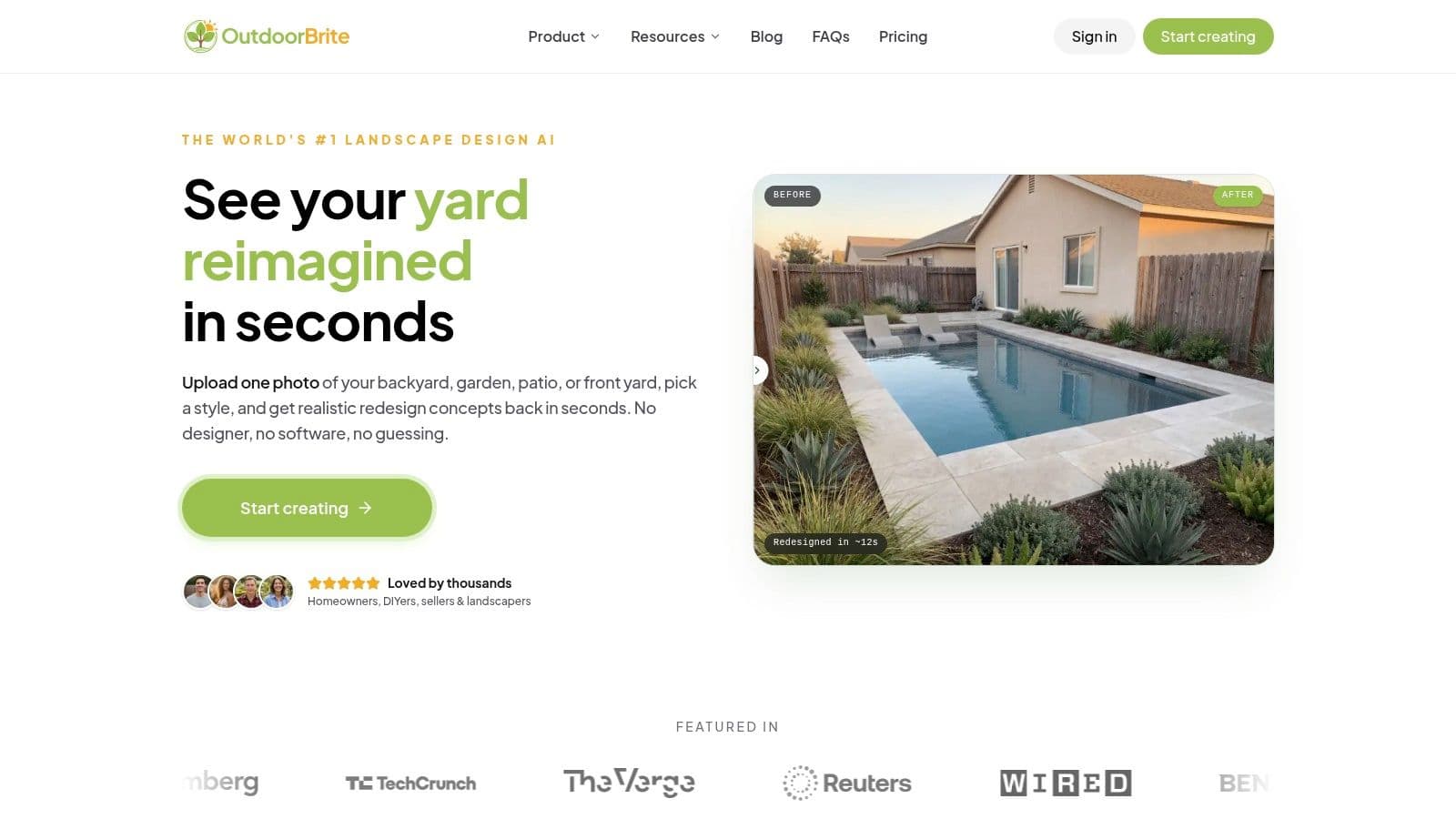
One practical option is an ai landscape design generator that lets you upload a photo of your yard and test different hardscape and planting directions before spending on labor and materials. That's especially useful when you're deciding between multiple layouts rather than choosing finishes for a fixed plan.
What matters most is seeing the balance in your own space. Every yard has different proportions, sun patterns, sight lines, and constraints. Visualization helps you catch scale problems early, and it makes budgeting easier because you can identify what's essential versus what's just appealing in theory.
Practical Tips for Budget and Upkeep
A yard can look affordable on paper and still become expensive to own. The usual problem is not the patio, path, or plant list itself. It is everything tied to keeping those choices stable, usable, and easy to live with for the next 10 to 15 years.
Budget for the Parts People Forget
The best budgets break the project into systems, not just features. A homeowner may price a patio and some new plantings, then get surprised by drainage corrections, soil work, or the labor needed to access a tight side yard. Those are the items that often decide whether a project holds up well or starts costing money again in a few seasons.
Include these categories:
- Base and prep work: Excavation, grading, compaction, soil improvement, and drainage work affect how long surfaces stay level and how well plants establish.
- Edge conditions: Steps, borders, transitions, and finish work at the house or fence line shape both appearance and day-to-day usability.
- Water management: Downspout routing, slope correction, and runoff control protect both paved surfaces and planted areas from avoidable damage.
- Plant establishment: New trees, shrubs, and beds often need mulch, irrigation adjustments, staking, and occasional replacement during the first growing period.
- Future access: Utility boxes, irrigation parts, wall repairs, and bed maintenance all get harder and more expensive if crews cannot reach them easily later.
If you're hiring help, it also helps to understand typical labor structures before you request proposals. This overview of average hourly fees for landscapers can help you frame conversations around scope, labor intensity, and what drives pricing.
Compare options by installation cost, yearly upkeep, and likely repair cycle. That is the real ownership cost.
Keep Upkeep Realistic
Maintenance should match your schedule, your tolerance for chores, and how you use the yard. I've seen homeowners install large planted beds they loved in spring, then spend the next few summers trying to catch up on pruning, watering, and cleanup they never wanted to do in the first place.
For hard surfaces, preventive care is cheaper than deferred repair:
- Sweep and rinse surfaces regularly so organic buildup, staining, and joint problems do not settle in.
- Watch joints and edges because minor movement is far less expensive to correct than a full reset.
- Check drainage after storms so ponding, erosion, and washout get addressed before they spread.
For plantings, lower the maintenance load at the design stage:
- Choose plants for the actual site conditions so they are more likely to thrive without constant intervention.
- Group plants by water needs so irrigation stays efficient and simpler to manage.
- Prune for size early so shrubs and small trees do not outgrow their space and force heavy cutbacks later.
If you want a visual walkthrough of outdoor planning choices and what to think about as you balance cost and function, this clip is a useful place to pause and compare ideas:
The right yard is not the one with the most features. It is the one you can afford to build, maintain, and still enjoy years from now.
Common Questions About Hardscape and Landscape
Which adds more home value
The better question is which improvement makes the yard more usable for the next owner without creating upkeep they will resent.
A well-built patio, walk, or seating area often holds value because buyers understand it right away and can use it on day one. Good plantings help too, especially near the entry and along the house, but overplanted beds can read as future work instead of an asset. If resale matters, spend first on function, then use softscape to frame it and make it feel finished.
Can I DIY hardscape projects
Yes, but only where mistakes stay small and easy to fix.
Gravel paths, simple borders, and a modest planting bed are realistic weekend projects for many homeowners. Paver patios, retaining walls, stairs, drainage changes, and anything that affects grade usually cost less when built correctly the first time. I have seen plenty of DIY installs that looked fine for one season, then started shifting because the base, slope, or edge restraint was wrong.
How does climate affect the decision
Climate changes the ownership cost more than the initial design concept.
In freeze-thaw areas, surface movement and joint failure matter. In hot, dry regions, irrigation demand and plant stress matter more. Near the coast, salt and wind can shorten the life of some materials and limit what will thrive. The right choice comes from matching materials and plantings to local conditions, not from choosing one category over the other.
How long does a typical project take
Simple jobs can move quickly. Full yard projects rarely do.
Site access, grading, permit requirements, weather, and material lead times all affect the schedule. Plantings also have a seasonal window, which means the best install date for stonework is not always the best install date for living components. Homeowners usually get a better result by phasing the work than by forcing everything into one rushed build.
If you're still weighing tradeoffs, start by testing the layout before you buy materials or book a crew. OutdoorBrite Money gives homeowners a practical way to compare different yard directions visually, so it's easier to decide where hardscape should lead, where greenery should soften, and what belongs in the budget now versus later.
See your yard reimagined
Start creating