How Much Does Backyard Landscaping Cost: 2026 Pricing Guide
Discover how much does backyard landscaping cost in 2026. Get a realistic breakdown, explore budgets from $1,500 to $50,000+, key price drivers, and tips to
Backyard landscaping can cost $1,500 for a simple refresh or over $50,000 for a full renovation. The huge gap isn't because estimates are sloppy, it's because a mulch-and-plant update lives in a completely different budget category than patios, grading, drainage, and outdoor living features.
Table of Contents
- Why Backyard Landscaping Costs Are So Misleading
- The Core Price Drivers That Shape Your Budget
- Sample Budgets From a Simple Refresh to a Full Renovation
- DIY vs Hiring a Pro What You Really Save
- How to Get an Accurate Estimate and Reduce Costs
- Frequently Asked Questions About Landscaping Costs
Why Backyard Landscaping Costs Are So Misleading
Most homeowners start with a low number they saw online, then wonder why local quotes feel much higher. That reaction makes sense, because a broad landscaping average often mixes tiny jobs with large outdoor builds that barely resemble each other. LawnStarter's 2026 cost guide puts general professional landscaping around $1,400 to $1,660, while other national sources land closer to $3,515 or $3,647 on average, and that's exactly why the headline number can be so misleading. LawnStarter's 2026 landscaping price guide
Scope is the issue. A backyard refresh might mean mulch, a few shrubs, and some lawn repair. A backyard renovation can mean demolition, grading, pavers, drainage, seating areas, irrigation, and built features that change the entire way the yard works.
The average is not the project
A single average can't capture the difference between a tidy planting job and a full outdoor living space. That's why per-square-foot pricing is often more useful than one flat headline number, especially when the yard has unusual access, slopes, or hardscape plans. LawnStarter's cited benchmark of $4.50 to $14.50 per square foot helps explain why costs rise so quickly as the scope grows. LawnStarter's 2026 landscaping price guide
Practical rule: If the job changes how you use the backyard, not just how it looks, you're probably no longer in “refresh” territory.
That distinction matters because many homeowners budget for plants when they really want construction. If you're only replacing tired beds and cleaning up the edges, you're comparing against one kind of project. If you want a place to cook, gather, sit, and move water away from the house, you're planning something much bigger.
What “refresh” and “renovation” actually mean
A refresh usually focuses on softscaping, the living parts of the yard. A renovation adds the bones of the space, meaning patios, walls, steps, and sometimes lighting or irrigation. Once the bones go in, labor and material needs rise together, which is why the final bill can jump fast.
That's the part many online calculators flatten out. They may be useful for a rough starting point, but they don't tell you whether your vision belongs in a low thousands budget or a five-figure build. The rest of this guide is about placing your project in the right bucket before you ask for quotes.
The Core Price Drivers That Shape Your Budget
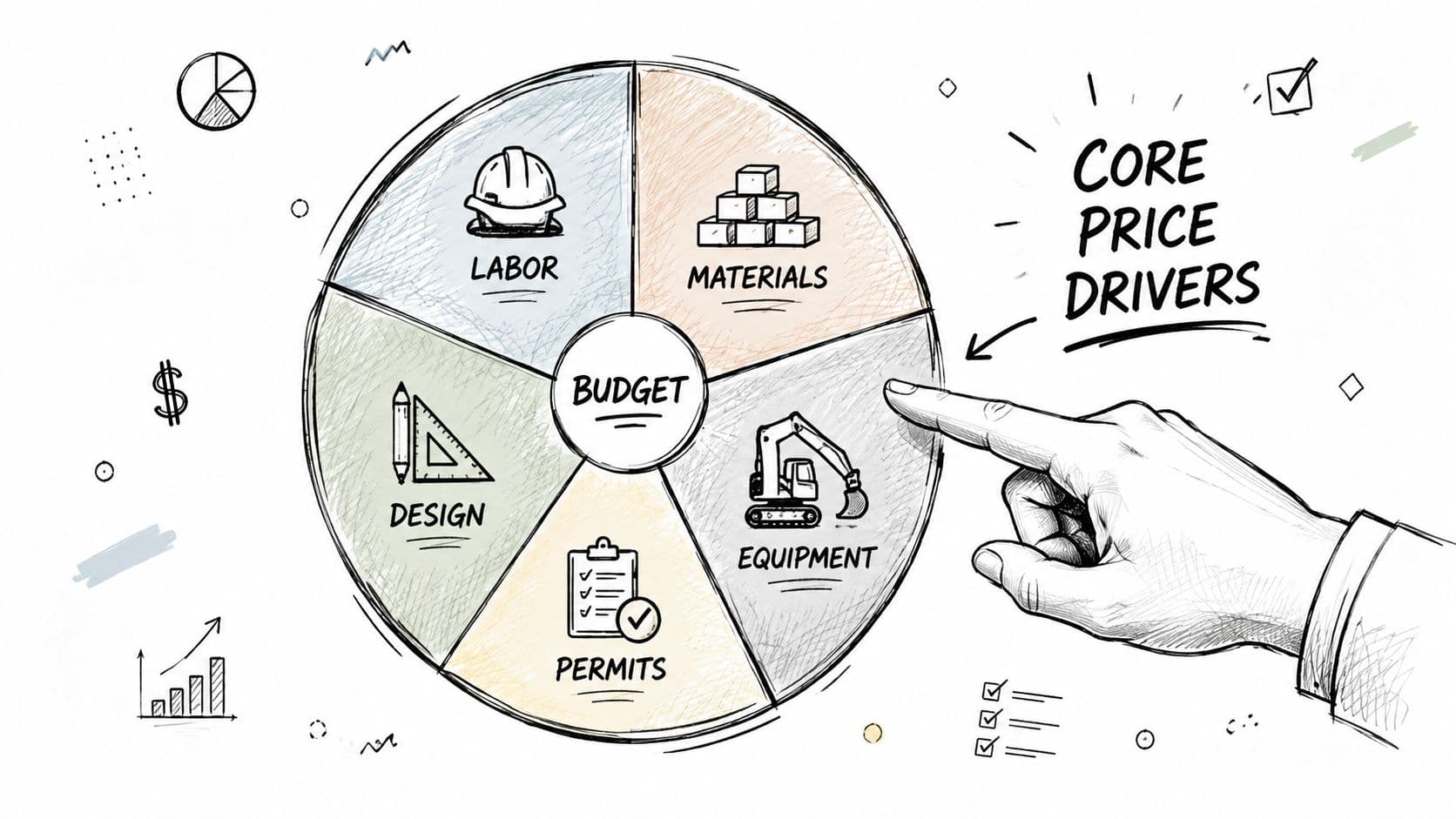
The cleanest way to understand a landscaping quote is to separate the yard into the parts you can see and the parts that support everything else. Hardscaping is the bones. Softscaping is the skin. Labor is the part that ties the whole project together, and it usually drives more of the total than homeowners expect.
Size and site prep
Yard size matters because every square foot has to be touched, moved, planted, graded, or finished. Site prep matters just as much. Clearing debris, leveling slopes, hauling away old material, and correcting drainage all add effort before a single plant goes in.
That's why two backyards of the same size can land at very different totals. One may be a clean slate with easy access. The other may need reshaping, protection for adjacent structures, or enough prep work that the project feels like a small construction site.
Hardscaping and softscaping
Hardscaping covers patios, walkways, retaining walls, and other built surfaces. It tends to cost more because it needs excavation, base work, compaction, and careful installation. Softscaping is the planting layer, including grass, mulch, trees, shrubs, and seasonal color.
The built pieces set the long-term function of the yard, so they usually claim the biggest share of the budget. Planting fills the yard in and softens the look, but it rarely carries the same structural burden. If you're choosing where to spend first, hardscape usually defines the layout, while plants make it feel finished.
Labor and add-ons
Angi's cost guidance says many professional installs sit around $4.50 to $12 per square foot for basic to moderate work, while more complex work can climb to $40 per square foot. The same source notes labor can account for about 80% of total project cost, which is why simplifying the design often saves more than chasing cheaper plants alone. Angi's landscaping cost guide
A few common add-ons push budgets up fast:
- Lighting: Wiring and fixture placement add coordination and labor.
- Irrigation: Good watering systems reduce maintenance, but they add installation cost.
- Drainage: Solving water problems usually takes excavation and careful grading.
- Outdoor cooking or lounge areas: These are construction decisions, not decoration choices.
Design choices that change the bill
A straight path is cheaper than a curved one. A compact patio is cheaper than a multi-zone gathering area. A yard with simple edges is cheaper than one with retaining walls and multiple elevation changes. Those differences aren't cosmetic, they alter how much labor, base work, and material handling the crew has to do.
A useful planning habit is to decide what the yard must do, then strip out everything that doesn't support that purpose. When homeowners start with “I need a place to sit, a place for kids, and a way to manage runoff,” the quote gets clearer. When they start with “I want it to feel upscale,” the scope often wanders.
Sample Budgets From a Simple Refresh to a Full Renovation
The fastest way to avoid sticker shock is to stop thinking in one giant number. Backyard landscaping usually falls into tiers, and each tier buys a different kind of outcome. That's why a project can feel affordable in one phase and expensive the moment it turns into a true outdoor room.
Backyard Landscaping Budget Tiers 2026 Estimates
| Budget Tier | Typical Cost Range | Common Inclusions |
|---|---|---|
| Basic Refresh | $1,500 to $5,000 | Mulch, plantings, minor lawn repair, cleanup, simple edging |
| Mid-Range Makeover | $8,000 to $20,000 | Larger planting plan, a paver patio or pergola, irrigation upgrades, better lighting |
| High-End Transformation | $25,000 to $50,000+ | Multiple hardscape zones, outdoor kitchen, extensive lighting, lounge areas, structural features |
The low end is usually a cleanup-and-renewal job. It improves curb appeal and makes the yard look cared for, but it doesn't rework the space. The mid-range tier starts to change how you live outside because it adds a destination, not just decoration.
What the tiers feel like in real life
A homeowner with a basic refresh is usually tackling the parts that look tired. New mulch, fresh shrubs, a reseeded patch of lawn, maybe a better edge around beds, that kind of work. This tier makes sense when the yard already functions and just needs a reset.
A mid-range makeover is where the yard starts to earn its keep. A patio creates a place to sit, a pergola adds shade, and irrigation or lighting can make the space easier to use and maintain. If your wish list includes a gathering area, this is often the first realistic budget band.
A high-end transformation changes the property's daily use. That's the range for multiple zones, strong hardscape presence, and features that make the backyard feel like an extension of the house. HomeAdvisor says complete renovations commonly land in the $15,000 to $50,000 band, and more complex builds with pools, patios, and outdoor kitchens can break $100,000. HomeAdvisor's landscaping installation cost guide
If your plan includes more than planting and cleanup, assume you're moving out of starter pricing and into renovation pricing.
For homeowners trying to narrow the scope, a helpful exercise is to rank features by necessity. A patio might be essential. A fire feature might be a nice extra. The more realistically you sort the list, the better the budget will hold up once the bids arrive.
If you're still collecting visual ideas, the backyard paver inspiration gallery is useful for seeing how different patio layouts change the feel of a yard without changing the entire property. For broader planning habits, even affordable wedding planning tips can be a smart reminder that good budgets start with priorities, not wish lists.
DIY vs Hiring a Pro What You Really Save
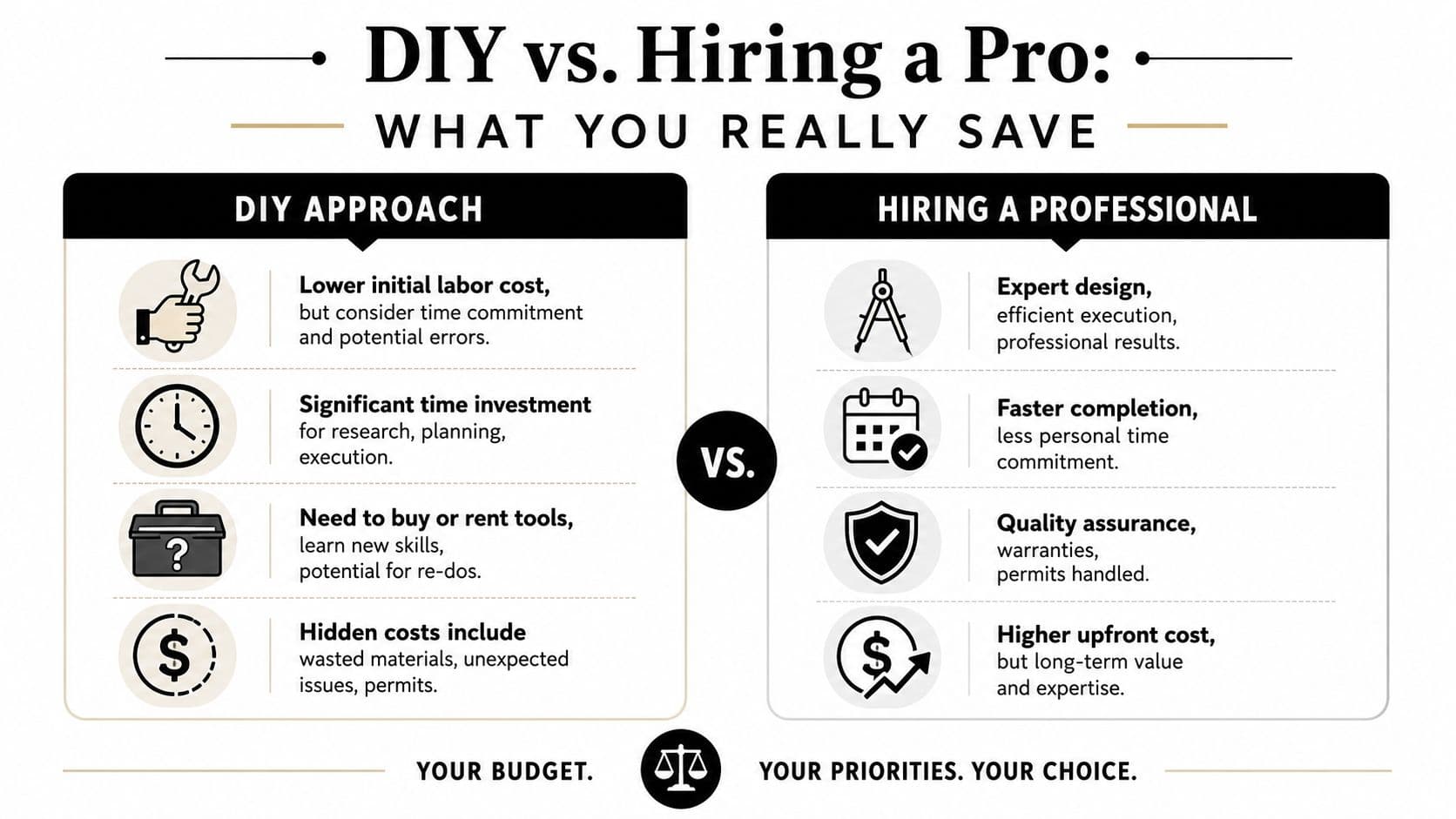
DIY can lower the upfront bill, but it doesn't erase the true cost of the project. It just shifts more of that cost onto your time, your tools, and your tolerance for mistakes. Hiring a pro costs more on paper, yet it often protects the parts of the project that are hardest to fix later.
Where DIY makes sense
DIY is strongest on low-risk tasks. Planting, mulching, simple cleanup, and some demolition are manageable for many homeowners. If the project is mostly softscaping and you've got time, the labor savings can be real.
The catch is hidden cost. Tools need to be bought or rented. Materials have to be delivered or hauled. If the layout changes halfway through, wasted product can erase part of the savings. A weekend project can also turn into a month of interrupted work if weather, access, or muscle fatigue slow everything down.
Where hiring a pro pays off
Professionals earn their fee when the project depends on accuracy. Patios need proper base work. Retaining walls need the right build sequence. Irrigation and lighting need planning before anything is buried or finished. If a mistake affects drainage or structure, the fix can be far more expensive than the original labor charge.
That's why a skilled crew often saves money in ways that don't show up on the first invoice. They work faster, coordinate trades better, and reduce re-dos. They also understand how to simplify a design so the yard still looks finished without making every element custom.
For complex structural work, a resource like the HomeProBadge retaining wall guide can help homeowners understand why wall design and construction details matter before they approve a quote. If you're considering concepting software before you talk to contractors, AI backyard design can help you see the yard layout more clearly, and ai garden design generator is another way to sketch planting-led ideas before committing to materials.
A simple decision test
Ask three questions before choosing DIY:
- Can I make a mistake without ruining drainage, slope, or structure?
- Do I have the tools and time to finish this cleanly?
- Will a delay or redo cost more than the labor I'm trying to save?
If the answer to any of those is no, the pro route usually makes more sense. DIY is a great fit for visible, low-risk work. It's a bad fit for anything that would be expensive to tear up and do again.
How to Get an Accurate Estimate and Reduce Costs
A good estimate starts with a good plan. Contractors can only price what they understand, and vague wishes usually produce vague quotes. If you want a cleaner number, bring a clear layout, a feature list, and a realistic sense of what can wait until phase two.
What to ask for before you hire
Get at least three itemized bids. Itemized quotes make it easier to compare apples to apples because you can see what's included in material, labor, and site prep. Ask each contractor how they handle drainage, access, haul-away, and any work that might affect permits or inspections.
You should also check references for projects that resemble yours. A crew that installs clean planting beds may not be the right crew for a patio-heavy yard. The more closely their past work matches your scope, the more useful their estimate will be.
A polished sketch beats a fuzzy idea every time.
That's where visual planning helps. OutdoorBrite turns a photo of the actual yard into redesign concepts, which can make it easier to explain what you want before bids are written. It's not a substitute for construction pricing, but it can reduce confusion about layout, style, and feature placement when you're talking with contractors.
How to keep the budget under control
Phase the work if the full plan is too expensive right now. Start with grading, drainage, and the main patio, then add planting, lighting, or accessories later. That approach keeps the backbone of the project intact without forcing every feature into one expensive season.
Material choice matters too. Simpler pavers, smaller plant sizes, and fewer custom details usually keep the quote down. The goal isn't to make the yard cheap, it's to make sure the money goes where you'll feel it most, like function, access, and durability.
One more useful tactic is to handle the easy labor yourself. Demolition, basic cleanup, and planting can be a sensible hybrid approach if the contractor is covering site prep and construction. That keeps the professional work focused where it matters most.
If you want another way to compare options before calling anyone, a tool like AI backyard design can help translate rough ideas into a cleaner concept. It's especially helpful when you're deciding whether the project is still a refresh or has already crossed into renovation territory.
Frequently Asked Questions About Landscaping Costs
Does landscaping add resale value?
It can, but the payoff depends on how well the yard fits the house and the neighborhood. A clean, functional backyard usually supports buyer interest because it makes the property feel easier to live in. The value tends to be strongest when the work improves first impressions, usability, and maintenance, not when the yard is overloaded with personal features.
What ongoing maintenance should I budget for?
Maintenance is easy to underestimate because the project doesn't end when the install crew leaves. Plants need care, irrigation needs checks, and hardscape areas still need cleaning and upkeep. A low-maintenance design, the kind with durable materials and simpler planting, is usually easier to live with than a yard full of high-touch features.
Is spring or fall better for starting?
Either can work, but the better start time is the one that fits your local climate, contractor availability, and the type of work being done. Planting-heavy jobs often benefit from cooler conditions, while construction-heavy projects may be scheduled around access, weather, and crew capacity. The main advantage is not the season alone, it's starting with enough lead time to avoid rushed choices.
Are design fees separate?
Often, yes. Design and installation are different parts of the job, and some projects need a separate design phase before anyone prices the build. That separation can help homeowners, because a clear plan makes the install quote easier to understand and compare.
A smart backyard budget starts with a clear scope, not a number pulled from an average. If you're ready to turn a rough idea into a yard plan you can price, visit OutdoorBrite and use it to visualize your space before you request bids or buy materials.
See your yard reimagined
Start creating