
How to Boost Curb Appeal on Any Home This Year
Learn how to boost curb appeal with quick wins, landscaping upgrades, hardscape tweaks, and staging tips. See ideas on your own yard before spending a dollar.
You're standing in the driveway on a Saturday morning, looking at your house the way a buyer or guest does. The driveway crack suddenly seems obvious. So does the faded trim, the dead shrub beside the porch, and the porch light that makes the entry look flat after sunset. Inside the house, everything may be clean and orderly, but the exterior is sending a different message.
Learning how to boost curb appeal isn't about collecting a long list of decorative ideas. It's about correcting the visible problems in the right order, then adding planting, lighting, and character that suit the house and its surroundings. Paint applied over mildew won't look fresh for long, and pavers installed over a sinking base will become an expensive reminder that preparation matters.
The driveway view is the honest starting point. Work from the street inward, and use this sequence: structural repairs and cleaning before paint, softscape before hardscape, neighborhood fit before dramatic statements, and visualization before you spend on plants, stone, or a contractor.
Table of Contents
- Standing in Your Driveway
- Why Curb Appeal Pays You Back
- Quick Wins You Can Finish in a Weekend
- Landscaping Upgrades That Move the Needle
- Hardscape and Front-Yard Structure
- When Standout Curb Appeal Backfires
- Visualize Changes Before You Spend
Standing in Your Driveway
Start by walking to the opposite side of the street, then return to the driveway and follow the route a visitor would take. Look at the house as one composition instead of inspecting each feature separately. Buyers see the roofline, garage door, path, planting beds, windows, and front door in a single glance, so a beautiful new door won't rescue a neglected approach.
Make three passes.
Fix what signals risk
First, look for conditions that suggest deferred maintenance:
- Water and drainage: Check for overflowing gutters, staining beneath downspouts, pooling near the walkway, or soil touching siding.
- Safety and access: Notice loose railings, uneven steps, broken paving, slick surfaces, and branches that obstruct the path.
- Exterior wear: Look for peeling paint, damaged siding, cracked trim, rusted hardware, and a garage door that no longer sits square.
- Visual clutter: Remove dead plants, unused pots, tangled hoses, toys, tools, and decorations that compete with the entry.
These repairs may not photograph as dramatically as a new flower bed, but they change the story the property tells. A buyer who sees a clean, dry, orderly exterior has fewer reasons to assume hidden maintenance work.
Clean before you decorate
Wash the siding, front steps, windows, mailbox, porch ceiling, and driveway. Clean gutters and remove cobwebs from corners and light fixtures. For garage doors and other large exterior features, the practical maintenance guidance collected in expert advice from Danny's Garage Door Repair is a useful reference before you decide whether replacement is necessary.
Don't pressure-wash delicate surfaces aggressively. Test a small hidden area first, keep the spray away from window seals, and use the correct nozzle for wood, vinyl, brick, and concrete. Cleaning often reveals that some “replacement” projects only need repair and a careful refresh.
Build the design in layers
Once the exterior is sound, establish the planting layout. Then decide whether the walkway, edging, steps, or lighting need structural changes. A hardscape installed before you resolve bed shapes and drainage often forces you to cut plants back, move soil, or redo borders.
Practical rule: If a new feature doesn't look intentional from the curb, don't add another feature. Correct the composition first.
Take a straight-on photo and a three-quarter photo before doing any work. Those images become your baseline, and they'll make it easier to judge whether each improvement has improved the whole frontage rather than only one corner.
Why Curb Appeal Pays You Back
A buyer may forgive dated porch furniture or a plain planting bed. A failing roof, sagging gutter, cracked step, or worn garage door raises a harder question: what other maintenance has been deferred? That is why exterior work deserves attention before decorative upgrades, even when the kitchen or bathroom appears more exciting.
In Remodeling magazine's 2024 Cost vs. Value analysis, eight of the ten improvements with the highest return on investment were exterior projects. Reported payback ranged from 68% for a new composite deck to 194% for a garage door replacement, according to Zillow's summary of exterior home improvements.
Those figures do not make a new garage door or deck the right choice for every property. They show that the front-facing exterior combines visibility, buyer attention, and measurable resale performance. Zillow's summary also notes that 15% of sellers repaired or replaced a roof before listing, while 72% of buyers considered a watertight roof very important. A roof, gutter, siding, or garage-door defect can weaken the effect of every decorative improvement around it.
A separate summary of National Association of Realtors survey work reports that 99% of participants said curb appeal matters in attracting a buyer, and 94% of 6,911 realtors surveyed said they advise sellers to improve it before listing. The same curb appeal and resale-value overview cites outdoor design value estimates ranging from 1% to 10% for homes with well-kept grounds, with some substantial yard improvements associated with higher effects.
Use a three-tier spending test
Judge the frontage in this order:
- Safety and maintenance cues: Check the roof, gutters, drainage, cracks, railings, steps, and damaged siding first. These defects create concern because buyers can see the future repair bill.
- Freshness and care: Clean windows, a maintained lawn, crisp bed edges, sound paint, and an orderly entry show consistent upkeep.
- Emotional appeal: Plants, lighting, hardware, color, and a welcoming porch help buyers picture daily life there.
The third layer works only when the first two look credible. Stone placed around a stained foundation reads as camouflage. Decorative lighting beside a broken step highlights the hazard. A freshly painted door framed by peeling trim looks unfinished.
Neighborhood fit matters too. A restrained entry can outperform a dramatic redesign if neighboring homes share a quiet, traditional character. Conversely, a bare frontage may look neglected on a street where established beds and mature trees are expected. Match the scale, maintenance level, and architectural cues of the block before choosing expensive materials or unusual colors.
Curb appeal ROI by project type
| Project | Reported value or payback | Typical cost | Buyer notice level |
|---|---|---|---|
| Garage door replacement | Up to 194% reported payback | Varies by door and installation | High |
| Composite deck | 68% reported payback | Varies by size and materials | Medium to high |
| Roof repair or replacement | Depends on condition and market | Varies substantially | Very high |
| Siding, door, or exterior replacement | Exterior work dominates high-return rankings | Varies by scope | High |
| Planting and grounds maintenance | 1% to 10% reported effects for homes with well-kept grounds | Varies by design and maintenance | High |
Use the table to set priorities, not to promise a return. Cost recovery changes with location, workmanship, timing, and the condition of the rest of the home. Fund the feature a buyer can see, understand, and trust before adding details that only photograph well.
Clean glass can make the entire frontage appear better maintained. Residential windows need a gentler approach than storefront glazing, but these storefront window maintenance tips provide useful reminders about technique, tools, and residue prevention.
Quick Wins You Can Finish in a Weekend
A weekend project should improve several visible surfaces at once. The strongest quick wins are usually cleanup, entry paint, lighting, and small hardware because they change the way the eye reads the front elevation without requiring a full redesign.
Begin with a measured clean
Pressure-wash the driveway, front walk, porch steps, lower siding, and gutter faces where the material can tolerate it. Rent or borrow equipment if you don't own it, and spend time sweeping loose grit before washing. Let surfaces dry fully before you judge their condition or apply any coating.
Your tool list is simple: a stiff outdoor broom, hose, pressure washer or suitable cleaner, extension cord if required, gloves, eye protection, and drop cloths. The common mistake is using maximum pressure everywhere. That can etch concrete, force water behind siding, damage mortar, or strip wood fibers.
Clean windows and light fixtures by hand. Wipe the mailbox, door threshold, porch furniture, and house numbers while you're already working at the entry. The guide on how to improve curb appeal from Superior Home Improvement is a useful companion for organizing these small exterior repairs.
Make the door the focal point
A front door can take a strong color more easily than the entire façade. Choose a shade that relates to the roof, brick, stone, or trim. A warm red, muted blue, deep green, or restrained charcoal can add definition, but the right choice depends on the surrounding materials and the amount of shade.
Remove or protect hardware, clean and lightly sand the surface, repair dents, and use an exterior primer where needed. Paint in indirect light, keep an eye on temperature and moisture, and don't close the door until the finish has cured enough to avoid sticking. Touch up trim and railings with a brush rather than repainting sound surfaces unnecessarily.
Replace the details people read up close
New house numbers, a clean mailbox, a door handle, and a coordinated lockset can make the entrance feel deliberate. Choose numbers that are easy to read from the street and match the architectural scale of the home. If you change one visible metal finish, check the other fixtures before ordering. Mixed metals can work, but accidental mismatching usually looks careless.
Lighting needs the same restraint. Replace tired fixtures with warm LED bulbs, use symmetry where the entry allows it, and aim for a clear path rather than a brightly illuminated façade. A porch sconce on a dusk-to-dawn sensor is more useful than a collection of scattered lights that creates glare.
Photograph the baseline
Before you start, take photos from the street, the driveway, the walkway, and the front-door approach. Shoot in daylight and after dark if lighting is part of the project. Keep the camera position consistent, and record which fixtures, colors, and hardware you changed.
For path proportions and entry transitions, the OutdoorBrite guide to walkways can help you compare layout ideas before you commit to a new surface. A weekend result should look cleaner and more coherent, not merely busier.
Landscaping Upgrades That Move the Needle
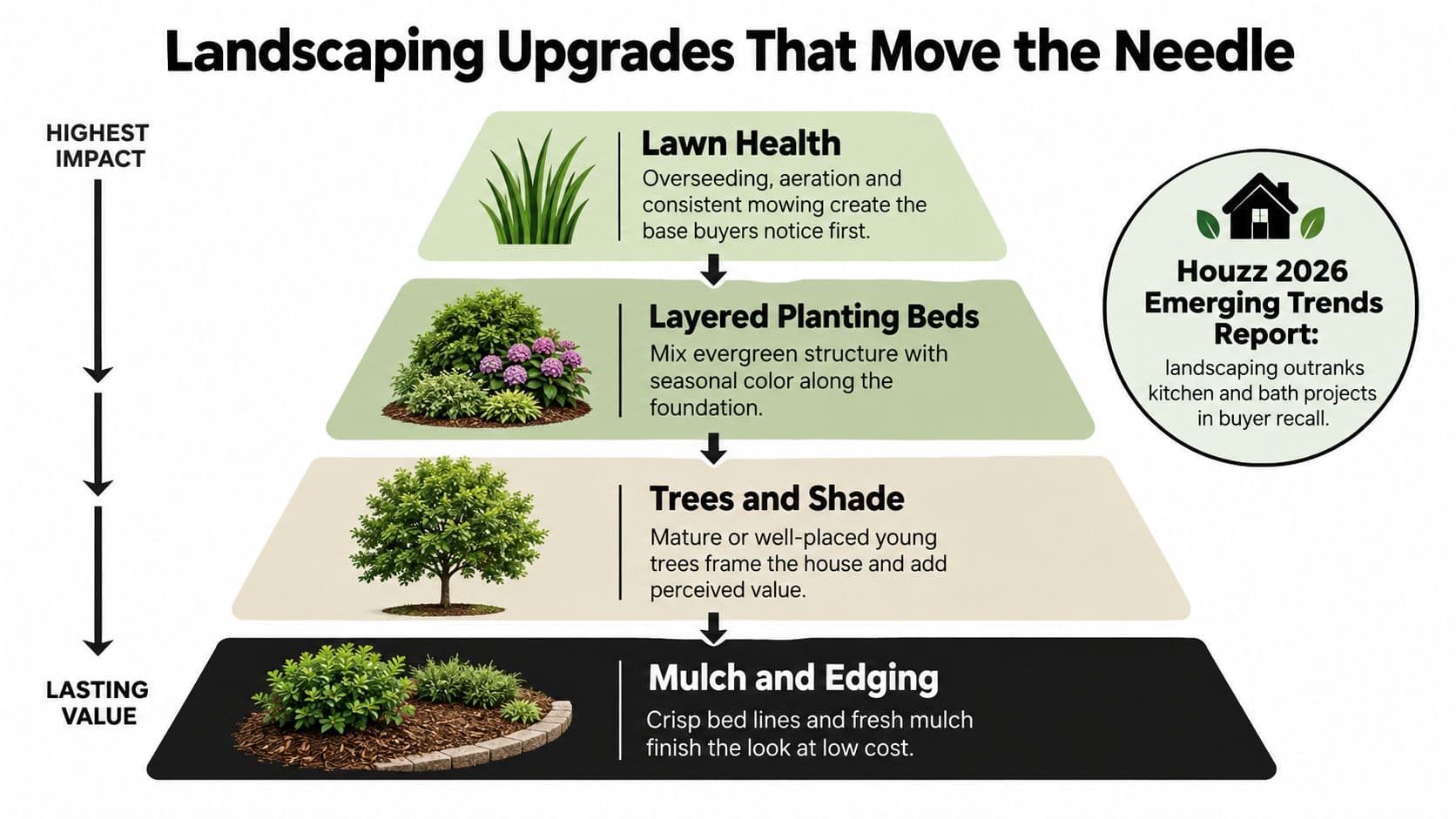
Landscaping works best as a softscape-first project. In the 2026 U.S. Houzz Outdoor Trends Study, 74% of homeowners upgraded plants, shrubs, or trees, 62% added beds or borders, and 45% improved paths, stairs, or steps, as reported in Houzz's exterior design trends coverage. The pattern points to a practical order: establish the living structure and bed layout before committing to permanent hardscape.
Start with the lawn, but don't treat a large lawn as automatically superior. Remove debris, correct thin areas, define its edges, and choose plants or turf that suit the local climate and the amount of maintenance you'll provide. A neat, modest lawn usually supports a house better than a larger patch of stressed grass.
Give the planting plan a clear hierarchy
Trees frame the house from a distance, while shrubs and perennials control the closer view. The Nebraska Extension review summarized by Houzz's landscape value research reports that well-designed, managed grounds contribute 5% to 12% to perceived home value, and one Texas study estimated exterior features plus surrounding plantings could contribute up to 17% of property value.
The same review associates more than five front-yard trees in Georgia with a 3.5% to 4.5% sales-price increase. That doesn't mean you should fill the frontage with trees. Placement, maturity, species, root behavior, and maintenance determine whether a tree frames the house or creates future problems.
Use this sequence:
- Choose the main frame: Place a suitable tree where its mature canopy will support the façade without blocking windows, roofs, signs, or utility access.
- Build evergreen structure: Use shrubs to anchor corners and define the foundation. Check their mature width instead of planting based on the size of the nursery container.
- Add seasonal rhythm: Use perennials and restrained seasonal color near the path and entry. Group plants in repeated masses instead of scattering one of everything.
- Finish with ground definition: Create clean bed lines and use mulch consistently, keeping it away from trunks, siding, and door thresholds.
Each zone creates a maintenance commitment. Lawns need mowing and seasonal care. Trees need pruning and observation as they mature. Foundation shrubs need shaping and enough space to breathe. Flower beds need weeding, watering, and replacement planning. Choose fewer plant types if that's what you can maintain consistently.
Make maintenance visible
Buyers don't need to identify every plant. They notice whether beds are healthy, edges are crisp, soil is controlled, and growth is hiding the house. Native or climate-suited plants can support a lower-maintenance design, but “low maintenance” never means “no maintenance.”
Avoid the common impulse to add plants whenever a bed looks empty. Empty space can be useful breathing room, especially in a narrow frontage. A simpler planting scheme with healthy specimens usually signals more care than a crowded bed with competing heights and textures.
Show the design from daylight and evening viewpoints before planting. The video walkthrough adds another perspective on combining the visual layers of a front yard.
Hardscape and Front-Yard Structure
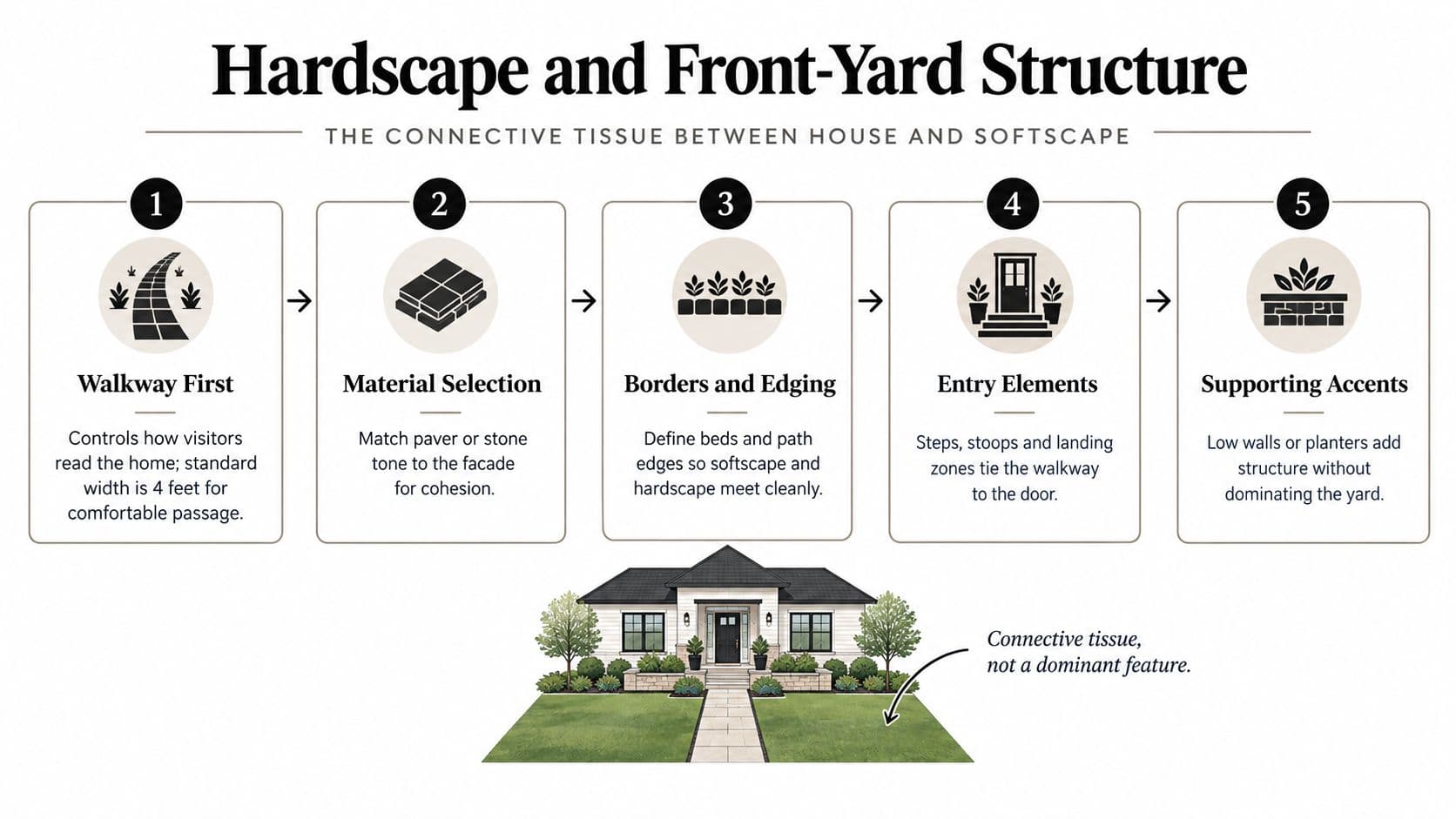
Hardscape should connect the house to the surrounding yard, not overpower it. The walkway is the first structural decision because it controls how visitors approach the entry and where the eye travels from the street.
Repair the existing path before replacing it. Clean, stable concrete may need only crack repair and improved edging. A new surface makes sense when the route is unsafe, badly proportioned, poorly drained, or visually disconnected from the façade.
Select materials for the whole property
Pavers offer pattern, texture, and localized repair. If one area settles, you can often lift and reset individual units instead of demolishing the entire path. Poured concrete creates a clean, continuous surface and can be cost-effective for straightforward layouts, but repairs may be more visible and freeze-thaw movement can produce cracking.
Brick and natural stone can age gracefully when their color relates to the house. Stamped concrete can imitate other materials, but its appearance depends heavily on installation, drainage, joint planning, and long-term maintenance. Don't select a material from a close-up sample. View it beside the siding, foundation, driveway, and planting palette.
Edging provides the second structural layer. Steel or aluminum suits a crisp contemporary home. Brick or cobblestone often feels more natural beside traditional masonry. Lightweight plastic edging can shift, heave, or expose itself when the bed is maintained poorly, so use it only when the installation and local conditions support it.
Treat lighting as guidance
Place path lighting to reveal changes in grade and direct people toward the door. Avoid lining fixtures up so precisely that the walk looks like a runway. Alternate positions where appropriate, conceal wiring carefully, and keep light away from bedroom windows and neighboring properties.
Uplighting can emphasize a tree trunk, masonry wall, or architectural detail, but it should support the composition rather than turn the front yard into a stage set. Warm light generally feels more residential than harsh, blue-toned illumination. Use shielding and timers so the fixtures remain useful without creating glare.
A small planter, bench, low wall, or address marker can complete the transition between hardscape and planting. One well-scaled accent usually does more than several unrelated objects. If you're comparing layouts on your own property, an ai front yard design tool can help you test a path, planting arrangement, or driveway edge against the existing façade before ordering materials.
When Standout Curb Appeal Backfires
Bold design only helps when it still belongs to the house and the street. A tropical planting scheme can look misplaced on a block of restrained craftsman homes. A stark modern façade treatment may fight a row of 1950s ranches. An accent color that looks rich in afternoon shade can appear fluorescent under evening lighting.
The neighborhood-fit problem is less about copying the next house and more about respecting the visual scale, materials, and expectations around you. The verified industry summary from iPropertyManagement's home improvement research notes that bold exterior self-expression can create neighborhood controversy, while extension and academic research connects value more closely with design quality, plant size, and garden upkeep than with just adding more plants.
Use the curbside lineup test
Stand at the curb and take one wide photo that includes your house and the two nearest neighbors. Crop out the rest of the street. If your proposed changes make the middle home look unrelated to the homes beside it, reduce the intensity before you buy.
| Upgrade | Typical Resale Effect | Risk If Overdone |
|---|---|---|
| Coordinated door color | Creates a clear entry focal point | Can dominate a small façade |
| Native or climate-suited planting | Supports a cared-for, context-aware appearance | Can look unplanned without structure |
| Distinctive lighting | Improves evening definition and access | Creates glare or disturbs neighbors |
| Decorative hardscape | Adds texture and guides movement | Makes a narrow frontage feel crowded |
| Strong architectural contrast | Can clarify the home's character | May conflict with the house and neighborhood |
The purpose of curb appeal isn't to make buyers stop and stare at an eccentric detail. It's to help them picture their own lives in a home that looks sound, welcoming, and appropriately connected to its setting.
Visualize Changes Before You Spend
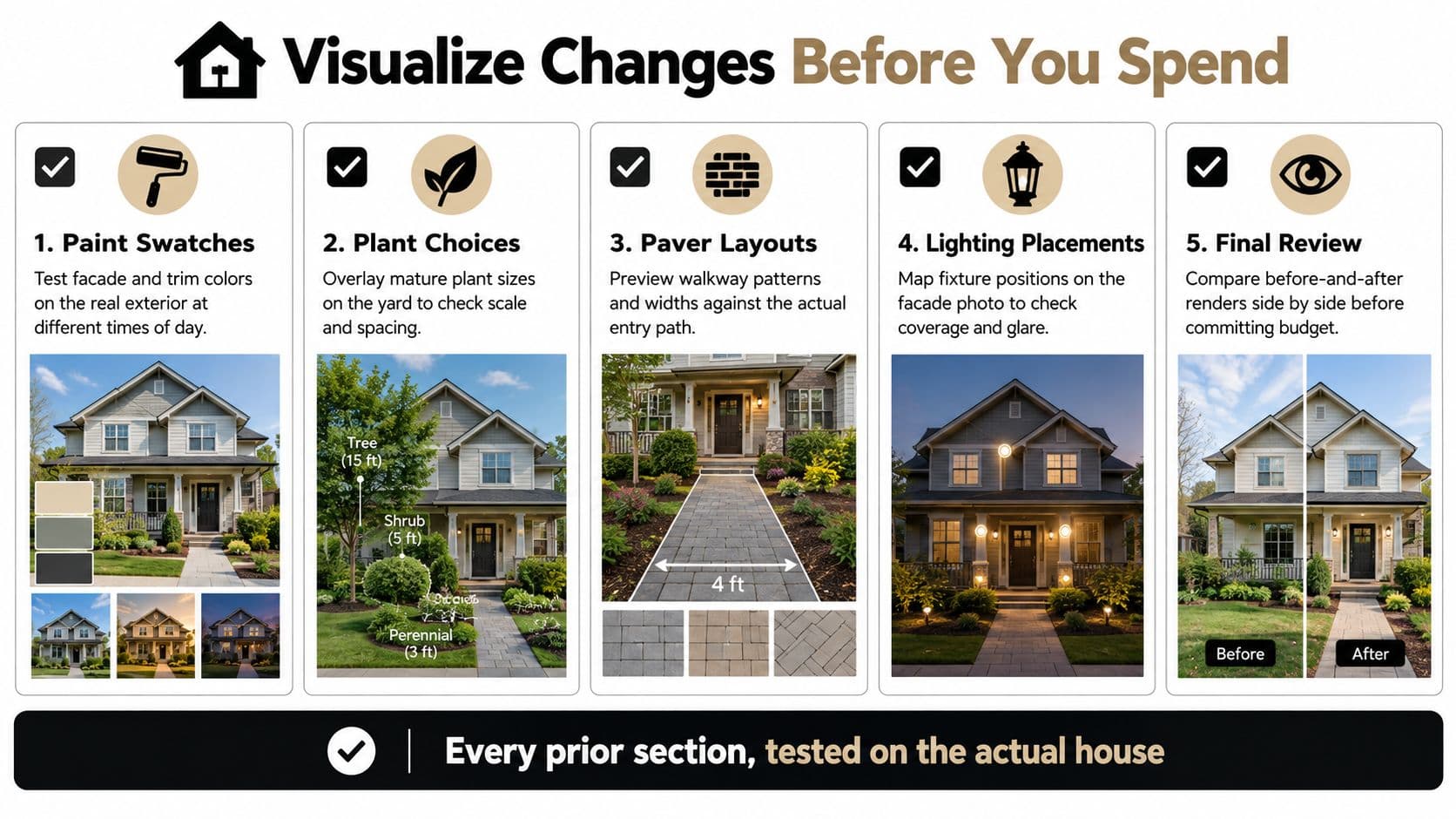
A paint swatch on a phone screen won't tell you how it looks beside your brick at dusk. A plant label won't show how a mature canopy may frame or hide the porch. A paver sample won't reveal whether a proposed walkway is too narrow, too busy, or aimed at the wrong point on the façade.
Photograph the front elevation straight on, then take angled views from the driveway and the opposite side of the street. Keep the camera at a consistent height near the average buyer's eye line, and shoot each comparison during the same general lighting window. Mark your standing position with chalk or a small marker so the next image matches the first.
Layer one decision at a time
Start with the base photo, then test the door and trim. Add the planting beds without changing the house color. Overlay the tree at its expected mature scale, then add the path and lighting. This sequence shows whether an improvement strengthens the composition or merely competes with the feature you changed before it.
An AI garden design workflow can help you place visual alternatives over a photo of the actual yard, making it easier to compare plant groupings, materials, and proportions before hiring a contractor or ordering stone. Use the result as a planning aid, not as a substitute for checking drainage, utilities, mature plant size, local conditions, or installation details.
Keep the finished design maintainable through the seasons:
- Spring: Refresh mulch, repair winter damage, redefine bed edges, and inspect drainage.
- Summer: Check irrigation, monitor stressed plants, prune growth away from paths, and clean high-touch surfaces.
- Fall: Decide where leaves can remain beneficially and where they'll block drains, paths, or planting crowns.
- Winter: Inspect exterior lighting, protect vulnerable plants, and check that snow and runoff won't damage the entry.
Print your baseline photos and write four short lists beneath them: quick wins, landscaping, hardscape, and visualization decisions. Start with the visible repair that affects safety or maintenance, complete the cleaning, test the design on the actual house, and only then commit to permanent materials. That sequence is how to boost curb appeal without turning a good idea into a costly redo.
OutdoorBrite lets you upload a photo of your front yard and compare realistic redesign concepts for planting, paths, lighting, and other exterior elements before you spend on materials or a contractor. Visit OutdoorBrite to test your own frontage, refine the direction, and turn the strongest concept into a practical curb-appeal plan.
See your yard reimagined
Start creating