How to Plan a Garden: Create Your Dream Yard
Learn how to plan a garden that thrives. Our guide covers site analysis, plant selection, budgeting, & AI tools for your dream yard.
You're probably standing in the exact spot where most garden plans begin. Looking at a yard, patio edge, side strip, or sunny back corner and thinking, “I could do something great with this.” Then the questions pile up. What should go there? How much sun does it get? Do you need raised beds? How much work is this going to be in July when life gets busy?
That last question matters more than most planning guides admit. A lot of people don't quit gardening because they picked the wrong tomato. They quit because they built a garden that asked for more time and energy than they could realistically give. If you want to learn how to plan a garden that lasts past the first burst of enthusiasm, start with honesty, not seed catalogs.
Good garden planning is part design, part logistics, and part self-awareness. You're matching plants to place, but you're also matching the project to your schedule, your body, your budget, and the way you live at home.
Table of Contents
- Start With Your Why and Your Reality
- Read Your Landscape Like a Pro
- Create Your Base Plan and Visualize the Future
- Select Your Perfect Plants and Materials
- Plan Your Budget Timeline and Maintenance
- Your Garden Journey Begins Now
Start With Your Why and Your Reality
The first decision isn't what to plant. It's what kind of responsibility you want this garden to become.
That sounds less romantic than choosing roses or tomatoes, but it's the difference between a garden that settles into your life and one that turns into weekend guilt. The biggest planning mistake I see is people designing for their fantasy schedule. They picture spring energy, not August maintenance.
Define success before you define the layout
Start with a short answer to one question: What do you want this garden to do for you?
For some people, success means fresh food at the table. For others, it means a front yard that looks sharper from the street, a pollinator-friendly border, or a quiet place to sit with coffee. If your goals lean ornamental and resale-minded, this guide to Central California home value improvements can help you think through which outdoor changes support curb appeal in a practical way.
Write down your top priorities in plain language. Not “create a beautiful edible sanctuary.” Write what you mean:
- Food first: herbs, salad greens, and a few dependable vegetables you'll eat
- Low effort: fewer beds, simpler shapes, less hand watering
- Color and habitat: flowers that support pollinators and keep the yard lively
- Better use of space: turning an ignored strip or patchy lawn edge into something intentional
If you can't rank your priorities, you'll keep changing the plan every time you walk through a garden center.
Practical rule: A clear goal saves more money than a good deal on plants.
Match the garden to your real schedule
This is the part many people skip, and it's the part that keeps gardens alive. Data shows 68% of new gardeners abandon their projects within the first year due to time overwhelm, yet only 12% of existing planning guides include time-budget frameworks or low-maintenance design strategies that match actual gardener availability (The Growing Place).
That number rings true because garden work doesn't arrive evenly. A bed can look calm for days, then suddenly need watering, tying up, harvesting, pest checks, and weeding at the same time. If your plan depends on heroic effort every weekend, it's fragile.
Try this reality check before you sketch anything:
- Weekday capacity: Are you someone who can give a few minutes most days, or only touch the garden on weekends?
- Physical effort: Do you want to kneel, dig, and haul, or would you rather reduce bending and repetitive maintenance?
- Travel and summer routines: If you leave often or work long hours, avoid plants and layouts that punish missed days.
- Attention span: Some gardeners enjoy constant tinkering. Others want tidy structure with fewer decisions.
A useful benchmark from garden planning research is that consistent success can come from about 15 minutes per day when the plan is manageable and maintained regularly (RubyHome gardening statistics). That's encouraging, but only if your design respects it.
A small garden that gets steady care will outperform a larger one that keeps getting postponed.
If you're unsure, start smaller than your ambition tells you to. A compact plan with room to expand is smart gardening. An oversized first build usually creates more edge to weed, more soil to water, and more plants to disappoint you.
Read Your Landscape Like a Pro
A yard can look promising at noon and turn into a problem by 3 p.m. The fence throws shade, the back corner stays soggy, the hose barely reaches, and the spot that seemed perfect asks for more upkeep than you can give. Such situations reveal the time-value planning gap in real life. A garden that fights the site will also fight your schedule.
Start by treating the yard like a set of working conditions, not a blank canvas. Watch how it behaves before you decide what belongs there. I have seen gardeners lose a full season because they planned around the photo in their head instead of the ground under their feet.
Walk the yard with a notebook
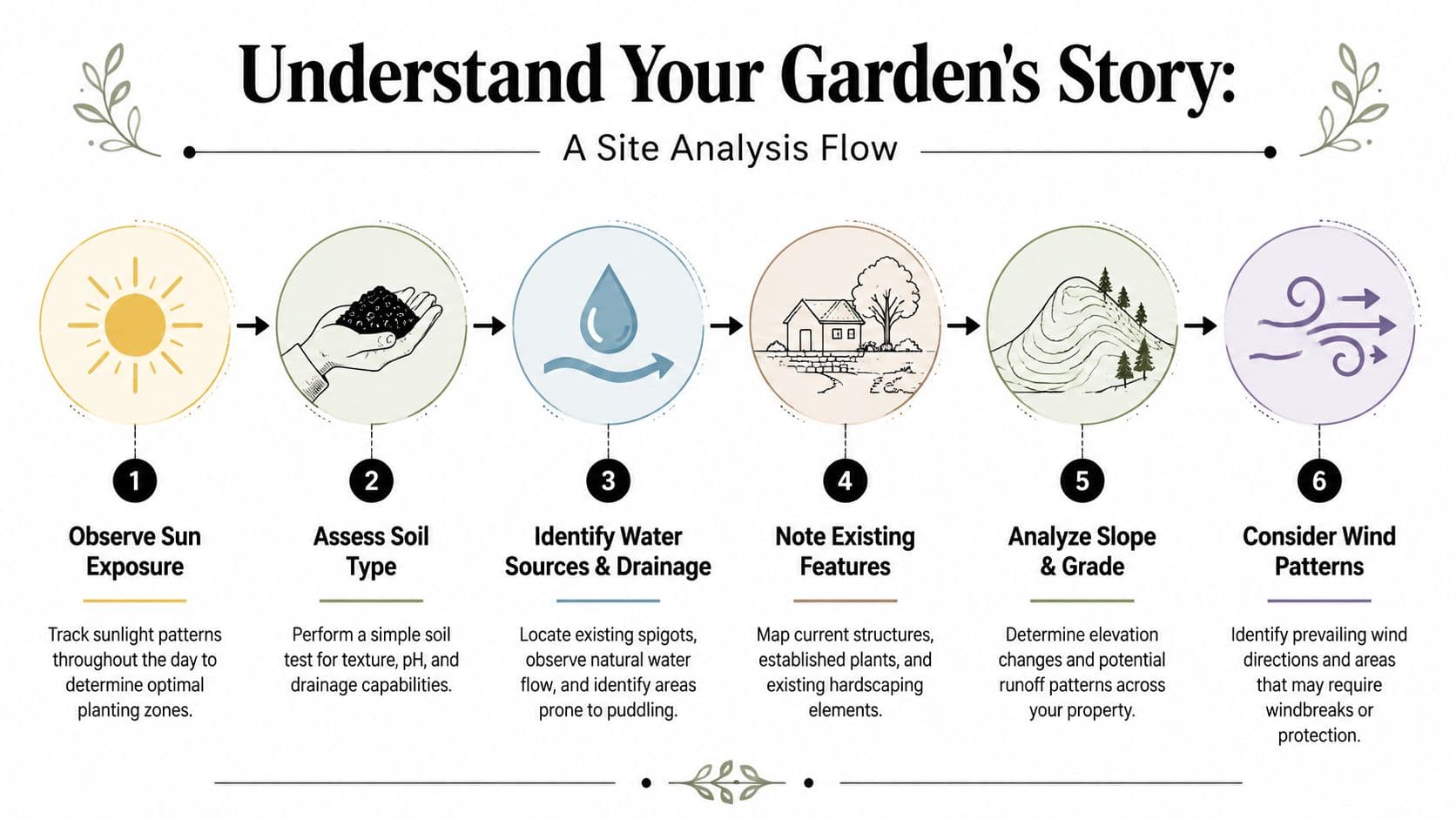
Before you buy materials, spend time outside at different hours and in different weather. A notebook, tape measure, and phone camera are enough. If you are planning food crops, the University of Minnesota Extension recommends a spot with at least 6 hours of full sun each day for vegetables (University of Minnesota Extension).
Pay attention to the hours that matter most. Morning and early afternoon light usually does more for vegetables than a bright patch late in the day. Also note what the site asks from you. A bed that needs hand watering every hot evening may work on paper, but not for someone who gets home late and misses days.
Here's the first-pass checklist I use:
- Sun exposure: Track which areas stay bright and which lose light behind trees, fences, or the house.
- Water access: Check whether the hose reaches easily or whether carrying water will become routine.
- Drainage: Look for puddles after rain, compacted soil, and spots that dry out too fast.
- Wind exposure: Notice corners that batter seedlings or pull moisture from the soil.
- Root competition: Large tree roots can make digging hard and leave nearby plants thirsty.
- Traffic patterns: Mark where people, dogs, bins, and wheelbarrows already move.
If you like testing layouts visually, tools that use ai for landscape design can help after you've measured light, access, and space. They work best when on-site notes come first.
Measure the limits before you design the dream
A surprising amount of garden frustration comes from simple dimensions. Beds go in too close to a fence. Paths are too narrow for a wheelbarrow. The sunniest corner turns out to be the hardest one to reach with compost, tools, and water.
Path width is a good example. The Royal Horticultural Society advises making paths wide enough for comfortable access, with more width where a barrow is needed (Royal Horticultural Society). That sounds basic, but it affects maintenance every week. Tight access means more stepping into beds, more soil compaction, and more annoyance. Annoyance is what makes people stop harvesting, stop weeding, and then stop caring.
Slope matters in the same practical way. A gentle grade may be manageable. A sharper one usually means runoff, exposed roots, and watered spots that never stay evenly moist. On sloped ground, raised beds or terracing can save time later because they make watering, soil management, and footing far more predictable.
Write these site limits directly on your sketch so you do not forget them once you start dreaming:
| Site factor | What to look for | Planning response |
|---|---|---|
| Sun | Strong direct light for food crops | Reserve the brightest area for vegetables |
| Slope | Noticeable grade or runoff | Use raised beds or terrace if needed |
| Access | Tight corners or awkward routes | Keep paths clear and workable |
| Water | Long hose runs or dry zones | Group thirstier plants together |
| Obstacles | Trees, fences, walls | Respect shade and root competition |
Clearances help too. Leave enough room from walls, trees, and fixed structures so you can dig, prune, harvest, and move through the space without squeezing past branches or scraping buckets along siding. If a spot is technically usable but awkward every single time you enter it, it is not a good spot.
The yard usually tells you where the garden should go. Trouble starts when you insist it belongs somewhere else.
Create Your Base Plan and Visualize the Future
Saturday morning is when planning errors show up. You head out with a shovel, set a few pots where the beds might go, and realize the hose barely reaches, the path is too tight for a wheelbarrow, and the bed that looked perfect on paper will need edging, tying in, and deadheading all summer. That is the time-value planning gap in real life. A good plan has to fit the ground and the hours you can give it.
Start with a base map you can use
Put the garden on paper before you buy anything. A plain overhead sketch is enough. Mark the house, fences, gates, existing trees, patios, taps, sheds, and anything else that will still be there in five years. Then add the parts that affect daily use, such as rough traffic routes, awkward corners, and places where carrying mulch or tools will be a nuisance.
The University of California Master Gardener Program advises starting with a measured plan and organizing beds in ways that improve light exposure and irrigation efficiency (UC Master Gardener Program of Alameda County). That lines up with what works on the ground. If thirsty plants are spread all over the yard, watering takes longer and gets skipped more often. If crop rows or major planting lines fight the sun, growth gets uneven and the whole space feels harder to manage.
Keep the first draft rough. I usually tell people to use pencil because the first version is for catching mistakes, not showing off.
A useful base plan includes:
- Permanent structures: house walls, sheds, patios, fences
- Fixed plants: mature shrubs and trees you plan to keep
- Working routes: gates, barrow access, the paths you already walk
- Service points: hose connections, compost area, tool storage
- Pressure spots: shade, runoff, tight corners, drainage problems
Try two or three layouts before you build one
Careful planning saves real effort. One large bed may look tidy, but two smaller beds with a wider central path can be easier to weed, water, and harvest. A border near the house may look attractive from indoors, but if it needs frequent trimming and you only garden on weekends, that spot can turn into a chore fast.
Test the layout against your actual habits. How far will you carry compost. Can you turn a wheelbarrow without clipping every corner. Will you need to step into beds to reach the back row by July. Those small frictions are what wear people down.
If you want help comparing options visually, browsing Best landscape design apps can make it easier to test spacing, shapes, and path layouts before you commit.
A video walkthrough can also make the planning process easier to picture:
Ask one hard question before you finalize anything. How much work will this shape create in August?
Plan for the garden you can keep up with
A base plan should also show what future you will have to maintain. Wide sweeping beds look great in spring and often become edging, staking, and weeding jobs by midsummer. Long rows can be productive, but they also add walking, bending, and cleanup. Shorter runs, smaller repeated beds, and clear paths usually make the space easier to keep in good shape.
I learned this the hard way. A plan can be horticulturally sound and still fail because it asks for too many small tasks every week. If your energy is limited, build in convenience now. Keep the compost close enough to use. Put the high-attention crops where you pass them often. Leave space to kneel, turn, and carry things without fighting the layout.
That is how a base plan becomes a garden you will still enjoy caring for next season.
Select Your Perfect Plants and Materials
Plant shopping is where good plans often go sideways. A gardener starts with a clear layout, then falls for the hydrangea in bloom, the tomato variety with the beautiful label, or the pack of seeds that promises a huge harvest. By August, the underlying problem shows up. The garden fits the yard, but it does not fit the gardener's time.
That Time-Value Planning Gap matters here more than anywhere else. A plant can suit your site and still be the wrong choice if it asks for deadheading, extra watering, staking, pest checks, or seasonal replacement work you will not keep up with.
Choose plants by fit and by workload
Start with the plants that match your conditions without special treatment. Sun, shade, soil drainage, wind, and heat still matter. So does your weekly capacity. A bed full of thirsty annuals can look great in June and turn into a daily obligation in July.
Plant tags help, but I trust mature size and care routine more than the flower photo. Read for width, spread, water needs, disease issues, and whether the plant wants pruning or division. If a tag sounds vague, assume the plant may ask for more work than you expect.
For dry, hot areas, a focused list of 2026 drought tolerant plant selection can help you narrow choices that hold up with less irrigation.
Mix reliable plants with a few high-attention picks
Most strong gardens use a simple ratio. Let dependable plants carry the structure, then spend your attention on a small number of plants you particularly care about. That gives you interest without creating a maintenance trap.
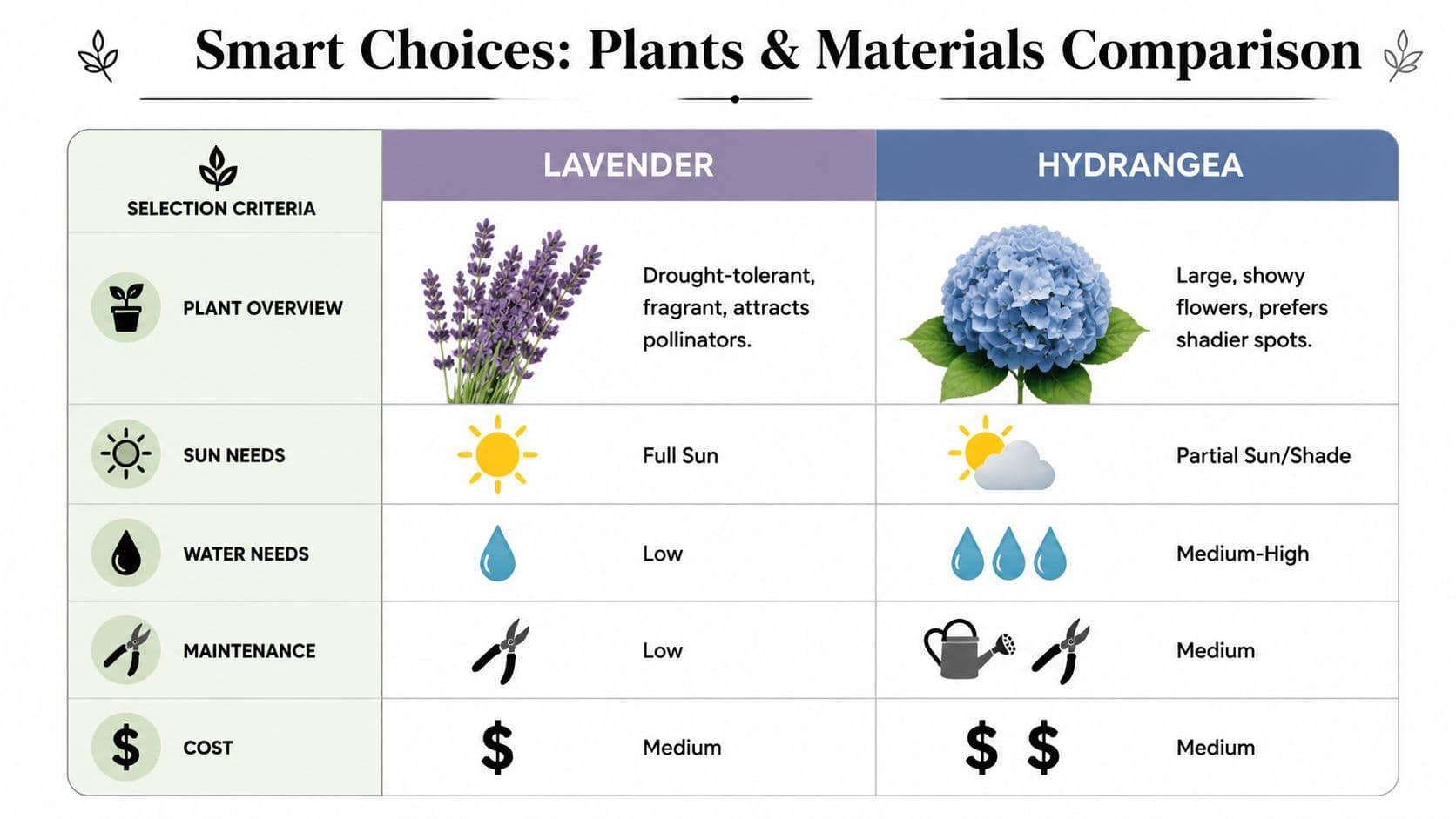
Here's the trade-off in plain terms:
| Plant choice | What you gain | What it usually asks from you |
|---|---|---|
| Lower-maintenance, drought-tolerant plants | Steadier performance and less watering | Less dramatic bloom in some seasons |
| Thirstier, showier plants | Bigger color and impact | Closer monitoring, better soil, and more frequent watering |
| Annuals | Fast color and easy seasonal changes | Replanting, feeding, and regular cleanup |
| Perennials | Long-term structure and repeat performance | Patience, editing, and enough room to mature |
That same logic applies to edible gardens. A short row of lettuce planted every couple of weeks is easier to use than one oversized sowing that all matures at once. Herbs, cut-and-come-again greens, bush beans, and a manageable tomato count usually give better value than cramming every empty space with crops you will struggle to harvest.
I learned this one the hard way. Abundance sounds efficient on paper. In practice, too much of one crop creates picking, washing, preserving, and cleanup work right when summer energy is already thin.
Companion plants can still earn their keep. Marigold, dill, alyssum, and zinnia add color while bringing in beneficial insects, but they work best as part of a balanced planting plan, not as a cure-all for pest problems.
Pick materials with maintenance in mind
Materials shape the workload as much as plants do. Gravel paths need occasional raking and weeding. Wood edging looks sharp early on but can rot or shift. Metal edging stays crisp longer but costs more up front. Raised beds improve access for many gardeners, yet they also need more soil to fill and can dry out faster in hot weather.
The same goes for supports. A simple tomato cage you can reuse for years often beats an elaborate trellis system that takes half a Saturday to assemble and store.
A few combinations tend to work well:
- Fast reward, lighter upkeep: herbs, salad greens, mulch, and a short run of dependable perennials
- High return, higher effort: large containers, thirsty ornamentals, indeterminate tomatoes, and sprawling vines
- Good balance for new gardeners: one focal shrub, repeated filler plants, a small edible patch, and basic supports
- Safer than buying everything at once: phased planting, so you can see what the garden asks of you before adding more
If mosquitoes are part of your summer reality, plant choice and material choice can help a bit, but standing water and dense, neglected corners matter more. If you want to achieve a bite-free yard, handle that separately instead of expecting citronella or a few herbs to solve it.
A good plant list is not the one with the most variety. It is the one you will still be glad you chose in midsummer, when the hose is heavy, the weeds are quick, and every extra task has to justify its place.
Plan Your Budget Timeline and Maintenance
July is where a lot of garden plans get exposed. The plants are in, the receipts are piling up, weeds are faster than you expected, and one skipped week turns into a mess that eats your Saturday. I learned early that my biggest planning mistake was not choosing the wrong flowers. It was building a garden for the version of me with endless time.
Budget and timing need to follow your actual capacity. A cheaper plan that you can keep up with will usually outperform an ambitious one that asks for too much money, too many trips to the garden center, and too much weekly labor.
Budget for the first season you can actually maintain
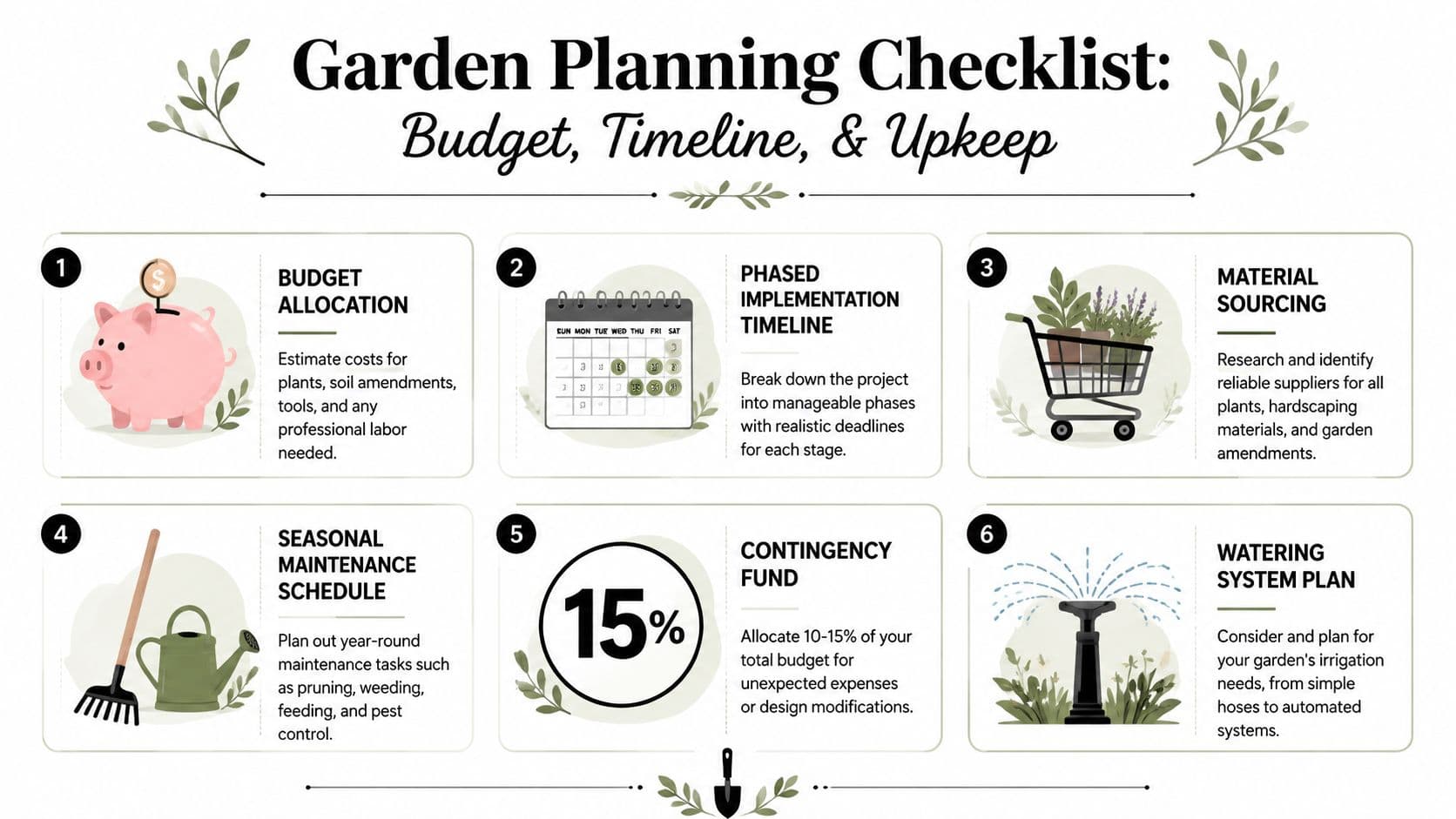
Start by pricing the parts that keep the garden functioning, not just the parts you notice in photos. Plants are only one line item. Soil, mulch, irrigation pieces, ties, supports, hand tools, and replacement plants are usually where the budget stretches.
A working budget often includes:
- Soil and amendments: compost, fertilizer if needed, mulch
- Build materials: edging, raised bed lumber or metal, fasteners
- Watering setup: hose, timer, wand, drip parts, watering can
- Plant support gear: stakes, cages, netting, clips, labels
- Basic upkeep supplies: pruners, gloves, pest control, refill mulch
Then separate purchases into phases. That is one of the easiest ways to close the Time-Value Planning Gap.
Phase 1 covers the pieces you need before or at planting. Phase 2 handles the items you only buy after the garden proves it needs them. Decorative containers, extra beds, and one-more-trip impulse buys belong later. This protects cash flow, but it also protects your energy. Every added feature creates another job.
A simple timeline works better than an elaborate one you never check:
- Prep period: clear, mark, amend soil, fix watering access
- Planting window: install the backbone first, then fill in
- Early establishment: water closely, mulch, stake, replace losses
- Midseason upkeep: weed, harvest, deadhead, cut back, monitor pests
- End-of-season review: note what earned the space and what did not
Plan maintenance like a recurring bill
The best maintenance plan is specific enough that future-you can follow it when you are tired.
Ask these questions before you buy the last plant:
- What needs attention every 2 to 3 days in hot weather?
- What needs a weekly pass?
- What can be ignored for two weeks without causing trouble?
- Which jobs are awkward, messy, or physically tiring?
- What will still get done in your busiest month?
Those answers should shape the garden as much as sun and soil do. If you only have 20 minutes on weeknights, do not build a plan that depends on hand-watering scattered containers in three different corners. If bending is hard on your back, fewer beds with better access beat a larger planted area every time.
Comfort belongs in maintenance planning too. If biting insects make you avoid the garden at the exact hour you would normally water or sit outside, solve that problem on purpose. A local service resource on how to achieve a bite-free yard can help you think through mosquito pressure before outdoor time becomes unpleasant.
Avoid the budget mistakes that create more work
First-year garden costs often rise because the same problems get paid for twice. Crowded planting leads to extra pruning or replacement. Poor watering setup leads to stressed plants and impulse purchases. Buying all the materials upfront often leaves you stuck with items that looked useful on paper and became clutter in the shed.
A few habits keep the plan grounded:
- Leave a buffer in the budget: replacements and small tool purchases are normal
- Buy supports before plants need them: waiting usually means emergency fixes
- Group work by zone: one area to water, weed, and harvest is easier than several scattered trouble spots
- Write down recurring chores: memory is unreliable in midsummer
- Review after four weeks: cut tasks that are not earning their effort
A maintenance plan is a promise that your garden will still make sense when the novelty wears off.
The strongest garden budget is not the one for the biggest build. It is the one that funds a garden you can keep healthy with the time and energy you really have.
Your Garden Journey Begins Now
A good garden plan gives you something better than a pretty sketch. It gives you a filter for decisions.
You've looked at your own time and energy first. You've read the site instead of guessing. You've built a layout around access, light, and watering. You've chosen plants with more discipline and less impulse. You've also made room for the unglamorous part, which is where success usually lives: maintenance.
This is the benefit of planning. It doesn't lock you into perfection. It gives you a stable starting point, so changes become adjustments instead of resets.
Gardens always teach something back. One bed will do better than expected. One plant will disappoint you. One corner will turn out drier, hotter, shadier, or more useful than it looked on paper. That's normal. The plan isn't there to remove discovery. It's there to make discovery manageable.
Start with the space you have. Keep the first version practical. Let the garden earn its expansion.
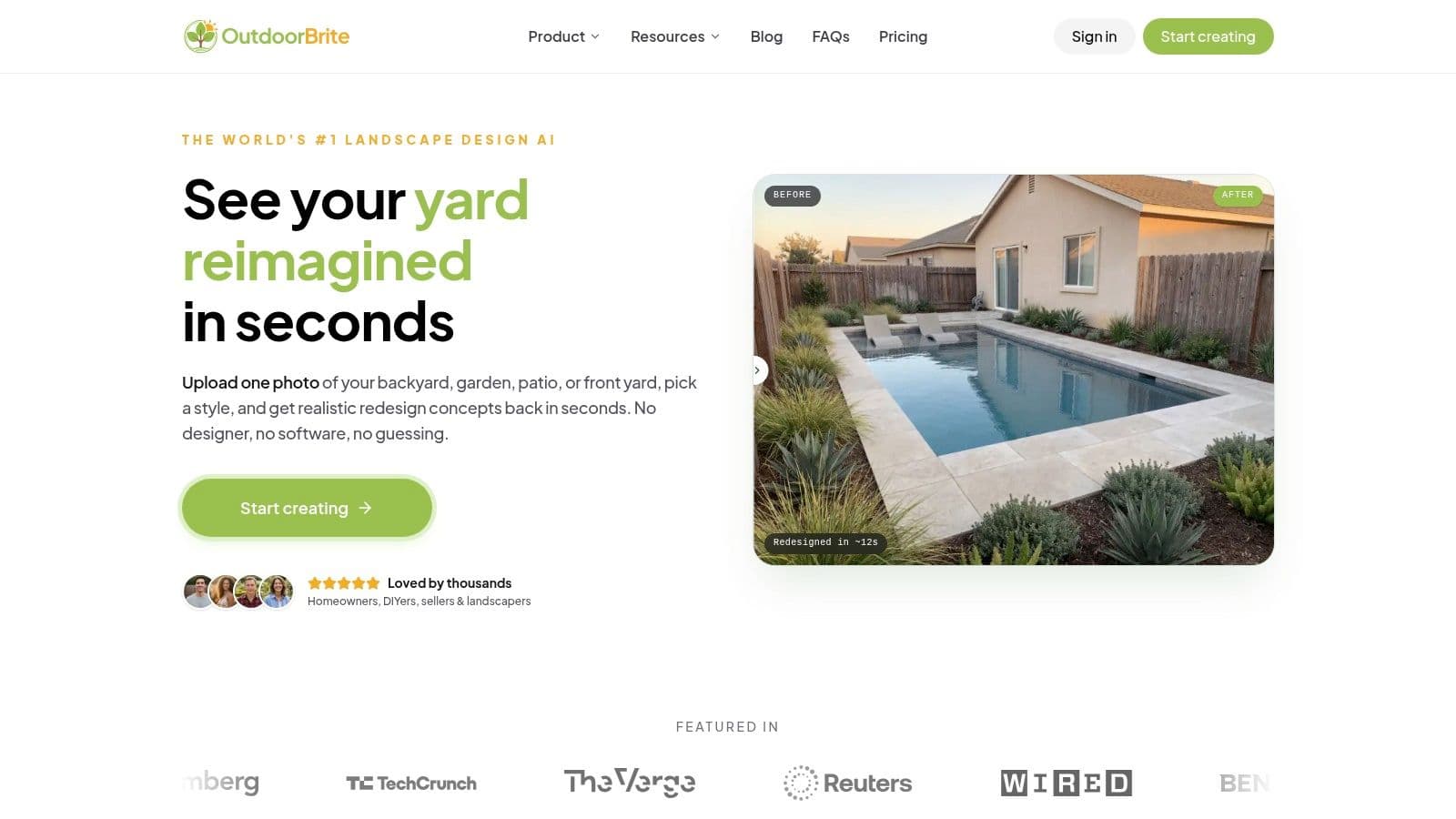
If you want to turn rough ideas into a clearer visual plan before you spend on materials, OutdoorBrite Money can help you test garden and yard concepts from a photo of your space, so you can compare layouts, styles, and planting directions with more confidence.
See your yard reimagined
Start creating