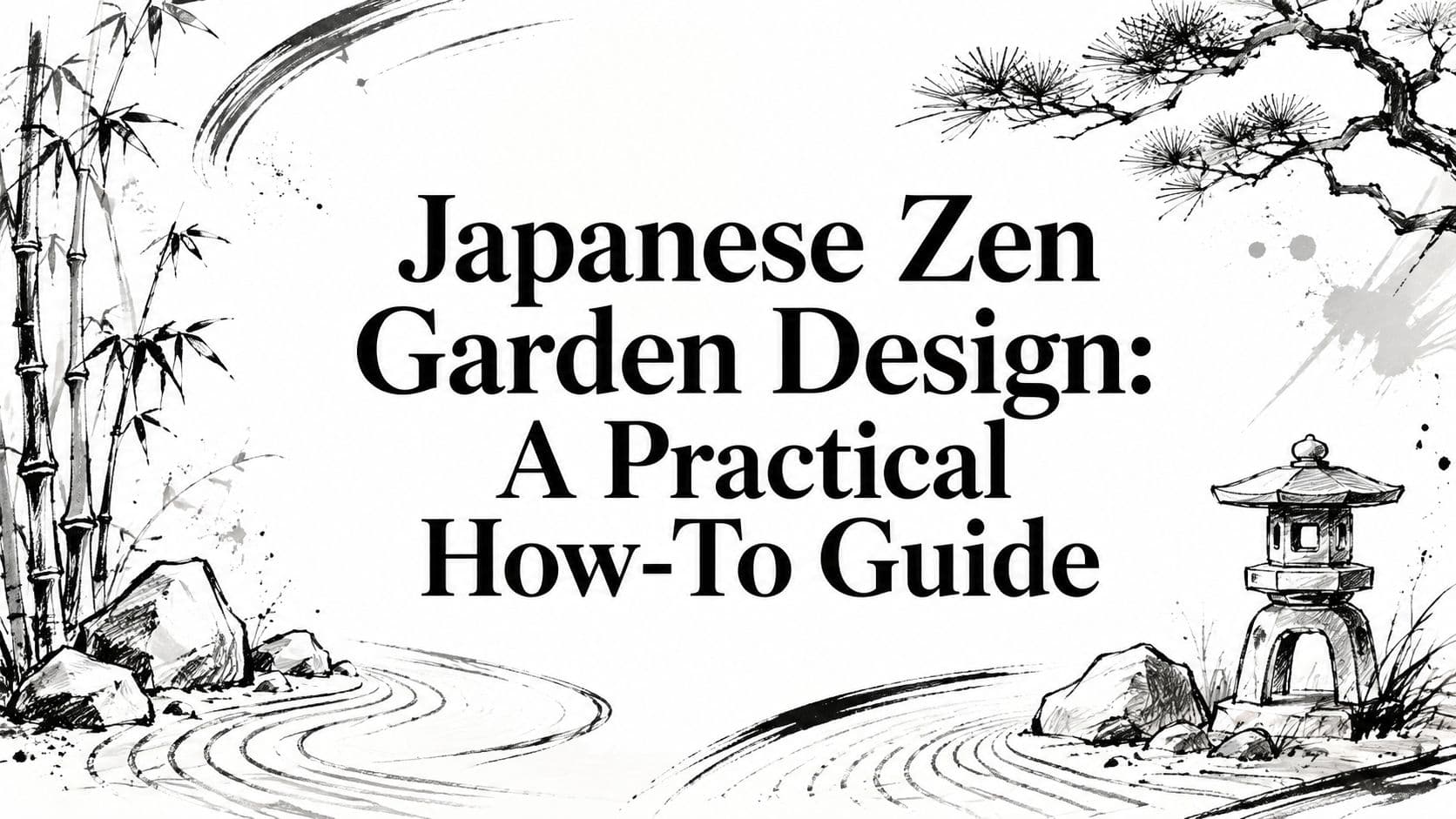
Japanese Zen Garden Design: A Practical How-To Guide
Master Japanese zen garden design with this practical guide covering principles, planning, plant choices, and maintenance.
You've got a flat patch of yard, a bag of inspiration photos, and the uneasy sense that a few rocks and some gravel shouldn't be this hard to get right. That's the usual starting point for Japanese Zen garden design, because the look is simple on the surface and picky in the details. The difference between a calm, intentional garden and a backyard that feels half-finished comes down to sequence, proportion, and restraint.
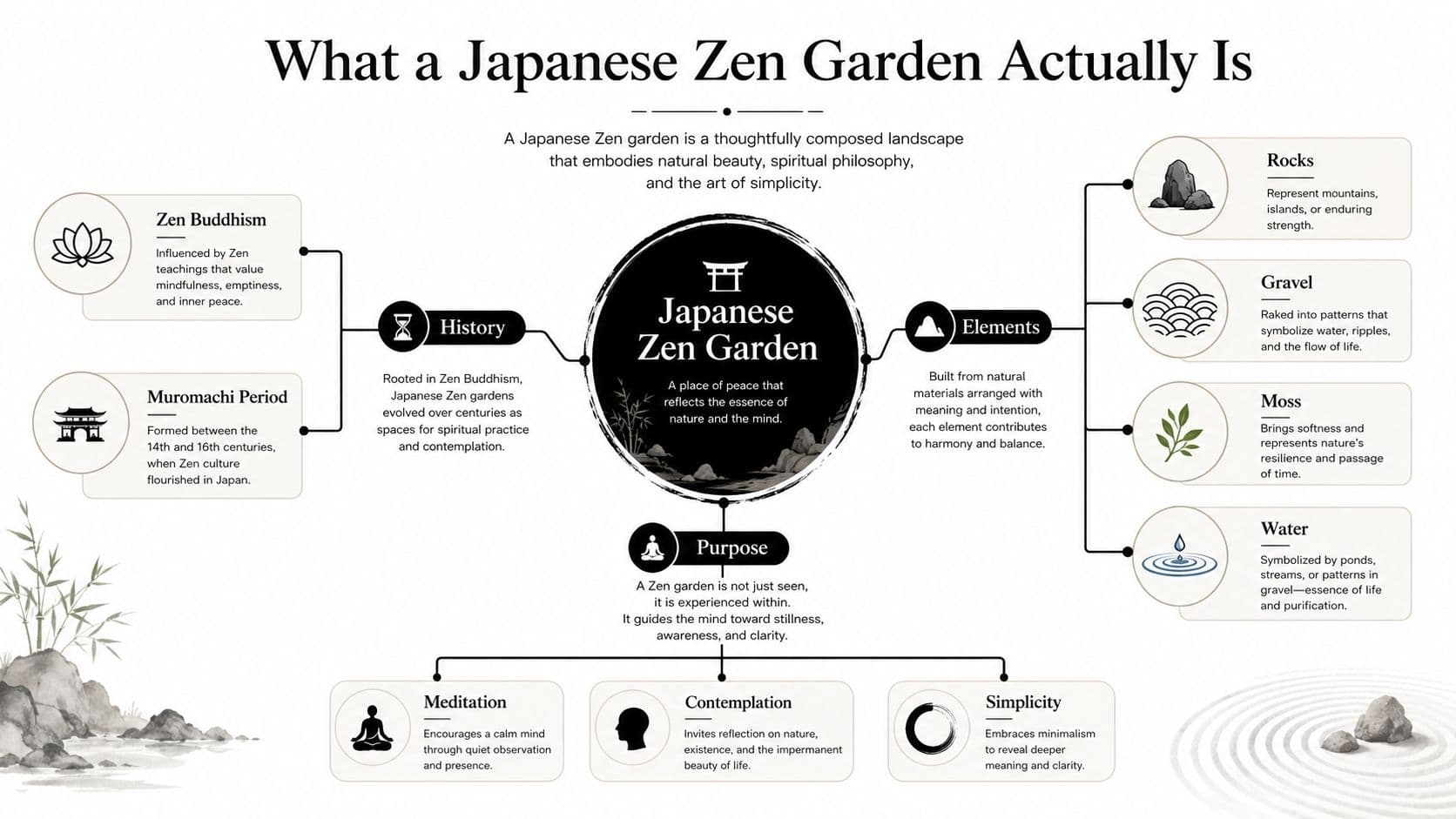
Table of Contents
- What a Japanese Zen Garden Is
- The Design Principles Behind the Look
- Planning and Building Your Garden Step by Step
- Choosing Between Karesansui and a Plant-Forward Japanese Garden
- Stones, Gravel, Plants, and Materials That Actually Work
- Maintaining the Garden Through the Year
- Common Mistakes That Ruin the Look
What a Japanese Zen Garden Is
A lot of homeowners start by thinking a Zen garden means raked gravel and a few rocks, full stop. That gets part of the picture right, but it misses why the style feels so different from a standard ornamental bed. The recognizably minimalist form took shape in the Muromachi period (1333-1573), when Zen-related arts flourished and gardens became independent dry compositions instead of parts of larger pond gardens, with Ryōan-ji in Kyoto standing as one of the most famous surviving examples of that shift, and often credited to Soami (samuraitours.com).
The purpose is meditative, not decorative
The design logic is clear. Raked gravel imitates the essence of nature and creates a sense of emptiness and distance so the mind has something to settle into, not just something to look at (samuraitours.com). In the small karesansui gardens I've built, the spaces that held up best were the ones that resisted the urge to fill every gap. Restraint kept the composition calm.
The visual language usually includes stones, gravel, moss, pruned evergreens, and a strong sense of off-center composition. You read the garden from a chosen viewpoint, and the composition works because there's enough open space around the objects for them to feel deliberate. A Zen garden is not a dense planting scheme with a rock problem, it is a composed scene built around absence as much as presence.
Practical rule: if the garden still looks interesting when you remove one element from the photo, the composition is probably doing the right amount of work.
Dry composition or Japanese-style garden
A lot of web content gets muddy here. A true karesansui is a dry rock garden with very few plants and no water, while a broader Japanese-style garden can include water, bridges, lanterns, and more varied planting (gardendesign.com). That distinction matters because the style you choose changes everything else, from maintenance to plant selection.
The Design Principles Behind the Look
A small Zen garden only reads well when the composition is disciplined. The style grew out of earlier Chinese and Japanese garden traditions, then took on a stripped-back visual language in the Kamakura and Muromachi eras, where reduction became part of the point. Kyoto temple grounds show how fully that language settled in, and en.wikipedia.org notes that the city's temple gardens contain many Shirakawa-suna areas. That history matters because the look is not decorative by accident, it is built around control, restraint, and clear reading from one chosen angle.
Composition starts with asymmetry
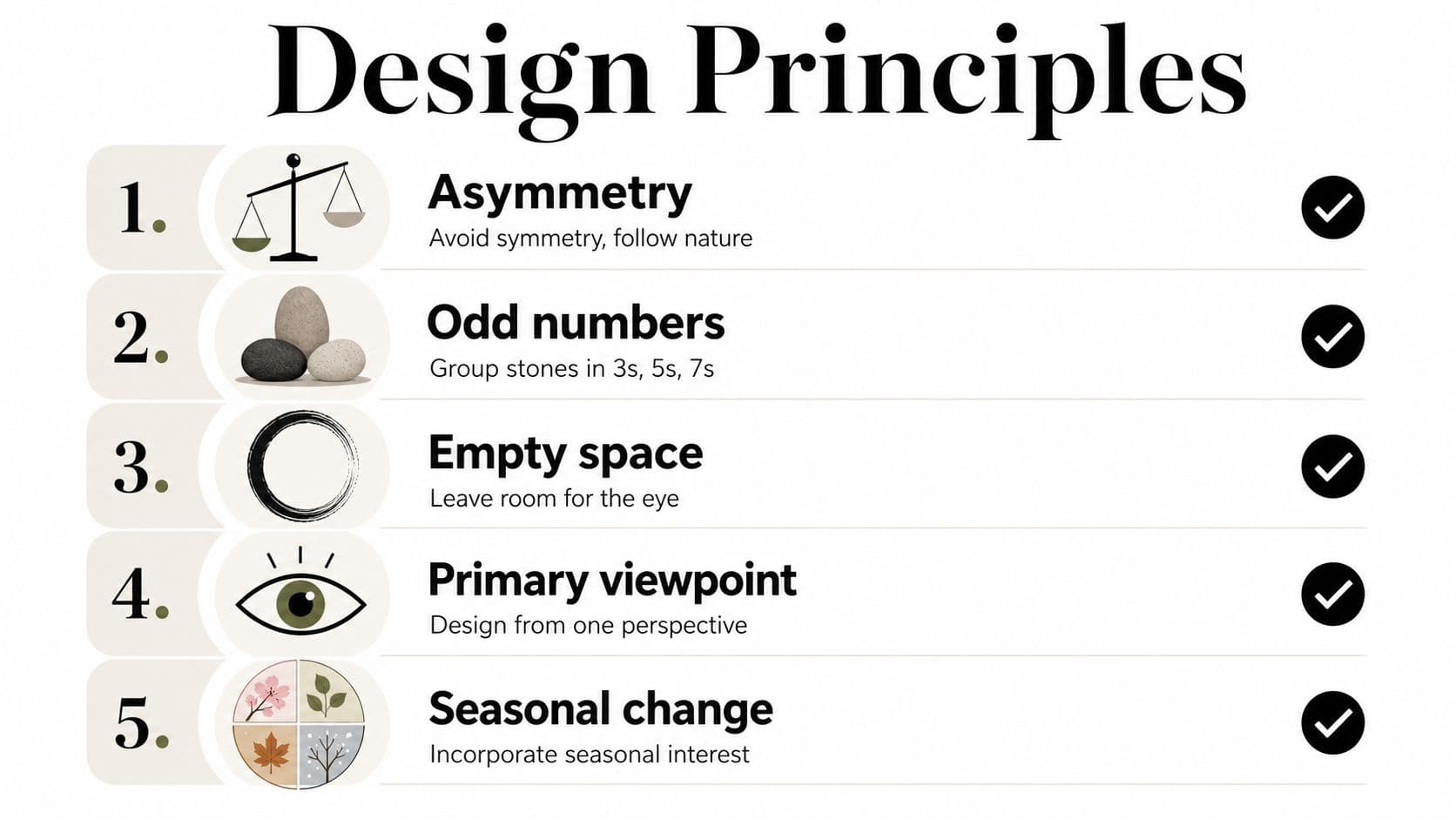
Asymmetry is the first rule most good designs follow. It does not mean the layout should feel random. It means the eye should move through the garden naturally instead of stopping at a mirror image that feels stiff.
In a small yard, a centered stone cluster often looks static. Shift the mass off-center and the whole scene starts to feel more deliberate. The same principle applies to groupings. Three, five, or seven stones usually read as a composition, while even counts can feel locked in place (plantingatlas.com). The reason is visual motion. With three stones, one can lead, one can support, and one can settle the rhythm without forcing symmetry.
Empty space does the heavy lifting
Crowding is the mistake I see most often in backyard Zen gardens. A composition needs negative space because the open ground is part of the design, not leftover area waiting to be filled. When stones, lanterns, plants, and ornaments all compete for attention, the scene loses the calm that makes the style work.
Raked gravel can stand in for water without pretending to be a pond. That symbolic move helps in small residential spaces because it keeps the design quiet even when the footprint is tight. Shakkei, or borrowed scenery, still has a role, but in a suburban yard it usually means accepting a fence line, hedge, or neighboring tree as part of the frame. Fighting that backdrop rarely improves the garden. Working with it usually does.
A good Zen garden gives the eye one clear place to rest.
Planning and Building Your Garden Step by Step
A good Japanese zen garden workflow starts with the ground truth of the site, not with a shopping cart full of stone and gravel. I have seen plenty of DIY builds fail because the gravel went in before the main rocks were settled, or because no one checked the composition from the place where it would be seen. The order that holds up is simple, site audit first, then viewpoint, then stone placement, then everything else.
Start with the site, not the sketch
Walk the space and look at sun, slope, drainage, access, and existing trees. If water collects where you want gravel, you will end up fighting mud and compaction. If a tree drops debris through the season, the garden will need more cleanup than the sketch suggested. If the area is hard to reach, hauling stone by hand becomes part of the design whether you planned for it or not.
Then choose the primary viewpoint. That might be a kitchen window, a patio chair, or the edge of a deck. The composition should be judged from that angle first, because stones, voids, and raked lines all read differently depending on where you stand.
Place the stones before anything else
Set the major stones on site and look at them from the viewing point before you spread gravel. In small gardens, I usually edit by removing pieces when the scene feels crowded, because too many objects make the whole thing feel busy and flat. Once the stones hold together as a composition, add the gravel. Plants or structures come after that, as finishing moves rather than starting points.
For a small corner build, the work is less about force and more about checking the same view again and again. A planning tool helps when you want to test a layout on a photo of your own yard before you move heavy material. A practical place to start is the best free garden design software, because it lets you try out proportions before you commit to digging.
Build in that order, and the garden stays readable. Reverse it, and every later adjustment turns into cleanup.
Choosing Between Karesansui and a Plant-Forward Japanese Garden
This is the decision most guides dodge. A true karesansui gives you the most distilled form of the style, but it also asks for more precision in stone placement and gravel work. A plant-forward Japanese garden is softer, more forgiving, and often easier to live with when you want color, seasonal change, and a broader palette.
Pick the dry garden if restraint is the goal
Choose karesansui if you want the garden to read as abstract, meditative, and low-material. It's a better fit when you don't want a lot of irrigation, don't want a plant collection to manage, and like the clarity of a composition built from a few strong parts. It also works well where the site is compact and every object needs to earn its place.
Pick the plant-forward version if you want more life in the frame
A broader Japanese-style garden can include moss, maples, azaleas, water features, lanterns, and more layered planting. That approach softens the geometry and gives you more tolerance for imperfection. If your climate rewards plant growth and you enjoy pruning and seasonal change, this route usually feels more natural in a backyard.
Use your maintenance tolerance as the deciding filter. If you don't want to be out there raking and editing the composition regularly, a plant-forward design may feel easier. If you want a garden that reads like a composed still life, karesansui is the cleaner choice. The garden AI design workflow can help you compare both looks on the same yard photo before you commit to one direction.
Stones, Gravel, Plants, and Materials That Actually Work
Material choice should follow function, not habit. In Japanese Zen garden design, each element has a role in the composition, and the garden falls apart when the materials start competing for attention. The safest way to shop is to decide what each item is supposed to do, then buy only what supports that job.
| Material | Role in Composition | What to Look For |
|---|---|---|
| Stones | Structure, scale, focal tension | Natural character, stable placement, varied size, strong silhouettes |
| Gravel | Ground plane, rakeable surface, visual quiet | Clean texture, consistent size, stable drainage behavior |
| Moss | Softness, age, transition | Shade tolerance, moisture fit, a restrained look |
| Japanese maple | Seasonal presence, lighter vertical accent | Small form, clean branching, climate fit |
| Pruned evergreen | Year-round structure | Dense habit, responds well to shaping |
| Bamboo fencing | Enclosure and frame | Simple lines, weather resistance, visual restraint |
Stones carry the composition
Stone selection is where most of the personality lives. Use rocks with enough character to read as anchors, but avoid so many shapes that they turn into a collection. Placement should feel grounded and deliberate, not scattered like leftover materials from another project.
Orientation matters too. A stone that looks good from one angle can look flat from another, so always set and review it from the primary viewpoint before locking it in. That's especially true in small yards where one bad angle can dominate the whole scene.
Gravel and plants should stay quiet
Gravel works best when it supports the stone work instead of fighting it. In hot or dry climates, a restrained gravel field can stay cleaner than turf and still preserve the style's bare, contemplative look. In wetter or heavily shaded yards, drainage and compaction need more attention, because the surface has to remain readable after rain and foot traffic.
Plant choices should stay limited. Moss, black mondo grass, Japanese maple, azalea, and pruned pines are common fits because they support the aesthetic without overpowering it, but only if the climate can support them. Outside Japan, the smartest move is to use local or climate-adapted substitutes that preserve the same restrained feel, especially in heat, shade, or heavy moisture.
Good material choice: anything that helps the stones read clearly and keeps the surface calm.
Bad material choice: anything decorative that needs constant intervention to look intentional.
Maintaining the Garden Through the Year
A Zen garden is easiest to admire right after it's built, and hardest to keep believable after a season of weather, leaves, and foot traffic. The maintenance rhythm needs to be part of the design from the start, because the look depends on preserving surface clarity and the balance between stone and open space. Weekly attention is enough for many small gardens, as long as you stay ahead of the obvious breakdowns.
Weekly and seasonal care keep the pattern alive
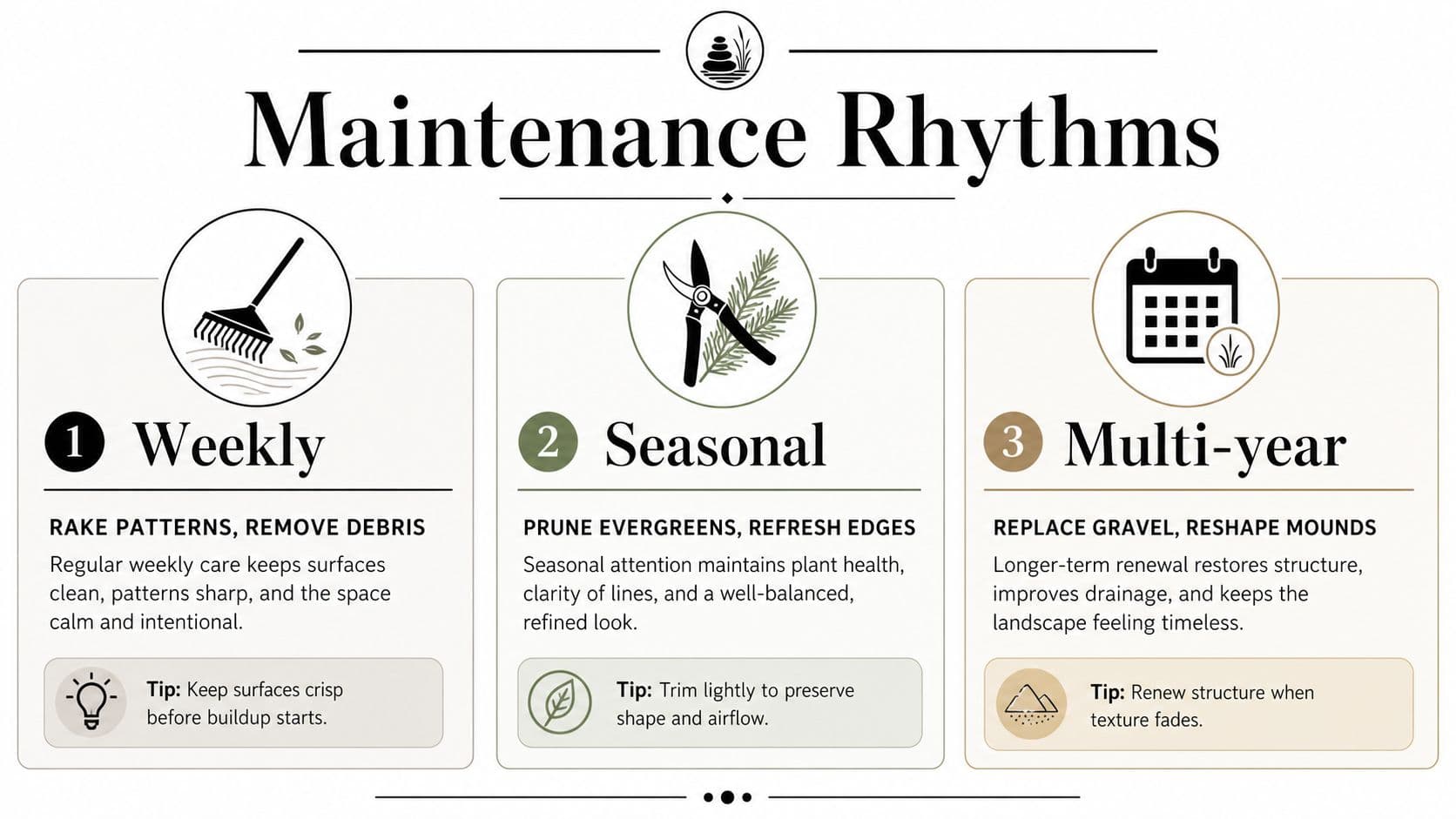
The most concrete benchmark in the sources is weekly gravel raking, described as a 10 to 15 minute task that refreshes the pattern and clears debris. That small routine keeps the surface legible, especially where footprints, twigs, and windblown grit would otherwise blur the lines. Weed removal should happen as needed, not on a vague seasonal schedule.
Seasonally, prune evergreens once or twice per year and refresh edges where gravel has migrated or compacted (hadaa.app). If leaf litter keeps blowing in, remove it before it gets worked into the rake pattern. The surface should look calm, not scrubbed into uniformity.
Multi-year care is part of the contract
Gravel usually needs replenishment every 3 to 5 years as compaction and migration happen. That is normal wear, not a design failure. Top it up before the surface gets thin enough to expose the base layer or blur the line work.
Where irrigation sits near the planting edge, adjust watering based on soil type so moisture does not creep into the gravel field. A Zen composition loses its sharpness fast when water, mulch, and fallen debris start mixing into the dry surface.
The garden should look edited, not overworked. If every rake mark is disappearing under debris, the maintenance rhythm is already behind.
Common Mistakes That Ruin the Look
Most bad Zen gardens aren't built with bad intentions. They're built by default, with each “small” choice pushing the design away from calm and toward clutter. The problem is usually one of these five mistakes, and each one has a better alternative if you catch it early.
Mirror symmetry kills the feeling
Placing stones in mirrored pairs or lining both sides up evenly makes the garden feel stiff. It looks planned in the wrong way, like a diagram instead of a natural setting. The fix is simple, break the symmetry and let one side carry more visual weight.
Too many elements erase the empty space
A common first draft adds rocks, lanterns, planting pockets, stepping stones, and a fence, all at once. The result is a garden that has objects but no air. Edit by subtraction, and protect the void as carefully as you place the stones.
The wrong viewpoint ruins the composition
If the garden only looks good from above, from the workbench, or from a photo taken after you moved around to find the angle, it's not designed yet. The primary viewpoint should be obvious and intentional. Build from the chair, window, or patio edge where the garden will be read.
Decorative gravel that ignores maintenance
A gravel layer that looks beautiful in the nursery yard can compact, migrate, or lose pattern definition in a real backyard. Once that happens, the rake marks smear and the surface starts looking tired. Choose material with long-term behavior in mind, not just color.
Climate-blind planting choices create constant repair
A plant list that ignores heat, shade, wetness, or cold turns the garden into a replacement project. A dry garden especially suffers when the plant palette needs more water or pruning than the site can support. Climate fit matters more than authenticity-by-photo.
A subtler failure happens when someone copies a famous temple garden without the proportions or enclosure that made it work. What was serene in Kyoto can read as an unfinished rectangle in a suburban lot if the frame is wrong and the emptiness has no relationship to the view. That's why the site audit and viewpoint matter more than imitation.
A practical way to pressure-test the plan is to mock up the layout on your own yard photo before moving the stones. OutdoorBrite can generate visual redesign concepts from a backyard image, which makes it easier to see whether the composition feels balanced before the expensive part starts. If you've been sitting on a half-formed idea, visit OutdoorBrite and use it to test a Japanese Zen layout against your actual space before you buy stone.
See your yard reimagined
Start creating