Watering Schedules for Plants: The Complete Guide
Build personalized watering schedules for plants with our step-by-step guide. Learn to adjust by plant type, soil, season, and irrigation method.
You're standing in the yard in July, hose in hand, and half the plants look thirsty while the other half look like they've been drowned. That's the mess a typical watering routine can become. It feels responsible until the tomatoes wilt, the shrubs yellow, and the flowerbed starts smelling sour because one calendar rule got applied to every plant in the yard.
A real watering schedule for plants is not a fixed day on the calendar. It's a decision based on soil moisture, plant maturity, sun, drainage, and whether the plant lives in a pot or the ground. The strongest guidance points in the same direction, most houseplants don't need frequent watering, plants in outdoor beds do better with deep soaking, and new plantings need a different rhythm than established ones. The mistake is treating all of those cases like they're the same job.
Table of Contents
- Why Most Watering Schedules Fail Before They Start
- The Four Inputs That Decide How Often You Water
- Container Plants Versus In-Ground Beds
- Building Your Weekly and Seasonal Schedule
- Choosing Between Manual Watering and Automated Irrigation
- The Case for Deep, Infrequent Watering
- Troubleshooting Common Watering Schedule Problems
Why Most Watering Schedules Fail Before They Start
The classic failure looks like this. A homeowner waters the whole yard every Saturday morning, the patio pots, the new shrubs, the tree ring, and the dry-looking corner by the fence. By August, the pots are bone dry by afternoon, the bed near the downspout is staying soggy, and the “easy” schedule has created two different problems in the same yard.
That happens because most schedules start with the wrong assumption, that every plant wants the same treatment. They don't. A median watering interval of 7 days across a dataset of 8,357 plant species shows how misleading the old “water often” habit can be, since 67% of houseplants need water once a week or less and only 8% need it more than twice a week (growli water data). In plain English, a lot of plants would rather be left alone than babysat.
The three assumptions that break a schedule
The first bad assumption is that species don't matter much. They do, and a succulent, a fern, and a tomato patch are not interchangeable. The second is that calendar timing beats soil timing. It doesn't, because wet soil is wet soil whether the last watering happened yesterday or three days ago. The third is that the whole yard dries at the same rate. It never does, because sun, wind, mulch, slope, and soil texture all change the pace.
Practical rule: if two plants live in different conditions, they should not share the same watering habit.
This is why a short diagnostic step saves more plants than any printed schedule. Look at the plant, touch the soil, check where the water goes, and then decide. If you want a yard that looks intentional instead of improvised, start with plant groupings that match moisture needs. A solid guide to a green water-wise yard helps with that planning.
The Four Inputs That Decide How Often You Water
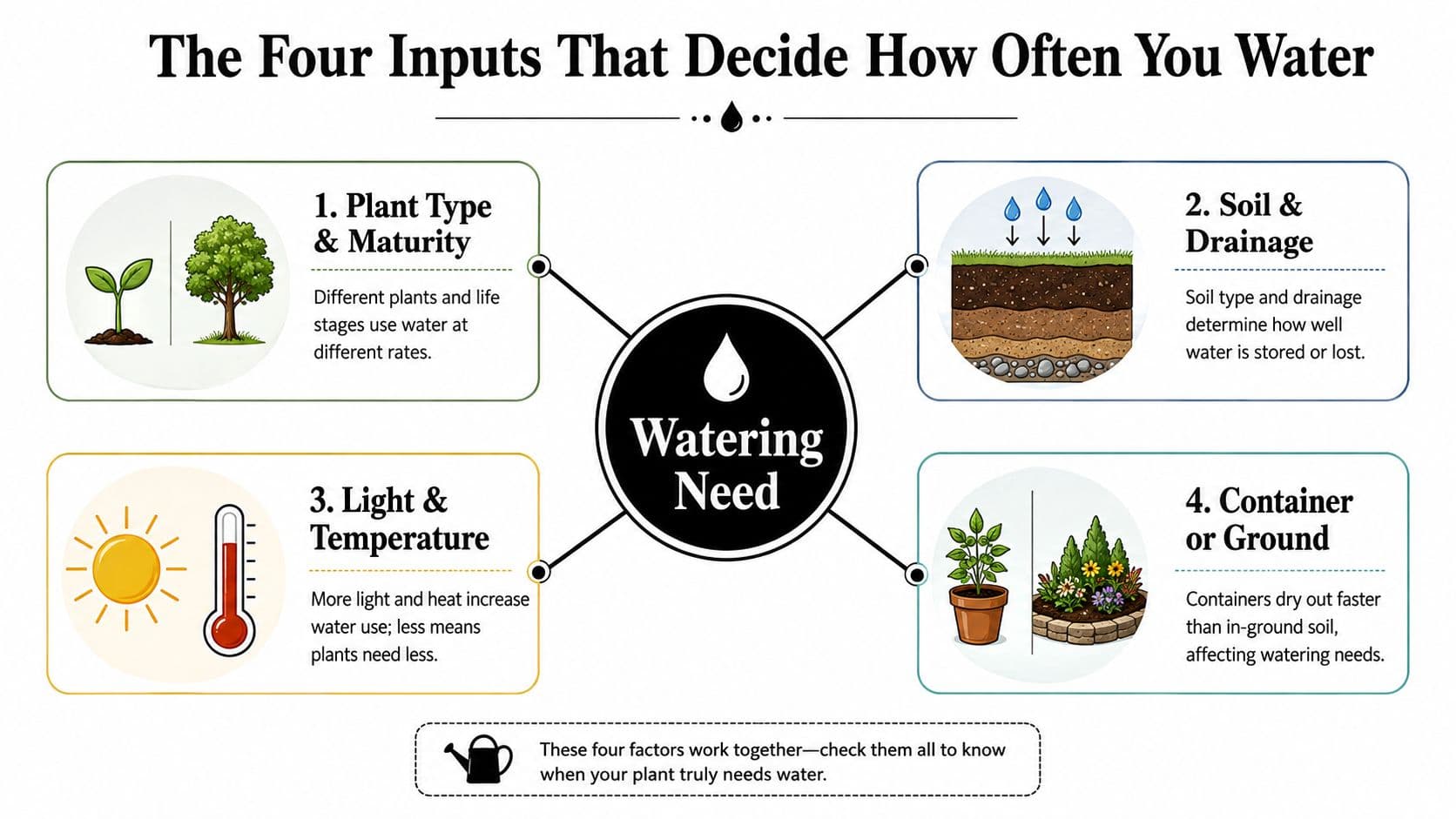
Watering decisions get a lot easier when you stop asking, “What day is it?” and start asking, “What is this plant dealing with?” Four inputs decide most of it, plant type and maturity, soil and drainage, light and temperature, and whether the plant is in a container or in the ground. Ignore even one of those, and the schedule is probably wrong.
Plant type and maturity
A new transplant wants a different rhythm than an established shrub or tree. Newly planted material has a small, stressed root system, so it needs closer attention while roots expand. Established plants can usually wait longer because they've already pushed roots into a larger soil volume and can hunt for moisture.
Soil and drainage
Soil texture changes everything. Sandy soil drains fast and dries fast. Clay holds water longer and can stay wet far too long if you keep pouring on top of it. If your yard has drainage issues, the plant schedule won't work until the site drains better. That's where practical yard maintenance matters, and if runoff or drainage is part of your problem, maintaining drains in Arizona is a reminder that water management is not just a plant issue.
Light and temperature
A bed in full sun on a windy patio does not behave like a bed in afternoon shade. Heat and air movement dry soil faster, so exposed plants need more monitoring. A plant under tree cover or near a cool north wall may need less frequent watering even if it's the same species.
Container or ground
Pots and beds are not the same environment. A container is a tiny, fast-drying root zone. The ground has more buffering capacity, especially if the soil is amended and mulched.
Before you build a schedule, score each bed against those four inputs. If all four point toward fast drying, expect shorter intervals. If two or more point toward slow drying, stop watering on autopilot.
Container Plants Versus In-Ground Beds
Patio plants die for one reason over and over, people water them like they're in the ground. They aren't. A pot has limited soil, faster evaporation, and no deep reservoir below it. A garden bed has more mass, more buffering, and usually a better chance of staying evenly moist between waterings.
| Factor | Container Plants | In-Ground Beds |
|---|---|---|
| Drying speed | Fast, especially in sun and wind | Slower, especially with mulch |
| Watering style | Small root volume needs close monitoring | Best with deeper soaking |
| Common mistake | Letting the mix dry too far, then drenching it | Shallow watering that never reaches roots |
| Failure mode | Hydrophobic potting mix, root-bound pots | Compacted soil, runoff, uneven penetration |
| Best fix | Check moisture often and water thoroughly to drainage | Water slowly enough to soak below the surface |
| Good design move | Group pots with similar thirst together | Use plant placement to keep thirsty species near each other |
The biggest trap in containers is potting mix that repels water after it dries out. Once that happens, water can run down the sides and miss the root ball. The cure is simple, soak the pot fully and don't let it get to the brittle-dry stage again.
In the ground, the opposite problem shows up. People spray the surface and assume the plant is covered. That barely wets the top layer and leaves deeper roots dry. If you're planning beds, crop placement for raised beds matters because water-demanding plants should sit where you can reach and manage them without dragging a hose across the whole yard.
A tomato in a hot pot and a tomato in the garden bed are not the same plant from a watering standpoint. The pot will ask for attention far more often. The bed will punish shallow watering far more slowly, which tricks people into thinking their routine is working when it isn't.
Bottom line: containers need closer observation, beds need deeper soaking.
Building Your Weekly and Seasonal Schedule
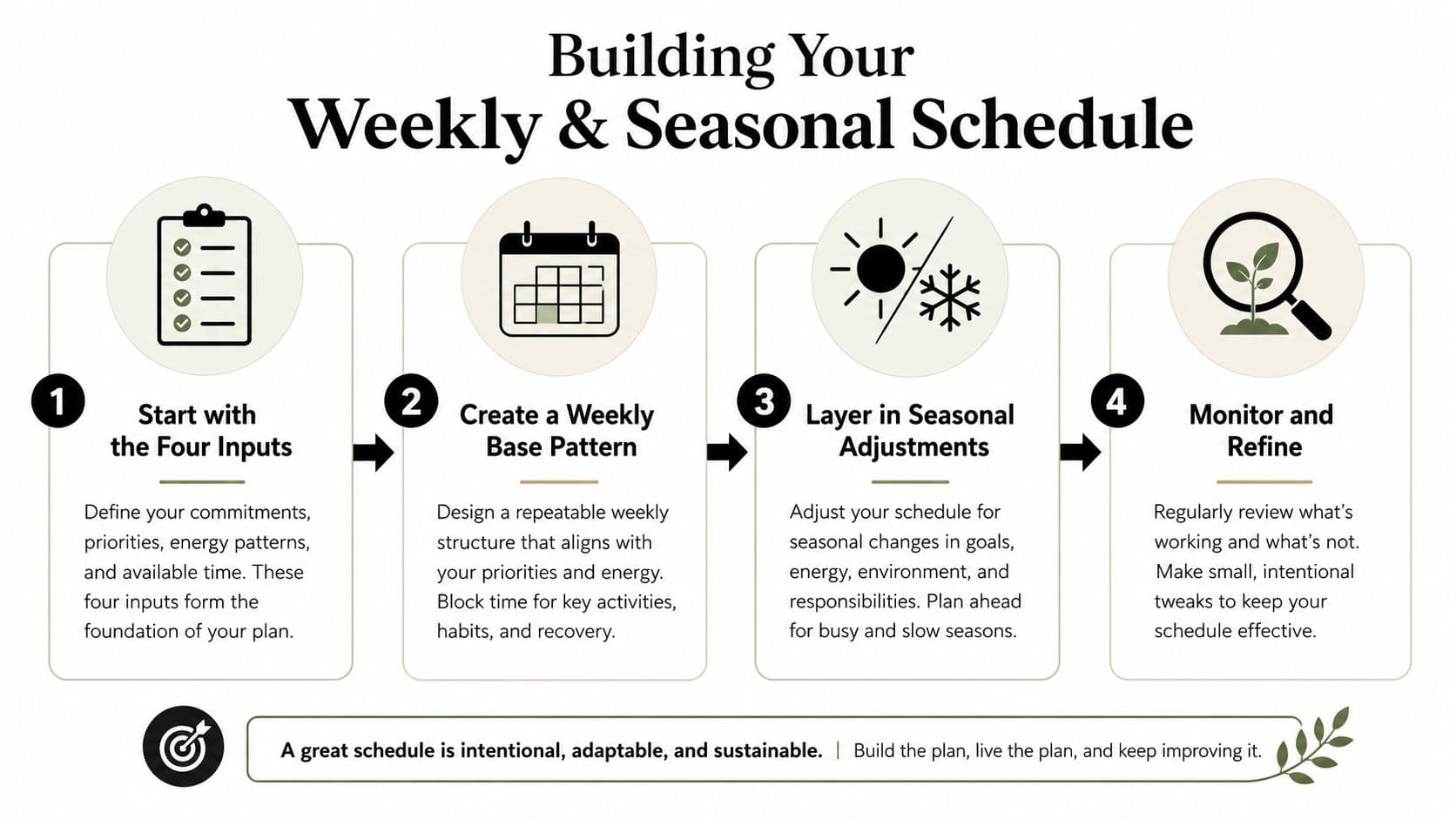
A schedule should start as a base pattern, then get adjusted by weather and plant age. For new plantings, morning watering is the smart move because it reduces evaporation and leaf wetness. Early on, a higher-frequency rhythm makes sense, then you taper as roots expand and the soil starts holding moisture more evenly.
Start with the plant stage
Use one simple rule. New plantings get closer attention, established perennials get checked on a steady rhythm, and shrubs and trees get watered as the root zone needs it rather than on a panic schedule. A cheap soil-moisture check, or even your finger, should be the trigger. If the soil is dry 1 to 2 inches down, it's time to water. If it's still cool and damp, leave it alone.
Adjust for season, not just habit
Spring growth usually asks for less aggressive watering than midsummer heat. Summer stretches need more attention because soil dries faster and plants lose water faster. Fall should taper, especially once temperatures cool and rainfall starts doing some of the work. EPA guidance says a garden typically needs about 1 inch of water per week including rainfall, but that amount changes by location, weather, and plant type (EPA WaterSense watering tips).
Use rainfall as part of the schedule
Don't water twice after a storm because the calendar said so. Count rainfall first, then fill the gap. Texas A&M's garden guidance keeps proving the same point, watering should respond to weather, not blind habit, and its climate-based irrigation advice is a good reminder that plants in heat or drought need a different rhythm than plants in cooler weeks (Texas A&M AgriLife watering guidance).
For homeowners in cities with older plumbing or conservation concerns, water-saving plumbing for LA homes is a useful companion idea because irrigation works better when the rest of the water system isn't fighting it.
A practical monthly rhythm looks like this. Watch closely in spring, water more often in peak summer, then cut back in fall as the soil stays moist longer. The point isn't perfection. The point is to stop pretending July and October should use the same schedule.
Choosing Between Manual Watering and Automated Irrigation
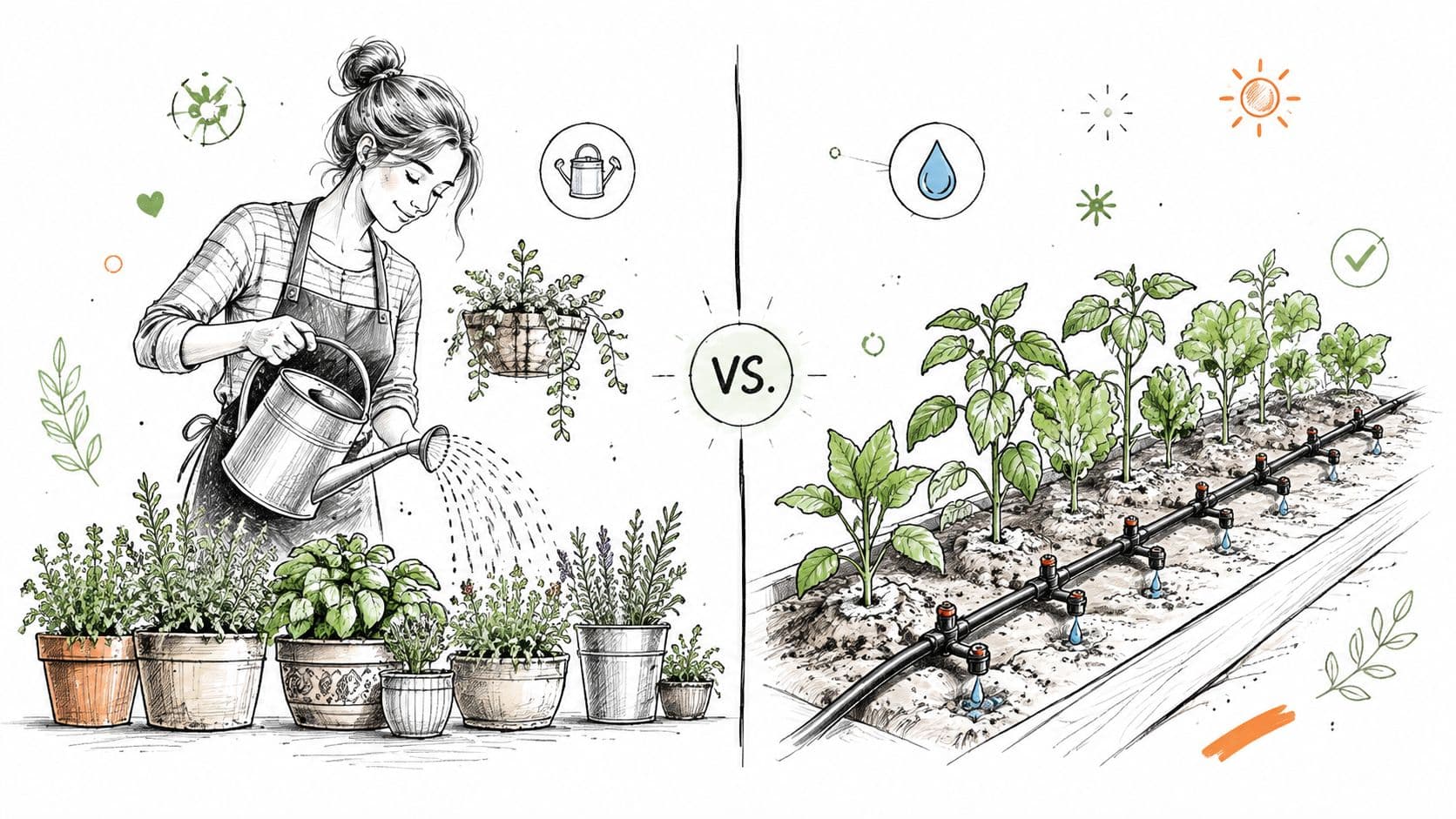
Manual watering is fine if you stay home, know your plants, and don't mind checking beds by hand. A hose-end timer is the cheapest step up from that, and it's often enough for a small yard with simple plant groupings. Drip irrigation earns its keep when the yard is larger, the plants are grouped by water need, or you're trying to keep things alive during a trip.
What each system does well
- Hand watering: best for small spaces, containers, and close observation.
- Hose timers: best for consistency without a big setup.
- Soaker hoses: useful for simple beds that need slow, even wetting.
- Drip kits: best for targeted watering, especially when you want to keep foliage dry.
Where each one falls short
- Hand watering gets skipped when life gets busy.
- Timers still water the wrong amount if the bed is poorly designed.
- Soaker hoses can waste water if they're laid badly or left in the wrong place.
- Drip systems need a little planning, but that planning is the whole point.
A lot of homeowners jump straight to gear and skip the layout. That's backward. Group plants by thirst first, then decide whether a timer, soaker hose, or drip line makes sense. The upgrade is not the hardware, it's putting compatible plants together so one watering pattern serves the whole zone.
The same logic applies to overhead versus drip. Overhead spray is broad and sloppy, and it wets leaves more than roots. Drip is more deliberate and usually the better choice for beds, shrubs, and mixed plantings where you want control. If the yard is small and the layout is clean, manual watering can still work. If the yard has mixed needs, automation is usually the safer bet.
The decision is simple. If you can't realistically water the same beds the same way every week, automate the routine and design the yard around that reality.
The Case for Deep, Infrequent Watering
Watering too often and too lightly keeps the top inch damp, which feels productive, but it does a lousy job of training roots to search deeper. Deep, infrequent watering forces moisture down into the root zone, then gives the soil time to partially dry before the next session. That pattern supports stronger rooting and cuts down on the mushy, stressed look that comes from constant surface moisture.
Texas A&M's guidance and Iowa State's watering advice both point in the same direction, soak the soil instead of dribbling a little water every day. Iowa State recommends wetting soil to at least 5 to 6 inches deep, and Texas A&M advises a weekly soaking rather than frequent shallow watering (Iowa State Extension guidance).
Rule of thumb: water long enough to wet the root zone, then wait until the soil starts drying before watering again.
The exception that proves the rule
New plantings are the exception. Early establishment needs more frequent attention because roots haven't spread yet. Once that first stretch is over, backing off is the right move. That's where people go wrong, they keep using establishment watering long after the plant has outgrown it.
Deep watering also fits better with mulch. If you need a refresher on how surface cover supports a sane irrigation plan, find the best garden bed mulch and use it to slow evaporation around the root zone.
The blunt truth is this. Daily sprinkling is usually a weak habit dressed up as care. A good schedule respects the root zone, the soil, and the plant's stage of growth. Water less often, water more thoroughly, and stop rewarding shallow roots.
Troubleshooting Common Watering Schedule Problems
When a watering schedule fails, the plant usually tells you fast. Yellowing leaves and sour soil point one way. Crispy edges and wilt point another. Runoff on a slope points to a schedule that looks fine on paper but doesn't soak the bed.
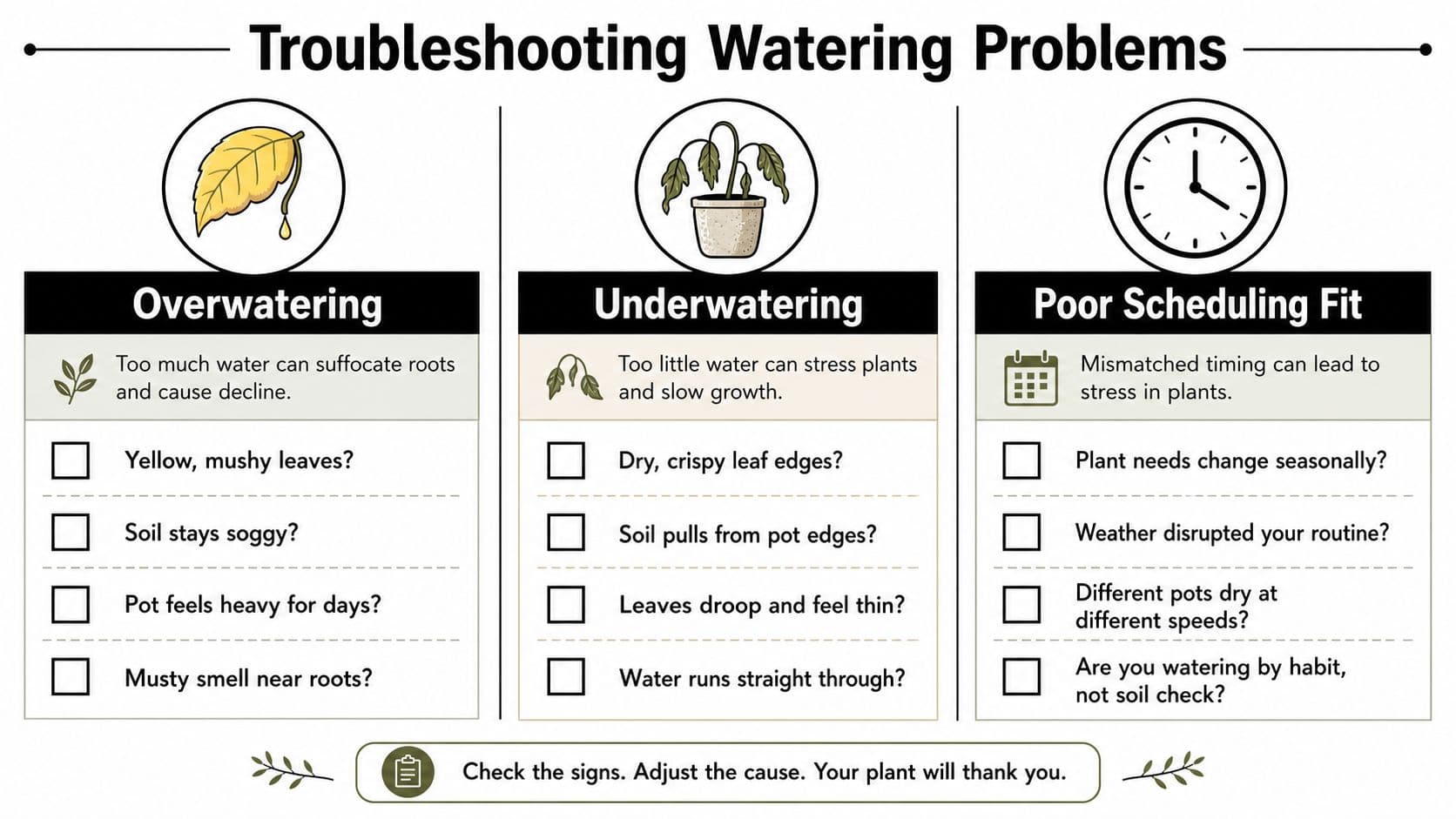
Overwatering
Yellow leaves, soft growth, and soil that never seems to dry out usually mean the schedule is too frequent or the drainage is poor. Back off immediately, let the soil breathe, and check whether the root zone is sitting wet instead of just looking damp on top. If the pot has no drainage or the bed holds water after rain, the watering plan is wrong no matter how careful it looks.
Underwatering
Wilting by midafternoon, brittle leaves, and dry soil pulling away from pot edges point to not enough water or not enough depth. Water slowly and thoroughly so the root zone rehydrates. If the plant perks up after watering but collapses again fast, the interval is too long or the site is too exposed.
Poor scheduling fit
Windy patios, sloped beds, and compacted soil all break schedules in different ways. Water can run off before it soaks in, or it can dry out too fast because the plant placement is wrong for the site. The fix is usually a mix of slower application, better grouping, and a different interval for that exact zone.
- Check the soil first: if it's wet below the surface, don't add more.
- Slow down runoff: water in smaller passes if the slope sheds water.
- Move the interval: heat and exposure shorten the gap, cool weather lengthens it.
A good schedule is one you can adjust without guessing. If the plant, the weather, or the soil changed, the watering should change too.
If you want better results in your yard, stop treating watering like a fixed chore and start treating it like a design decision. OutdoorBrite helps homeowners test landscape ideas on their actual space before they plant, so you can group thirsty plants together, avoid bad layout mistakes, and build a yard that matches the way you water. Visit OutdoorBrite and use it to plan a smarter landscape before the next hot spell exposes the weak spots.
See your yard reimagined
Start creating