10 Patio Design Ideas Images for 2026 Inspiration
Explore stunning patio design ideas images for every style. From modern to rustic, get tips and visualize your dream patio with AI before you build.
Your patio gets used in real life, not in a catalog. Maybe the dining table blocks the back door. Maybe the fire pit looked right in a saved photo but would crowd your yard. Or maybe you have plenty of space and still cannot picture which style will feel right once the stone, furniture, lighting, and planting are all in place.
That is the point where many homeowners stall. They collect patio design ideas images, save a dozen strong references, and still have no clear answer on scale, circulation, or material mix for their own property.
Good patio design solves those questions before construction starts. A patio should support how you live outside, whether that means quiet morning coffee, family dinners, or a layout that can handle a crowd without feeling packed. The hard part is not finding inspiration. The hard part is testing whether a clean modern layout, a Mediterranean palette, or a lush cottage scheme fits your house, climate, budget, and maintenance tolerance.
AI helps close that gap. With the best free patio design app, you can upload your yard, try different patio styles, swap paving materials, adjust furniture scale, and compare layouts before you buy a single paver or planter. I recommend using AI early for one reason. It exposes bad decisions while they are still cheap to fix.
You will see ten distinct patio directions in this guide, along with the trade-offs that matter on site: heat retention, upkeep, drainage, privacy, comfort, and how each look ages over time. If you want more foundational tips for a captivating patio, pair them with the visualization workflow here so your saved images turn into a plan you can trust.
Table of Contents
- 1. Modern Minimalist Patio Design
- 2. Mediterranean Patio Oasis
- 3. Japanese Zen Garden Patio
- 4. Rustic Farmhouse Patio
- 5. Contemporary Outdoor Living Room
- 6. Tropical Paradise Patio
- 7. Industrial Chic Patio
- 8. Cottage Garden Patio
- 9. Sustainable Eco-Patio Design
- 10. Luxury Modern Outdoor Entertaining Patio
- 10 Patio Design Styles: Side-by-Side Comparison
- From Idea to Reality Your Patio Design Blueprint
1. Modern Minimalist Patio Design
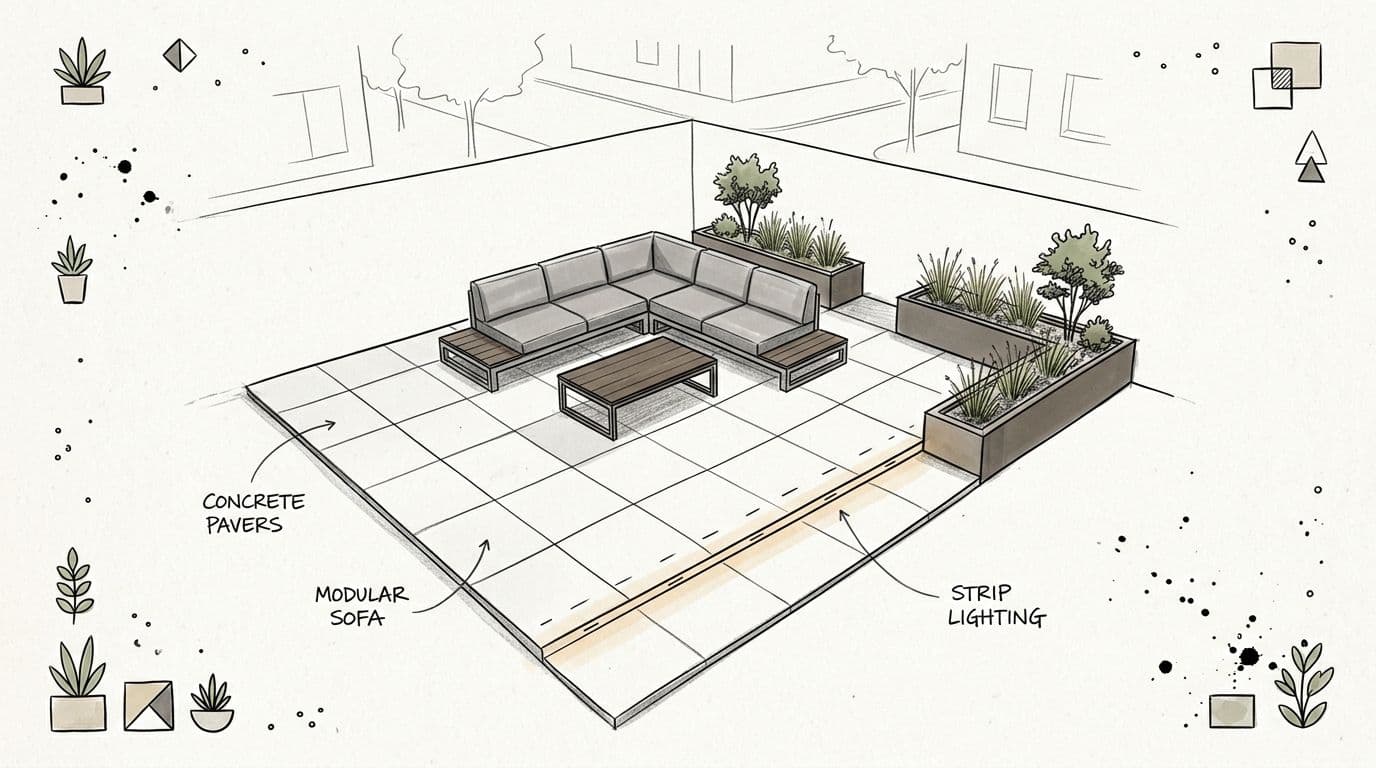
You step into a small backyard after work and want the space to feel quiet, ordered, and easy to use. Modern minimalism can do that beautifully, but only if the layout is disciplined and the materials are doing real work.
The strongest minimalist patios are built from proportion, contrast, and clear circulation. Large-format pavers, a low-profile seating piece, concealed lighting, and one intentional focal point usually create a stronger result than filling the patio with matching sets. In compact urban yards and roof terraces, that restraint often makes the space feel larger because the eye has fewer interruptions.
Keep the layout restrained
Minimalist design does not mean flat or boring. Pattern still matters. A simple grid, a stacked bond, or a subtle directional layout can give the patio structure without making it feel busy. This detail is important even in a minimalist layout, because the paving often carries more visual weight when accessories are limited.
Use OutdoorBrite early, before you price materials or order furniture. Upload your yard photo and generate three versions of the same concept: smooth poured concrete, concrete-look porcelain, and a mixed scheme with a narrow decking border. Then test each one in bright afternoon sun and with evening lighting turned on. Homeowners often choose a finish they love in daylight, then realize at dusk it feels cold or reflective.
The trade-offs are straightforward. Concrete usually gives the most monolithic look, but it can crack and show staining. Porcelain stays crisp and is easier to clean, though it can feel slightly less natural if the detailing is weak. Decking softens the edge and makes the space feel warmer underfoot, but too much timber can pull the design away from the minimalist brief.
- Limit the palette: Two hardscape tones and one accent finish is usually enough.
- Use one focal object: A fire bowl, linear water feature, or oversized planter can anchor the space without clutter.
- Protect movement paths: Leave enough clearance to slide chairs out and walk through the patio comfortably.
- Keep planting architectural: Grasses, clipped evergreens, or a single multi-stem specimen suit this style better than mixed cottage planting.
Practical rule: Minimalist patios succeed when each visible element has a job, whether that job is seating, light, shade, or structure.
If you are starting with a blank yard photo, a best free patio design app helps you test furniture scale, spacing, and sightlines before you commit. That is one of the smartest ways to use patio design ideas images. Not as inspiration alone, but as a working draft you can pressure-test before the build starts.
2. Mediterranean Patio Oasis
Mediterranean patios succeed through atmosphere. Terracotta, limestone tones, curved openings, stucco walls, olive-toned planting, and weathered wood all work together to create warmth. But homeowners often push this style too far and end up with a themed set instead of a livable patio.
The better version feels collected. Think a clay pot grouping, a simple fountain, textured paving, and deep-seat chairs with linen-colored cushions. The look should feel sun-aged, not crowded.
Warm materials, controlled abundance
If you're using AI to explore patio design ideas images in this style, ask OutdoorBrite for warm plaster walls, terracotta containers, a small central water feature, and filtered evening light. Then generate a second version with fewer accessories. Most of the time, the cleaner one reads as more authentic.
Mediterranean design also handles entertaining well because it naturally supports lingering. A built-in bench with loose cushions often works better than six separate dining chairs in a compact footprint.
What works:
- Patina-friendly materials: Natural stone, limewash looks, reclaimed wood.
- Portable planting: Large pots let you adjust the layout over time.
- Soft lighting: Lanterns and wall sconces give this style its evening mood.
What usually doesn't:
- Too many accent colors: One cobalt or saffron note is enough.
- Fake distressing everywhere: Let real materials age instead.
- Dense décor in small yards: Ornament can choke the circulation.
A good Mediterranean patio should feel open at the center and richer at the edges. That balance is what keeps it relaxing instead of cluttered.
3. Japanese Zen Garden Patio
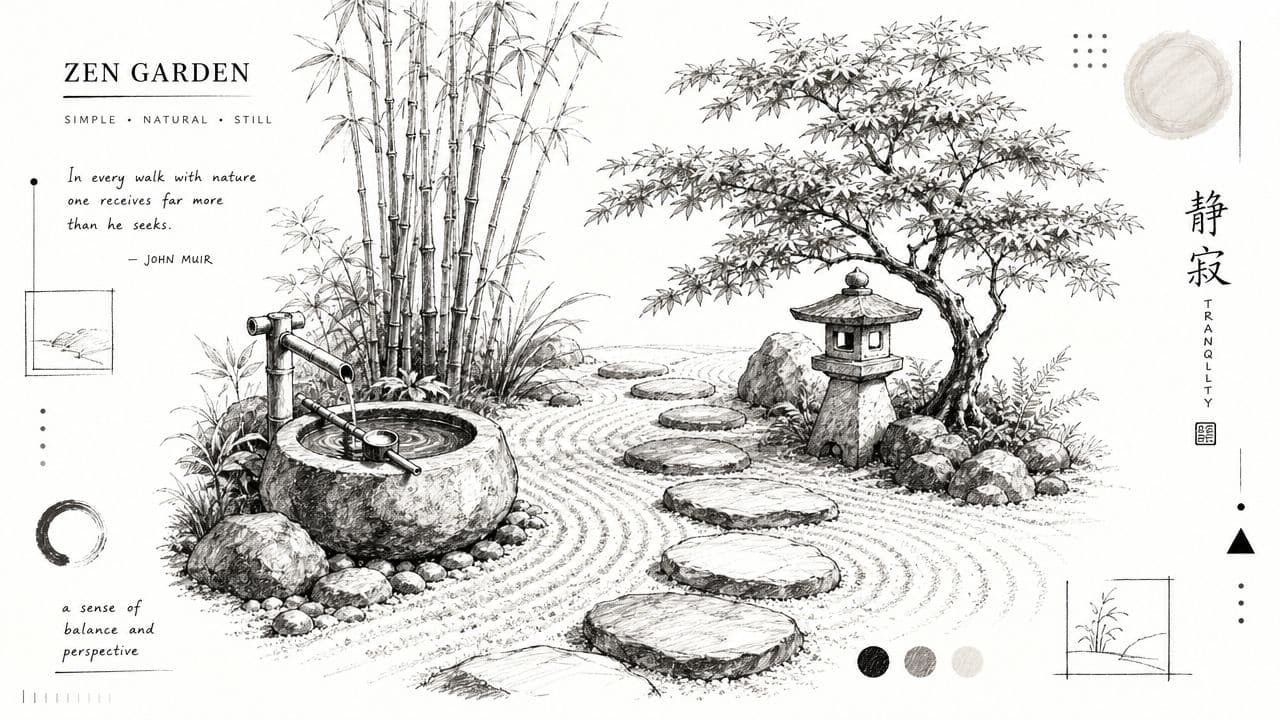
A Zen-inspired patio works best when it slows the eye down. Fewer moves. Better placement. Strong negative space. This is one of the easiest styles to get wrong if you borrow random elements from patio design ideas images without understanding the composition behind them.
Start with one anchor. That might be a stone basin, a specimen pine, a gravel court, or a timber bench facing a quiet planting bed. Then build around it with asymmetry and clear lines of movement.
Use fewer elements, better placed
For a small backyard patio to seat six comfortably, the layout needs about 150 to 180 square feet, with roughly 25 to 30 square feet per person, according to Allied Outdoor Solutions. In practice, that means a Zen patio used for quiet seating can feel generous with less furniture, while a social version still needs real elbow room.
Ask OutdoorBrite to generate one concept with raked gravel and stepping stones, then another with larger stone slabs and mossy edges. Compare which one fits your actual maintenance tolerance. Gravel looks beautiful, but leaves, seed drop, and debris show quickly under trees.
A Zen patio should feel intentional from every angle, not decorative from one camera view.
A few reliable choices:
- Use natural finishes: Stone, unfinished timber, gravel, and matte ceramic work better than glossy surfaces.
- Hide the mechanics: Irrigation parts, hoses, and storage should disappear.
- Light gently: Low path lighting and concealed warm fixtures beat bright overheads.
This style rewards discipline. If every item is trying to be meaningful, none of it is.
4. Rustic Farmhouse Patio
Rustic farmhouse patios feel welcoming because they mix utility with comfort. A weathered table, simple gravel or stone underfoot, black metal details, wood planters, and an herb bed nearby can do more than a highly polished setup that never feels lived in.
The trade-off is maintenance. Real wood weathers. Painted finishes chip. Galvanized metal can look charming in the right context and cheap in the wrong one. The key is to use a few honest materials repeatedly instead of assembling every “rustic” object you can find.
Texture matters more than perfection
OutdoorBrite is useful here because rustic spaces often look better after you remove things. Generate one image with vintage signs, barrels, crates, and layered containers, then one stripped back to a dining table, string lights, planter boxes, and a stone edge. The second version usually feels more believable.
I like farmhouse patios most when they include something productive. A narrow cutting garden, a raised herb bed, or a potting station gives the style purpose and keeps it from feeling staged.
- Mix old and new carefully: Pair a reclaimed-look table with clean cushions, not distressed everything.
- Favor forgiving materials: Tumbled pavers, gravel, fieldstone, and sealed wood age more gracefully than slick finishes.
- Use lighting to soften roughness: Warm bulbs and lantern light make reclaimed materials feel inviting.
This look works best on cottages, older homes, and transitional properties with some architectural softness. On a sharply modern house, it can feel disconnected unless you simplify it heavily.
5. Contemporary Outdoor Living Room
A contemporary outdoor living room earns its keep on an ordinary Tuesday, not just when guests come over. You step outside with coffee, the chair is comfortable, there is shade where you want it, and a side table is close enough to use. That level of function is what separates a styled patio from one that behaves like a real room.
The design priority is structure. Contemporary spaces usually work best with a clear lounge zone, a secondary dining or café spot, lighting at more than one height, and some form of cover that makes the space usable beyond perfect weather. I do not try to copy an indoor living room piece for piece. I carry over the logic instead: seating that relates well, circulation that stays open, and surfaces where people naturally need them.
Build around use, then refine the look
Homeowners often ask for a patio that feels polished, but the actual brief is usually more specific. They want a place to talk, read, host a few friends, supervise kids, or eat outside without dragging chairs around every time. Contemporary design handles that well because it is flexible, but only if the layout is doing real work.
Use ai outdoor patio design to test those decisions before you buy furniture. Start with your actual patio photo. Prompt one version with a low-profile sectional, two swivel chairs, a fire table, and a slatted pergola. Then generate a second version with a sofa, two lounge chairs, nesting side tables, and a dining banquette along the edge. The better option is usually the one that keeps walkways clean and gives every seat a purpose.
Small spacing mistakes cause big frustration.
I usually check three trade-offs early:
- Zone the space without crowding it: Separate lounging from dining, but keep enough open floor area for people to move naturally.
- Choose shade with the furniture plan in mind: Pergolas look architectural, retractable awnings give more weather control, and umbrellas are cheaper but often interrupt circulation.
- Balance built-in and movable pieces: Built-ins save space and look custom-made. Movable furniture is easier to rework as your needs change.
Materials matter here too. Contemporary patios hold up best when the palette is edited. Powder-coated aluminum, teak or thermally modified wood, large-format pavers, performance fabric, and simple planters usually age better than trend-heavy pieces with lots of ornament. If the house is modern, keep lines crisp. If the house is more traditional, soften the look with warmer wood tones and fuller cushions so the patio feels connected rather than imported from another property.
The style is popular for a reason. It supports daily use, adapts to entertaining, and photographs well, but the best version is the one that still works after the novelty wears off.
6. Tropical Paradise Patio
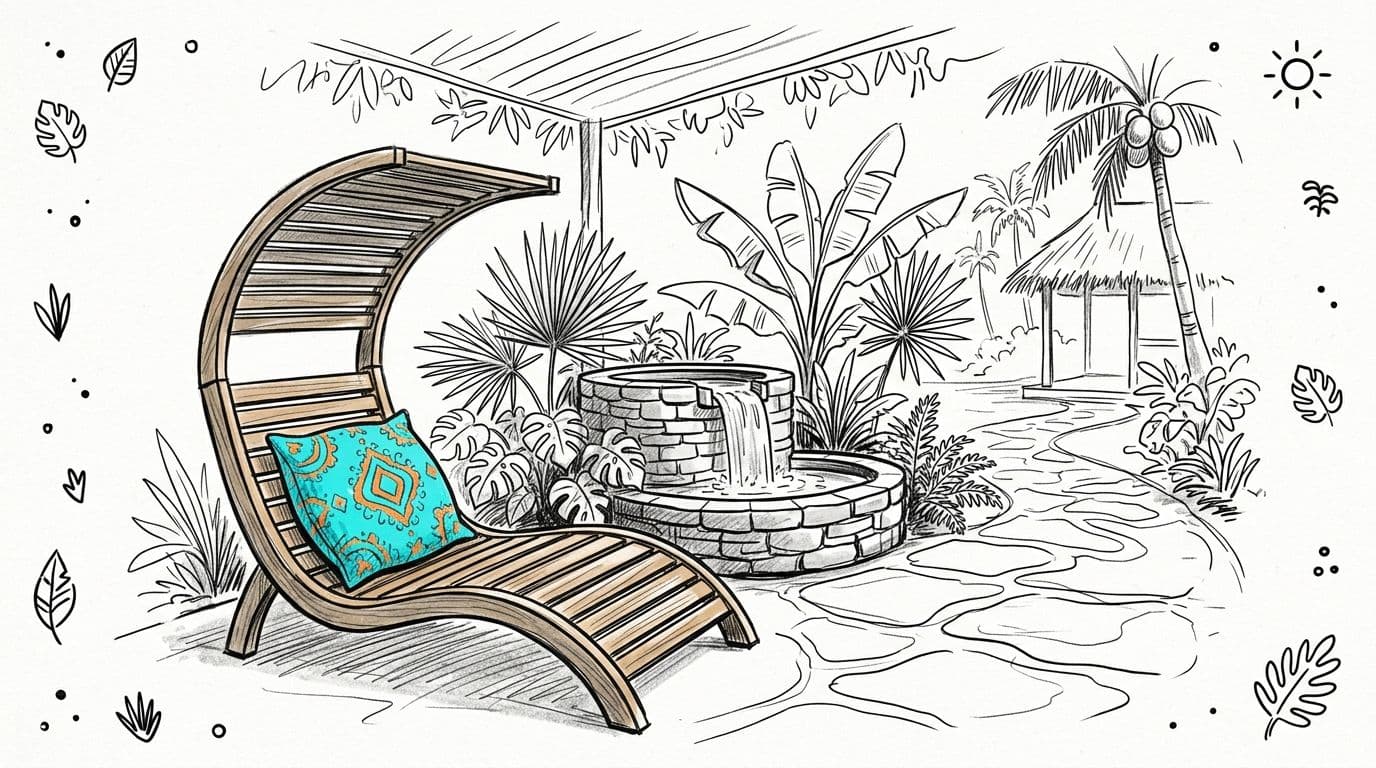
A tropical patio should feel immersive, not messy. The strongest versions layer broad-leaf planting, wood or stone textures, filtered shade, and one obvious focal point such as a fountain, plunge feature, or dramatic specimen plant.
This is also one of the easiest styles to romanticize in photos and regret in real life. Dense planting needs access for pruning, irrigation, and cleaning. If the patio becomes hard to walk through or impossible to sweep, the mood disappears fast.
Lush doesn't mean overcrowded
With OutdoorBrite, generate one image using dense perimeter planting and a clear central seating zone. Then test another with plants filling every edge and corner. The second version often looks rich in a render but feels claustrophobic when you imagine living in it.
Tropical patios work best when the hardscape stays relatively quiet. Let the plants carry the personality. Teak-style seating, neutral cushions, and a restrained paving pattern usually support the look better than highly decorative tile plus bright textiles plus bold containers.
A few field-tested choices:
- Layer by height: Groundcover, medium foliage, and tall screening create depth.
- Keep sightlines open from seating: You want enclosure, not visual pressure.
- Use color selectively: A patterned pillow or painted planter is enough.
If you live outside a tropical climate, you can still capture the feeling through leaf shape, texture, and humidity cues like water sound and dappled shade. The style is less about actual geography than sensory effect.
7. Industrial Chic Patio
Industrial patios depend on contrast. Raw concrete, blackened steel, brick, exposed fasteners, and angular furniture give the structure its edge. Then wood, textiles, and planting keep it livable.
Without that softness, the space can feel cold. With too much softness, it stops reading as industrial. This style needs discipline in both directions.
Let the structure show
Material choice matters here because flaws become part of the design language. According to this hardscape cost and drainage discussion on YouTube, concrete installation averages $8 to $15 per square foot, while pavers range from $10 to $20 per square foot, with complex cuts pushing pavers toward the higher end. The same source notes that pavers allow localized repair and recommends a 1 to 2% slope for raised paver bases to improve drainage. That practical difference matters on industrial patios because the look often depends on crisp lines staying crisp over time.
Use OutdoorBrite to compare a poured-concrete look with large-format pavers and steel edging. Then zoom out mentally and ask which one you'll still like after weathering. Industrial design gets stronger with honest wear, but only when the base construction is sound.
- Highlight one raw material: Brick wall, black steel frame, or board-formed concrete.
- Add one warm counterpoint: Wood slats, olive trees, or upholstered seating.
- Light vertically: Wall washing and pendants make industrial spaces feel intentional at night.
This style suits loft conversions, modern additions, and urban homes with architectural character. On a traditional suburban elevation, it needs a lighter touch.
8. Cottage Garden Patio
Cottage patios are generous, fragrant, and a little unruly on purpose. They use soft edges, layered bloom, winding access, painted or aged furniture, and a sense that the garden arrived first and the patio settled into it later.
That charm disappears when the space becomes chaotic. A cottage patio still needs visual hierarchy. There should be a clear place to sit, a clear route to walk, and a few moments where the eye can rest.
Romantic planting still needs discipline
This style is especially useful in smaller spaces because heavy planting can make a modest patio feel enveloped rather than exposed. If privacy is part of the brief, there's a real gap in much of the image inspiration online. Romanstone notes that small urban lots are often underserved on privacy that doesn't sacrifice light, and cites a 2025 Houzz Outdoor Trends Report in which 54% of urban homeowners prioritize privacy while only 12% of featured patio images in major design publications show functional privacy solutions that don't darken the space, in this discussion of small patio designs.
That's where AI previews help. Instead of defaulting to tall dense screening, try OutdoorBrite with airy trellis panels, espaliered planting, or layered containers that filter views without creating a cave. For compact yards, AI design for small patios is most useful when you compare privacy options side by side.
A cottage patio should feel enclosed by planting, not trapped behind it.
Try these moves:
- Use vertical supports: Arches and trellises add height without a heavy wall effect.
- Layer bloom timing: Don't rely on one peak season.
- Keep hardscape simple: Let the planting do the storytelling.
9. Sustainable Eco-Patio Design
A sustainable patio earns its keep on the worst weather day, not just in a styled photo. After a hard rain, the surface should drain, planting beds should hold their shape, and furniture should sit on materials that will still look good three seasons from now.
The design work starts with water. Watch where runoff moves, where puddles sit, and which edges dry out too fast. Those patterns should guide the layout, material palette, and planting plan before you choose colors or accessories.
Build the drainage into the design
Permeable pavers, open-joint stone, stabilized gravel, and recycled concrete all have a place here, but they perform differently. Gravel is affordable and drains well, though it can migrate into planting beds and feel unstable under dining chairs. Permeable pavers look more finished and handle foot traffic better, but they need the right base and occasional maintenance to keep the joints from clogging. If you want a current overview of how permeable paving is being used in practice, the Interlocking Concrete Pavement Institute guide to permeable pavements is a better reference point than trend roundups.
Use OutdoorBrite before you commit. Upload a photo of your yard and test two versions of the same footprint. One with standard pavers and narrow planting beds, another with permeable paving, a gravel margin, and a small rain garden at the low point. Prompt it with specifics such as: "eco patio with permeable pavers, native grasses, corten edging, rain garden border, cedar screen, soft modern style." Homeowners usually make better decisions once they can compare performance-driven choices as actual design options, not abstract upgrades.
For seating or accent pieces, stylish outdoor pallet designs can work well in an eco-patio if you keep the detailing simple and use them where occasional weathering will not be a problem.
A short video can help spark ideas before you refine them further:
A few eco-patio moves that hold up well:
- Match plants to the microclimate: Dry edges, hot reflected sun, and damp low spots need different species.
- Use fewer, better materials: A tight palette often looks calmer and lasts longer.
- Give runoff a destination: Swales, gravel bands, and rain gardens should be planned features, not afterthoughts.
- Choose durable finishes: Reclaimed timber can be beautiful, but only if the species and detailing suit outdoor exposure.
The best eco-patios feel calm, resolved, and easy to live with. The sustainability shows up in lower maintenance, better drainage, and materials that age with some dignity.
10. Luxury Modern Outdoor Entertaining Patio
Guests arrive at dusk. The lighting comes on in layers, the grill zone works without crowding the lounge, and nobody has to ask where to set a drink. That is what a luxury entertaining patio should do. It should host well.
The strongest version usually starts with planning the evening, not the finishes. I map the space around three jobs: cooking, conversation, and circulation. If those overlap too much, the patio feels expensive but awkward. If each zone has enough clearance and the materials stay disciplined, the whole space reads as calm and high-end.
Use OutdoorBrite to test that layout before you price anything. Generate one concept with a linear fire feature, low-profile sectional seating, large-format porcelain, and concealed strip lighting. Then run a second version with a motorized pergola, full outdoor kitchen wall, bar seating, and a stronger contrast palette. Comparing those side by side helps homeowners see whether their house suits quiet architectural luxury or a more social, hospitality-style setup.
Automation is showing up more often in premium patio projects, especially with adjustable pergolas, app-based lighting scenes, integrated audio, and weather-responsive controls. The trade-off is straightforward. More technology adds convenience, but it also adds service points, wiring coordination, and budget pressure. I prefer to hide the hardware and spend first on comfort, shade, and durable surfaces. Those decisions still matter ten years from now.
For a polished space that does not feel too formal, stylish outdoor pallet designs can introduce a relaxed accent in a secondary seating corner or drinks station.
A few luxury rules that hold up in real projects:
- Give every zone proper spacing: Dining chairs, bar stools, and lounge seating need circulation room or the patio feels cramped fast.
- Choose fewer finishes: Stone, metal, and timber can work beautifully together, but only if one leads and the others support it.
- Build lighting in layers: Task lighting at the kitchen, soft ambient light at seating, and subtle step or edge lighting usually outperform one bright overhead source.
- Plan for service access: Refrigeration, storage, bins, and cleanup water should sit where hosting is easy, not where they photograph well.
- Use AI prompts with specifics: Try "luxury modern entertaining patio, porcelain pavers, outdoor kitchen wall, motorized pergola, integrated LED lighting, large sectional, black and warm wood palette, evening render."
The best luxury patios feel composed because every decision has a job. Guests notice the comfort. Homeowners notice how easy the space is to use.
10 Patio Design Styles: Side-by-Side Comparison
| Design Style | 🔄 Implementation Complexity | ⚡ Resource Needs | ⭐ Expected Outcome / 📊 Impact | Ideal Use Cases | 💡 Key Advantages / Tips |
|---|---|---|---|---|---|
| Modern Minimalist Patio Design | Medium, precise detailing and smart integration | Medium–High, quality hardscaping, smart lighting | High ⭐, clean, spacious, timeless; strong AI renderability | Urban/contemporary homes, small–medium patios, rooftops | Easy to maintain; add texture and one statement piece; use negative space |
| Mediterranean Patio Oasis | High, masonry, water features, layered plantings | High, terracotta/stone, mature plants, irrigation | High ⭐, warm, resort-like ambiance; high visual appeal | Warm climates, entertaining, coastal or Spanish-style homes | Creates vacation feel; choose materials that patina; include water feature |
| Japanese Zen Garden Patio | Medium, requires cultural principles and careful composition | Medium, specialized stone, plants, water basins | Very High ⭐, tranquil, meditative, timeless; property value boost | Wellness-focused homeowners, meditation spaces, small to large yards | Start with one focal point; follow asymmetry and authentic principals |
| Rustic Farmhouse Patio | Low–Medium, adaptable, many DIY opportunities | Low–Medium, reclaimed wood, stone, abundant plantings | Medium–High ⭐, warm, nostalgic, family-friendly | Older homes, family gatherings, budget-conscious renovations | Customizable with reclaimed items; layer textures and functional gardens |
| Contemporary Outdoor Living Room | High, integrated kitchens, climate control, zoning | High, modular furniture, appliances, climate tech | Very High ⭐, full indoor/outdoor extension; high usability and value | Year‑round entertaining, large groups, luxury family homes | Plan distinct zones; invest in durable furnishings and layered lighting |
| Tropical Paradise Patio | High, dense planting, water features, canopy design | High, exotic plants, irrigation, ongoing maintenance | High ⭐, immersive, sensory-rich resort feel; strong impact | Warm climates, privacy-focused designs, resort-style homes | Layer plants for depth; plan irrigation; balance vegetation with clear seating |
| Industrial Chic Patio | Medium, structural emphasis and salvaged sourcing | Low–Medium, metal, concrete, reclaimed components | High ⭐, bold, durable, urban-forward aesthetic | Lofts, converted warehouses, creative urban properties | Balance raw materials with soft textiles; use lighting to highlight structure |
| Cottage Garden Patio | Medium, planting choreography and seasonal planning | Medium, many plants, pathways, regular maintenance | High ⭐, romantic, wildlife-friendly; seasonal richness | Countryside homes, gardeners, medium–large patios | Plan bloom sequences; maintain clear paths; mix perennials and annuals |
| Sustainable Eco-Patio Design | Medium, research-based site-specific decisions | Medium, native plants, permeable paving, water systems | High ⭐, lowers footprint, improves stormwater, marketable sustainability | Conservation-minded homeowners, water‑sensitive regions | Use native species, design rain gardens visibly, test seasonal lifecycle |
| Luxury Modern Outdoor Entertaining Patio | Very High, custom architecture, tech, and professional installation | Very High, premium materials, smart systems, professional services | Very High ⭐, impressive, event-ready, strong property value | High‑net‑worth residences, formal entertaining, show homes | Prioritize quality, test lighting scenarios, plan tech that enhances (not dominates) |
From Idea to Reality Your Patio Design Blueprint
Patio inspiration gets much more useful when it moves from generic images to your own property. That's the fundamental shift. Instead of collecting random screenshots and hoping they translate, you can upload a photo of your actual yard, test multiple design directions, and see what each style does to light, proportion, circulation, and mood.
That matters because every strong patio starts with trade-offs. Minimalist spaces need restraint. Mediterranean patios need editing. Tropical patios need maintenance planning. Cottage layouts need controlled planting. Industrial schemes need warmth. Luxury entertaining spaces need discipline so they don't become overbuilt. Images alone don't solve those decisions. Visualization does.
OutdoorBrite fits naturally into that process because it lets you work from reality instead of fantasy. Upload the current patio, choose a style, and generate design concepts that match the architecture and space you already have. Then refine the details. Test paver patterns, compare privacy ideas, review seasonal lighting, and see whether a pergola, planter wall, or lounge layout improves the yard or just fills it.
That approach also lowers the risk of expensive mistakes. Hardscape is hard to undo. Furniture that looks right in a showroom can read oversized outdoors. Tall screening can fix privacy but kill daylight. A style that feels exciting in one image can clash with the house once it's applied to the site. AI previews won't replace construction knowledge, but they do make your early decisions sharper.
If you're planning a build, choose one style from this list and generate several variations before talking to a contractor. If you're a DIY renovator, use the images to narrow materials and layout before spending on supplies. If you're preparing a home for sale, use patio design ideas images strategically to find the version of the yard that feels broadest in appeal.
OutdoorBrite Money may also be relevant if you want one place to start planning the visual side of the project while moving toward a real renovation decision. The useful part isn't hype. It's clarity. Once you can see a realistic direction, the next step gets easier.
A good patio doesn't begin with construction. It begins with a convincing image of what belongs in your space, and what doesn't.
OutdoorBrite Money helps you turn patio inspiration into a visual plan you can act on. Visit OutdoorBrite Money to upload your yard, generate realistic patio concepts, and compare design directions before you spend time or money on the build.
See your yard reimagined
Start creating