Planting Zone San Antonio Texas: A Complete Local Guide
Discover your planting zone San Antonio Texas, frost dates, microclimates, and the best plants to grow with this practical local gardening guide.
You can buy a plant labeled for your zone, set it in the ground, and still watch it struggle by August or freeze back after a mild winter. That usually means the label was only part of the story, because San Antonio gardening depends on more than one temperature number. It depends on your neighborhood, your sun exposure, your soil, and how you water when the heat settles in.
If you're trying to make sense of the planting zone San Antonio Texas gardeners live with, start here: the city isn't a single uniform zone, and your yard may behave differently from the one across town. Once you learn how to read the map, frost dates, and summer stress together, plant choices get a lot easier.
Table of Contents
- Why Your San Antonio Yard Is Not One-Size-Fits-All
- Understanding San Antonio's 8b and 9a Zones
- Reading San Antonio Frost Dates and the Growing Season
- Best Plants for San Antonio's Zones
- Soil, Sun, Water and Summer Survival
- Common Mistakes When Trusting the Zone Label
- Translating Zones Into a Landscape Design
- Your San Antonio Planting Calendar at a Glance
Why Your San Antonio Yard Is Not One-Size-Fits-All
A homeowner in Stone Oak buys a shrub that's supposed to handle the local zone, plants it with care, and still loses it after a hard freeze. Someone downtown grows the same plant in a protected courtyard and it sails through the winter. That mismatch is exactly why a zone label alone can't tell the whole story.
San Antonio, Texas is mapped across two USDA planting zones, 8b and 9a, with zone 9a covering about 80% of the urban region and zone 8b concentrated in cooler northern pockets such as Stone Oak. That split matters because a plant that works fine in most of the city may need extra protection, or a different spot entirely, in a cooler yard. If you need help translating that into real-world plant choices or keeping a garden line moving for customers, a landscaping answering service can keep those conversations organized while you sort out the plan.
What the zone map actually tells you
USDA hardiness zones measure average annual extreme minimum temperatures, not every weather factor that affects a plant. That means the map is useful for winter survival, but it does not account for soil drainage, reflected heat from pavement, shade from buildings, or the hotter pockets created by urban development.
Practical rule: If a plant barely survives the cold on paper, it still needs the right soil, water, and exposure to make it through a San Antonio summer.
That's why two neighbors can both say they live in San Antonio and still get different results. One yard may be more exposed to wind and cold air drainage, while another holds heat near a wall or fence. The zone number helps you narrow the field, but it doesn't replace what you see standing in the yard.
For gardeners, that's good news. Once you stop treating the whole city as one uniform planting target, your plant list gets more realistic, and your failures start making sense instead of feeling random.
Understanding San Antonio's 8b and 9a Zones
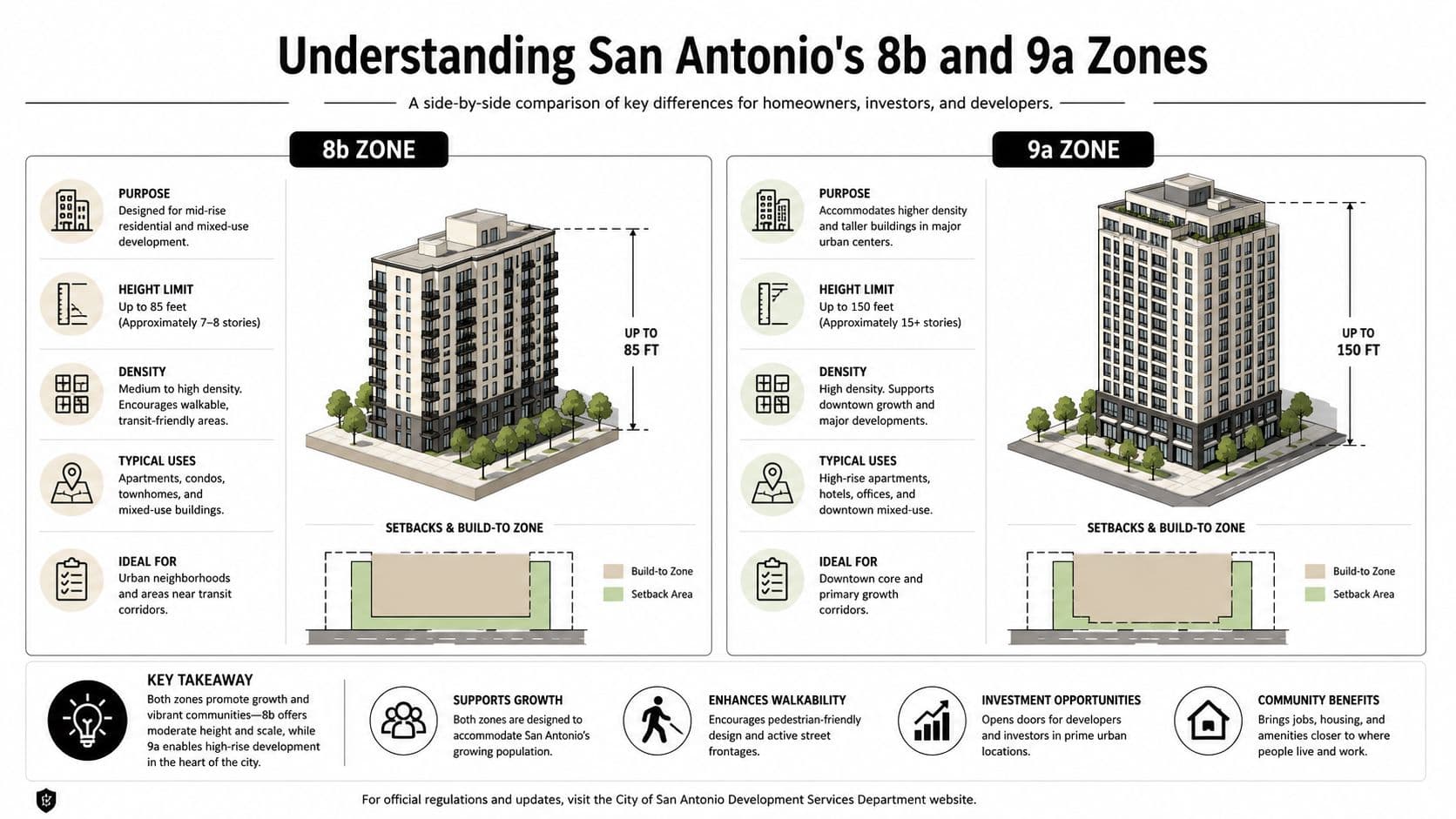
The easiest way to read a hardiness map is to think in temperature bands, not labels. In San Antonio, zone 8b corresponds to 15°F to 20°F, while zone 9a corresponds to 20°F to 25°F for the annual extreme minimum. That difference sounds small, but for tender perennials and young shrubs, it can decide whether a plant returns in spring or gets knocked back.
How to use the USDA zone number
Start by finding your ZIP code on a hardiness lookup and then ask a better question, not just “What zone is San Antonio?” Ask, “What part of San Antonio am I in, and what does that mean for this bed?” The city stayed on the zone boundary after the USDA revised its hardiness map in 2023, which is why San Antonio didn't become a single neat category.
That boundary status explains why a plant may be fine in a warm pocket and questionable a few miles away. A 9a-rated plant can be a solid choice across much of the city, while more frost-sensitive material is still riskier in the cooler 8b pockets. The map is a winter survival guide, not a promise.
What the zone does and does not guarantee
A lot of people assume a zone rating tells them everything. It doesn't. The label says a plant can likely handle a certain minimum cold, but it says nothing about how fast the soil dries out, how hard the afternoon sun hits, or how much heat bounces off a driveway.
A zone is a starting point, not a verdict.
So when you compare plants, use the zone like a filter. If the plant can't handle your lowest likely temperature, don't waste time. If it can, move on to the actual yard questions, like where the cold air settles and which spots bake in late afternoon. That's where the successful San Antonio planting decisions usually get made.
Reading San Antonio Frost Dates and the Growing Season
A long growing season changes how you think about timing. In San Antonio, the question usually isn't whether you have enough warm days, it's which frost calendar fits your yard. That's why local planting guides can disagree a little and still be pointing to the same practical truth: the city gives gardeners a long frost-light window.
Comparing the local frost estimates
| Source | Last Spring Frost | First Fall Frost | Frost-Free Days |
|---|---|---|---|
| Independent ZIP code guide for 78205 | February 28 | November 27 | 272 |
| San Antonio planting calendar | February 24 | November 29 | 278 |
| Horticultural planting guide | Around March 20 | Around November 12 | Around 240 |
These numbers vary by source and by neighborhood, but they all describe a long enough season for warm-weather planting patterns. That means you can think in terms of extended spring planting, summer maintenance, and a late fall finish instead of treating the year like a short northern season.
How to read the dates for your yard
Use the earlier frost date if your yard sits in a colder pocket or an exposed open space. Use the later date if you're in a warmer, protected spot with walls, patios, or urban heat around you. The important part is to treat the calendar as a planning tool, not a promise.
San Antonio's frost calendar is driven more by frost timing than by winter cold. That's why the city behaves like a high-opportunity southern market, where the main scheduling challenge is getting the timing right for warm-season crops and tender ornamentals. It also explains why many gardeners can stretch plantings later into the fall with a little protection.
For vegetables, herbs, and flowering annuals, that long window opens up more than one planting cycle. You're not working against a brief season, you're working with a long one and making sure the crop or plant can still handle the heat once spring turns into summer.
Best Plants for San Antonio's Zones
The smartest San Antonio plant list is not the longest one. It's the one that fits your hardiness zone, your summer conditions, and how much maintenance you're willing to do. Think in groups, not single purchases.
Trees and larger structure plants
For larger plants, focus on species that can handle local heat and a range of winter conditions. Native and regionally adapted choices usually fit better than anything that needs babying every July. A good tree also gives you future shade, which becomes part of the plant strategy, not just the design.
Shrubs and perennials that earn their space
Shrubs with strong drought tolerance and perennials that bloom through heat tend to do better in San Antonio than delicate, moisture-hungry choices. Look for plants that can keep their form after sun exposure and don't collapse the first time irrigation gets interrupted. That's the same logic behind choosing plants for long-term structure rather than quick seasonal color.
Vegetables and seasonal picks
For edible beds, the long frost-free window helps a lot. Tomatoes, peppers, squash, and other warm-season crops can make sense when you match them to the frost calendar and give them enough water early in establishment. If you want a broader spring-to-summer starting point, these spring planting tips for homeowners can help you line up timing with the season.
Texas natives and low-drama choices
Native plants deserve attention because they're already adapted to local conditions more often than imported ornamentals are. They usually ask for less fuss once established, and they fit the reality that San Antonio gardeners are balancing survival, appearance, and water use at the same time.
Good plant rule: If you're torn between two choices, pick the one that matches your sun exposure and irrigation plan, not just the one with the prettiest tag.
The best San Antonio gardens usually mix all of these layers. A tree for shade, shrubs for structure, perennials for seasonal color, and vegetables where the light and water make sense. That mix gives you a garden that looks intentional instead of crowded with unrelated plants.
Soil, Sun, Water and Summer Survival
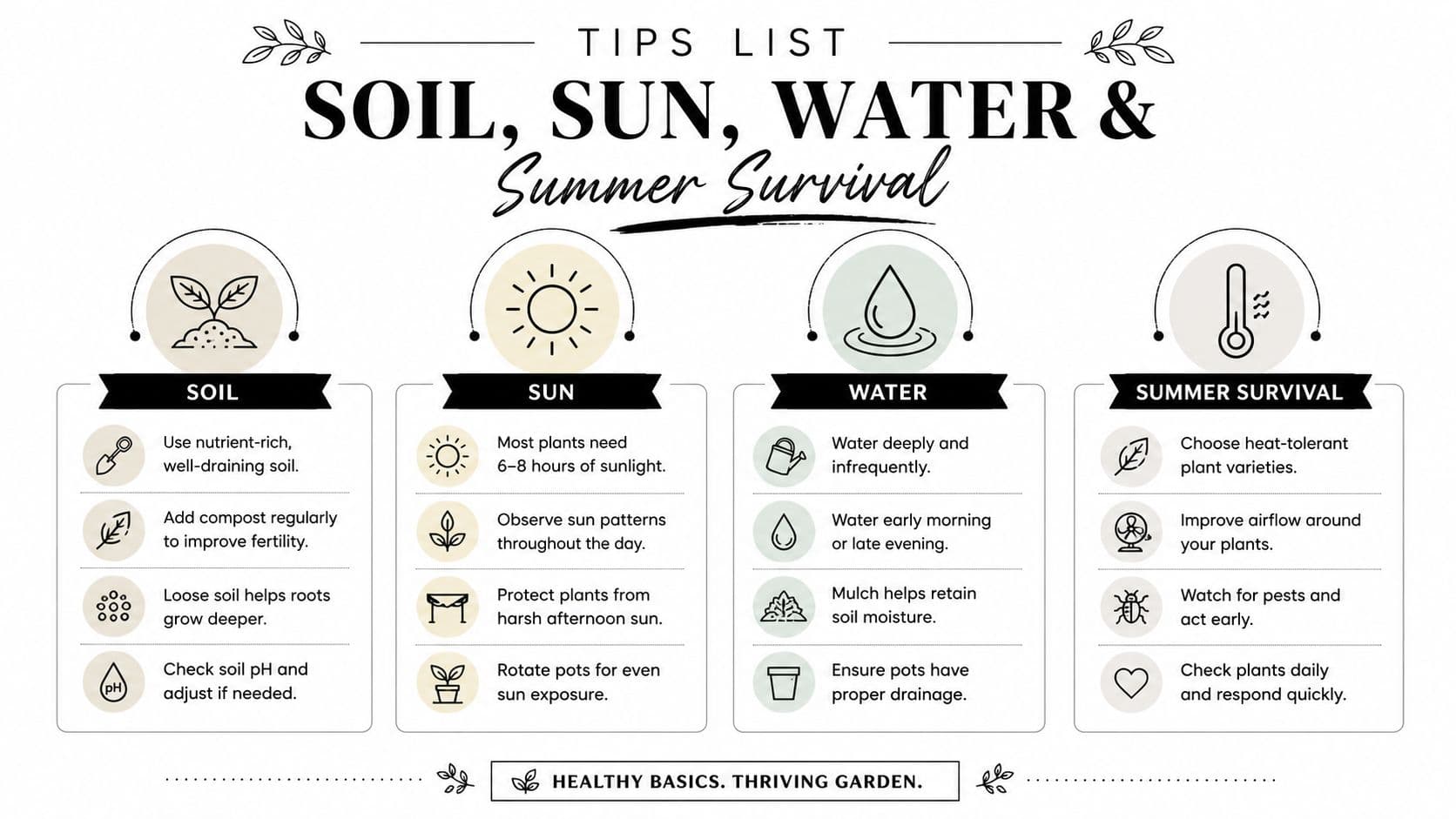
The plant that struggles in San Antonio is often not the one that got too cold, it's the one that got overheated, underwatered, or planted into tired soil. Gardeners who do well here usually treat soil, sun, and water as one system, not three separate chores.
Start with the ground you have
San Antonio yards often need help holding moisture and supporting roots through dry spells. Compost and mulch are the simplest place to begin because they improve the root zone without asking you to redesign the whole yard. If your soil drains too fast or bakes into a crust, the plant will fight that stress every day.
Match plants to the sun, not the label
A zone-appropriate plant can still burn in the wrong exposure. Full western sun, reflected heat from masonry, and hot pavement near a bed can make a planting spot behave much harsher than the zone number suggests. That's why a plant that looks perfect on a tag can still fail if you place it where the afternoon heat is brutal.
Water for survival, not just appearance
Independent guidance for San Antonio increasingly points gardeners toward xeric design, mulch, drip irrigation, and SAWS WaterSaver plants, which is a clear sign that heat and water scarcity drive real-world survival. If you're trying to build a bed that lasts, that same principle is worth combining with these smart irrigation landscaping tips.
When water is limited, consistency matters more than a splash here and there. Drip irrigation keeps the root zone more even, and mulch slows the drying effect of the sun. That combination often matters more in August than any winter protection plan.
San Antonio gardens usually fail from summer stress before they fail from winter cold. If a plant looks unhappy, check soil first, then sun, then watering. That order solves more problems than chasing fertilizer.
Common Mistakes When Trusting the Zone Label
The biggest mistake is assuming the zone label is the answer. It isn't. It's one piece of the answer, and in San Antonio, it can mislead you if you forget how much local variation exists from one yard to the next.
The usual traps
- Treating the whole city the same: San Antonio spans different hardiness conditions, so a plant that works in one neighborhood may need more protection in another.
- Ignoring heat pockets: A patio wall, driveway, or south-facing fence can create a hotter microclimate that pushes plants harder than the map suggests.
- Overwatering stressed plants: Heat stress and too much water can look like the same problem at first, but soggy roots make recovery harder.
- Planting tender species too casually in colder pockets: A plant that's fine in 9a conditions may still need a safer site, winter cover, or a different choice in 8b areas.
What the map leaves out
Zone maps are based on average annual extreme minimum temperatures, not heat, soil, drainage, or urban heat-island effects. That's why the city-wide answer can be misleading for plant choice and timing. A bed in deep shade with heavy clay behaves differently from a raised bed on open ground, even if both sit inside the same ZIP code.
The practical fix is to think in layers. First, ask whether the plant can take your coldest likely night. Then ask whether it can handle your sun exposure and watering reality. Only after that should you worry about bloom color or style.
If a plant seems zone-appropriate but keeps failing, the warning sign is usually in the site, not the tag. That's a helpful shift, because it means you can change the planting spot, amend the bed, or swap to a tougher plant without blaming the whole season.
Translating Zones Into a Landscape Design
Zone data becomes useful when you turn it into layout decisions. A good garden design doesn't just contain plants that can survive, it places them where they're most likely to thrive. That means matching the map to the yard before you buy too much material.
Turn the yard into zones of its own
Start by dividing the space into sun, part shade, and high-heat areas. Then group plants by water needs so the thirsty ones aren't fighting the drought-tolerant ones for the same irrigation schedule. That simple move saves a lot of second-guessing later.
The right layout also gives you room to layer. Trees create future shade, shrubs fill structure, and perennials carry color at ground level. When those layers make sense, the yard looks planned instead of crowded.
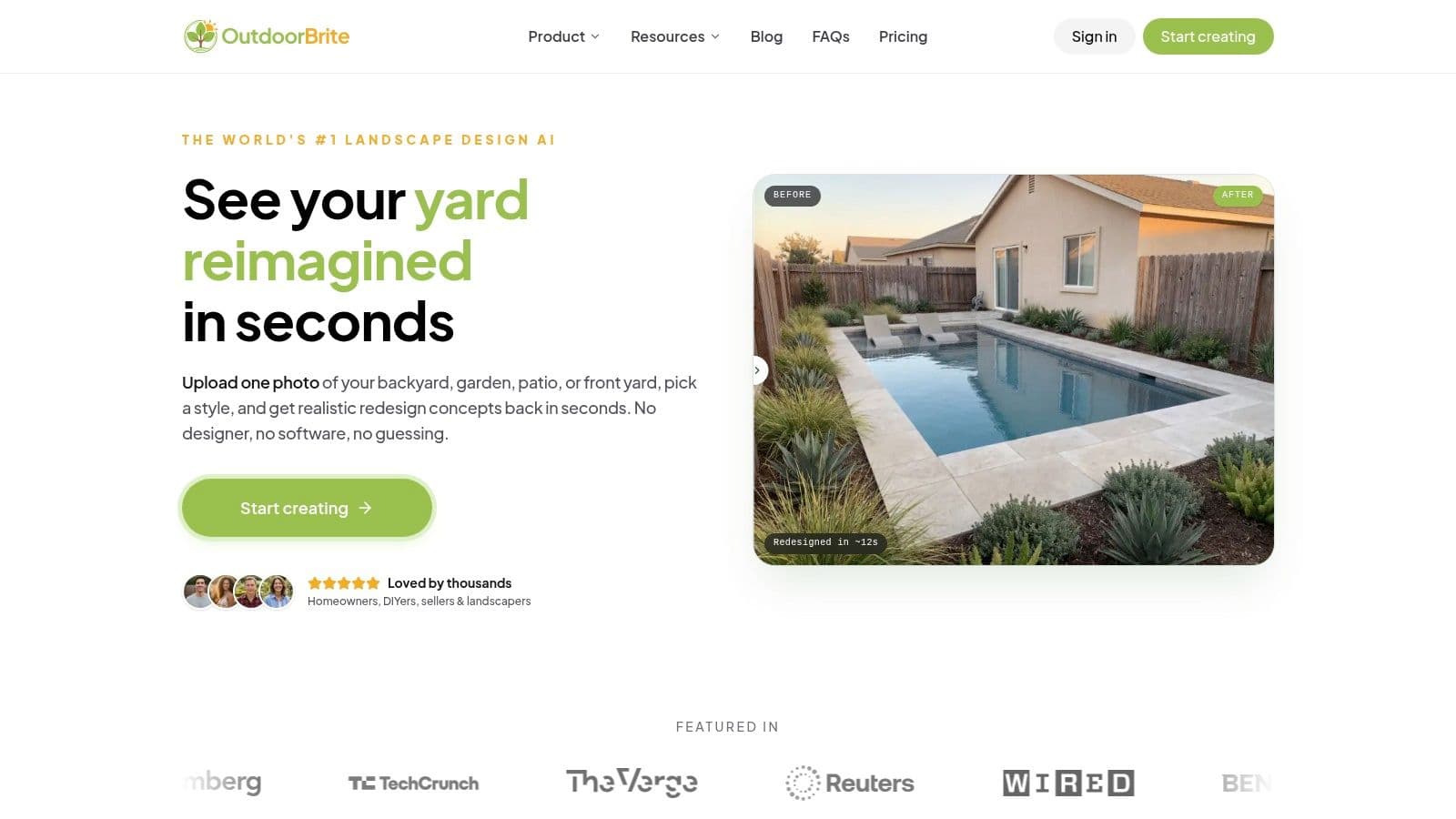
If you want to test that idea before digging, an ai garden design generator can help you visualize how a planting bed might look with different plant types and layouts. That kind of preview is useful when you're trying to decide whether a bed needs more shade, a different border, or a cleaner irrigation path.
Use visuals to avoid costly guesses
A lot of mistakes happen because people can't quite picture how a plant will look once it grows up. They choose by tag photo, not by scale, spacing, or the way the bed sits in the yard. A visual mockup helps you catch those problems before you buy.
For a practical walkthrough, the video below shows how fast a photo-based design can move from blank yard to usable concept.
The best workflow is simple. Check your zone, narrow your plant list, then test the layout visually before you commit. That sequence keeps the project grounded in local reality instead of wishful thinking.
Your San Antonio Planting Calendar at a Glance
A good planting calendar for San Antonio doesn't just name months, it tells you what the weather is likely to do to each decision. Use the long frost-free window as your backbone, then adjust for the heat and the microclimate in your own yard.
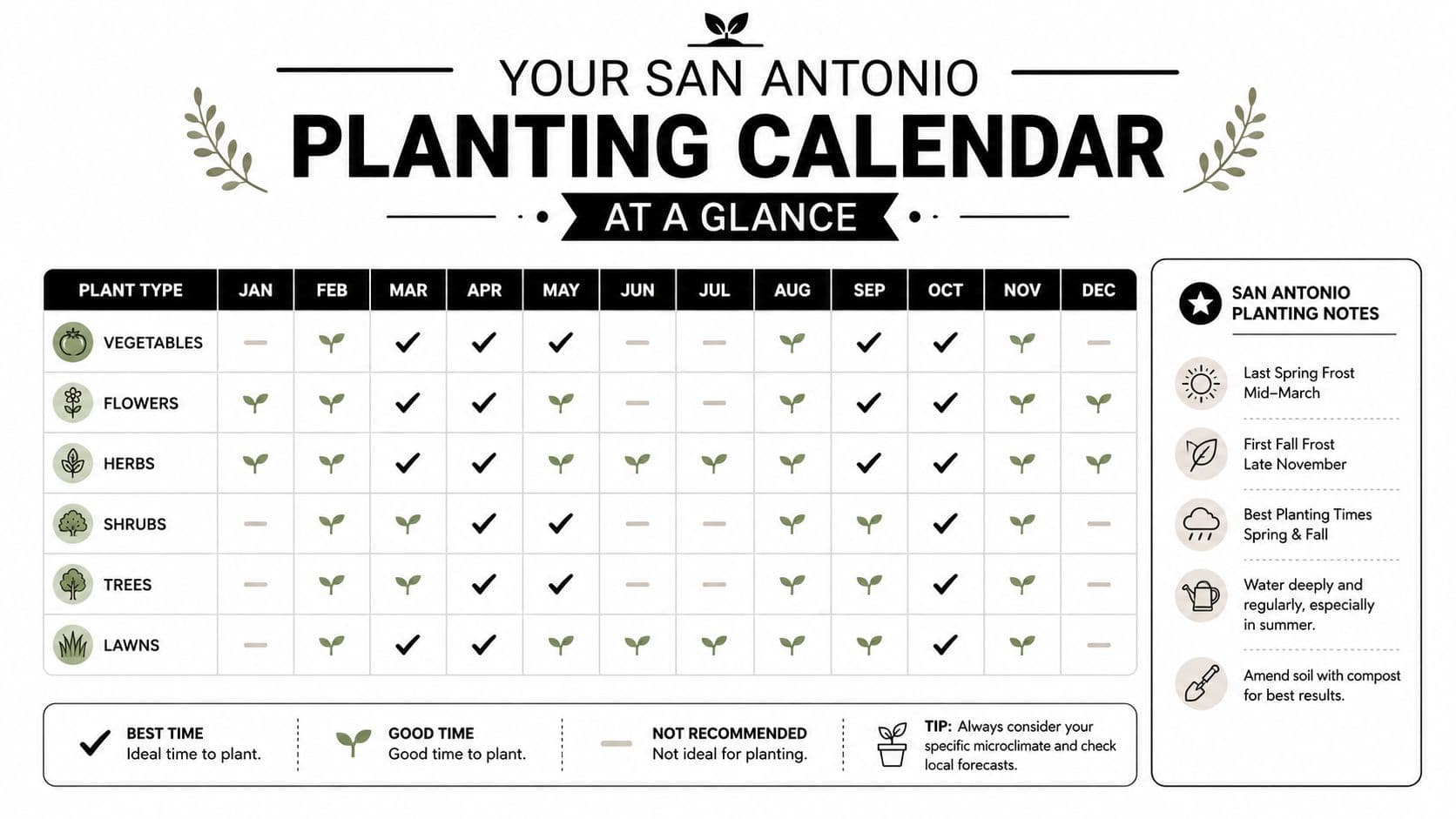
Spring
Plant warm-season crops after your local frost risk is behind you. This is also the time to set out shrubs and perennials while the weather is still manageable and roots can settle before the worst heat arrives. If you're planting tomatoes, a second round later can make sense in a long-season city like this one.
Summer
Shift your focus to mulch, drip irrigation, and heat protection. Plants that are already established usually do better than newly planted ones, so the goal becomes keeping roots cool and moisture more consistent. If something wilts fast, check afternoon sun and irrigation coverage first.
Fall
Use the extended season to refresh beds, plant cool-season color where it fits, and give the soil a cleanup before winter. Fall is also a good time to evaluate which plants handled the summer and which ones need to be replaced with tougher choices.
Winter
Do your dormant pruning and bed planning when the garden slows down. Winter is also when you can step back and see structure, gaps, and microclimates more clearly. That makes it easier to decide where to move shade-loving plants and where open sun beds can handle tougher species.
The planting zone San Antonio Texas gives you the starting point, but the best results come from layering zone data with local frost timing, water strategy, and a layout that fits your actual yard. Keep that order in mind, and your next planting season will feel less like guesswork and more like a plan.
If you want to turn a rough yard idea into a clear visual plan, visit OutdoorBrite Money and test your San Antonio outdoor design before you dig. Upload a photo, compare styles, and see how your plant choices fit the space, the light, and the heat. It's a fast way to make smarter outdoor decisions without the expensive trial and error.
See your yard reimagined
Start creating