Sedum Variegated Stonecrop: Complete Care and Design Guide
Master sedum variegated stonecrop care with our complete guide on identification, planting, watering, troubleshooting, and landscape design ideas.
You're standing in a nursery aisle with a small pot of striped succulent leaves in your hand, and the label says stonecrop. It looks tough, tidy, and almost too neat to be real, which is exactly why so many homeowners bring it home with high hopes. The plant can be a great choice, but only if you match it to the right sun, soil, and moisture, because sedum variegated stonecrop is a low-water plant, not a plant-for-every-spot plant.
Table of Contents
- What Variegated Stonecrop Actually Is
- How to Identify Variegated Stonecrop in Real Conditions
- Hardiness Zones and Microclimate Needs
- Soil Mix and Watering Rhythm That Prevent Rot
- Planting and Propagation From Cuttings
- Where Variegated Stonecrop Fails as a Low-Maintenance Solution
- Landscape and Container Design Ideas With Companion Plants
- Troubleshooting Common Problems and Long-Term Maintenance
What Variegated Stonecrop Actually Is
A lot of shoppers treat stonecrop like a generic “small succulent,” but the plant behind the label has a real history. Sedum is a large genus in the stonecrop family, with roughly 600 species in Britannica's account, and gardening references describe over 400 species in cultivation across Europe, Asia, North Africa, Mexico, and parts of North America. Britannica also traces the name to the Latin sedere, meaning “to sit,” which fits the plant's low, rock-hugging habit very well. Britannica's sedum entry makes that lineage clear.
The plant behind the nursery tag
The variegated form most often sold as variegated stonecrop is Sedum lineare ‘Variegatum'. That name isn't just a marketing label, it was formally documented by Irish naturalist Robert Lloyd Praeger in the Royal Horticultural Society's 1921 account of sedum in cultivation, and later included in an early-20th-century annotated succulent list. NParks' flora record shows that it was already a named, circulated plant by the 1920s and 1930s.
That history matters because it explains why this plant shows up so often in rock gardens, walls, dry slopes, and low-maintenance schemes. It's not a delicate novelty. It's a plant selected over time for a growth habit that stays close to the surface and uses the surrounding environment rather than fighting it.
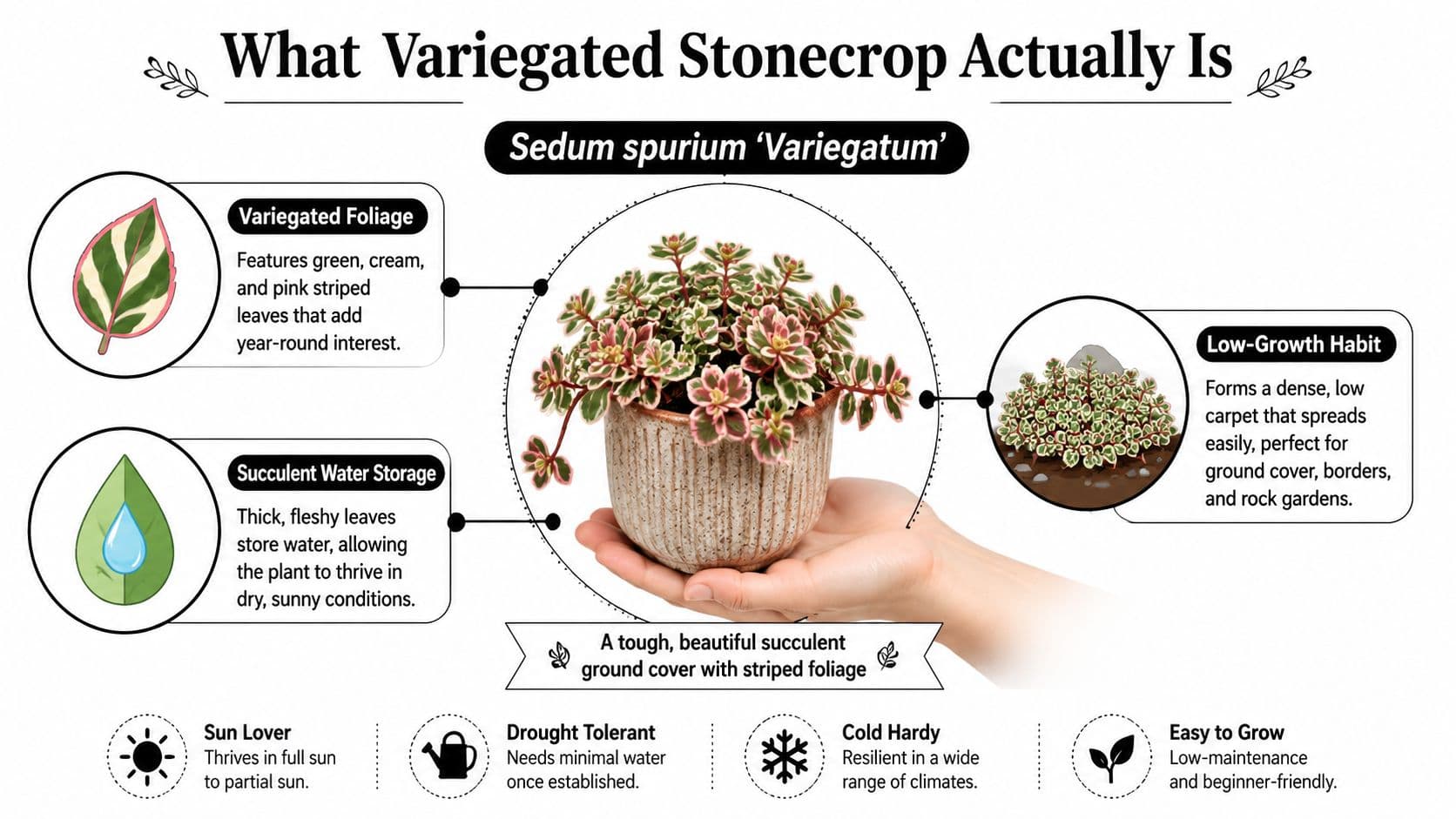
The main beginner mistake is assuming the variegation means the plant is fussier than it is, or that all sedums behave the same way. They don't. Some sedums stay low and mat-forming, others rise into taller clumps, and that difference changes how you use them in a yard. With variegated stonecrop, the low profile is the point.
How to Identify Variegated Stonecrop in Real Conditions
Catalog photos can make any succulent look compact and colorful. Real life is messier. A plant in a shop tray might look creamy and tight, then stretch after a few weeks in a shaded patio corner, and that change is often the first clue you're dealing with a stonecrop that wants more light.
Start with the leaves, then check the stems
The easiest visual signal is the foliage. Variegated stonecrop usually shows green leaves edged in white, yellow, or pink, and stronger sun can push those margins toward orange or pink. In shade, the same plant often turns paler and less defined. Stepables' care notes describe that color shift directly.
Then look at the stems. A true stonecrop should read as a low, mat-forming plant, not a plant that reaches upward for light. That habit ties back to the Latin idea of “to sit,” and it's the feature frequently overlooked when identifying succulents by leaf color alone. If the stems are getting long and the plant looks sparse between nodes, it's telling you the light is wrong.
Practical rule: if a stonecrop is growing upward instead of across, the site is probably too shaded for the plant to hold its compact shape.
The sit test in the yard
The simplest identification check is the sit test. Place the plant on a stone, a wall edge, or a container rim and ask whether it naturally hugs the surface. Variegated stonecrop should look like it belongs there. It should read as edging or spill-over material, not as a tall focal point.
That helps distinguish it from many other trailing succulents with different care habits. A homeowner can easily confuse striped sedums with other variegated trailing plants at first glance, but the growth habit gives the answer. If it stays low, branches laterally, and keeps its foliage tight in sun, you're likely looking at the right plant.
Hardiness Zones and Microclimate Needs
Variegated stonecrop is often sold as easy, but easy still depends on site. A sheltered, well-drained pocket of a yard behaves very differently from a flat clay bed that stays wet after rain. In other words, microclimate matters as much as the plant tag.
Size and placement at a glance
| Characteristic | Specification |
|---|---|
| Mature height | 4 to 8 inches |
| Mature spread | 12 to 24 inches |
| Best light | Full sun |
| Best soil condition | Sharply drained soil |
That size range makes the plant useful where you want coverage without height, especially along borders, in gravel pockets, and in small containers. Buchanan's Plants describes the mature profile this way, along with the full-sun, fast-draining performance envelope that keeps the plant compact. Buchanan's Plants' variegated stonecrop profile is the clearest quick reference for the plant's mature scale.
Read the yard, not just the zone
A south-facing wall, a raised bed, and a stone-filled edge dry out faster than an open low spot, even in the same climate. That's why two homes in the same general region can have opposite results with the same sedum. The sheltered spot may work beautifully because it sheds water and reflects heat, while the wet pocket fails because the plant never gets the dry-down it needs.
If you're building a new dry bed, it helps to think like a builder instead of a plant buyer. Good drainage starts with the shape of the site, then the soil, then the container or edging material. Homeowners working on a small retrofit often find it useful to sketch the bed first, and a DIY greenhouse with salvaged supplies article can be a smart reminder that recycled materials can support a better-growing setup without overcomplicating the project.
Site rule: if rainwater lingers where you plan to plant, the location is wrong before the plant ever goes in.
Soil Mix and Watering Rhythm That Prevent Rot
Sedums store water in their leaves, so they don't need the same rhythm as bedding plants or lawn edges. That's the reason they survive dry spells so well, and also the reason they fail fast in soggy soil. Think of each leaf as a tiny reservoir, then picture that reservoir sitting over a root zone that never dries out. That's rot country.
Build drainage into the soil
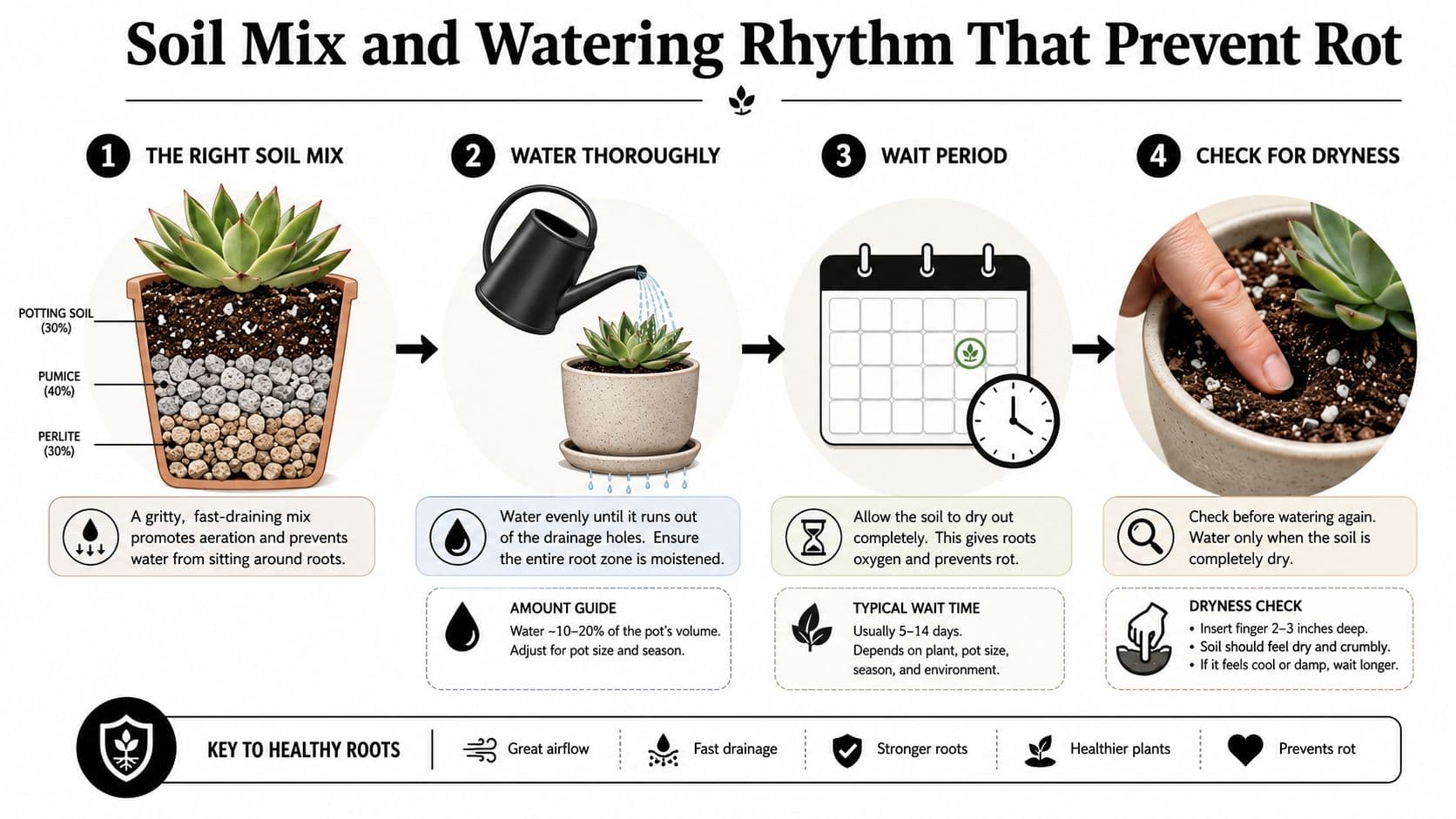
For in-ground planting, aim for a gritty mix with more mineral material than organic matter. A simple working rule is about two parts mineral grit to one part organic material. In containers, go even leaner and use a very gritty succulent mix so the roots don't sit in moisture after watering. The goal is not rich soil, it's fast movement of water away from the crown.
The other half of the equation is the pot itself. Terra-cotta dries faster than plastic and helps prevent the saturated, stagnant conditions that sedums dislike. Drainage holes matter more than the container's color or style, because standing water is the problem.
Water by dry-down, not by habit
The cleanest method is the finger test. Push a finger into the mix at root depth, and water only when it feels dry through the zone where the roots live. That's a more reliable habit than watering on the same day every week. If the soil still feels cool and damp below the surface, wait.
Watering rule: water deeply, then stop until the soil has dried again. Sedum does better with that cycle than with frequent small drinks.
A quick planning note helps here too. If you like keeping a record of when you water patio plants, a guide to plant watering schedules can keep your routine consistent without turning succulent care into guesswork.
Planting and Propagation From Cuttings
A healthy sedum start doesn't need deep planting. In fact, burying it too far down creates the same problem as overwatering, because the crown stays damp and crowded. The crown should sit at soil level, with enough exposure to dry quickly after rain or irrigation.
Set the plant up for spread
If you're planting several starts as groundcover, space them so the mats can meet without competing for light. That makes sense because variegated stonecrop is a low, spreading plant, not a shrub that fills upward first. Once established, it can knit together into a neat edge or patch without much fuss.
The true payoff comes when you want more plants without buying more pots. Sedums root well from cuttings, which means one healthy plant can become a whole border if you handle the cuttings correctly.
Root cuttings the right way
Take a healthy stem, then let the cut end callus in dry shade for a few days before placing it on top of a gritty, lightly moist mix. Don't bury the wound. The callused end should sit against the surface where roots can form without constant moisture around the stem.
Leaf cuttings can work too, but they're slower and less predictable than stems. A homeowner trying to root sedum in water usually loses the material to rot before roots have a chance to form, because succulents want air and a dry wound first.
The The Cactus Outlet sedum guide is a useful companion if you want a second look at propagation timing and cut-and-callus handling. Keep that idea simple, though. Dry the cut. Set it on gritty mix. Wait for roots before you treat it like a mature plant.
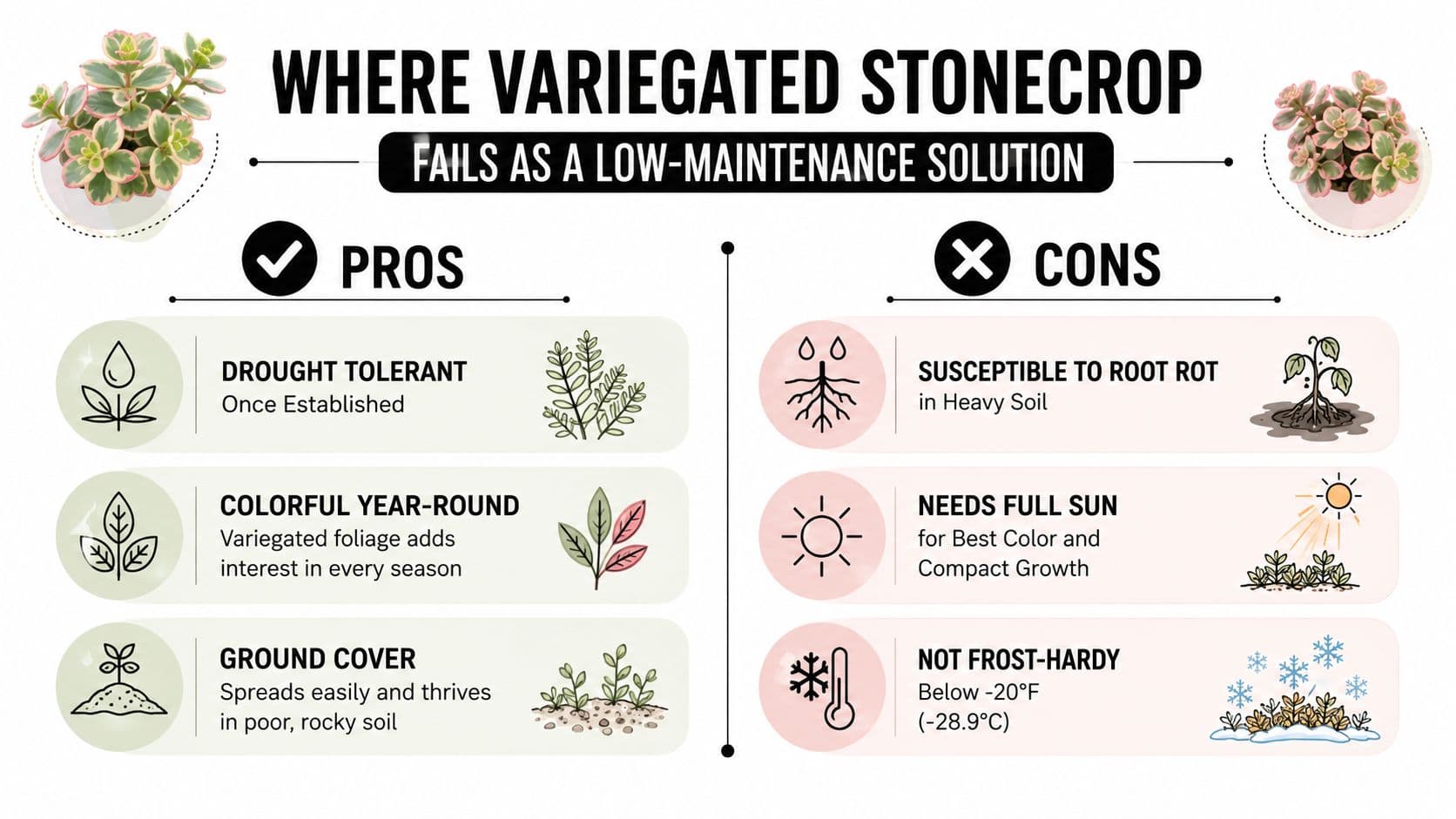
Where Variegated Stonecrop Fails as a Low-Maintenance Solution
“Low-maintenance” gets misunderstood all the time. It doesn't mean plant it anywhere and walk away. Variegated stonecrop is forgiving in the right place, and stubborn in the wrong one.
The sites that cause trouble
Heavy clay is the classic failure point. Clay holds water around the roots, especially in winter, and sedums hate that combination. So do irrigated beds that stay damp after every run of the sprinkler, shaded courtyards that never dry, and containers without drainage holes. Those are all easy ways to turn a resilient succulent into a declining one.
Shade is a second problem because it changes both color and form. The plant gets leggier, the variegation fades, and the mat no longer looks tight. In consumer terms, the plant starts looking “tired,” but the underlying issue is that the site is asking it to do a job it wasn't built for.
A simple decision rule
If your yard holds a puddle for more than an hour after rain, skip it. If the bed sits under a downspout, skip it. If the spot gets less than four hours of direct sun, skip it. Those are blunt rules, but they save money and frustration.
Best use case: dry, sunny spots where soil drains fast and the plant can stay low without being constantly corrected.
The OutdoorBrite low maintenance plant list can help you compare other options if your site is wetter or more shaded than a sedum wants. That's the right mindset here, match the plant to the yard instead of trying to force the yard to fit the plant.
Landscape and Container Design Ideas With Companion Plants
Variegated stonecrop earns its keep where a yard needs a bright, low line rather than height. The pale margins read almost like a visual border, which helps a dark stone wall, gravel path, or plain pot edge look finished without much plant mass. That's why designers like it as a filler, an edger, and a softener.
Where the plant works best
In the ground, it can tuck into the front of a dry border, spread along a rock seam, or bridge gaps between stones. In containers, it trails just enough to soften the rim without swallowing the pot. Because the plant stays compact in strong light, it's also useful where a homeowner wants order instead of a floppy spill.
Its best companions share the same sunny, lean conditions. Blue fescue adds cool contrast, creeping thyme gives bloom and fragrance, hens-and-chicks contribute a tighter rosette texture, and ornamental oregano brings a looser, herb-garden look. Those combinations work because they all prefer the same dry, bright setup.
Building a small planting scheme
A simple composition might use sedum at the edge, blue fescue behind it, and thyme weaving through the foreground. The stonecrop supplies the stripe and the low line, while the grasses and rosettes keep the scene from looking flat. That mix works better than stuffing a bed with many unrelated plants that each want different water.
If you want to test how those combinations look before buying plants, ai garden design software can be a practical way to mock up a patio corner or front bed in your own photo. That's especially useful for homeowners deciding between a modern gravel look, a Mediterranean palette, or a lighter xeriscape arrangement.
Design shortcut: use variegated stonecrop where you need brightness at ground level, then pair it with plants that repeat the same dry-site rhythm.
Troubleshooting Common Problems and Long-Term Maintenance
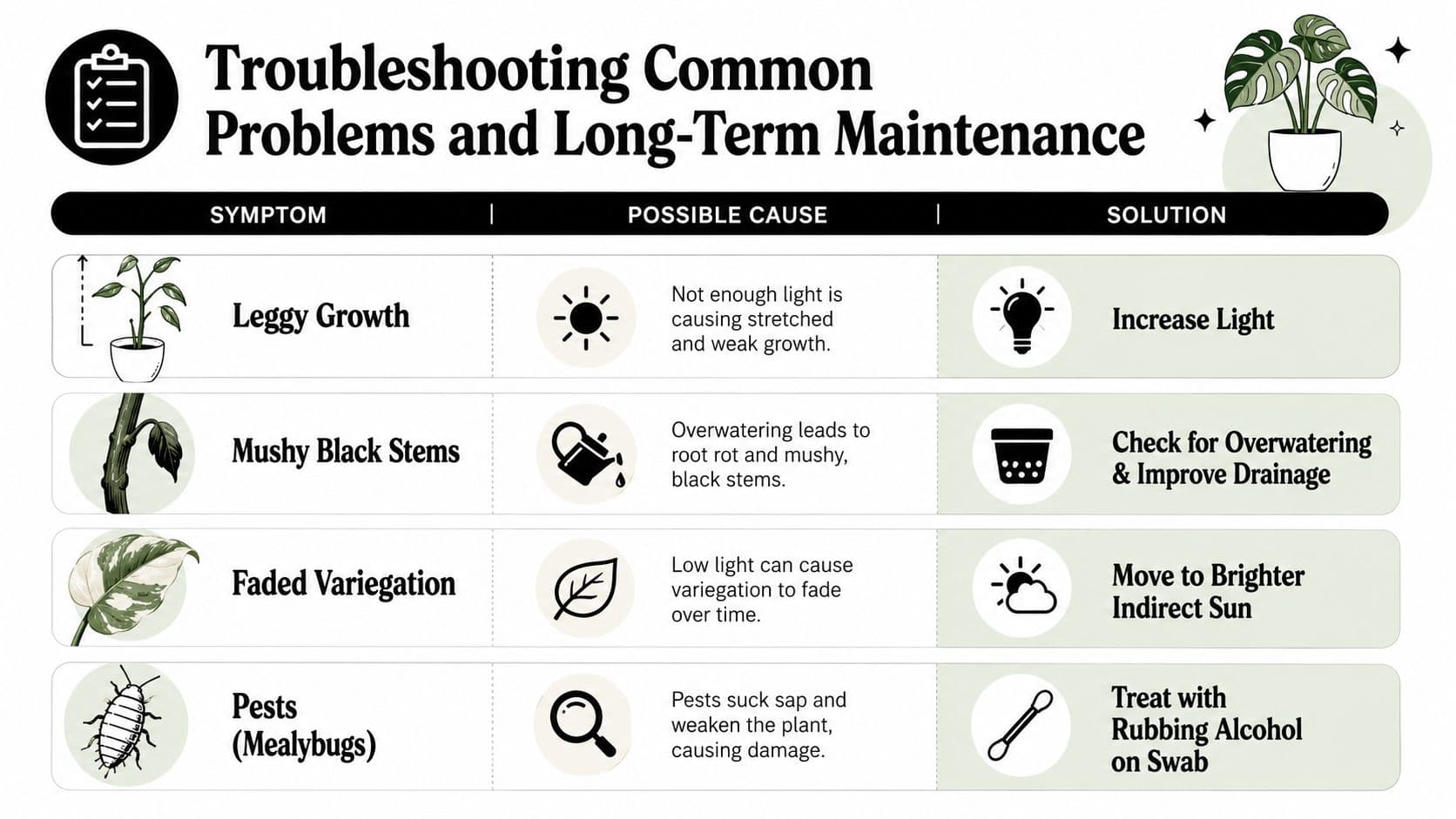
Most sedum problems are site problems in disguise. Once you know what the plant is asking for, the symptoms become easier to read. A stretched stem, a collapsed crown, or washed-out color usually points back to light, drainage, or moisture.
Symptom to cause guide
- Leggy growth, usually means too little sun. Move the plant to a brighter spot, because sedums stretch when they're reaching for light instead of building a compact mat.
- Mushy black stems, usually point to overwatering or crown rot. Check drainage first, then back off water and remove damaged tissue.
- Faded variegation, often comes from shade or too much nitrogen. Brighter light usually helps the color return.
- Pests such as aphids or mealybugs, can cluster on tender growth and flower buds. A cotton swab with rubbing alcohol can help on small infestations, especially on containers.
Keep the plant tidy without babying it
A light spring trim helps remove winter-damaged stems and keeps the mat from looking ragged. Skip heavy fertilizer in lean soil, because lush soft growth is not what you want from a plant that succeeds by staying compact. If a mat becomes crowded after a few seasons, divide it and replant the strongest sections.
The most important habit is still the simplest one. Keep the plant in bright light, let the soil dry, and don't assume every problem needs more water. That one change prevents more losses than any rescue treatment.
If you want to plan a stonecrop border, compare companion plants, or test how a dry, bright planting would look in your own yard, visit OutdoorBrite. It's a practical way to turn a photo of your space into a design concept before you spend money on plants, pavers, or a full redesign.
See your yard reimagined
Start creating