What Is Xeriscaping Landscaping: A 2026 Guide
Curious about what is xeriscaping landscaping? Discover how to create a beautiful, low-water garden that saves money and thrives. Our guide covers principles
Xeriscaping is a smart strategy for your outdoor space that can reduce water consumption by 60% or more compared to regular lawns, and in arid regions the reduction can reach 50 to 75%. Fundamentally, it means designing a beautiful yard that reduces, and sometimes nearly eliminates, the need for extra watering by using the right plants, soil practices, mulch, and layout.
If you're staring at a patchy lawn, a noisy sprinkler, and a water bill that feels out of proportion to the joy your yard gives back, you're not alone. A lot of people start looking up what is xeriscaping landscaping when they realize the usual cycle of mowing, watering, fertilizing, and re-seeding never really ends.
The good news is that xeriscaping isn't a surrender. It's a redesign. Done well, it feels less like giving something up and more like building a yard that finally fits your climate, your time, and the way you live.
From Thirsty Lawn to Thriving Oasis
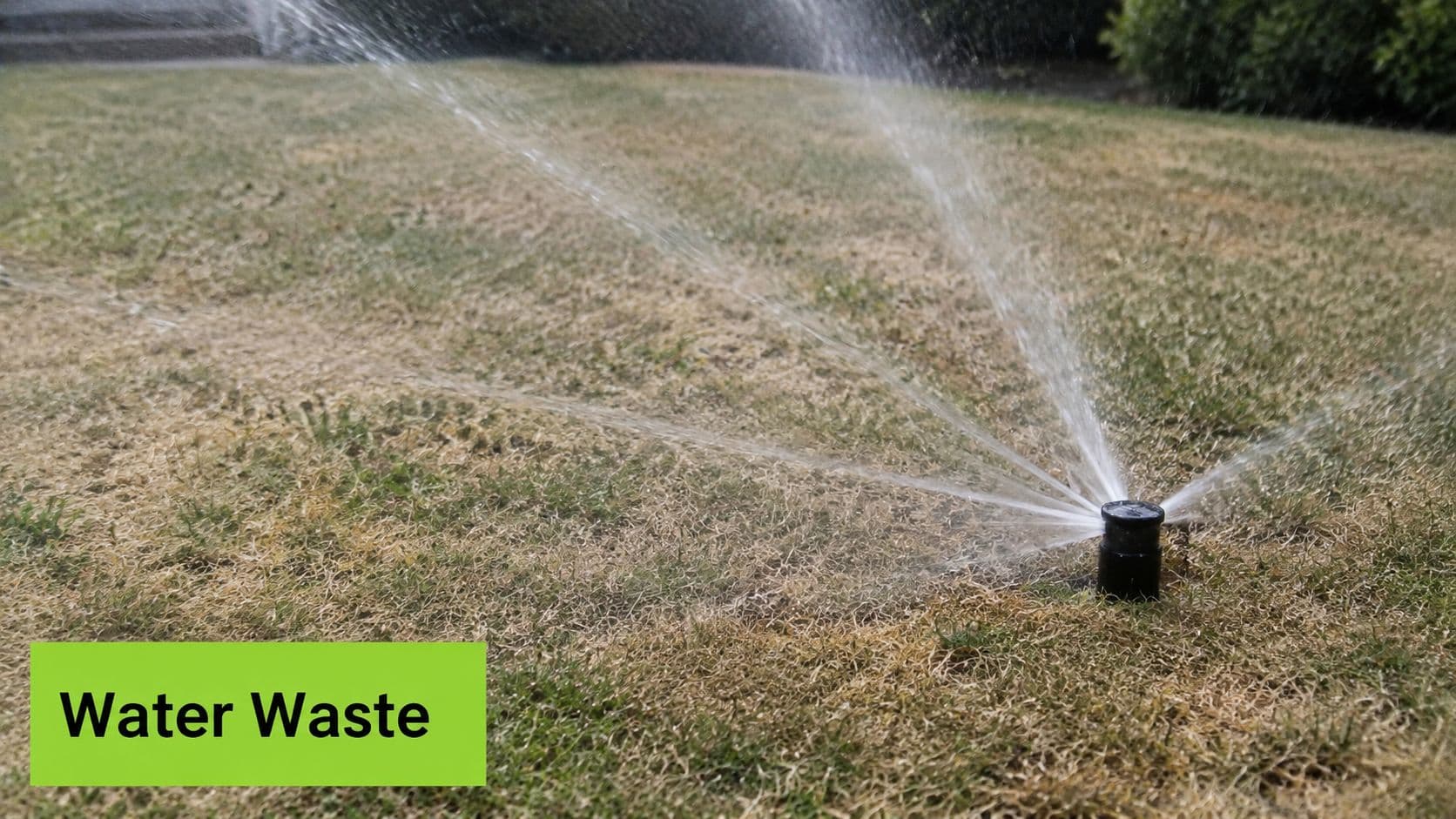
A neighbor of mine once had the classic front yard routine. Sprinklers ran on schedule, the mower came out every week, and each hot stretch left fresh brown patches that needed even more attention. The lawn looked needy because it was. It was asking the site to behave like a place with endless water.
That's where xeriscaping starts to make sense. Instead of forcing the outdoor areas to fight the climate, you design with the climate. You swap fragile, high-demand areas for planting beds, paths, mulch, stone, and drought-tolerant plants that can handle local conditions with far less babysitting.
What changes first
The biggest mental shift is this. A xeriscape yard is not an empty yard. It still has color, shape, movement, and seasonal interest. The difference is that each element earns its place.
Instead of one giant sheet of turf, think in zones:
- Gathering spaces: A patio, path, or seating area where people spend time.
- Planting areas: Beds filled with region-appropriate plants that don't need constant water.
- Functional ground cover: Mulch, gravel, or low-water alternatives in places where grass never performed well anyway.
If you're weighing alternatives to grass, that's often the first practical step. You don't have to remove every blade at once. Many people begin with the hardest strip to keep green, the slope by the driveway, the side yard no one uses, or the sunny patch that always burns out first.
Practical rule: Start where your lawn struggles most. That spot is usually giving you the clearest clue that the current design doesn't fit the site.
Why this feels so different
Traditional lawns often behave like a demanding houseguest. Xeriscaping behaves more like a well-planned home. Every part has a purpose, and the systems support each other.
Once people see that, the idea stops feeling extreme. It starts feeling sensible.
The Philosophy of Xeriscaping Beyond Rocks and Cacti
The biggest myth about xeriscaping is visual. People hear the word and picture a yard full of gravel, a few cacti, and not much else. That image is one narrow version, not the definition.
The word itself helps clear this up. According to this xeriscaping reference, the term xeriscaping comes from the Greek word "xeros," meaning dry, and it was coined in 1981 by Dr. Larry Costello of Colorado State University. The same source notes that xeriscaping can reduce water consumption by 60% or more compared to regular lawn areas, and in arid regions that reduction can reach 50 to 75%.
That tells you something important. Xeriscaping isn't really about a look. It's about water-wise design.
Think of it like a smart home for your garden
A smart home doesn't remove comfort. It uses systems intelligently so you get comfort with less waste. Xeriscaping works the same way outdoors.
You can have:
- A cottage-style yard: layered flowers, soft forms, and pollinator-friendly planting
- A modern yard: clean lines, sculptural plants, gravel, and strong geometry
- A Mediterranean feel: silvery foliage, aromatic herbs, warm stone, and dry-climate character
- A native garden: plants that feel like they belong because they do
The shared idea isn't appearance. It's efficiency.
What xeriscaping values
A well-designed xeriscape usually aims for several things at once:
| Focus | What it means in practice |
|---|---|
| Water conservation | Water goes where it's needed, not across the whole yard by default |
| Resilience | Plants are chosen for local conditions, so heat and dry spells are less disruptive |
| Lower input | Less mowing, less fertilizer, and less correction work |
| Habitat | Diverse planting can support birds, insects, and pollinators |
| Beauty | Texture, contrast, bloom timing, and structure matter as much as water savings |
Xeriscaping is a design philosophy, not a desert costume for every yard.
That's why the question what is xeriscaping has a bigger answer than “using less water.” It's really the practice of building an outdoor environment that behaves intelligently over time.
The Seven Principles of Successful Xeriscaping
The most helpful thing about xeriscaping is that it isn't vague. It follows seven core principles: Planning and Design, Soil Improvements, Efficient Irrigation, Plant Zones (hydrozoning), Mulches, Turf Alternatives, and Maintenance, as outlined in Colorado State University Extension's xeriscaping guide. That's why it works in many garden designs, not just a cactus-and-rock look.
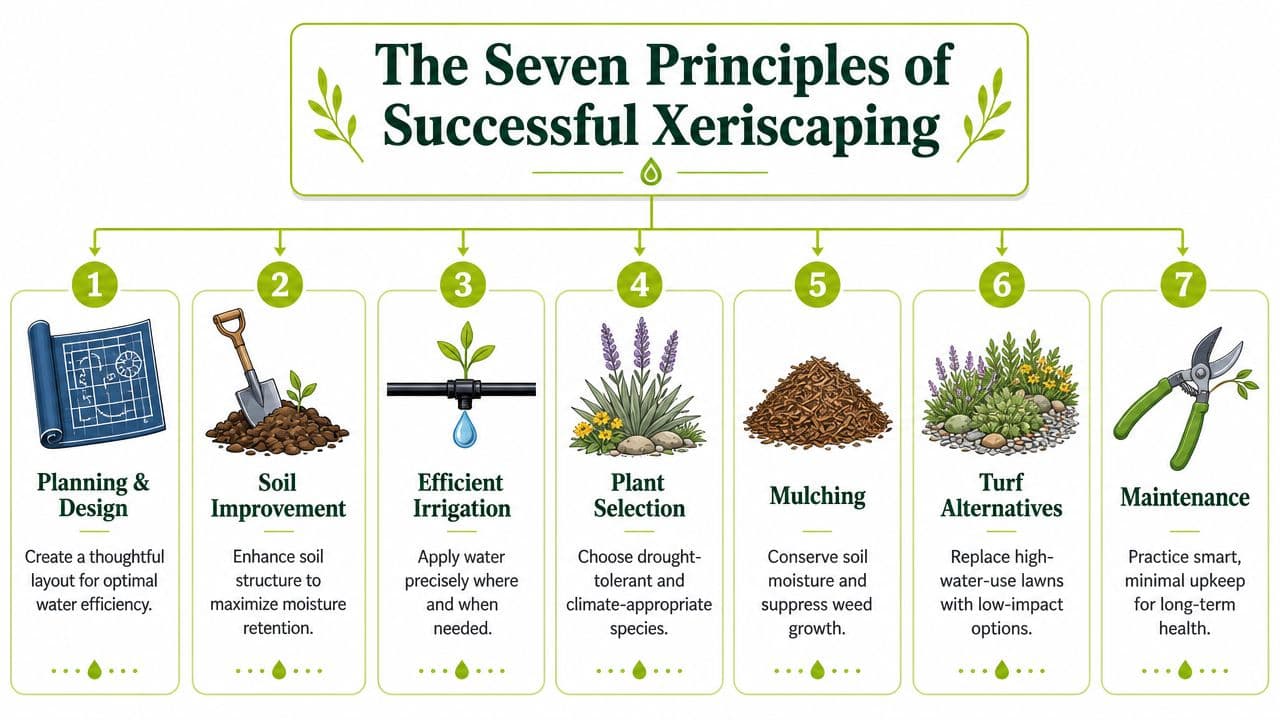
Start with a plan, not a shopping cart
People often make the same mistake. They buy a few drought-tolerant plants, add gravel, and hope that equals xeriscaping. It usually doesn't.
Planning and design comes first. You map sun, shade, slope, drainage, views, access, and how you use the space. A front entry has different needs than a dog run. A hot strip along a driveway behaves differently than a protected courtyard.
Treat the soil like infrastructure
Soil improvement sounds boring, but it's one of the hidden drivers of success. Good xeriscaping doesn't mean stuffing beds with endless amendments. It means understanding what helps water move into the soil and stay available to roots.
Water with precision
Efficient irrigation matters, especially during plant establishment. A drip line or focused system puts water where roots can use it instead of spraying sidewalks and fences. If you're new to layout and hardware, this primer on Utah irrigation system basics is a useful starting point for understanding how irrigation components work together.
Later in this section, it helps to see the principles in action:
Group plants by thirst level
Plant zones, also called hydrozoning, is one of the smartest parts of the method. Instead of mixing everything together randomly, you group plants with similar water needs so one area can be watered differently from another.
That prevents a common problem. If a thirsty plant and a drought-tolerant plant share a line, one often gets too little or the other gets too much.
Use mulch like a protective blanket
Mulches help slow evaporation, moderate soil temperature, and reduce weed pressure. Organic mulch is especially useful around many planting beds because it creates a more stable root zone.
Shrink turf to the places where it earns its keep
Turf alternatives don't mean grass is forbidden. They mean grass should be intentional. Keep it where people play, walk, or lounge barefoot. Replace low-value turf with planting beds, hardscape, gravel gardens, or lower-water groundcovers where appropriate.
Maintain differently, not endlessly
Maintenance still exists, but it changes shape. Instead of constant mowing and correction, you do seasonal cleanup, occasional pruning, irrigation checks, and weed control.
Here's the simple version of the seven principles in action:
- Design first: Match the layout to how the yard works in real life.
- Improve soil wisely: Support root health and water movement.
- Irrigate efficiently: Target the root zone instead of spraying everything.
- Zone plants by water need: Let similar plants share schedules.
- Mulch generously: Protect moisture and reduce stress on the soil.
- Rethink lawn areas: Keep turf only where it has a clear purpose.
- Maintain with intention: Fewer chores, but smarter ones.
Key takeaway: Xeriscaping succeeds because each principle supports the others. Pull one out, and the system gets weaker.
Bringing Your Xeriscape Design to Life
Xeriscaping gets fun once you understand the principles. The yard stops looking like a problem to solve and starts looking like a palette.
A xeriscape in Arizona won't look like one in the Pacific Northwest, and it shouldn't. The goal isn't copying a style from somewhere else. The goal is creating a design that looks right in your setting and still uses water wisely.
Build a style around your climate
You might lean toward a few different looks:
- Mediterranean feel: silvery foliage, warm-toned gravel, herbs, and airy structure
- Modern dry garden: strong geometry, ornamental grasses, clean edging, and sculptural forms
- Pollinator-first planting: layered perennials, long bloom windows, and habitat value
- Native naturalism: a looser, more local look that feels connected to the surroundings
The design trick is matching aesthetic goals to site conditions. A sunny slope may want one palette. A shaded side yard may need another.
Use hydrozoning to keep beauty practical
The technical side matters here. In Kansas State's xeriscape landscaping publication, hydrozoning is defined as grouping plants into xeric, moderate, and mesic zones based on water needs, paired with soil amended to contain only 3 to 5% organic matter to support water infiltration.
That sounds technical, but the everyday version is simple:
- Xeric zone: hottest, driest spots with the least supplemental water
- Moderate zone: areas that need some regular support
- Mesic zone: the places that naturally hold more moisture or where you want a lusher effect
Once you sort your yard this way, plant decisions become clearer.
Seeing the plan before you build it
For many homeowners, the hardest part isn't understanding xeriscaping. It's visualizing it. They can imagine a single plant, but not the whole composition.
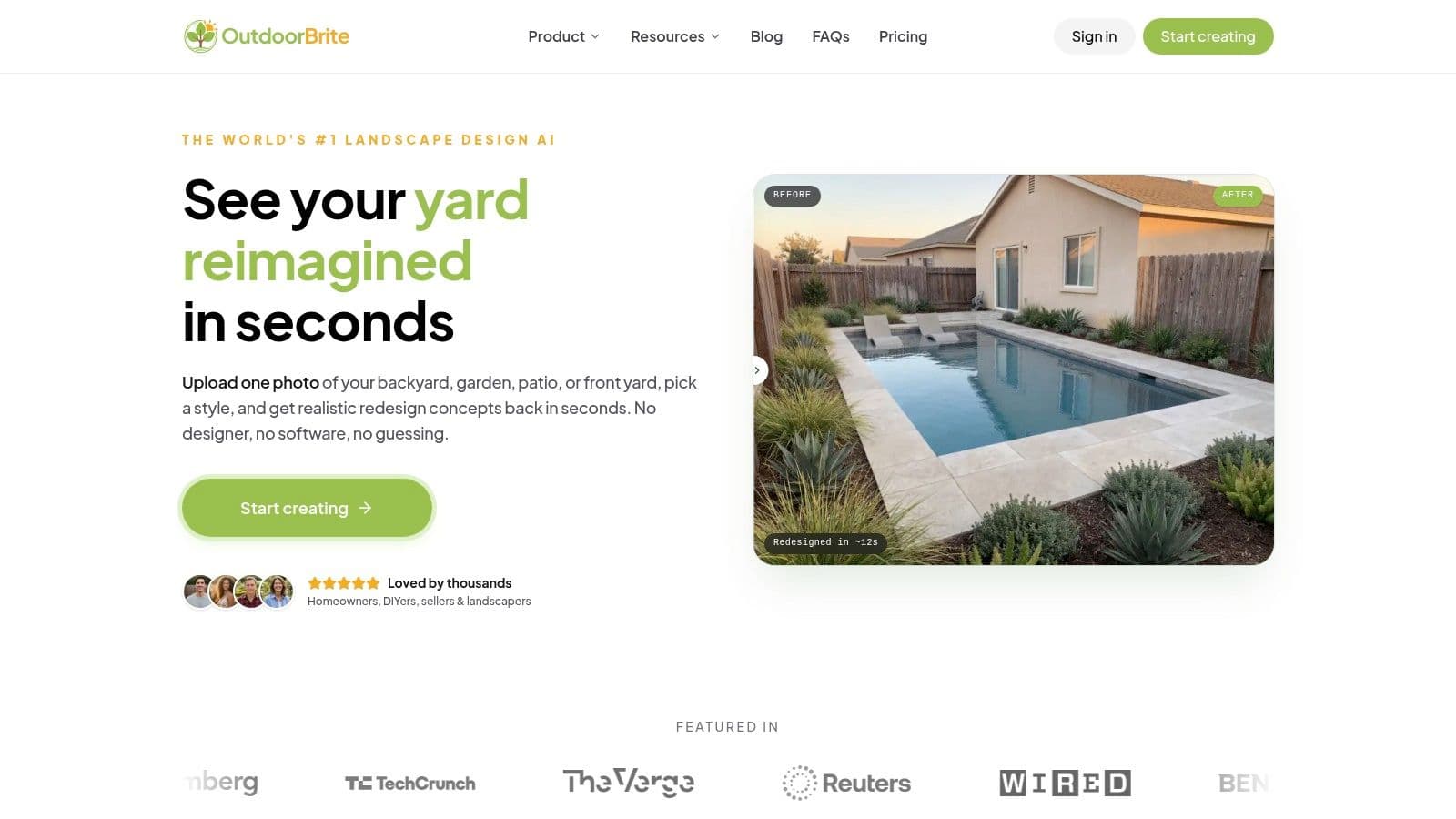
A tool like backyard design ai can help by turning a photo of your existing yard into a visual concept with different styles, layouts, and planting directions before you start buying materials. That kind of preview is useful when you're trying to compare gravel tones, bed shapes, or how much lawn to keep.
Good design gets easier when you can react to something visible instead of guessing from a blank yard.
The Real Cost and Reward of a Xeriscape Yard
The honest answer is that xeriscaping often saves water over time, but the upfront side of the story is less tidy. Removing turf, reshaping beds, adding irrigation, changing hardscape, and buying new plants can cost more at the start than rolling out fresh sod and calling it done.
That trade-off gets glossed over in a lot of garden advice. According to this xeriscaping cost discussion, 60% water savings are often cited without enough context on initial costs, and AI-guided design reduces material waste by 30%. The same source notes that over 40% of U.S. municipalities restrict rainwater harvesting, which can complicate DIY water-saving plans.
Where the value shows up
A xeriscape yard often pays you back in a few ways:
- Lower water demand: Less irrigation usually means less outdoor water use.
- Less repetitive upkeep: You spend less time correcting lawn stress and mowing large turf areas.
- Better fit for dry conditions: The yard is more likely to hold its appearance during hot, dry weather.
- Fewer design mistakes: Planning before purchasing helps avoid extra stone, mulch, edging, or plants that don't belong.
The hidden friction points
The biggest budget mistakes usually come from poor sequencing.
For example:
| Misstep | What it causes |
|---|---|
| Buying plants before mapping zones | Wrong plants end up in the wrong places |
| Skipping irrigation planning | Rework, patch jobs, and uneven watering |
| Overusing one material | The yard looks flat, harsh, or unfinished |
| Ignoring local rules | Water harvesting ideas may need revision |
If you're doing this yourself, regulations matter more than people expect. A rain barrel idea that sounds sensible may run into local restrictions, so it's worth checking local rules before you design around captured water.
Visualize Your Sustainable Yard with OutdoorBrite
People don't typically abandon xeriscaping because the idea is flawed. They quit because the blank page is intimidating. They worry the yard will look too stark, the plant mix will feel random, or the finished result won't match what they imagined.
That's where visualization changes the experience. Instead of making decisions in your head, you can work from an image of your own yard and test layouts that follow water-wise logic. That makes the project feel less like a leap and more like a series of choices.
Confidence matters as much as design
A xeric planting still needs care, especially at the beginning. New Mexico State University notes in this xeric landscape irrigation guide that irrigation isn't eliminated entirely and is needed for at least the first few years while root systems develop. That point matters because many beginners assume xeriscaping means instant zero-maintenance.
It doesn't. It means smarter maintenance, better plant matching, and less waste over the life of the yard.
A practical next step
If you're interested in sustainability beyond the garden, this article on From Power Bills To Sustainable Energy Living is a useful reminder that outdoor choices and household resource choices often work best when you think of them together.
For the yard itself, Outdoorbrite gives homeowners a way to upload a photo and explore what a more water-wise layout could look like before any digging starts. That's especially helpful if you're trying to decide how much lawn to remove, where to place planting beds, or which overall style fits your home.
The best first move isn't buying plants. It's getting clear enough to make fewer expensive guesses.
A good xeriscape doesn't look like compromise. It looks considered. It fits the climate, supports the way you use the space, and asks for less from you once it's established.
If you're ready to test ideas before you commit to stone, mulch, plants, or irrigation, try OutdoorBrite. Upload a yard photo, explore xeriscape-friendly layouts, and use the visual plan to make clearer decisions with more confidence.
See your yard reimagined
Start creating