What Plant Zone Is Charlotte NC? Your 2026 Gardening Guide
Find out what plant zone is charlotte nc. Discover the official USDA hardiness zone (8a) for your Charlotte garden, frost dates, and plant recommendations for
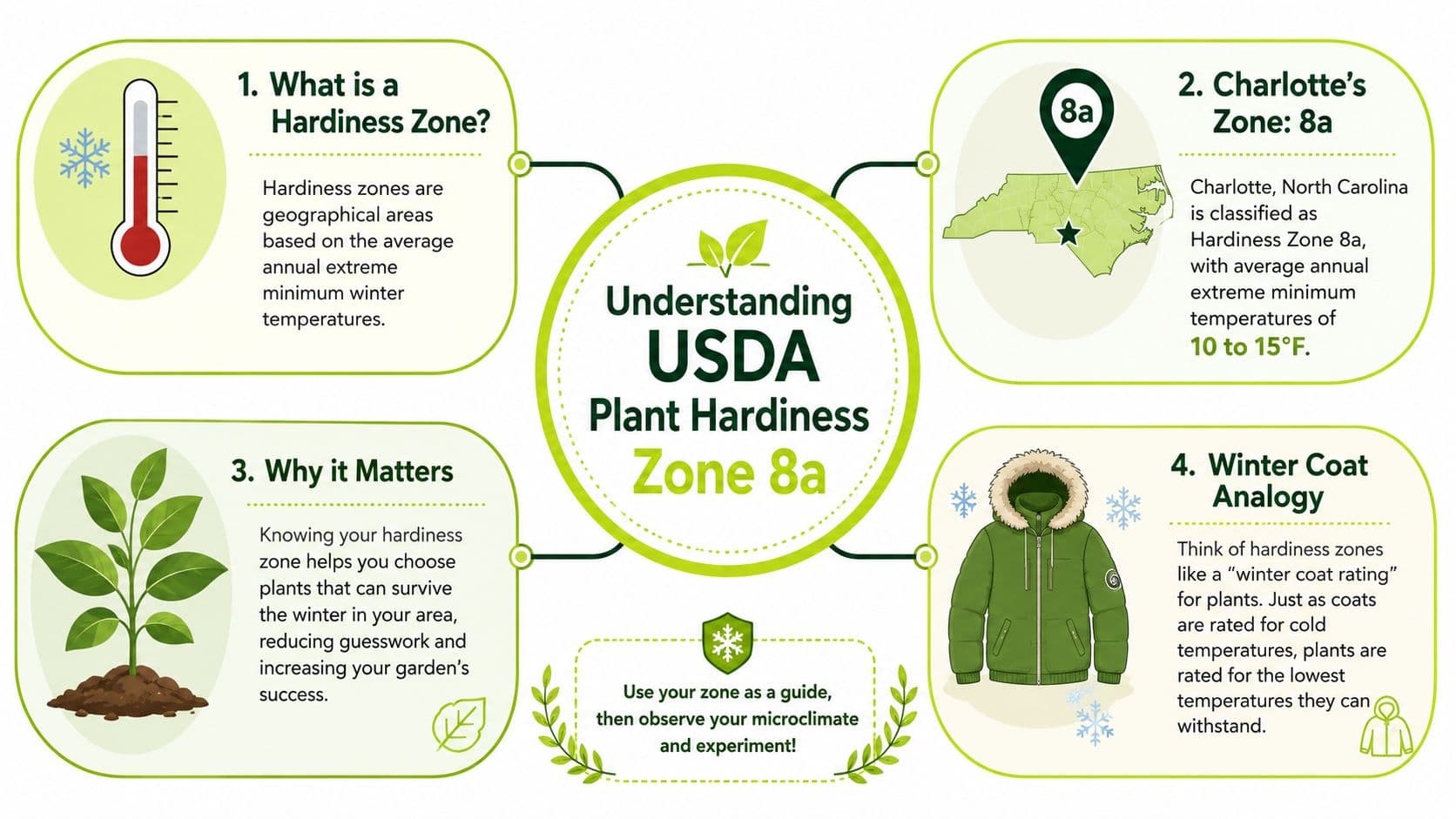
Charlotte, NC is in USDA Plant Hardiness Zone 8a, which means its minimum average annual extreme temperature is 10°F to 15°F. That's a recent shift from Charlotte's older Zone 7b designation, where the winter minimum range was 5°F to 10°F.
A lot of first-time gardeners ask, “What plant zone is Charlotte NC?” and stop there. But the better question is what that zone means for the plants you buy, the timing you follow, and the mistakes you can avoid in your own yard.
If you've stood in a nursery looking at tags for hydrangeas, magnolias, or vegetables and felt unsure, you're not alone. That little zone number is the shortcut that helps you choose plants with a real chance of making it through winter. It can save you money, cut down on replanting, and make your first garden much more enjoyable.
Your Essential First Step to a Thriving Charlotte Garden
Starting a garden in Charlotte often feels simple until you try to choose actual plants. You see sun-loving shrubs, flowering perennials, raised-bed vegetables, and patio pots, but you still don't know which ones fit your yard long term. That's where your hardiness zone comes in.
Think of your zone as the first filter. Before color, height, bloom time, or style, you need to know whether a plant can survive winter in your area. For Charlotte gardeners, that baseline is Zone 8a.
Why that one number matters
A hardiness zone won't tell you everything. It won't tell you whether your yard is shady, soggy, windy, or packed with red clay. But it does answer one big question early.
Practical rule: If a plant isn't rated for your zone, don't make it the backbone of your garden.
That's especially helpful for beginners. A Zone 8a garden gives you a wide range of choices, but not every tempting plant tag at the garden center is a safe bet. If you're sketching ideas before you shop, a tool like AI garden design can help you organize beds, pathways, and plant groupings before you start digging.
Good planning beats impulse buying
Charlotte gardeners also do a lot of container growing, porch planting, and indoor-outdoor plant swapping. If you're using staking tools for delicate stems or potted tropicals, clear supports like these acrylic plant support rods can keep small plants upright without distracting from the display.
Your zone is the starting point, not the whole plan. Once you understand what 8a means in plain language, plant tags stop feeling random and your choices get easier.
Decoding Charlottes USDA Hardiness Zone 8a
A USDA Plant Hardiness Zone is basically a winter survival rating for plants. I tell customers it's comparable to a winter coat guide. Some plants need a heavy coat because they can handle colder lows. Others need a lighter coat because they're better suited to milder winters.
Charlotte's current rating is Zone 8a. According to the updated 2023 USDA hardiness information for Charlotte, the city is classified as USDA Zone 8a, with a minimum average annual extreme temperature of 10°F to 15°F, based on winter temperature data from 1991 to 2020. That same source notes Charlotte was predominantly Zone 7b on the 2012 USDA map, where the winter minimum range was 5°F to 10°F.
What changed for gardeners
That update matters because older gardening advice for Charlotte may lean colder than current conditions. If you learned years ago that a certain gardenia or magnolia was “iffy” here, that advice may no longer fit much of the city.
Charlotte's move from 7b to 8a also reflects a broader state trend. The updated map places North Carolina across a range from 6a to 9a, and the map itself divides North America into 11 distinct zones using 30-year temperature averages.
What Zone 8a means in practice
For a home gardener, Zone 8a means winter is still a factor, but it's less punishing for borderline Southern plants than it used to be. Plants that once struggled through colder Charlotte winters can now be more realistic choices for many yards.
A zone map doesn't promise safety in every cold snap. It gives you the best long-term average for picking survivors.
That's the key difference. Hardiness zones are about patterns, not guarantees. If you use them that way, you'll make smarter plant decisions and fewer expensive mistakes.
Why Your Neighbors Yard Might Be Different
Charlotte's official zone is useful, but your yard doesn't live on a flat, uniform map. It lives beside brick walls, driveways, fences, low spots, and maybe a patch of woods. That's why two homes a few minutes apart can grow the same plant very differently.
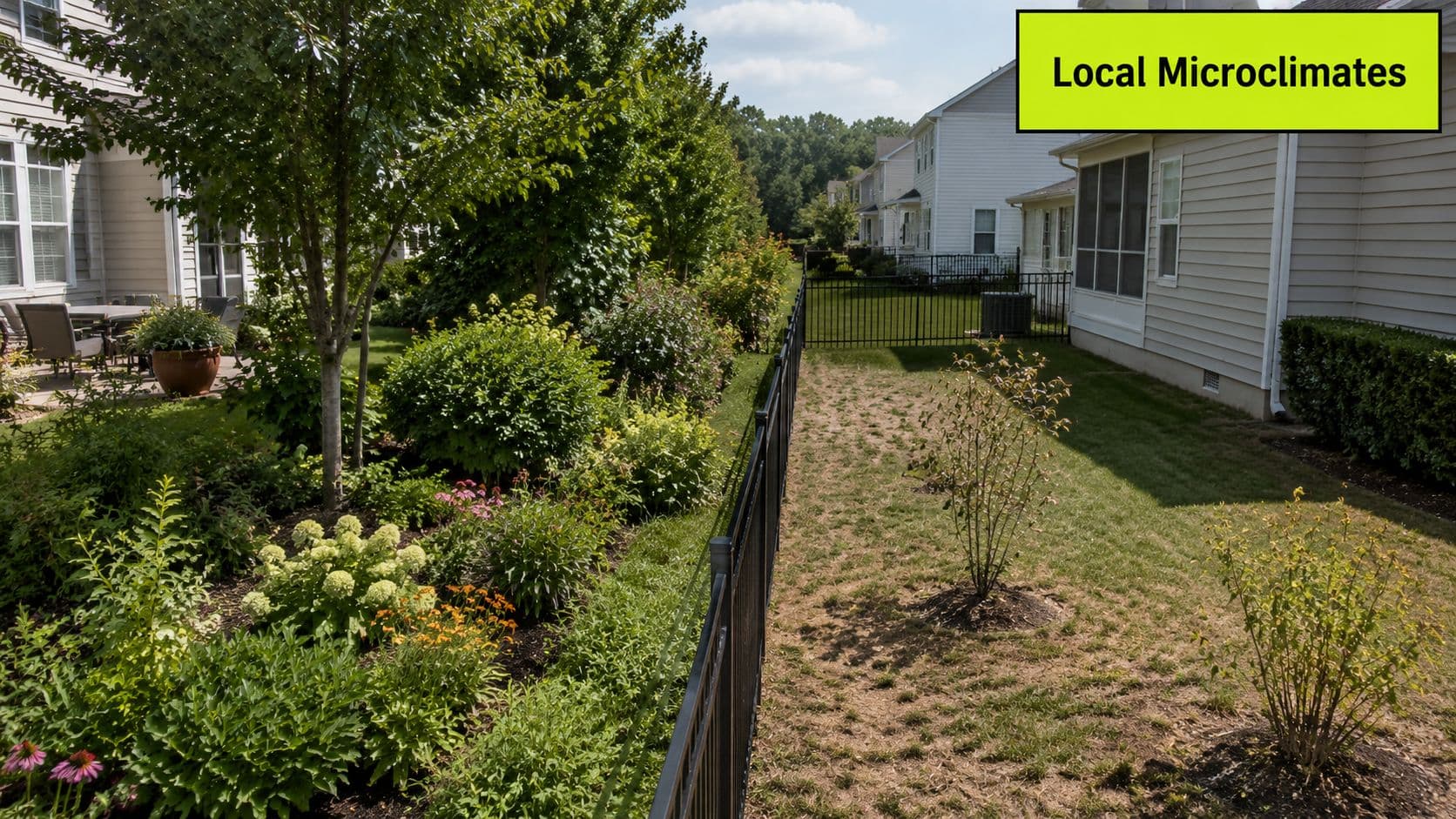
Charlotte's hardiness pattern is a bit nuanced. As noted in this North Carolina planting zone guide, the area falls within a transitional microclimate range of Zone 7b to 8a, with most of the urban core stabilized in 8a. That 5-degree threshold between 7b and 8a can decide whether a marginally hardy perennial comes back cleanly or gets knocked back.
Common Charlotte microclimates
The warmest spots are often close to the urban core, masonry walls, and sheltered courtyards. Those areas hold heat longer.
Colder pockets usually show up in open yards, low areas where cold air settles, and exposed corners that catch winter wind.
What to watch on your own property
- South or west walls often stay warmer and can protect tender shrubs.
- Low spots can collect colder air, even when the rest of the yard looks fine.
- Downtown and close-in neighborhoods may run warmer because the built environment acts like a heat sink.
- Edges near woods or open land can feel colder and less protected.
If you're right on that borderline, choose conservatively. A plant rated comfortably for Zone 8 is usually a safer anchor plant than one that barely hangs on.
Find Your Exact Zone and Key Planting Dates
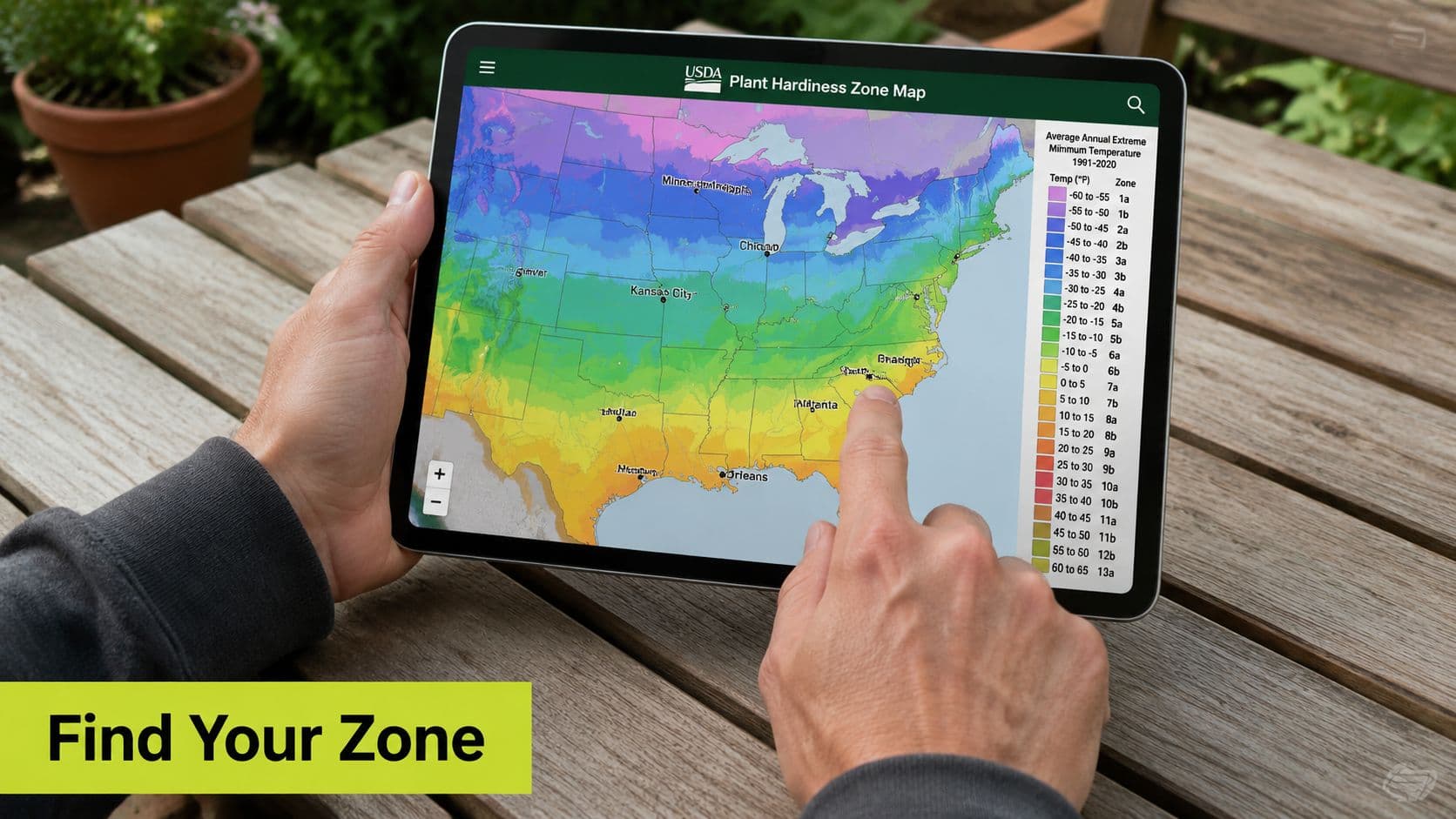
If you want a practical answer beyond the citywide average, look up your own address on the official USDA map. Use the ZIP code search on the USDA interactive tool and compare that result with what you already know about your yard. A sunny brick patio and a windy backyard slope don't behave the same way, even in the same neighborhood.
A simple way to use your zone
Start with the map result, then test it against your site.
- Search your ZIP code on the USDA interactive hardiness map.
- Walk your yard in the morning and late afternoon to notice sun, shade, and wind.
- Mark warm pockets near foundations, patios, and brick walls.
- Keep tender plants movable if you're still learning how your space behaves.
A lot of new gardeners get hung up on exact calendar dates. In real life, local weather shifts from year to year, so it's better to treat frost timing as a working window, not a fixed appointment.
Use frost dates as a guide, not a guarantee
For trees and shrubs, seasonal timing matters just as much as zone. If you're planning woody plants, this guide for thriving trees is a helpful next read.
For a quick visual on how the USDA map works, this short walkthrough makes it easier to use the tool correctly:
Don't plant by habit alone. Plant by your site, your map result, and the actual weather in front of you.
Top Plants to Grow in Your Zone 8a Garden
The zone shift becomes particularly enjoyable. The move into 8a opens the door to plants that used to be more risky in Charlotte gardens. You still need good soil, proper watering, and the right light, but your plant palette is broader than many longtime gardeners realize.
The key is to build around reliable performers first, then try a few warmer-climate choices in protected spots.
Plants that fit Charlotte well
According to the Charlotte hardiness update discussed earlier, the shift to 8a expands the plant palette for residents. Species that were once more vulnerable in 7b, including certain magnolias, hydrangeas, gardenias, and hibiscus, now show higher survival without protective winter measures, and crops like okra and sweet potatoes can be grown with greater consistency.
Here's a practical shopping list to start from:
| Plant Type | Examples |
|---|---|
| Perennials | Coneflower, Black-Eyed Susan, Hibiscus |
| Shrubs | Azaleas, Gardenias, Hydrangeas, Camellias |
| Trees | Crepe Myrtle, Magnolia |
| Edibles | Okra, Tomatoes, Sweet Potatoes |
How I'd choose from that list
For flower beds, start with dependable perennials like coneflower and black-eyed Susan, then mix in a hibiscus where you want a bigger summer statement. For foundation plantings, azaleas and hydrangeas are easy entry points, while gardenias reward you with fragrance if you place them well.
If you want small-tree impact, magnolias deserve another look in today's Charlotte climate. They used to make some gardeners nervous in colder spots. In many local yards now, they're more practical than they once were.
For edible gardens, okra and sweet potatoes make sense for gardeners who want warm-season crops that suit our longer, hotter stretch. Tomatoes still earn their place, but they need attention to spacing, watering, and airflow.
A smart beginner mix
Try this combination for a first 8a garden:
- Front layer: Black-eyed Susan for long color
- Middle layer: Hydrangea for structure
- Anchor shrub: Gardenia in a protected, sunny-to-partly sunny spot
- Vertical interest: A small magnolia where it has room to mature
- Edible corner: Okra and sweet potatoes in the sunniest area
That kind of mix gives you flowers, evergreen presence, and something to harvest.
Visualize Your Perfect Zone 8a Landscape
Knowing your zone is one thing. Seeing how those plants might look in your own yard is another.
A lot of Charlotte gardeners can picture individual plants, but they struggle with layout. Will the hydrangeas crowd the walkway? Will the magnolia overpower the bed? Will the whole thing still look balanced in winter?
That's where a visualization tool helps. With landscape ai design, you can upload a photo of your yard and test ideas before you buy plants or move soil. For a beginner, that makes the leap from “I know my zone” to “I know what to plant where” much less intimidating.
A good garden plan should look good on day one and still make sense after plants fill in.
Frequently Asked Questions About Charlotte Gardening
Is Charlotte really all one zone
Not exactly. Charlotte is best understood as mostly 8a with local variation. Some sites behave warmer, especially near the urban core, while other properties feel closer to the colder side of the local range.
Are suburbs like Matthews or Huntersville the same as Charlotte
They're often similar, but not identical in how a yard behaves. Suburban lots can be more exposed than close-in urban properties, and that can affect winter protection, wind exposure, and frost pockets. It's smart to use the official map for your exact location and then observe the site.
How does Zone 8a affect lawn care
It mostly changes how you think about winter stress and plant selection around the lawn, not just the turf itself. Warm-season ornamental choices often fit more comfortably now, but lawns still depend on sun, drainage, mowing habits, and seasonal maintenance. If your grass struggles, the cause is often site conditions, not just the hardiness zone.
What is an AHS Heat Zone and should I care
Yes, but treat it as a second layer of planning. A hardiness zone tells you about winter cold. A heat zone helps you think about summer stress. In Charlotte, both matter because plants have to handle humid heat as well as winter dips.
Should I buy only Zone 8 plants now
For long-term backbone plants, that's a smart approach in many yards. But if your property is exposed, on high ground, or prone to frost pockets, choosing plants with a little extra cold tolerance can still be wise.
Charlotte gardening is getting more flexible, but not careless. The best gardens here still come from matching the plant to the place.
If you're ready to turn your Charlotte Zone 8a ideas into a real plan, try OutdoorBrite. You can upload a photo of your yard, explore planting concepts that fit your space, and move from guessing to a layout you can build with confidence.
See your yard reimagined
Start creating