Best All Year Plants and Flowers: Continuous Color
Discover the top 10 all year plants and flowers for a stunning garden. Our guide covers evergreens, winter bloomers, & seasonal standouts.
Beyond spring, most yards hit a slump. The tulips fade, the summer pots get tired, and winter leaves you staring at bare soil and a few exhausted shrubs. That's usually when people start searching for all year plants and flowers and realize the phrase can be misleading. Very few plants bloom nonstop in every climate, but you can absolutely build a garden that never looks empty.
The trick is layering. Use evergreen plants for structure, winter bloomers for cold-month relief, long-season performers for summer and fall, and shrubs with berries or fragrance when flowers are scarce. Annuals still matter too. In the U.S., six familiar annuals, petunia, impatiens, begonia, geranium, pansy, and New Guinea impatiens, account for 46.6% of all garden annual sales, which tells you how heavily gardeners rely on them for seasonal color in visible spaces like entry beds and porch containers (pollinator and annual sales research).
If you want edible plants that earn their keep, it's also worth browsing 29 perennial crops. For now, here are 10 reliable choices that keep a garden lively across the seasons.
1. Helleborus niger (Christmas Rose)
Helleborus niger is one of the few plants that makes winter gardening feel rewarding instead of dutiful. It blooms when the rest of the shade border is asleep, and the evergreen foliage keeps doing useful visual work after the flowers pass. In a small front bed under a deciduous tree, that matters.
This is the plant I reach for when someone says their garden looks dead from winter into early spring. Tuck it beneath bare-branched trees, beside a path, or near a north-facing porch where you'll surely notice the flowers.
Where it earns its spot
Christmas Rose works best as an understory perennial in cottage gardens, woodland edges, and foundation beds with filtered light. It's also one of the smarter picks for mature yards where tree roots make planting harder.
That last point gets ignored too often. Proven Winners notes that gardening under trees takes a LOT of excess water and plant food for the first 2 to 3 years, and the site says 70% of gardeners fail there in that same period when they don't adjust watering and feeding (growing under trees guidance).
Practical rule: If you plant hellebores under a mature maple or oak, water the root zone deeply and consistently during establishment. Tree roots will compete harder than most beginners expect.
For planning, this is also a good plant to test with an ai garden design generator. Shade beds are hard to picture on paper, and hellebores help anchor the lowest evergreen layer.
2. Ilex verticillata (Winterberry Holly)
Winterberry Holly doesn't carry winter on its leaves. It carries it on its berries. Once the foliage drops, the stems light up with red fruit, and that bare-branch effect is exactly why it works.
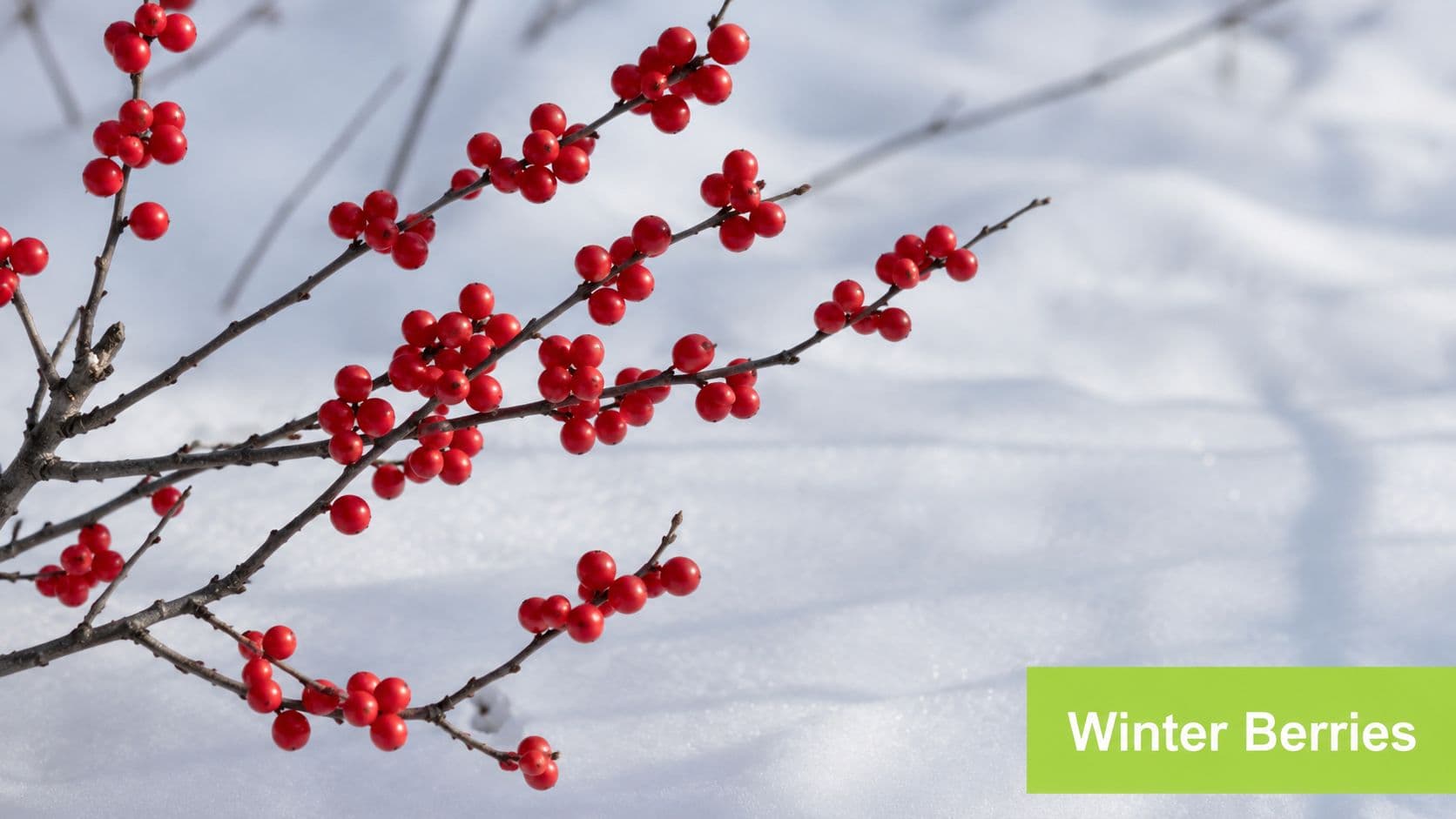
In rain gardens, low spots, and heavier soils, Winterberry solves two problems at once. It handles difficult ground better than many ornamental shrubs, and it gives you a focal point when perennial beds disappear.
What gardeners get wrong
The common mistake is planting one shrub and waiting for berries. Female plants need a male pollinator nearby, so this is a shrub you plan, not impulse-buy. If you've got a modern garden with grasses and conifers, a grouping of Winterberry can be the winter accent that keeps the whole design from flattening out.
A strong combination looks like this:
- Back layer: Dense evergreens for dark contrast behind red berries
- Middle layer: Winterberry as the cold-season focal point
- Front layer: Low sedges, hellebores, or spring bulbs for the handoff into the next season
Bare stems with berries look stronger against a solid green backdrop than they do against open lawn.
3. Lavandula angustifolia (English Lavender)
English Lavender gives you more than bloom. It gives foliage color, scent, and shape. Even when it isn't flowering, the silvery-green mound earns space in the border.
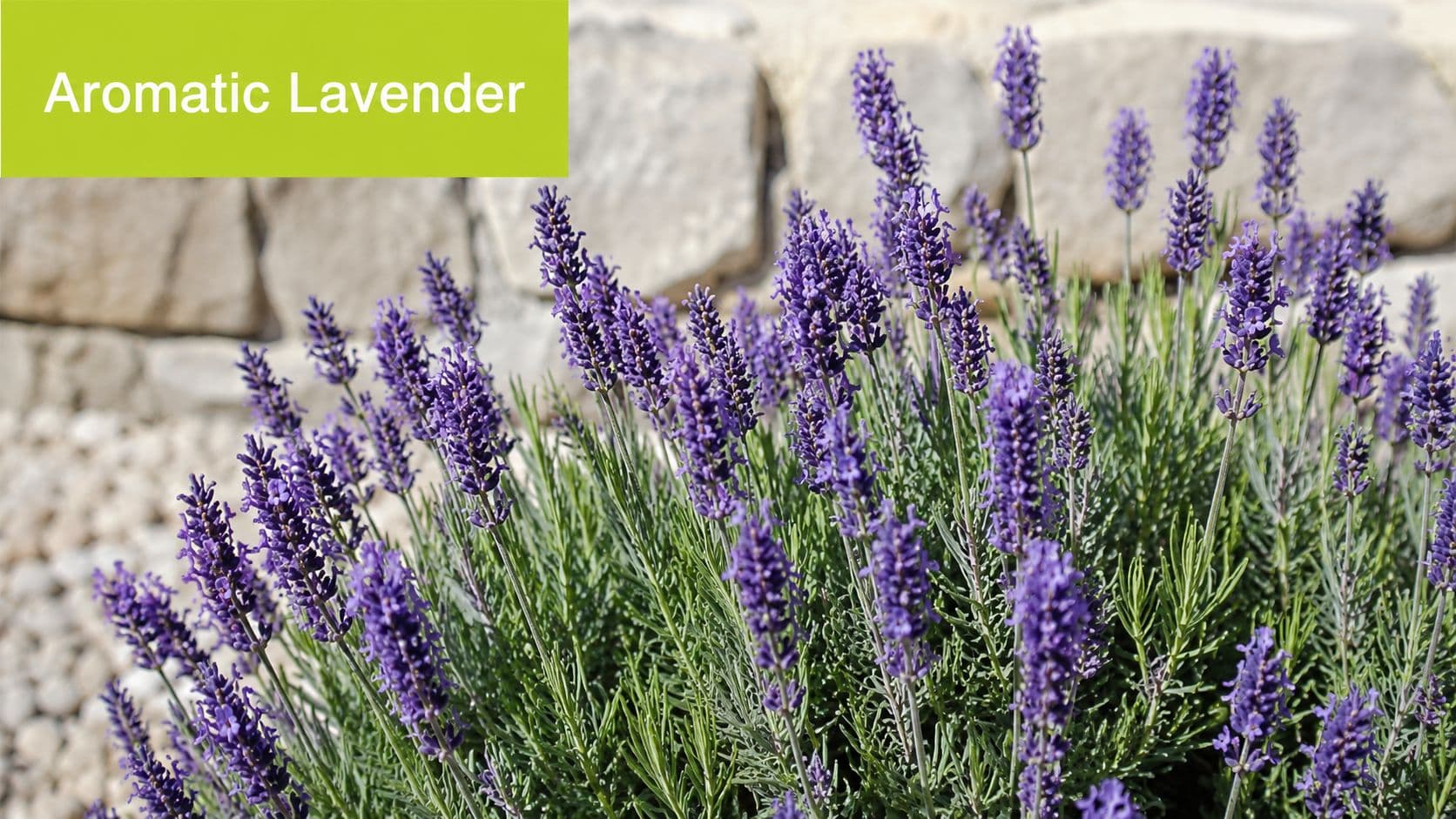
This plant suits Mediterranean-style beds, gravel gardens, sunny walkways, and cottage borders. In each case, restraint is the key. Rich soil and too much water usually make lavender look worse, not better.
Keep it lean
Plant it where the soil drains fast and the crown won't stay wet. Skip the urge to pamper it with heavy compost in the planting hole. Lavender usually responds better to average or even poor soil than to soft, moisture-holding ground.
If you want more ideas for pairing it with roses, salvias, or ornamental grasses, discover new garden plant ideas. For the scent side alone, it also makes sense to learn about lavender oil from Aroma Warehouse.
For small spaces, use compact forms like ‘Munstead'. For larger sunny runs, broader plantings create the hazy, repeated look that makes lavender so effective.
4. Skimmia japonica (Japanese Skimmia)
Skimmia is a quiet plant, and that's part of its value. It doesn't scream for attention in spring and disappear later. It holds glossy evergreen leaves, flowers in season, and brings berries when many beds have gone flat.
This is one of the best all year plants and flowers for a shaded front entry, a woodland path, or a small courtyard where every plant has to justify its footprint. It also behaves well in containers if you keep moisture steady.
Best use in small gardens
Use Skimmia where you need winter presence without bulk. A pair flanking steps, a cluster under a window, or a shaded patio pot can all work. Like Winterberry, berry production depends on having male and female plants nearby.
Two design tips matter here:
- Match the soil first: Skimmia prefers acidic conditions, so test before planting instead of guessing.
- Build a shade layer: Pair it with hellebores, evergreen ferns, and low groundcovers rather than forcing it into a sunny mixed bed.
If your yard has mature trees and those awkward leftover gaps near walls or paving, think small-scale. Harmony in the Garden says 60% of gardeners miss the 4 C's, corners, cracks, crannies, and crevices, even though those tiny spaces are useful for year-round interest (planting the 4 C's).
5. Camellia japonica (Japanese Camellia)
Camellia is what you plant when you want winter to feel intentional. The glossy evergreen leaves already look polished. Then the flowers arrive when most gardens have almost nothing going on.
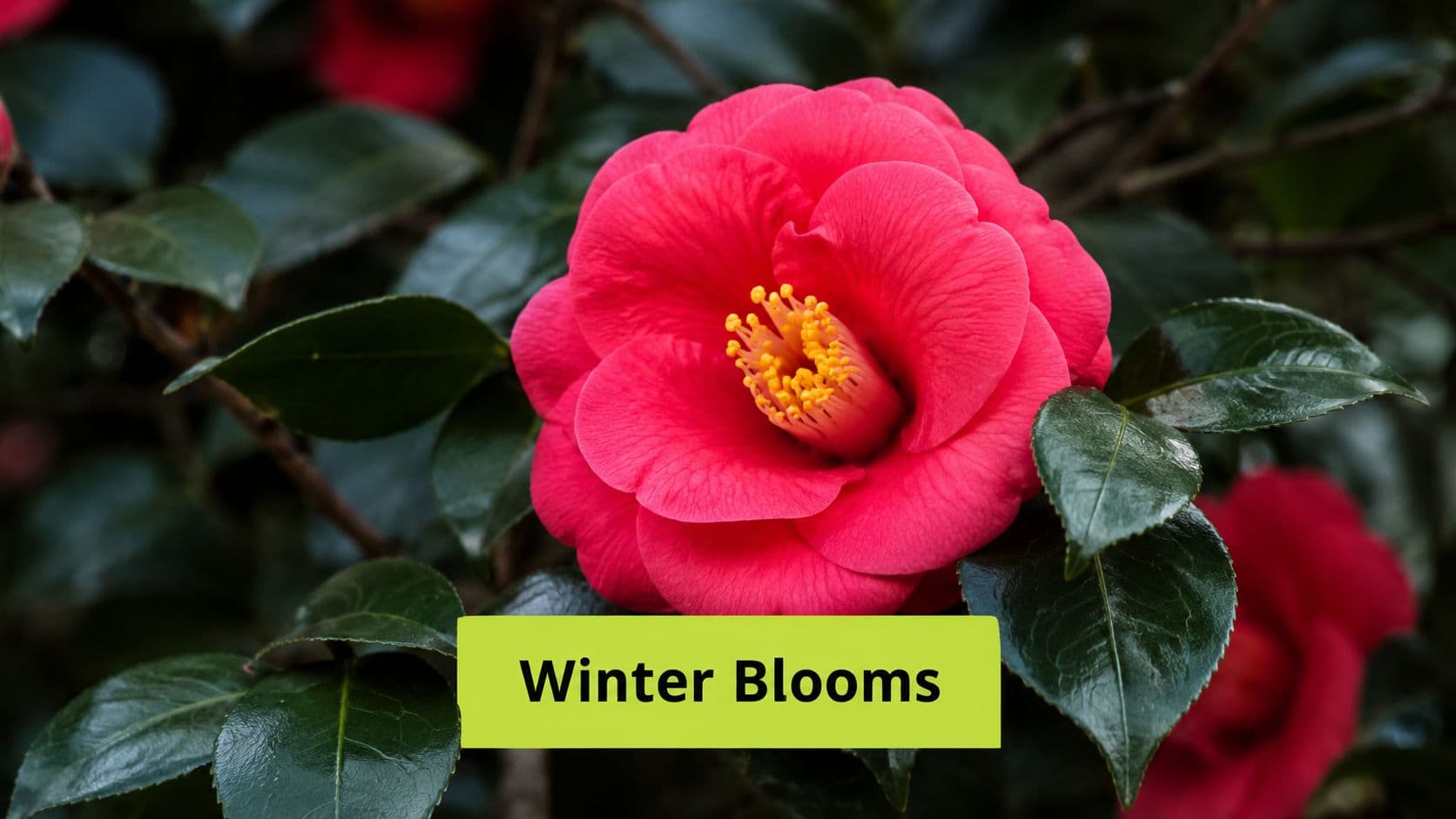
In warm temperate and humid subtropical regions, Camellia belongs near patios, woodland edges, and sheltered foundation beds. It reads as luxurious, but it's not fussy if the site is right.
Site it carefully
Afternoon shade helps protect blooms and foliage from stress. Wind protection matters too. If you put Camellia in an exposed corner, winter weather can spoil the show fast.
Before planting, it helps to spend a few minutes understanding garden soil prep. Camellias reward good placement more than corrective rescue work later.
Camellia is rarely the plant that fails first. Bad siting is.
Use early, mid, and late cultivars if you want a longer display. In a layered border, pair it with ferns, hellebores, and dark mulch so the winter flowers stand out.
6. Buxus sempervirens (English Boxwood)
Not every year-round plant needs flowers. Boxwood proves that structure can carry a garden through all four seasons. Without that evergreen framework, even a generous planting of bloomers can look loose and temporary.
Boxwood suits formal borders, clipped entry hedges, knot gardens, and simple mounded anchors in mixed beds. It also works in modern outdoor spaces where repeated green forms calm down a busy mix of textures.
Use it as the frame
Think of Boxwood as the outline, not the headline. Let it define bed edges, hold corners, or create rhythm between flowering shrubs. Then let seasonal plants do the changing.
A quick visual on shaping and habit helps before you commit:
Give it airflow, avoid constant sogginess, and don't shear it into dense outer shells every time. Light, timely pruning keeps growth healthier than relentless clipping.
7. Caryopteris × clandonensis (Bluebeard)
By late August, many borders lose definition. Bluebeard earns its place right there, sending up clear blue flowers just as earlier summer color starts to thin out.
It performs best in full sun and soil that drains well. In rich, wet ground, it often grows soft and floppy, then struggles through winter. In a hot, exposed bed or gravel garden, it usually stays tighter and flowers better. That trade-off matters more than extra feeding or fussing.
Pair it with strong fall partners
Bluebeard looks strongest beside warm autumn tones and upright shapes. Plant it near coneflowers, rudbeckia, switchgrass, or seedheads that hold into fall. The blue flowers read cleaner against copper, gold, and straw colors than they do against another cool-toned planting.
For beginners, this is a useful shrub because it solves a timing problem. Spring and early summer gardens are easy to fill. Late season is where many planting plans fall flat. Bluebeard helps carry that gap without needing constant deadheading.
If you are mapping combinations in OutdoorBrite, test Bluebeard in small groups of three against tawny grasses or dark mulch. That kind of preview helps you judge whether the color contrast is sharp enough before you plant.
Cut it back in early spring, not fall. Leave the stems standing over winter so you can spot the plant easily, and so cold weather does not hit fresh pruning cuts.
8. Euonymus fortunei (Wintercreeper)
Wintercreeper earns its place by solving awkward spaces. Slopes, dry shade, foundation edges, and the narrow strip beside a fence are all jobs it can handle. That flexibility is useful, but it comes with a warning.
In some regions, Wintercreeper can be invasive. Check local guidance before planting. If it's a problem in your area, choose another evergreen groundcover instead of forcing it.
Where it works best
When it is appropriate to plant, Wintercreeper can brighten dim areas with variegated foliage and cover ground where turf never succeeds. It can also climb if given support, which some gardeners like and others regret.
Use it carefully:
- For slopes: Let it stabilize and soften hard grades where mowing is awkward.
- For deep shade: Use it as a foliage carpet under shrubs where grass won't fill in.
- For vertical surfaces: Only train it up fences or walls if you're willing to prune every year.
This is a utility plant. Treat it that way, and it's helpful. Expect it to behave like a delicate specimen, and you'll fight it.
9. Sarcococca confusa (Fragrant Sarcococca)
Sarcococca is easy to overlook until you smell it in winter. Then you remember it for years. The flowers are tiny, but the fragrance carries, which makes it ideal near entries, walks, and sheltered seating spots.
This shrub is especially good in shaded urban gardens where space is tight and winter interest has to come from foliage, perfume, and subtle detail rather than large floral displays.
Put it where people pass by
Don't hide Sarcococca at the back of a border. Place it near a gate, beside front steps, or along a side path you use in cold weather. A fragrant plant can't do much for you if it's stranded fifty feet from the house.
Plant winter fragrance close to doors. You won't go looking for it on a cold afternoon.
It combines well with hellebores, ferns, and other shade-tolerant evergreens. The effect isn't loud, but it feels finished in months when most gardens don't.
10. Viburnum × burkii (Burkii Viburnum)
Burkii Viburnum is a strong choice if you want a shrub that bridges seasons instead of dominating just one. It flowers with fragrance, develops berries, and keeps enough substance in the garden to matter after the bloom is over.
For colder regions, that flexibility is valuable. You may not get the same winter flower drama as a Camellia, but you do get a dependable shrub with structure, scent, and seasonal change.
A practical shrub for mixed borders
Use Burkii Viburnum in mixed shrub borders, foundation beds, and pollinator-friendly plantings. It looks most natural when it has room to keep its upright habit rather than being boxed into a tight corner.
Two points make it more effective:
- Plant more than one: Cross-pollination improves berry production.
- Prune after flowering: If you prune at the wrong time, you'll remove next season's display.
The broader plant industry also shows why versatile plant varieties matter. The U.S. Plant and Flower Growing industry is projected to reach $21.0 billion in 2026, with 45,994 growing businesses operating in the country, according to IBISWorld's industry outlook. For home gardeners, that usually translates to more choices from specialized growers, but also a stronger need to choose plants that stay useful beyond one short season.
Comparison of 10 Year-Round Plants
| Plant | 🔄 Implementation complexity | ⚡ Resource requirements | 📊 Expected outcomes | 💡 Ideal use cases | ⭐ Key advantages |
|---|---|---|---|---|---|
| Helleborus niger (Christmas Rose) | Low ongoing; slow to establish 🔄 | Moderate moisture; tolerates poor/alkaline soils ⚡ | Reliable winter blooms and evergreen structure 📊 | Shade/woodland understory; winter interest 💡 | Winter blooms & evergreen foliage ⭐ |
| Ilex verticillata (Winterberry Holly) | Moderate; needs male+female and 3–4 yr to fruit 🔄 | Consistent moisture; adaptable to wet/clay soils ⚡ | Bold, persistent red berries; strong wildlife value 📊 | Rain gardens, winter focal points, native plantings 💡 | Long-lasting winter berry display; bird attraction ⭐ |
| Lavandula angustifolia (English Lavender) | Moderate; requires annual hard pruning and sun 🔄 | Very low water once established; well‑draining soil ⚡ | Strong summer bloom, fragrance, pollinator support 📊 | Mediterranean, xeriscape, cottage borders; container use 💡 | Fragrance, pollinator-friendly, drought tolerant ⭐ |
| Skimmia japonica (Japanese Skimmia) | Low; slow growth, needs male+female for berries 🔄 | Prefers acidic, humus-rich moist soil ⚡ | Evergreen structure, spring flowers, winter berries 📊 | Deep shade, small gardens, containers, foundation plantings 💡 | Excellent shade tolerance and compact evergreen form ⭐ |
| Camellia japonica (Japanese Camellia) | Moderate–high; site and frost protection critical 🔄 | Acidic, consistently moist soil; sheltered site ⚡ | Spectacular winter blooms and long-lived evergreen canopy 📊 | Warm-zone winter focal, woodland understory, entry specimens 💡 | Large winter flowers and exceptional longevity ⭐ |
| Buxus sempervirens (English Boxwood) | High; skilled pruning/topiary & very slow growth 🔄 | Moderate water; good air circulation to prevent disease ⚡ | Year-round formal structure for hedges/topiary 📊 | Formal gardens, hedging, sculptural accents 💡 | Exceptional shearing ability and evergreen structure ⭐ |
| Caryopteris × clandonensis (Bluebeard) | Low; dies back in cold, needs spring hard prune 🔄 | Low water; prefers full sun and lean, well‑draining soil ⚡ | Late-summer color; strong pollinator attraction 📊 | Pollinator gardens, drought-tolerant borders, cottage mixes 💡 | Late-season blooms and drought tolerance ⭐ |
| Euonymus fortunei (Wintercreeper) | Low; adaptable but can be invasive if unchecked 🔄 | Very low maintenance; tolerates poor soils ⚡ | Year-round evergreen groundcover or climber; variegation impact 📊 | Groundcover, slopes, shady brightening, privacy screens 💡 | Versatile evergreen coverage and shade brightening ⭐ |
| Sarcococca confusa (Fragrant Sarcococca) | Low; slow growth, prefers shade and acid soil 🔄 | Moist, humus-rich acidic soil; low maintenance ⚡ | Intense winter fragrance with evergreen form 📊 | Shade near entries/seating, woodland borders, subtle fragrance spots 💡 | Exceptional winter fragrance and shade performance ⭐ |
| Viburnum × burkii (Burkii Viburnum) | Moderate; benefits from multiple plants for best berries 🔄 | Moderate moisture; very cold-hardy ⚡ | Extended flowering Nov–Apr and persistent berries 📊 | Northern foundation plantings, winter-interest borders 💡 | Long bloom window and excellent cold tolerance ⭐ |
Design Your Four-Season Garden with Confidence
A good year-round garden doesn't depend on one miracle plant. It depends on layers that take turns carrying the scene. Boxwood gives structure. Camellia and Helleborus handle the cold months. Lavender carries summer with foliage and scent. Bluebeard pushes color later than many gardeners expect. Winterberry and Skimmia keep the garden from going visually flat when flowers are scarce.
That layered approach also matches how people use outdoor spaces. The U.S. bedding and garden plant market reached $3.56 billion in 2022, up from $3.40 billion in 2021, while total domestically produced floriculture sales reached $6.685 billion, up from $6.415 billion (U.S. floriculture market report). Gardeners keep buying visible, seasonal color because it works. The smartest move is to combine that seasonal color with evergreen structure and long-blooming plants instead of choosing one or the other.
If you live in a frost-free climate, true near-continuous flowering becomes easier. Lantana is noted as a long-bloomer that flowers continuously, and in frost-free areas it can bloom all year round (year-round blooming reference). In colder climates, the better goal is continuous interest rather than nonstop flowers. That's a more realistic and more successful way to think about all year plants and flowers.
It also helps to remember the basic split between plant types. Annual flowers grow for one long season and die with freezing weather, while perennials come back year after year (annuals and perennials overview). Some self-sowing annuals can mimic perennial behavior by reseeding and returning on their own, which is useful if you want a looser, lower-cost planting style (self-sowing annuals explanation).
If you want to test combinations before digging, OutdoorBrite is one practical option. You can upload a photo of your yard, try plant arrangements, and preview how a border might look across different conditions so you're not guessing from plant tags and memory alone. That kind of preview is especially helpful when you're balancing winter structure, summer bloom, and shade-heavy problem spots.
Try OutdoorBrite if you want to map out all year plants and flowers before you buy anything. It's a simple way to test layout ideas, compare seasonal layers, and make fewer planting mistakes in the yard you already have.
See your yard reimagined
Start creating