Artificial Turf Pros and Cons
Weighing artificial turf pros and cons? Explore 8 key factors like cost, maintenance, safety, and environmental impact before you decide.
Your weekends disappear into the same loop. Mow. Water. Pull weeds. Watch one patch go brown while another turns muddy. Then you notice a neighbor's lawn that looks perfectly green in the middle of a dry spell, and artificial turf starts to sound less like a shortcut and more like a solution.
That appeal is real. A synthetic lawn can cut out constant upkeep, keep the yard looking finished year-round, and reduce water use. But the full artificial turf pros and cons go well beyond convenience. Heat, drainage, appearance, safety, long-term replacement, and upfront cost all matter just as much as the promise of a tidy lawn.
For most homeowners, the smartest move isn't saying yes or no right away. It's testing where turf makes sense on your property. That's where OutdoorBrite helps. Before you pay for excavation, base prep, and installation, you can preview how turf looks beside patios, plant beds, shade structures, pet runs, and hardscape. That makes the trade-offs easier to judge with your own yard in view, not a showroom sample.
1. Low Maintenance and Year-Round Green Appearance
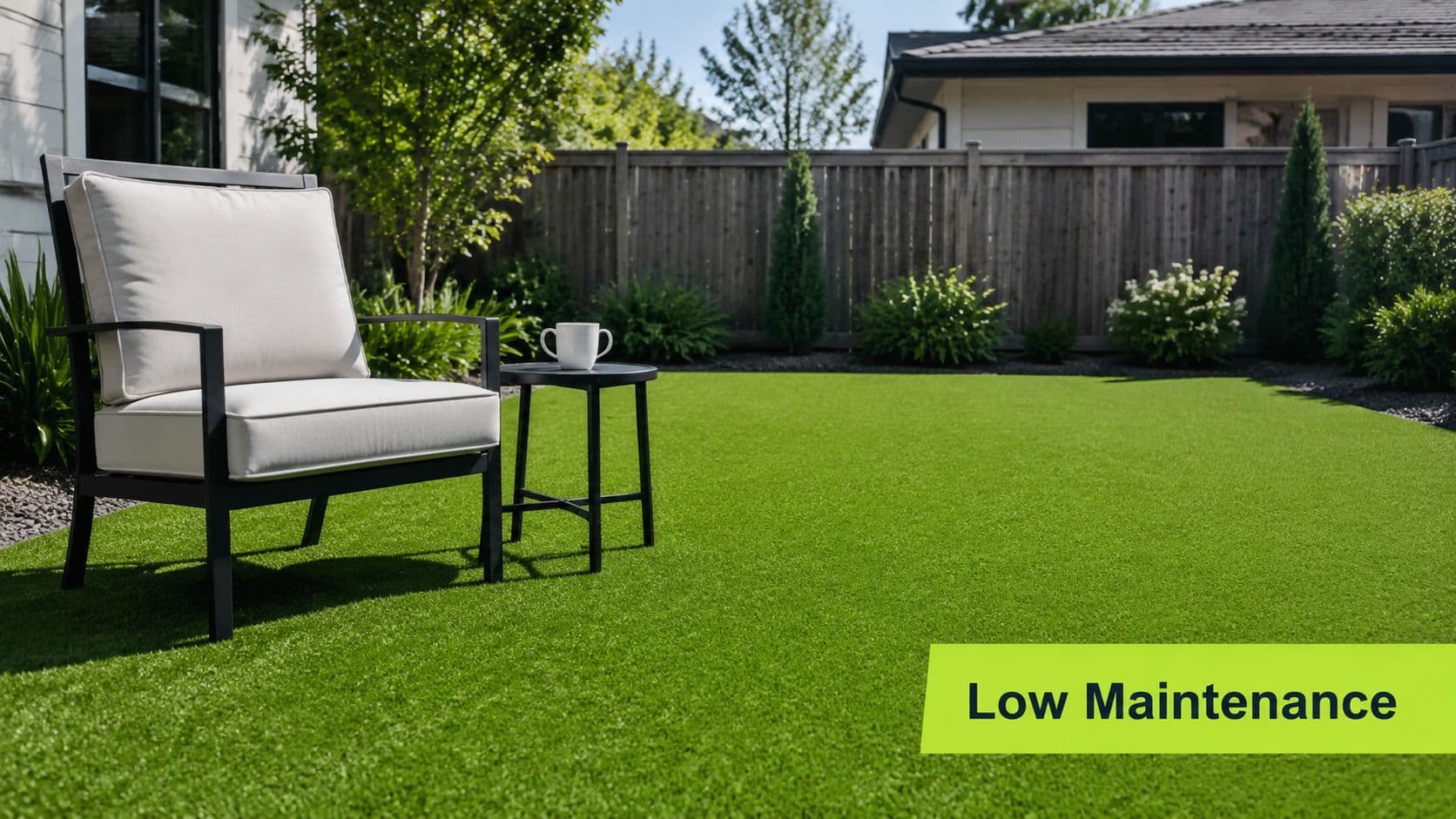
For homeowners tired of spending weekends mowing, edging, fertilizing, and patching bare spots, turf earns its appeal quickly. It cuts out most routine lawn chores and keeps the yard looking finished through drought, winter dormancy, and heavy foot traffic.
That benefit is real, but it helps to clarify what “low maintenance” means. Artificial turf removes lawn care, not upkeep altogether. It still needs occasional rinsing, brushing, debris removal, and spot cleaning, especially in pet areas or under trees. I usually tell homeowners to expect less work, not zero work.
The visual consistency is what often tips the decision. Natural grass can struggle in side yards, shady corners, rooftops, narrow dog runs, and small courtyards where sunlight, drainage, or repeated use make healthy growth difficult. Turf stays green in those problem areas and gives the space a cleaner, more deliberate look.
Where it works best
Turf usually performs best where real grass is already losing the fight. A front yard under water restrictions, a backyard path worn down by dogs, or a narrow side yard that never gets enough sun are all practical candidates. In those spots, the lower upkeep can justify the investment more clearly than it does in a large open lawn that already grows well.
Practical rule: Turf makes the most sense in hard-to-maintain zones, not automatically across the whole property.
OutdoorBrite helps with that decision before installation starts. You can test turf beside patios, gravel, planting beds, shade structures, and play areas, then compare how the yard looks across different seasons and lighting conditions. That makes it easier to judge whether a full turf lawn is worth it, or whether a smaller, targeted installation will give you the look and maintenance reduction you want with fewer compromises.
2. Heat Absorption and Surface Temperature Concerns
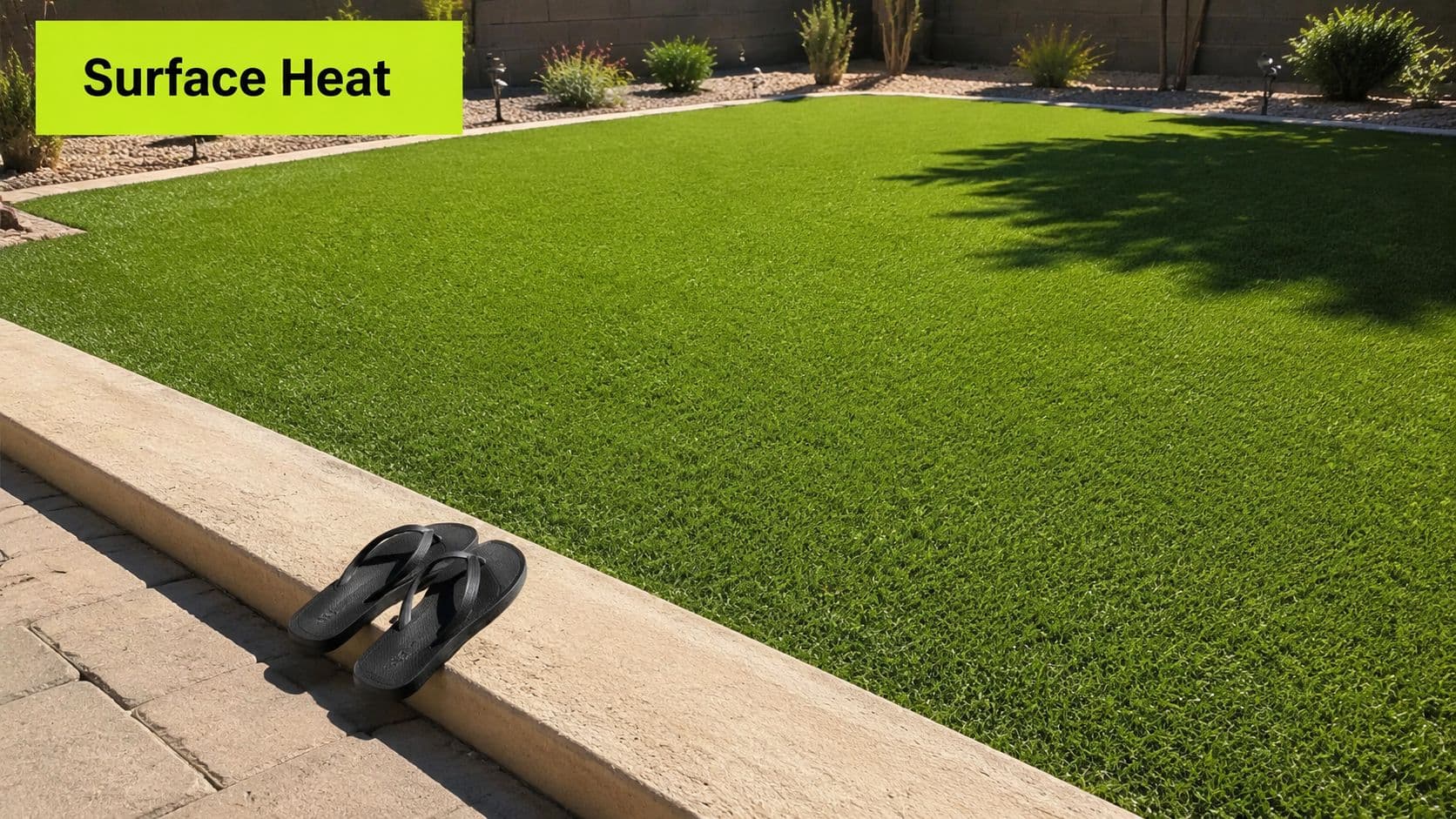
A backyard can look perfect at 11 a.m. and feel unusable by 2 p.m. if the turf is in full sun.
Heat is one of the biggest practical drawbacks with artificial grass. Synthetic fibers and infill hold heat differently than living turf, so the surface can become uncomfortable for bare feet, pets, and anyone sitting or playing close to the ground. That matters more than the showroom sample. A small patch near a pool, dog run, or play area can become the hottest part of the yard during the hours people want to use it.
I usually tell homeowners to judge turf by peak summer conditions, not spring photos. In hot, sunny yards, the question is not whether the turf will warm up. It will. The question is whether the space will still function the way your family uses it.
How to reduce the problem
Product specs help with durability, but layout does more to control comfort. If heat is a concern, design the yard around use patterns first.
- Keep turf out of full-sun gathering zones: Save natural grass, decking, pavers, or gravel for areas where kids play barefoot or people lounge for long periods.
- Use shade on purpose: Trees, pergolas, umbrellas, and shade sails can make a noticeable difference during the hottest part of the day.
- Limit turf to problem spots: Side yards, pet runs, narrow strips, and shaded sections are usually better candidates than wide open sun-exposed lawns.
- Test the plan before installation: OutdoorBrite lets you preview turf with nearby trees, structures, and hardscape so you can compare a full lawn against a smaller targeted installation. For broader options, review OutdoorBrite's guide to lawn alternatives.
The main mistake is treating turf as a surface choice only. It is also a heat-management decision.
Turf that photographs well at noon can still be too hot for daily use in midsummer.
3. Environmental Impact and Non-Biodegradable Materials
Artificial turf changes the kind of maintenance a yard needs, but it does not remove environmental trade-offs. A living lawn uses water, fertilizer, fuel for mowing, and sometimes herbicides or pesticides. Turf cuts much of that ongoing input. It also replaces a living surface with a manufactured one that will eventually need to be removed and discarded.
That is the part homeowners need to weigh clearly.
The University of Illinois Extension notes that synthetic turf avoids mowing, fertilizing, aerating, and reseeding, and it can reduce water use in applications where natural grass struggles without regular irrigation. The same review also points out that some turf systems use recycled tire material, which supporters cite as one way to reuse waste in the product stream, according to University of Illinois Extension on synthetic and natural athletic turf.
The downside is material lifespan and disposal. Turf is still a plastic-based product. It does not break down like grass, and once it wears out, replacement usually means hauling out rolls of backing, infill, and base materials. Some homeowners are comfortable with that trade if they are solving a serious irrigation or wear problem. Others would rather reduce lawn area without covering the yard in synthetic material.
In practice, the best answer is often selective use. Install turf where natural grass consistently fails, such as a dog run, a narrow side yard, or a shaded strip, then use planting beds, mulch, gravel, or groundcovers elsewhere. That approach usually lowers the environmental compromise and gives the yard a more natural balance.
This is also where planning matters before installation. OutdoorBrite helps homeowners compare a full-turf layout with a mixed design so they can see how much synthetic surface they need, if any. For side-by-side ideas, start with OutdoorBrite's guide to lawn alternatives.
4. Installation Costs and Long-Term Financial Investment
Artificial turf is usually a budget shock at first. The material itself typically runs from $5 to $20 per square foot, with installation adding another $3 to $12 per square foot, based on OtO Lawn's cost breakdown for artificial turf. Once base prep, drainage, edging, and labor are included, the project quickly moves into serious-money territory.
For sports fields, the numbers are even sharper. The University of Illinois Extension notes that synthetic field installations often exceed $1 million, and one soccer field comparison put synthetic at $1.4 million versus $690,000 for natural grass, with the lifetime prorated gap narrowing to less than $15,000 over the expected lifespan. That's a useful reminder that upfront price and lifetime value aren't the same thing.
When the math works
For a homeowner, the financial question is simpler. Will you stay in the house long enough to benefit from lower water and maintenance needs, and are you solving a real problem that natural grass hasn't solved well? If the yard is constantly failing because of pets, shade, wear, or watering restrictions, turf can be easier to justify.
If you're unsure, use OutdoorBrite before you call installers. Test a full-turf yard against a hybrid layout. Often, the smarter investment is turf only in the dog run, side yard, or high-traffic zone, with the rest handled through planting and hardscape.
- Get multiple bids: Turf pricing varies heavily by excavation, drainage complexity, and site access.
- Budget for the full system: Base prep and drainage matter as much as the visible grass.
- Avoid over-installing: A smaller, targeted turf area often delivers most of the maintenance benefit at a lower total cost.
5. Safety Concerns for Children and Pets
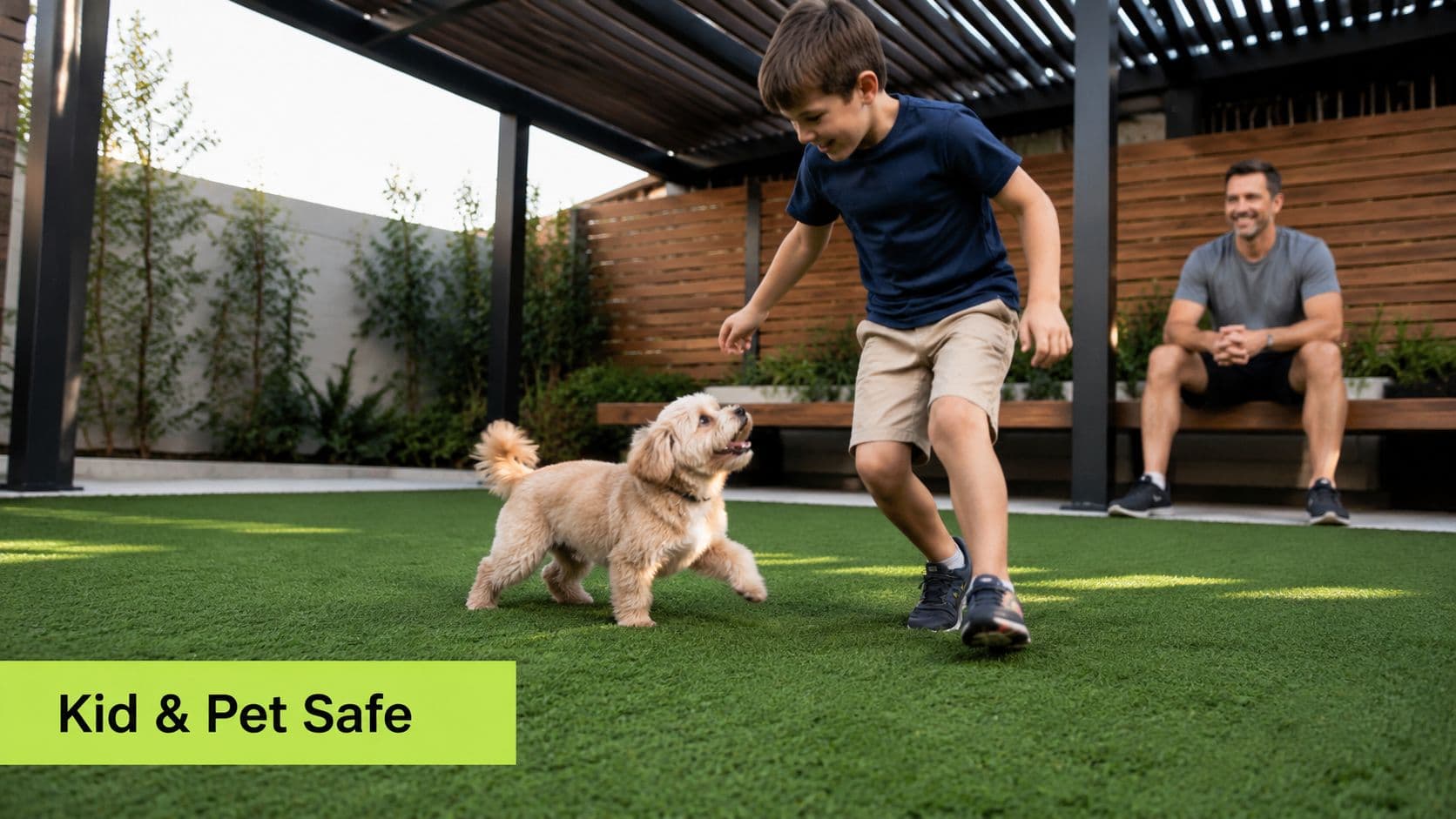
A common homeowner scenario is simple. The yard needs to handle soccer, bare feet, a dog that runs hard, and a parent who does not want mud tracked into the house. Artificial turf can solve some of that, but safety depends less on the sales sample and more on the full system under it.
For home use, the biggest concerns are surface abrasiveness, heat at skin level, and how well the turf handles pet waste. A soft-looking product can still feel rough during a slide. A turf area that drains poorly can trap odors and create a cleanup problem fast. Dogs also react differently than people do because they spend more time in direct contact with the surface through their paws and body.
Research on synthetic playing surfaces has raised ongoing questions about injury patterns and skin-contact issues, especially around abrasions and infection risk after turf burns, according to the American Academy of Pediatrics discussion of athletic injuries on synthetic turf. A backyard is not a football field, but the lesson carries over. Contact matters.
Family test: If kids will play barefoot or the dog will use the area every day, inspect samples with your hands, ask how the surface drains, and check the temperature in full afternoon sun before you buy.
The safest residential layouts usually avoid full-yard replacement. I often recommend keeping turf in the highest-wear zone, then pairing it with shaded planting areas, mulch beds, or hardscape where kids and pets can cool off and rest. That gives you easier maintenance without forcing every activity onto one synthetic surface.
Planning helps here. A landscape ai design mockup lets you test a hybrid yard before installation, so you can place turf where durability matters, keep natural or shaded areas where comfort matters, and reduce the risk of paying for the wrong layout.
For pet owners, a purpose-built layout helps more than a blanket lawn replacement. Many families do better with a mixed yard that includes shade, rinsable turf, and non-turf zones for rest and play. If that's your priority, this guide to designing pet-friendly yards can help you think through practical layouts before you commit.
6. Aesthetic Limitations and Artificial Appearance
A turf sample can look great in your hand and still look wrong once it covers 800 square feet. That is the aesthetic risk homeowners often underestimate.
Artificial turf tends to look most convincing in contained areas such as dog runs, side yards, putting greens, or small play zones. In a front yard or a broad open lawn, the uniform color, repeated blade pattern, and clean edges are easier to spot. The more visible the area, the more the installation depends on design restraint and product quality.
How to make it look better
The best results usually come from using less of it.
I recommend treating turf as one material in the yard, not the whole visual story. Planting beds, boulders, stepping stones, mulch, trees, and varied edging help break up the surface so the eye does not read one uninterrupted sheet of green. Seam placement matters too. Poor seams are one of the fastest ways to make a new install look artificial, especially in afternoon light.
Premium turf usually holds color better over time, but long-term color is only part of the picture. What makes turf look believable is a mix of blade shape, pile height variation, muted tones, and how well the surface fits the style of the house and surrounding plants. A modern home with structured hardscape can carry synthetic turf more convincingly than a cottage-style yard with loose, natural planting.
This is one of the easiest parts of the decision to test before spending money. OutdoorBrite lets you compare full-turf layouts against mixed options on your actual property photo, so you can see whether turf improves the yard or makes it feel too manufactured. If you want to check that before installation, use OutdoorBrite's landscape ai design tool to compare a full replacement with a hybrid plan that keeps real planting where the yard needs texture and softness.
7. Drainage Issues and Water Management Problems
A good turf installation drains cleanly. A bad one smells, puddles, shifts, or fails early. Most homeowners focus on fiber color and blade shape, but the success of the project usually depends on what's under the surface.
That's why drainage should be treated as a design issue, not just an installation detail. Clay soil, a high water table, roof runoff, low spots, and pet use all change what the base needs to do. Turf laid over poor grading can trap water and create a yard that looks neat from a distance but performs badly in real weather.
Don't treat base work as optional
Before choosing a layout, it helps to understand how water already moves through the yard. OutdoorBrite can help you visualize where turf should stop and where gravel, drains, or planting zones should take over. That often leads to a better hybrid plan than wall-to-wall synthetic grass.
Here's a useful walkthrough on drainage and install prep:
One practical note on labor and upkeep comes from the University of Illinois Extension. A 2008 study cited there found synthetic turf required 375 hours of annual labor at a cost of $6,000, compared with 250 hours and $4,000 for natural turf in that setting, even though synthetic eliminated mowing and several traditional maintenance tasks. That's a reminder that “low maintenance” doesn't mean “no maintenance,” especially when cleaning, grooming, and drainage issues enter the picture.
8. Durability, Wear Patterns, and Replacement Timelines
Turf doesn't wear out evenly. It fails where people and pets use it hardest. The dog's bathroom corner, the shortcut from patio to gate, and the patch under a soccer goal will age first, even when the rest still looks fine.
That's why lifespan claims should be treated as broad ranges, not guarantees. One source says artificial turf typically lasts 20 years under normal traffic conditions, with shorter life in high-use areas and fading resistance in UV-stabilized varieties, according to this video summary of artificial turf lifespan and wear. Wirecutter gives a more conservative view, noting that lifespan is often cited as ten years or less depending on climate and maintenance.
Plan for wear before it shows up
The best way to extend appearance is smart placement. Don't force turf to handle every activity in the yard if pavers, mulch, decomposed granite, or a dedicated path would absorb the abuse better. Design traffic patterns on purpose.
The market itself shows why durability matters. Grand View Research projects the global artificial turf market will grow from USD 7.3 billion in 2025 to USD 13.7 billion by 2033, at a projected CAGR of 8.3%, with nearly one-third of the market now tied to landscaping rather than sports, according to Grand View Research on artificial turf market growth. More homeowners are buying in, but that also means more people are learning the same lesson later. Turf is durable, not indestructible.
If a section of yard already gets hammered by dogs, bikes, or constant foot traffic, assume that area will age first and design for replacement access from day one.
Artificial Turf: 8-Point Pros & Cons Comparison
A table like this is most useful before you call installers, not after. It helps narrow the key decision. Full-yard turf, a partial turf zone, or no turf at all. It also gives you a clearer starting point for testing ideas in OutdoorBrite so you can compare shade, hardscaping, plant beds, and turf placement before money gets committed.
| Item | Implementation Complexity 🔄 | Resource Requirements ⚡ | Expected Outcomes ⭐📊 | Ideal Use Cases 📊 | Key Advantages ⭐ | Major Concerns / Trade-offs 💡 |
|---|---|---|---|---|---|---|
| Low Maintenance and Year-Round Green Appearance | Medium, professional install recommended | Low ongoing upkeep; moderate upfront cost | ⭐ Consistent green look through every season; long service life with proper installation | Busy homeowners, dry climates, rooftops, rental properties | ⭐ Cuts mowing, watering, and routine lawn work | 💡 Higher upfront spend, less natural character, eventual replacement |
| Heat Absorption and Surface Temperature Concerns | Low baseline; higher if adding cooling measures or shade | May require lighter turf, cooling products, or shade structures | ⭐📊 Can run much hotter than the air temperature; mitigation can help but does not eliminate heat | Shaded play areas, limited-use zones, sites with a heat plan | ⭐ Heat can be reduced with design choices and material selection | 💡 Barefoot use can become uncomfortable or unsafe in summer; mitigation adds cost |
| Environmental Impact and Non-Biodegradable Materials | Medium, especially if comparing eco options or mixed-material designs | Low water and chemical use during ownership, but significant manufacturing and disposal impacts | ⭐📊 Reduces irrigation and lawn-care inputs, but creates long-term plastic waste | Water-restricted properties weighing practical trade-offs; hybrid yard designs | ⭐ Lowers water use and reduces mowing-related upkeep | 💡 Non-biodegradable materials, disposal concerns, possible infill migration |
| Installation Costs and Long-Term Financial Investment | High, site prep, base work, and pro installation matter | High upfront cost; lower routine lawn-care spending over time | ⭐📊 Cost stability can improve over time, depending on how long the homeowner stays and what natural grass would have cost | Long-term homeowners, commercial sites, areas with expensive water or difficult turf conditions | ⭐ Predictable upkeep and fewer recurring lawn service costs | 💡 Large initial investment, uncertain payback for short-term ownership, future replacement expense |
| Safety Concerns for Children and Pets | Medium, product choice and maintenance standards matter | Requires safe infill, drainage, shade, and regular cleaning | ⭐📊 Avoids pesticide exposure from traditional lawn care, but heat and hygiene still need active management | Families and pet owners who prioritize drainage, shade, and product selection | ⭐ Clean surface, fewer mud issues, no mowing or lawn chemicals | 💡 Heat, friction burns, bacterial buildup, and concerns around some infill types |
| Aesthetic Limitations and Artificial Appearance | Low to medium, better products and thoughtful layout reduce obvious seams | More realistic turf costs more; design effort is needed to blend with the surrounding yard | ⭐ Looks tidy from a distance; close-up appearance varies by product quality and installation | Homes that value a manicured look; utility areas; sports-focused spaces | ⭐ Uniform appearance in every season | 💡 Plastic sheen, visible pattern repetition, and a result that can look less convincing up close |
| Drainage Issues and Water Management Problems | High, grading and base construction need to be correct | Significant installation materials and technical skill; perimeter drainage may be needed | ⭐📊 Can drain well when built correctly; poor installation leads to pooling, odor, and cleanup problems | Sites with qualified installers and suitable soil conditions | ⭐ Keeps use areas cleaner than natural grass in wet periods | 💡 Drainage failures are expensive to fix; weak fit for heavy clay or high water-table sites without added work |
| Durability, Wear Patterns, and Replacement Timelines | Medium, traffic planning and material quality affect lifespan | Premium products last longer; all systems need some brushing, infill upkeep, and repair over time | ⭐📊 Holds up well in many yards, but traffic lanes and pet zones usually age first | Sports areas, pet runs, side yards, and high-use spaces with a replacement plan | ⭐ Strong wear resistance compared with natural grass in difficult spots | 💡 Matting, infill loss, seam issues, and eventual replacement costs |
OutdoorBrite adds value here because the hard part usually is not understanding the list. It is deciding which trade-offs are acceptable on your property. A visual test can show whether a smaller turf zone, added shade, or a mixed yard plan solves the problem better than a full artificial lawn.
Your Final Decision Visualize Before You Invest
Artificial turf can be a smart solution. It can also be an expensive mistake. The difference usually comes down to whether you're solving a specific problem or chasing a low-maintenance ideal without thinking through heat, drainage, appearance, and long-term wear.
The strongest case for turf is practical. You want a usable yard without constant mowing and watering. You have areas where natural grass keeps failing. You need a cleaner surface for pets, a polished look in a difficult side yard, or a year-round green lawn in a dry climate. In those situations, synthetic grass can absolutely earn its place.
The weaker case is emotional overcorrection. A homeowner gets tired of lawn care and assumes a full-property turf conversion will fix everything. Then the yard runs hot in summer, looks more artificial than expected, or drains poorly because the install focused on the visible surface instead of the base. Those are expensive regrets.
A balanced design often works better than an all-or-nothing one. Use turf in the places where it clearly outperforms grass. Keep living planting where softness, cooling, habitat, and natural character matter most. Add shade where heat will be an issue. Build drainage into the plan before the first roll of turf shows up. That's how you get the benefits without inheriting every downside at once.
OutdoorBrite is valuable because it turns this from a guess into a visual decision. You can upload your yard, test turf placements, compare them with gravel, planting beds, hardscape, and mixed layouts, and see how the space changes under different lighting and seasonal conditions. That matters when one of the biggest turf mistakes is installing too much of it in the wrong place.
If you're weighing artificial turf pros and cons, don't start with the installer. Start with the layout. See what the lawn looks like beside a pergola, where the dog run should go, whether the front yard feels too uniform, and where hardscape would carry traffic better than synthetic grass. Once you can see the result on your own property, the right decision usually gets much clearer.
OutdoorBrite makes that planning step fast and practical. Upload a photo of your yard to OutdoorBrite, test artificial turf alongside other low-maintenance options, and generate photorealistic redesigns in seconds so you can invest with confidence instead of guessing.
See your yard reimagined
Start creating