10 Best Flowering Shrubs for a Stunning Garden in 2026
Ready to transform your yard? Discover the 10 best flowering shrubs for continuous color, from low-maintenance options to fragrant classics. Get expert tips!
Your yard probably isn't failing because the lawn looks bad. More often, it feels flat. There's no structure in winter, no burst of color when you pull into the driveway, and no planting that makes the space feel finished. That's where flowering shrubs earn their keep.
They do more than fill beds. The best flowering shrubs add shape, repeatable color, privacy, and problem-solving power. Some handle partial shade. Some carry a border through summer. Some announce spring before perennials wake up. A good shrub plan also saves work because you're building the backbone of the garden, not just decorating it for one season.
This list keeps the focus on shrubs that help homeowners make design decisions. Each one has a clear use case, a few honest trade-offs, and practical notes for placement. You'll also see where a visualization tool such as OutdoorBrite can help, especially when you're trying to judge scale, seasonal color, or whether a planting will overwhelm the front of the house.
1. Hydrangea The Statement Bloomer
Pull into a front yard with a well-placed hydrangea in bloom and the whole planting feels finished. Few shrubs create that much visual weight so quickly, which is why I use hydrangeas when an entry bed, front walk, or mixed border needs a clear focal point.
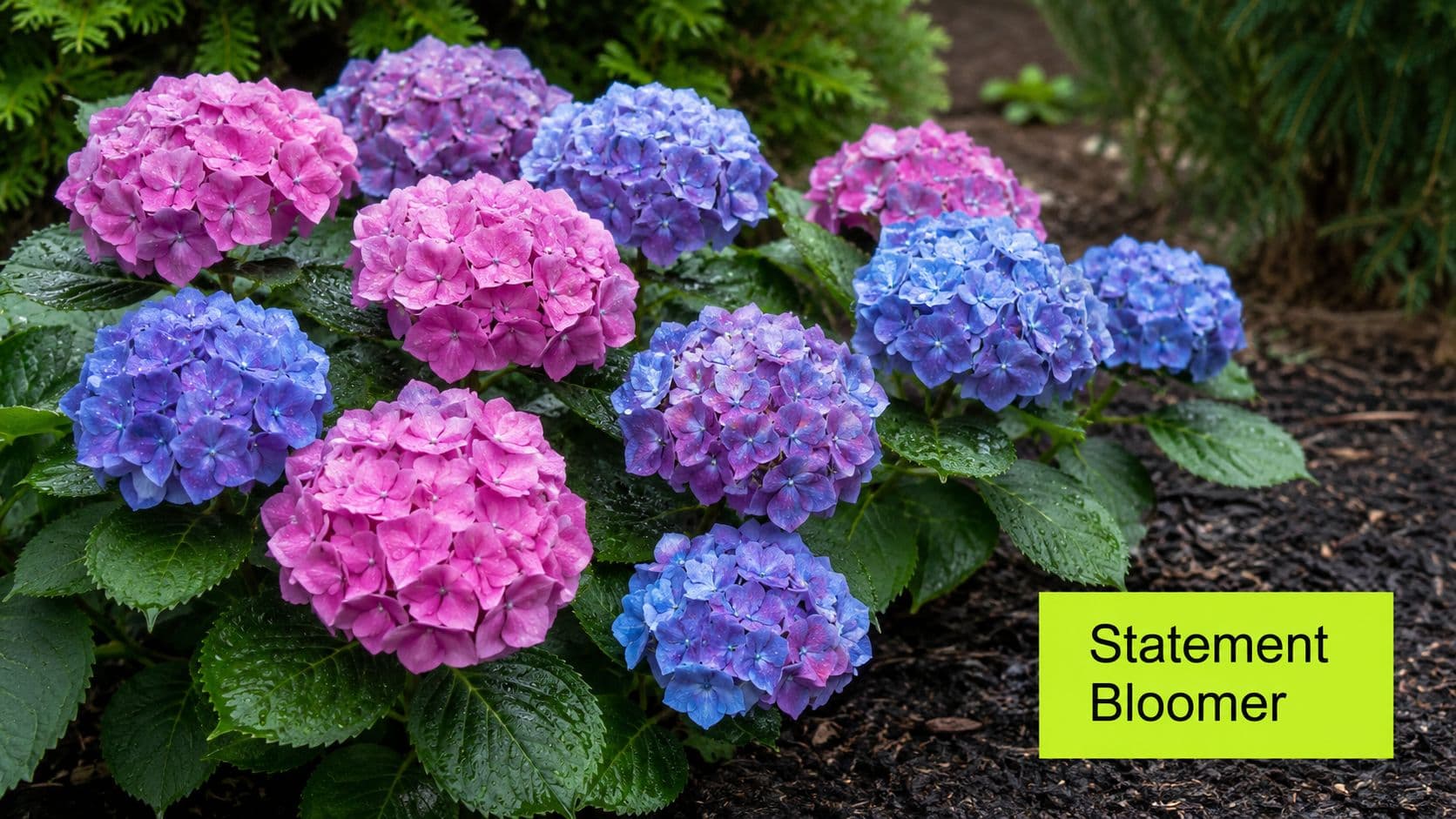
Bigleaf and panicle hydrangeas also earn their keep because they hold color for a long stretch compared with many flowering shrubs. The trade-off is placement. In the wrong spot, they scorch, flop, or dry out faster than homeowners expect.
Use them where the blooms can be seen up close and from the street. They are especially effective near an entry, at the turn in a walkway, or as the broad-leaf anchor in a border that has too many fine-textured plants. They also fit naturally into curb-appeal plantings, which is why they often show up among the plants to boost home value.
Best placement and care
Morning sun with afternoon shade suits many hydrangeas, especially in hot climates. Panicle types handle more sun than bigleaf hydrangeas, so matching the variety to the site matters more than forcing one type into every bed. Soil should stay evenly moist but still drain well. A mulch layer helps keep roots cooler and cuts down on stress in midsummer.
A simple field test works well here. If the plant wilts hard every afternoon and recovers at night, the site is usually too hot, too dry, or both.
Hydrangeas also need room. Garden centers sell them small, but mature plants can dominate a foundation bed if spacing is too tight. I like to mock up hydrangea layouts before planting, especially near the house, because one oversized shrub usually looks intentional and three crowded together usually look like a correction waiting to happen. OutdoorBrite helps with that step by letting you compare size, bloom color, and spacing before you dig.
2. Butterfly Bush (Buddleia) The Pollinator Magnet
If your priority is movement and wildlife activity, butterfly bush does that job quickly. The long flower panicles pull in butterflies, bees, and hummingbirds, and the upright habit gives a border some height without needing a hedge.
This is a strong fit for a sunny side yard, mailbox bed, or informal pollinator strip along a fence. It's less convincing in a tight, formal foundation planting because the habit can get loose if you don't prune it hard.
What works and what doesn't
Plant it in full sun. Then prune it down hard in early spring to keep the plant dense and flowering low enough to enjoy. Weekly deadheading also helps, and deadheading is a proven maintenance move that extends reblooming in shrubs including hydrangeas and weigela by redirecting energy away from seed production, as noted earlier.
- Use it for vertical color: It breaks up a low planting of mounded shrubs and perennials.
- Skip it near wild areas: In some regions, invasiveness is a real concern.
- Pair it with simpler foliage: Too many loud companions make the planting chaotic.
OutdoorBrite can help you test a wildlife-garden style before you plant. That matters with butterfly bush because the flower spikes are dramatic in bloom but plain when the plant is cut back.
3. Lilac The Fragrant Classic
Lilac earns its spot for one reason that never goes out of style. Fragrance. A mature lilac near a porch, gate, or patio changes how a garden feels in spring.
It's best in traditional settings, cottage-style borders, and older homes where the architecture can hold its own against that nostalgic look. In a sharp modern layout with clipped evergreens and gravel, lilac can feel out of place unless you keep the palette restrained.
Design notes for smaller yards
Older lilacs can get rangy, so spacing matters. Give them room for airflow and don't cram them against the house. If the site stays damp or shaded, flowering suffers and mildew pressure usually follows.
Put lilacs where people pass by them, not where they're only viewed from a window.
OutdoorBrite's spring settings are helpful for lilac planning because bloom season is the payoff. You want to judge whether that brief but memorable display belongs near the entry sequence, where it can carry the whole front garden for a few weeks, or deeper in the yard as a destination plant.
4. Roses The Timeless Bloomer
Roses cover a lot of ground, so the smart move is choosing the right type for the job. Shrub roses for easy structure. David Austin English roses for a softer cottage look. Canadian roses where winters bite. Knock Out roses where low maintenance matters more than fragrance.
Roses are also one of the most common flowering shrubs in the United States, with over 150 million bushes planted annually across residential and commercial settings, according to SKH's guide to flowering shrubs.
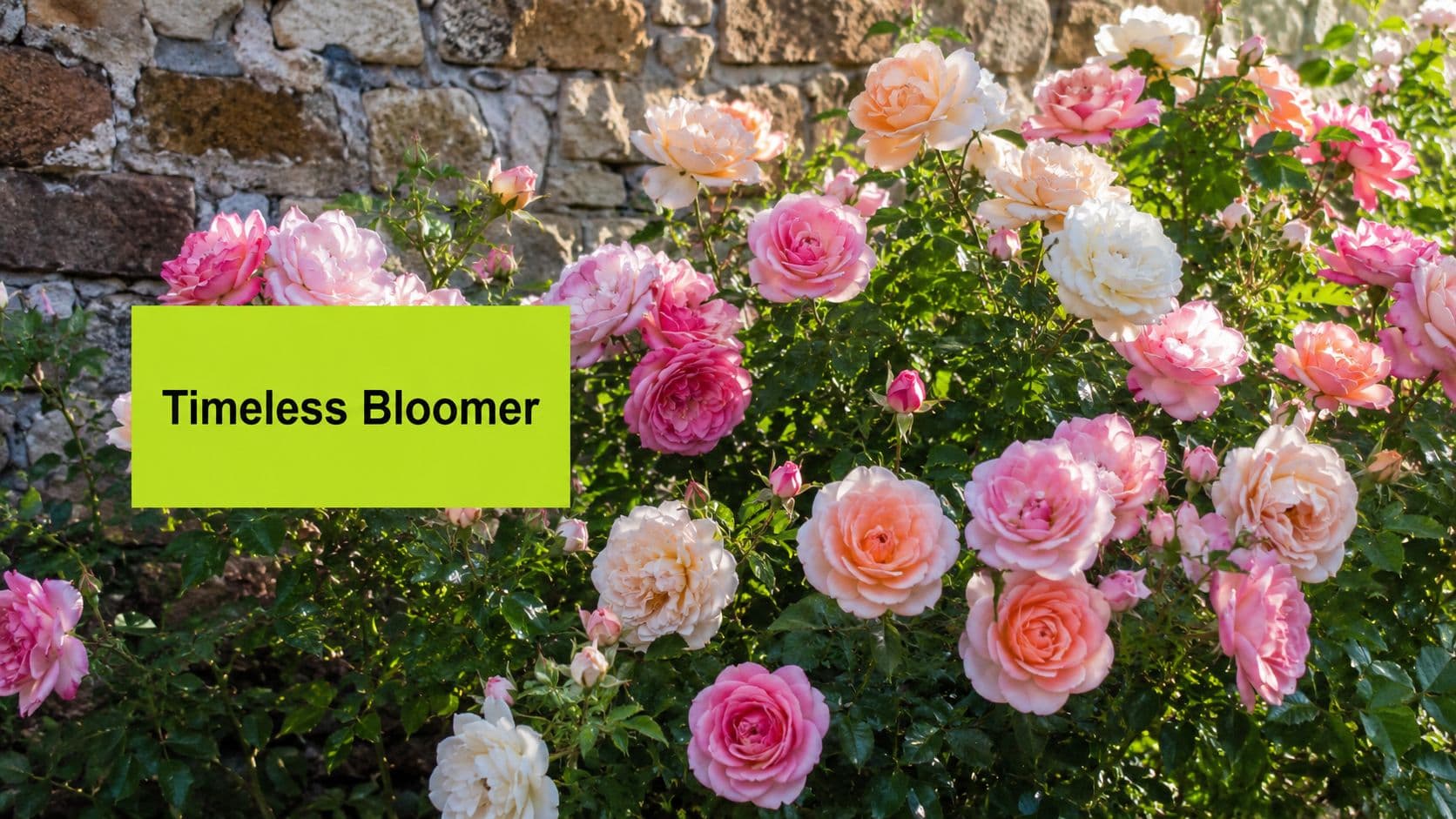
For front yards, Knock Out still deserves attention. It blooms from late spring until the first hard frost and can provide up to 9 months of color while maturing to 3 feet tall by 4 feet wide, based on Garden Goods Direct's flowering shrub roundup.
How to keep roses rewarding
Roses need sun. They require at least 6 hours of direct sun to bloom well, and that's one rule I wouldn't try to bend. They also improve with steady deadheading and mulch, especially in hot sites where soil dries out fast.
A quick visual can help with color selection before you buy:
OutdoorBrite's palette tools are useful for roses because color mistakes are common. A pink-and-peach rose can look elegant against limestone and completely wrong against red brick.
5. Weigela The Easy Summer Bloomer
Weigela is one of the easiest shrubs to recommend to new gardeners because it gives a lot back without asking for much. It flowers reliably, fills in quickly, and doesn't need the constant fuss that roses or camellias sometimes do.
This is a good shrub for the homeowner who wants color in a mixed border but doesn't want a formal garden routine. It's also useful in rentals or starter homes where the budget goes toward broad impact first.
Where it shines
Weigela does best in full sun to partial shade, and it looks strongest when massed in twos or threes instead of used as isolated dots around the yard. Prune after flowering if it needs shaping, and keep air moving around the plant.
A practical use case is the side of a driveway where heat bounces off pavement and many softer plants struggle. Weigela handles that kind of ordinary suburban exposure well once established. OutdoorBrite is handy here because fast-fill shrubs can look undersized at planting and oversized by year three.
6. Camellia The Winter Elegance
Camellias solve a design problem most gardens have. Winter emptiness. Their glossy evergreen foliage gives structure all year, and the flowers arrive when many borders are otherwise quiet.
They're especially valuable on shaded property lines, entry paths with filtered light, and courtyards that need a calmer, more refined look. If your style leans formal, camellias fit naturally. If your style is cottage-garden loose, they can still work, but they need softer companions around them.
Smart siting matters
Camellias prefer partial shade and acidic soil. They also appreciate shelter from harsh wind and hot afternoon sun. If you force them into an exposed western bed, they'll tell you quickly that it was a bad idea.
For homeowners trying to create year-round structure, OutdoorBrite plant recommendations are useful for pairing camellias with other shrubs that won't leave the garden empty outside bloom season.
A camellia is rarely the loudest shrub in the yard. It's often the one that makes the whole composition feel finished.
7. Forsythia The Spring Herald
Few shrubs announce spring as clearly as forsythia. It flowers on bare branches in early spring, and that yellow reads from a distance in a way softer colors don't.
Forsythia is recognized as a top spring-flowering shrub for early color, and it needs only 6 hours of sun for strong bloom density, according to Proven Winners on low-maintenance front-yard shrubs.
Best use in a real yard
Use forsythia where you want a seasonal jolt. Along a fence line, at the back of a mixed border, or in an informal screen, it does exactly what it's supposed to do. Near a very formal front entry, though, it can feel wild unless you commit to pruning.
It's also one of the lower-maintenance shrubs for deer-prone areas, and that practical advantage matters more than people think. OutdoorBrite's spring view can help you test whether that bright yellow is energizing the design or overpowering everything around it.
8. Azalea The Shade Garden Specialist
Azaleas remain one of the safest choices for flowering color in partial shade. When a homeowner says, “Nothing blooms under those trees,” azalea is often part of the fix.
They're best used in woodland-style plantings, foundation beds with morning light, and layered borders where a tree canopy filters the sun. The color range gives you flexibility, but the strongest designs usually limit the palette instead of mixing every available shade.
The trade-off to understand
Azaleas want acidic, well-drained soil. That means they're not a plant to drop into any random hole and hope for the best. In heavy, wet soil, they decline fast.
There's also a broader design gap worth noting. Many drought-tolerant blooming shrubs still demand full sun, and one curated review found that 78% of popular drought-tolerant bloomers such as lavender, rosemary, and Cistus require full sun, leaving fewer obvious options for dry partial shade, according to Gardenia's guide to drought-tolerant blooming shrubs. Azaleas aren't the answer to every dry-shade site, but they're often better suited to part-shade design than the usual sun-loving shortlist.
9. Spiraea The Delicate Bloomer
A front bed can look crowded fast, especially once roses, hydrangeas, and evergreen structure plants all start competing for attention. Spiraea solves that problem. It brings flower and texture without adding visual weight.
I use it where a planting needs a softer edge, especially in cottage-style borders, along foundations, or between larger shrubs and mounded perennials. The fine branching and smaller blooms help a bed feel layered instead of packed. That makes spiraea one of the better use-case shrubs in this list for homeowners who want color with less fuss and fewer pruning mistakes.
Why maintenance matters here
Spiraea is forgiving, but the type matters. Spring-flowering varieties should be pruned right after bloom because they set buds on older wood. Summer-blooming forms can be cut back in late winter or early spring, which is one reason they fit low-maintenance plans so well.
Deadheading helps repeat bloom on many newer varieties and keeps the plant tidier through the season. Skip it if you want the easiest care routine, but expect the shrub to look looser by midsummer.
Before planting, use a garden ai design mockup to test spacing. Spiraea reads as delicate up close, yet it can disappear if it gets tucked behind heavier shrubs or lost in a bed full of coarse foliage. Place it where that fine texture can do some work. Near paths, in the front half of a mixed border, or repeated in drifts rather than planted as a lonely single.
10. Mock Orange (Philadelphus) The Fragrant Favorite
Mock orange is for gardeners who care as much about scent as bloom. The white flowers aren't flashy in the way hydrangeas or roses are, but the fragrance can define a late-spring garden.
This shrub earns its place near patios, benches, front walks, and windows that stay open in mild weather. It's less useful tucked at the back of a deep border where nobody experiences the scent.
Best design use
Let mock orange play a supporting role. Pair it with shrubs that carry color before or after it flowers, because its main moment is concentrated. Prune after bloom and remove older canes over time to keep the plant productive and attractive.
If you're deciding where fragrance will be enjoyed, a garden ai design mockup helps more than commonly assumed. Seeing a bench, a path, and a scented shrub in one view often changes where the plant belongs.
Plant mock orange for where you spend time, not for where you mow past it once a week.
Top 10 Flowering Shrubs Comparison
| Shrub | Implementation Complexity 🔄 | Resource Requirements ⚡ | Expected Outcomes ⭐📊 | Ideal Use Cases 💡 | Key Advantages |
|---|---|---|---|---|---|
| Hydrangea: The Statement Bloomer | Moderate 🔄, soil pH management, annual pruning | Moderate ⚡, consistent moisture, partial shade, soil amendments | High ⭐⭐⭐⭐ 📊, long bloom season, dramatic focal color | 💡 Shaded borders, specimens, containers, privacy screens | Large color-changing blooms, excellent for cut/dried arrangements |
| Butterfly Bush (Buddleia): The Pollinator Magnet | Low 🔄, regular deadheading and annual hard prune | Low ⚡, tolerates poor, dry soils; full sun | High ⭐⭐⭐⭐ 📊, strong pollinator attraction, long summer bloom | 💡 Pollinator gardens, cottage, xeriscape, quick-fill plantings | Rapid growth, very low maintenance; highly attractive to butterflies |
| Lilac: The Fragrant Classic | Low–Moderate 🔄, prune after bloom, ensure air circulation | Low ⚡, full sun, well-drained soil; cold-hardy | High fragrance ⭐⭐⭐⭐ 📊, intense but short spring display | 💡 Cottage gardens, fragrant borders, privacy hedges, entries | Strong fragrance, long-lived, classic spring appeal |
| Roses: The Timeless Bloomer | Moderate–High 🔄, routine pruning, pest/disease management | High ⚡, regular watering, feeding, full sun | Very High ⭐⭐⭐⭐⭐ 📊, continuous color, design versatility, fragrance | 💡 Formal rose gardens, mixed borders, containers, cutting gardens | Unmatched variety and fragrance; many disease-resistant options |
| Weigela: The Easy Summer Bloomer | Low 🔄, prune after flowering to prevent legginess | Low ⚡, adaptable soils, full sun to partial shade | Good ⭐⭐⭐ 📊, abundant summer blooms, attracts hummingbirds | 💡 Foundation plantings, mixed borders, quick-fill landscapes | Fast growth, very easy to grow, variegated foliage options |
| Camellia: The Winter Elegance | Moderate 🔄, requires acidic soil and winter protection | Moderate ⚡, acidic, well-draining soil, consistent moisture, shade | High ⭐⭐⭐⭐ 📊, winter/early-spring blooms and evergreen structure | 💡 Shade gardens, winter interest plantings, entryways | Winter color when few plants bloom; long-lived evergreen form |
| Forsythia: The Spring Herald | Low 🔄, prune immediately after flowering | Low ⚡, hardy, adaptable to many soils | Medium–High ⭐⭐⭐ 📊, brilliant early spring color, short bloom | 💡 Early-season hedges, naturalized woodlands, background screens | Very early bright blooms, vigorous and low-maintenance |
| Azalea: The Shade Garden Specialist | Moderate 🔄, requires acidic soil and proper siting | Moderate ⚡, acidic, well-draining soil; consistent moisture | High ⭐⭐⭐⭐ 📊, abundant spring color in shade locations | 💡 Shade borders, woodland understory, containers on shaded patios | Best flowering option for shade; thousands of cultivars for variety |
| Spiraea: The Delicate Bloomer | Low 🔄, occasional pruning to prevent legginess | Low ⚡, adaptable to varied soils and light | Good ⭐⭐⭐ 📊, extended season across varieties; airy texture | 💡 Mixed borders, cottage gardens, low-water foundations | Versatile, low pest issues, adds light, feathery texture |
| Mock Orange (Philadelphus): The Fragrant Favorite | Low 🔄, prune after flowering; occasional rejuvenation | Low ⚡, hardy and adaptable; full sun to partial shade | High fragrance ⭐⭐⭐⭐ 📊, intense but brief late-spring scent display | 💡 Fragrant borders, entryways, cut-flower gardens | Outstanding orange-blossom fragrance; hardy with minimal care |
From Plan to Plant Your Flowering Garden Guide
You stand in the yard with three nursery pots, a tape measure, and a bed that looked bigger on Saturday than it does now. That is the moment good shrub plans usually go off track. The fix is simple. Choose each shrub by job first, then by flower.
Start with the use-case. Hydrangea works as a focal point near an entry or patio. Azalea earns its spot in bright shade where many flowering shrubs struggle. Butterfly bush fits open, sunny areas where pollinator activity matters more than tidy form. Spiraea and weigela are often the easier choice for homeowners who want reliable bloom without a demanding care routine. Grouping shrubs this way makes the list easier to use and prevents the common mistake of treating every flowering shrub as interchangeable.
Then study mature size with the house, windows, paths, and seating areas in mind. Camellias can look refined and balanced near an entrance, but they can feel too dense if the bed is shallow. Forsythia needs enough width to arch naturally. If it gets squeezed into a narrow strip, it turns into a pruning chore. Mock orange belongs close enough to enjoy the scent, but not where its brief bloom period leaves a gap in a highly visible spot.
Layering is what keeps a planting bed attractive after the peak flowers pass. Pair coarse shrubs such as hydrangea with finer textures from grasses or small-leaved perennials. Use evergreen form from camellia or other shrubs to hold the composition together in winter. A strong planting depends on foliage, branch structure, and spacing as much as bloom color.
Planting technique affects performance more than many homeowners expect. Dig a hole wider than the root ball, keep the shrub at the same depth it grew in the pot, and water thoroughly after planting so moisture reaches the full root zone. Light daily watering encourages shallow roots. Mulch helps hold even soil moisture and keeps roots cooler during heat, which supports better bud set and steadier flowering.
Pruning has to match bloom timing. Lilac, azalea, forsythia, and mock orange set next season's flower buds soon after they finish blooming, so prune them right after flowering if they need shaping. Hydrangea is more complicated because pruning time depends on whether the variety blooms on old wood, new wood, or both. That is one reason plant tags matter. Buying the right cultivar saves a lot of frustration later.
If your soil is poor or compacted, start with the basics in this homeowner's guide to soil prep.
I also recommend testing layout ideas before planting, especially when you are mixing shrubs with very different mature sizes and bloom windows. OutdoorBrite is useful for that. Upload a photo, try shrubs by category such as shade-tolerant, low-maintenance, or pollinator-friendly, and compare how the bed reads in spring, summer, and winter. That preview helps you catch crowding, weak focal points, and awkward gaps before you spend money or start digging.
OutdoorBrite makes shrub planning much easier when you're staring at a blank yard and second-guessing every choice. Upload a photo to OutdoorBrite, test flowering shrubs in different styles and seasons, and see a realistic layout before you buy plants or start digging.
See your yard reimagined
Start creating