8 Corner Yard Landscaping Ideas to Try in 2026
Transform an awkward spot with these corner yard landscaping ideas. Find inspiration for seating nooks, water features, and low-maintenance gardens.
That awkward corner of your yard probably has a job already. It catches the spare pots, the hose you meant to coil, the patchy grass that never fills in, and the one shrub that looks unhappy no matter what you do. Most homeowners have a corner like that. It sits in view, but it doesn't feel designed.
The good news is that corners are easier to fix than wide-open spaces because they already have definition. Two edges give you a natural frame, which makes them ideal for planting, screening, seating, or a single strong focal point. The best corner yard landscaping ideas don't try to hide the shape. They use it.
Below are eight practical ways to turn a neglected edge into something purposeful. Each one works as a mini-blueprint, with materials, trade-offs, and build tips that help you avoid the usual mistakes. If your broader goal is to add curb appeal to your home, a cleaned-up corner often makes a bigger difference than people expect.
1. Tiered Garden Beds for Corner Elevation
A flat corner can look accidental. Tiered beds fix that fast because they add height, structure, and a clear planting hierarchy. They work especially well where the yard pinches inward or where you need more visual weight near a fence, garage wall, or side yard turn.
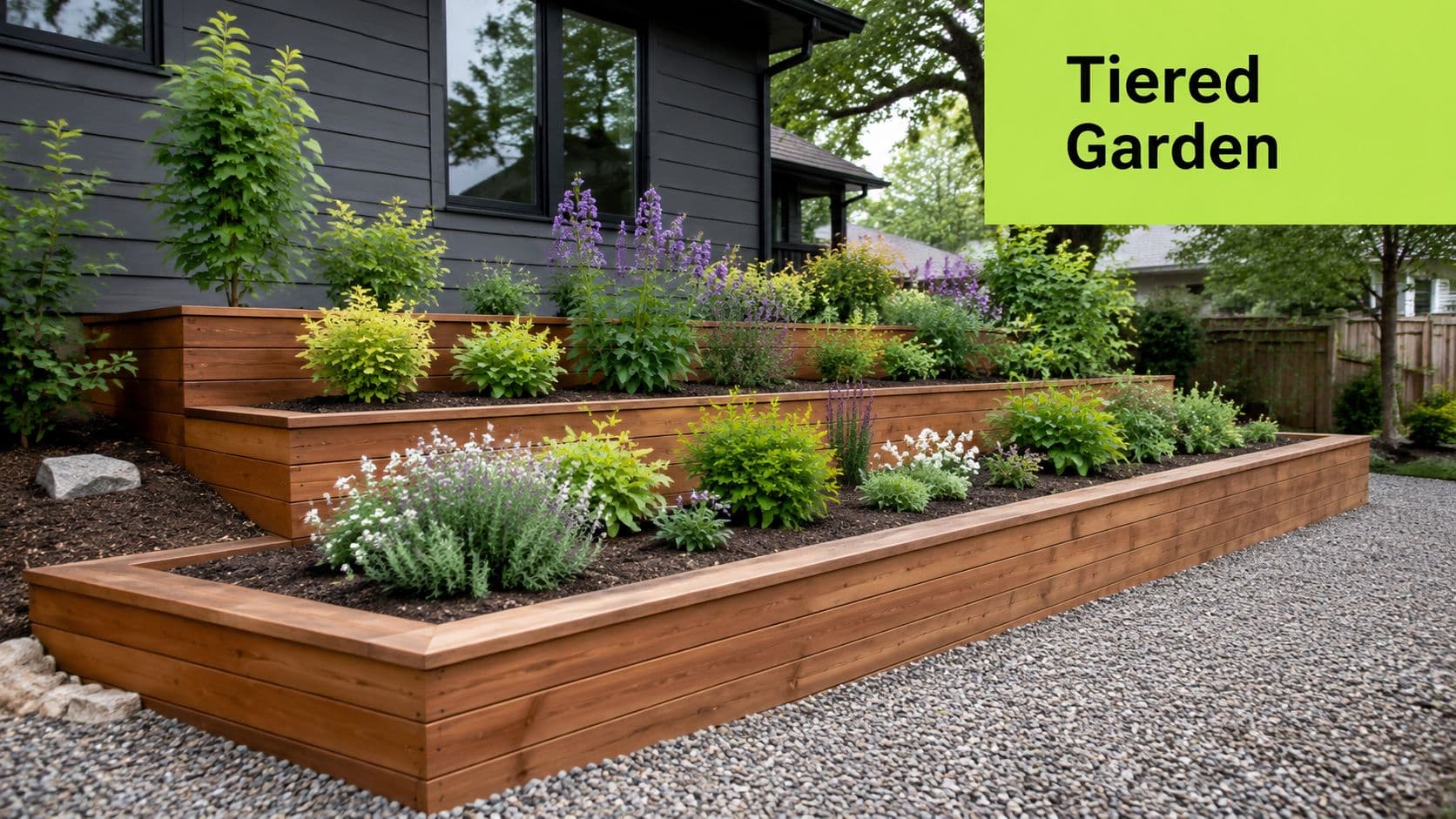
For most DIY builds, cedar, composite boards, and stone block are the safest material choices. Cedar is easier to cut and move. Stone looks more permanent but takes better base prep. I'd start with two or three levels, not more. Once tiers get too tall, the corner starts to feel crowded and the wall pressure becomes harder to manage.
What works best
Use the tallest plants in the back tier, mounding plants in the middle, and spillers or low edging plants at the front. In a sunny corner, succulents, salvias, and ornamental grasses usually read clean and intentional. In a milder, greener look, perennials and dwarf shrubs create a softer stacked effect.
- Best materials: Untreated cedar, composite lumber, or retaining wall block
- Smart add-ons: Ground fabric between levels and drip irrigation lines before filling with soil
- Common mistake: Mixing thirsty plants with dry-climate plants in the same tier system
Practical rule: If the tier layout looks complicated on paper, it'll feel worse once built. Test simple shapes first with ai landscape design software.
A good real-world model is the compact townhouse corner where ground space is limited but vertical layering adds presence. This approach doesn't work as well in corners with major tree roots close to the surface, because excavation and root competition make the build harder.
2. Corner Pathways and Hardscaping
Sometimes the best fix isn't more planting. It's circulation. A corner that people walk past should guide movement, not interrupt it. Pathways give a leftover edge a reason to exist.
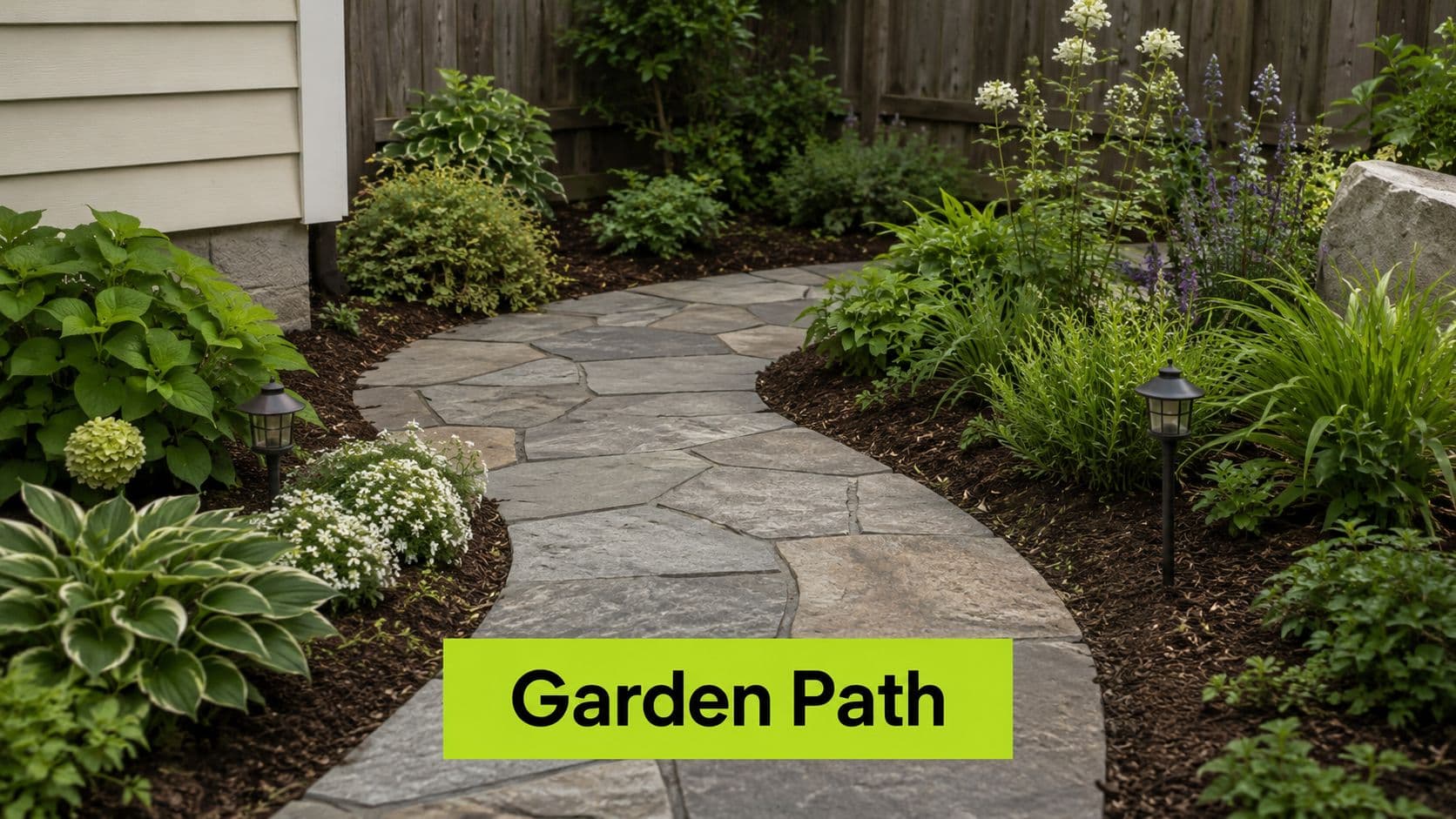
A meandering flagstone path suits cottage gardens and looser planting styles. Large-format pavers fit modern homes better. Gravel is budget-friendly and forgiving, but it migrates unless you edge it well. Decorative concrete is durable, though it can feel stark if the rest of the yard is soft and traditional.
Material choices and trade-offs
The path has to fit the job. A narrow stepping route feels fine beside a side yard border. A corner that leads to a gate, patio, or storage zone needs a more stable walking surface.
- For a relaxed look: Flagstone with groundcovers between joints
- For clean lines: Rectangular pavers with steel or aluminum edging
- For low cost: Compacted gravel over a firm base, with crisp borders to contain it
Drainage matters more than style. If water already sits in the corner, don't install flat pavers and hope for the best. Give the path a slight slope so runoff moves away from the house and doesn't pool near the edge.
Before committing to a surface, it helps to explore hardscape design ideas. If you're considering tile in a sheltered corner patio, this expert guide to outdoor tile selection is useful for comparing finishes and outdoor suitability.
Curves can make a corner feel larger, but only if the curve has a reason. Random bends look like layout mistakes.
3. Shade Trees and Understory Planting
A corner exposed to heat and glare often needs a canopy, not another row of shrubs. One well-placed shade tree can cool the feel of the entire yard and make the corner look established instead of newly planted.
The tree should match the scale of the house and the distance from structures. Corners near windows or walkways need a tree with enough clearance underneath, so you're not ducking branches later. I prefer trees that cast useful shade but still leave room for an understory of hostas, ferns, hellebores, astilbe, brunnera, or other shade-tolerant companions.
Layering the planting
Think in three layers. The tree sets the ceiling. Mid-height shrubs or bold perennials fill the body. Groundcovers or low clumps finish the base so bare mulch doesn't dominate the scene.
A Japanese maple with ferns can make a corner feel calm and refined. A broader shade tree with hostas and woodland perennials feels fuller and more traditional. In dry climates, substitute with species adapted to less irrigation and pair them with tougher understory plants that won't sulk in reflected heat.
- Do this first: Check mature size before planting
- Keep access open: Choose a branching height that won't block views or movement
- Avoid crowding: Leave room for air circulation between the tree and surrounding plants
A common mistake is placing the tree too close to the fence because the nursery container looks small. It won't stay small. Visualizing mature spread before planting saves a lot of future pruning and regret.
4. Corner Seating Nooks and Gathering Spaces
Some corners want to be used, not just admired. A seating nook turns dead space into a destination. It can be as simple as a bench tucked into planting or as built-out as a small paved pad with two chairs and a side table.
What makes this work is enclosure. Corners already feel protected, so they naturally support quiet seating. Add a backdrop like tall grasses, a slatted screen, or layered shrubs, and the space starts to feel like an outdoor room.
How to make it comfortable
Start with the experience. Do you want morning sun, afternoon shade, or a private spot for evening use? That answer should decide the location before you pick furniture. Weather-resistant materials such as teak, powder-coated metal, and composite are dependable because they age better than cheap softwood sets.
A small bistro setup works in a tight urban yard. A built-in bench can look custom, but it's less flexible if you later want to change the layout. Freestanding furniture is easier for renters or anyone still figuring out how the corner will be used.
If the seat faces a fence and nothing else, people won't use it much. Give the chair a view into the garden, toward a tree, or across the yard.
Lighting matters too. A low path light, a wall sconce, or warm string lighting can make a corner seating area feel intentional after sunset instead of forgotten.
5. Low-Maintenance Succulent and Xeriscaping Corners
If your corner gets strong sun and you're tired of watering it, stop fighting the site. Xeriscape planting is often the better answer. This is one of the most practical corner yard landscaping ideas because corners near fences and walls often run hot and dry anyway.
Succulents, sedums, agaves, ornamental grasses, and tough drought-tolerant shrubs bring strong shape with less upkeep than thirsty mixed borders. The look can be sculptural and modern, especially when you repeat plant forms instead of collecting one of everything.
What makes it succeed
Drainage is everything. If the soil holds water, amend it with coarse sand or gravel and avoid burying plant crowns under mulch. Newly planted succulents still need steady attention while they establish, but once rooted, this style usually asks for less from you than a flower-heavy bed.
The best layouts use restraint. A few agaves, clusters of echeveria or sempervivums, and gravel mulch often look better than a packed bed of tiny novelty succulents. If you want to understand the logic behind dry-garden planning, start with what is xeriscaping landscaping.
- Recommended materials: Gravel mulch, decomposed granite, boulders, and terracotta or concrete accents
- Best plant strategy: Group by water need so irrigation stays simple
- What usually fails: Dense planting in heavy soil with bark piled against stems
This style isn't ideal for every climate. In wet, cold zones, some succulent-heavy schemes struggle unless you choose hardy varieties and sharpen drainage aggressively.
6. Vertical Gardens and Living Walls
When a corner has almost no floor space, use the wall. Vertical gardens turn blank surfaces into planting area, and they soften hard angles better than almost anything else.
A simple trellis with climbing jasmine or clematis is often more realistic for DIYers than a full modular living wall. Wall-mounted planters can work for herbs, trailing ornamentals, or compact annual color, but they dry out quickly and need regular watering. That's the trade-off. They save footprint, but they demand consistency.
Here's an example that shows the idea in action:
Best uses for a vertical corner
A vertical treatment works especially well when the corner view is dominated by a fence, utility wall, or neighboring structure. Climbing plants disguise that backdrop and pull the eye upward. Espalier fruit trees can also work in the right climate if you want the corner to be both decorative and productive.
Before installing anything heavy, confirm that the wall or fence can handle moisture and load. Use a watering method you'll keep up with, whether that's drip irrigation or easy-access hand watering. If maintenance already slips in your yard, choose the simpler trellis route over a demanding panel system.
Living walls look impressive in photos. Trellised vines are what most homeowners maintain successfully.
7. Corner Water Features and Focal Points
A water feature can rescue a dull corner fast because it gives the eye somewhere to land. Even a compact fountain changes the feel of the space with sound, movement, and reflection.
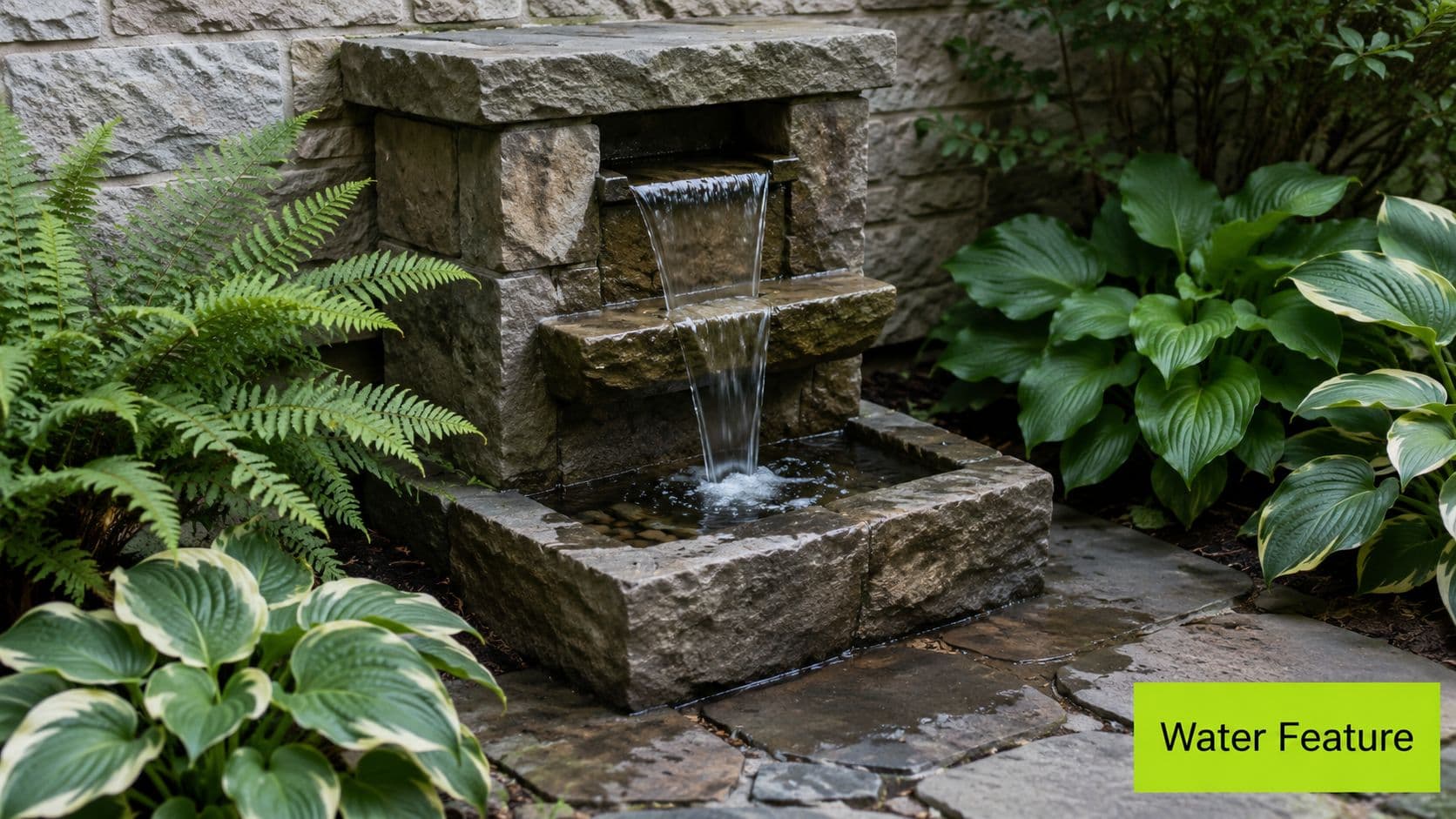
The key is proportion. A small corner needs a basin fountain, wall fountain, or birdbath-scale feature. A pond in a cramped edge often feels forced unless the whole yard supports that style. Modern homes handle clean geometric fountains well. Cottage and woodland gardens usually suit stone basins or softer, planted edges.
What to plan before buying
Water features need access, not just admiration. You'll need to refill, clean, and maintain them. If the pump is hard to reach or the cord path is awkward, that elegant idea becomes a nuisance.
Surround the feature with plants that support the mood without swallowing it. Ferns, hostas, iris, and moisture-tolerant perennials work in the right conditions. Add lighting if you'll see the corner at night. A lit fountain can become the strongest evening focal point in the yard.
- Best placement: Visible from indoors or from the main patio
- Most common error: Installing too close to messy overhanging trees that drop debris
- Worth doing: Build a simple maintenance routine before the feature goes in
This approach isn't for people who want a zero-maintenance yard. It is for people who value atmosphere and don't mind occasional upkeep.
8. Privacy Screening and Corner Enclosure Design
Some corners feel unusable because they're too exposed. Screening fixes that by creating refuge. Once the corner feels sheltered, it can support seating, a fountain, a fire feature, or a planting display much more convincingly.
Privacy can come from living material, built material, or both. Tall shrubs and vines soften the space, but they take time. Slatted fencing, panels, and arbors work right away. In most yards, the best result comes from combining them.
Fast privacy versus good-looking privacy
A solid fence solves visibility fast, but by itself it can feel flat. Planting layered shrubs in front of it improves the view and softens the edges. If you're comparing options, residential wood fencing gives a good sense of common enclosure styles.
Bamboo is popular, but use caution. Some types spread aggressively and become a headache. Clumping plants, upright evergreens, trellised vines, or mixed shrub borders are usually easier to control. Also check local rules before building taller screens, especially near streets or property lines.
- For immediate effect: Fence panel or decorative screen
- For softer long-term cover: Evergreen shrubs, vines, or layered hedging
- For the strongest result: Hardscape backdrop with living planting in front
A screened corner becomes much more useful when you integrate it with lighting and one anchor feature instead of treating privacy as the whole design.
8-Point Corner Yard Landscaping Comparison
| Option | 🔄 Implementation Complexity | ⚡ Resource & Maintenance | ⭐ Expected Outcome | 📊 Ideal Use Cases | 💡 Key Tips |
|---|---|---|---|---|---|
| Tiered Garden Beds for Corner Elevation | Medium–High: carpentry/soil work and leveling required | Moderate materials cost (wood/stone), moderate watering/erosion control | High ⭐⭐⭐: strong focal point, better drainage, accessible planting | Small or awkward corners needing vertical space and layered planting | Use durable materials, add landscape fabric between levels, install drip irrigation |
| Corner Pathways and Hardscaping | Medium: installation can be labor-intensive; may need pros | Variable upfront cost (pavers/stone higher), low ongoing maintenance | High ⭐⭐⭐: defines flow, reduces trampling, adds structure | Connecting front/back yards, creating defined garden rooms or routes | Choose width by use, ensure drainage, select materials to match architecture |
| Shade Trees and Understory Planting | Low–Medium upfront; long-term planning for mature size | Moderate–High (larger specimens cost more), low maintenance once established | Very High ⭐⭐⭐: cooling, privacy, layered ecosystem and year-round interest | Corners that benefit from shade, privacy, and mature structure | Pick zone-appropriate species, visualize mature spread, underplant with shade-tolerant species |
| Corner Seating Nooks and Gathering Spaces | Low–Medium: placement and minor hardscaping; simple build options | Low–Moderate: furniture, cushions, lighting; routine upkeep | High ⭐⭐⭐: converts corner to usable living space and increases livability | Small corners seeking usable seating, intimate social or meditation spots | Choose weather-resistant furniture, add privacy plantings and accent lighting |
| Low-Maintenance Succulent and Xeriscaping Corners | Low–Medium: soil amendment and careful plant selection | Low water use; moderate initial plant/soil amendment cost | High ⭐⭐⭐: low upkeep, water savings, sculptural aesthetic | Dry climates, coastal areas, or corners with limited irrigation | Amend soil for drainage, group by water needs, visualize mature spacing |
| Vertical Gardens and Living Walls | Medium–High: structural support and irrigation planning needed | Moderate–High installation cost; irrigation required for even moisture | High ⭐⭐⭐: maximizes planting area, privacy, visual impact in tight spaces | Very small corners, blank walls, privacy screens, edible vertical gardens | Verify wall load capacity, install drip irrigation, select appropriate climbers/planters |
| Corner Water Features and Focal Points | Medium–High: plumbing/electrical and safety considerations | Moderate–High: pump/electricity and regular maintenance | High ⭐⭐⭐: strong sensory focal point, wildlife attraction, cooling effect | Corners meant as focal destinations or near seating/sightlines | Size proportionally, ensure pump access, plan lighting and regular cleaning |
| Privacy Screening and Corner Enclosure Design | Medium: may require permits; living screens take time to mature | Moderate: fencing or planting costs; ongoing pruning/repairs | High ⭐⭐⭐: significant privacy, noise reduction, increased usable space | Exposed corners needing seclusion from street or neighbors | Combine living and hardscape screens, check local regulations, stage fast- and slow-establishing elements |
Visualize Your Perfect Corner Before You Build
The hardest part of corner landscaping usually isn't the labor. It's commitment. You can sketch ideas, flag out edges with a hose, and set pots in place, but many homeowners still hesitate because they can't quite picture the finished result. That's how good projects get delayed, or worse, built halfway and redone later.
OutdoorBrite offers considerable utility for this purpose. Instead of guessing how a tiered bed, privacy screen, succulent layout, or seating nook might look in your actual yard, you can upload a photo of the corner and test ideas before spending money on materials. That changes the planning process from abstract to visual.
For DIY projects, that matters more than people think. A corner is small enough that every choice shows. If the path is too wide, it crowds the planting. If the screen is too tall, it can feel boxed in. If the water feature is undersized, it disappears. Seeing those relationships in a realistic rendering helps you catch problems before they become expensive fixes.
OutdoorBrite is especially strong for comparing styles that are hard to imagine side by side. A dry modern xeriscape corner and a layered cottage-style corner might both fit the same footprint, but they create very different moods. Visual testing lets you decide based on what works with your house, your maintenance tolerance, and the way you use the yard.
That's the bigger lesson behind the best corner yard design ideas. The right answer isn't the fanciest one. It's the one that fits the site. Sun, drainage, privacy, traffic flow, and maintenance habits all matter more than trend chasing. Once you match the concept to the conditions, even a forgotten corner can become one of the strongest parts of the outdoor space.
OutdoorBrite helps you stop guessing and start designing with confidence. Upload a photo of your yard, try different styles, and see photorealistic corner transformations before you build. If you want a faster way to test planting layouts, hardscaping, screens, and focal points in your own space, try OutdoorBrite.
See your yard reimagined
Start creating