10 Best Deck Shade Options for Every Style & Budget
Explore the top 10 deck shade options, from pergolas to retractable awnings. Find the perfect solution for your budget, style, and sun exposure with our guide.
Turn Your Sun-Baked Deck Into a Cool Oasis
Is your beautiful deck sitting empty on sunny days, too hot to enjoy? You're not alone. The right shade can turn a glare-filled platform into the space where you eat dinner, read in the afternoon, or host friends without everyone chasing the one cool corner. Good shade changes how often you use your yard.
These 10 deck shade options cover quick fixes, built-in structures, and flexible systems that suit different budgets and layouts. I'm focusing on the practical trade-offs that matter once you have to buy, install, clean, and live with the thing. You'll also see where OutdoorBrite's AI designer can help you test ideas on your actual deck before you spend money.
If comfort is the goal, shade should work with your seating, dining, and airflow, not fight them. Pairing overhead cover with the right furniture solutions for summer comfort makes the space feel finished instead of improvised.
1. Pergolas
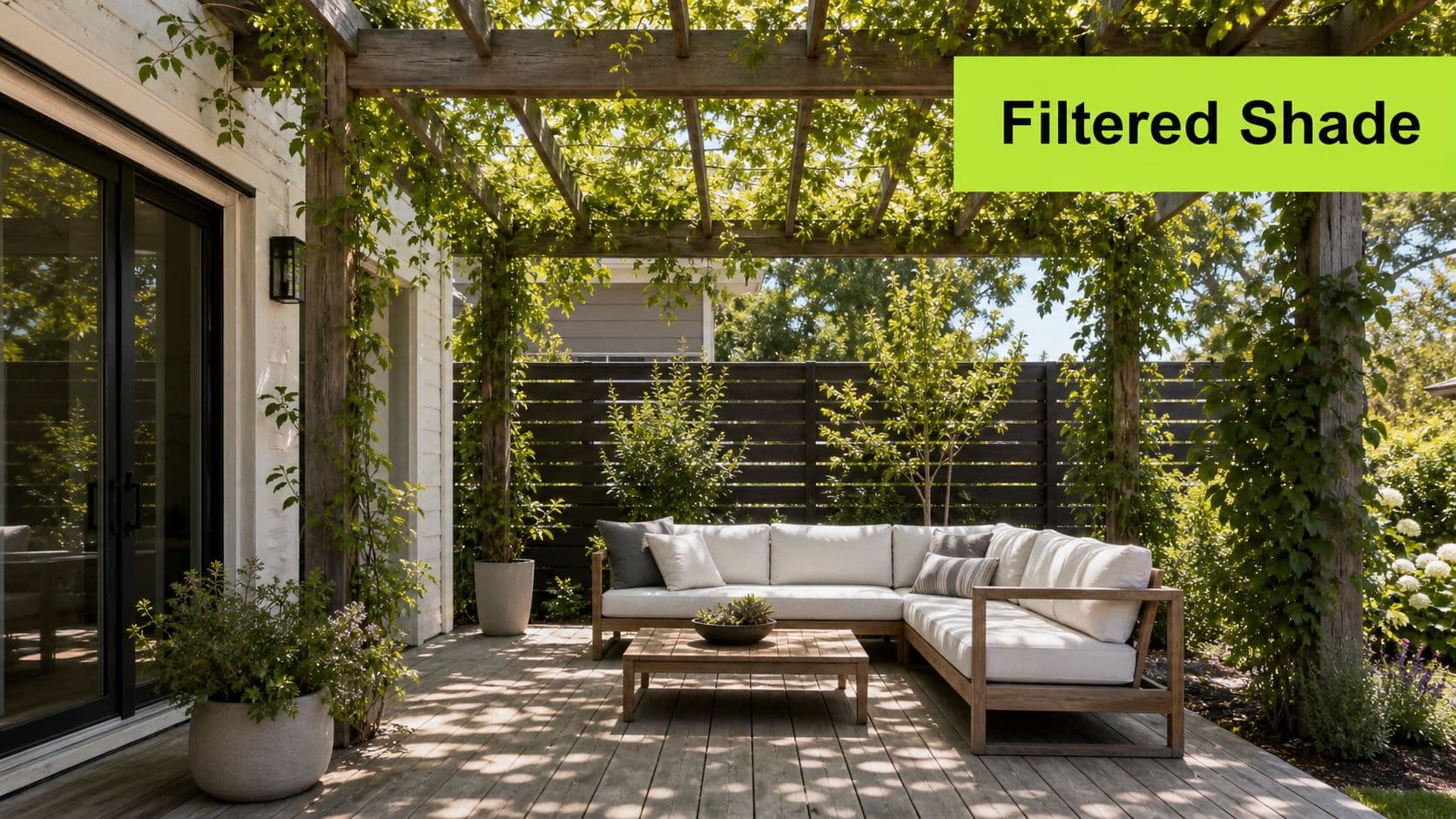
A pergola is the option I recommend when homeowners want shade that also gives the deck some architecture. It won't create full darkness like a solid roof, but it does break up harsh sun and makes a seating or dining area feel intentional. On a plain rectangular deck, that matters more than one might assume.
The catch is simple. Pergolas look easy on paper and become very permanent once they're anchored. Material choice matters too. Cedar feels warmer and more traditional, aluminum stays cleaner and asks for less upkeep, and steel fits modern homes but can feel visually heavy on a small deck.
Where pergolas work best
Pergolas shine over lounge zones, outdoor dining sets, and hot tubs where filtered light is welcome. They also pair naturally with vines. Fast-growing climbers such as wisteria, ivy, and clematis can create a living roof faster than waiting for trees to mature, though wisteria needs a strong structure because of its heavy woody stems, according to Valrose's deck shade ideas.
Practical rule: If you want both shade and airflow, pergolas usually feel better than solid covers in mild climates.
Use OutdoorBrite's pool shade guide as visual inspiration if you're trying to judge scale and placement. I'd also preview pergola orientation in OutdoorBrite before building. A pergola that looks centered from the house can still miss the worst afternoon sun.
2. Retractable Awnings
The usual homeowner scenario is simple. Breakfast on the deck feels great, but by late afternoon the sun is hitting the back door hard enough to make the seating area uncomfortable. Retractable awnings solve that specific problem well because they let you change the deck from open sky to shaded patio in a minute.
They work best on decks attached directly to the house, especially outside kitchens, family rooms, and sliding doors where daily use matters more than making a big architectural statement. In practice, that flexibility is a key advantage. You get shade when you need it, and you keep light in the house when you do not.
Manual models cost less and have fewer parts to service. Motorized versions are easier to use, especially on wider awnings or households that will extend and retract them often. If a shade feature only works when someone feels like cranking it out, it tends to get used less.
Cost, installation, and best-fit situations
Retractable awnings usually land in the middle of the pack on cost and installation difficulty. They are typically less disruptive than building a pergola or roof cover, but they still depend on proper wall mounting, good hardware, and a house structure that can carry the load. Wind exposure matters a lot here. On exposed decks, an awning can become a maintenance item fast if it is left out during rough weather.
This is also one of the easier options to misjudge from product photos alone. The projection can look generous on paper and still leave the dining area half exposed once the sun drops. I suggest mocking up the reach and height in OutdoorBrite before buying, especially if the deck gets strong western sun.
- Best fit: Attached decks that need shade on demand without adding a permanent overhead structure.
- Installation difficulty: Moderate. Easier than a framed build, but proper anchoring is not a casual DIY step.
- Watch for: Wind, fading fabric, water runoff, and walls that are not ideal for mounting.
- Design tip: Neutral or muted stripe fabrics usually hold up better visually than trend-driven colors.
3. Shade Sails
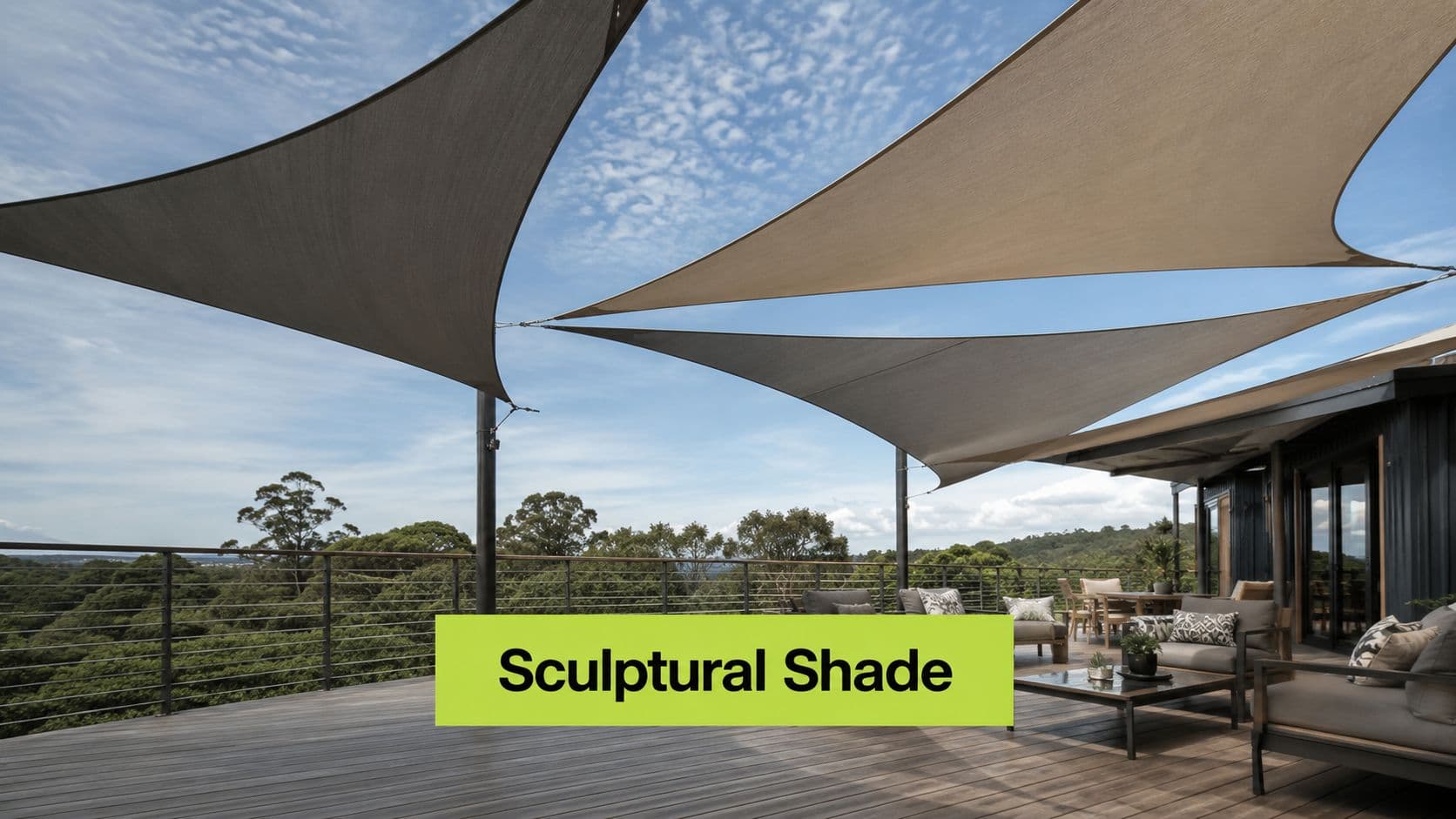
Late afternoon is when shade sails either prove their value or expose a bad plan. A well-sized sail can cool a seating area, sharpen the look of the deck, and do it for less money than a framed structure. A poorly placed one leaves the table half exposed and starts sagging after the first stretch of hot weather.
Shade sails work best for homeowners who want a lighter, more modern look than a pergola or gazebo. They are often one of the lower-cost shade options at the material level, but installation is where the primary trade-off becomes apparent. The fabric is usually the easy part. Proper posts, hardware, footings, and tensioning are what make the system look finished and stay safe.
Cost, installation, and best-fit situations
Installation difficulty ranges from moderate to hard, depending on whether you already have solid attachment points. Mounting to weak fascia, undersized posts, or random fence corners is where these projects go wrong. Good sails need height differences, careful angles, and enough tension to shed water and resist flapping in wind.
They also need more planning than homeowners expect. Triangular and rectangular sails cast very different shade patterns as the sun moves, so a layout that looks right on paper can miss the part of the deck where you spend time. I recommend testing post locations and sail heights in OutdoorBrite before you dig or order custom sizes. If you are reworking the full yard, browse these inspiring outdoor hardscaping projects so the sail, deck, planting, and circulation all work together.
A crisp sail looks intentional. A drooping one looks temporary.
- Best fit: Contemporary decks, lounge areas, and spaces where you want shade without a heavy overhead structure.
- Installation difficulty: Moderate to high. Simple kits are available, but getting the geometry and anchoring right is not a casual afternoon DIY job.
- Watch for: Wind load, pooling water, weak attachment points, and shade coverage that shifts more than expected through the day.
- Design tip: Layering two sails at different heights usually looks better and shades more effectively than forcing one oversized sail to do all the work.
4. Gazebos
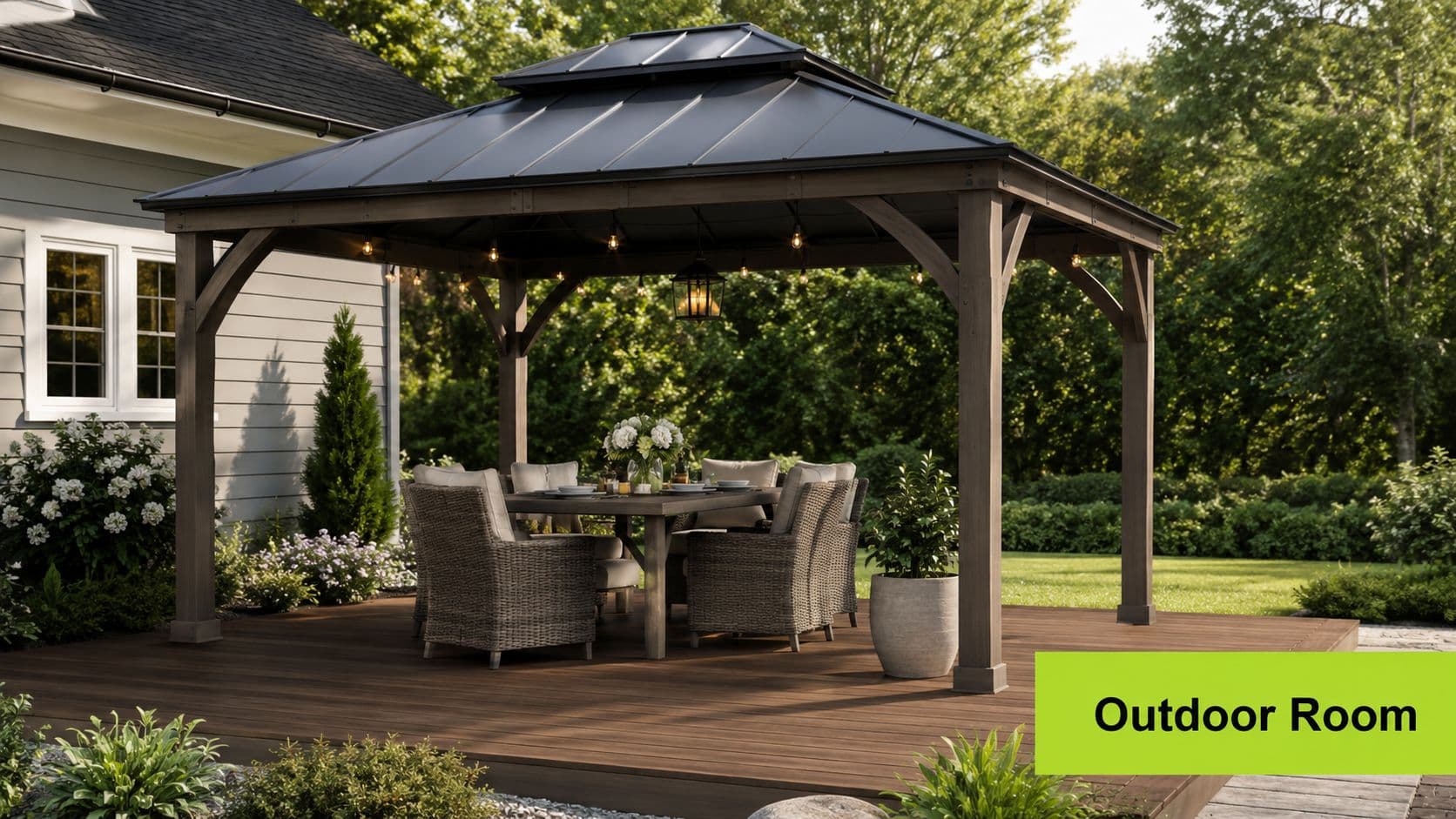
If a pergola defines a space, a gazebo creates a room. It delivers fuller shade, stronger weather protection, and a real sense of enclosure. For decks used mostly for dining or lounging in one fixed zone, that can be a big upgrade.
Gazebos work best when they're sized to a use, not just dropped in as a feature. A dining gazebo should comfortably hold the table and chair pullback. A lounge gazebo should leave room for circulation, not just furniture footprint.
Why people choose gazebos
This is a stronger choice for homeowners who want a destination at the far end of the deck or a sheltered seating area away from the house. Wood gazebos suit traditional homes. Vinyl and powder-coated metal versions reduce maintenance and often fit suburban remodels better.
- Best fit: A deck with one main social zone.
- Installation reality: Usually more involved than umbrellas, sails, or screens.
- Style note: Match roof lines and finish tones to the house so it feels integrated.
If you're planning a broader renovation, browse these inspiring outdoor hardscaping projects to see how a gazebo can connect with paving, steps, and planting instead of standing alone.
5. Shade Cloth and Shade Screens
By 4 p.m., a deck can go from pleasant to unusable, even if the overhead shade is doing its job. That usually points to low-angle sun, not a lack of roof coverage. Shade cloth and exterior screens solve that specific problem better than many larger structures.
These options earn their keep on west-facing and southwest-facing decks, where glare and heat come in from the side. A drop screen mounted to a pergola, porch frame, or simple post setup can cut the harshest sun without rebuilding the whole space. If the deck already has a cover overhead, screens are often the most efficient upgrade.
They also sit on the lower end of the cost range for deck shade. Basic shade cloth panels are usually DIY-friendly. Motorized or track-guided screens cost more and need cleaner installation, but they look better and hold up better in daily use. The trade-off is simple. The cheaper the screen system, the more likely you are to fuss with tie-downs, wrinkles, and wind movement.
Best use cases
I recommend shade screens for decks that feel fine in the morning and rough in late afternoon. They are also a strong fit for homes with close neighbors, because they add privacy while still allowing airflow.
Side shade often fixes the problem overhead shade leaves behind.
Outdoor curtains can do a similar job with a softer look. They suit traditional decks and lounge areas especially well, but they need more maintenance, move more in the wind, and generally block views less cleanly than a tensioned mesh screen.
If you are comparing ideas and having trouble picturing how much side shade you need, use the OutdoorBrite AI tool to test a screened edge, curtain panel, or mesh drop against your existing deck before you buy materials.
6. Louvered Systems Fixed and Motorized
Late afternoon is when this category makes sense. On a deck that bakes at 3 p.m. but feels cool again by dinner, adjustable louvers let you change the overhead coverage instead of committing to permanent full shade.
Fixed louvered systems work well if the sun pattern is predictable and the goal is filtered light with a cleaner architectural look. Motorized systems cost more, but they solve a different problem. They let one deck handle direct sun, partial shade, airflow, and light rain protection with a button press. That flexibility is why I usually reserve them for homeowners building a true outdoor room, not just adding a little summer relief.
Cost and installation are the primary separating factors here. Fixed systems are simpler and usually easier to price and install. Motorized units need power planned early, careful drainage details, and better installers. If wiring, lighting, heaters, or fans are part of the plan, get that electrical work coordinated before the frame goes up.
Where they justify the price
Louvers earn their keep on higher-end decks where the space gets used across more than one part of the day. They are especially useful on exposed decks where full solid roofing would make the area feel too dark or heavy. Aluminum is the usual material choice because it holds up well and asks for less maintenance than wood-based assemblies.
The trade-off is straightforward. More control means more cost, more moving parts, and less DIY potential.
Here's a good look at how a louvered setup works in practice:
- Best fit: Homeowners creating a long-term outdoor living area with a larger budget.
- Installation difficulty: Moderate for fixed systems, high for motorized systems.
- Material choice: Aluminum is usually the easiest to maintain.
- Planning tip: Run electrical before installation if you want motorized controls, lighting, or fans.
If you are deciding between fixed and motorized louvers, the OutdoorBrite AI tool can help you test both looks on your actual deck so you can see whether the extra complexity matches how you plan to use the space.
7. Umbrellas and Cantilever Umbrellas
The sun shifts, the seating shifts, and suddenly the shaded spot is three feet away from where anyone wants to sit. That is where umbrellas make sense. They solve a practical problem without locking you into a permanent structure.
For homeowners still figuring out how the deck gets used, umbrellas are often the smartest first buy. They cost far less than built-in shade, go up quickly, and let you test whether you need coverage over a dining table, a pair of lounge chairs, or a conversation area. If you later decide to build something permanent, the umbrella usually still has a job on the edge of the deck or near the grill.
Center-pole umbrellas fit best through a dining table where the pole is not in the way. Cantilever models cover seating more cleanly because the support arm sits off to the side. That cleaner footprint is the main reason people choose them, but it comes with a higher price and a heavier base.
Best for flexible shade, with clear limits
A key advantage here is mobility. You can rotate, tilt, or relocate the shade as the light changes, which fixed covers cannot do. On small decks and rental properties, that flexibility matters more than full-day coverage.
The trade-offs are straightforward. Umbrellas do not cover a large area as evenly as a pergola or gazebo. Wind is the weak point, cheap models fade fast, and the base needs real weight if you want the setup to feel secure. I tell clients to budget for the base and cover together, not just the canopy, because a flimsy stand is usually what fails first.
Use this option when you want low installation difficulty and moderate cost, not all-weather protection.
If your furniture layout changes often, an umbrella usually fits the deck better than a fixed overhead structure.
OutdoorBrite is useful here because umbrellas can look undersized or awkward faster than homeowners expect. Test a center-pole and a cantilever version on your actual deck before you buy, especially if you are choosing between one large umbrella and two smaller ones.
8. Polycarbonate and Acrylic Panel Covers
Polycarbonate and acrylic panel covers are for people who want weather protection without making the deck feel dark. They keep the area bright, shield it from sun and rain, and work especially well over transition zones near the house.
This is a strong fit for decks where you want to grill, dine, or move in and out during mixed weather. The space stays more usable than with fabric systems alone, but panel covers need ventilation. Without enough airflow, heat can build up underneath.
Good for bright covered decks
I like these on contemporary homes, on narrow side decks, and on backyard decks where a full roof extension would be too heavy visually. Tinted or lightly diffused panels can soften the glare while keeping the deck bright.
A few practical notes matter here:
- Ventilation first: Leave room for airflow so the space doesn't trap heat.
- Cleaning matters: Dirt and pollen show quickly on clear panels.
- Style fit: These look best when the frame and roofing feel deliberate, not improvised.
Use OutdoorBrite to compare panel clarity and framing styles. Small visual differences in tint or structure can completely change whether the result feels airy or commercial.
9. Green Walls and Living Shade Structures
Living shade takes patience, but it can be the most satisfying option if you want the deck to feel cooler and softer instead of more built up. Vines over pergolas, trellises near seating, and planted vertical screens all add filtered shade with a garden feel that fabric and metal can't replicate.
For larger natural shade, trees are hard to beat. They can lower surface and air temperatures by 20 to 45°F, and deciduous trees are especially useful because they shade in warm months and let light through in colder months. Planting them to the west helps block intense afternoon sun, according to Decks & Docks' guide to deck shade ideas.
Natural shade with a longer timeline
This option works best when you can wait for growth or when you combine plants with another structure early on. A vine-covered pergola is much more effective than a bare pergola in a hot yard.
If you want a smaller-scale planting strategy, look at small native trees for local gardens for ideas that won't immediately create root or clearance problems. Just be careful near foundations and utilities when planting close to the house.
10. Deck Shade Structures with Integrated Seating and Furniture
Integrated shade structures work well when the deck is being redesigned as a whole, not patched together one piece at a time. Think built-in benches under a pergola, storage tucked into planter edges, or a dining banquette under a framed cover. The big advantage is coherence. Everything relates to everything else.
This approach usually isn't the cheapest upfront, but it can save you from the cluttered look that happens when shade, seating, and storage are all bought separately over time. It also makes smaller decks work harder because every square foot has a job.
Why integrated layouts feel better
When shade and furniture are planned together, traffic flow improves and the deck feels calmer. The seating lands where the shadow falls. Storage doesn't block circulation. Dining areas don't end up half-covered.
If you're planning from scratch, test the entire layout with an ai patio design generator. That's especially useful for balancing built-in seating with open floor space, so the deck still feels comfortable instead of crowded.
Deck Shade Options: Top 10 Comparison
| Item | 🔄 Implementation Complexity | ⚡ Resource Requirements | ⭐ Expected Outcomes | 📊 Ideal Use Cases | 💡 Key Advantages |
|---|---|---|---|---|---|
| Pergolas | Medium, straightforward DIY or pro install 🔄 | Moderate, wood/metal/composite, posts, possible plant support; $ | Filtered/variable shade; architectural focal point ⭐⭐⭐ | Homeowners wanting permanent, planted outdoor rooms | Customizable, supports climbers, elegant aesthetic |
| Retractable Awnings | Low–Medium, simple mount; motor add increases complexity 🔄 | Moderate, fabric, roller hardware, optional motor/electrical; $$ | On-demand full coverage when deployed; flexible sun control ⭐⭐⭐ | Renters/homeowners who want seasonal or view-preserving shade | Retractable, protects furnishings, motorized convenience |
| Shade Sails | Medium–High, precise tensioning and anchoring required 🔄 | Moderate, HDPE fabric, sturdy anchors/posts; $ | Strong UV blocking with sculptural shade patterns ⭐⭐⭐ | Large open decks, commercial or public spaces needing wide coverage | Wide-span coverage, lightweight, modern aesthetic |
| Gazebos | High, foundation, permits and professional install common 🔄 | High, full framed roof, materials, foundation; $$ | Fully sheltered outdoor room; all-weather protection ⭐⭐⭐⭐ | Permanent gathering spaces, dining areas, homeowners seeking robust shelter | Complete weather protection, high curb/property value |
| Shade Cloth & Screens | Low, simple mounting and seasonal removal 🔄 | Low, mesh fabric, ropes/clips, basic frames; $ | Affordable reduction of sun and heat; variable opacity ⭐⭐ | Budget-conscious projects, renters, nurseries/agriculture | Very affordable, portable, easy seasonal install |
| Louvered Systems (Fixed & Motorized) | High, structural framing and electrical for motorized units 🔄 | Very high, motorized louvers, controls, electrical; $$$ | Precise light/ventilation control; premium performance ⭐⭐⭐⭐ | Luxury homes, smart-home integrated outdoor areas | Motorized precision, smart integration, long-term durability |
| Umbrellas & Cantilever Umbrellas | Low, no permanent install; simple setup 🔄 | Low–Medium, umbrella, base/anchor; $ | Immediate portable shade with limited coverage ⭐⭐ | Temporary/seasonal shade, renters, small seating/dining areas | Portable, no construction, quick repositioning |
| Polycarbonate & Acrylic Panels | Medium–High, framing and sealing required 🔄 | Moderate–High, panels, framing, flashing; $$ | Weather protection while preserving light and views ⭐⭐⭐ | Homeowners wanting covered decks with natural brightness | High UV protection, clear light transmission, durable |
| Green Walls & Living Shade | Medium, plant support, irrigation, and establishment time 🔄 | Low–Medium, plants, trellis, irrigation; $ | Eco-friendly cooling and air-quality benefits; improves over time ⭐⭐⭐ | Eco-conscious projects, long-term natural shade installations | Biodiversity, natural cooling, evolving aesthetic |
| Deck Shade w/ Integrated Seating | High, custom design and professional build 🔄 | Very high, bespoke materials, built-in furniture, utilities; $$$ | Turnkey multifunctional outdoor room; high usability ⭐⭐⭐⭐ | Luxury, entertainment-focused outdoor living spaces | Space-efficient, cohesive design, built-in functionality |
How to Choose Your Perfect Deck Shade Solution
The right choice comes down to four things. Budget, permanence, climate, and style. If you want flexibility and a lower initial cost, retractable awnings and quality cantilever umbrellas are hard to beat. They let you respond to the weather without committing to a permanent overhead structure.
If you want something architectural, start with a pergola or gazebo. Pergolas give you filtered light and a lighter visual footprint. Gazebos create more complete cover and feel more like an outdoor room. For homeowners after precise control and a clean contemporary look, louvered systems are the premium answer.
Climate should drive the final call more than aesthetics alone. Wind exposure can punish umbrellas, weakly anchored sails, and poorly mounted awnings. Low-angle afternoon sun often requires side screens, curtains, or planting in addition to overhead cover. If your deck gets blasted from the west, a beautiful overhead feature may still leave you squinting at dinner.
Use patterns matter too. A dining deck needs reliable table coverage. A lounging deck can work well with partial shade and airflow. If kids use the deck midday, stronger UV protection matters more. If you entertain mostly in the evening, side shade may be more useful than a fully covered roof.
I also recommend thinking in layers instead of one perfect object. Some of the best deck shade options work in combination. A pergola with curtains. A gazebo with nearby planting. A cantilever umbrella over a lounge zone and a screen on the west side. Those mixed solutions usually feel more comfortable in real life than a single oversized shade feature trying to solve every problem.
Before you commit, take the guesswork out of it. Upload a photo of your deck to OutdoorBrite and test different structures, materials, and layouts in your own space. Seeing a pergola, awning, sail, or integrated seating plan on your deck is often what makes the decision clear. It's the easiest way to avoid scale mistakes, style mismatches, and expensive second guesses, and to build an outdoor space you'll use for years.
OutdoorBrite helps you move from vague ideas to a realistic deck plan fast. Upload a photo, test shade structures in different styles and lighting conditions, and see what fits before you buy materials or hire installers. Explore OutdoorBrite if you want a quicker, more confident way to design a cooler, more usable outdoor space.
See your yard reimagined
Start creating