Gardenia Cold Hardiness: A Homeowner's Survival Guide
Understand gardenia cold hardiness with zones, varieties, and winter protection methods to keep your gardenias thriving through frost.
Last night's frost can feel like a theft. A gardenia that looked glossy and full of promise on Friday can wake up Monday with blackened leaves, dropped buds, and that sinking feeling that all the care you gave it wasn't enough.
That moment is exactly why gardenia cold hardiness matters. It's not just a plant label on a nursery tag, it's the difference between a shrub that comes back after winter and one that turns into an expensive lesson in the wrong site, the wrong cultivar, or the wrong winter routine. Gardenias are reliably hardy outdoors only in USDA Zones 8-11, with newer selections sometimes stretching into Zone 7a and a few protected plants surviving in Zone 6 conditions, but cold damage depends on much more than a map line alone, especially in marginal climates where site and cultivar make the difference (Monrovia, Clemson HGIC).
Homeowners usually want one simple answer. They want to know whether to wrap the shrub, water it, mulch it, move it, or replace it. The frustrating truth is that winter survival is a combination of temperature, moisture, wind exposure, and timing, and the gardenia care advice that works in one yard can fail badly in another (Gardeners Path).
Table of Contents
- Introduction to Gardenia Cold Hardiness
- What Cold Hardiness Means for Gardenias
- USDA Zones Microclimates and Gardenia Varieties
- Recognizing Cold Injury in Gardenias
- Season by Season Gardenia Protection Methods
- Smart Planting Siting with AI Visualization
- Actionable Gardenia Cold Hardiness Recommendations
Introduction to Gardenia Cold Hardiness
A homeowner steps outside after the first hard frost and finds the gardenia a little drooped, with browned buds and leaves that look flattened and dark. That is usually when the questions begin. Did the shrub die, or did the cold knock it back?
Gardenias earn their reputation the hard way. They are prized for fragrance and glossy foliage, yet they also demand the right cultivar, the right spot, and careful winter judgment. In the Carolinas and other borderline areas, a plant may settle in for years and still get hit hard by a cold snap, so the same shrub can look dependable one season and stressed the next (Clemson HGIC).
Cold injury usually follows a pattern. Once you learn how gardenias respond to low temperatures, dry wind, mulch, water, and shelter, winter damage becomes easier to read. A blackened leaf no longer looks like a total loss. You start sorting clues the way an experienced grower does, one sign at a time.
That matters because gardenias do not fail in only one way. Some shrubs survive the freeze but skip flowering later. Others lose tender stems first, then push growth from lower canes. Some plants were never a good fit for the site, even if the zone number looked close enough on paper.
The better starting point is the plant's actual limits, then the yard itself. South-facing walls, open corners, low spots where cold air settles, and exposed beds all change the outcome. Winter moisture matters too, because dry soil and drying wind can leave a gardenia more vulnerable than a colder but better-sheltered planting. AI visualization can help homeowners map those patterns before planting, showing where a shrub may catch reflected warmth, where frost lingers, and where a microclimate gives better protection than the rest of the yard.
What Cold Hardiness Means for Gardenias
The Built-In Thermostat Idea
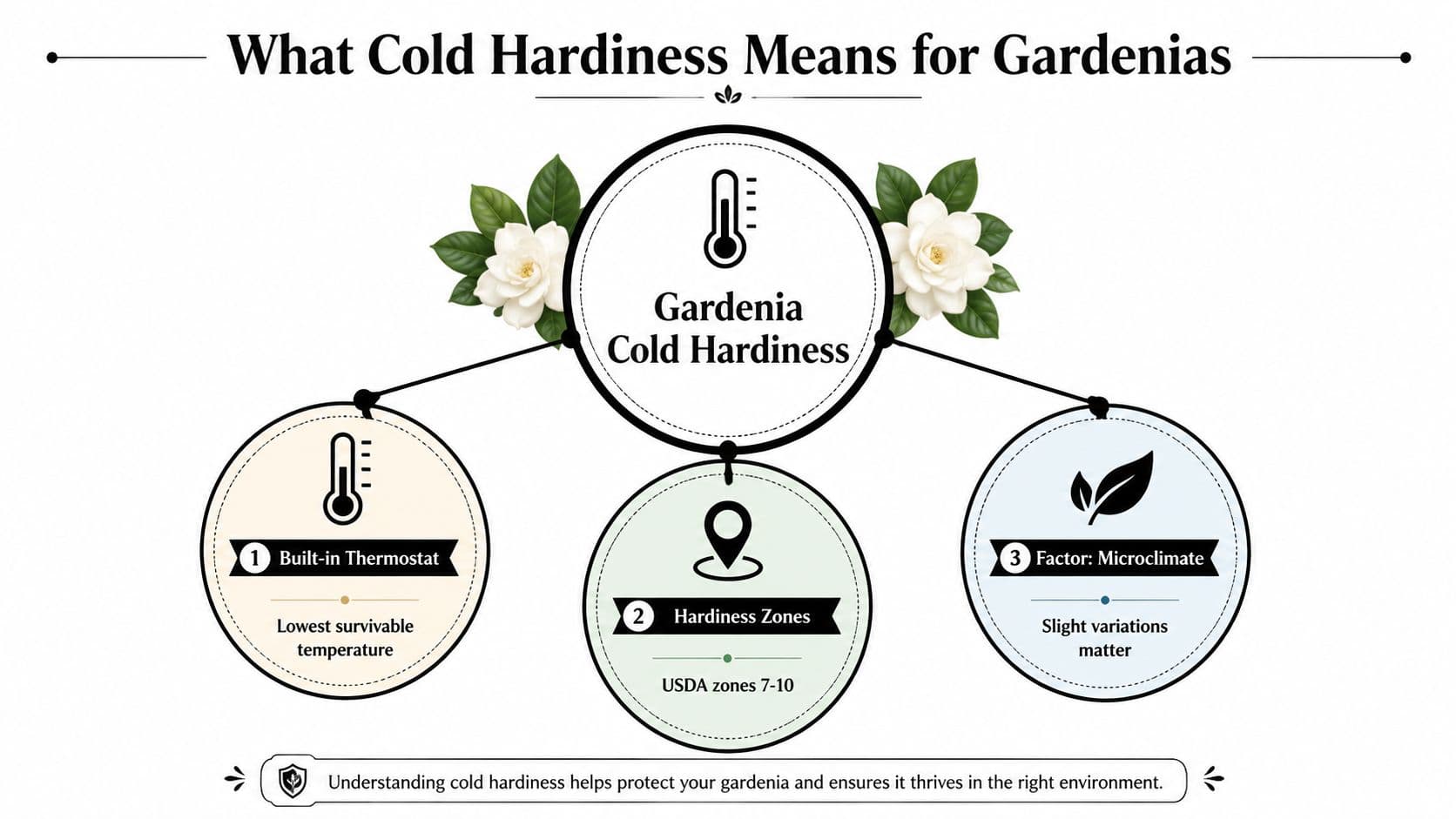
A gardenia's cold hardiness works like a built-in thermostat with a lowest safe setting. What matters most is the coldest point the shrub must face, not the average weather for the season. That is why hardiness is about minimum temperature survival, not comfort, and not necessarily flower quality either.
Gardenias are naturally limited in cooler climates. Most are reliably hardy outdoors only in USDA Zones 8-11, which line up with average annual extreme minimum temperatures of about 10°F to 40°F (Monrovia, Clemson HGIC). Newer cultivars can stretch that boundary somewhat, but the plant still has a lower limit and an upper one, and winter does not adjust for either.
Many homeowners assume “hardy” means a plant will look normal after cold weather. Gardenias do not work that way. A shrub may come through a cold stretch and still show stress later, because cold slows growth and can weaken future performance. One source notes that growth and flowering slow once night temperatures drop below 60°F (Monrovia). The plant can stay alive and still fail to meet expectations for bloom or vigor.
Practical rule: if a gardenia sits near the edge of its range, treat winter survival and spring bloom as two separate questions. A shrub can survive the season and still produce a thin floral display.
Why Survival and Blooming Aren't the Same Thing
A hardiness tag is a survival estimate, not a promise of full performance. Gardenias make that distinction especially clear, because a shrub can look acceptable in late winter and still bloom sparsely if buds were damaged or growth was set back.
Cold injury also does not begin at one tidy switch point. As noted earlier, stem and cambial damage rises sharply in very cold conditions, and established plants can still suffer when the temperature dips into a range that tests the plant's lower limit. Those guidelines help, but cultivar choice and shelter can change the outcome more than many homeowners expect.
A gardenia in a protected courtyard can outlast the same cultivar in an open bed. Two shrubs in the same town can also come through winter differently. Cold hardiness depends on the plant, and on the exact spot where it is standing when the cold arrives.
That is why yard planning matters as much as the plant tag. South-facing walls, sheltered corners, frost-prone low spots, and open beds all create different winter conditions, even before moisture and wind enter the picture. Winter dryness can make a gardenia more vulnerable than a colder site with better shelter and steadier soil moisture. AI visualization can help homeowners map those patterns before planting, showing where reflected warmth, frost pockets, and microclimates may change the outcome. For a broader example of how zone interpretation varies by region, see USDA zones for desert gardens.
USDA Zones Microclimates and Gardenia Varieties
A gardenia label tells only part of the story. The USDA zone gives you the broad climate range, but the planting spot decides how that range feels on the ground. A shrub tucked beside a masonry wall may ride out winter differently than the same plant sitting in an open bed where wind strips warmth away. Homeowners get better results by reading the yard as carefully as the zone map.
Gardenias also do not all respond the same way to cold. Some cultivars stay dependable in warmer zones, while others are selected for a little more hardiness and can handle borderline conditions better. That is why the plant name alone is not enough. The tag should be read with the cultivar's cold tolerance in mind, not just the flower picture or the familiar word “gardenia” (Clemson HGIC).
| USDA Zone | Extreme Min Temp | Gardenia Outcome |
|---|---|---|
| Zone 8-11 | About 10°F to 40°F | Most gardenias are reliably hardy outdoors here (Monrovia) |
| Zone 7a | Colder than the core gardenia range | Some newer cultivars extend into this range |
| Zone 6 with protection | Colder than the core range | A few exceptionally hardy forms may survive with protection |
The table is a starting point, not a promise. A sheltered courtyard can behave like a milder pocket, while an exposed front bed can act like a colder one. That difference matters because winter stress is not only about minimum temperature, it also depends on whether the plant is shielded from wind and whether the soil holds enough moisture to buffer the roots.
For that reason, zone advice works best when it is tied to the exact planting site. A low spot where cold air settles can leave a borderline shrub feeling the full weight of winter. A bed near a wall, patio, or other thermal mass often stays steadier. The USDA zones for desert gardens resource is a useful reminder that zone labels are only the first layer of planning.
Moisture is part of the picture too. Gardenias can be pushed harder by dry winter soil than by a cooler site with steadier moisture and better cover. That is one reason AI visualization can help homeowners before planting, because it can map where reflected heat, frost pockets, and exposed corners are likely to change the winter outcome.
For gardeners choosing among varieties, the safest approach is to pair the cultivar with the site. Ask whether the plant is hardy enough for your zone, then ask whether the spot gives it the kind of winter protection it needs. If the cultivar is borderline and the site is exposed, the plant is being asked to do too much.
Recognizing Cold Injury in Gardenias
A gardenia with cold injury often looks tired before it looks dead. Leaves may bronze, then darken. Buds can blacken and drop. Stems may seem brittle, almost crackly, as if the plant has aged several seasons in one night.
That is where confusion starts, because the symptoms can look like drought stress or root trouble. The leaves curl. The plant sags. The soil may even be moist, which makes the damage feel harder to read. Cold injury and water stress often resemble each other, even when the cause is different.
The main clue is where the damage sits on the plant. Tender tips and exposed growth usually suffer first. If the stems are still green under the bark and the base remains alive, the shrub may recover from lower growth. If the cold reached deep enough to injure the stem and cambium, the outlook is much worse, especially after a hard freeze or a long spell of repeated cold.
Gardenias are often hurt most where winter exposure is strongest. A plant tucked near a wall may keep more living tissue than one standing in open wind, while dry soil can make cold injury look worse because roots lose the moisture buffer they need. That is why site planning matters as much as temperature, and why a garden layout viewed through AI visualization can help homeowners spot frost pockets, reflected heat, and other small changes in winter conditions before damage happens.
Below about 10°F, the risk of serious wood injury climbs fast, especially on shrubs that were already stressed, exposed, or too dry going into winter. That does not mean every plant at that temperature dies, but it does mean the odds of structural damage rise quickly. For homeowners, the question shifts from “Will it bloom?” to “What wood is still alive?”
If the shrub is showing green tissue lower down, wait before cutting. Cold damage is easier to read after the plant has had time to declare what survived.
A simple late-winter check helps. Scratch a little bark on a suspect stem. Green tissue suggests life. Brown, dry tissue suggests dead wood. If the lower framework still shows life, hold off on major pruning until spring growth gives you a cleaner map of what to remove.
Gardenias can also rebound after being cut back hard, which tempts people to assume everything is fine. Recovery from the roots is not the same as preserving the shrub's shape or bloom cycle. That is why reading cold injury carefully saves both time and disappointment.
Mulch can make this reading easier too. A steady layer helps reduce sharp swings in soil moisture and temperature, which keeps the plant from adding drought stress to cold stress. For gardeners comparing mulch choices, the OutdoorBrite Money gardening tips resource is a useful starting point for matching bed material to the kind of protection a gardenia needs.
Season by Season Gardenia Protection Methods
A gardenia that survives winter usually gets there through a chain of small, well-timed choices. Cold protection works best before the first hard freeze arrives, because once leaves blacken or stems split, you are responding to damage instead of preventing it. For homeowners, the seasonal goal is simple, keep the plant steady through changes in temperature and moisture.
Fall sets up the whole winter. Clemson advises do not fertilize gardenias in the fall, because late feeding can push tender growth that is more likely to be injured when temperatures drop below 15°F (Clemson HGIC). New shoots are like soft tissue on a tree branch. They look healthy now, then fail quickly when cold arrives.
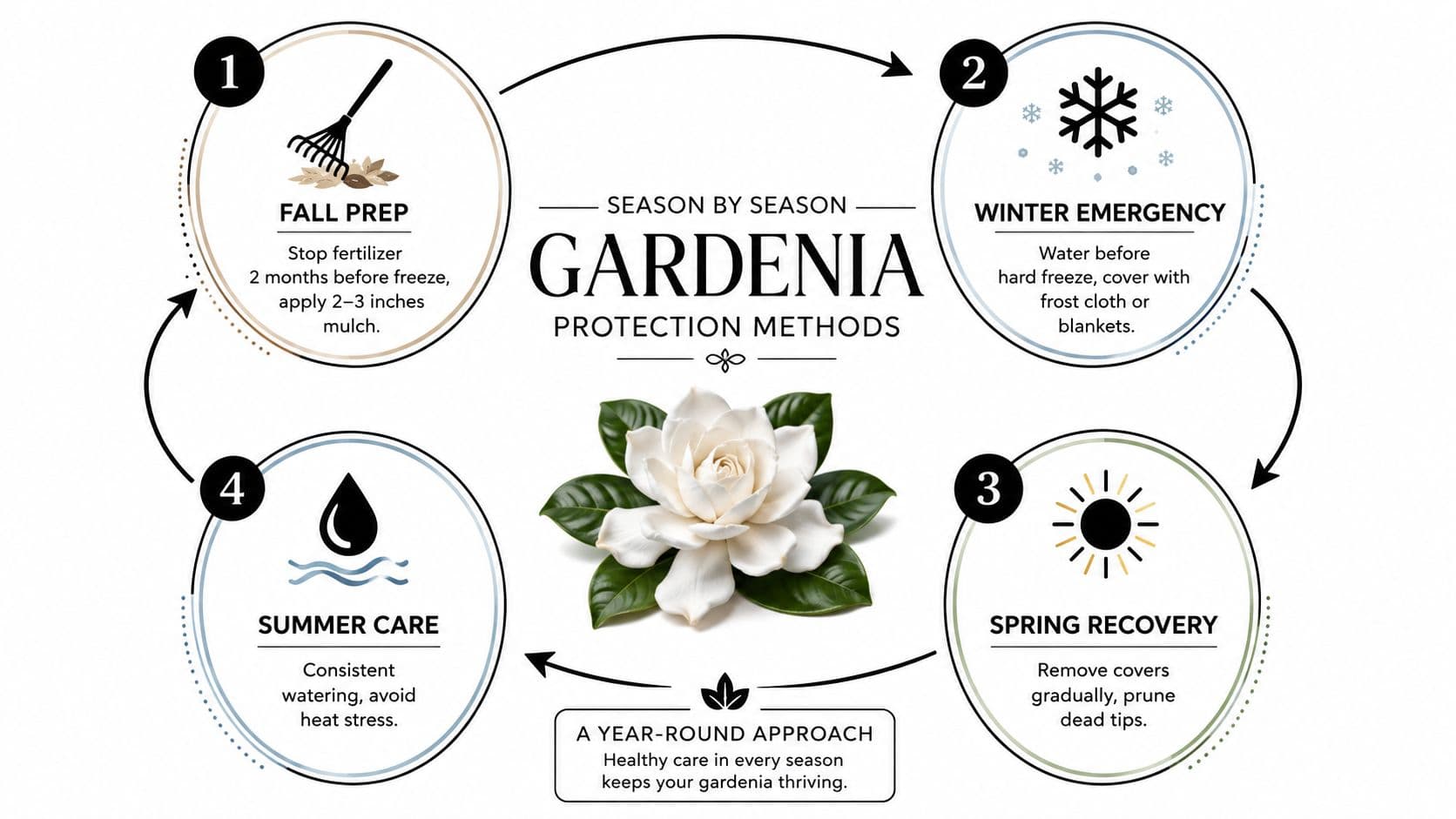
Mulch is the next part of that setup. Clemson recommends 2 to 3 inches of mulch, such as pine straw, compost, or ground bark. That layer helps keep the root zone from swinging sharply between warm afternoons and cold nights, which is especially helpful in beds that lose heat quickly after sunset (Clemson HGIC). The same guidance also points to light, partial shade, morning sun, and afternoon shade as favorable growing conditions, because a bed that bakes all day or chills too fast can stress the plant before winter even begins.
Winter moisture needs a careful balance. Soil that is already dry before a freeze loses heat faster than soil with some moisture in it, so a thorough watering before a hard freeze can help the root zone hold warmth a little longer. Gardeners Path notes that supplemental water before a freeze can help because moist soil holds heat better, while dry soil before a freeze increases cold injury risk (Gardeners Path). That is not a reason to soak the bed all season. It is a reminder that winter care is more like tuning a thermostat than following a single rule.
Container gardenias need a different kind of attention. Move them to a sheltered place if you can, away from direct wind and out of the most exposed part of the yard. A frost cloth or blanket can help during a short cold snap, especially when a windbreak is part of the setup. For plants in the ground, a cover protects best when it limits direct exposure, not when it traps damp leaves for long periods.
| Season | Best Move | Why It Matters |
|---|---|---|
| Fall | Stop fertilizer and mulch lightly | Prevents tender growth and steadies roots |
| Before freeze | Water the soil if it's dry | Moist soil holds heat better |
| During cold snaps | Cover and block wind | Reduces exposure and drying |
| Spring | Remove covers gradually and trim only what's dead | Lets you see what actually survived |
A good mulch choice supports that whole routine. OutdoorBrite Money gardening tips can help readers compare bed materials, but the gardenia rule stays the same. Protect the root zone, keep winter moisture balanced, and avoid encouraging soft growth too late in the season.
For a visual walk-through, the embedded video below shows how seasonal care choices can be sequenced through the year.
Smart Planting Siting with AI Visualization
The smartest winter protection is the one you don't need every year. If a gardenia is planted in the right spot, you spend less time wrapping, moving, and rescuing it when temperatures fall. That's why site planning beats emergency patching for most homeowners.
A sheltered planting bed can change the outcome as much as a hardiness label. A brick wall, for example, can moderate cold a bit and reduce the sting of wind. An open corner of the yard can do the opposite, especially if cold air settles there or winter winds whip through without obstruction. Gardenias don't care that the view is pretty if the site behaves like a freezer.
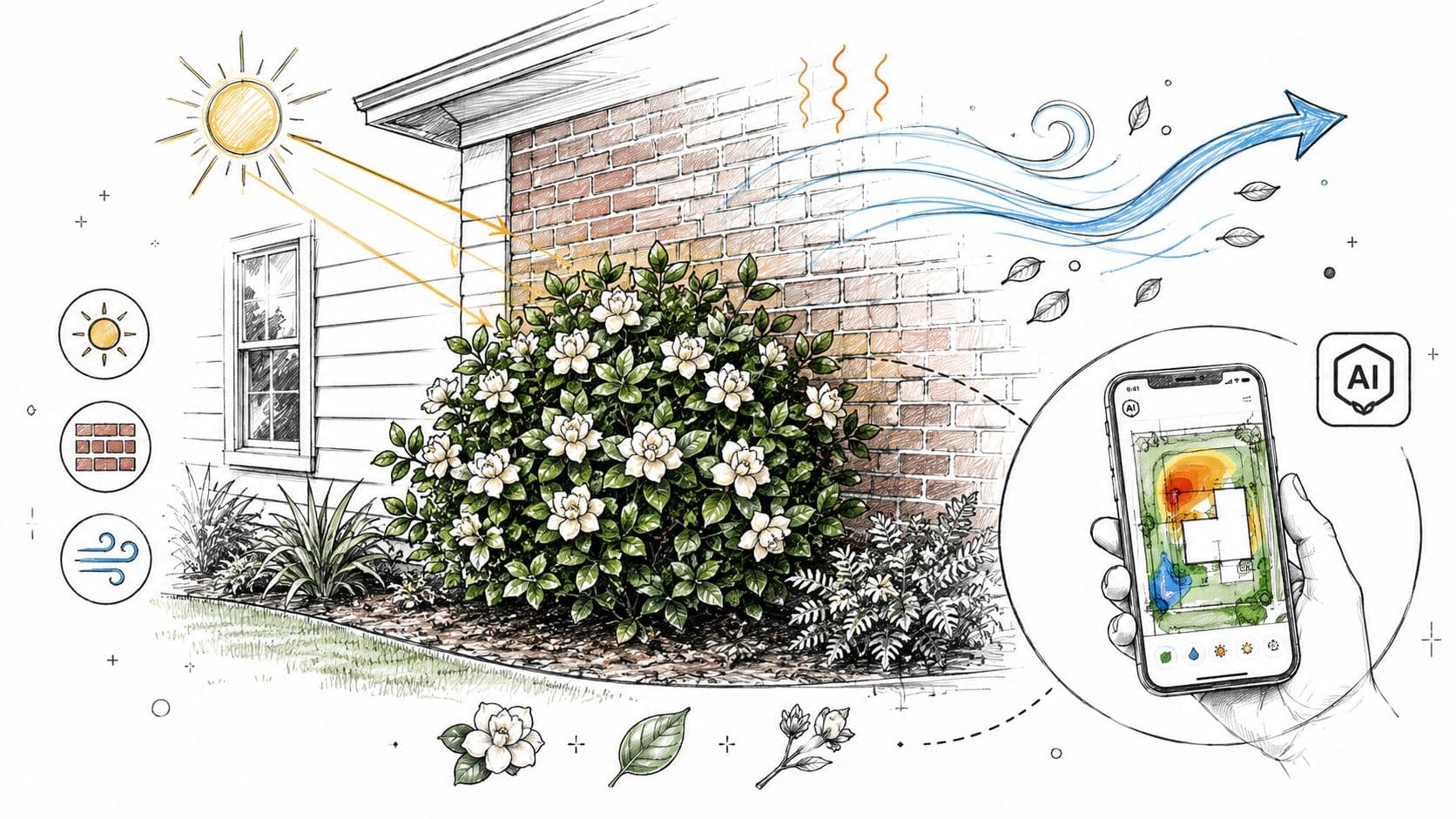
That's where visual planning starts to help. A rough mockup lets you compare a protected foundation bed, an exposed lawn edge, and a container near a wall before you dig. You can see how a winter cover would fit, where wind might hit first, and whether the plant's mature size will leave it too exposed later.
For that reason, a tool like ai garden design software is useful not because it changes plant biology, but because it makes the site easier to judge. Homeowners often picture flowers and forget airflow. A visual layout brings the plant, the house, and the winter cover into the same frame.
Good placement reduces rescue work. If a plant starts in a protected spot, the winter routine gets simpler and less risky.
That doesn't mean AI replaces judgment. It means it helps you test your judgment before you buy. For gardenias, that's especially valuable because one bad placement can make a marginal cultivar behave much worse than expected. A few minutes spent visualizing the bed can save years of frustration.
Actionable Gardenia Cold Hardiness Recommendations
If you live near the edge of gardenia country, start with the plant, not the promise. Choose a cultivar that fits your zone, then place it where your yard gives it the best chance to stay buffered from wind and cold air. In marginal climates, that pairing matters more than a generic “gardenia” label.
For homeowners, the safest routine is straightforward. Keep the shrub mulched, avoid fall fertilizer, and make sure the root zone has steady moisture before a freeze. A dry root ball can leave the plant like a house with the heat turned off, cold stress reaches the roots faster and recovery gets harder. If cold damage shows up, wait long enough to see what wood is dead before you prune hard. That patience saves living stems from an unnecessary cut.
DIY gardeners can think in terms of a yearly winter kit. Have mulch ready, keep frost cloth or a lightweight cover on hand, and know which plants need shelter before the first serious front arrives. It also helps to check where snow, roof runoff, and meltwater collect, because a gardenia that sits in a wet pocket after a freeze can suffer in a different way than one in dry, open air. That makes cold protection a habit instead of a scramble.
Gardeners should specify cultivars and site conditions together. A borderline gardenia in an exposed bed is a different plant from the same cultivar against a wall with morning sun and winter cover access. Good specifications reduce complaints because they account for more than the zone number.
The biggest misconception to retire is the idea that winter care means watering less. The stronger rule is balance. Moist, not soggy, soil and a sheltered site help, but the advantage comes from avoiding sudden drying after a freeze-thaw swing, which often causes more trouble than the cold alone.
A thriving gardenia after a harsh winter usually comes from three things working together, the right cultivar, the right microclimate, and the right seasonal care. Once you start planning with those three pieces in mind, cold hardiness stops feeling mysterious and starts feeling manageable.
See your yard reimagined
Start creating