Las Vegas Plant Hardiness Zone Guide for Desert Gardens
Las Vegas plant hardiness zone explained: USDA zones, microclimates, drought-tolerant picks, and planting calendars for a thriving desert yard.
You can stand in a Las Vegas nursery right now, look at a plant tag that says zone 9, and feel confident. Then July arrives, the leaves crisp, the soil bakes hard, and the same plant that “should've worked” ends up in the trash. That failure usually isn't because the tag was wrong. It's because Las Vegas plant hardiness zone questions only answer one part of the survival puzzle, and desert yards punish anything that ignores the rest.
The right way to read Las Vegas climate data is simple, but it takes more than one label. The USDA map tells you how cold a plant may have to tolerate in winter, while your yard's exposure, elevation, reflected heat, and water access decide whether it can live through summer. In this city, the plant that survives in one backyard can fail two streets away. That's why a working gardening plan has to start with the zone, then move to heat, microclimate, and irrigation.
Table of Contents
- What Las Vegas Gardeners Get Wrong About Zones
- How the USDA Hardiness Zone Map Reads Las Vegas
- Beyond USDA Zones for a Desert Climate
- Microclimates That Change the Zone in Your Yard
- Reading a Las Vegas Planting Calendar
- Desert-Adapted Plants That Earn Their Place
- Soil, Water, and Shade Rules That Beat the Heat
- Designing a Yard Around Your Real Zone
What Las Vegas Gardeners Get Wrong About Zones
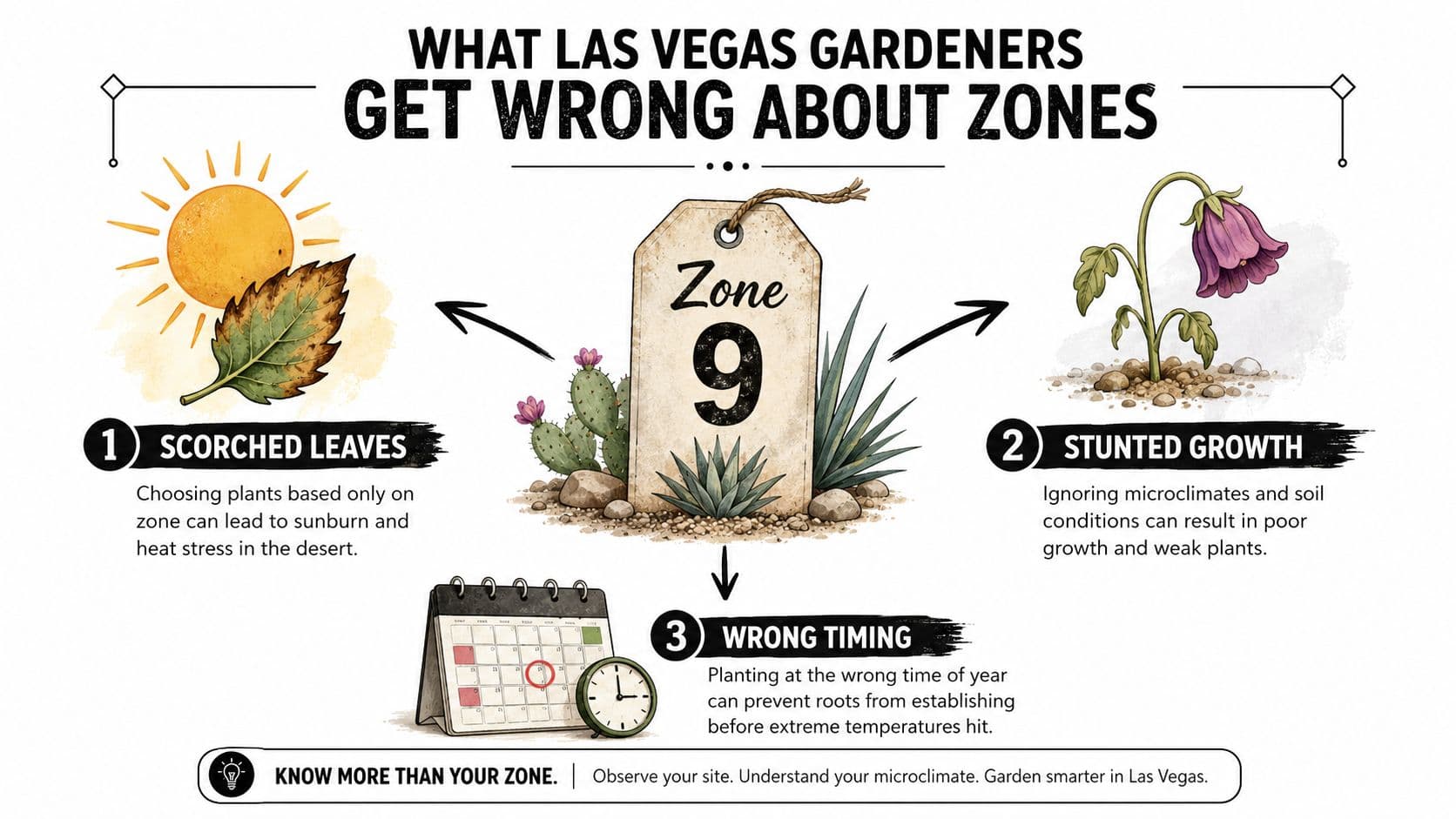
A homeowner buys a plant labeled zone 9, puts it in the ground with hope and a hose, then watches it collapse by mid-summer. I've seen that pattern over and over, and the mistake is usually the same. The label made the plant sound local enough, so the buyer stopped asking the harder question, will this plant handle my exact yard in July?
The zone number is real, but incomplete
The Las Vegas plant hardiness zone is useful because it tells you something specific, the cold a plant may need to endure in winter. It does not tell you whether the same plant can tolerate reflective stucco walls, hot gravel, dry wind, or a July afternoon with relentless sun. That gap is where many Las Vegas gardens fail.
A second confusion comes from treating the city as if it were one uniform climate. It isn't. A yard tucked into a heat-trapping courtyard, a lot on the valley edge, and a downtown patio can all behave differently even when the ZIP code is the same. That's why the one-line answer from a nursery tag often gives people a false sense of certainty.
Practical rule: if a plant barely survives your zone on paper, it probably needs a better site in your yard than you think.
The better habit is to use the zone as a starting filter, then ask three more questions, how hot does the site get, how much wind does it take, and how much water can you realistically supply? In Las Vegas, those three questions often decide the outcome faster than the zone label does. That's the desert reality most generic plant guides skip.
How the USDA Hardiness Zone Map Reads Las Vegas
The latest USDA map no longer treats Las Vegas as one flat climate block. The 2023 USDA Plant Hardiness Zone Map places parts of the metro in zones 8a, 8b, 9a, and 9b, while the older 2012 map showed most of the city in 8b and 9a, according to the Las Vegas hardiness summary at PlantMaps. That shift matters because USDA zones are built from 30-year average extreme winter minimum temperatures, not from a single cold night, and in Las Vegas those labels translate to winter lows from 10°F to 30°F across the metro area.
What those labels mean in practice
If you're comparing a plant tag to your yard, the zone number tells you whether winter cold is a serious risk. It does not promise success, but it does narrow the field. A plant sold for zone 9 might get through a typical winter in some parts of the valley, while a more exposed or higher-elevation site may need the colder end of the range to stay safe.
| USDA Zone | Avg. Extreme Winter Low | Where It Applies in the Valley |
|---|---|---|
| 8a | 10°F to 15°F range | Colder pockets and exposed edges of the metro |
| 8b | 15°F to 20°F range | Cooler parts of the valley and some outlying neighborhoods |
| 9a | 20°F to 25°F range | Many lower-valley and urban areas |
| 9b | 25°F to 30°F range | Warmest parts of the metro, especially more urbanized sites |
The point of the table isn't to make you memorize numbers. It's to show that Las Vegas isn't one single hardiness zone anymore, and it probably never was in the way gardeners casually use the term. A hillside lot, a sheltered patio, and a windswept street corner can each belong to a different planting reality.
The USDA's map is still valuable because it gives a common language for winter survival. Just don't confuse that with a full gardening answer. In this city, winter cold is only one test, and often not the one that kills the plant first.
Beyond USDA Zones for a Desert Climate
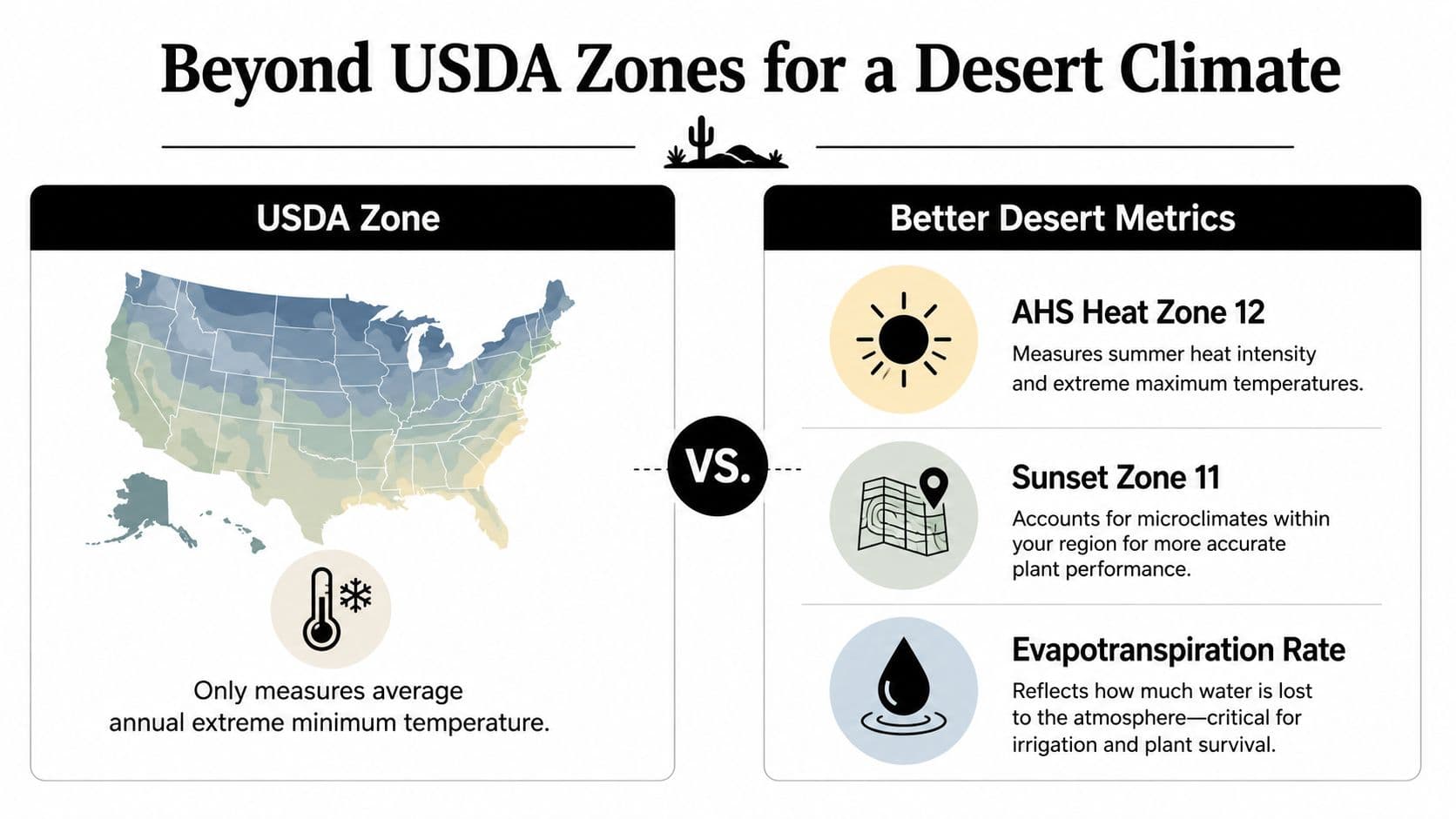
USDA zones were built to answer a winter question, not a desert question. That's why Las Vegas gardeners need a broader lens. The USDA's own zone map is a winter-cold hardiness tool, while local Nevada guidance points out that the challenge here is heat, aridity, and watering strategy, which is exactly why a “zone 9” answer can feel technically correct and still be useless in a backyard.
Why heat and elevation deserve equal attention
Las Vegas sits in the warmest interior band of Nevada, and that means summer stress can overwhelm a plant long before winter cold gets a chance to matter. One yard might get morning shade and afternoon relief, while another sits on reflective concrete all day. Those are not small differences. They're the sort that decide whether a shrub establishes or fades out.
The station data from Nevada Extension makes the local spread easy to see. Las Vegas McCarran Airport averages an annual minimum of 26.6°F, which falls in zones 9b/8a, while Las Vegas WFO averages 24.8°F, which corresponds to 9a/8b ranges, according to USU Extension's Nevada hardiness guidance. Those few degrees matter because they show how quickly the recommended plant palette can shift from one station to another.
What gardeners often miss is that elevation and exposure can push a site into a colder or harsher category than the city name suggests. A foothills edge, a north-facing lot, or a windy corner may behave one full zone differently from a dense, heat-retaining neighborhood. That's why the zone number should never be your only filter.
Use this test: if two parts of your yard dry at different speeds, they probably don't share the same planting logic.
Heat-zone systems and western climate guides try to capture those differences better than a winter map alone. They're not perfect either, but they push you toward the right habit, matching plants to sun intensity, reflected heat, and water demand, not just frost tolerance. That's the shift desert gardeners need.
Microclimates That Change the Zone in Your Yard
A north-facing lot in the foothills and a south-facing downtown patio can be two different gardens, even before you choose a single plant. The first may stay cooler longer, catch more winter chill, and dry more slowly. The second may trap heat from walls, pavement, and nearby glass, then keep that heat late into the evening. Same city, different survival rules.
Read your yard before you read the plant tag
Start with the spots that punish plants the hardest. West-facing walls reflect afternoon heat. Gravel and concrete bounce sun back into the canopy. Tight courtyards reduce airflow, which lets temperature and stress build up fast. If your yard has any of those features, treat it like a hotter, harsher site than the weather app makes it look.
Now compare that with open, exposed edges of the valley. Those spots can cool faster at night and take more wind, especially in outer neighborhoods. That's where a plant may need colder-zone resilience, even if the metro's headline zone looks warm enough on paper. The result is simple, but homeowners often resist it, because it asks them to think like a site assessor instead of a shopper.
Build a yard-level checklist
Use four questions before you plant anything.
- Exposure: Does the spot get full afternoon sun, filtered light, or morning light only?
- Slope: Is the area low and warm, or high and exposed?
- Hardscape reflection: Do walls, paving, or pool decks bounce heat back into the plant?
- Canopy and wind: Does anything block drying wind or soften intense sun?
If a spot stays hotter and drier than the rest of the property, plant it as if it were at least one zone warmer in summer stress terms. If it sits in a cold pocket or a wind tunnel, plant it as if it were colder. The exact zone label won't tell you that. Your yard will.
Reading a Las Vegas Planting Calendar
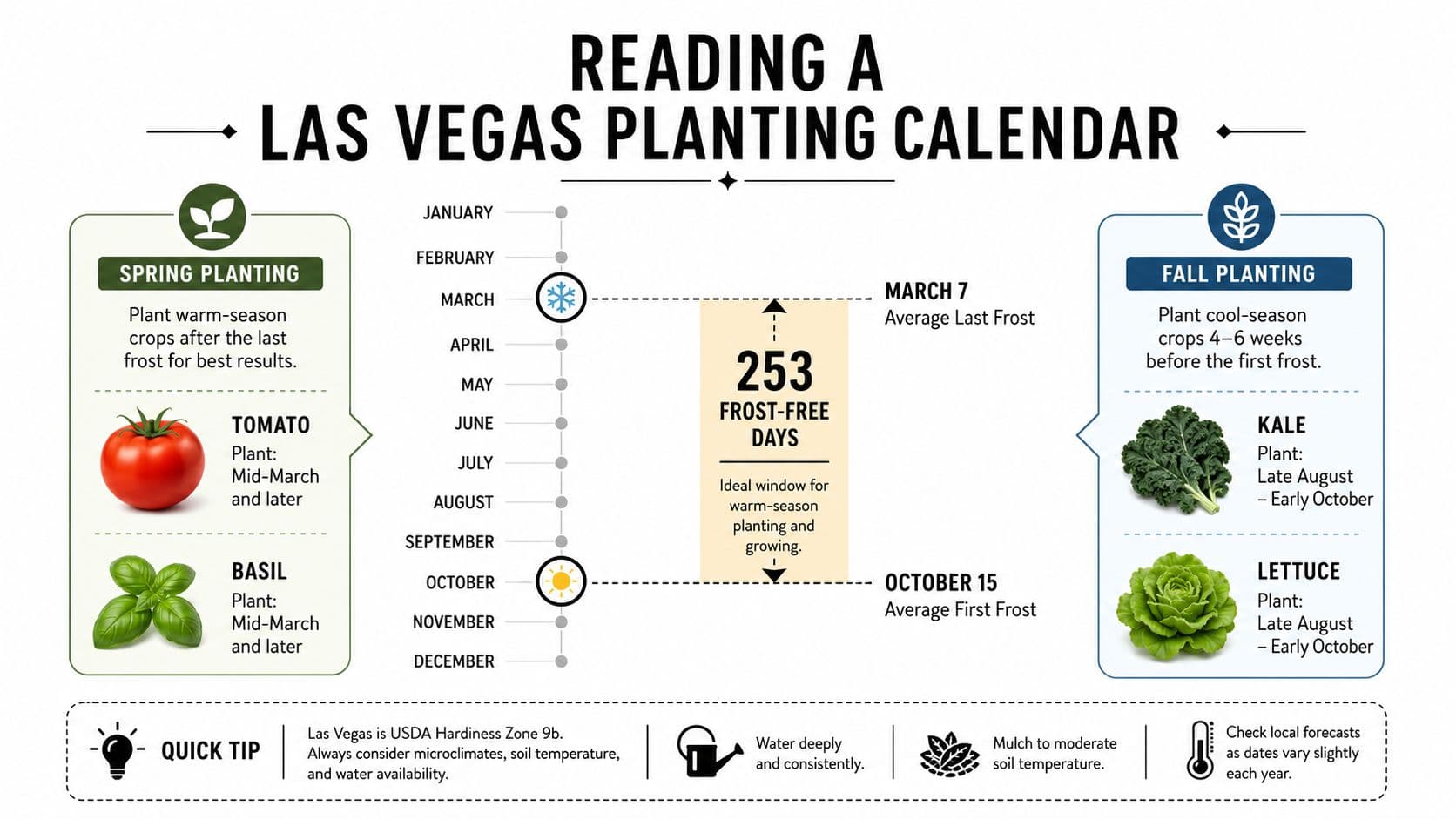
Las Vegas has a long garden window, but it's not a relaxed one. One local zone guide estimates about 253 frost-free days, with an average last spring frost around March 7 and first fall frost around November 15, according to Growli's Las Vegas zone summary. That gives the city a growing season of roughly 8.3 months, but the middle of that window can still be brutal for new plants.
The calendar works if you respect the heat
Early spring and fall are the safest windows for many cool-season crops and fresh plant installations. By late winter, people can start sowing and setting out plants that prefer mild conditions. By fall, the same logic returns. The soil is cooling, the sun is less punishing, and roots can recover.
Mid-March through April is a better window for warm-season transplants once the ground begins to warm. That timing matters because air temperature alone can fool you. A warm afternoon doesn't mean the root zone is ready. Soil lags behind the forecast, and plants feel that delay.
June through August is when many new installations struggle. This is the period when shade, mulch, and targeted watering make the difference between establishment and collapse. If you install anything tender then, assume it needs more protection than the tag suggests.
A simple way to use the calendar is to split your decisions into three buckets.
- Cool-season crops: plant during the mild shoulder periods.
- Warm-season transplants: wait until the soil is reliably warm enough for root growth.
- New ornamentals: place them where afternoon stress is lowest and irrigation is easiest to manage.
New plants don't die from one hot day. They fail when hot days, dry wind, and shallow watering line up long enough to stall root growth.
The local frost window is useful, but the heat window is usually the bigger challenge. That's the part many calendars skip, and it's why so many spring plantings look fine in April, then struggle by the time summer settles in.
Desert-Adapted Plants That Earn Their Place
The best Las Vegas plant palette is organized by job, not by impulse. A shade tree has a different purpose from an evergreen screen, and an edible herb has a different stress profile from a flowering accent. If you group plants by function first, you'll make fewer expensive mistakes.
Match the plant to the role
For a shade tree, desert-adapted options like mesquite and desert willow are often used because they handle heat better than many imported ornamentals once established. For a screen, evergreen choices that tolerate sun and dry air are usually safer than lush, water-hungry hedges. For color, lantana can take strong sun better than many delicate annuals.
For edible spaces, rosemary and pomegranate make more sense in many Las Vegas yards than cool-climate favorites that sulk in heat. Herbs and fruits still need irrigation, but they're easier to place in hot sites when you choose them for desert conditions from the start. If you want more ideas for species that fit that broader framework, the drought tolerant landscaping design guide is a useful companion reference.
Use a short decision grid
Before you buy, ask these four questions for each plant.
- Minimum cold tolerance: Can it handle the cold end of your specific yard, not just the city?
- Heat tolerance: Will it stay attractive through the hottest months?
- Water need after establishment: Can you maintain it without constant rescue watering?
- Best microclimate: Does it want afternoon shade, reflected warmth, or open sun?
That list keeps you from treating every “desert plant” as if it behaves the same way. Some handle reflected heat well but hate wind. Others tolerate cold snaps but scorch in full exposure. Desert success comes from placement as much as species choice.
The sharpest question is not “Is it a zone 9 plant?” It's “Does this plant fit my exposure, my irrigation habits, and my willingness to protect it in summer?” If the answer is fuzzy, keep shopping.
Soil, Water, and Shade Rules That Beat the Heat
In Las Vegas, summer survival depends more on heat management than on winter hardiness. A plant can be technically suited to the zone and still fail if its roots overheat or dry out too quickly. That's why the best outdoor spaces lean on water timing, soil structure, and shade, not just plant labels. For a broader planning approach, the water-wise outdoor design ideas page lines up well with this logic.
Water early and deep
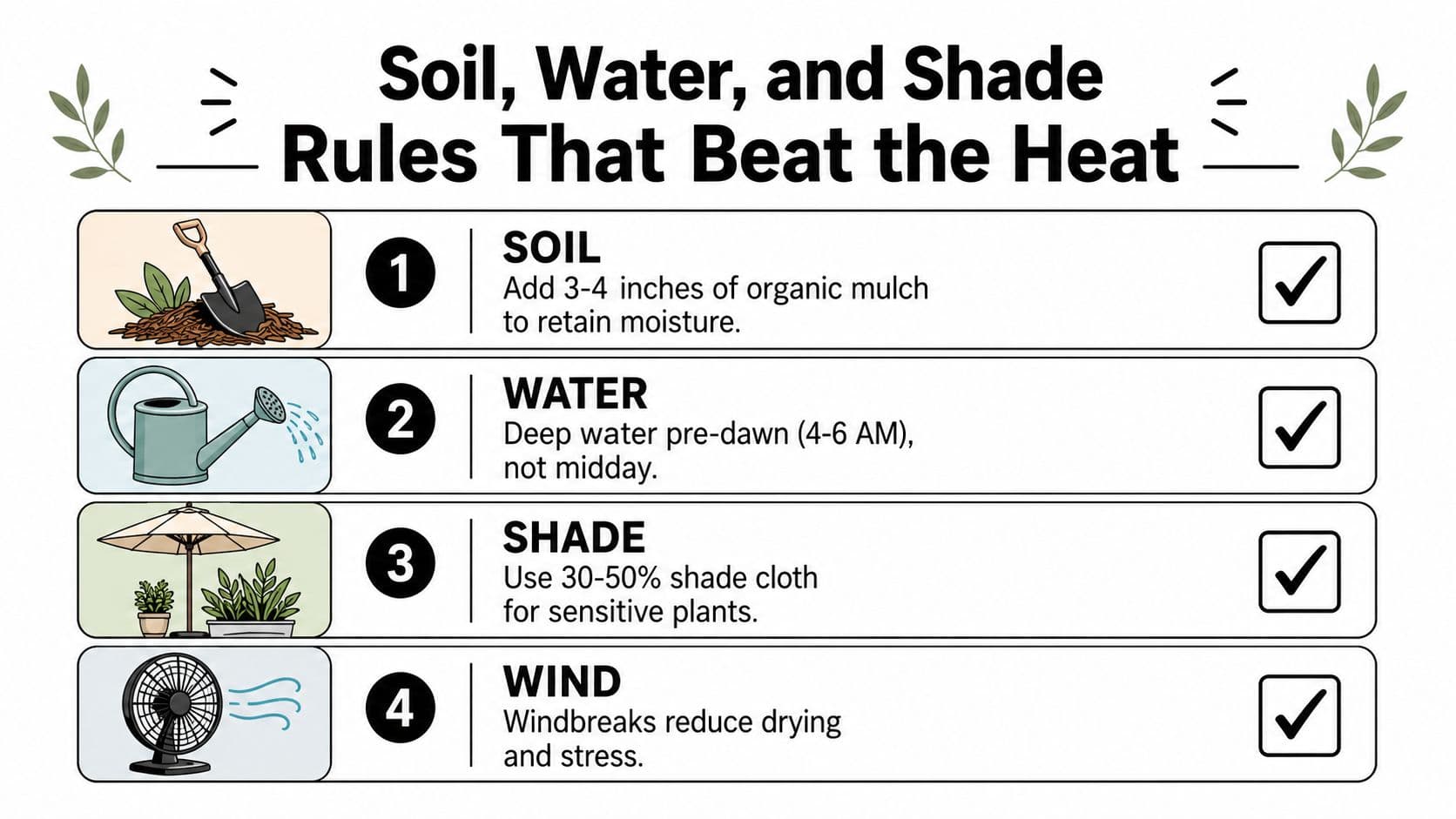
Deep irrigation matters more than frequent splashing. Watering in the cool part of the morning gives moisture time to move into the root zone before the sun and wind pull it back out. Midday watering wastes more water to evaporation and doesn't reach the plant as effectively in extreme heat.
Shallow watering trains roots to stay near the surface, where temperatures swing harder and moisture disappears faster. That's the wrong pattern for desert planting. You want roots to chase moisture downward, where the soil stays steadier.
Shade is a tool, not a luxury
Sensitive vegetables and herbs can benefit from 30% to 40% shade cloth in the hottest period, especially on exposed beds. That isn't about hiding plants from sunlight entirely. It's about reducing the stress load so the foliage and root system can keep functioning. If you're dealing with a very harsh site, use shade where the afternoon sun hits hardest.
Soil and mulch change the root zone
Las Vegas soils often need help holding water and letting it move where roots can use it. Organic matter improves that balance, especially in compacted or caliche-prone ground. Mulch on top helps hold moisture and buffers root temperatures, which is valuable when the air is dry and the soil surface heats quickly.
Survival rule: if the root zone is hot, dry, and exposed, the plant is working uphill all day.
Windbreaks help too, especially in open yards and on exposed patios. Less wind means less moisture loss and less leaf stress. In this climate, every layer that slows drying makes a plant's life easier.
Designing a Yard Around Your Real Zone
A good Las Vegas yard design starts by placing the hardest-working plants where the site gives them the best chance. Put shade trees where afternoon sun pounds hardscape. Keep thirsty or tender plants away from reflected heat. Group plants by water need so you're not forcing one irrigation schedule to serve everything at once.
Think in layers, not isolated specimens
Hardscape matters more here than it does in milder places. A pool deck, stucco wall, or light-colored patio can create heat that a plant feels all evening. If you ignore that reflection, you'll keep replacing plants that were never given a fair site. The fix is not always a different species. Sometimes it's just a different position.
Hydrozoning makes the rest easier. Put plants with similar water needs together so the driest corner doesn't get overwatered just to keep one thirsty accent alive. That habit saves time, reduces stress, and makes the whole yard look more coherent.
If you want to test a layout before digging holes, an ai garden design generator can help you preview how sun, shade, and plant massing might look against your actual space. That's especially useful in Las Vegas, where one poor placement can turn a good plant into a summer casualty.
A final point for the FAQ question people keep asking. The newer USDA map does not erase frost risk, and the city still isn't climatically uniform. The best yard plan treats the zone as the first layer, then layers in microclimate, water, and shade until the design matches the site you have.
If you're planning a Las Vegas yard and want to stop guessing, start with a photo of your space and build from the real exposure, not the nursery tag. OutdoorBrite Money gives you a fast way to visualize plant placement, shade, and hardscape before you spend on the wrong materials. Visit OutdoorBrite Money and use it to make your next desert decision with a lot more confidence.
See your yard reimagined
Start creating