Ground Cover Instead of Mulch: Complete Guide
Discover when to use ground cover instead of mulch, compare pros and cons, species selection, costs, and get actionable installation tips
A living ground cover can replace mulch long-term, but plan on a temporary 1–2 inch mulch layer during establishment; drought-prone beds still need a water source that can support the plants. The right choice is usually staged replacement, not an instant swap.
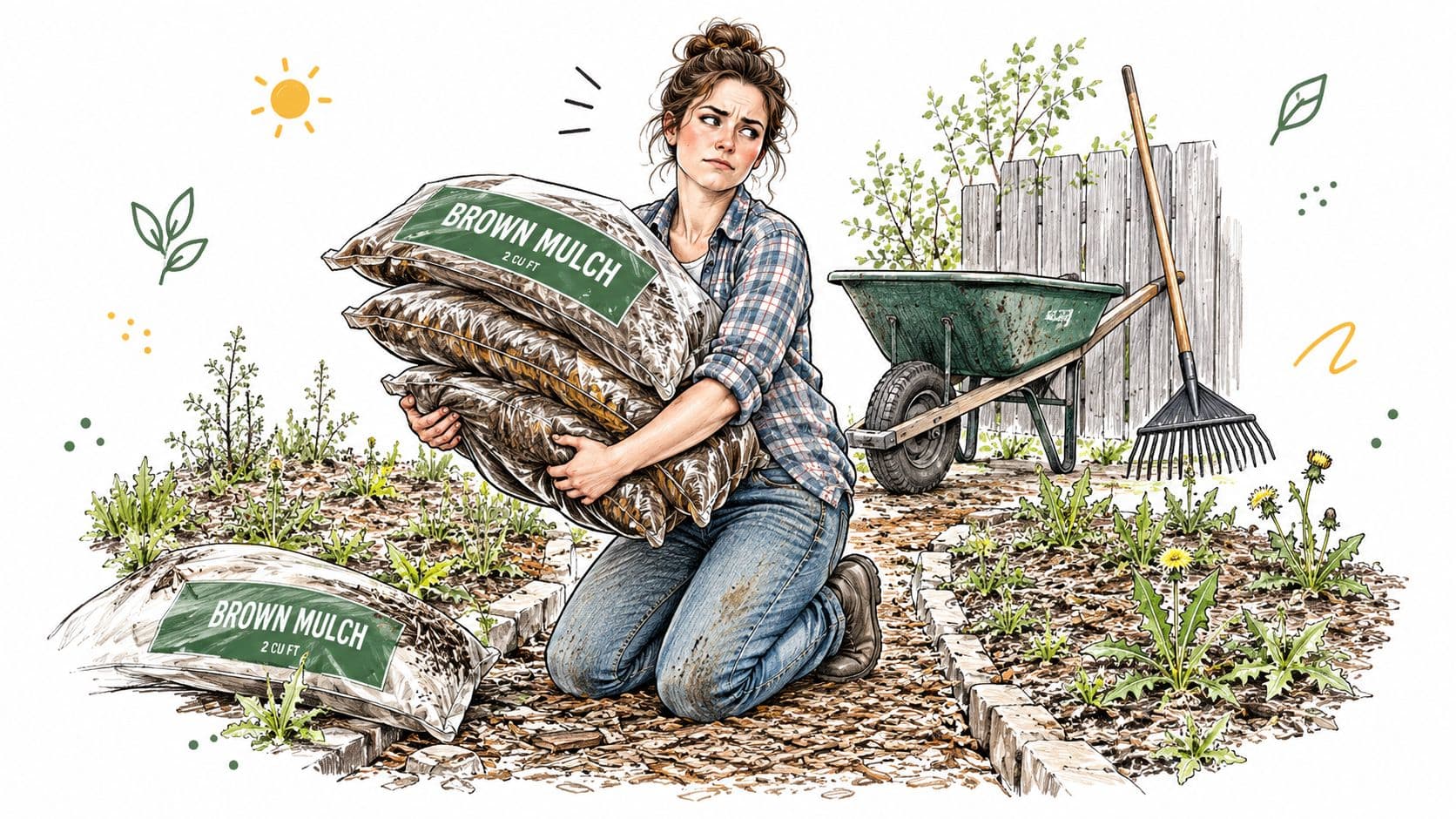
You're tired of buying mulch every spring, spreading it around shrubs, and watching weeds return through the same brown surface. The bed looks finished for a short time, then rain, wind, settling, and foot traffic expose the soil again. Ground cover instead of mulch sounds like a way to stop that cycle, but living plants don't behave like an inert layer.
A ground cover needs time to root, spread, and close its gaps. Until that happens, bare soil remains exposed to weeds, runoff, and erosion. Once the canopy becomes continuous, established ground cover can suppress weeds, slow stormwater, and hold soil in place, as explained by University of Maryland Extension.
That makes the practical question more useful than “Which is better?” Ask instead: Where should mulch protect the bed now, and where can living plants take over later? This approach works particularly well in planting beds, moderate slopes, and areas where mowing is difficult. It needs more caution on steep grades, dry sites, heavily trafficked surfaces, and near homes in wildfire-prone regions.
The comparison below focuses on what changes during installation, establishment, and long-term maintenance.
Table of Contents
- Introduction to Ground Cover Instead of Mulch
- Ground Cover vs Mulch Overview
- Pros and Cons of Living Ground Covers
- Suitable Species and Mulch Types for Different Conditions
- Installation, Maintenance, and Water Budget Trade-offs
- Cost and Longevity Comparison
- When to Choose Ground Cover Instead of Mulch
- Frequently Asked Questions
Introduction to Ground Cover Instead of Mulch
A front bed usually reaches the same breaking point the same way. The mulch has thinned out, weeds are pushing through, and another top-up feels like paying for the same short-term fix again. Replacing mulch with living ground cover can solve part of that problem, but ripping out the mulch all at once usually creates a new one: exposed soil between small plants.
The better move is staged replacement. Install the ground cover in a properly prepared bed, keep a light temporary mulch layer between the young plants, then pull that mulch back as the planting fills in. That gives you weed control and soil cover during establishment instead of asking immature plants to do a mature planting's job. It also gives you room to adjust irrigation. New ground cover often needs regular watering early on, even if the long-term goal is to reduce how much bare soil dries out in summer.
Used well, living ground cover can handle several jobs homeowners expect from mulch:
- Weed suppression: Dense growth limits the light and open space weeds need.
- Soil protection: Roots help hold soil, and foliage reduces direct impact from rain.
- Runoff control: Once coverage is established, water moves across the bed more slowly.
- Habitat: Depending on the plant choice, you may get flowers, texture, and insect activity that mulch alone cannot provide.
Timing matters. On slopes, in dry exposures, or anywhere runoff already shows up after storms, I would not count on fresh planting alone to stabilize the surface. Temporary mulch, and sometimes erosion control material, still earns its keep while the bed closes in.
Wildfire exposure changes the decision too. Near the house, the safest answer may be less combustible material of any kind, along with simpler plant spacing and stricter maintenance. Ground cover is often a replacement strategy, not an instant swap.
Ground Cover vs Mulch Overview
Traditional mulch is a surface layer placed over soil. Bark, wood chips, and other organic materials gradually decompose, while gravel and stone remain largely inert. Ground cover fabric is another common option, though it works differently from both plant-based cover and loose mulch because it creates a barrier beneath or beside the surface material.
Living ground cover is a planted mat. Creeping plants, spreading perennials, and low grasses occupy the soil itself, gradually replacing the exposed surface rather than covering it. The two approaches aim at similar outcomes, but they reach them on different schedules.
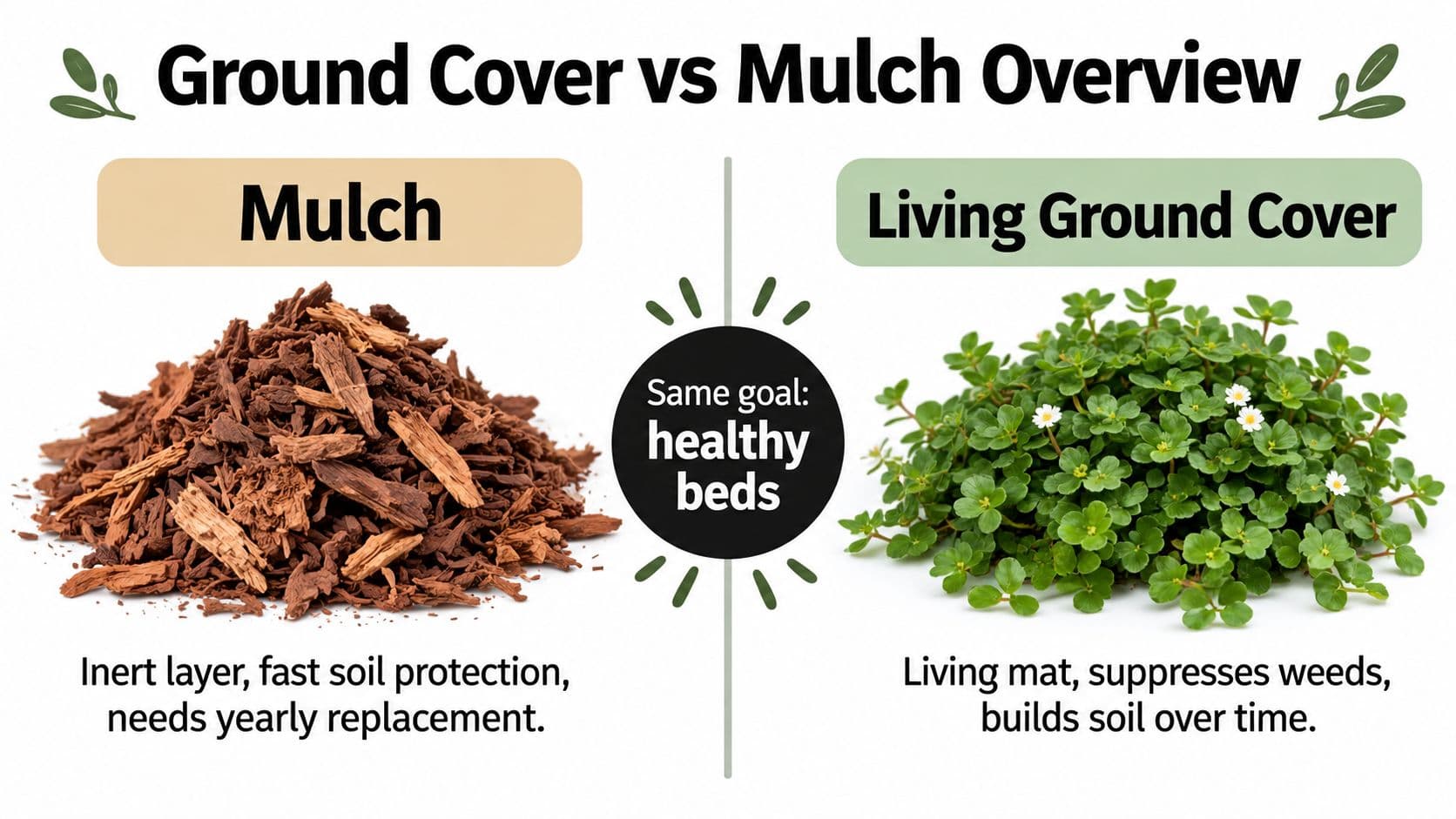
Ground cover also belongs to a longer soil-conservation tradition. A University of Maryland Extension publication based on USDA conservation material describes how vegetative cover protects land from erosion. That agricultural history matters at residential scale because the same basic mechanics apply: roots hold soil, foliage intercepts rainfall, and continuous coverage reduces exposed ground.
| Criterion | Mulch | Living ground cover |
|---|---|---|
| Initial performance | Protects soil immediately | Needs time to root and spread |
| Weed control | Blocks light from day one, but gaps can develop | Improves as the canopy closes |
| Moisture | Reduces evaporation without using water for growth | Uses soil water and releases some through transpiration |
| Erosion | Predictable during establishment | Stronger once plants form continuous cover |
| Maintenance | Organic types need replenishment | May need edging, thinning, and seasonal cleanup |
| Traffic | Usually unsuitable for repeated traffic unless designed for it | Most types are also unsuitable for heavy traffic |
| Soil benefits | Organic types add material as they decompose | Roots contribute living structure over time |
Neither option wins every category. Mulch provides immediate protection and predictable moisture conservation. Ground cover can reduce repeated surface replacement and add living ecological function, but only after careful establishment.
Pros and Cons of Living Ground Covers
Living ground cover is attractive because it turns a bare bed into a functioning plant community. A closed canopy shades the soil, reduces opportunities for weed seeds to germinate, and keeps roots working in the bed through part or all of the year. The result can feel more permanent than a freshly spread layer of bark.
That permanence depends on species choice and maintenance. A vigorous spreader may fill gaps quickly, but it can also cross edging, enter shrub crowns, or overwhelm slower plants. Mature cover often needs periodic thinning, trimming, or boundary control. It doesn't mean “plant once and forget forever.”
Where ground cover earns its place
The strongest advantages appear when the site matches the plant:
- Continuous protection: Once the canopy closes, foliage and roots cover soil more consistently than a thin or displaced surface layer.
- Living soil support: Root growth can contribute organic matter and improve soil structure over time.
- Habitat value: Flowering and evergreen species can provide shelter and seasonal resources for insects.
- Difficult mowing areas: Slopes and narrow beds become easier to manage when a suitable mat-forming plant replaces turf.
The water requirement is the most common surprise. Unlike bark or stone, living cover transpires. University of Nevada guidance cautions that mulch limits evaporation while living mulch draws water from the soil and releases some of it into the atmosphere. A horticultural field study cited in that guidance recorded mid-July soil-water reductions of approximately 5–12 percentage points, equivalent to about 60 mm of water per metre of soil depth, and estimated that vigorous growth could require an additional 30–60 mm of irrigation to avoid stress.
That doesn't make ground cover unsuitable for xeriscaping. It means you must select for local heat, drought tolerance, rooting behavior, and seasonal water demand rather than choosing by appearance alone. For regional ideas, this guide to choosing ground cover for Austin yards is a useful example of matching plants to a hot, water-conscious garden.
Why mulch still works
Organic mulch provides fast weed suppression, root insulation, and gradual nutrient release as it breaks down. Inorganic gravel and stone last longer and suit dry, decorative, or hardscape-adjacent designs, though they don't build soil in the same way organic material does.
Mulch has failure points, but they're usually easy to identify. Piling it against trunks or plant crowns can create moisture and decay problems. Synthetic fabric can interfere with water movement and becomes difficult to manage once roots and weeds grow through it. Organic mulch also needs periodic replenishment, often every one to three years, depending on material and conditions.
The reason mulch remains the default is simple: it performs predictably from day one. In a steep, newly graded, or water-limited bed, that reliability may matter more than the long-term appeal of living cover. Homeowners comparing a broader range of planting options can also review these best lawn alternatives for 2026 before committing to a single treatment.
Suitable Species and Mulch Types for Different Conditions
Choose the material or plant for the site, not for a catalog photograph. A drought-adapted, shallow-rooted ground cover may suit a xeriscape bed, while a shade-tolerant creeper is better under an established canopy. A mat-forming plant with strong soil-holding ability can help on a moderate slope, provided it won't spread into nearby beds.
Vigorous spreaders need boundaries. Use edging, inspect the perimeter during the growing season, and thin plants before they cross paths or crowd shrubs. A ground cover that fills quickly can be useful, but uncontrolled spread turns a low-maintenance bed into a recurring division project.
For mulch, bark and wood chips fit woodland-style beds, shrub borders, and flower plantings where organic matter is welcome. Gravel or stone suits Mediterranean-style designs, drainage-conscious areas, and beds beside hardscape. Neither should be selected solely because it looks tidy in a showroom.
The useful decision rule is seasonal water demand before mature appearance. Consider heat, rainfall, irrigation access, shade, slope, soil drainage, and the plant's mature spread. A plant that looks ideal at maturity may struggle during establishment or compete with shrubs for moisture. Conversely, a modest-looking species that tolerates the actual site can create the more durable installation.
Installation, Maintenance, and Water Budget Trade-offs
The safest replacement plan starts with a prepared bed. Remove perennial weeds, correct drainage problems, and place plants so they can expand without immediately crowding trunks, crowns, paths, or neighboring species. Leave the soil covered while the plants establish.
Use approximately 1–2 inches of mulch between new ground-cover plants during this phase. University of Illinois Extension explains that properly maintained ground covers create dense soil cover, retard weed growth, and prevent erosion, while slopes may need mulch or fiber netting at planting.
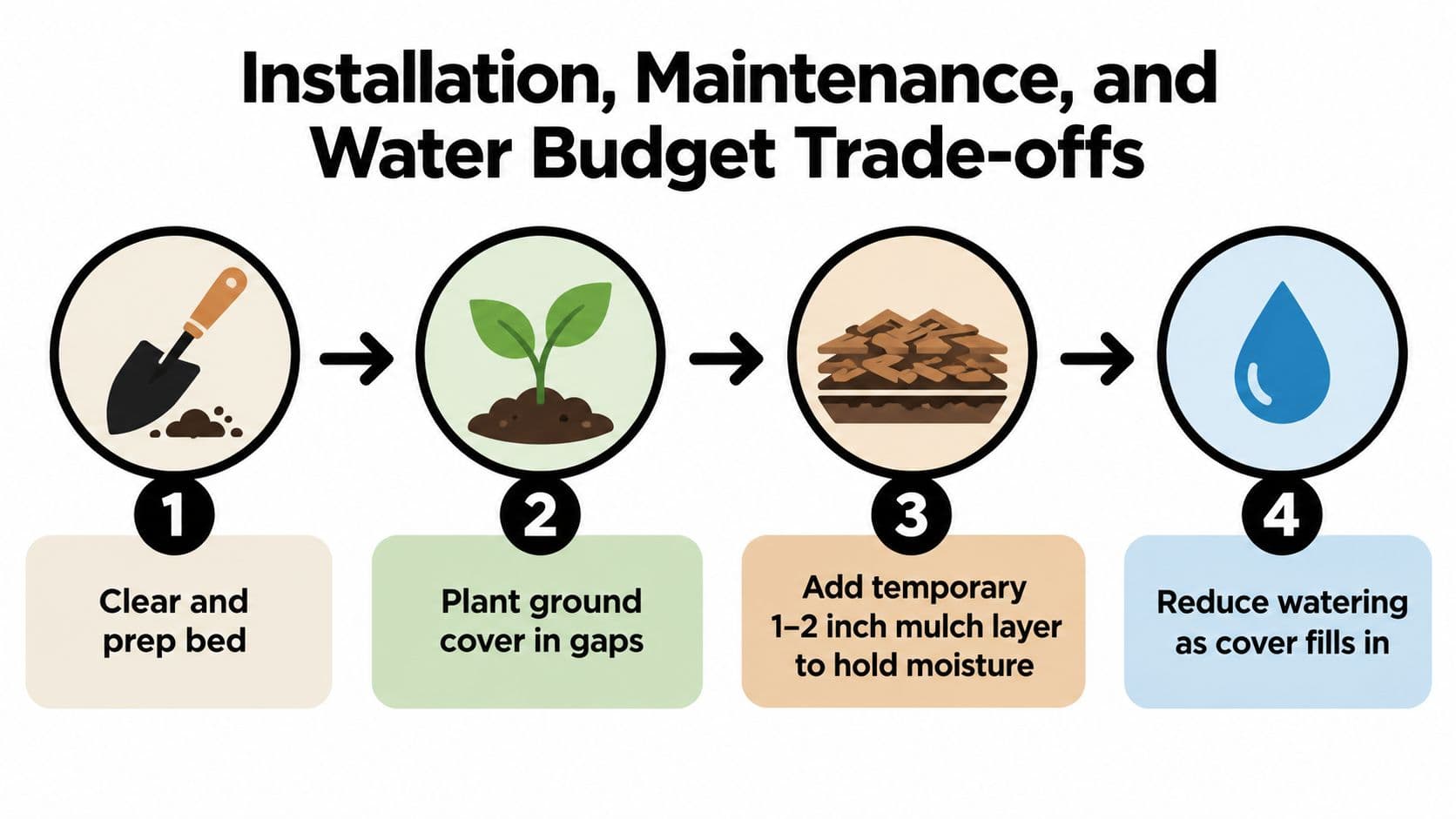
A workable seasonal sequence
At planting, water regularly and inspect the bed after heavy rain. Keep mulch off plant crowns and tree trunks so the young plants don't stay excessively wet at the base.
During the first growing period, check soil moisture during dry weather and remove weeds from gaps before they seed. Don't reduce irrigation just because the plants look green on the surface. Roots may still be shallow.
After establishment, shift from routine irrigation toward checks during summer or fall dryness. University of Illinois guidance supports this change after the first season, but local heat, rainfall, soil, and plant choice still determine the schedule.
As coverage closes, rake back or reduce mulch rather than stripping the bed in one operation. Removing all protection too early creates erosion and weed gaps. Thin aggressive spreaders and keep access paths clear.
Living cover may need more water than mulch because it has a biological water budget. The Nevada evidence above shows that active living mulch can lower soil water substantially, while USDA soil-conservation guidance emphasizes mulch's immediate role in reducing raindrop impact, crusting, compaction, and evaporation.
Use these water-saving yard design tips when irrigation capacity is limited. They can help you position beds, hardscape, and plants so the replacement plan doesn't create a water demand the property can't support.
Cost and Longevity Comparison
Mulch usually wins the first season because the work is straightforward. A crew or homeowner can prepare the bed, spread the material, and achieve immediate visual coverage without waiting for roots to fill gaps. Ground cover requires plant purchases, placement, watering, weed control, and gap management before it delivers the finished appearance.
Over a longer period, the cost pattern changes. Organic mulch requires repeated material handling and labor, while established ground cover shifts much of the work toward trimming, edging, thinning, and occasional replacement of failed plants. The financial result depends heavily on climate, plant survival, irrigation access, and how much maintenance the homeowner values.
| Time horizon | Mulch pattern | Ground-cover pattern |
|---|---|---|
| First season | Lower effort and predictable coverage | Higher planting and watering effort |
| Middle period | Replenishment and weed management continue | Gaps close and watering can become more targeted |
| Established bed | Ongoing material and labor cycle | Periodic trimming, edging, thinning, and cleanup |
| High-risk site | Often the safer protective layer | May fail if water, soil, or exposure is unsuitable |
Don't ignore hidden labor. Pulling weeds around loose material, clearing mulch from edging, moving bags, and rebuilding the bed after runoff all take time. Ground cover replaces those tasks with a different set of jobs, and its maintenance is usually less predictable if the plants spread aggressively.
For homeowners weighing other long-term outdoor materials, the same lifecycle thinking applies when you compare composite vs timber for coastal NSW. The cheapest initial installation isn't automatically the cheapest ownership path.
A practical rule follows: mulch is usually the better first-season choice, while ground cover can become the better long-term choice after establishment. Keep mulch where the site is extremely dry, heavily trafficked, steep, or prone to rapid erosion. Before buying material, find the right mulch amount for the areas that still need temporary or permanent coverage.
When to Choose Ground Cover Instead of Mulch
Ground cover is a strong candidate for planting beds, moderate slopes, and places where mowing is awkward or unsafe. It makes particular sense when you want continuous soil protection and would rather manage living plants than repeatedly spread organic material.
Mulch remains the better immediate answer on steep, highly erodible, newly graded, or water-limited ground. Those areas expose young plants to the exact conditions that make establishment difficult. Keep a protective layer in place and reduce it only as the canopy becomes dense.
Match the method to the yard
- High slope: Start with mulch, fiber netting, or another stabilizing treatment. Add mat-forming ground cover as the long-term layer only after plants can hold the surface.
- High traffic: Use neither a delicate ground cover nor loose mulch as the primary walking surface. Route traffic onto paving, stepping stones, or a defined path.
- Xeriscape design: Select drought-adapted, shallow-rooted plants only where rainfall or irrigation can support establishment. Retain mulch around young shrubs, under trees, and in exposed dry beds until coverage is near continuous.
- Defensible space near a house: Don't assume living plants are automatically fire-safe. Fire-resistant, low-growing, irrigated ground covers may be preferable to dry bark mulch in some climates, but dead stems and litter still need annual removal.
Fire safety changes with climate and maintenance. Colorado State University Extension identifies ground covers as useful for erosion control and parts of defensible space, while Utah guidance recommends low-growing, dense, irrigated cover with annual removal of dead material. Oregon State Extension's wildfire landscaping guidance cautions that dry bark mulch can become hazardous during drought.
There isn't one universally safest replacement within the first 0–5 feet around a home. Humid and temperate regions may offer more reliable green growth, while arid and wildfire-prone regions require closer attention to irrigation, dormancy, plant spacing, hardscape breaks, and combustible litter. A living plant that dries out and accumulates dead stems can still add fuel.
Design before you plant
Plant spacing determines how long the bed remains vulnerable. Too much space leaves weed and erosion gaps, while overly dense planting raises the upfront cost and can create crowding later. Check mature spread against nearby trunks, paths, drains, walls, and lawn edges.
OutdoorBrite lets homeowners and garden designers upload a yard photo and generate realistic redesign concepts in seconds. You can test styles such as modern, cottage, Mediterranean, tropical, Japanese zen, or xeriscape, then use the elements editor to add planting beds, edging, and hardscape features.
That visual step is useful when replacing mulch because you can assess plant spacing, coverage density, existing trees, walkways, and structures before committing. The tool supports subscription-based high-resolution downloads and doesn't require design software experience, so it can support a weekend DIY plan or a contractor's client presentation. You can also compare eco-friendly timber options when the design includes raised edges, screens, or other timber elements.
Test the proposed layout against the actual yard, confirm the plant's water and fire-management requirements, and only then buy plants or schedule installation.
Frequently Asked Questions
Does ground cover eliminate weeding?
Not at the beginning. Open spaces between young plants still receive light and moisture, so weeds can establish until the canopy closes. Temporary mulch, early inspection, and prompt removal prevent those gaps from becoming a permanent maintenance problem.
Can ground cover grow in full shade or full sun?
Some species can, but no single ground cover suits every exposure. Match the plant to the site's light, soil drainage, heat, and seasonal moisture. A shade plant placed in reflected heat may fail, while a sun-loving species under dense trees may thin out.
Should I remove all mulch before planting?
Usually, no. Clear planting pockets, loosen compacted soil, and keep a thin protective layer between plants. Reduce the mulch gradually as foliage spreads instead of exposing the entire bed at once.
Can living ground cover replace gravel or stone?
Sometimes, but drainage and root-zone conditions decide the answer. Gravel may be the better surface beside hardscape, in a dry decorative bed, or where plants can't tolerate the heat and drainage pattern. Living cover also adds a water demand that stone doesn't.
Is ground cover suitable for heavy foot traffic?
Most ground covers aren't a substitute for a walkway. Occasional contact may be tolerated by some sturdy species, but repeated traffic compacts soil and damages the canopy. Use paving or stepping stones for the movement route and reserve plants for the surrounding bed.
What should I do with ground cover near a wildfire-prone home?
Choose low-growing, irrigated species only when they can remain healthy, remove dead stems and litter annually, and interrupt planting with suitable hardscape where appropriate. Dry bark mulch can be hazardous, but unmanaged dormant vegetation isn't automatically safe.
Use OutdoorBrite to upload a photo of your yard, test a xeriscape or other planting style, and visualize ground-cover spacing before you purchase plants. Compare the proposed bed with existing trees, paths, and hardscape, then refine the layout before hiring help or starting the installation.
See your yard reimagined
Start creating