

Harvey Lemon Tree: The Ultimate Planting and Care Guide
Grow a thriving Harvey lemon tree with our step-by-step guide. Learn planting, watering, pruning, pest control, and how to visualize it in your yard.
You're probably standing in the yard with a small citrus tree in mind, trying to answer three practical questions before you commit. Will it survive your winters, will it produce, and will you regret where you planted it a few years from now?
That's where the Harvey lemon tree earns its keep. It isn't the fussiest lemon you could grow, and that matters more in a home garden than glossy nursery tags ever admit. A tree that handles weather swings, settles in well, and gives you fruit without years of suspense is usually the better long-term choice.
This guide is built for that real-world decision making. It covers where Harvey shines, how to plant it with enough room for its mature size, how to care for it through the seasons, and how to harvest for juice quality instead of stopping at surface color.
Table of Contents
- Why the Harvey Lemon Tree Belongs in Your Garden
- Perfect Placement and Planting for a Healthy Start
- Your Seasonal Guide to Watering and Fertilizing
- Pruning, Pest Control, and Disease Management
- Harvesting for Peak Flavor and Propagating New Trees
- Visualize Your Harvey Lemon Tree with AI Landscape Design
Why the Harvey Lemon Tree Belongs in Your Garden
Most home gardeners don't need a glamorous citrus tree. They need one that behaves well in an ordinary yard. That usually means a tree that can handle weather shifts, rewards basic care, and doesn't punish every small mistake.
The Harvey lemon tree has that reputation for a reason. It was formally selected in 1940 in Florida and was cultivated to be hardy in both hot and cooler conditions, according to the University of Florida IFAS publication on Harvey lemon. That background matters because some lemon varieties look great at the garden center but struggle once they leave protected nursery conditions.
A new gardener often starts with the dream of stepping outside and cutting a few lemons for dinner, tea, or a batch of juice. Then reality steps in. The patio gets colder than expected. The planting bed is tighter than it looked. Summer is easy, but the transition into cooler weather exposes weak varieties fast. Harvey tends to fit the gardener's life better because it was selected with climate swings in mind, not just ideal conditions.
A better fit for real home landscapes
The strongest case for Harvey isn't novelty. It's reliability.
- Climate tolerance: It was selected for Florida conditions that include heat and cooler spells, which gives it a practical edge in home gardens.
- Long track record: A cultivar with decades of horticultural history inspires more confidence than a trendy pick with little home-garden experience behind it.
- Useful fruit tree habit: Gardeners usually want a citrus tree that earns its space. Harvey is often chosen because it offers both ornamental value and kitchen value.
Practical rule: If you're choosing between a slightly more exotic citrus and one with a strong record of adapting to home conditions, pick the tree you're more likely to keep healthy for years.
It also belongs in the conversation as a design plant, not just a fruiting one. A lemon tree near a sunny patio, side yard, or front corner bed can carry a lot of visual weight. If you're comparing it with other garden-friendly choices, it helps to discover plants to boost curb appeal and think about how the tree will read from the street as well as from the kitchen window.
Perfect Placement and Planting for a Healthy Start
A Harvey lemon tree usually succeeds or struggles based on one early decision. Placement. If the site is wrong, every later fix feels like extra work.
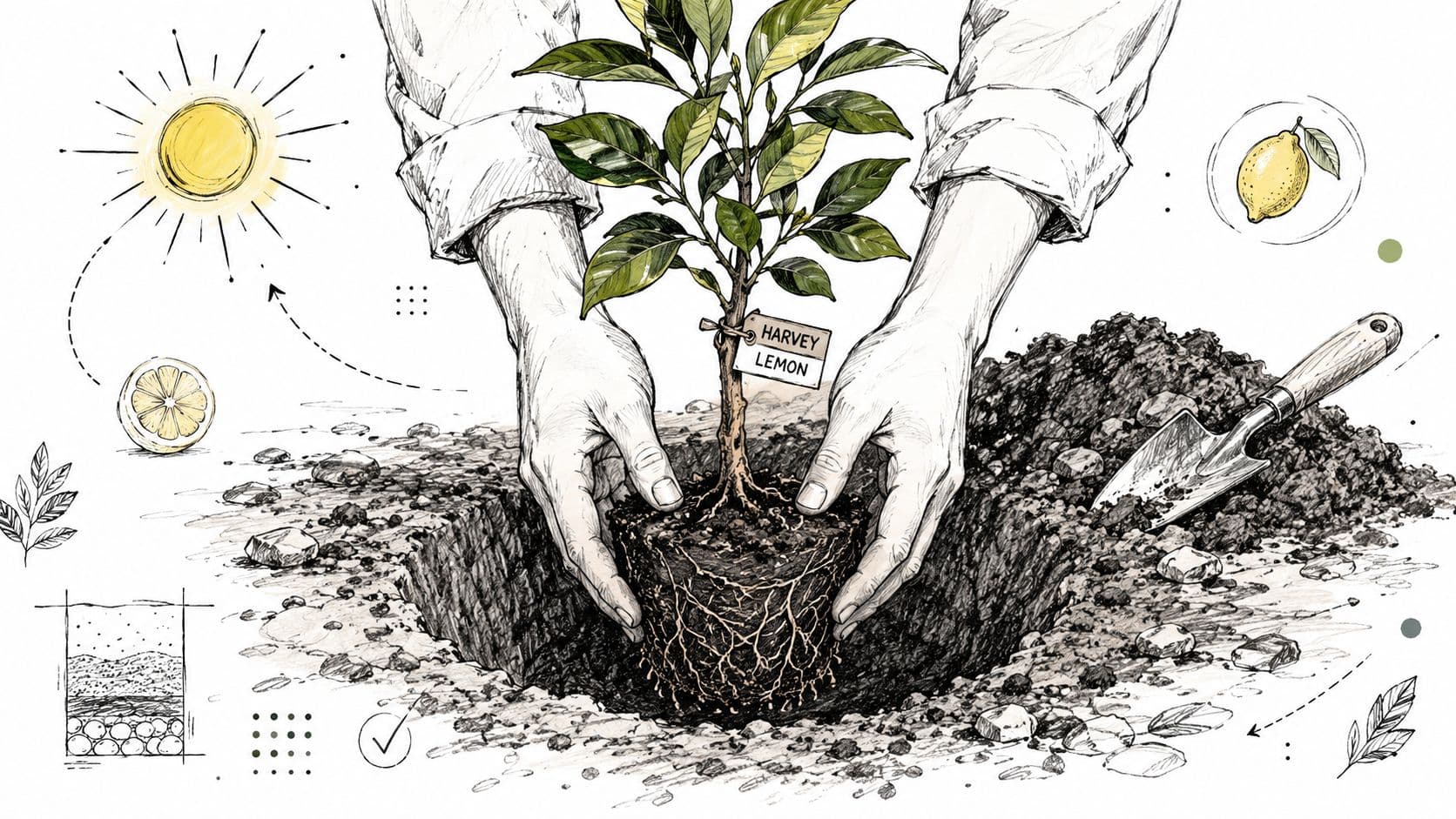
The hard numbers help here. Harvey is cold hardy to 20°F (-6.7°C) and is suited to USDA zones 8 through 11, and a mature tree reaches 12 to 14 feet tall and 8 to 10 feet wide, with at least 8 feet of spacing from other trees, according to this Harvey lemon tree profile. Don't plant it like a compact shrub. Plant it like a small tree that needs air and light.
Think about the mature tree, not the nursery pot
That small tree in a container can fool you. Gardeners tuck it near a fence, walkway, or foundation because it looks harmless. A few years later, the canopy wants more room, airflow drops, and harvesting becomes awkward.
Before planting, I like to judge a site by three things:
- Sun exposure: Citrus pays you back for bright conditions. If the spot already feels marginal for sun, it won't improve once surrounding plants fill in.
- Air movement: Tight corners trap moisture and make foliage slower to dry.
- Working room: You need enough space to prune, inspect leaves, and harvest without fighting other shrubs.
Leave room for the tree you want later, not the one you bought this afternoon.
If you're still deciding when to plant, timing matters almost as much as location. This guide on selecting the right tree planting season is useful for matching your planting day to local conditions instead of forcing the tree into stress.
In-ground and container setup
For in-ground planting, keep the process simple. Dig a hole that accommodates the root ball without forcing roots into a tight cylinder, set the tree at the proper height so it doesn't sink too low, and backfill with care so the roots make contact with the surrounding soil instead of sitting in air pockets.
For containers, the biggest mistake is treating citrus like a temporary patio annual. If you're growing Harvey in a pot, choose a stable setup with enough root room and strong drainage from the start. Gardeners using balconies or decks often need to think about support, weight, and railing-compatible setups too. If that's your situation, this railing deck planters installation guide helps with layout ideas that make small-space growing more practical.
A quick planting checklist helps avoid common errors:
- Check spacing first: Give the tree at least 8 feet from nearby trees so the canopy can develop without crowding.
- Match the climate to the site: Outdoor planting makes the most sense where winter lows fit Harvey's hardiness range.
- Avoid the cramped “empty corner” impulse: Empty doesn't always mean suitable. Corners often become the worst microclimates in the yard.
Your Seasonal Guide to Watering and Fertilizing
Citrus care goes wrong when people chase a rigid schedule. Water every few days. Feed on a fixed date. Repeat. That sounds tidy, but trees don't grow by calendar alone. Heat, wind, pot size, soil texture, and the pace of new growth all change what the tree needs.
The better approach is to tie care to the season and to what the tree is doing. A Harvey lemon tree in active growth wants different treatment than one sitting through cool weather. If you learn that rhythm, care gets easier.
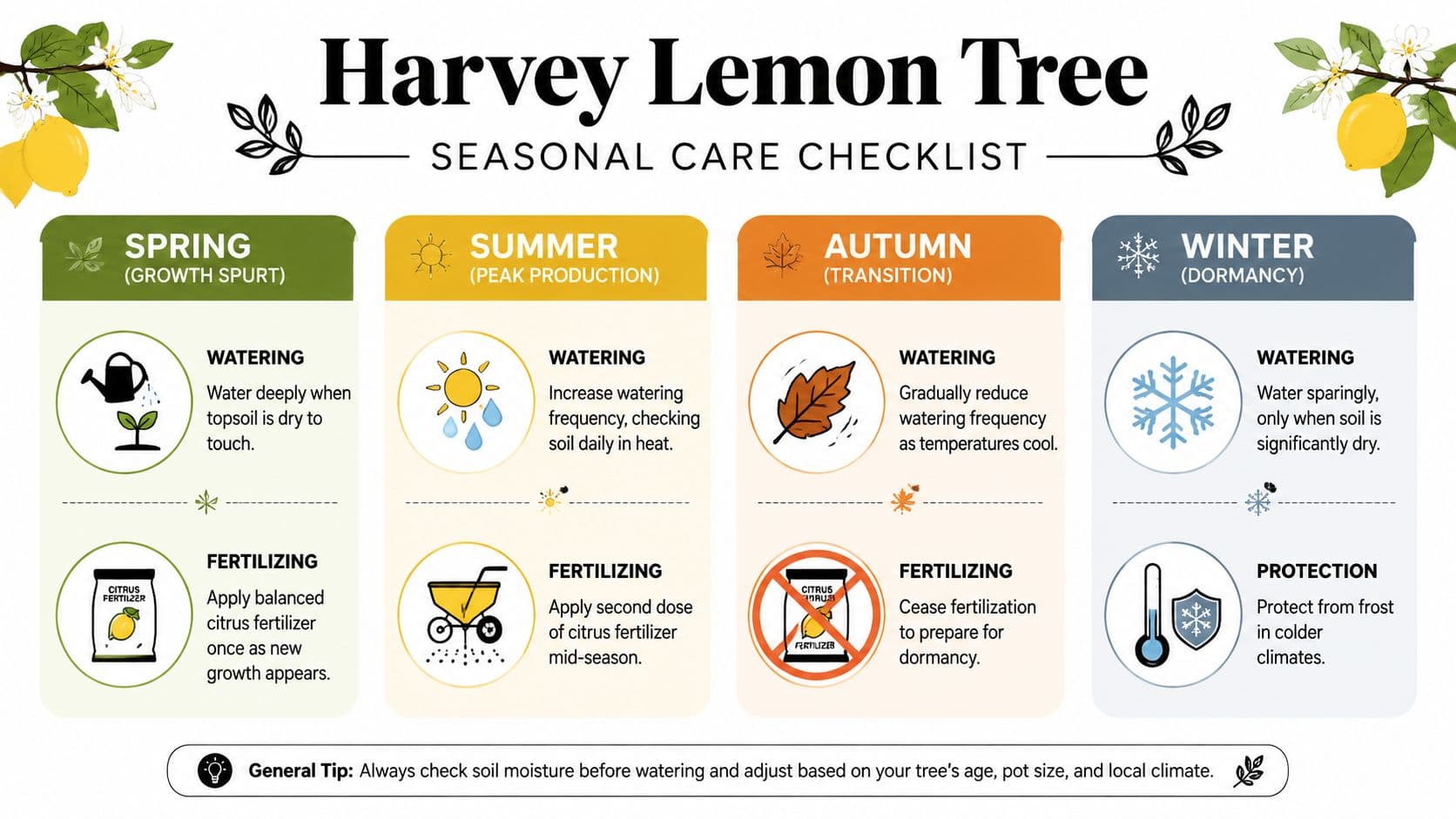
Water first, then feeding
A thirsty citrus tree and an overwatered citrus tree can both look unhappy. That's why “deep watering” matters more than frequent splashing. Water thoroughly, then let the root zone use that moisture before you water again. Shallow, frequent irrigation trains roots to stay near the surface, where stress shows up faster.
Use these field-tested rules:
- In warm active periods: Check the soil and water thoroughly when the surface has dried and the root zone is ready for another drink.
- In cooler periods: Ease back. Lower temperatures slow water use, especially for potted trees.
- After planting: Watch the tree more closely until it settles in. Newly planted citrus can't shrug off neglect the way an established tree can.
Fertilizer should support growth, not force it. Feed when the tree is actively pushing new leaves and stems, then taper off as growth slows. That shift matters because late feeding can encourage tender growth at the wrong time.
A citrus fertilizer plan works best when it follows the tree's growth cycle. More product isn't the same as better nutrition.
Harvey Lemon Tree Annual Care Calendar
| Season | Watering Focus | Fertilizing Action | Pruning/Pest Watch |
|---|---|---|---|
| Spring | Water deeply when the tree resumes active growth and the soil has started drying between waterings | Apply a balanced citrus fertilizer as new growth begins | Check for winter damage, dead twigs, and early insect activity |
| Summer | Increase vigilance during heat and wind, especially for container plants | Apply another feeding during the main growing season if the tree is growing well | Watch tender flush for chewing or sucking pests and inspect leaves often |
| Autumn | Reduce watering gradually as temperatures cool and growth slows | Stop fertilizing as the tree prepares for a quieter season | Remove weak or damaged shoots and keep the canopy open |
| Winter | Water sparingly and avoid keeping roots constantly wet | Don't push new growth with fertilizer during dormancy-like slow periods | Protect from cold stress and monitor indoor or sheltered plants for leaf drop triggers |
A few signs tell you the routine needs adjustment:
- Leaves look dull and limp in heat: Check moisture first.
- Soil stays wet too long: Back off watering before roots suffer.
- Growth is lush but weak: Fertilizer may be too aggressive for current conditions.
Good citrus care is steady, not dramatic. The goal is a tree that grows with purpose, flowers without strain, and holds fruit without cycling through avoidable stress.
Pruning, Pest Control, and Disease Management
Healthy Harvey lemon trees usually come from regular observation, not heroic rescue work. If you walk past the tree often, look under leaves, and prune with restraint, most problems stay manageable. When gardeners ignore the tree for months and then react all at once, they usually prune too hard, spray too much, or misread a stress symptom.
Pruning, pests, and disease all connect. A dense canopy stays damp longer. Stressed growth attracts trouble faster. Honeydew-producing insects lead to black fungal growth on leaves. One issue often opens the door to the next.
What to prune and what to leave alone
Citrus doesn't need constant shaping. It needs selective cleanup.
Start with what's clearly not helping the tree:
- Dead wood: Remove brittle or lifeless branches first.
- Crossing branches: If two limbs rub, one will eventually lose.
- Suckers and weak interior shoots: These often clutter the tree without improving structure.
Make cuts cleanly and avoid turning the tree into a stripped frame. I see this mistake often. A gardener wants “air circulation” and removes so much foliage that the tree spends its energy recovering instead of producing.
Keep the natural form. Pruning should improve structure and light access, not redesign the tree from scratch.
If a branch is carrying healthy leaves and sits well in the canopy, leave it alone unless there's a clear reason to remove it.
Pests and disease problems that start small
The most useful habit in citrus care is a slow inspection. Turn over a few leaves. Look for sticky residue. Check stems for bumps that don't belong there. Scan for distorted new growth.
A practical response usually follows this order:
- Confirm the problem. Don't spray because the tree “looks off.”
- Address the cause. Improve airflow, clean up plant debris, and correct watering mistakes.
- Use the mildest effective treatment first. Horticultural oils, soap-based products, or hand removal often solve early issues.
- Recheck before repeating. Repeated treatment without observation creates its own stress.
For crawling pests around containers or nearby hardscape, barrier and dust strategies can help in the right setting. If ants are farming sap-feeding insects around your citrus, these DE tips for ants and roaches are a useful companion read for controlling activity around the growing area.
A few patterns are worth remembering:
- Sticky leaves often signal insects first, fungus second.
- Black coating on foliage is usually easier to solve when you remove the insect source.
- Leaf drop after stress isn't always disease. Sometimes the tree is reacting to water imbalance, root disturbance, or an abrupt environment change.
Treat the tree like a living system, not a set of unrelated chores. Clean structure, calm roots, and frequent checks prevent more trouble than a shelf full of rescue products.
Harvesting for Peak Flavor and Propagating New Trees
Many gardeners harvest lemons too early because the fruit looks ready. That's understandable. A bright yellow lemon reads as finished. But with citrus, appearance alone can mislead you, especially if your main goal is juice.
Unlike many fruits, citrus does not continue to ripen after picking, so timing matters. The challenge is that many guides stop at “full color,” while juicing quality depends on more than appearance, as noted in this Harvey lemon growing page.
Why color alone is a weak harvest test
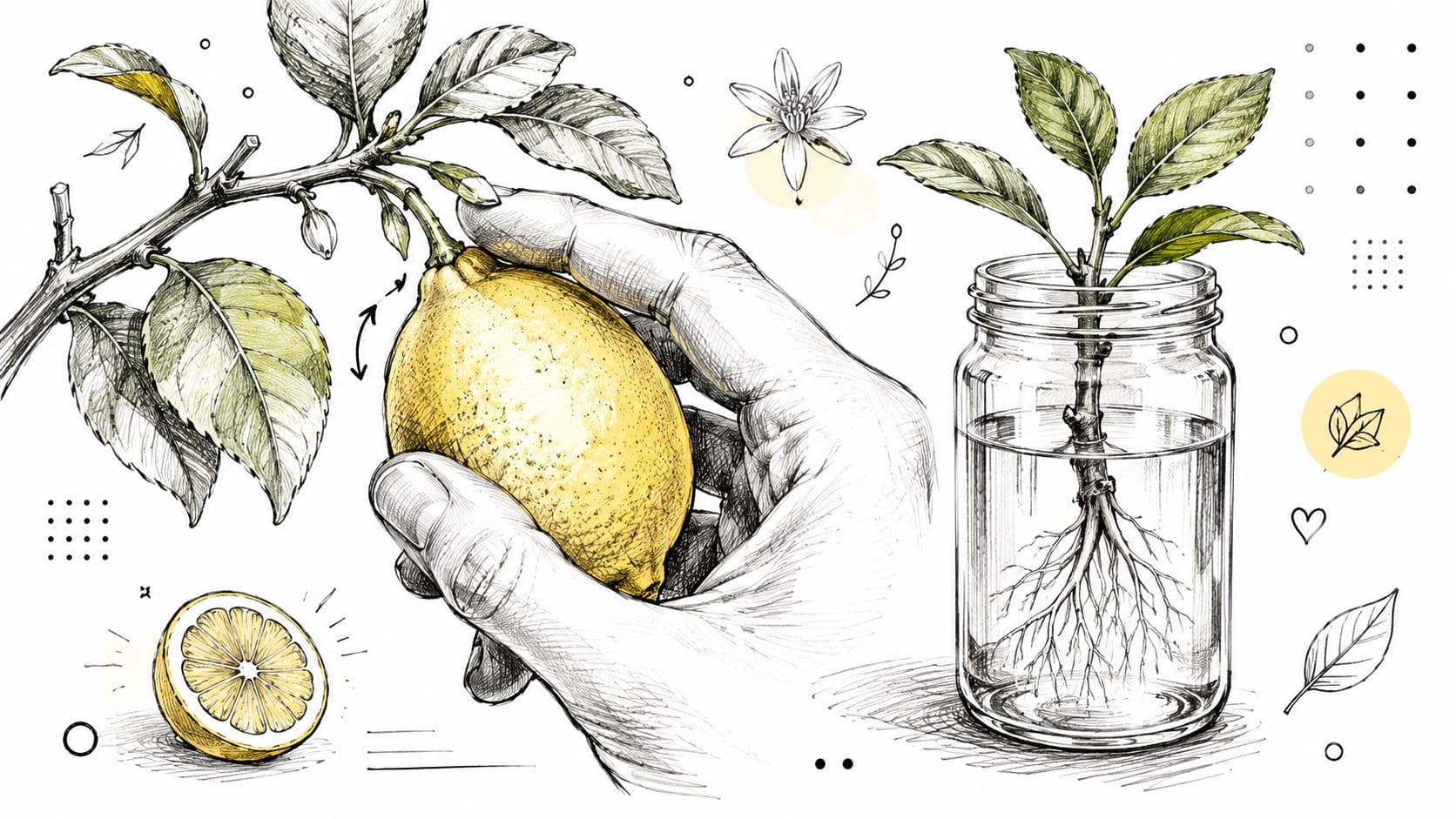
A lemon can be fully colored and still not be at its best for the kitchen. If you want strong juice yield and better balance, use a combination of signs instead of a single visual cue.
I tell gardeners to check fruit this way:
- Color is the first signal, not the final one: Yellow fruit gets your attention.
- Weight matters: Fruit that feels heavy for its size often gives a better impression of juice content.
- Texture matters too: Look for firmness with a slight give rather than rock-hard fruit.
That “slight give” is where experience beats guesswork. You're not waiting for softness. You're checking whether the fruit feels mature, dense, and ready rather than tight and unfinished.
If you're serious about juice, sample one fruit before stripping the tree. A single cut lemon tells you more than a week of staring at peel color.
The tree's season also helps. Harvey lemons can fruit early and are often harvested from September through March, with ripening typically in late fall to winter, according to the earlier Harvey profile already cited above.
Here's a helpful visual demonstration before you start harvesting in earnest:
A simple way to propagate from cuttings
Propagation is a worthwhile side project if you enjoy experimentation. It's less about instant results and more about learning how citrus responds.
A straightforward home method looks like this:
- Take a healthy cutting from vigorous growth, not weak or diseased wood.
- Remove excess leaves so the cutting doesn't lose moisture too quickly.
- Place it in a clean rooting medium or water, depending on the method you prefer.
- Keep conditions stable. Bright light helps, but avoid scorching exposure.
- Be patient. Cuttings fail most often from abrupt drying, rot, or constant disturbance.
What doesn't work well is treating propagation like a casual windowsill trick. Citrus cuttings need consistency. If you want a backup tree, start more than one cutting and focus on cleanliness and stable moisture.
Visualize Your Harvey Lemon Tree with AI Landscape Design
Planting mistakes usually don't happen because gardeners lack enthusiasm. They happen because mature scale is hard to picture. A young Harvey lemon tree looks manageable almost anywhere, and that's exactly why people place it too close to paths, patios, or larger shrubs.
This is one place where AI design tools are useful. Instead of guessing, you can upload a photo of your yard and test how a citrus tree reads in the actual space. That helps with aesthetics, but it also assists with practical decisions such as clearance, sightlines, and how the tree will interact with nearby planting beds.

Why pre-visualizing placement saves trouble
A good placement plan answers questions before the shovel goes in:
- Will the canopy crowd the walkway later
- Will the tree overpower a narrow patio bed
- Will nearby shrubs make the area feel cramped once everything fills out
- Does the container location still make sense when winter protection becomes part of the routine
Container-grown citrus often needs a multi-week transition before moving indoors for winter. That underserved topic, including the need to adjust light, water, and fertilizer gradually to prevent shock and leaf drop, is discussed in this container citrus transition discussion. Good planning starts before the first cold night. If you already know where the tree will live in summer, where it will transition in autumn, and how it fits under shelter or indoors, you avoid a lot of reactive scrambling.
Using AI to plan container moves and year-round care
The biggest advantage of AI visualization isn't novelty. It's decision clarity.
A useful workflow looks like this:
- Photograph the planting area from the angle you see most often.
- Test multiple positions for the Harvey lemon tree rather than falling in love with the first idea.
- Check the surrounding composition so the citrus doesn't block entrances, windows, or lower feature plants.
- Think through the off-season if you'll grow in a pot and need to move it during cooler weather.
If you want to compare tools before choosing one, this guide to the best ai garden design software is a practical starting point.
Pre-visualization also helps curb a common beginner impulse. People often plant for the empty space they have today. Experienced gardeners plant for the maintenance pattern they can manage later. A tree that looks perfect in spring can become awkward by harvest season if ladders, pruning access, or seasonal movement weren't part of the original plan.
If you want to map out your Harvey lemon tree before you buy soil, pots, or edging, try OutdoorBrite Money. It lets you test placements on real photos of your yard so you can make cleaner planting decisions and avoid layout mistakes that are easy to fix on screen but annoying to fix in the ground.
See your yard reimagined
Start creating