Herb Garden Design: A Beginner's Guide to a Perfect Plot
Start your herb garden design with confidence. Our guide covers layouts, plant selection, and visualization tools to create a beautiful and productive space.
You're probably standing in the exact spot where most herb gardens begin. Near the back door, on a balcony, or beside a tired flower bed, thinking fresh basil, parsley, and mint would be useful, but not knowing how to turn that vague wish into a functional layout.
That uncertainty is normal. Herb garden design looks simple from a distance, yet the difference between a thriving plot and a frustrating one usually comes down to a few early choices about access, light, spacing, and structure. Get those right, and the garden becomes easy to harvest, pleasant to maintain, and beautiful enough to feel intentional rather than improvised.
From Dream to Design Your Herb Garden Journey
A good herb garden usually starts with a practical craving. You want rosemary within reach for roast vegetables. You want mint for tea. You want a handful of parsley without buying another bunch that wilts in the fridge.
The mistake beginners make isn't lack of enthusiasm. It's assuming an herb garden has to be elaborate to be worth doing. In practice, the best herb garden design is often the clearest one. A defined space, clean paths, simple groupings, and plants chosen for actual use will outperform a decorative but muddled plan every time.
That idea is old, and that's useful. Formal herb gardens with organized beds, still popular now, date back to 12th-century medieval Europe, showing that accessible, functional planting areas have guided garden design for nearly 1,000 years according to the history of herb garden design at Brooklyn Botanic Garden. The appeal hasn't lasted because it's fashionable. It has lasted because it works.
Practical rule: Start with function, then add style. The garden you can reach, weed, and harvest will always look better by midsummer than the one designed only on paper.
I've seen small herb gardens succeed in places where owners thought they had too little room or too little confidence. A narrow side yard can become a productive cutting garden. A cluster of containers by the kitchen steps can feel complete when the pots share a common material or finish. If you want decorative touches that still fit a useful working garden, personalized garden style accents can help tie the space together without cluttering it.
Planning Your Perfect Herb Patch
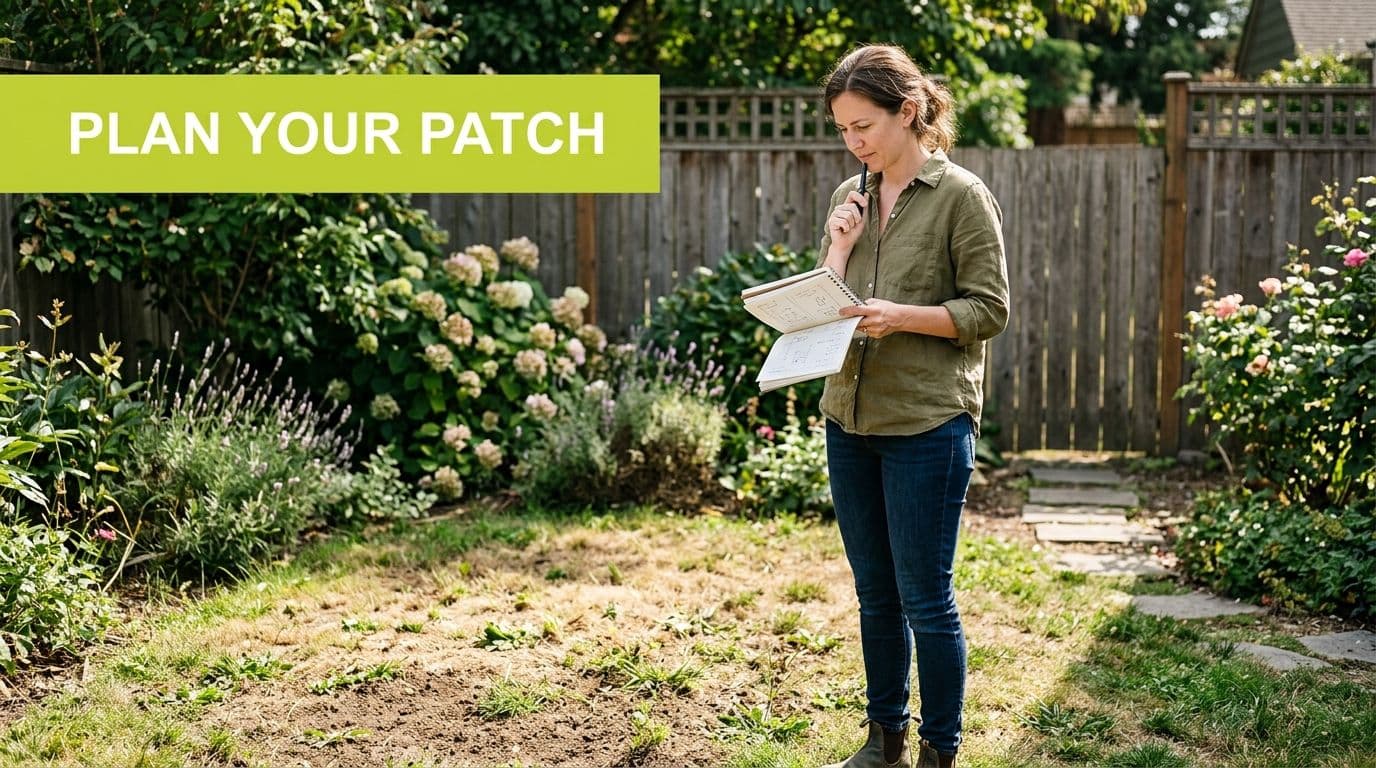
Effective planning happens before you buy plants. A notebook, a tape measure, and one slow walk around the yard will save more trouble than any impulse trip to the garden center.
Define what the garden needs to do
A kitchen-focused herb bed looks different from a mixed sensory garden. If you cook often, give the most space to staples you'll cut repeatedly. If fragrance matters more, lean into lavender, lemon balm, and thyme. If you want a low-fuss starter garden, reduce the plant list and repeat a few reliable favorites.
I like to sort goals into three buckets:
- Daily cooking: basil, parsley, chives, oregano, thyme
- Tea and fragrance: mint, lemon balm, chamomile, lavender
- Structure and evergreen presence: rosemary, sage, thyme
That short list helps when you're designing your ideal garden, because layout decisions become clearer when you know what you'll harvest.
Assess light and access first
For maximum usability, beds should be no more than 1.5 meters (about 5 feet) wide, so you can reach the center without stepping in, and most herbs need approximately 6 hours of sunlight per day according to this herb garden layout guide from Better Homes and Gardens Australia. Those two measurements shape almost every smart plan.
If a bed is too wide, the center gets neglected. If the site doesn't get enough light for the herbs you choose, growth turns thin and disappointing.
A simple site check works well:
- Watch the sun: note where light falls from morning through afternoon.
- Check your route: if the garden is awkward to reach, you'll harvest less often.
- Notice water access: dragging a hose across half the yard gets old quickly.
- Look at heat exposure: tender leafy herbs appreciate protection from the fiercest late-day sun in hotter spots.
A short visual walkthrough can help you translate those notes into a buildable plan.
Choosing Your Herb Garden Layout
Layout changes everything. The same collection of herbs can feel orderly, cramped, lush, or unmanageable depending on the structure holding it together.
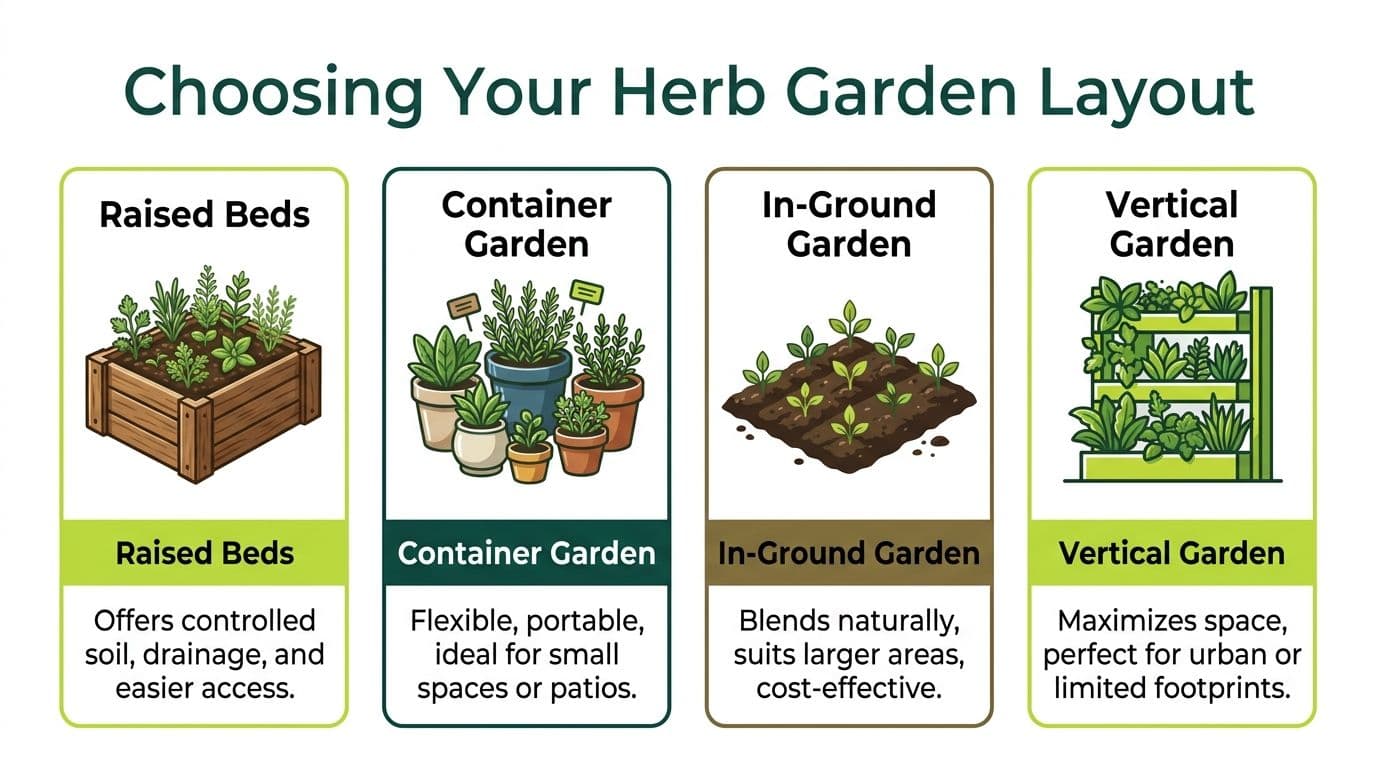
Four layouts that work for real homes
| Layout | Best for | Strengths | Trade-offs |
|---|---|---|---|
| Raised beds | Homeowners who want control | Better soil management, clean edges, easier harvest | Higher setup effort |
| Container garden | Patios, balconies, renters | Portable, flexible, easy to start small | Pots dry faster and need closer attention |
| In-ground garden | Larger yards and existing borders | Natural look, cost-effective, blends with other planting | Soil quality can be limiting |
| Vertical garden | Tight urban spaces | Uses walls and shelving efficiently | Watering can be uneven if poorly planned |
Raised beds suit gardeners who want a defined system. They're especially good when native soil is poor or drainage is unreliable. They also make herb garden design feel intentional from the start, because the boundaries are already established.
Containers are the easiest gateway. Terracotta, glazed ceramic, galvanized tubs, and sturdy resin planters all have their place. What doesn't work is using a pile of random undersized pots and expecting them to read as a single design. Group them by material, color family, or height and the whole area looks planned.
In-ground herb gardens feel softer and more integrated. They work well along a path, beside vegetables, or woven into an ornamental border. The downside is that aggressive growers can disappear into the mix or overwhelm neighbors if you're not vigilant.
Vertical setups solve the footprint problem, but they're best for lighter, frequently harvested herbs rather than large woody plants. Shelving, wall planters, and tiered stands can all work if the watering routine is realistic.
Spacing is where beginners usually crowd the bed
A practical rule is to allow 30 to 45 cm between individual plants, which gives herbs room to mature without overplanting, as noted by Jekka's small culinary herb garden designs. At planting time, that spacing can look too open. Resist the urge to fill every gap.
Crowded herbs don't look lush for long. They compete, airflow drops, and harvesting gets messy.
If you're torn between two layouts, choose the one you're most likely to maintain. A simple container cluster cared for weekly will outperform a large raised bed that feels like another chore.
Selecting Herbs for Your Climate and Kitchen
Plant choice should start with your habits, not with a generic “must-grow” list. The best collection is the one you'll cut often and understand quickly.
Build around use first
For cooking, start with the herbs that earn their space. Parsley, chives, thyme, oregano, basil, sage, and rosemary cover a lot of daily meals. If you drink herbal tea or want a softer sensory corner, mint and lemon balm are more useful than many people expect.
If your garden is partly decorative, use contrast well. Fine leaves beside broad ones, silver foliage beside deep green, upright forms behind mounding plants. That combination creates structure even in a small patch.
Don't ignore partial shade
Most herb guides overstate how much ideal sun people have. A significant share of urban gardens receive only 4 to 6 hours of direct sunlight, and only about 12% of recent herb garden articles include shade-specific plans, according to this partial shade herb garden article. That gap matters because many gardeners are working with less-than-perfect conditions.
For those lower-light spaces, chives, mint, parsley, and lemon balm are solid choices.
The smartest herb gardener isn't the one forcing sun lovers into a dim corner. It's the one matching plants to the site that already exists.
Herb selection guide by light and use
| Herb | Sun Needs (Daily Hours) | Primary Use | Best Layout |
|---|---|---|---|
| Basil | About 6 hours | Culinary | Raised bed or container |
| Parsley | 4 to 6 hours | Culinary | Raised bed, container, or in-ground |
| Chives | 4 to 6 hours | Culinary | Container or in-ground edge |
| Mint | 4 to 6 hours | Tea and culinary | Container |
| Lemon balm | 4 to 6 hours | Tea and fragrance | Container or raised bed |
| Rosemary | About 6 hours | Culinary and structure | Container or raised bed |
| Sage | About 6 hours | Culinary and structure | Raised bed or container |
| Thyme | About 6 hours | Culinary | Raised bed, wall edge, or container |
One warning matters here. Mint is useful, but it isn't polite. If you want it, give it its own container or a confined space rather than mixing it freely into a small bed.
Soil Irrigation and Long-Term Care
A handsome layout won't rescue bad drainage. If roots stay wet too long, herbs decline fast, especially the woody types.
Get the soil right before planting
Most herbs need free-draining soil with a pH between 6.0 and 7.0, and woody herbs in containers need at least 150mm of depth for their root systems, according to this guide to creating an herb garden. In practical terms, that means avoiding heavy, waterlogged ground and being selective about container size.
If your soil is sticky and dense after rain, improve drainage before you plant. If it's weak and dries too quickly, add organic matter and monitor moisture more closely. If you need a deeper primer, this guide on how to improve your garden soil for planting is a useful place to start.
Watering and upkeep that actually works
Irrigation doesn't have to be complicated. What matters is consistency and placement.
- Water the root zone: aim low, not over the foliage.
- Match method to scale: a watering can suits a compact setup, while drip irrigation makes sense for larger beds.
- Use the right container depth: shallow pots are rarely enough for woody herbs.
- Harvest properly: regular cutting keeps many herbs productive and shaped.
For ongoing care, Jekka's pruning advice is one of the most practical references I know. Cut stems from the tips, favor fresh soft growth, and avoid hacking into old woody tissue on herbs such as sage and thyme. Mint also needs containment because it spreads aggressively in shared space.
Visualize and Style Your Herb Garden Design
The productive herb garden isn't automatically plain. Some of the best-looking gardens are also the most useful because the styling comes from plant habit, repetition, and clear structure.
Style with contrast and rhythm
Use height deliberately. Rosemary or sage can anchor the back or center of a composition. Parsley and chives make a softer middle layer. Creeping thyme or low mounding herbs can soften an edge.
Color matters too. Silver foliage cools a planting down. Bright greens make the whole bed feel fresh. Repeating one pot style or one edging material helps the eye read the garden as a whole rather than as a collection of separate decisions.
For larger spaces, it also helps to think beyond the herb bed itself. Paths, seating, and nearby hardscaping affect how the garden feels in use. If you're also planning adjacent lounge or dining space, ideas for creating comfortable outdoor living areas can help the herb garden sit naturally within a broader outdoor setup.
Use visualization before you dig
A hand sketch still has value. It's fast, personal, and good for testing bed shapes. But modern planning is better when you can see proportion, materials, and plant massing before buying anything.
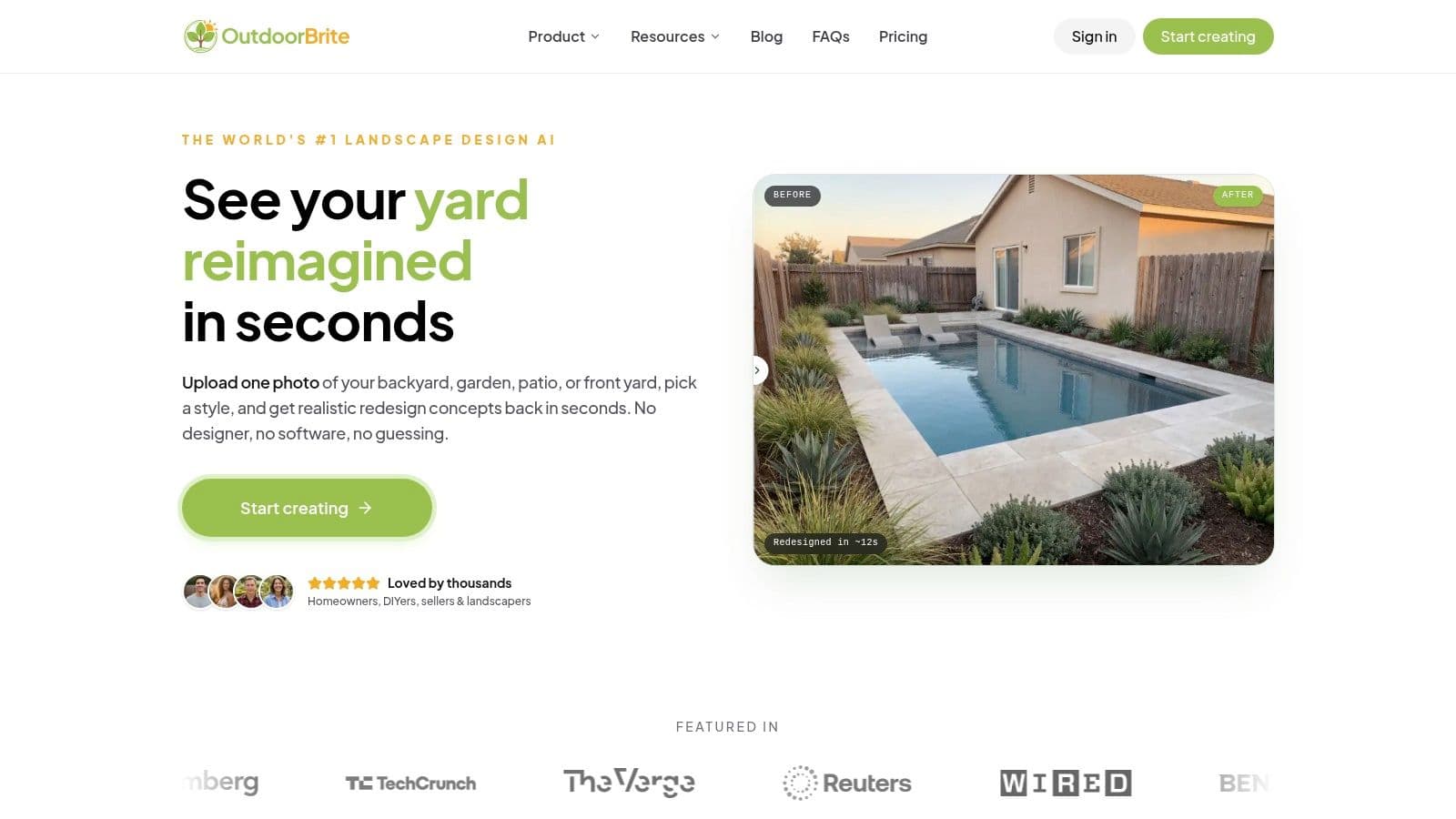
That's where an ai garden design generator becomes useful. Upload a photo, test different bed shapes, compare container arrangements against raised beds, and see whether your chosen palette looks refined or crowded. For beginners, that removes a lot of hesitation. For experienced gardeners, it speeds up decision-making and helps catch mismatched proportions early.
A garden plan becomes easier to trust when you can see it in context instead of trying to picture everything from a rough sketch.
A strong herb garden design always balances beauty and use. If the garden is easy to move through, easy to harvest, and pleasing from the house, you'll keep using it. That's the true measure of success.
OutdoorBrite makes that planning stage much easier. If you want to test layouts, materials, and planting styles before you commit, explore OutdoorBrite and turn a simple photo of your yard, patio, or garden into a clear visual plan you can build.
See your yard reimagined
Start creating