
How Do You Attract Butterflies to Your Garden
Learn how do you attract butterflies to your garden with practical steps for nectar plants, host plants, water features, and seasonal timing that actually work.
You plant a row of colorful flowers, wait through the season, and eventually spot a butterfly drifting past. It lands, feeds briefly, then disappears. The garden looks inviting, but nothing stays long enough to lay eggs.
That's the central mistake behind many butterfly gardens. Adult butterflies need nectar, but caterpillars need specific host plants, shelter, and safe places to complete their life cycle. If you want to know how do you attract butterflies to your garden in a way that supports future generations, design for eggs, larvae, pupae, and adults, not just the prettiest flowers.
Table of Contents
- Designing a Complete Butterfly Habitat
- Choosing Host Plants for Caterpillar Survival
- Planting Nectar Sources for Adult Butterflies
- Creating Water Features and Sheltered Microclimates
- Embracing the Messy Garden for Butterfly Success
- Putting It All Together Year Round
Designing a Complete Butterfly Habitat
A row of nectar flowers may draw butterflies for a few minutes, yet leave no place for eggs, caterpillars, or pupae. A complete garden supports the whole cycle. Host plants, nectar plants, shelter, and water each serve a different purpose, and leaving out one can turn a promising border into a short stopover.
Host plants feed larvae and give females somewhere to lay eggs. Nectar plants supply adult butterflies across the growing season. Shelter reduces exposure to wind, rain, and abrupt temperature changes, while a shallow water source provides moisture and minerals during warm weather.
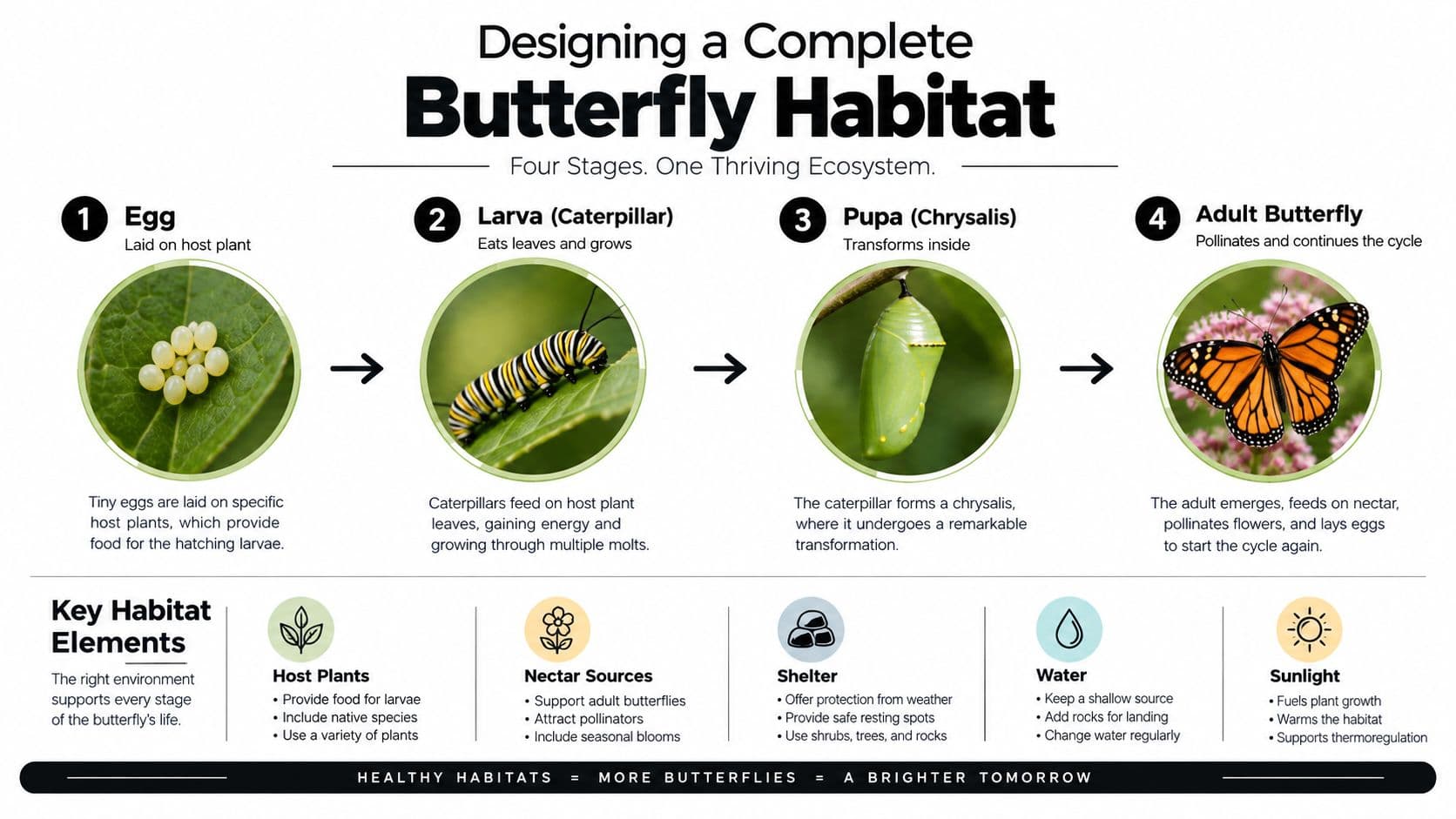
Build around the life cycle
Check a state, provincial, or national biodiversity database for butterflies recorded in your area. Match those species with locally suitable host plants, then add nectar plants whose bloom periods overlap. Put host plants along the rear or outer edge if leaf damage needs to be less visible. Group nectar plants in sunny, sheltered positions where adults can feed without crossing an exposed lawn.
Reserve a quieter zone for pupation and overwintering. Upright stems, grasses, dense vegetation, and leaf litter can provide attachment sites and cover. The guide to heat-proof garden planting can help with plant choices for a hot site, while ai garden design software lets you test the arrangement before buying plants or disturbing the soil.
Give the habitat a workable shape. A small garden can use a central nectar cluster about one to two metres across, with host plants set nearby rather than scattered singly. Leave narrow paths or open gaps between planting groups so butterflies can move through them, but keep each host plant patch large enough to avoid looking like an isolated specimen. Place a shallow water dish at the edge of the planting and provide nearby stems or stones for perching.
Choosing Host Plants for Caterpillar Survival
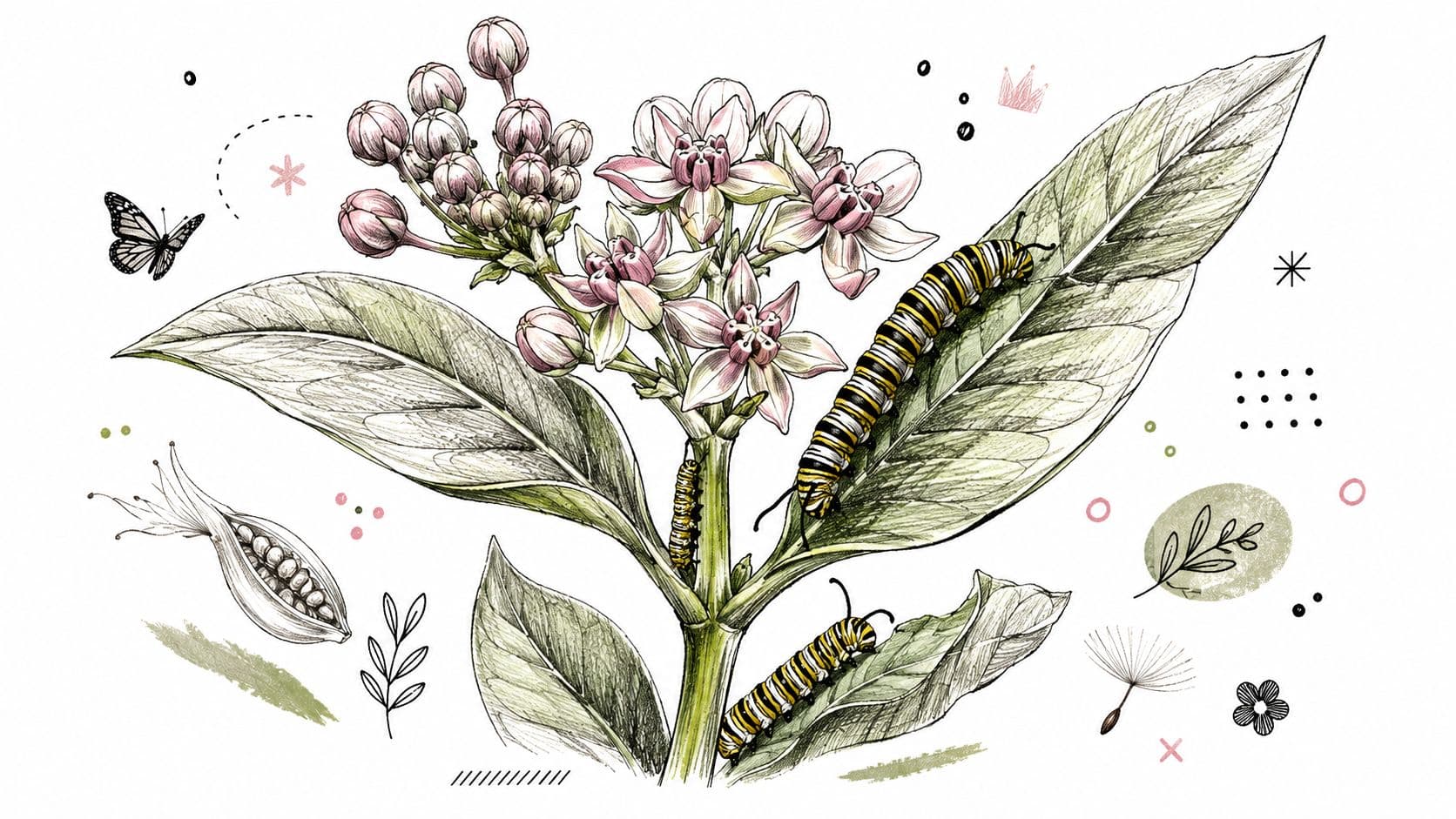
Caterpillars aren't general-purpose leaf eaters. Many can use only a narrow range of plants, sometimes a particular genus. The USDA Forest Service butterfly habitat guidance notes that most butterfly caterpillars use only one plant genus, which makes host-plant selection the foundation of reproduction.
Begin with the butterflies you want to support. Check local extension services, biodiversity databases, and regional field guides, then write down each species' larval host plants. Don't assume that a flower marketed as “butterfly friendly” will feed its caterpillars.
Match plants to local species
Monarch caterpillars require milkweed. Other butterflies may depend on native trees, shrubs, grasses, or perennial herbs. The NC State Extension guide to butterflies in your backyard recommends combining diverse host plants with nectar plants, rather than treating larval food as an afterthought.
| Butterfly Species | Host Plant | Region Notes |
|---|---|---|
| Monarch | Milkweed | Use milkweed species native or locally appropriate to your region |
| Great spangled fritillary | Violet | Caterpillars feed on violet leaves |
| Swallowtails | Regionally suitable host plants such as members of the carrot family | Confirm the species and host range through local extension guidance |
| Other local species | Native trees, shrubs, grasses, or perennials | Match plants to butterflies documented in your area |
Keep host plants in several locations rather than placing every plant in one dense patch. That gives caterpillars more feeding options and makes the garden less vulnerable if one plant suffers drought, disease, or heavy grazing. Expect foliage to disappear. A stripped stem isn't automatically a failed plant, it may be evidence that the garden is doing its reproductive work.
Protect larvae from the gardener
Avoid pesticides on host plants, including broad-spectrum products and treatments described as natural. A spray that controls aphids can also kill newly hatched caterpillars. Check nursery labels and ask whether plants were treated with systemic insecticides before bringing them home.
Don't hide all host plants behind ornamental screening. Put some near paths or observation points so you can look for eggs and larvae without disturbing them. If you're expanding a regional planting list, guidance on choosing native plants for 2026 offers useful context for prioritizing plants adapted to local conditions.
Planting Nectar Sources for Adult Butterflies
A garden can look full of flowers while offering little useful food across the season. Adult butterflies need nectar from early spring through late activity, and the wider garden still needs host plants for reproduction. In an urban private-garden study, observed butterfly richness ranged from 4 to 10 species per garden, increasing as gardens contained more host-plant and nectar-plant species in the published research. The practical lesson is clear: a sequence of varied plants supports more life than one fashionable shrub.
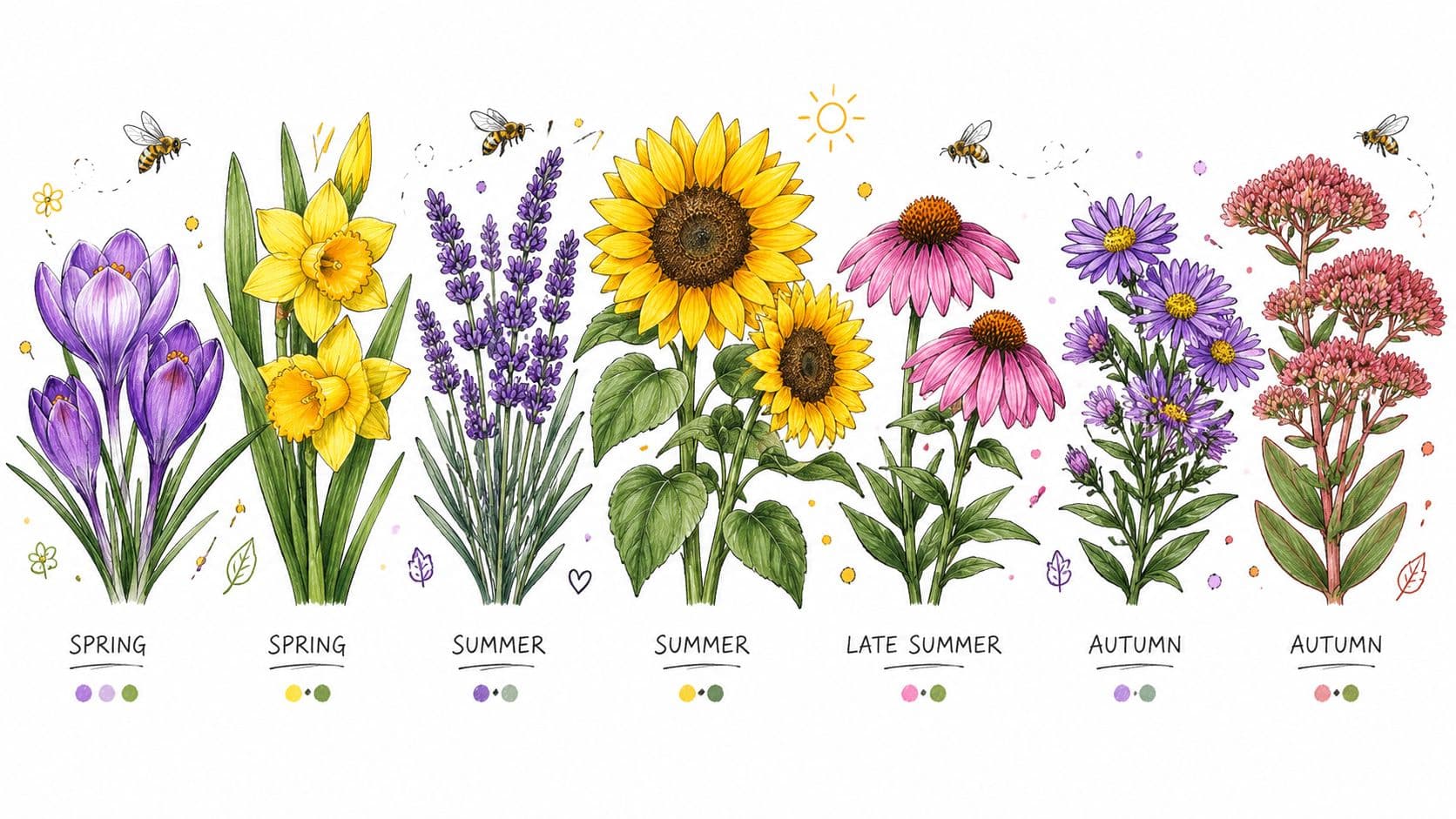
Plan the flowering calendar before buying plants. Combine early, middle, and late-season nectar sources so adults can feed whenever weather permits flight. Vary flower forms, heights, colors, and plant families. Flat-topped blooms offer useful landing surfaces, while tubular flowers may suit butterflies with longer proboscises. No single flower shape serves every species.
Favor diversity over the catalog effect
Plant nectar sources in visible clumps instead of scattering isolated specimens across the lawn. Groups of one plant are easier for butterflies to locate and create a stronger feeding area. Set them in full sun where possible, while shrubs, fences, or other structures reduce exposure to prevailing wind.
Research by Salisbury, Armitage, and Bostock, published in Insect Conservation and Diversity, examined 11 ornamental flower varieties and found that no single plant attracted the entire butterfly community. Oregano received 50.2% of recorded visits, compared with 22.2% for butterfly bush. Those figures describe that study, not a universal planting formula. Local climate, flowering timing, and butterfly communities differ, so use the results to support a mixed border rather than crown one winner.
Choose native or locally adapted plants from reputable nurseries, and ask whether flowering plants received systemic insecticides. “Organic” does not automatically mean harmless to caterpillars or adult butterflies. These OutdoorBrite garden design tips can help with plant combinations and placement.
Once the garden is established, record which plants receive visits. Note the date, weather, flowers in bloom, adult butterflies, eggs, and caterpillars. A short weekly check reveals what works better than a plant label's promise.
Here's a visual reference for combining seasonal nectar sources and varied planting forms:
Creating Water Features and Sheltered Microclimates
Food attracts butterflies, but the surrounding conditions determine whether they can rest, warm up, and remain active. A garden exposed to constant wind can lose visitors quickly, even when its flowers are excellent. Build small contrasts into the layout, with open sunny spots beside protected vegetation.
Compare simple water options
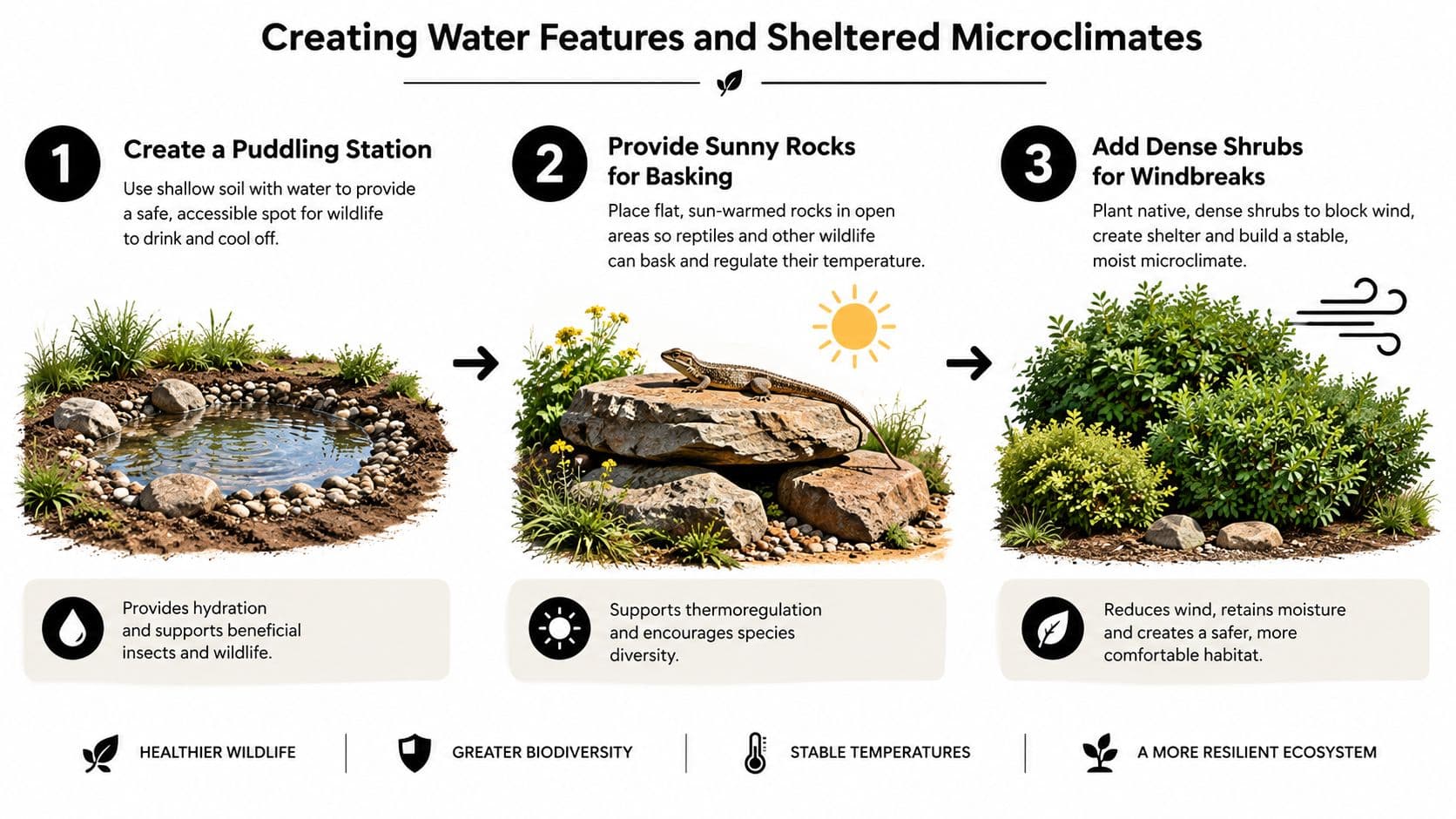
A puddling station is usually the most natural choice. Make a shallow patch of soil or sand, keep it damp, and refresh it regularly. Butterflies can take in moisture and minerals from the wet surface without facing the steep sides of a deep container.
A shallow dish filled with pebbles is easier to install and clean. Keep the water level low enough that butterflies can stand on exposed stones, and replace stagnant water regularly. A sloping birdbath offers more capacity, but smooth, deep basins can be difficult for insects to use safely.
Give butterflies somewhere to land
Place flat stones where morning and midday sun can warm them. Add taller shrubs, fences, grasses, or dense native vegetation on the side facing prevailing winds. These features create a sheltered pocket without turning the garden into a sealed enclosure.
Leafy cover also helps during heavy rain. Retain some stems and low vegetation instead of clearing every surface around a water feature. For a broader approach to managing water in the garden, sustainable yard water harvesting can help you plan irrigation and habitat features together.
You can sketch these relationships on paper, mark them on a photograph, or use a garden planning tool before making changes. The important question isn't whether the layout looks symmetrical. It's whether butterflies can move from nectar to shelter, water, and host plants without crossing a completely exposed yard.
Embracing the Messy Garden for Butterfly Success
A garden can look healthy and still support no butterflies beyond passing visitors. Perfect leaves may mean caterpillars have nowhere to feed, while eggs hide beneath foliage, pupae attach to stems or nearby structures, and leaf litter offers cover during harsh weather.
A full life-cycle garden requires visible damage. Keep enough host foliage for larvae to eat and for plants to recover. Judge the planting by feeding, shelter, and pupation, not by whether every leaf looks untouched.
Practical rule: If every leaf is perfect, look for what might be missing from the food chain.
Reserve one corner for stems, grasses, and leaf litter. Delay cutting plants until you have checked for eggs, pupae, and overwintering insects. Maintenance still has a place. Keep paths, seating areas, and formal borders tidy, then let habitat areas stay rougher. Leaving dead stems through winter also gives insects cover, following guidance from the USDA habitat guide.
Pesticides pose risks beyond direct treatment of host plants. Spray drifting from a neighboring lawn can reach flowers and foliage you never treated, and some products may persist in soil where larvae or other insects encounter them. Avoid spraying near property lines when wind could carry droplets, and ask neighbors to notify you before treating shared boundaries. Insecticides, habitat loss, and climate change are identified as important pressures in recent coverage of butterfly decline from Washington State University.
A slightly untidy border can support the stages a catalog-perfect planting misses. Holes, shed skins, and caterpillars are useful evidence that the garden is functioning.
Putting It All Together Year Round
A butterfly garden can look busy in June and still fail to produce the next generation. The test is whether it supports eggs, caterpillars, chrysalises, and adults across the year, not just whether flowers attract visitors. Treat each season as a maintenance window with a different decision to make.
From March through April, inspect emerging host plants before cutting damaged stems. In colder zones, delay milkweed cutting until late April or after new growth is clearly established. In warmer zones, check plants from late February and leave any stem carrying eggs or larvae. Record the first feeding damage, because those marks show which plants are functioning as nurseries.
From May through August, keep a simple weekly record of adult visits, eggs, caterpillars, and empty chrysalises. A plant stripped of leaves may be supporting more life than a pristine replacement. Clean shallow water dishes every few days during hot weather, and every week during mild weather. Remove algae, fallen leaves, and mosquito larvae without disturbing nearby pupae or resting insects.
September and October are the time to review what happened. Mark gaps between flowering periods, identify host plants that ran short of foliage, and label areas where caterpillars or chrysalises were found. Delay major clearing until you have checked stems, seed heads, and leaf litter. In regions with cold winters, leave these materials in place through spring unless they create a safety or disease problem.
From November through February, change the layout slowly. Order plants suited to local species, but reserve space for the plants that produced evidence of use. Avoid turning over every bed at once, since buried pupae and sheltered insects may be in undisturbed soil or plant debris.
One garden cannot reverse broad butterfly declines, which are linked to pressures including habitat loss, insecticides, and climate change as reported by Washington State University. Connected yards can still provide more feeding plants, shelter, and pesticide-free ground.
Start with one locally appropriate host plant, then expand according to what survives and what butterflies use. OutdoorBrite lets you upload a yard photo and generate layout concepts showing host plants, nectar beds, shelter, and water features. Visit OutdoorBrite to test an arrangement before buying materials.
See your yard reimagined
Start creating