Mediterranean Landscape Design: Guide to Stunning Gardens
Discover Mediterranean landscape design: plants, materials, layouts, & low-water strategies for a stunning, dream garden. Get our guide now!
A lot of homeowners start in the same place. They save photos of gravel courtyards, olive trees, pale stone paving, and terracotta pots, then look out at a thirsty lawn and wonder how that look could possibly work in a real yard.
The good news is that Mediterranean garden design isn't just a vacation fantasy. It's one of the most practical styles you can choose if you want a yard that looks settled, relaxed, and easier to maintain than a turf-heavy layout. The catch is that the style only works when you copy the logic behind it, not just the surface details.
Your Guide to a Sun-Drenched Garden
Mediterranean gardens evoke a sense of calm. The materials look aged instead of flashy. The planting feels loose but intentional. One can imagine eating outside, brushing past rosemary, and not spending every weekend chasing weeds or dragging sprinklers around.
That appeal is real, but the best Mediterranean garden design projects succeed for a more grounded reason. They simplify the yard. They reduce lawn, use a tighter plant palette, and rely on hardscape that looks better as it weathers. That makes the space easier to manage and often more usable day to day.
I've seen homeowners get stuck because they think they need a large property, imported materials, or a perfect climate. You don't. You need a clear layout, the right plant substitutes for your region, and the discipline to avoid decorative features that create more work than charm.
Practical rule: Start with the bones of the garden. Paths, sitting areas, shade, and drainage matter more than chasing a plant list from a photo.
A small side yard can become a gravel dining court. A basic patio can feel Mediterranean with light paving, textured pottery, evergreen herbs, and restrained color. Even a front yard can take on the style if you reduce turf and lean on stone, gravel, and dry-climate structure.
The goal isn't to make your property look like a film set in Tuscany. The goal is to create a yard that feels warm, durable, and believable where you live.
The Soul of Mediterranean Design
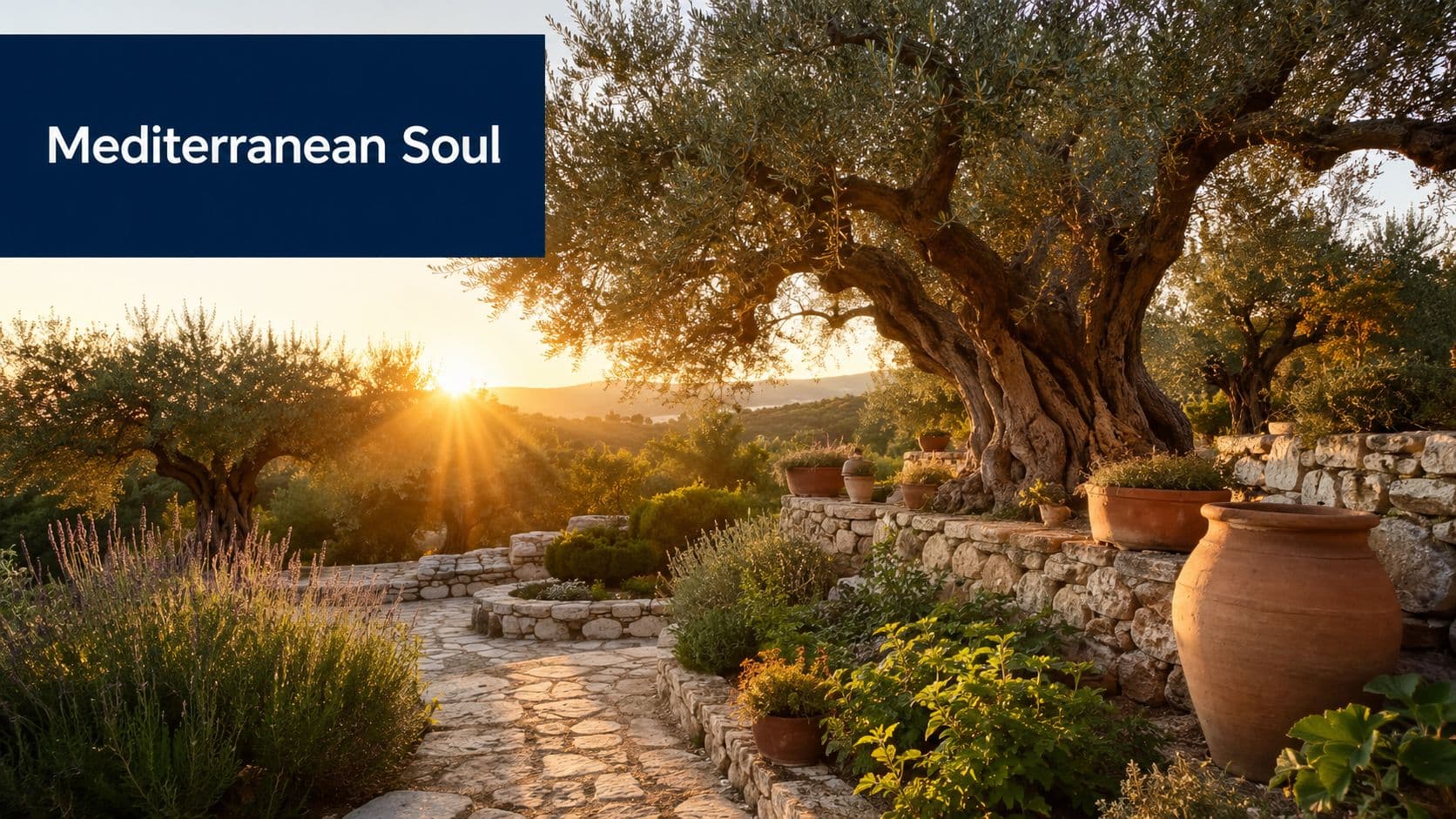
Mediterranean garden design has three pillars. If you understand them, every material and plant choice becomes easier.
Rustic simplicity
This style isn't polished in a formal way. It should feel worn in, like linen, clay, limewash, and stone that have been in the sun for years. Clean geometry helps, but the finish should never feel stiff.
Choose fewer materials and let them repeat. One gravel, one main paving material, one wall finish, a restrained pot style. That repetition creates the quiet confidence people often mistake for “expensive taste.”
Indoor outdoor living
Mediterranean gardens are designed to be used, not just viewed through a window. Dining areas, shaded seating, and easy transitions from the house matter more than ornamental beds that sit unused.
That means a practical layout usually beats a plant-packed one. A simple terrace outside the kitchen, a bench under a small tree, or a compact courtyard with room for a table will do more for daily life than adding another decorative border.
The most convincing Mediterranean yard is one you actually inhabit.
Texture and natural materials
Color matters less than texture. Gravel crunches underfoot. Stone holds heat. Terracotta softens the edge of paving. Silvery foliage plays against rough masonry. This is why the style still looks rich even with a limited palette.
A few guiding choices help:
- Use earthy finishes: Terracotta, limestone tones, warm gray stone, muted plaster, and weathered wood fit naturally.
- Keep foliage structural: Think clipped or mounded forms, evergreen herbs, and plants with gray-green leaves.
- Let surfaces breathe: Slight irregularity looks better than trying to make everything crisp and perfect.
If a feature feels too glossy, too colorful, or too ornate, it usually fights the style.
Building Your Plant and Material Palette
A Mediterranean garden usually starts to go wrong at the buying stage. Homeowners fall in love with olive trees, lavender, and terracotta in a photo, then discover six months later that the olive hates their winter, the lavender rots in heavy soil, and the paving choice pushes the budget past the point where irrigation and drainage get finished properly.
That is why the palette needs to do two jobs at once. It has to carry the look, and it has to suit your climate, soil, and maintenance budget.
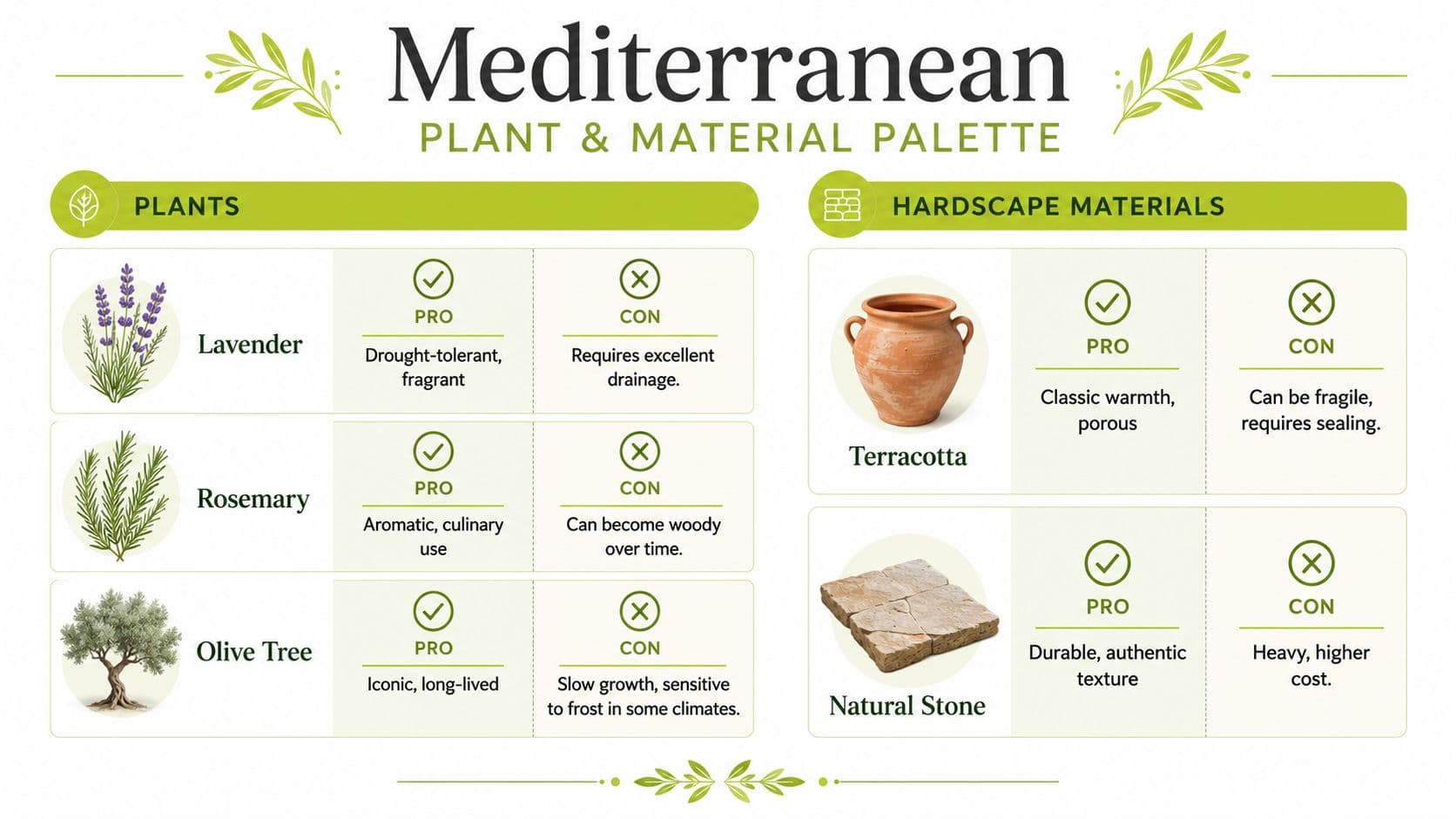
What belongs in the core palette
Start with structure. Good Mediterranean-style planting relies on repeated shapes, restrained color, and plants that look good in heat and bright light without constant attention. In practice, that usually means mounded herbs, evergreen shrubs, one or two small trees, and a short list of materials that age well.
A workable base palette often includes:
- Lavender and rosemary: Fragrance, soft movement, and a familiar Mediterranean feel.
- Sage and other dry-climate herbs: Useful for low, rounded massing and seasonal texture.
- Olive trees or lookalikes: Strong visual impact, but only where climate and drainage support them.
- Terracotta containers: Best used sparingly at entries, near seating, or as focal points.
- Natural stone, gravel, and light-toned concrete pavers: These keep the ground plane bright, practical, and water-wise.
One design move matters more than people expect. Replace thirsty lawn areas with gravel, planted joints, or dry planting beds around paving. That lowers water demand and gives the garden the crisp, sun-baked character people are usually after. This design guidance on gravel and paving shows the idea clearly.
If you are still comparing plant options, this roundup of low-maintenance garden plants is a useful starting point.
Where projects usually fail
The common mistake is copying a plant list from California, Italy, or the south of France without adjusting for local conditions. I see this often in colder zones and in humid regions. The style can still work there, but the exact species often need to change.
Wet winters can kill rosemary. Heavy clay can ruin lavender. Freeze-thaw cycles can crack cheap terracotta and stain porous stone if the base prep is poor. Those are expensive lessons.
Use the visual cues of Mediterranean design, but match the plants and materials to your site. Leaf color, plant shape, bark texture, and spacing matter more than strict authenticity.
| Goal | Classic choice | Better swap in tougher climates |
|---|---|---|
| Silvery focal tree | Olive | A hardy small tree with gray-green foliage |
| Fragrant mound | Lavender | A local shrub or perennial with similar form and sharp drainage tolerance |
| Evergreen herb massing | Rosemary | A cold-tolerant evergreen subshrub with a similar texture |
This is also where hidden costs show up. Olive trees, imported pots, and premium stone can consume the budget fast, while drainage, soil prep, and irrigation are the items that determine whether the garden still looks good in year three. Before you commit to a material-heavy scheme, check realistic 2026 outdoor living space pricing so the finish choices do not crowd out the practical work underneath.
AI tools can help here if you use them well. Ask for plant alternatives by USDA zone, soil type, and sun exposure. Then verify the shortlist with a local nursery or designer before you buy. That one step can save a surprising amount of money and prevent the most common Mediterranean-style failure: a beautiful palette that was never suited to the site.
Designing Your Layout and Key Features
Start with how you want to use the space at 8 a.m., at lunch, and after sunset. A Mediterranean-style yard succeeds when the layout supports real habits, not just a photo. Morning coffee wants shelter from wind. Outdoor dining needs shade near the kitchen. A quiet sitting area works better with a bit of enclosure, even on a small lot.
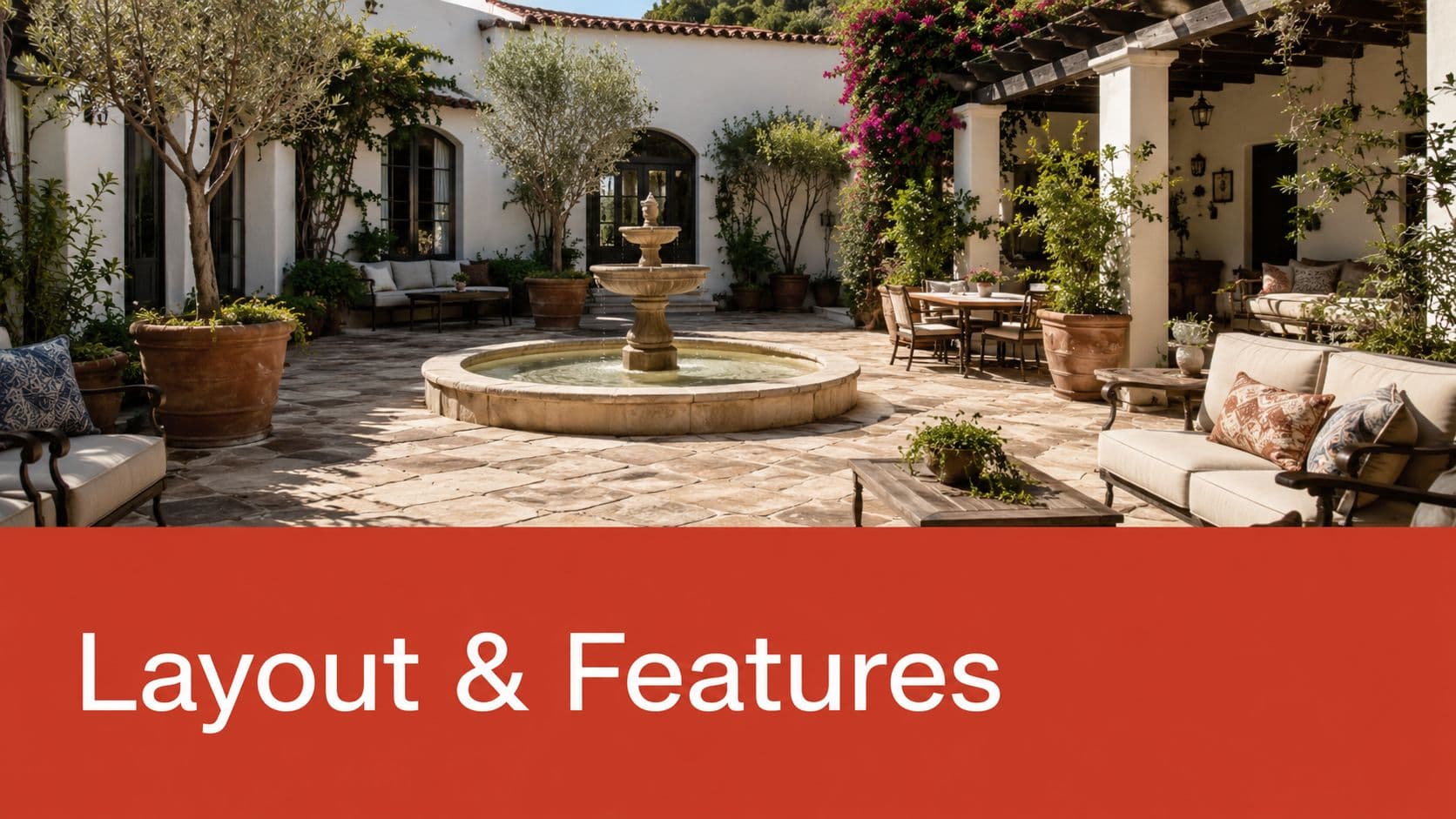
Three layouts that work
A courtyard suits compact homes, side yards, and infill lots. Walls, fences, or clipped planting give it structure fast, and the smaller footprint keeps paving and irrigation costs under control. If privacy matters more than long views, this is often the strongest choice.
A broad patio fits families who eat outside often or need clear circulation for kids and guests. The risk is scale. Without shade, edge planting, or a focal point, a big paved area can feel flat and hot. Break it up with large pots, a dining zone, and one strong vertical feature such as a wall, pergola, or small tree.
A terraced slope often makes more financial sense than forcing a steep yard flat. Low retaining walls, gravel paths, and repeated planting bands can look settled and appropriate in this style. Full regrading usually costs more than homeowners expect, and it can create drainage problems below if the water has nowhere to go.
If you are still comparing layouts, OutdoorBrite's drought-resistant designs can help you pressure-test ideas that look right but may be expensive to build or maintain on a dry site.
The truth about pergolas and fountains
Pergolas and fountains earn attention because they create instant character. They also add real cost, maintenance, and permit questions that inspiration galleries rarely mention.
In many regions, open-water features face restrictions during drought periods, and pergolas may need permit review depending on size, attachment method, height, and local wind or snow-load rules. I tell clients to check those items before they fall in love with a feature, not after the contractor has started pricing footings and electrical runs.
The trade-off is straightforward. A pergola can make a south-facing patio usable in summer, but it may need engineered footings, anchoring, lighting, and finish maintenance. A fountain can cool the mood of a courtyard, but it also brings algae control, pump replacement, splash patterns, and winter shutdown in colder climates.
A simple test helps. If a feature needs regular cleaning, specialty trades, or a permit path you have not confirmed, price a lower-risk version too. A shade sail, a freestanding arbor, a basin with no recirculating spray, or a textured wall with a single spout often gives you a similar feel with less cost and less upkeep.
Before committing to a major built feature, it helps to sanity-check labor and construction assumptions against broader 2026 outdoor living space pricing. Even with a restrained plan, site access, masonry, drainage work, and carpentry can shift the budget faster than decorative finishes.
A Mediterranean-style result does not depend on expensive signature pieces. Gravel underfoot, one shaded seating area, masonry or stucco texture, and a few well-scaled containers usually carry the design better than a long wish list of features.
Smart Strategies for a Low-Water Landscape
You feel the difference in July. A turf-heavy yard starts demanding constant irrigation, patch repairs, and weekend cleanup. A well-planned Mediterranean garden asks for something else: fewer plant types, better drainage, and water delivered with intention.
Start with plant grouping. Put herbs, shrubs, and trees with similar water needs together so one valve is not serving plants that want completely different treatment. If you want a few thirstier choices, keep them near the house or in pots where you can check them quickly and water by hand if needed.
Drip irrigation usually earns its cost back in reduced waste and fewer plant losses. It puts water at the root zone, keeps foliage drier, and avoids spraying gravel, paving, and walls. Overhead spray can still make sense for a small lawn panel or temporary establishment, but it is usually the wrong fit for this design style.
Watering rhythm matters as much as plant choice. New planting needs regular moisture while roots spread, then the schedule should get less frequent and deeper. The goal is to train roots downward, not keep the top inch of soil damp all summer.
A practical baseline looks like this:
- First growing season: Water new plants consistently during dry spells so the root ball does not cycle between dust-dry and saturated.
- After establishment: Shift to deep, occasional irrigation during hot periods instead of frequent shallow watering.
- Former turf areas: Remove grass fully if possible. Small leftover strips often force extra irrigation zones, more edging work, and higher monthly water use.
Material choices affect water use too. Gravel mulch, decomposed granite, and porous paving can reduce evaporation and keep the surface easier to maintain than bark in hot, exposed areas. The trade-off is heat. Stone and gravel reflect more warmth, so soften them with canopy cover, larger shrubs, or shaded seating if the yard already runs hot.
Maintenance usually drops when you stop fighting the climate. You spend less time mowing, fertilizing, and repairing thirsty lawn areas, but low-water does not mean no-work. Drip lines need seasonal checks, gravel collects debris, and some Mediterranean plants decline fast if heavy soil stays wet in winter.
That last point causes many failures outside true Mediterranean climates. Homeowners often copy the look from photos, then install lavender, rosemary, or olive trees in poorly drained clay or humid shade. The style can still work in those regions, but the plant list often needs to shift toward lookalikes and tougher regional substitutes. For more ideas on dry-climate planning, OutdoorBrite's guide to OutdoorBrite's drought-resistant designs is a useful companion.
I also recommend testing your ideas before buying materials in bulk. A quick mockup can show whether gravel coverage feels harsh, whether container placement is practical, or whether a courtyard needs more shade than you first thought. If you are already using Gemini AI in photo workflows, the same habit of visual testing can help you catch expensive garden mistakes before installation.
Bringing Your Vision to Life with AI
You settle on warm stone, clipped shrubs, and a simple dining terrace. Then the materials arrive, the focal tree looks undersized, and the patio sits a few feet off from where people want to gather. That is how expensive yard projects drift off course. Mediterranean-style spaces are especially sensitive because the whole effect depends on proportion, restraint, and how hard surfaces, planting, and shade work together.
Visualization cuts down that risk early. A photo-based mockup can show whether gravel is swallowing too much space, whether terracotta feels rich or too heavy against your house, and whether one olive-like specimen tree has enough presence on its own.
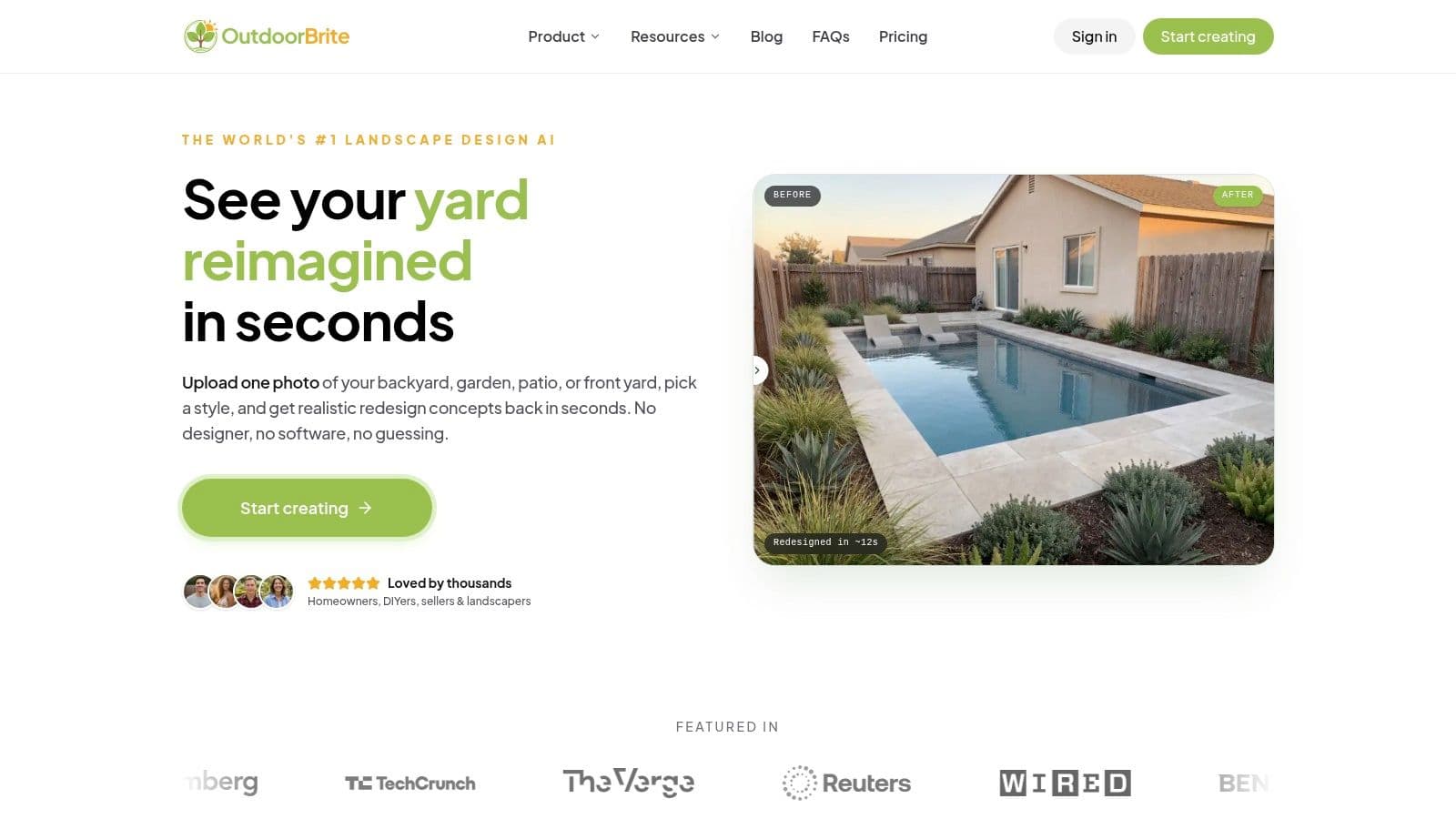
One practical option is ai landscape design software. Upload a photo of your yard, apply a Mediterranean direction, and compare layouts, paving choices, gravel coverage, and container placement before you commit real money. OutdoorBrite works this way, which makes it useful for homeowners who need to narrow choices before talking to contractors or buying materials.
The value is simple. AI mockups help you kill weak ideas while changes are still cheap.
Use them to check:
- Surface balance: Too much paving can make the space feel harsh and hot. Too little can leave it looking patchy or unfinished.
- Plant massing: Mediterranean design relies on structure and rhythm. Random additions usually weaken the result.
- Feature placement: A fountain, pergola, or dining area often works better slightly shifted once you see it on the actual site photo.
- House fit: The same palette that suits pale stucco may feel forced against dark brick or cool-toned siding.
AI will not handle grading, drainage, setback rules, or permit requirements. It does help with the part that trips up many first-time clients. Seeing scale, composition, and material weight before installation. That is the part generic inspiration photos rarely solve, especially outside true Mediterranean climates where the look may need regional plant substitutes and more shade than the reference images suggest.
If you want a broader view of using Gemini AI in photo workflows, that overview gives useful context for how homeowners are testing visual ideas before committing.
Start with the layout. Keep the palette tight. Test two or three directions on a real photo of your yard. Then price the work in phases if needed. That sequence usually leads to better decisions and fewer mid-project corrections.
If you want to try that process on your own yard, OutdoorBrite lets you upload a photo and preview Mediterranean-style redesign ideas before you commit to plants, paving, or construction. It's a practical way to narrow your direction and move into the project with fewer surprises.
See your yard reimagined
Start creating