Top 8 Pine Tree Types for Landscaping in 2026
Discover the best pine tree types for landscaping your yard. Our guide covers 8 varieties, from dwarf to tall, with tips on size, care, and ideal placement.
Choosing the perfect pine starts with an honest look at the yard you have, not the one you wish you had. A pine can give you year-round color, privacy, structure, and a strong backdrop for everything from flower beds to modern hardscapes. It can also swallow a small lot, crowd a driveway, or struggle for years if the soil and climate don't match.
That's why a good list of pine tree types for landscaping should do more than name attractive species. It should tell you where each tree fits, what role it plays best, and where homeowners usually make the wrong call. If you're sketching ideas, testing curb appeal, or comparing evergreens with Stage AI's landscape design tools, it helps to think in functions first: screen, specimen, coastal accent, mountain survivor, or urban workhorse.
Pines also demand long-range thinking. Some stay compact enough for foundation beds. Others mature into dominant canopy trees that define the entire property. The right match looks intentional in five years and still looks intentional decades later. The wrong match becomes a pruning problem you never really solve.
1. Eastern White Pine (Pinus strobus)
A big backyard can feel exposed for years if the wrong evergreen goes in first. Eastern White Pine solves that problem best on properties that need a tall, soft-textured screen or a full-size specimen tree, not a compact accent near the house.
The Missouri Botanical Garden notes that Eastern White Pine typically grows 50 to 80 feet tall and 20 to 40 feet wide in USDA zones 3 to 8. Those numbers matter at the design stage. This tree belongs on large lots, along long property lines, or behind open lawn where its mature form has room to read clearly.
Best use and common mistake
Eastern White Pine earns its place as a screening tree, estate-scale backdrop, or wind buffer. I use it where a client wants year-round mass without the heavy, rigid look some denser evergreens create.
The common mistake is planting it too close to patios, foundations, or side-yard fences. The tree may look manageable for the first several years, then it starts competing for light and space in ways pruning will not fix cleanly.
Practical rule: Plant Eastern White Pine where you want height, softness, and privacy at the edge of the property, not in the middle of a tight planting bed.
A few design points help:
- Best setting: Large suburban lots, rural properties, and broad side or rear boundaries
- Visual role: Soft screen, tall background tree, or canopy anchor for older-home settings
- Form management: Let it keep its natural pyramidal shape. Light limbing up for clearance is fine, but repeated heading cuts usually leave it looking uneven
- Design preview: Test mature height and width with ai landscape design before planting, especially if you need to protect window views or afternoon light
It also has a lighter, more relaxed character than many other evergreens in this guide. That makes it a strong fit for homeowners who want a pine that feels established and graceful rather than dense and formal.
2. Dwarf Alberta Spruce Pine (Picea glauca 'Conica')
This isn't a true pine, but homeowners shopping pine tree types for landscaping often want this exact look: evergreen, conical, dense, and manageable near the house. Dwarf Alberta Spruce fills that role better than most actual pines on small lots.
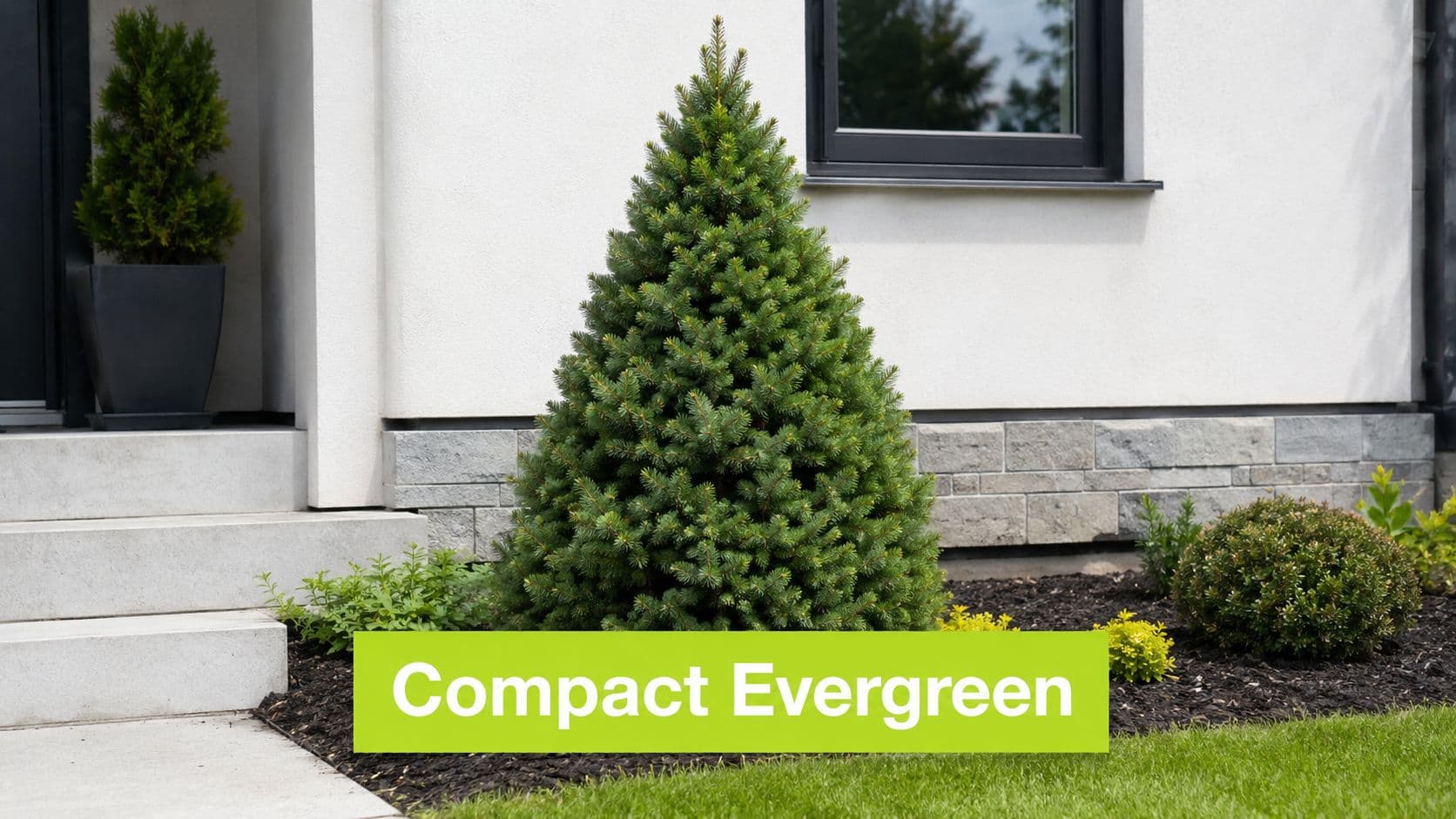
It fits where larger conifers don't. I like it at front entries, in symmetrical pairs by a walkway, or as a quiet focal point in compact formal gardens. It also works in large containers where homeowners want year-round structure on patios or decks.
Where it works and where it doesn't
Its strength is control. The form is naturally tight, so you don't spend years correcting growth. That makes it useful beside modern architecture, especially in suburban neighborhoods where foundation planting space is limited.
The trade-off is stress in hot, dry exposure. Afternoon heat can rough it up, and dry foliage invites spider mites. It's a better choice where you can provide steady moisture and some protection from intense late-day sun.
- Best placement: Front beds, entry flanks, and small formal layouts
- Soil priority: Keep drainage sharp and work in organic matter if the soil is thin
- Design preview: Use OutdoorBrite's season controls before buying so you can judge how the plant reads in winter, when its shape matters most
In Denver, Minneapolis, and Toronto style settings, this kind of compact evergreen often succeeds because the planting plan respects scale. It's not trying to be a privacy tree. It's acting like a living architectural element.
3. Scots Pine (Pinus sylvestris)
A cold, exposed yard with sandy soil can rule out a lot of evergreens fast. Scots Pine stays in the conversation because it handles those rougher conditions without looking stiff or generic. As it matures, the crown opens, the branching gets more expressive, and the upper bark shifts to a warm orange tone that stands out in winter.
For homeowners in colder regions, that hardiness matters. The Missouri Botanical Garden plant profile for Scots Pine lists it for USDA Zones 3 to 7, which helps explain why it remains a reliable choice across northern parts of the U.S. and in exposed rural properties.
Best for rugged sites and informal screening
Scots Pine works best when the goal is toughness with character. I use it on mountain lots, larger suburban edges, and rural properties where the planting needs to hold up to wind, thin soil, and winter exposure. It also fits informal screening better than tightly clipped privacy rows because the mature form has a looser, more natural outline. If you are comparing screening options, your 2026 privacy guide can help you decide whether a pine with this habit matches the level of coverage you want.
Its main trade-off is refinement. This is not the pine I'd choose for a crisp formal entry or a compact foundation bed. It wants space, sun, and permission to age naturally.
Show off the bark instead of hiding it. Remove only what improves clearance or reveals structure.
A few decisions make a big difference:
- Give it full sun: Better light improves bark color and keeps the branching stronger.
- Protect drainage: Scots Pine handles lean soil well, but soggy ground shortens its useful life.
- Space for maturity: Let the crown develop without crowding fences, roofs, or other conifers.
- Plant in the right window: If timing is still up in the air, this tree planting advice for homeowners is useful for getting establishment right.
This is a good tree to preview before you buy. In OutdoorBrite, place it where you think you want screening or a background canopy, then test the mature size against the house, driveway, and neighboring trees. Scots Pine usually succeeds when the design accepts what it is. A hardy, informal pine for difficult ground, not a polished specimen for tight spaces.
4. Japanese Black Pine (Pinus thunbergii)
A front yard with strong architecture often needs a tree with the same presence. Japanese Black Pine fills that role. It brings dark needles, muscular branching, and a sculptural habit that holds its own beside stone, gravel, clean paving, and coastal light.
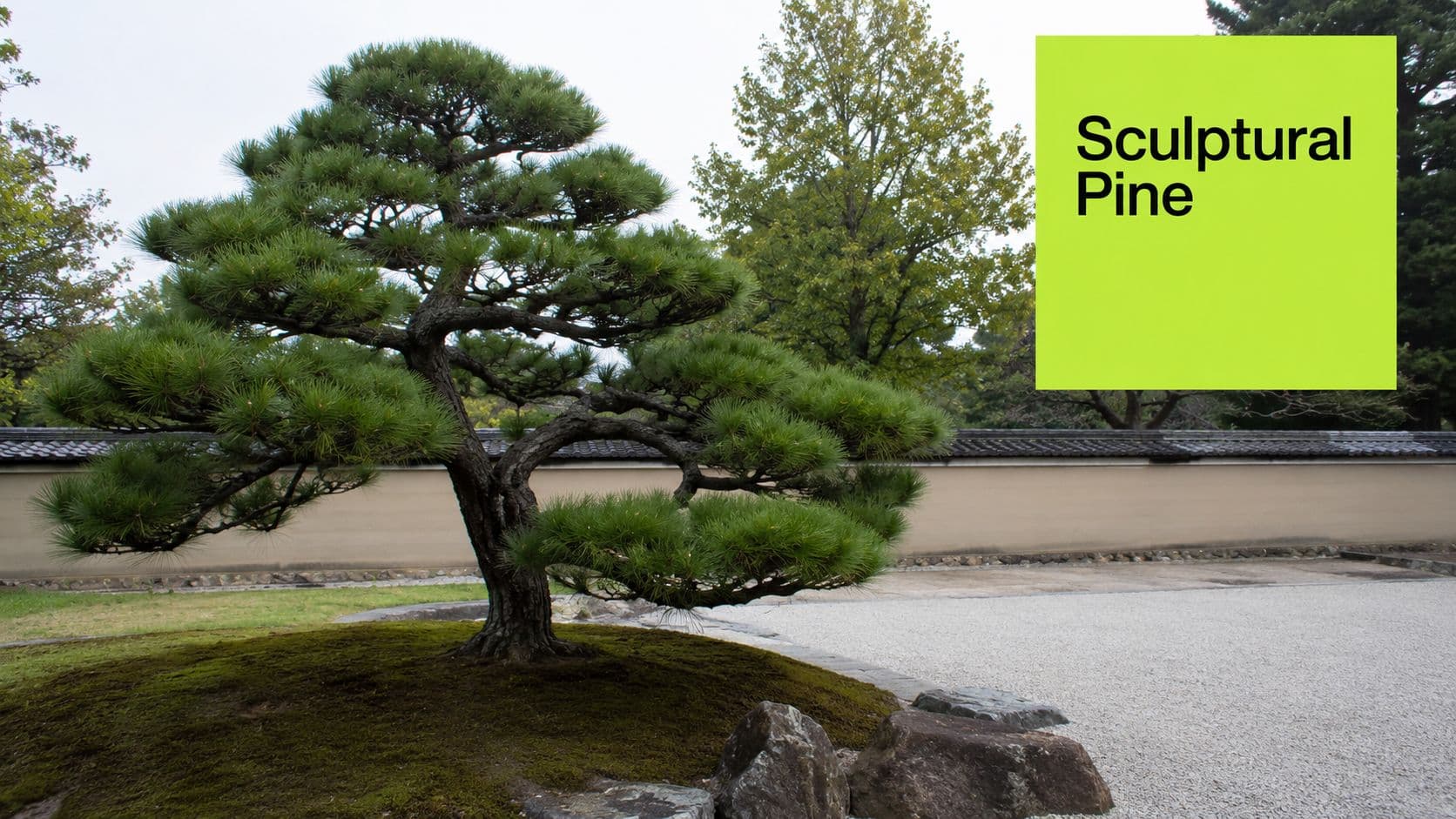
Its mature size depends heavily on site conditions, age, and how it is trained. The Missouri Botanical Garden plant profile describes Japanese Black Pine as a broad, irregular evergreen that typically grows much larger than a small accent tree. That is the design takeaway that matters. Give it room, or commit to long-term pruning from the start.
Best for sculptural focal points and coastal sites
I use this pine where the tree itself is part of the composition, not just background greenery. It suits Japanese-inspired gardens, restrained contemporary yards, and seaside properties where salt spray rules out softer evergreens.
It also responds to training better than many pines. That makes it useful for gardeners who want layered branching, exposed trunk lines, or a cloud-pruned look. The trade-off is maintenance. A neglected Japanese Black Pine can turn coarse and oversized faster than homeowners expect.
For privacy, treat it as a character screen with gaps and movement, not a solid wall. If that distinction affects your plan, your 2026 privacy guide will help you compare tree spacing, fencing, and sightline control before you plant.
A quick visual test helps before you commit:
Use OutdoorBrite to place it near entries, courtyards, or open gravel beds and study the mature mass from the street and main windows. This species usually works best with negative space around it. Crowded planting hides the branching that makes it worth choosing in the first place.
5. Mugo Pine (Pinus mugo)
Mugo Pine fills the gap many homeowners have. They want a coniferous look, but they don't have room for a towering evergreen. Mugo delivers dense, low structure that feels mountain-tough without taking over the lot.
It's one of the better small-space choices for foundation beds, rock gardens, and minimalist planting schemes. In those settings, it reads as intentional mass, not leftover shrubbery.
Best for small-space structure
Mugo works where you need evergreen bones near the ground plane. Around modern homes, it pairs well with gravel, large stone, steel edging, and a short palette of grasses or perennials.
What doesn't work is over-shaping it into little green lumps. Once homeowners start shearing it too hard, they lose the rugged character that makes it useful in the first place.
- Choose sharp drainage: Like most pines, it won't reward heavy, wet soil.
- Keep it sunny: Dense growth holds better in full sun.
- Water while young: Give it support during establishment, then let it toughen up.
- Mock up the composition: OutdoorBrite is helpful here because low evergreen masses change how clean or crowded a front bed feels.
Mugo also earns its place in exposed sites. On windy lots, alpine-style gardens, and colder northern environments, it often looks better than fussier evergreens because the form already belongs in a harder setting.
6. Limber Pine (Pinus flexilis)
Limber Pine is for homeowners dealing with elevation, weather, and winter stress that rules out softer planting choices. On the right property, it's one of the most practical pines you can plant.
Its appeal isn't just appearance. It's how it behaves under pressure. Flexible branches handle snow and ice well, and the overall look stays compact enough to fit mountain homes without feeling oversized.
Best for mountain resilience
I'd put Limber Pine high on the list for cabins, ridge homes, and exposed western lots where wind and winter are part of daily life. It looks natural there because it is natural to those conditions.
That matters in design. A pine that belongs to the site always looks calmer than one you're forcing to survive.
Plant mountain pines where the land already wants them. Don't improve the site so much that you erase the reason they work.
The practical checks are simple:
- Prioritize drainage: Rocky or lean soils are often better than rich, wet ones.
- Give it full sun: Mountain light suits it.
- Use AI weather settings: Snow and low-angle winter light can change how a tree reads beside a house or driveway.
- Prune lightly: Let branch flexibility and natural form do the work.
If your home sits high enough that winter shape and durability matter as much as summer beauty, Limber Pine deserves serious consideration.
7. Bristlecone Pine (Pinus longaeva)
A bristlecone works best on the kind of property where softer evergreens look out of place. Dry, rocky ground, big sky, and a house that needs one sculptural tree rather than a full green mass are the right conditions.
Bristlecone Pine is known for exceptional longevity and a weathered, ancient-looking form. That visual character is the main reason to plant it. Even a young tree brings age, texture, and tension to a spare western planting design.
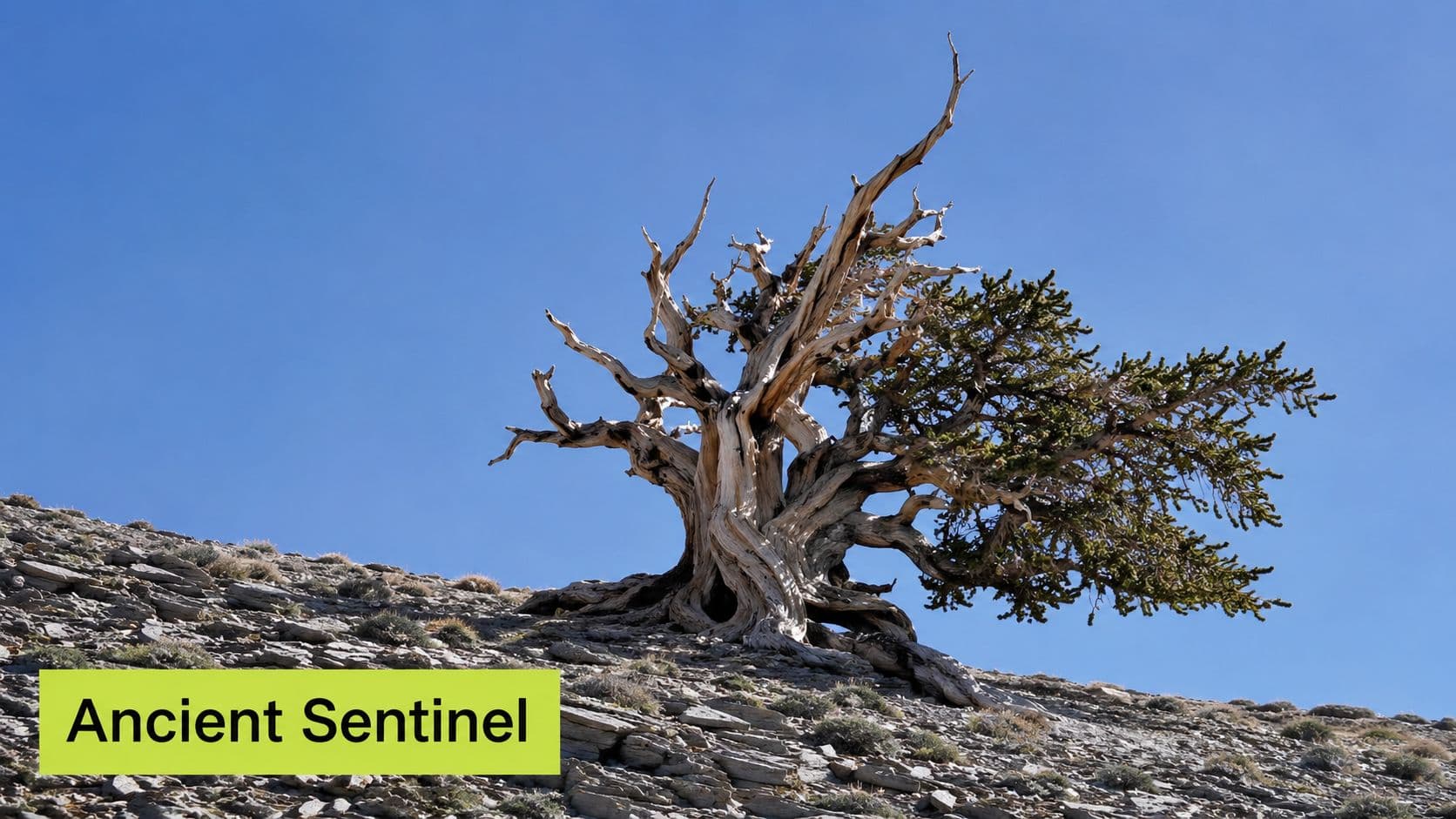
Best for legacy plantings in harsh western sites
I use Bristlecone where the setting already feels exposed and restrained. High-elevation properties in California, Nevada, Utah, and Colorado are good candidates, especially when the goal is a specimen tree that reads as permanent instead of decorative.
The trade-off is simple. This pine does not reward pampering. Rich soil, regular feeding, and extra irrigation can weaken the look that makes it valuable in the first place. Heavy pruning creates the same problem.
Use it with discipline:
- Give it fast drainage: Gravelly or rocky soil suits it better than amended beds
- Keep the setting open: Rock, gravel, and negative space show off its form better than crowded shrub groupings
- Let irregular growth stay visible: Twisted branching is part of the appeal, not a flaw to correct
- Preview mature scale with OutdoorBrite: Test how its future silhouette will sit near paths, patios, and key view lines before planting
This is not the pine for every yard. For the right western site, though, few trees create a stronger sense of permanence with so little ornament.
8. Austrian Pine (Pinus nigra)
A front yard along a busy street needs a tree that can hold its shape, block ugly views, and tolerate heat, wind, salt, and compacted soil. Austrian Pine fits that job better than many softer, looser pines.
Its main strength is function. The needles stay dark and dense, the branching reads solid from a distance, and the overall form gives a property year-round structure. According to the Missouri Botanical Garden plant finder for Pinus nigra, it is generally suited to USDA Zones 4 to 7 and matures into a large evergreen tree. The NC State Extension profile on Austrian pine also notes its broad size potential and tolerance for difficult growing conditions.
Best for screens, windbreaks, and hard-use city yards
I use Austrian Pine where the assignment is clear. Screen the neighbor, soften traffic, hold a windy edge, or give a newer house enough evergreen weight to feel settled. It performs best where there is room to let it become a real tree instead of a clipped hedge.
There is a trade-off. This species can solve a lot of site problems, but crowding it creates new ones. Dense branching needs sun and air circulation, especially in rows. If you plant for the size you see at the nursery, you usually end up pruning more than you planned and losing the natural fullness that made the tree appealing.
Use it with purpose:
- Reserve it for larger settings: It needs real overhead and lateral space to stay useful long term
- Place it where screening has to work year-round: Dark, dense growth gives stronger visual blocking than open-canopied pines
- Avoid stagnant pockets: Good airflow matters more than people expect with broad evergreens
- Preview mature height and shadow with OutdoorBrite: Test how a full-grown screen will affect windows, driveways, and front-yard proportions before planting
For homeowners choosing by function first, Austrian Pine is one of the better options in this guide. It is the pine for tough streets, exposed lots, and properties that need evergreen mass more than delicacy.
Pine Species Comparison Chart
A side-by-side chart helps once you have narrowed the choice by job. Use it to match each tree to the conditions in your yard, then preview mature size, density, and shadow with OutdoorBrite before you buy. That step catches a lot of avoidable mistakes, especially with screening trees and small-space specimens.
| Tree | Best fit | Siting difficulty | Water and soil needs | Mature effect | Main advantage |
|---|---|---|---|---|---|
| Eastern White Pine (Pinus strobus) | Large properties, natural screens, wooded edges | Moderate | Average moisture during establishment. Prefers well-drained soil and room to spread | Tall, soft-textured evergreen with a more natural look than tighter pines | Good choice for homeowners who want height and a less formal screen |
| Dwarf Alberta Spruce (Picea glauca 'Conica') | Small yards, entry beds, containers, formal accents | Low to moderate | Consistent moisture and good drainage. Appreciates protection from intense afternoon heat | Dense, narrow evergreen with a tidy outline | Fits spaces where a full-size conifer would overwhelm the bed |
| Scots Pine (Pinus sylvestris) | Dry sites, rocky ground, informal mixed plantings | Low to moderate | Handles lean, well-drained soil well once established | Medium to large tree with an open habit and attractive bark as it ages | Useful where soil quality rules out fussier evergreens |
| Japanese Black Pine (Pinus thunbergii) | Coastal properties, sculptural focal points, Japanese-inspired gardens | High | Needs drainage, sun, and attentive early care. Tolerates salt better than many options | Strong form, dense needles, and a more architectural presence | One of the better picks for coastal exposure and intentional pruning |
| Mugo Pine (Pinus mugo) | Rock gardens, foundation beds, smaller properties, exposed sites | Low | Adapts to poorer soils if drainage is good. Light watering during establishment | Low, mounded evergreen that stays visually grounded in compact beds | Reliable for tight spaces where height would become a maintenance problem |
| Limber Pine (Pinus flexilis) | Mountain settings, snowy areas, dry western sites | Moderate | Wants sun and drainage. Settles in slowly, then handles dry periods well | Medium tree with a looser, durable character | Strong option for harsh sites where wind and snow are part of the job |
| Bristlecone Pine (Pinus longaeva) | Specialty collections, rock gardens, high-elevation settings | High | Best in lean, sharply drained soil with a restrained watering approach | Slow-growing, sculptural specimen with strong age character | Chosen more for character and rarity than for quick coverage |
| Austrian Pine (Pinus nigra) | Streetside plantings, windbreaks, larger privacy screens, exposed lots | Moderate | Tolerates difficult urban soil better than many pines. Benefits from sun and airflow | Dense, dark evergreen mass with a heavier visual presence | Strong screening value where traffic, wind, or exposure rule out softer species |
The practical difference comes down to function. Eastern White Pine and Austrian Pine handle big screening jobs. Mugo Pine and Dwarf Alberta Spruce suit smaller beds. Japanese Black Pine and Bristlecone Pine are usually design choices first, where shape and character matter more than fast coverage.
If you are stuck between two options, test the mature form in your yard before planting. A tree that looks balanced on paper can still crowd windows, block winter light, or make the front of the house feel top-heavy once it fills in.
From Planting to Perfect Pine
A pine usually looks manageable on planting day. Five or ten years later, that same tree can crowd a front walk, darken a main window, or drop needles where you wanted clean gravel and low upkeep. The right choice starts with the job the tree needs to do and the conditions it has to handle.
Start with function. If you need year-round screening, a fast, soft-textured grower like Eastern White Pine may fit a large property, while Austrian Pine often makes more sense on exposed lots or along roads where wind, salt, and tougher soil are part of the deal. If the goal is a compact specimen near an entry or patio, Mugo Pine or Dwarf Alberta Spruce usually stays easier to place and easier to live with.
Soil and drainage decide more than the nursery label does. Many pines prefer well-drained, slightly acidic soil with a pH between 5.0 and 6.5. In clay that stays wet, roots struggle and growth gets uneven. In dry, lean ground, species like Limber Pine or Japanese Black Pine often adapt better than softer pines that want more forgiving conditions.
Climate fit matters just as much. Scots Pine handles cold well and brings strong color contrast, but it still needs room. Bristlecone Pine offers remarkable character, yet it is usually better for specialty settings than for homeowners who want quick coverage or a full privacy screen. Good results come from matching the tree to the site first, then building the rest of the planting plan around that choice.
This guide is organized that way for a reason. A pine is not just a species choice. It is a design decision tied to use, scale, and setting. Urban buffer, small-space focal point, coastal survivor, high-altitude specimen. Those categories help narrow the field much faster than appearance alone.
Visualization helps at this stage. I often advise homeowners to test mature size against the house, driveway, fence line, and sun exposure before they buy. A tool like OutdoorBrite can show whether a pine works better as a single specimen, a screen, a paired entry planting, or a structural evergreen on a slope. That matters most on smaller properties, where one oversized conifer can throw off the whole yard.
OutdoorBrite makes that final decision much easier. You can upload a photo of your yard, try different pine placements and garden styles, and see realistic concepts before you plant. It is a practical way to avoid scale mistakes, compare evergreen options, and move from rough ideas to an outdoor design you feel confident building.
See your yard reimagined
Start creating