Planning a Front Yard Landscape: Boost Curb Appeal & Value
Start planning a front yard landscape that boosts curb appeal & value. Our guide covers site analysis, style, plants, budget, & AI for instant design ideas.
You're probably standing in the same place most homeowners do at the start of this project. You know the front yard needs help, but you're torn between wanting something attractive, something manageable, and something that won't force a redo six months later.
That tension is exactly why planning a front yard design matters. A front yard isn't just a collection of plants. It's circulation, visibility, drainage, maintenance, privacy, and cost, all working in one small space. Done well, it feels simple. Done poorly, it becomes a string of expensive fixes.
The Foundation of Great Design Site Analysis and Goal Setting
The part that saves the most money usually happens before you buy anything. Good front-yard design starts with an honest read of the site, not a Pinterest board.
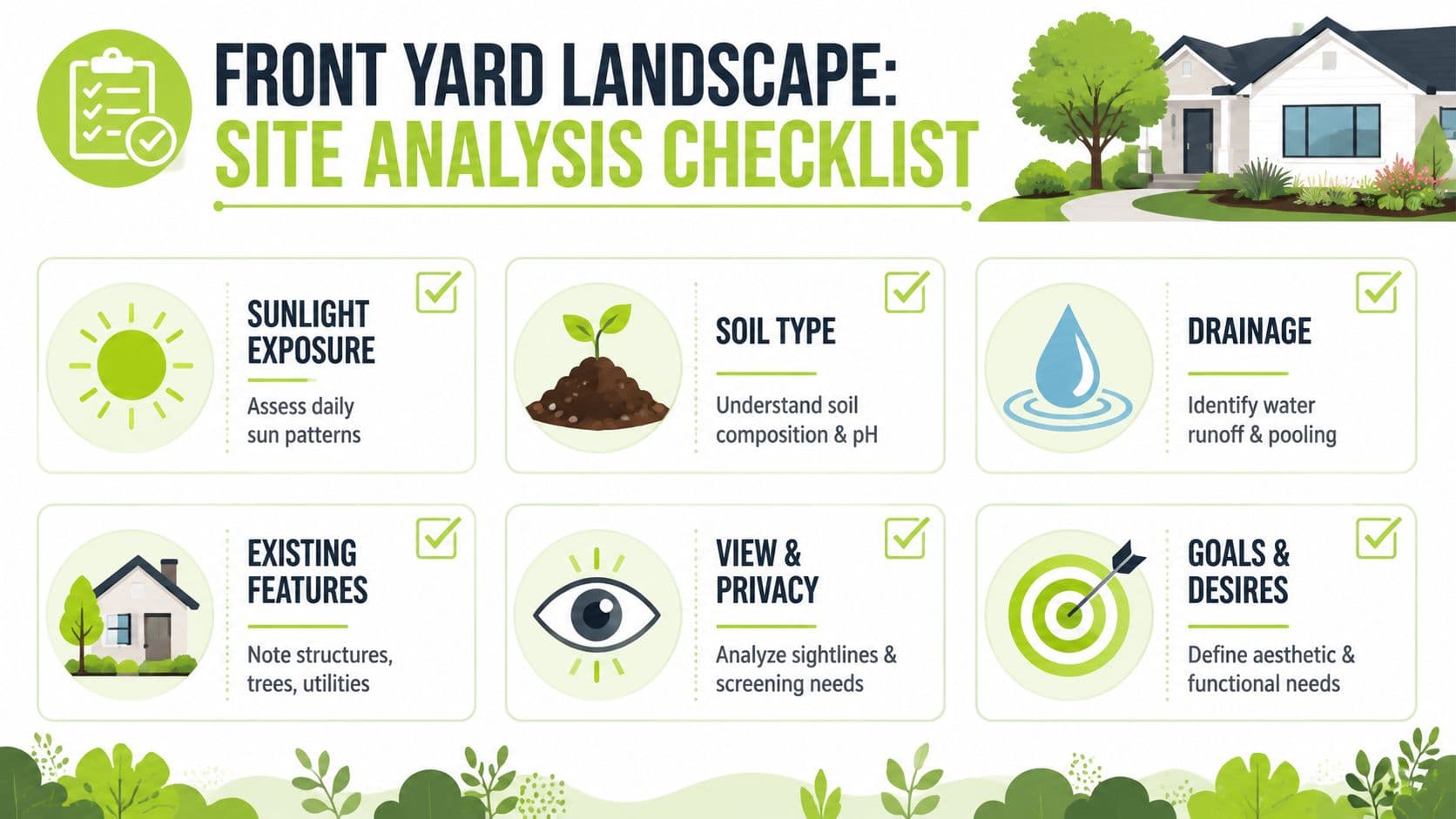
A reliable workflow begins with a scaled base map and a site inventory. That means measuring the property perimeter, marking fixed features like doors, driveways, utilities, slopes, and drainage paths, then layering in sun, shade, and access before drawing beds or walkways. Skipping that inventory phase is the most common planning mistake, because aesthetics-first layouts often ignore how people move through the yard or where water goes (Autumn Hill Nursery step-by-step landscape design process).
Build a base map before you design
Your base map doesn't need to be fancy. Graph paper works. A tablet works. A simple measured sketch works.
Start with:
- Property edges and structures: house footprint, porch, driveway, walk, mailbox, utility boxes, meters
- Fixed site conditions: slopes, low spots, drainage flow, downspouts, exposed roots
- Use patterns: where guests cut across the lawn, where deliveries happen, where car doors open
- Light exposure: morning sun, harsh afternoon sun, deep shade, seasonal shade shifts
Practical rule: If a design decision doesn't appear on your base map, it's probably being made from memory, and memory is usually where expensive mistakes start.
Watch the yard before you change it
Most front yards reveal their problems if you observe them for a few days. Water pools in the same place. One corner bakes. Another stays dim and damp. The straight path to the front door turns out not to be the path people take.
That's why I tell homeowners to spend a little time standing at three viewpoints: from the street, from the front door, and from inside the main front window. Those views tell you what guests see, what you see arriving home, and what you'll live with every day.
A practical companion resource is this guide to Central Florida property improvements, especially if you're thinking about curb appeal as part of a broader exterior update rather than a planting-only project.
Set goals that can survive trade-offs
A front yard almost never delivers everything at the maximum level. More privacy can reduce openness. More plant variety can increase upkeep. A larger lawn may look simple at first and create more work later.
Use a short priority list:
- Must-have outcomes: safer walkway, stronger curb appeal, more privacy near windows
- Nice-to-have features: seasonal color, seating area, pollinator planting
- Non-negotiable limits: budget cap, low maintenance, HOA constraints
If you need help translating those priorities into layout ideas, OutdoorBrite's yard design guide is a useful reference point for organizing yard elements before you commit to materials.
The yard should answer your actual daily needs first. Style comes after function, not before it.
Find Your Style and Visualize Possibilities with AI
Once the site makes sense on paper, style choices become easier. Without that groundwork, people tend to choose images they like rather than designs that fit their house, climate, and habits.
The old method was mood boards, clipped photos, and a lot of guesswork. That still has value, but digital visualization is better for one reason: it shows the idea on your actual property.
Compare styles against your house, not in isolation
A modern layout with strong geometry can look sharp on a clean-lined home and forced on a cottage facade. A lush layered planting scheme can soften a plain suburban elevation and overwhelm a smaller entry.
A simple comparison helps:
| Style | What works well | Where people go wrong |
|---|---|---|
| Modern | Clean lines, restrained palette, strong hardscape | Too sparse for the scale of the house |
| Cottage | Informal planting, softness, seasonal color | Becomes messy without structure |
| Mediterranean | Gravel, structure, drought-tolerant feel | Feels out of place without the right materials |
| Formal | Symmetry, clear focal points, strong entry sequence | Looks stiff if the house is casual |
Use AI to test before you spend
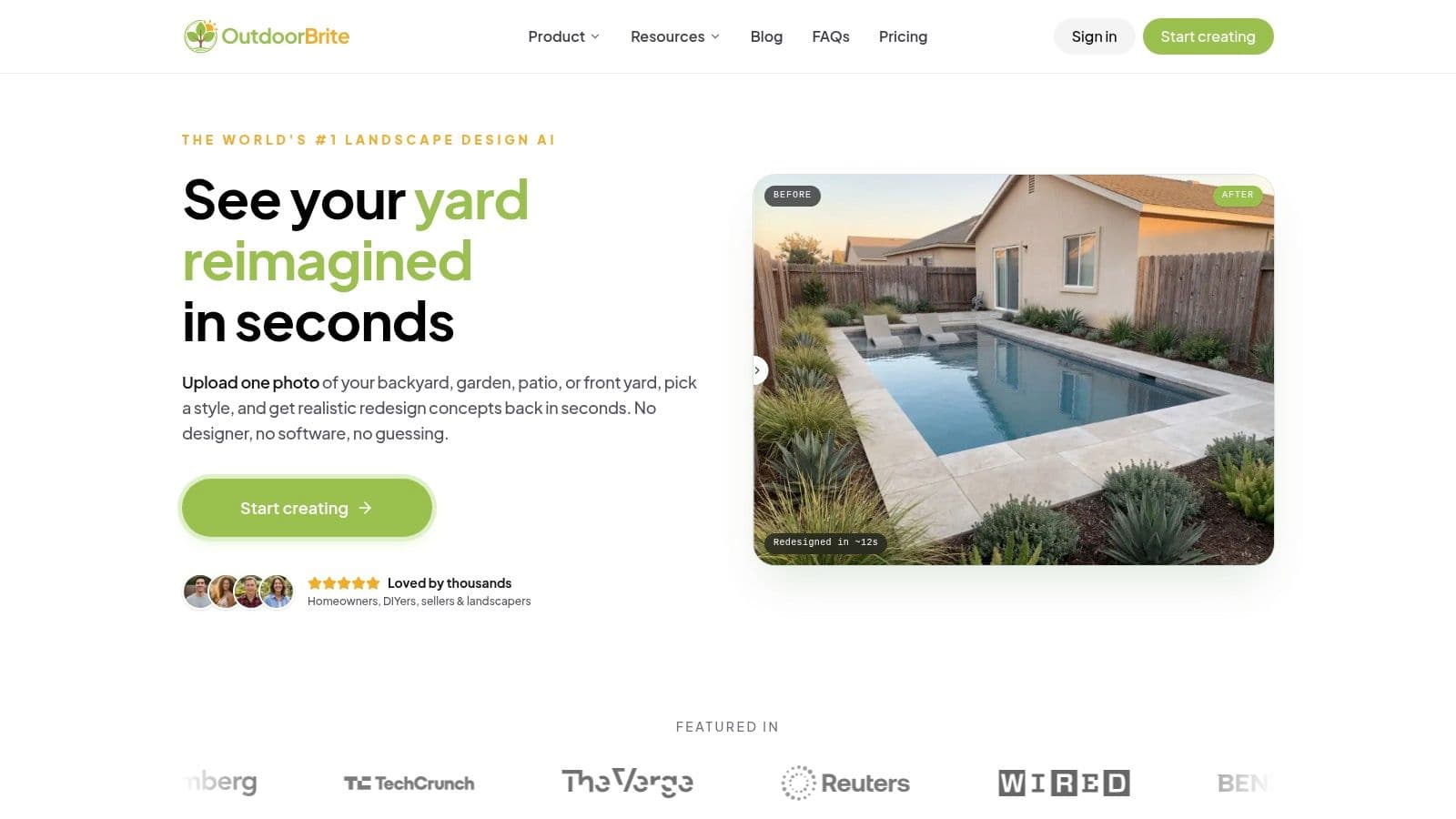
Here, tools become practical instead of gimmicky. A platform like ai landscape design lets you upload a front-yard photo and generate style directions for the actual site conditions you're working with. That's useful when you're deciding between a cleaner low-planting look, a layered border, or a gravel-forward layout with fewer maintenance demands.
What matters isn't novelty. It's risk reduction. You can check whether taller screening near a window feels elegant or heavy, whether a wider path improves the entry sequence, or whether reduced lawn makes the house look better or more exposed.
Privacy isn't all or nothing
One of the least-helpful front-yard clichés is “just add shrubs.” Privacy in a front yard is rarely solved by a single hedge line.
A better approach treats privacy as a spectrum. Partial screening near a sitting area or window can coexist with open sightlines to the front door and lower plant heights near the street. That's more useful than blanket screening, especially on lots close to sidewalks or neighbors, and it aligns with guidance that digital visualization can make these trade-offs easier to test (Lowe's front yard landscaping ideas).
Don't design a fortress when what you actually need is selective screening.
That's where AI previews help. You can experiment with layered heights, fence openness, bed depth, and tree placement before buying a single shrub.
Crafting the Layout with Hardscape and Softscape
The strongest front yards have good bones. In practice, that means hardscape gives the yard structure and softscape gives it life.
Hardscape includes paths, edging, steps, retaining elements, gravel areas, and lighting positions. Softscape includes planting beds, lawn, groundcovers, and trees. The mistake I see most often is treating plants as the main event and everything else as filler. In reality, the layout succeeds when the hardscape creates order first.
Start with circulation and focal points
Ask one practical question: how should someone move from curb or driveway to the front door?
That answer shapes the whole plan. Walkways should feel direct enough to be intuitive but not so narrow or abrupt that they seem accidental. Entry points should be visible. If the door is hidden, use a focal point such as a specimen plant, a widened landing, or lighting to pull attention where you want it.
For ideas on structuring those permanent elements, hardscape design inspiration can help you compare materials and layout approaches before finalizing your plan.
Make beds deep enough to matter
Thin foundation strips rarely look finished. They also limit plant choice and create maintenance headaches because every plant is jammed into the same narrow band.
Try this instead:
- Use deeper bed lines: curved or angled beds with enough depth for layering
- Repeat shapes: if one bed sweeps outward, echo that move elsewhere so the yard feels intentional
- Anchor key zones: place stronger evergreen structure near corners, entries, or major windows
A front yard reads faster than a backyard. People see the overall shape first, then the plants.
Don't leave lighting until the end
Lighting affects safety, arrival experience, and nighttime curb appeal. It belongs in the plan from the beginning, especially around walks, steps, and entry transitions.
If you're sorting out fixture placement or power considerations, this practical guide on how to install outdoor lighting the right way is worth reviewing before installation decisions get locked in.
Choosing Plants for Beauty and Climate Resilience
Plant choice is where a front yard plan either gets easier to live with or harder every season. I see the same mistake on first-time projects all the time. Homeowners fall for flowers in a nursery pot, then discover two years later that the plant wants twice the space, more water, or a different light exposure than the bed can give it.
Start with performance. Then choose beauty within those limits.
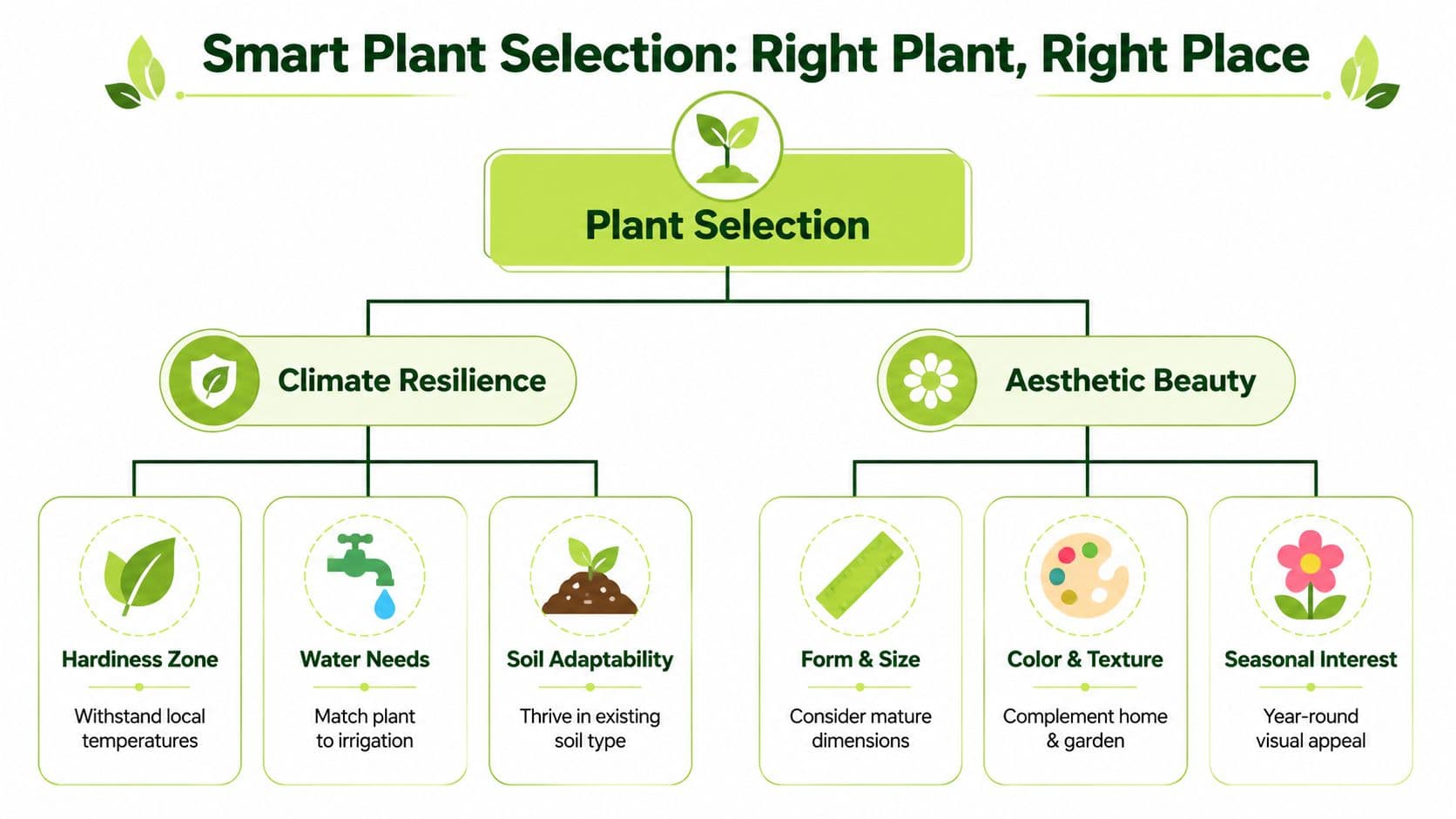
Use the right plant right place filter
The map from your earlier planning work should drive this decision. A plant that matches your climate but ignores drainage, reflected heat, or mature width can still become an expensive mistake.
Before anything goes on the plant list, check four things:
- Light fit: full sun, part sun, bright shade, deep shade
- Water fit: dry bed, average moisture, runoff zone
- Size at maturity: height and width after real growth, not container size
- Role in the design: screening, edging, seasonal color, evergreen structure
This is also where climate resilience gets practical. In many front yards, the best-performing mix includes plants that can handle heat swings, short drought periods, heavy downpours, and less-than-perfect soil. Native plants often help, but native does not automatically mean right for every spot. A native shrub that thrives in open woodland can still struggle against a south-facing foundation wall that throws heat back at it all afternoon.
AI tools can speed this part up. Use them to mock up plant combinations, compare mature forms, and test privacy levels from the street before you buy anything. That helps you catch common problems early, such as blocking a window, crowding a walkway, or creating a bed that looks sparse in winter.
A good visual overview can also help as you sort plant roles and resilience factors:
Layer for visual depth and year-round structure
A front yard usually looks stronger with fewer plant types used well. Too many species can make the entry feel busy, especially from the street where people read the yard in a few seconds.
Build depth in three layers:
- Structural layer: a tree or large anchor shrubs that hold the composition together
- Mid layer: medium shrubs and durable perennials that carry most of the seasonal interest
- Edge layer: low plants, groundcovers, or border material that finish the bed cleanly
Privacy matters here too. If you want to soften views into the house without making the front feel closed off, use filtered screening instead of a solid wall of shrubs. Ornamental grasses, airy branching shrubs, or small multi-stem trees can block direct sightlines while keeping the house visible and welcoming.
Reduce maintenance by editing the plant palette
A lower-maintenance front yard rarely comes from stuffing every open space with plants. It comes from restraint, repetition, and a realistic view of how much upkeep you want to handle in July.
Use fewer varieties and repeat them. That usually looks more intentional, cuts replacement costs, and simplifies pruning, irrigation, and seasonal cleanup. It also makes AI previews more useful because you can compare a small number of clear options instead of sorting through a cluttered mix that would be hard to maintain in real life.
Lawns are the biggest trade-off in many climates. A larger turf area can make the yard feel open and familiar, but it often raises water use, mowing time, and edge maintenance. Reducing turf and giving more space to tough shrubs, groundcovers, and mulched beds often creates a cleaner look with less work. In hot or regulation-heavy areas, that choice can also make the yard more durable over time.
Managing Budgets Timelines and Professional Help
A front yard project usually gets real the moment estimates start coming in. The sketch that looked simple on screen can turn into excavation, drainage fixes, lighting runs, plant delivery, and a month of decisions if no one set priorities early.
Budgeting works best as a decision tool. It helps you separate the parts that shape the yard for years, such as grading, walks, steps, and drainage, from the parts you can phase in later, such as smaller plant groupings or decorative containers. AI mockups are useful here because you can test a simpler first phase against a full build before spending money on work that may not add much.
Break the project into parts
Projects go over budget when the whole yard is priced as one blurry number. Split it into categories and price each one with a clear scope.
| Budget area | Typical questions to answer |
|---|---|
| Demolition and prep | What needs removal, grading, cleanup, or haul-off? |
| Hardscape | Which surfaces, steps, edging, or walls are permanent and expensive to change later? |
| Plants | What size and quantity are necessary now, and what can wait for phase two? |
| Irrigation and lighting | What infrastructure should go in before planting or paving? |
I usually tell homeowners to commit to hardscape early. A walkway in the wrong place causes years of frustration. Swapping out a few shrubs later is far less painful.
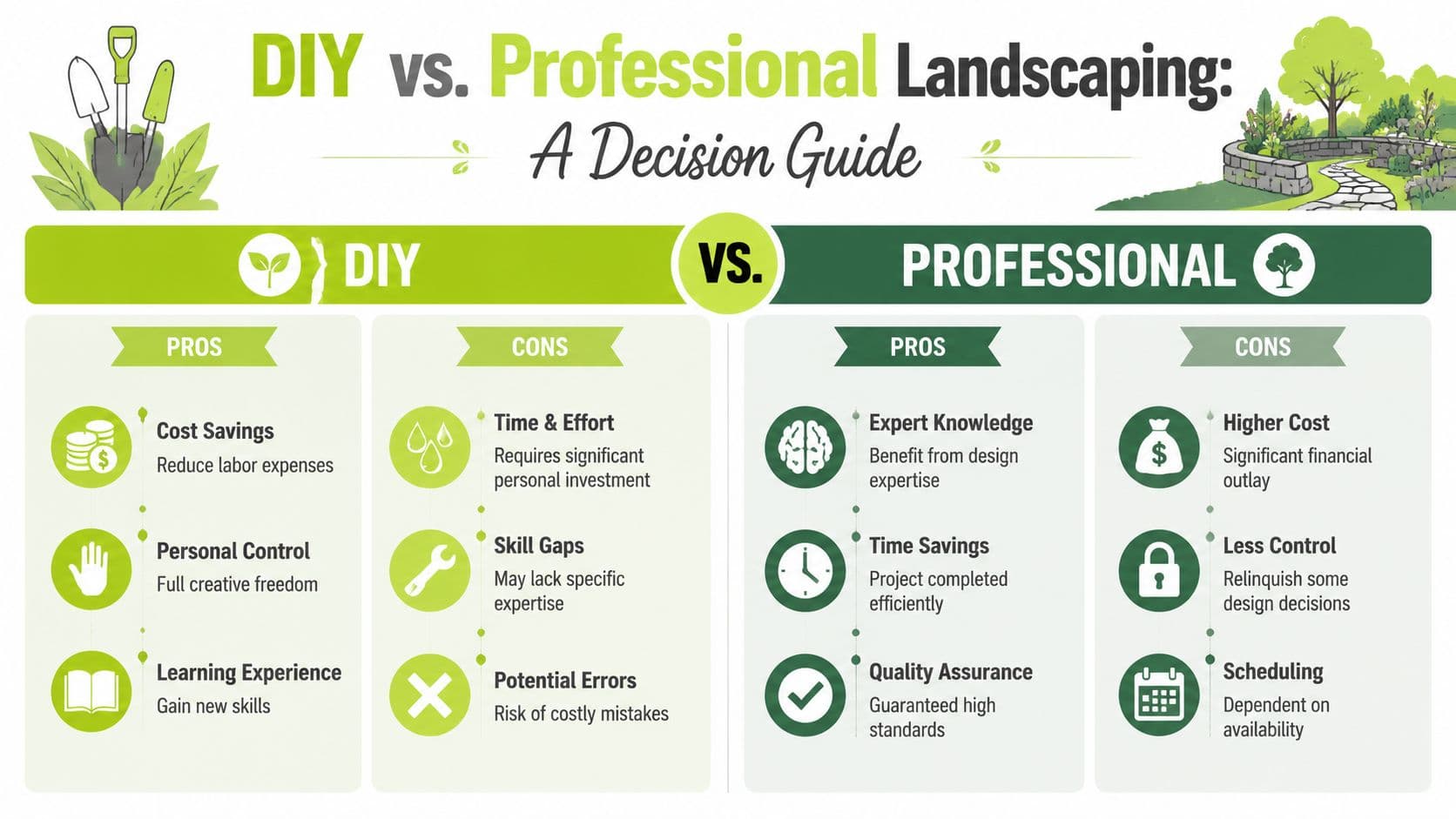
Decide what to DIY and what to hire out
Some work is well within reach for a careful homeowner with time, basic tools, and a clear plan. Other work carries enough risk that hiring help is cheaper than fixing mistakes.
DIY usually makes sense for:
- Planting and mulching: after the layout and spacing are set
- Simple bed prep: turf removal, basic edging, compost incorporation
- Finish details: pots, seasonal color, small visual upgrades
Professional help is usually the better call for:
- Drainage corrections: poor water movement can affect the porch, walk, and foundation
- Retaining walls, masonry, and steps: errors show up fast and can create safety issues
- Electrical and advanced lighting: code, transformer sizing, and wire runs matter
- Design work with multiple constraints: privacy, street visibility, grading, and HOA rules often conflict
A clear plan saves money twice. It avoids change orders during installation, and it reduces the odds of tearing out work that looked fine in a sketch but fails at full scale.
Phase the work without weakening the design
Phasing works when the first round still looks intentional. Start with the bones of the yard. Handle grading, drainage, walks, lighting sleeves, and the main bed lines first. Then install anchor elements such as a small tree, screening plants, or the foundation planting that frames the entry. Smaller fillers can come later.
This matters even more if you are balancing privacy with curb appeal. Homeowners often rush to install a dense screen, then realize it blocks windows, crowds the walk, or makes the front feel shut down. A fast AI concept test can help you compare a filtered screen against a heavier planting approach before you commit to material and labor.
Timelines need the same realism. Material lead times, permit review, contractor schedules, weather delays, and plant availability can all shift the calendar. Check local rules and HOA requirements before installation starts. Waiting a week for approval is easier than removing work that does not comply.
Ensuring Long-Term Success with a Maintenance Plan
A front yard plan isn't finished when installation ends. It's finished when the yard can still look good a year later without constant rescue work.
That's why maintenance needs to be designed in. If the layout relies on nonstop pruning, thirsty turf, or plants that outgrow the space quickly, the design wasn't solved. It was postponed.
Build a simple care rhythm
Most homeowners don't need a complicated maintenance manual. They need a repeatable routine.
Keep it basic:
- Watering: adjust for establishment periods, heat, and rainfall
- Mulching: maintain coverage to suppress weeds and moderate soil conditions
- Pruning: shape for structure, not constant correction
- Observation: catch stress, dieback, and crowding early
Design choices that make upkeep easier
Low maintenance doesn't mean lifeless. It means the yard has enough structure to stay coherent even when everything isn't in peak bloom.
A strong front yard can rely on hardscape, repeated textures, and a smaller plant palette rather than dense planting or large turf areas. That approach reduces upkeep while preserving order and visual appeal, a principle that's often missing from generic front-yard advice.
The best maintenance plan starts during design. Every plant you don't need to shear every month is a future win.
As plants mature, edit with purpose. Thin overcrowded areas. Replace underperformers. Keep sightlines to the entry clear. A front yard is a living composition, and small corrections made early are easier than major overhauls later.
If you want to test ideas before spending on materials or labor, OutdoorBrite lets you turn a photo of your front yard into realistic design concepts so you can compare styles, layout directions, and screening options with more confidence.
See your yard reimagined
Start creating